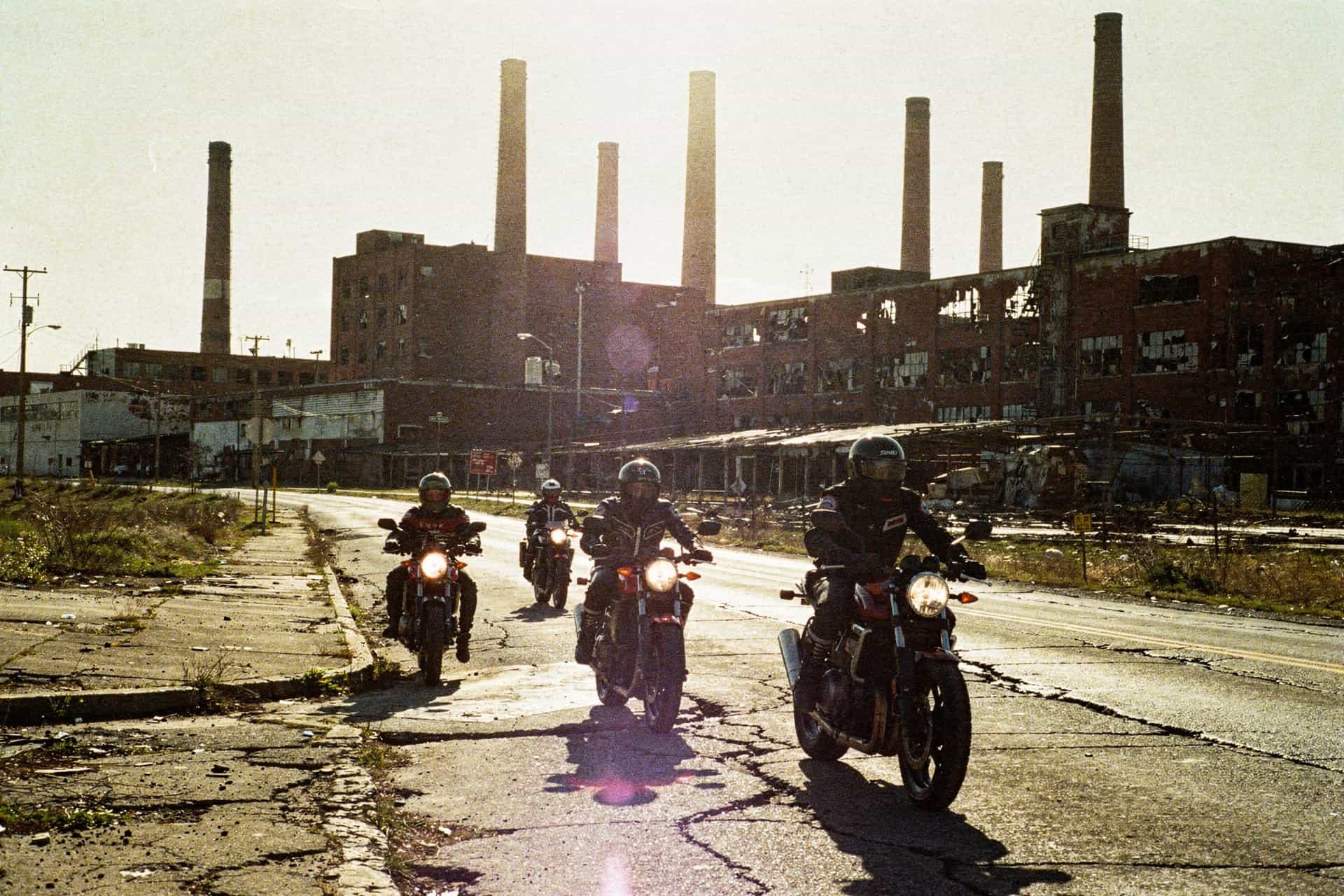
Detroit’s motorcycle club record is unusually well documented, for an unglamorous reason: federal prosecutors have spent three decades building cases here, and cases generate paper. Indictments, plea agreements, trial verdicts, and appellate opinions all carry dates and survive in public archives. That paper trail is the honest basis for a page like this one.
What it is not is a snapshot of who runs what today. Every fact below is anchored to a specific year and a specific document. Where a commonly repeated claim about Detroit clubs has no record behind it, we say so instead of filling the gap.
| Field | Documented detail | Date of record |
|---|---|---|
| Locally founded one-percenter club | Highwaymen MC, founded in Detroit | 1954 |
| Outlaws national leadership based in Detroit | Harry Bowman, international president, convicted and sentenced to life | 1984 to 1999; convicted 2001 |
| Outlaws Michigan and Indiana chapters charged | Sixteen indicted, Detroit Eastside, Detroit Westside, Downriver, Bay City, Fort Wayne, Indianapolis | August 2007 |
| Highwaymen federal case | RICO and VICAR convictions, Eastern District of Michigan, affirmed in part on appeal | 2010 to 2013 |
| Phantom Outlaw MC, headquartered in northwest Detroit | Six leaders and members convicted of violent racketeering offenses | March 2015 |
For the broader cluster context, our motorcycle clubs complete guide is the reference page.
The Highwaymen MC: Detroit’s Own
The Highwaymen Motorcycle Club was founded in Detroit in 1954. That distinction matters more than it sounds. The Outlaws are a national organization with a long Michigan presence; the Highwaymen are a Detroit club that grew outward from the city. Detroit is not territory to them, it is the origin.
The best-documented period of the club’s history is the federal prosecution that began with arrests in May 2007. FBI agents arrested dozens of members and associates on charges that included racketeering, drug trafficking, stolen vehicle trafficking, extortion, and conspiracy to commit murder, capping a multi-year investigation that used wiretaps and cooperating witnesses. The case, captioned United States v. Nagi in the Eastern District of Michigan, expanded through superseding indictments into one of the largest ever brought in that district.
A jury convicted five defendants at a two-month trial in 2010. A second trial convicted four more. The Sixth Circuit ruled on the consolidated appeals on September 30, 2013. It affirmed most of the convictions, vacated one firearm count, and remanded two defendants for resentencing because they had been sentenced above the twenty-year statutory maximum that applies to a RICO conspiracy conviction standing alone. What those defendants received on remand is not in the appellate opinion, and we did not find a later sentencing record for them, so we are not going to state a number.
We are describing a closed case with published outcomes. What we are not describing is the club’s present size, structure, or activity, none of which is established by a case that concluded over a decade ago.
Outlaws Chapters in Southeast Michigan
The Outlaws Motorcycle Club was founded in McCook, Illinois in 1935 and expanded into Michigan decades later. Rather than retell that national history here, the useful Detroit-specific question is what the federal record actually shows about the Michigan chapters.
Two things, mainly.
The leadership connection. Harry Bowman served as the Outlaws international president from 1984 to 1999, running the organization from a Detroit chapter. He was indicted in 1997 on ten counts, four of them under the racketeering statute. The FBI placed him on its Ten Most Wanted list in 1998 and he was arrested in Sterling Heights, Michigan in June 1999. His trial was held in Tampa, not Michigan, and on April 16, 2001 a jury convicted him on eight of nine counts, including ordering killings of rival club members and firebombings. He was sentenced on July 27, 2001 to life plus consecutive terms. The Eleventh Circuit affirmed in United States v. Bowman, 302 F.3d 1228 (2002). He died in federal custody in March 2019.
This is worth stating carefully because it gets scrambled constantly online, including in the earlier version of our own Chicago article: the club’s national leadership sat in Detroit during that period, and the case that ended it was tried in Florida.
The 2007 chapter indictment. On August 15, 2007, the Justice Department announced that a federal grand jury in Detroit had indicted sixteen leaders, members, and associates of the Outlaws on charges including violent crimes in aid of racketeering, cocaine, methamphetamine, marijuana, and hashish distribution, felon in possession of a firearm, and sale of a firearm to a known felon. The named chapters were Detroit Eastside, Detroit Westside, Downriver, and Bay City in Michigan, plus Fort Wayne and Indianapolis in Indiana. The Justice Department credited three named investigations, Operation Broken Spoke, Operation Detroit Mugger, and Operation End Game, describing a five-year effort involving ATF, the FBI, the National Drug Intelligence Center, Michigan State Police, the Detroit Police Department, and departments in South Bend and Fort Wayne. Fourteen defendants later pleaded guilty.
If you have seen Operation Broken Spoke described as a Chicago investigation, that is a circulating error. The Justice Department record places it in Detroit, Fort Wayne, and Indianapolis.
The Phantom Outlaw MC
The Phantom Outlaw Motorcycle Club is the Detroit-specific organization most often missing from articles about the city’s clubs, even though it produced one of the more recent federal cases here.
On March 16, 2015, a federal jury in Detroit convicted six leaders and members of conspiracy to commit murder in aid of racketeering and related violent racketeering offenses, after a multi-week trial before a judge of the Eastern District of Michigan. Justice Department material described the club as headquartered in northwest Detroit with chapters in several other states and a nomads chapter. The club’s national president was sentenced to 35 years later that year, and the national enforcer received 40 years, which included a count for shooting at federal agents.
As with every case on this page, the convictions establish what specific individuals did, as found by a jury on a specific date. They do not establish anything about the organization’s status now.
What the Record Does Not Show
Three claims turn up in nearly every article about Detroit clubs, and none of them survives a source check.
Current territory maps. There is no public, current document that assigns Detroit neighborhoods or highway corridors to particular clubs. Maps circulating online are usually redrawn from archived law enforcement threat assessments, some of them fifteen or more years old, with the publication date stripped off.
Current membership numbers. Federal charging documents count defendants, not members. A sixteen-defendant indictment tells you sixteen people were charged.
Founding claims for smaller clubs. The Outcasts MC is commonly given a 1969 Detroit founding, and that is the club’s own account rather than something we can trace to an independent record. We link to the entity page rather than restate it here as established fact.
The general point applies past Detroit: institutional classifications like the Justice Department’s outlaw motorcycle gang designation describe how an agency categorizes an organization at a moment in time. They are not the same thing as a conviction, and they are not automatically current. Our 1 percenter guide walks through the difference between a category, an allegation, and a verdict.
Why the Auto Industry Shows Up in Every Version of This Story
Every article about Detroit motorcycle culture reaches for the factories at some point, and the connection is worth handling carefully rather than assuming.
What is not in dispute is that this was a city built around machining, welding, fabrication, and tool-and-die work, and that those are the same skills a motorcycle rewards. Beyond that adjacency, the story usually goes further than the evidence does. That a manufacturing workforce produced the region’s custom builders, that union culture handed club culture its vocabulary of mutual aid and loyalty, that economic collapse moved club membership in a measurable way: each of those is repeated confidently and we have not found data establishing any of them as cause and effect.
We are flagging that rather than filling it in. Detroit has enough documented history that it does not need an invented causal chain holding it together.
The Vietnam-era growth of clubs is a related case. Researchers who study these organizations, including Thomas Barker, discuss military service as a recurring thread in one-percenter membership. That is a general finding about the clubs, not a measured Detroit statistic, and we are presenting it that way.
Riding Out of Southeast Michigan
Detroit’s riding culture reaches far past the one-percenter world, and most riders here will never touch it.
The Woodward Dream Cruise, the long-running August event along Woodward Avenue, is primarily a car event, and motorcycles have always been part of the traffic it draws. We are not going to give you an attendance figure or a count of bikes, because the ones that circulate are estimates without a source attached. Like Chicago, the season is short: the window from late April through October is the whole year, and riders treat it that way. The first genuinely warm weekend in spring is the one everybody here waits out the winter for.
The terrain near the city is flat Great Lakes plain. Two or three hours north, that changes completely. The northern Lower Peninsula and the Upper Peninsula hold some of the best touring in the Midwest, and the seasonal migration north is a fixture of Michigan riding.
Veterans’ riding organizations are part of the same landscape, including groups affiliated with the Combat Veterans Motorcycle Association, American Legion Riders, and Patriot Guard Riders. They are open about membership and do not claim territory, which is the structural difference between them and the clubs in the case record above. How many of them operate here, and how their numbers compare to the clubs that generate the headlines, is not something we found published, so we are not going to rank them. The same gap exists in New York and every other large metro with a documented MC history.
If you want the machinery side of the story instead, our Harley-Davidson history guide covers the engines that most of this culture was built around.
What Detroit Riders Carry
Ride out of Detroit and the city comes with you: the work ethic, the mechanical fluency, the flat refusal to be counted out. That identity is not bought, it is accumulated, mile by mile and winter by winter.
We build gear for riders who make things with their hands. Our t-shirts are cut for people with grease in their knuckle creases, our patches and merch carry biker culture themes without imitating any club’s insignia, and our caps go on heads that spend more time under a helmet than under a roof. None of it is protective riding gear, and none of it signals membership in anything.
Disclaimer
We are not an MC and we do not claim affiliation with one. This article is built from federal court records, Justice Department announcements, published appellate opinions, Detroit newsroom reporting, and academic work. It reports documented conduct without endorsing it, and it deliberately omits current chapter, leadership, and location detail.
Sources
- Members of Outlaws Motorcycle Club Indicted in Detroit on Violent Crime, Drug and Gun Charges, US Department of Justice, August 15, 2007. Primary source for the sixteen-defendant indictment, the named Michigan and Indiana chapters, and the Operation Broken Spoke, Detroit Mugger, and End Game investigations.
- Fourteen Motorcycle Gang Leaders and Members Plead Guilty in Detroit, US Department of Justice. Outcome of the 2007 Outlaws indictment.
- United States v. Nagi, consolidated appeals, US Court of Appeals for the Sixth Circuit, September 30, 2013. Appellate record for the Highwaymen MC prosecution, including the RICO conspiracy sentencing cap and the remands.
- United States v. Bowman, 302 F.3d 1228 (11th Cir. 2002). Appellate opinion in the prosecution of the Detroit-based Outlaws international president.
- Taco Bowman, head of Outlaws motorcycle gang, dies at 69, The Detroit News, March 6, 2019. Detroit newsroom account of Bowman’s tenure, arrest, and death.
- Six Leaders and Members of Phantom Outlaw Motorcycle Club and Vice Lords Street Gang Convicted, US Department of Justice. Primary source for the March 2015 Detroit convictions and the club’s described headquarters.
- Black Motorcycle Clubs in Detroit, WDET, 2023. Detroit public radio feature on the city’s Black riding club history.
- One-Percenters: Michigan’s Outlaw Motorcycle Gangs, WDET, 2015. Local reporting on the Michigan one-percenter landscape as of 2015.
- Barker, Thomas. Biker Gangs and Transnational Organized Crime. Routledge, 2nd edition, 2014. Academic survey used for general club-structure and membership observations, not for Detroit-specific numbers.