A motorcycle club can be a century-old national organization, a local riding group, a veterans association, or a faith-based ministry. The shared element is organized riding. The structure, patch customs, admission rules, and relationship with public authorities vary widely.
This guide is a map of those differences. It separates terms clubs use for themselves from the “outlaw motorcycle gang” label used in dated law enforcement reports. It also distinguishes allegations, convictions, documented history, and club folklore.
Use it as a hub: start with the club types below, then follow the linked profiles for source-led histories of individual organizations.
Motorcycle Club Types at a Glance
| Label | Common purpose | Typical structure | Important limit |
|---|---|---|---|
| MC | Membership organization built around motorcycles | May use officers, bylaws, chapters, and colors | No universal patch or prospecting rule |
| RC | Social riding and group events | Usually lighter membership structure | Use varies by organization |
| 1%er or outlaw MC | Club identity outside mainstream sanctioning bodies | Often uses a 1% diamond and formal membership | Membership is not itself proof of criminal conduct |
| LEMC | Club associated with current or former law enforcement | Varies by organization | Not all groups use the same eligibility rules |
| Faith or veterans group | Ministry, service, support, or shared background | Can be an MC, RC, or association | Mission does not determine patch format |
How Motorcycle Clubs Started
Motorcycle clubs existed before World War II. A distinct postwar wave grew as returning service members, surplus machines, racing, and affordable civilian motorcycles brought more riders together. Veterans feature in several club histories, but claims that combat left an entire generation unable to accept civilian life are speculation.
Southern California became central to postwar club history. Club accounts and secondary histories disagree on some founding places, dates, and organizational links, so this guide does not turn one origin story into a universal timeline.
The Hollister Incident
In July 1947, riders gathered for a rally and races in Hollister, California. Drinking, street riding, and arrests drew newspaper coverage. Life magazine then published a now-famous photograph of a rider on a motorcycle amid beer bottles. Later reviews of contemporary reporting show how a disorderly weekend grew into a national outlaw-biker myth.
Later accounts attributed a “99% law-abiding” response to the AMA. Oxford Bibliographies notes that the statement is attributed to the association and that the AMA has denied making it. Our 1%er meaning guide examines the dispute in context.
Postwar Clubs and the Big Four Label
The Hells Angels trace their organization to California in 1948, while the Oakland chapter associated with Sonny Barger became prominent in later reporting. Founding accounts vary on the exact relationship among early California clubs.
“Big Four” later became shorthand for the Hells Angels, Outlaws MC, Bandidos, and Pagans MC. It is not a verified current ranking by size or reach.
Types of Motorcycle Clubs
Not all clubs are the same, and the following categories can overlap. Clubs choose their own names and rules; no central authority assigns MC or RC status.
1%er / Outlaw Motorcycle Clubs (OMCs)
These clubs identify as outside mainstream sanctioning organizations and may use a 1% diamond. Membership stages, motorcycle requirements, meeting rules, and patch customs vary by club and chapter. American V-twins are prominent in the culture, but they are not a universal requirement.
“Outlaw” is used differently by clubs, historians, journalists, and police. The FBI’s 2015 National Gang Report defined an outlaw motorcycle gang through alleged use of an organization as a conduit for criminal enterprises. That law enforcement definition is not the same as a rider choosing the outlaw label, and it does not prove individual guilt.
The FBI’s 2015 report discussed seven major outlaw motorcycle groups. Our dated major-clubs guide links those federal descriptions to deeper entity histories without presenting a current ranking.
Regional histories require the same source discipline. The Unknown Bikers MC profile separates documented history from later claims.
Riding Clubs (RCs)
Riding clubs range from organized groups with officers and bylaws to informal groups centered on shared rides. Some use one-piece emblems, but patch format and geographic wording do not define every RC.
Riding clubs usually emphasize shared rides and social events over formal membership stages. That is a useful general distinction, not a rule: an RC may have officers and bylaws, while an MC may set its own level of commitment.
Law Enforcement Motorcycle Clubs (LEMCs)
Law enforcement motorcycle clubs generally draw members from current or former police and public-safety professions. Eligibility differs by organization, and patch format alone does not establish an alliance or rivalry.
Christian Motorcycle Clubs
Faith-based organizations combine riding with ministry or service. Our Christian motorcycle clubs guide covers documented examples without inferring relationships from patches or geography.
Veterans’ Motorcycle Clubs
Veterans appear in several postwar club histories, but motorcycle organizations existed before the war and public sources do not support one current veteran-membership rate across 1% clubs.
Regional Reporting
A regional list records what dated sources documented in a place. It does not prove a current alliance, hierarchy, or exclusive geographic claim.
For dated regional reporting, see motorcycle clubs in Arizona and Texas biker gangs. Neither page is a live chapter map.
Recurring Motorcycle Club Terms
Thomas Barker’s academic survey and the memoirs listed in the sources use titles such as president, vice president, sergeant-at-arms, road captain, secretary, and treasurer. They also use terms such as prospect and hangaround when describing some organizations and periods. These are useful search terms, not a universal chain of command or admission process.
Public bylaws, court records, and memoirs may describe what a title meant in the organization being discussed. They do not establish the same authority, duties, voting rights, membership stage, or timeline elsewhere. For a factual club profile, the role, organization, period, and source must stay attached to each other.
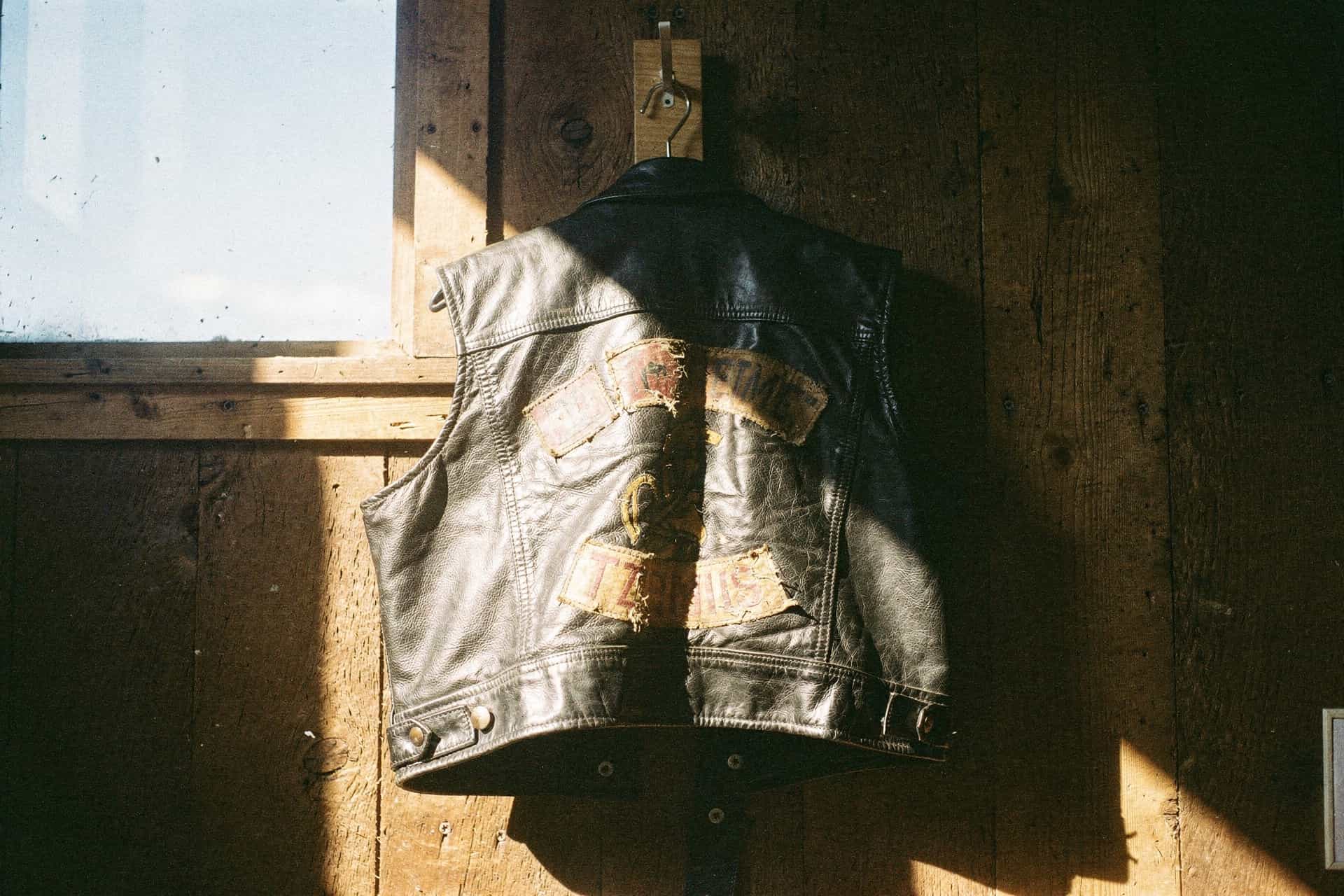
MC Patches: What They Mean and Why They Matter
“Cut” and “colors” are common terms for a vest and its club insignia. Meanings belong to the specific organization and period being documented. Our biker patch meanings guide distinguishes common formats from club-specific claims.
Three-Piece Patch
A three-piece back design uses three visual positions:
- Top rocker: Curved wording above the center emblem
- Center patch: The central logo or emblem
- Bottom rocker: Curved wording below the center emblem
A bottom rocker may name a place, but its meaning depends on the organization and source being discussed. Public evidence does not establish one protocol shared by every club.
Two-Piece and One-Piece Patches
Riding clubs often use a one-piece emblem, and some organizations use two-piece or three-piece designs. The number of pieces does not create a formal rank between RCs and MCs.
Other Patch Terms
The 1% diamond is used by some clubs and members that claim a 1% identity. Other letters, numbers, memorial wording, and support language need organization-specific evidence. Internet patch dictionaries often turn one documented use into a universal meaning.
For sourced examples and the limits of visual interpretation, use our biker patch meanings guide. For more terminology, see the biker slang guide and FTW meaning guide.
No Universal MC Code
Internet lists often present patch handling, photography, territory, admission, and meeting customs as one binding code. Public evidence does not support that claim. Private bylaws vary and do not establish one set of rules for people outside the organization.
Do not copy real organization names or insignia or imply affiliation. On public roads and at public events, follow the law and event rules. Bobber Brothers apparel uses independent artwork and does not reproduce club colors or 1% symbols. See independent rider T-shirts outside the club context.
Dated Index of Major 1%er Clubs
“Big Four” is a historical shorthand, not a live league table. The FBI’s dated 2015 report discussed the Hells Angels, Outlaws, Bandidos, Pagans, Mongols, Vagos, and Sons of Silence. It should not be used as a 2026 membership or geographic map.
Use the dated major-clubs comparison for the common source standard. Organization-specific pages cover the Hells Angels, Outlaws, Bandidos, Pagans, Mongols, Vagos, and Warlocks. Those histories are not current rosters or statements about alliances.
Women in Motorcycle Clubs
Published histories describe male-only membership and gendered labels in some organizations and periods. Those accounts do not establish the rules or language of every current club.
Women’s motorcycle organizations are part of the wider history, but one organization’s membership rules do not establish those of another. Women’s MCs, RCs, and associations use structures and patch formats of their own choosing.
MC Culture vs. Hollywood: Separating Fact from Fiction
Shows like Sons of Anarchy, films like The Wild One, and Hunter S. Thompson’s Hell’s Angels: The Strange and Terrible Saga of the Outlaw Motorcycle Gangs have shaped public ideas about MC culture. They are cultural sources, not evidence of current club practices.
Drama can borrow real titles, patches, and historical events while inventing the motives and daily life of members. A scripted hierarchy is not evidence of how a real chapter operates.
Public charity rides or businesses also do not prove or disprove allegations in a criminal case. Judge each claim by its source: an indictment contains allegations, a verdict establishes findings in that case, and a club website presents the club’s own account.
Reading Modern Claims Carefully
The federal government sought forfeiture of Mongol Nation’s trademarks after a 2018 racketeering verdict. In 2023, the Ninth Circuit affirmed the denial of forfeiture on statutory grounds and did not reach the constitutional questions. The case did not produce a US Supreme Court ruling.
That distinction is the standard for this guide: identify the court, date, defendant, allegation, and outcome. Treat organization websites as self-description, dated intelligence reports as snapshots, and current chapter or membership claims as unverified unless a source actually establishes them.
A Practical Claim Check
Start with the exact proposition. A founding date, a membership count, an officer duty, a patch meaning, and a criminal allegation are five different claims. One source rarely proves all five.
Next, identify who produced the record and when. A club history can establish how an organization describes itself. A contemporary newspaper can establish what was reported after an event. An intelligence report can establish an agency’s dated assessment. A court opinion can establish what that court decided, but only for the parties and issues before it.
Then check scope. A record about one chapter, defendant, city, or year does not automatically describe a national organization today. A photograph can show what was visible in that image, but it cannot establish the wearer’s status or the meaning of every similar patch.
Finally, label uncertainty instead of filling gaps with biker folklore. When reliable accounts conflict, show the competing dates or descriptions. When current membership, territory, or internal rules are not public, say that the evidence does not establish them.
This method also protects other riding groups from being swept into a criminal label merely because their vest, officers, or group rides resemble details reported about another organization.
Visual similarity is a prompt to verify the source and organization, not a factual shortcut to identity, affiliation, hierarchy, or conduct.
For broader cultural history beyond clubs, read the motorcycle culture guide. It covers builders, films, rallies, and riding culture without presenting one organization’s customs as rules for all riders.
Sources
- FBI: 2015 National Gang Report - dated federal definition and assessment of outlaw motorcycle groups
- Oxford Bibliographies: Outlaw Motorcycle Clubs - academic overview noting the disputed AMA attribution and the association’s denial
- RevZilla: 75 years after Hollister - review of contemporary reporting and later mythology
- Ninth Circuit: United States v. Mongol Nation - 2023 opinion affirming denial of trademark forfeiture on statutory grounds
- Britannica: Hells Angels - Encyclopedic overview of Hells Angels history and organization
- Thompson, Hunter S. Hell’s Angels: The Strange and Terrible Saga of the Outlaw Motorcycle Gangs. Random House, 1967.
- Barger, Ralph “Sonny.” Hell’s Angel: The Life and Times of Sonny Barger and the Hell’s Angels Motorcycle Club. William Morrow, 2000.
- Barker, Thomas. Biker Gangs and Transnational Organized Crime. Routledge, 2nd edition, 2014.