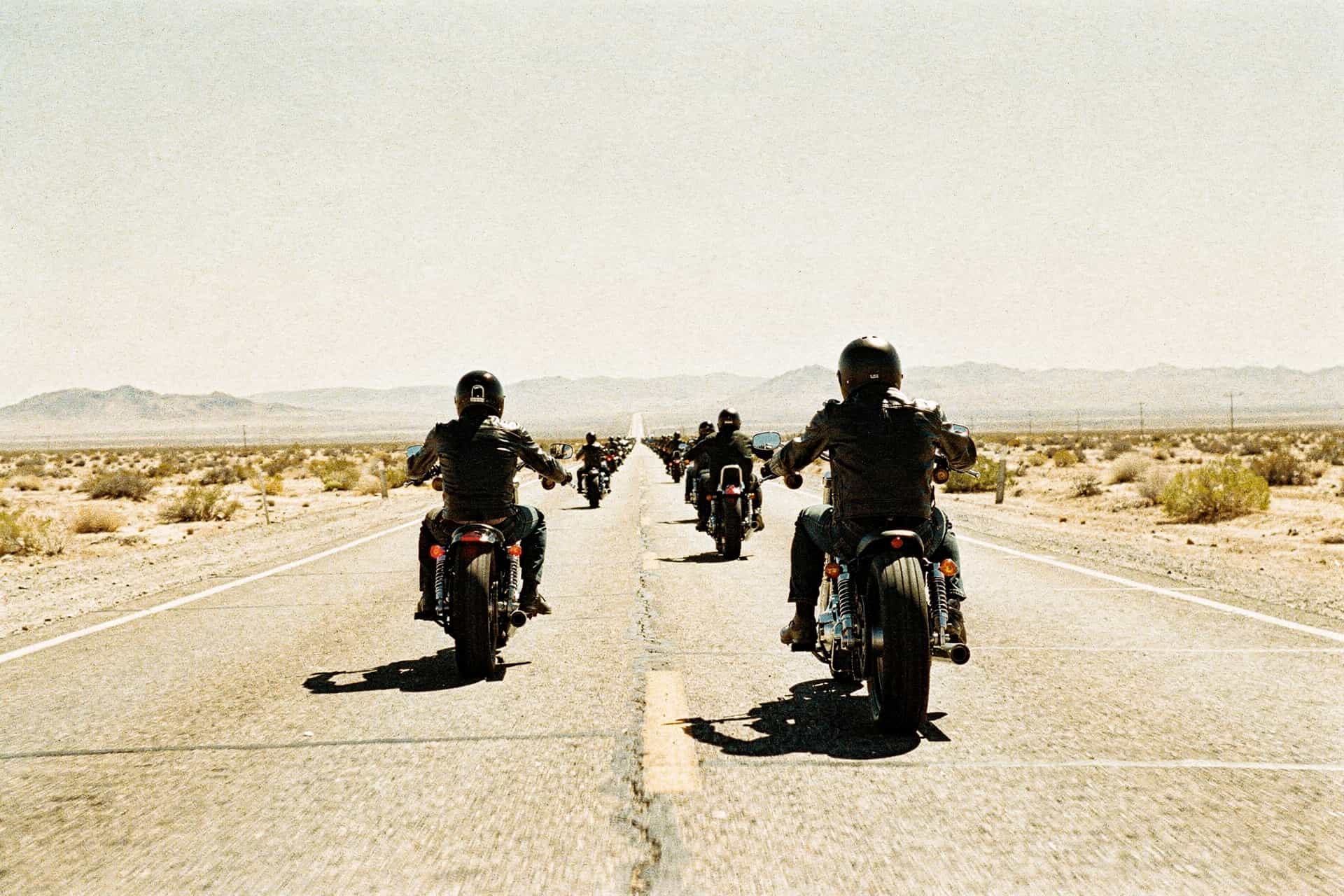
Herb Shreve was an Arkansas pastor with a problem he could not solve from behind a pulpit. His son had gone sideways - rebellious, unreachable, done listening to sermons. So Shreve did something that probably made his congregation nervous: he bought a motorcycle. Not as a gimmick. Not as an outreach strategy cooked up in a church board meeting. He bought a motorcycle because his kid rode, and the only way to reach him was to meet him on the road.
That decision, made in the mid-1970s in Hatfield, Arkansas, led Shreve to resign from his church and, in 1975, found the Christian Motorcyclists Association. Fifty years later, the CMA has over 125,000 members, more than 1,200 chapters in all 50 states, and a presence in 31 countries. A father buying a motorcycle to connect with his son became one of the largest faith-based organizations in the entire motorcycle world.
We have sat at rally hospitality tents run by CMA members who handed us water and coffee without asking a single thing in return - not our names, not our denomination, not whether we believed in anything at all. They were riders first. The faith part came if you wanted it to. If you did not, the water was still cold and the coffee was still hot. That approach is why these organizations have lasted while so many other outreach efforts have come and gone.
Christian motorcycle clubs are one of the most misunderstood corners of riding culture. Secular riders wonder why you would mix church with chrome. Churchgoers wonder why ministry needs a leather vest and a V-twin. And the one-percenter world has its own complicated relationship with Christian bike clubs - one that involves territorial protocols, three-piece patch disputes, and genuine tension between MC tradition and the mission of spreading the gospel. None of those groups are entirely wrong, and none of them see the complete picture.
The CMA: Fifty Years of Meeting Riders Where They Are
The Christian Motorcyclists Association is the largest and oldest Christian motorcycle organization in the United States. Founded by Herb Shreve in 1975 in Hatfield, Arkansas, the CMA was built on a premise so straightforward it barely needs explaining: bring the gospel to the motorcycle community by meeting riders where they are. At rallies. At bike nights. On the road. Not in a church building with stained glass and an organ. On the asphalt, in the parking lot, next to the bikes.
Shreve’s founding story is worth understanding because it explains why the CMA works differently from a traditional motorcycle club. He was not a rider who found religion. He was a pastor who found motorcycles - specifically, he found that motorcycles were the only bridge left between him and his son. That origin shaped everything about the organization. The CMA was designed as a ministry that rides, not a motorcycle club that prays.
The organizational structure reflects that distinction. CMA members wear a back patch, but the organization does not follow the one-percenter club model. There is no prospecting process in the MC sense. Chapters are organized around local churches or communities, and membership is open to any rider who shares the faith-based mission. The structure resembles a service organization more than a motorcycle club - national leadership, regional coordinators, and local chapters operating with significant autonomy.
The CMA’s reach is documented and substantial. Published figures put it above 125,000 members across more than 1,200 chapters in all 50 states, with additional chapters in 31 countries. Those are the organization’s own numbers as reported around its fiftieth anniversary in 2025, so treat them as an order of magnitude rather than a live count. The independently verifiable figure is financial: the CMA’s accredited nonprofit profile reports total annual revenue of roughly 9 million dollars, most of it cash donations. That is a genuine national organization, not a mailing list. At Sturgis, Daytona Bike Week, Laconia, and hundreds of smaller events, CMA members set up hospitality tents offering free water, coffee, and conversation. They do not preach from a stage. They sit next to you, ask how your ride was, and let the conversation go wherever it goes. If you want to talk about faith, they are ready. If you want to talk about your bike’s carburetor, they are ready for that too.
That approach - present without pressure, available without judgment - has been the CMA’s defining characteristic for five decades. It is also why their events draw riders who would never walk into a traditional church on a Sunday morning.
The Three-Piece Patch Problem
Before going further into specific Christian MCs, the three-piece patch issue needs to be addressed directly, because it has shaped the relationship between faith-based riding organizations and the traditional MC world for decades.
In motorcycle club culture, the three-piece back patch - top rocker, center patch, bottom rocker - signifies a motorcycle club that claims territory and operates within the established MC hierarchy. Our guide to reading a cut diagrams the one, two, and three piece formats side by side and marks which parts of the convention are actually documented. Wearing a three-piece patch without the sanction of the dominant club in your area is considered a serious violation of protocol. It is not a fashion choice. It is a territorial statement.
In the early 1980s, this reality created a crisis for several large motorcycle organizations. National groups including H.O.G. (Harley Owners Group), the Blue Knights (law enforcement riding club), and the CMA all made a conscious decision to consolidate their patches into one-piece back patches specifically to avoid conflict with outlaw clubs and to respect MC protocol. The decision was pragmatic and, by most accounts, wise. It removed a source of friction and allowed these organizations to operate alongside the MC world without triggering territorial disputes.
But not all Christian motorcycle organizations made the same choice. Some Christian MCs wear three-piece patches - claiming territory, operating with MC structure, and accepting the consequences that come with that decision. The results have been mixed. Some Christian MCs have sought and received permission from dominant clubs in their area. Others have refused, arguing their authority comes from a higher power and they do not need approval from secular organizations. That stance has, predictably, created problems.
The Confederation of Clubs (COC), which serves as a liaison between motorcycle clubs in many regions, has mediated disputes between Christian MCs and traditional clubs over patch issues. In some areas, working relationships have been established. In others, tension persists.
For anyone trying to understand this from outside the MC world: the three-piece patch is not fabric. It represents territory, authority, and a commitment to protocols that have governed club interactions for decades. Christian MCs that choose to wear three-piece patches know exactly what they are claiming, and they accept the weight that comes with it.
Bikers for Christ: MC Structure, Ministry Mission
Bikers for Christ (BFC) occupies a different space in the Christian biker world than the CMA. Founded in August 1990 by Pastor Fred Zariczny in Marysville, California, BFC operates more like a traditional motorcycle club in structure while maintaining a faith-based mission. That combination puts them squarely in the middle of the three-piece patch debate.
BFC members wear a two-piece back patch - featuring a Bible, a sword, and upswept wings. The organization’s decision to operate with MC-adjacent structure while not going full three-piece reflects an awareness of the tensions described above. They run like a club - regular meetings, mandatory rides, organizational discipline, chapter structure - but the faith element is not a sidebar. It is the core purpose. Everything else serves the ministry.
BFC chapters function like motorcycle club chapters in practice. Members are expected to ride, to represent the organization, and to maintain standards. The difference from a traditional MC is the mission statement: evangelism within the biker community. Members participate in rides, rallies, and outreach events, using their presence in the motorcycle world as a platform for ministry.
What sets BFC apart from the CMA is the commitment to operating within recognizable MC frameworks. BFC members look like riders at a rally because they are riders at a rally. The faith comes through in conversation and action, not in aesthetics. A BFC member sitting next to an Outlaws member at a fuel stop does not look like a missionary. He looks like another guy on a motorcycle. That is the point.
The Rushing Wind Biker Church in West Virginia represents yet another model - a brick-and-mortar church built specifically for the biker community. The variety of approaches within Christian motorcycle ministry - organization-based like CMA, MC-structured like BFC, and church-based like Rushing Wind - reflects a movement that has figured out there is no single way to reach riders.
Sons of God MC and the MC Ministry Model
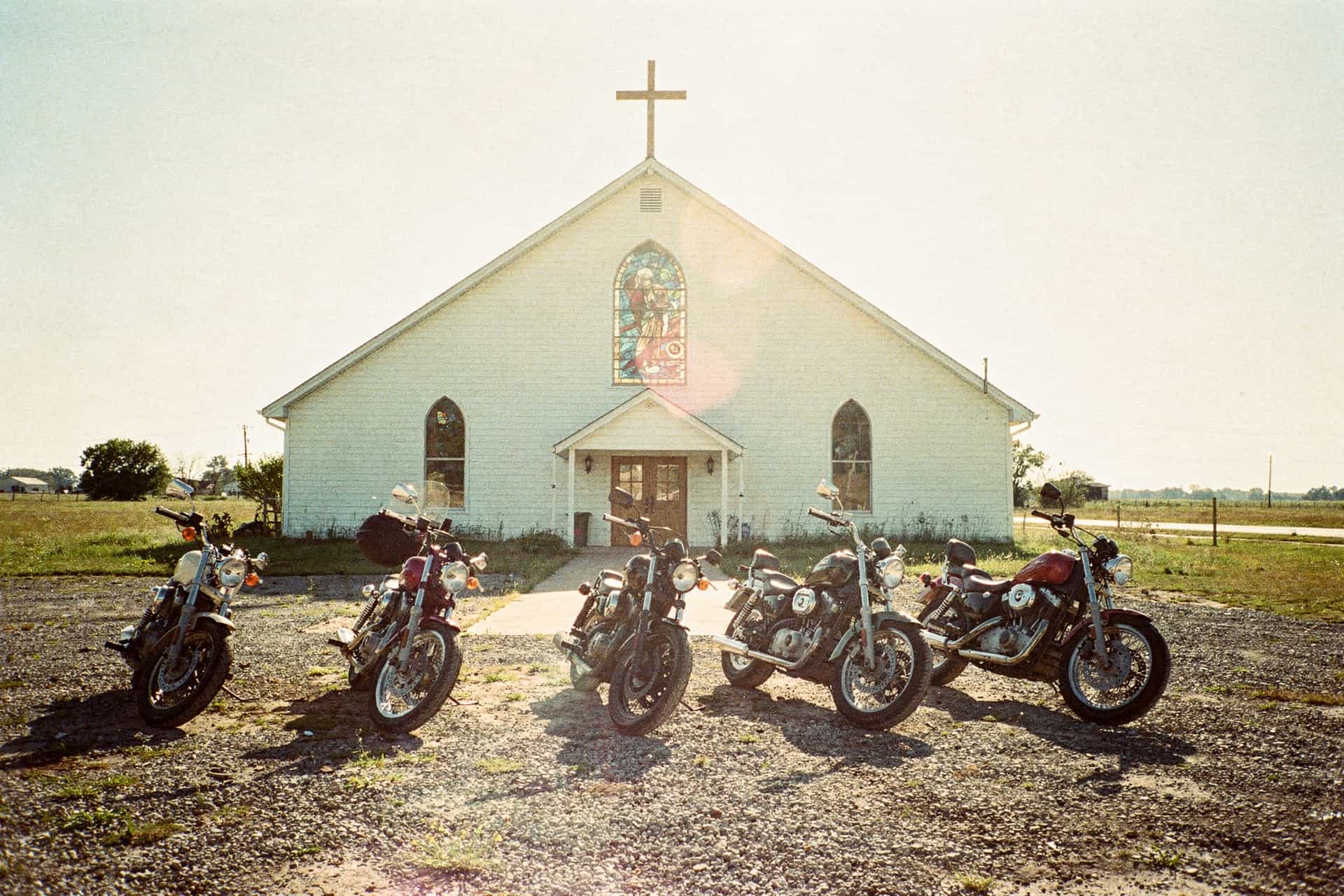
The Sons of God Motorcycle Club Ministry operates as a full MC with one-percenter-style structure - prospecting, patching, hierarchy, territorial protocols - while maintaining an explicitly Christian mission. They represent the far end of the spectrum: a club that looks like an MC, operates like an MC, and exists to serve a religious purpose.
Organizations like the Sons of God, the Tribe of Judah MC, the Holy Ghost Riders, and the Soldiers for Jesus MC each interpret the balance between MC protocols and Christian ministry differently. Some lean hard into the MC model with strict prospecting and patch requirements. Others use the MC aesthetic more loosely, borrowing the look without fully adopting the organizational discipline.
The existence of these clubs raises questions unique to the intersection of faith and motorcycle culture. Can a club be simultaneously a ministry and a territorial MC? How does a Christian club handle the confrontation that is sometimes part of MC life? What happens when turn-the-other-cheek theology meets a territorial dispute?
Each Christian MC answers these questions for itself, and the answers vary significantly. Some lean on the faith as a way to de-escalate conflict. Others have discovered that claiming territory with a three-piece patch and a Bible verse does not exempt them from the realities of how the MC world operates. The tension is real, and pretending it does not exist would be dishonest.
What They Actually Do
The day-to-day work of Christian motorcycle clubs is less dramatic than the patch controversies but far more significant to their members and communities. The practical reality is charity rides, prison outreach, addiction recovery support, and a constant presence at motorcycle events across the country.
CMA and other Christian organizations have established outreach programs at correctional facilities across the United States. Members visit prisons and jails, lead Bible studies, and provide mentorship to incarcerated individuals - many of whom have backgrounds in the motorcycle world. This prison ministry connects directly to the realities of MC culture, where incarceration is not a distant concept but something that touches people’s lives regularly. The riders doing this work understand the world they are ministering to because many of them came from it.
Addiction recovery is a major focus across multiple Christian motorcycle organizations. The Set Free Soldiers - a Christian MC that specifically targets recovering addicts - built their model on a straightforward observation: if the bonds of brotherhood can keep a person committed to a club, those same bonds can keep a person committed to sobriety. The MC structure provides accountability, routine, and belonging - three things that addiction recovery programs consistently identify as critical to sustained sobriety.
Charity rides organized by Christian motorcycle clubs raise funds for everything from children’s hospitals to homeless shelters to disaster relief. These events are one of the few spaces in the motorcycle world where the usual hierarchies and territorial protocols relax in service of a shared goal. One-percenter club members, riding club members, independents, and non-riders come together because the cause matters more than the patch.
At major rallies, Christian organizations provide services that have become expected parts of the infrastructure. Free water stations, prayer tents, roadside assistance, basic first aid. At Sturgis in August, when it is 105 degrees and you have been riding all day, a cold bottle of water from a CMA tent is not a religious experience - it is survival. And it comes without strings attached.
Living Between Two Worlds
Christian motorcycle clubs exist at the intersection of two cultures that view each other with suspicion. The traditional church world is uncomfortable with the leather, the tattoos, the rough language, and the association with a subculture that has a reputation for lawlessness. The traditional MC world is suspicious of organizations claiming MC status while operating under a mission fundamentally different from the outlaw ethos.
The riders who navigate both worlds develop a social fluency that is easy to underestimate. A Bikers for Christ member who rides to a rally on Saturday, attends a church service Sunday morning, and shows up at a COC meeting Sunday afternoon is crossing cultural boundaries that most people never approach. He needs to be credible in each room - and each room is judging him by a different set of standards.
The growth of Christian motorcycle organizations over the past five decades suggests that the tension between these worlds is productive rather than destructive. The movement continues to attract members, establish chapters, and maintain its presence at major events. Whether that growth comes despite the tension or because of it is a question each rider in the Christian motorcycle world answers privately.
What is clear is that faith-based motorcycle organizations have earned their place in the broader riding community. They ride the same roads, face the same weather, wrench on the same machines. The Harley-Davidsons underneath CMA members and BFC members are the same Harleys underneath every other rider on the highway. The mechanical tradition does not discriminate by theology.
Spiritual Symbols on the Road
The overlap between spiritual symbolism and motorcycle culture goes well beyond formal Christian organizations. The guardian bell tradition - a small bell given by someone who cares about your safety, hung on the bike to ward off road gremlins - carries both superstition and genuine community meaning. It is not Christian in origin, but the impulse behind it is the same: the belief that something beyond horsepower and tire grip watches over you on the road.
Biker slang is full of references to fate, luck, and forces bigger than the rider. The culture has always made room for the idea that the road is not entirely under your control. Christian motorcycle clubs formalize that instinct. They put a name and a theology on something riders have always felt - that the miles between departure and arrival are not entirely yours to manage.
That connection between riding and faith is genuine, not performed. It is the reason Herb Shreve’s experiment in Arkansas worked when so many other outreach efforts failed. He did not try to make riders come to church. He brought the church to the road, and the road was already a place where riders were thinking about the things that matter.
We carry gear for riders who represent what they believe in - whether that is faith, freedom, or just the open road. Our patches and merch collection has symbols that mean something to the people who wear them. Our t-shirts and hoodies are built for people who ride in every condition and every state of mind. What you carry with you on the road is your business. We just make sure you look like a rider while you carry it.
Disclaimer
We are not an MC, and we do not pretend to be. We are a brand built by riders who respect the culture and the history. This article covers documented organizations and their publicly stated missions. We respect both the motorcycle club world and the faith-based riding community.
Sources
- Christian Motorcyclists Association - Official CMA website with organizational history and chapter information
- Road Dirt: Spotlight - 50 Years of CMA - Feature on CMA’s 50th anniversary covering founding history and growth
- Christian Living Magazine: CMA - 50 Years of Sharing Fun and Spreading Faith - Profile of CMA’s history and mission
- Bikers for Christ: History - Official BFC history page with founding details
- ECFA: Christian Motorcyclists Association Profile - Accredited nonprofit profile confirming the 1975 founding and reporting roughly 9 million dollars in total annual revenue
- Barker, Thomas. Biker Gangs and Transnational Organized Crime. Routledge, 2nd edition, 2014.