Pull up to any trailhead on a Saturday and you will see two crowds that barely overlap. One group unloads tall, skinny machines off trailers - plastic body panels, spiked tires, seats you could rest a phone on sideways. The other group rolls in on the road, low and heavy, chrome catching the sun, saddlebags packed. Same two wheels and an engine. Almost nothing else in common.
A dirt bike is a lightweight, knobby-tired, long-travel machine built for off-road trails, usually not street legal and needing no license on private land. A street motorcycle is heavier, rides on smooth tires, and is built and licensed for paved roads. A dual-sport is the street-legal middle ground that does both.
That is the short answer. The longer one, which decides what you should actually buy and whether you can legally ride it home, comes down to hardware, the law, and what kind of riding you are chasing.
Built for Dirt vs Built for Pavement
Everything about a dirt bike is bent toward one job: covering rough, loose ground fast without beating the rider to death. Everything about a street motorcycle is bent toward the opposite - staying planted, comfortable, and stable on hard pavement at speed, often with a passenger and gear.
That split in purpose drives every design choice. A dirt bike wants to be light so it can flick through ruts and get picked up after a fall. A street bike wants mass low and centered so it tracks straight through a highway sweeper. Neither is “better.” They are answers to different questions.
Riding position tells the same story. On a dirt bike you sit tall and forward, ready to stand up on the pegs the second the ground gets rough. Standing lets your legs act as extra suspension and shifts your weight where you need it through a corner or over a jump. On a street bike you sit down, planted, upright or leaned into the bars depending on the style, built to stay put for hours. One posture is athletic and constantly moving. The other is settled in for the long haul.
If you have never thrown a leg over either, start with our motorcycle beginner’s guide for the ground rules on gear, licensing, and picking a first bike. This article zooms in on the one fork in the road that trips up new riders most: dirt or street.
The Hardware Differences
The frame, the tires, the suspension, and the engine all point in the same direction on each type. Here is where they part ways.
Weight
This is the number you feel first. Dirt bikes are small and light - a full-size off-road bike often lands around 200 pounds ready to ride. A typical street motorcycle runs closer to 400 pounds, and touring machines go well past that. Light means a dirt bike changes direction with a shove of the bars and a lean, and you can muscle it out of a rut. Heavy means a street bike holds its line and shrugs off crosswinds and truck wake on the interstate.
Tires
Dirt bike tires are knobby - deep, blocky lugs with big gaps between them. Those knobs dig into loose soil, mud, sand, and gravel and claw for grip where a smooth tire would just spin. The trade-off is that knobbies are miserable on pavement. The small contact patch and hard rubber slide on asphalt, especially in the wet. Street tires are the reverse: smooth or lightly grooved, a wide contact patch, soft compound, built to stick to hard road surfaces and warm up under speed.
Suspension
Off-road suspension has long travel - often a foot or more of movement at each end - so the wheels can soak up rocks, roots, and hard landings off jumps. That travel is why dirt bikes sit so tall, with high ground clearance and seats that leave shorter riders on tiptoe. Street bikes use much shorter travel tuned for potholes, expansion joints, and speed bumps, keeping the bike low and stable instead of pogo-ing over every ripple.
Engine
Most dirt bikes run a single-cylinder engine, commonly under 450cc. It is compact, torquey down low, and light, which suits short bursts of trail riding. Street motorcycles span a much wider range, from small single-cylinder commuters up to big multi-cylinder engines built for sustained highway speed, passing power, and long days in the saddle. A dirt bike’s engine is a sprinter. Many street engines are marathoners.
There is a cooling difference hiding in there too. Plenty of small dirt bikes are air-cooled or run a simple radiator because they rarely sit still long enough to overheat, and light weight matters more than anything. Street bikes that idle in traffic and cruise at highway speed for hours more often lean on liquid cooling and bigger radiators to hold temperature steady. It is one more place where the same basic engine gets built two different ways for two different lives.
Honest take: the first time one of us jumped from years on a street twin onto a 450 off-road single, the thing felt like it weighed nothing and revved to the moon. Twenty minutes on a rocky trail and forearms were done. Different tool, different muscles.
If you are still weighing what to actually buy, our roundup of the best beginner motorcycle models breaks down real bikes across both worlds, including small dual-sports that split the difference.
Street Legality and the Law
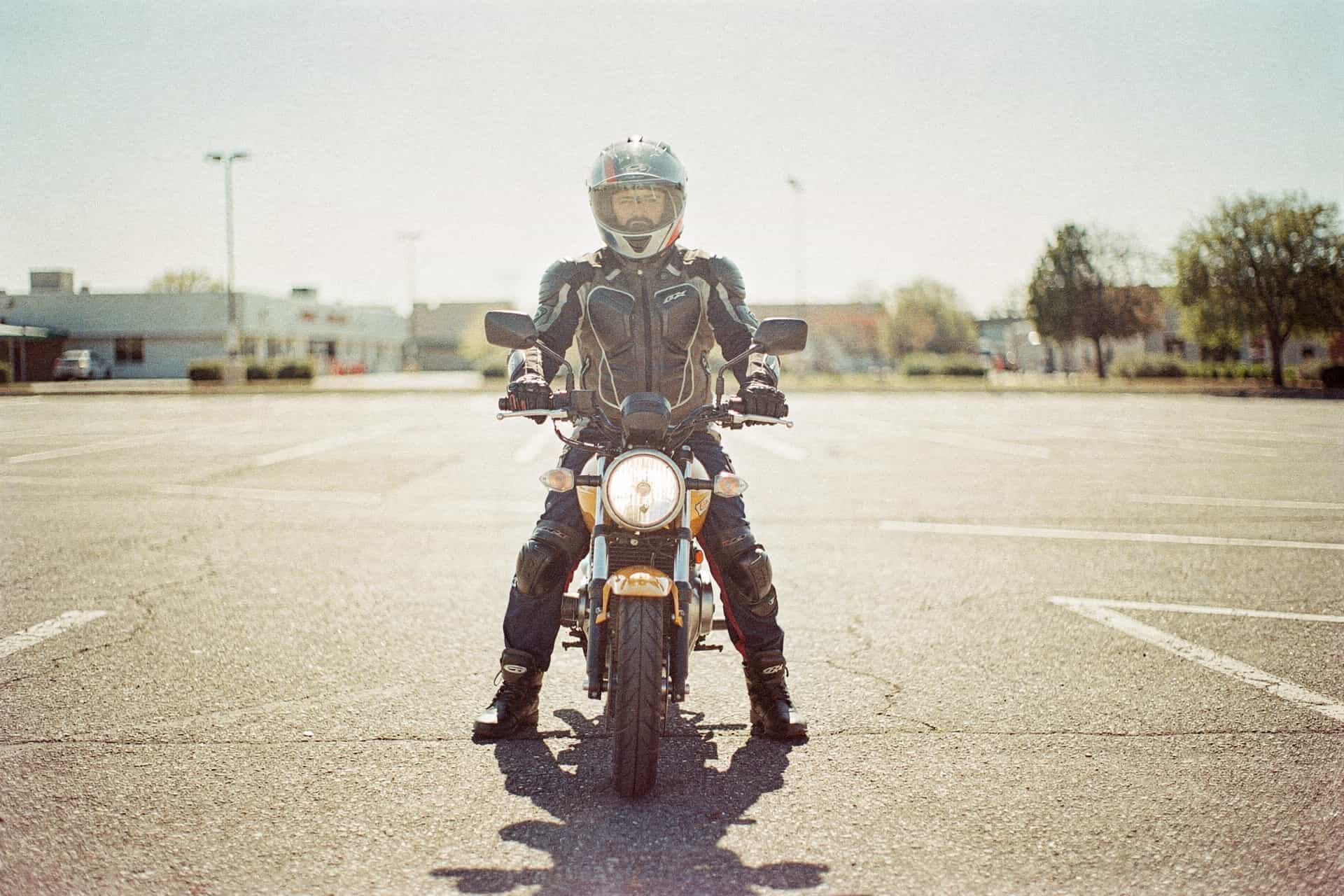
This is the part that surprises new buyers. A pure dirt bike is not street legal in most places, and no amount of wishing changes that. To ride legally on a public road, a motorcycle needs a specific list of equipment: a headlight and taillight, brake light, turn signals, mirrors, a horn, and usually a muffler that meets noise rules and a mount for a license plate. Dirt bikes ship without most of that, because on a trail you do not need it and the extra weight and cost only get in the way.
Street motorcycles come with all of it from the factory. That equipment is exactly why they weigh more and cost more - a chunk of the machine exists purely to satisfy the law and keep you visible to traffic.
The bridge between the two is the dual-sport. A dual-sport motorcycle is designed for off-road use while staying street legal. It carries the full legal kit - lighting, speedometer, mirrors, horn, plate, turn signals, and a muffler with a spark arrestor - on a frame with knobby-ish tires and real suspension travel. You can commute Monday through Friday and ride graded dirt roads on Saturday without swapping bikes. The catch is built into the name: a dual-sport gives up some dirt performance to be legal on the street, and some street comfort to survive the dirt. It is a compromise, and a good one for the right rider.
Dual-sports even split by weight. Light ones, roughly 250 to 300 pounds, ride the most like a true dirt bike. Middleweights, around 300 to 350 pounds, lean toward smooth trails and pavement. Heavyweights over 350 pounds are really road bikes that can handle a dirt road now and then.
Licensing, Registration, and Insurance
The paperwork follows the pavement, but off-road is not paperwork-free everywhere. On private land you generally need no motorcycle license, registration, or insurance to throw a leg over a dirt bike - that is a big part of why parents put kids on dirt bikes and why so many riders learn there first. Public trail systems are a different story: many states require OHV registration, a decal, or a permit to ride legal off-road areas (California’s OHV identification program is the classic example), and some add rider-education rules for minors. No motorcycle license, but not always no paperwork - check your state’s OHV rules before you load the trailer.
The moment a bike touches a public road, the rules flip. Now you need a motorcycle endorsement or license, the bike has to be registered and plated, and most states require insurance. This is the wall that stops people from simply riding a dirt bike to the store - it is not just missing lights, it legally cannot be registered for the road in the first place.
Requirements vary by state, so treat this as the general shape and check your own DMV before you buy. Some states have narrow paths to make certain off-road bikes street legal; others make it nearly impossible. Do not assume - one guy in our orbit bought a “street legal” plated dirt bike out of state, moved home, and found his new state would not honor the title for road use. Expensive lesson.
Whichever way you go, ride in real gear - a proper helmet, gloves, boots, and armor. Our biker gear guide covers what actually protects you versus what just looks the part, and the answer is different for dirt and street.
Side by Side
Here is the whole comparison in one place.
| Factor | Dirt Bike | Street Motorcycle | Dual-Sport |
|---|---|---|---|
| Intended terrain | Off-road trails, tracks | Paved roads | Both |
| Typical weight | Around 200 lb | Around 400 lb+ | 250 to 350+ lb |
| Tires | Knobby, deep tread | Smooth, wide contact patch | Mixed knobby/road |
| Suspension travel | Long (a foot or more) | Short, road-tuned | Long-ish, compromise |
| Engine | Single-cylinder, often under 450cc | Single up to large multi-cylinder | Single or small twin |
| Street legal | Usually no | Yes | Yes |
| License needed | Usually no road license on private land; check OHV rules | Yes | Yes |
| Registration/insurance | OHV registration/permit in many states | Required | Required |
| Riding position | Tall, forward, aggressive | Upright to leaned, comfort-focused | Upright, tall |
| Best for | Trails, motocross, learning throttle control | Commuting, touring, road miles | One bike for road and dirt |
Should a Beginner Start on a Dirt Bike?
We get asked this a lot, and the honest answer is: it depends on where you plan to ride.
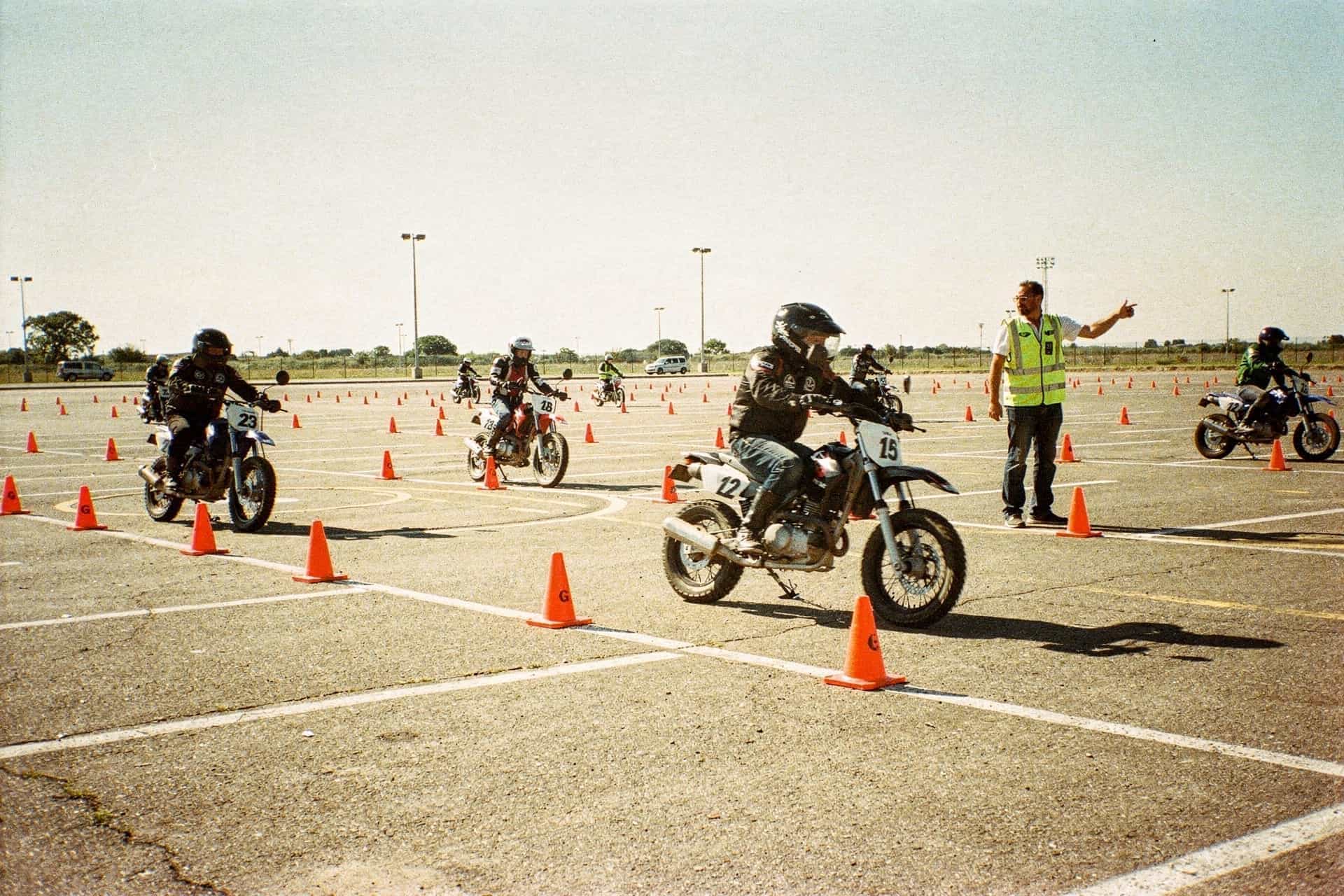
A dirt bike is a genuinely great teacher. Learning throttle control, clutch feel, balance, and how to react when a tire breaks loose is far less scary in the dirt, where speeds are lower, the ground is soft, and a tip-over usually costs you nothing but pride. Plenty of the best street riders we know learned in a field first. The bike is light and forgiving, and suitable private land can remove the road-license barrier to seat time.
But a dirt bike will not get you to work. If your real goal is commuting or road trips, learning on a dirt bike and then buying a street bike means you are learning road skills - traffic, braking on pavement, being seen by cars - fresh anyway. In that case a small, light street bike or a dual-sport is the smarter first purchase. A dual-sport especially lets you practice low-stakes skills on dirt roads and still ride legally on the street.
One more piece of the buying decision that catches new riders off guard is the fuel system, because it changes how the bike starts, tunes, and behaves in cold or at altitude. If you are comparing older and newer machines, our breakdown of fuel injection vs carburetor explains why a modern dual-sport fires up on a cold morning while a vintage carbureted dirt bike wants a warm-up and a right foot with some experience behind it.
So pick by destination. Dirt only, or learning before the street? Start on a dirt bike. Commuting and road miles? Start on a street bike or a dual-sport. Want both without owning two machines? The dual-sport was built for exactly that question.
Whatever you end up throwing a leg over, the culture is the same brotherhood the second you twist a throttle. Grab a shirt that says which side of the dirt you ride from our full collection and get out there. The bike gets you moving. The riding is what hooks you.
Sources
- Harley-Davidson - Dirt Bike vs Motorcycle - Official overview of weight, knobby tires, long-travel suspension, sub-450cc engines, street equipment, and licensing differences.
- Dual-sport motorcycle - Wikipedia - Definition of a dual-sport, the street-legal equipment list, and the weight classes from lightweight to heavyweight.
- Valley Cycle Center - Street Bikes vs. Dirt Bikes - Comparison of typical weights (around 200 lb vs around 400 lb), tire tread, suspension, frame materials, and riding position.