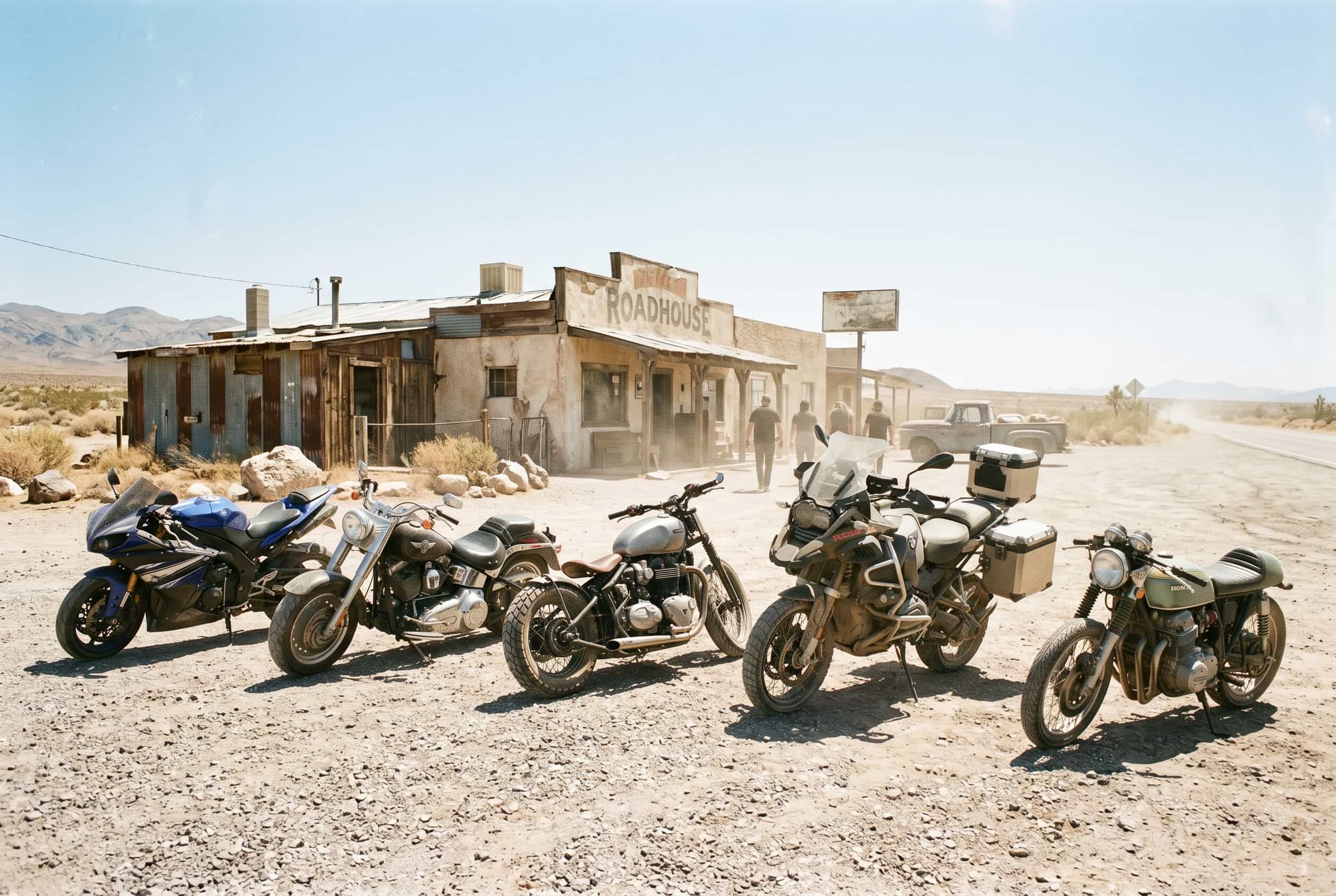
The first time we walked a dealership floor - this was years ago, back when we were still figuring out what kind of riders we wanted to be - the sheer variety was paralyzing. Low machines. Tall machines. Plastic-wrapped things that looked like fighter jets. Something in the corner with saddlebags the size of suitcases. And then a stripped-down bike with no fender and a solo seat that stopped us cold.
Nobody explains this stuff to you. The salesperson wants to sell you whatever has the highest margin. Your riding friends all think their category is the only one worth owning. The internet is full of listicles that tell you nothing useful.
So we made the guide we wish we had. Every major motorcycle type, laid out honestly: what defines it, what the ride feels like, who it actually works for, and where each category falls short. If you’re still sorting out the very basics of getting into riding, start with our motorcycle beginner’s guide first - it covers licensing, gear, and mindset before you even think about which category to shop.
Cruiser
Cruisers are where American motorcycling lives. The design language traces back to the 1930s through 1960s - postwar riders modifying military surplus bikes, pushing the pegs forward, lowering the seat, and building machines meant for long, straight highways. That basic formula has barely changed in 80 years.
Low seat height. Forward foot controls. A relaxed, laid-back riding position. V-twin engines that produce more rumble per cubic inch than any other powerplant. The whole machine is built around the idea that getting there is the point, not getting there fast.
Harley-Davidson and Indian own this space in America. Japanese manufacturers - Honda, Yamaha, Suzuki, Kawasaki - have been building excellent cruisers for decades that often cost less and require less maintenance. The Honda Rebel 500 is one of the best beginner bikes ever made, and it’s a cruiser.
Who rides them: Anyone who wants a comfortable, low-speed-friendly motorcycle for around-town riding and weekend highway hauls. The low seat heights (many under 27 inches) make cruisers a strong first-bike category for shorter riders who need to flat-foot at stops.
Where they fall short: Limited lean angle means you’ll scrape pegs in aggressive corners. Most cruisers are heavy - 600 to 800-plus pounds wet - which makes parking lot maneuvering a skill you develop over time. Wind protection is minimal unless you add a windshield or fairing. Short suspension travel turns rough roads into rough rides.
Example machines: Harley-Davidson Softail Standard, Indian Scout, Honda Rebel 1100, Yamaha V Star 1300.
Sportbike
Sportbikes exist for one purpose: going fast around corners. Everything about the design serves that goal. Aggressive forward-lean riding position. Clip-on handlebars tucked below the triple tree. High-revving engines - usually inline-fours or V-twins - wrapped in full aerodynamic fairings. Rearset footpegs that push your knees up and your weight forward.
The Japanese Big Four dominate sportbike manufacturing. Honda’s CBR, Yamaha’s YZF-R, Suzuki’s GSX-R, and Kawasaki’s Ninja lines have been racing each other for decades. European players like Ducati, Aprilia, and BMW bring different engineering philosophies and higher price tags.
Modern sportbikes pack electronics that would have been science fiction twenty years ago: cornering ABS, multi-mode traction control, quickshifters, wheelie control, and launch control. A new rider can walk into a dealership and buy a 200-horsepower motorcycle with more computing power than a 1990s fighter jet. Whether that’s a good idea is another question.
Who rides them: Riders who prioritize acceleration, braking, and corner speed. Track day regulars. Canyon carvers. People who don’t mind trading comfort for capability.
Where they fall short: The riding position destroys your wrists and lower back on anything longer than an hour. Insurance costs are brutal, especially for riders under 30. Carrying a passenger is technically possible but practically miserable. And 150-plus horsepower under your right wrist is genuinely dangerous if your skills haven’t caught up to the machine.
Example machines: Yamaha YZF-R1, Kawasaki Ninja ZX-6R, Ducati Panigale V4, Honda CBR600RR, Suzuki GSX-R1000.
Touring
Touring bikes are the long-haul trucks of motorcycling. Large fairings that block wind and weather. Hard saddlebags and trunk space. Heated grips, infotainment systems, cruise control, and engines built to hold 75 mph all day without complaint. These machines are designed for riders who measure trips in days, not hours.
The Harley-Davidson Road Glide and Honda Gold Wing sit at the top of this category and have for decades. A fully loaded Gold Wing Tour weighs over 800 pounds wet, has a six-cylinder engine, Apple CarPlay, heated seats for rider and passenger, and enough cargo space for a week of clothes. It’s closer to a convertible car than a traditional motorcycle.
That weight sounds intimidating. At highway speed, it’s invisible - touring bikes feel like magic carpets on the interstate. It’s parking lots and gas station turnarounds where the weight demands respect.
Who rides them: Long-distance riders. Two-up couples who tour together. Iron Butt Association members. Anyone planning to cross a continent without a support vehicle.
Where they fall short: The weight makes low-speed handling a learned skill - dropping a touring bike at a stop is expensive and embarrassing. Purchase prices start high and maintenance costs match. Fuel economy suffers compared to lighter machines. And you’ll never call a touring bike “nimble.”
Example machines: Harley-Davidson Road Glide Limited, Honda Gold Wing Tour, BMW K 1600 GTL, Indian Roadmaster.
Adventure / Dual-Sport
Adventure bikes split the difference between road touring and off-road capability. Long-travel suspension that soaks up gravel and potholes. Upright seating that keeps your back happy for hundreds of miles. Spoke wheels (often), engine guards, and ground clearance that lets you leave pavement without fear.
Dual-sports are the lighter, dirtier cousins. Basically street-legal dirt bikes with mirrors and turn signals. Less highway comfort, more genuine off-road capability.
The adventure category has exploded over the past decade. BMW’s GS series essentially created the modern ADV segment, and now every manufacturer has at least one entry. The appeal is obvious: one bike that handles highway commuting, gravel forest roads, and a cross-country trip without needing to own three separate machines.
Who rides them: Riders who refuse to let road conditions dictate their route. Commuters who also want to hit fire roads on weekends. Around-the-world trip planners. People who look at a gravel road and think “yes” instead of “no.”
Where they fall short: Tall seat heights on bigger ADV bikes lock out shorter riders entirely - the BMW R 1300 GS has a seat height north of 33 inches. Heavy adventure bikes become a handful in deep sand or mud. And the “jack of all trades, master of none” critique has some truth: a sportbike will out-corner them, a touring bike will out-comfort them, and a dirt bike will out-trail them.
Example machines: BMW R 1300 GS, KTM 1290 Super Adventure, Honda Africa Twin, Suzuki V-Strom 650, Yamaha Tenere 700.
Naked / Standard
Strip the fairings off a sportbike, raise the handlebars, and you’ve got a naked bike. The term “standard” is older - it just means a motorcycle without pretense. Upright seating, exposed engine, and the same potent powerplants found in faired sportbikes, but with ergonomics that don’t punish you for riding to work.
This is one of the fastest-growing motorcycle categories worldwide. Naked bikes work for everything: commuting, weekend rides, light touring with a tail bag, and spirited riding when the mood strikes. They’re the Swiss Army knife of motorcycling.
Who rides them: Riders who want sportbike performance without the aggressive body position. Daily commuters. People who think fairings are ugly. Beginners who want something that won’t pigeonhole them into one riding style.
Where they fall short: Zero wind protection at highway speed - anything above 70 mph and you’re the windshield. Cargo capacity is minimal without accessories. Some naked bikes (looking at you, Ducati Streetfighter V4) still pack enough power to overwhelm inexperienced riders. And exposed engines collect road grime fast.
Example machines: Yamaha MT-07, Kawasaki Z900, Ducati Monster, Triumph Street Triple, BMW S 1000 R.
Cafe Racer
Cafe racers were born in 1960s London. The story goes like this: young riders on British bikes - Triumphs, BSAs, Nortons - would strip them down, bolt on clip-on handlebars and rearset pegs, and race between cafes. The Ace Cafe on the North Circular Road was the most famous gathering point. The goal was a “ton” - 100 mph - on a modified street bike.
The aesthetic is unmistakable: low handlebars, humped single seat or a seat cowl, a forward lean, and nothing on the bike that doesn’t serve the purpose of going fast or looking fast. Modern manufacturers have caught on, selling factory cafe racers that capture the style without requiring you to fabricate your own seat pan in a garage.
Who rides them: Riders who care about aesthetics as much as function. Urban riders who keep trips short. Anyone who grew up staring at pictures of Tritons and dreaming about the Ace Cafe.
Where they fall short: The clip-on and rearset position gets uncomfortable fast - rides longer than an hour become endurance tests. Passenger accommodations are an afterthought at best. Factory cafe racers sometimes lean so hard into style that they compromise practicality. And the clip-on/rearset combo strains wrists and knees on anyone over six feet.
Example machines: Triumph Thruxton RS, Royal Enfield Continental GT 650, BMW R nineT Racer, Kawasaki Z900RS Cafe.
Bobber
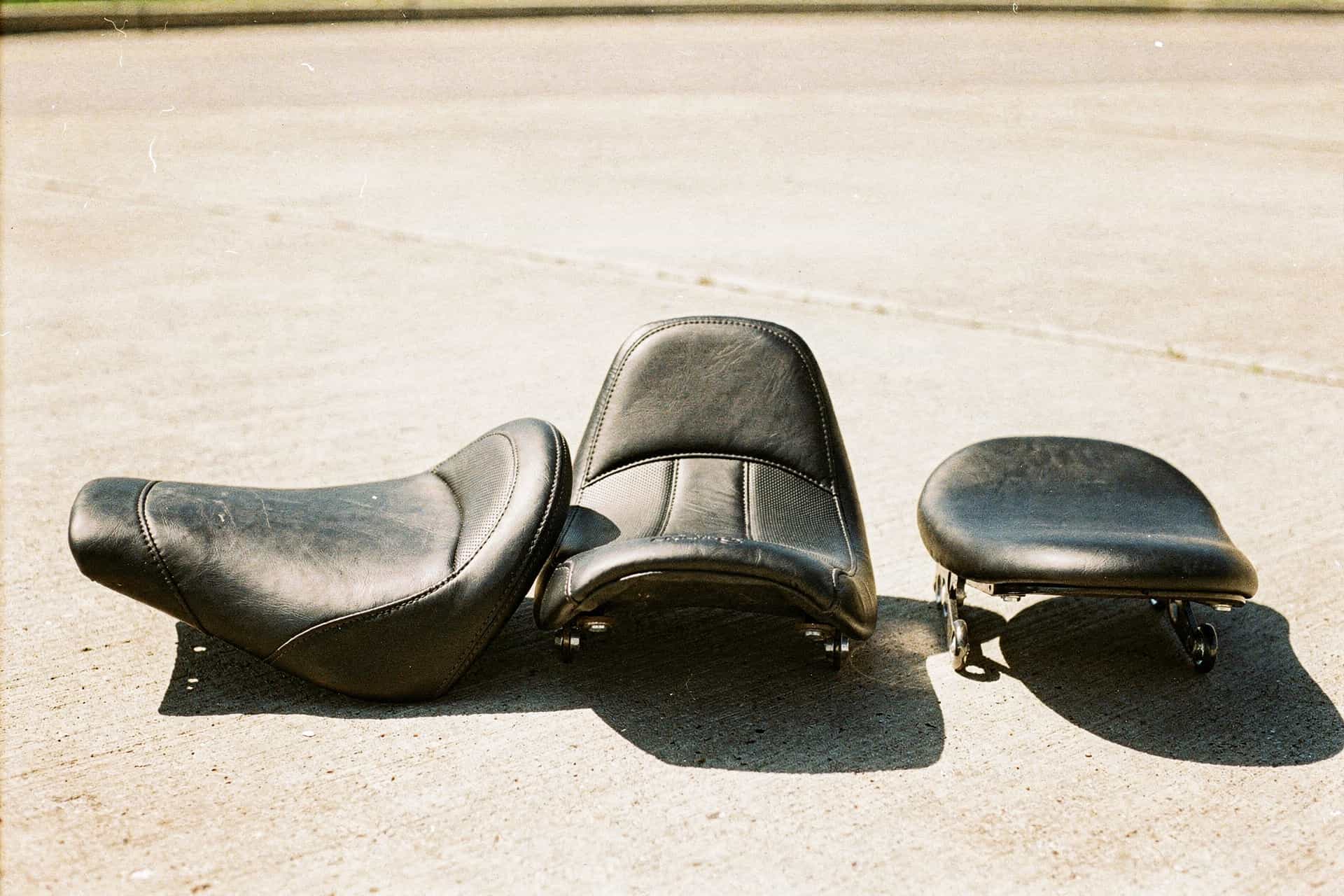
This is our world. We’ve been living in bobber culture since we started this company, and it’s the style that made us who we are.
A bobber is a motorcycle stripped to its essentials. Solo seat. Chopped fenders - “bobbed,” which is where the name comes from. Minimal bodywork. Clean lines. No excess. The style goes back to the 1940s when returning GIs chopped up their military Harleys and Indians, removing anything that added weight - fenders, extra lights, passenger seats - to make them lighter and faster on the street and the drag strip.
Modern bobbers keep that philosophy alive. Factory options like the Harley-Davidson Softail Standard, Indian Scout Bobber, and Triumph Bonneville Bobber give you the look without fabrication skills. But the real magic lives in custom builds - taking a donor bike and creating something that exists nowhere else on the road.
The difference between a bobber and a chopper? We wrote a whole piece on bobber vs. chopper, but the short version: bobbers subtract. Choppers stretch and modify. Bobbers are about less. Choppers are about different.
Who rides them: Riders who believe less is more. Garage builders. Anyone who’d rather have a bike with soul than a bike with a touchscreen.
Where they fall short: Solo seats mean no passengers. Bobbed fenders mean road spray on wet days. Minimal suspension on hardtail builds beats you up on long rides. And comfort is always sacrificed for style - that’s the deal you make.
Example machines: Harley-Davidson Softail Standard, Indian Scout Bobber, Triumph Bonneville Bobber, Yamaha Bolt.
Chopper
Choppers take what bobbers started and stretch it into rolling sculpture. Extended front forks. Raked-out frames that push the front wheel forward. High-rise handlebars - ape hangers that put your hands above your shoulders. Long, low silhouettes that look like nothing else on the road.
The style detonated into mainstream culture after Easy Rider in 1969. Captain America’s stars-and-stripes Panhead became the most recognizable motorcycle in American pop culture. The chopper has been a symbol of rebellion, individual expression, and outlaw romance ever since.
True choppers are almost always custom builds. The extended geometry makes them slow to steer and squirrelly at low speeds. That was never the point. A chopper is an art piece that happens to have an engine. It tells the world exactly who built it and why.
Who rides them: Builders and collectors. Statement riders. People who care more about the look than the function.
Where they fall short: Extended front ends make slow-speed handling genuinely difficult. Rides longer than 30 minutes get uncomfortable. Building one properly costs serious money. And they’re not practical daily transportation by any definition.
Example machines: Custom builds dominate this category. Billy Lane choppers and Detroit Choppers builds show what the top builders produce.
Scrambler
Scramblers were born when road riders wanted to race on dirt without buying a second bike. Take a standard street motorcycle, add knobby tires, raise the exhaust, lift the suspension, and go hit a flat track. The original scramblers were modified street bikes from the 1950s and 1960s.
Now Ducati, Triumph, BMW, and Husqvarna sell factory scramblers that capture the aesthetic and offer genuine light off-road capability. They’re not dirt bikes. They’re street bikes with enough ground clearance and tire grip to handle gravel roads, fire trails, and light single-track.
Who rides them: Urban riders who want the off-road aesthetic and occasional trail capability. Weekend gravel road explorers. Riders who want something that looks different from the sea of sportbikes and cruisers.
Where they fall short: Not as capable off-road as true dual-sports or adventure bikes - the suspension travel and tire selection are compromises. Knobby tires wear faster on pavement. Some factory scramblers are more catalog photo than genuine off-road tool. Limited cargo capacity.
Example machines: Ducati Scrambler, Triumph Scrambler 1200, BMW R nineT Scrambler, Husqvarna Svartpilen 401.
Dirt Bike
Dirt bikes aren’t street-legal unless specifically plated as dual-sports. They’re built for off-road riding only: motocross tracks, enduro trails, desert racing, hillclimbs. Minimal weight (under 250 pounds), long-travel suspension, aggressive knobby tires, and engines tuned for instant throttle response.
Both two-stroke and four-stroke options exist across the displacement range. Competition models from KTM, Husqvarna, Honda, Yamaha, and Kawasaki dominate. The racing community runs from local hare scrambles to the Supercross stadium circuit to the Dakar Rally.
Who rides them: Off-road riders, motocross racers, trail riders, and anyone who considers pavement boring.
Where they fall short: Not street-legal without conversion work. Seats are thin and hard. Maintenance intervals on race bikes are measured in hours, not miles. Zero passenger capacity. And if you’ve never ridden off-road, the learning curve is steep and muddy.
Example machines: Honda CRF450R, Yamaha YZ250F, KTM 350 EXC-F, Husqvarna FC 450.
Scooter
Yes, scooters count. Two wheels and an engine. Step-through frames, automatic CVT transmissions, small wheels, and underseat storage. They range from 50cc commuter scoots that top out at 35 mph to 650cc grand tourers like the Suzuki Burgman that cruise on highways.
Scooters are the most practical urban two-wheeled transportation available. No clutch, no shifting, no stalling at lights. Twist and go. Built-in storage under the seat fits a helmet or a bag of groceries. Fuel economy on smaller models hits 80 to 100-plus mpg.
Who rides them: Urban commuters, delivery riders, college students, and anyone who values getting there simply over getting there with style points.
Where they fall short: Small-displacement scooters can’t handle highway speeds. Small wheels handle road imperfections and debris worse than motorcycle-size wheels. Less crash protection than larger, heavier motorcycles. And yes, some riding circles will give you grief - which says more about them than about you.
Example machines: Honda PCX 150, Vespa GTS 300, Yamaha XMAX, Suzuki Burgman 400.
Quick Comparison
| Category | Seat Height | Weight | Best For | Power Range |
|---|---|---|---|---|
| Cruiser | 25-28 in | 500-800+ lbs | Boulevard cruising | 45-115 hp |
| Sportbike | 31-33 in | 350-450 lbs | Track, canyons | 100-210+ hp |
| Touring | 27-30 in | 700-900+ lbs | Long distance | 80-160 hp |
| Adventure | 32-35 in | 450-600 lbs | Mixed terrain | 65-160 hp |
| Naked | 30-33 in | 380-470 lbs | Commuting, all-around | 70-165 hp |
| Cafe Racer | 30-32 in | 350-470 lbs | Urban, short blasts | 45-120 hp |
| Bobber | 25-27 in | 450-600 lbs | Custom culture | 50-100 hp |
| Chopper | 24-28 in | 500-700 lbs | Shows, short rides | 50-120 hp |
| Scrambler | 31-34 in | 400-480 lbs | Urban + light off-road | 40-90 hp |
| Dirt Bike | 35-38 in | 200-260 lbs | Off-road only | 25-60 hp |
| Scooter | 27-31 in | 250-400 lbs | Urban commuting | 10-50 hp |
How to Actually Choose
Forget what looks cool in magazine photos for a minute. Think about three things honestly.
Where will you ride? If your riding is 90% urban commuting, a naked bike or scooter makes more sense than a touring rig. If you’re planning to cross the country two-up, don’t buy a cafe racer. If your roads are straight and flat, a sportbike’s cornering superiority is wasted. Match the machine to the terrain you actually ride.
What does your body need? Tall riders get folded up on cruisers. Short riders can’t flat-foot a big adventure bike. Heavy riders compress the suspension on lightweight machines. This isn’t about ego - it’s about physics. Sit on bikes before you buy them. An MSF motorcycle course lets you ride a training bike before you commit to buying anything, and it’s the best first step regardless of which category interests you.
What will you honestly do with it? A lot of people buy sportbikes and never see a track. A lot of people buy adventure bikes and never leave pavement. A lot of people buy touring rigs and ride ten miles to a bar on Saturdays. Buy for your real life, not your fantasy life. You can always add a second bike later.
Understanding motorcycle handlebar types also helps, because bars define your riding position within any category. The same cruiser feels completely different with drag bars versus 12-inch ape hangers. If you’re narrowing down first-bike options, our 13 best beginner motorcycle models covers the most approachable choices across several categories.
And if you already know your gut is pulling you toward a stripped-down machine with a solo seat and bobbed fenders - well, you’re in the right place. We’ve got the gear to match that mindset.
Sources
- Gear Patrol - The 8 Basic Types of Motorcycles Every Rider Should Know - category definitions, riding position differences, and use-case guidance
- Ride Vision - 13 Motorcycle Types, and How to Choose One - comprehensive category breakdown with ergonomic and performance comparisons
- Motorcycle Safety Foundation - Start Your Ride - beginner guidance on choosing a motorcycle category based on riding goals
- Cycle World - Motorcycle Buyer’s Guide - segment-by-segment overview including cruisers, sportbikes, touring, and adventure with specifications and model comparisons
- RevZilla Common Tread - Types of Motorcycles - rider-focused category explanations with real-world riding comparisons
If you want to go deeper into the culture around riding - rally calendars, films worth watching, the lifestyle history - our motorcycle culture guide covers it.