

We get the same question at least once a week from somebody who just decided they want to ride. It usually starts with “should I just buy a bike and teach myself?”
No. Absolutely not.
We’ve watched too many people skip structured training and learn the hard way - a dropped bike in a parking lot, a panic grab of the front brake in a turn, or worse. The Motorcycle Safety Foundation Basic RiderCourse exists because riding a motorcycle is a skill that requires instruction, not just enthusiasm. We’ve sent dozens of people to this course over the years, from shop visitors to friends to family, and every single one came back glad they did it.
Here’s what you’re walking into, what it costs, and how to come out the other side with a license endorsement and real skills.
What the MSF Basic RiderCourse Actually Is
The MSF Basic RiderCourse (BRC) is a standardized motorcycle training program run by the Motorcycle Safety Foundation, a nonprofit originally founded in 1973 and funded by major motorcycle manufacturers including Honda, Yamaha, Kawasaki, Suzuki, Harley-Davidson, and BMW. The organization has partnerships with over 30 state DMVs and the US military.
The course is designed for complete beginners. Zero riding experience required. You don’t bring a motorcycle. You don’t need a permit in most states. You show up, they hand you a bike, and they teach you from absolute scratch - friction zone, shifting, braking, turning, all of it.
The BRC is offered through state-approved training sites across all 50 states. Community colleges, dedicated riding schools, and Harley-Davidson dealerships all host these courses. You can find the nearest one through the MSF course locator.
How the Course Breaks Down
The BRC has two parts: classroom and range. Total time is roughly a weekend, though scheduling varies by provider.
Classroom (5-6 Hours)
Some providers offer this in person. Others let you complete it online through the MSF eCourse ($39.99, or often included free with your range course enrollment) before you show up for range days, which means all your in-person hours are spent on the bike instead of in a folding chair.
The classroom covers:
- Basic motorcycle controls - throttle, clutch, brakes, shifter, turn signals
- Riding strategy - the SEE method (Search, Evaluate, Execute) for hazard awareness
- Traffic situations - intersections, lane positioning, right-of-way
- Impairment - how alcohol, drugs, and fatigue affect riding
- Protective gear - why each piece matters and what minimum standards look like
None of this is complicated material. It’s foundational. Pay attention because the skills evaluation at the end tests concepts from the classroom, not just range exercises.
Range Riding (10 Hours On-Bike)
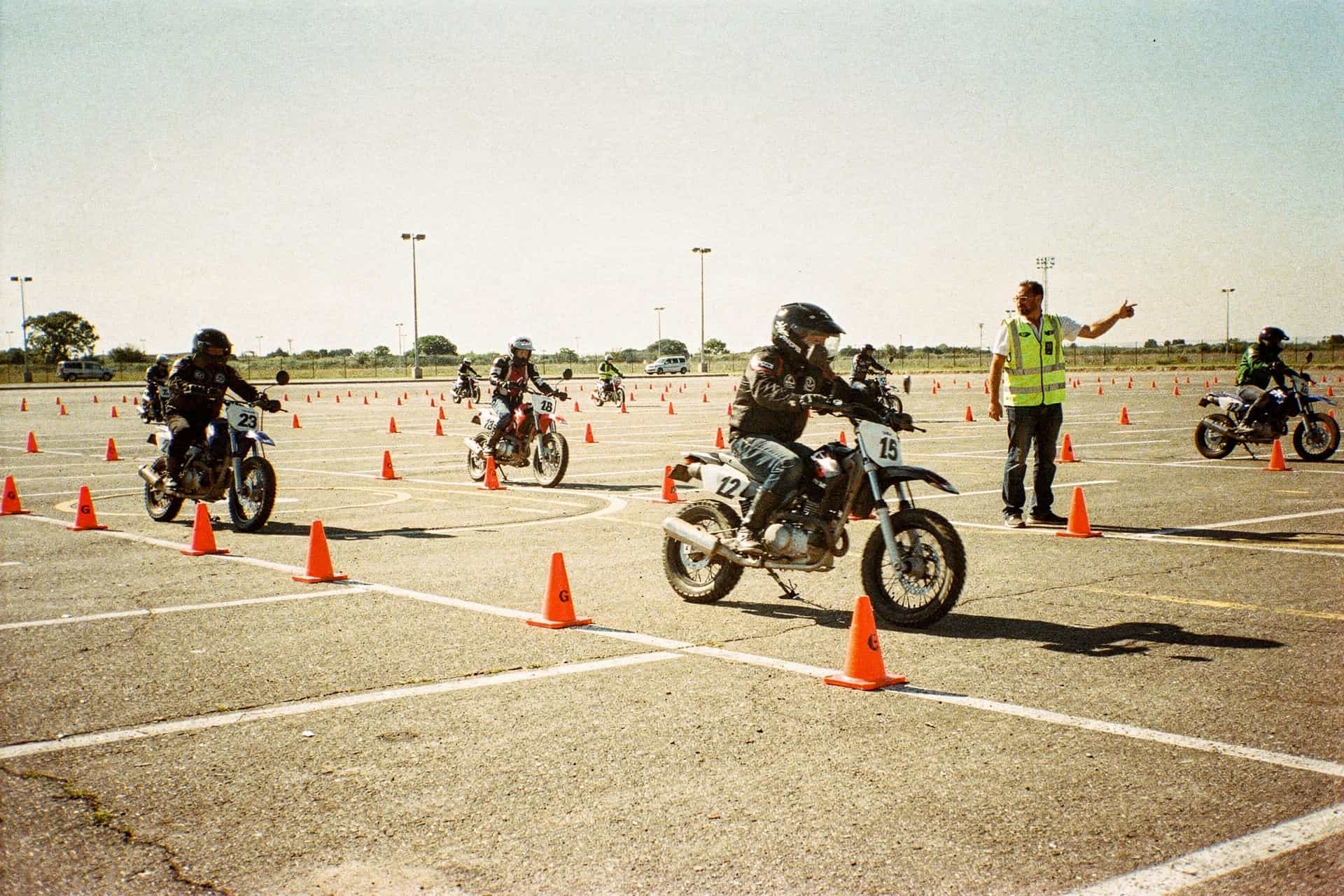
This is why you’re here. Two 5-hour sessions on a closed parking lot - the “range” - with professional instructors coaching you through progressively challenging exercises on training motorcycles. Class sizes are typically 6 to 12 students with one or two instructors.
The exercises build on each other:
- Friction zone and walking speed - learning clutch control at a crawl. This is where motorcycle riding begins. You learn where the clutch engages and how to modulate it at speeds slower than walking.
- Straight-line riding - first, second, and third gear. Basic upshifting and downshifting.
- Stopping - front brake, rear brake, combined braking. Learning how much stopping power the front brake actually has (a lot) versus the rear (less than you think).
- Turning - slow-speed turns, normal-speed turns, and swerving. Look-through-the-turn technique.
- Cornering - proper lean, countersteering introduction, maintaining speed through curves.
- Emergency maneuvers - quick stops from 20 mph, obstacle swerves. Simulating real-world panic situations in a controlled environment.
- Tight maneuvering - figure eights and U-turns. This is where riders struggle most. Slow-speed control separates confident riders from nervous ones.
Instructors demonstrate each exercise, walk you through it, then coach you through repetitions. If you’re struggling with something, they pull you aside and work with you one-on-one. Nobody is thrown into the deep end.
You will stall the bike. You will wobble. You might put a foot down at the wrong time. That’s normal. The training bikes have crash bars for a reason.
The Bikes They Give You
Training sites provide small, lightweight motorcycles - usually 125cc to 300cc machines chosen because they’re forgiving, light, low, and cheap to repair when students drop them. Common training bikes:
- Honda Grom (125cc)
- Honda Rebel 300
- Kawasaki Eliminator / Ninja 300
- Suzuki GZ250
- Yamaha V Star 250
- Harley-Davidson Street 500 (at H-D sponsored sites)
You cannot bring your own motorcycle to the BRC. The training sites need standardized, inspected machines they control. This is actually a benefit - you learn on a bike designed to be forgiving, not on the 700-pound cruiser you’re planning to buy afterward.
What to Wear (They Will Send You Home)
The MSF has a strict gear policy. Show up without the right stuff and you’re going home without a refund at most sites. We’ve seen it happen.
- DOT-approved helmet - most sites have loaners, but your own fits better and is more hygienic
- Eye protection - a full-face helmet covers this; otherwise you need riding glasses or goggles
- Long-sleeve jacket or heavy shirt - leather or textile riding jacket preferred. Not a flannel. Not a hoodie.
- Long pants - jeans at minimum, riding pants better. No shorts. No leggings. No yoga pants.
- Over-the-ankle boots - sturdy footwear that covers the ankle bone. No sneakers, no sandals, no cowboy boots with smooth soles
- Full-finger gloves - leather or textile motorcycle gloves. No fingerless gloves.
Also bring water and sunscreen. You’ll be standing on asphalt for hours in whatever weather shows up. Dress for the conditions but meet the minimums no matter what.
For a deeper look at riding gear beyond the course, our biker gear guide covers the essentials.
What It Costs
The BRC runs between $200 and $400 depending on your state and provider. Specific numbers from recent data:
- Upstate New York: Up to $321
- NYC area: Up to $398
- New Jersey: Around $350
- State-subsidized programs (California, Pennsylvania): Can drop to $150-$200
- Harley-Davidson Riding Academy: Typically $300-$400
The fee covers motorcycle use, fuel, insurance during the course, classroom materials, and the skills evaluation. It doesn’t cover your personal gear.
For perspective: the cost of one MSF course is less than the deductible on most motorcycle insurance policies. It’s a fraction of what you’ll spend replacing a broken clutch lever and scratched tank after dropping your new bike in a parking lot. And it’s nothing compared to an ER visit from a preventable crash.
The License Waiver
Here’s the practical reason most people take the course: in the majority of states, completing the MSF BRC waives the riding portion of the DMV motorcycle license test. You pass the course skills evaluation, take your completion card to the DMV, and they stamp a motorcycle endorsement on your license. No DMV parking lot. No bored examiner.
The MSF has partnerships with over 30 state DMVs for this waiver program. A few states (California being the notable one) require their own state-specific course instead of the MSF, but the format and curriculum are nearly identical.
You’ll still need to pass the written knowledge test at the DMV in most states. The classroom portion of the BRC prepares you for it.
Important: Some states require a learner’s permit before you can enroll in the BRC. Check your state’s specific requirements on the MSF FAQ page before signing up.
The Skills Evaluation
The final range session includes a scored skills evaluation. You start with a perfect score and lose points for errors. The exercises are the same ones you’ve been practicing all weekend:
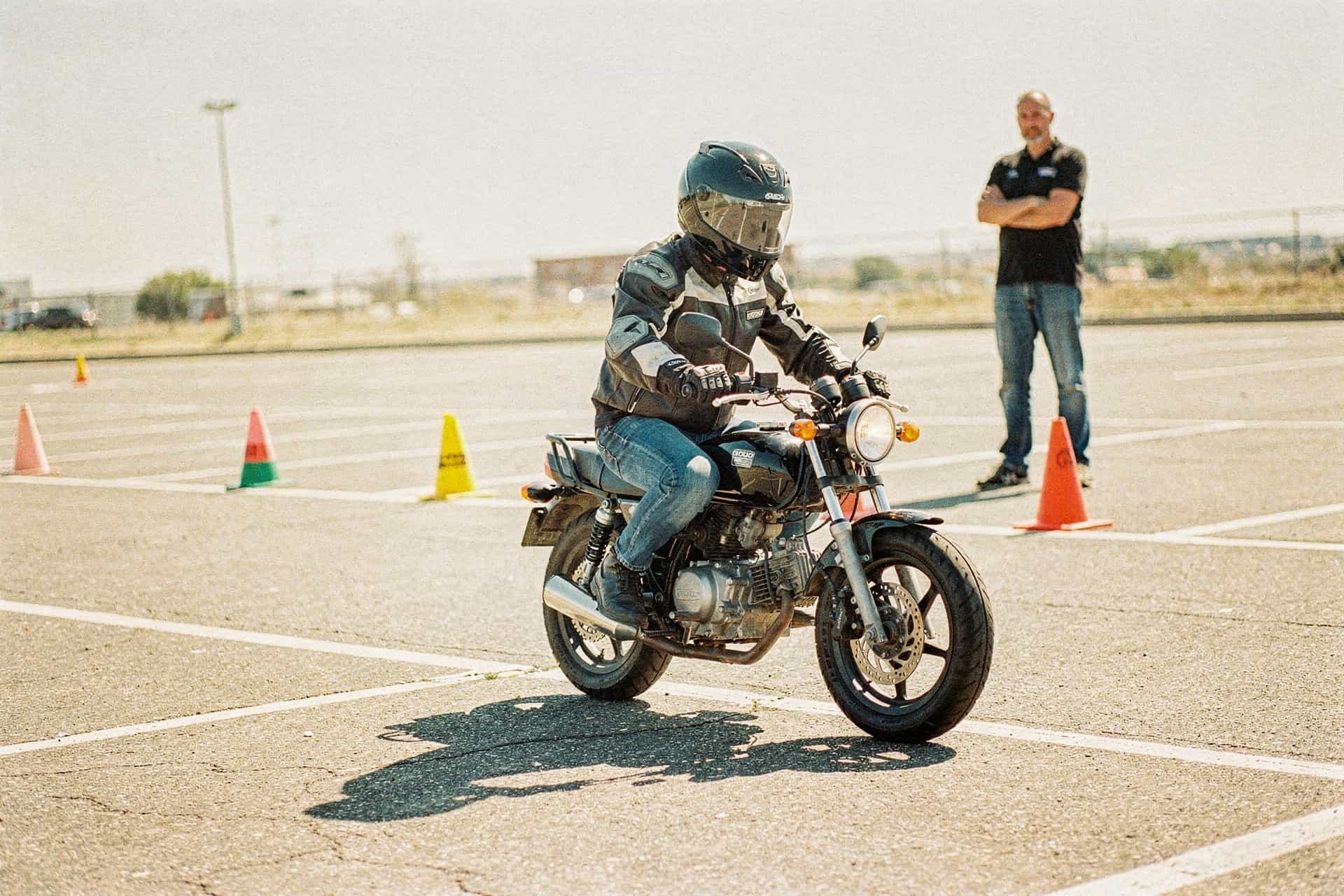
- Controlled stop - ride a straight line at 12-15 mph and stop smoothly within a marked box
- Swerve - ride at 12-15 mph and execute a quick lane-change around an obstacle
- Cornering - navigate a curved path at speed without crossing boundary lines
- Quick stop - accelerate to 20 mph and perform an emergency stop within a set distance
- Slow-speed U-turn - execute a tight U-turn within a defined box
Points come off for foot-down touches, crossing boundaries, stalling, or stopping too late. Dropping the bike is an automatic failure.
Most people pass. If you’ve been paying attention and putting in the repetitions all weekend, you’ll be fine. The evaluation is not designed to trick you. It’s designed to confirm you can operate a motorcycle safely at basic speeds.
Eight Things That Help You Pass
These come from riders we’ve sent through the course and from instructors we know personally.
Relax your grip. Death-gripping the handlebars is the number one beginner mistake. Tense arms fight the bike’s natural balance. Firm hands, relaxed elbows, let the bike move underneath you.
Look where you want to go. This is the most important riding skill you will ever learn, and it’s the one beginners fight the hardest. In turns, look through the corner to your exit point. Not at the ground. Not at the line you’re trying not to cross. Your body follows your eyes.
Drag the rear brake in slow-speed maneuvers. During U-turns and tight turns, lightly dragging the rear brake stabilizes the bike. It feels wrong at first. It works.
Live in the friction zone. All slow-speed control comes from feathering the clutch in the partial engagement zone between fully out and fully in. The faster you get comfortable here, the better every low-speed exercise goes.
Ask questions. The instructors are there to teach. If an exercise confuses you, say so. Nobody judges a beginner in a beginner course.
Wear comfortable gear. This is not the day for brand-new stiff boots you’ve never broken in. Discomfort pulls your focus away from riding.
Sleep the night before. You’re processing a massive amount of new physical and mental information. Fatigue makes everything harder and slower.
Accept mistakes as part of the process. Everyone stalls. Everyone wobbles. The course expects it.
What Comes After the BRC
Passing the BRC gives you a license endorsement and basic skills. It does not make you a skilled motorcyclist. That takes miles, years, and honest self-assessment.
The MSF offers advanced courses for riders who want to keep building:
- Basic RiderCourse 2 (BRC2) - a refresher using your own motorcycle, good for riders returning after a break or wanting to sharpen fundamentals
- Advanced RiderCourse (ARC) - higher-speed skills, group riding dynamics, advanced hazard avoidance
- Street RiderCourse - newer curriculum focused on real-world street riding scenarios
Many training sites also offer specialized programs for three-wheel motorcycles and off-road riding.
Take the Course Even If Your State Doesn’t Require It
Some states let you get a motorcycle endorsement with just a written test and a quick parking-lot skills test at the DMV. That’s legally sufficient. It’s not smart.
The MSF course gives you ten hours of on-bike practice with professional instructors watching your every move on a closed range. You cannot replicate that watching YouTube videos in your garage. You can’t replicate it riding around a parking lot with a friend shouting instructions.
We know riders with decades of saddle time who took the BRC and discovered habits they’d been doing wrong since day one. Muscle memory is powerful, and it doesn’t care whether the habit is good or bad. Structured training builds good habits from the start.
The Harley-Davidson Riding Academy
Harley-Davidson runs their own version of the MSF course called the Riding Academy. It uses MSF curriculum, is hosted at participating H-D dealerships, and the bikes are Harley-Davidson Street 500s or similar small-displacement models.
The content is identical to a standard BRC: same exercises, same evaluation, same license waiver. The differences:
- You ride Harley-Davidson motorcycles
- The setting is a dealership (some H-D marketing included)
- Pricing runs $300-$400 - slightly higher than most standard sites
- Class sizes may be smaller
If you already know you want a Harley, it’s a decent way to get familiar with the brand’s controls. If you’re brand-agnostic, a standard MSF site works equally well and usually costs less.
For Harley-specific technical knowledge - like understanding diagnostic codes or recognizing bad crank position sensor symptoms - that stuff comes after the course, once you own the bike and start wrenching.
Common Concerns
“I’m too old for this.” The average MSF student age has been climbing for years. People take the BRC in their 40s, 50s, and 60s regularly. The bikes are light and the exercises are low-speed. Age is not a barrier.
“I’m not strong enough.” Training bikes weigh 300 to 400 pounds. You don’t need to be an athlete. You need basic balance and the ability to hold a handlebar. If you can ride a bicycle, you can do this.
“What if it rains?” Courses run in light rain. Heavy storms may delay sessions. Riding in rain is genuinely useful experience - you’ll encounter it on real roads.
“What if I fail?” Most providers allow a retake at reduced cost. Failing means you need more practice before riding on public roads, which is exactly the right answer. It’s not a judgment.
“Do I need to know how to drive stick?” No. They teach clutch operation and shifting from zero. Manual car experience helps, but it’s not required.
What the Course Does Not Cover
The BRC teaches foundation skills. There’s a long list of things you’ll still need to learn through experience:
- Highway merging and sustained high-speed riding
- Night riding
- Dense traffic navigation
- Group riding etiquette and dynamics
- Cold and wet weather strategies
- Basic mechanical awareness and maintenance
Riding is a skill you build over years. The course gets you started on solid ground. The rest comes from miles, mentors, and paying close attention.
For understanding the different machines you’ll see out there, our types of motorcycles guide breaks down every category from sportbikes to bobbers. Once you’re comfortable on two wheels, understanding motorcycle handlebar types helps you dial in the ergonomics to match your body and riding style. And our motorcycle beginner’s guide covers the full picture - licensing, gear, choosing a first bike, and what to expect in your first year.
If you’re curious about the culture side of riding - the slang, the rallies, the biker bars - that’s a whole other education that starts when you show up and ride.
Get signed up. Get through the weekend. And once you’ve got that endorsement and a bike in the garage, come grab a shirt to match the lifestyle.
Sources
- Motorcycle Safety Foundation - Basic RiderCourse - official course description, structure, and enrollment information
- Motorcycle Safety Foundation - About - organization history, manufacturer partnerships, and mission
- MSF - Frequently Asked Questions - state licensing waivers, permit requirements, and course eligibility
- New York State Motorcycle Safety Program - FAQ - state-specific pricing and enrollment details
- NHTSA - Motorcycle Safety - federal motorcycle safety statistics and helmet effectiveness data
- Harley-Davidson Riding Academy - H-D sponsored MSF course details and pricing
- American Motorcyclist Association - State Laws Database - state-by-state licensing and endorsement requirements