Three months into owning a pair of fashion-brand “motorcycle boots,” the sole separated from the upper on a fuel stop outside Flagstaff. Hundred-degree pavement, 200 miles from home, held together with duct tape from a gas station clerk who’d seen it before. That’s the difference between boots built for riders and boots built for Instagram.
Biker boots aren’t a style choice. They’re the only thing between your feet and hot exhaust pipes, shifting pegs, road debris, and asphalt moving at 70 mph. The right pair protects you, lasts years, and gets better with age. The wrong pair leaves you limping.
This guide breaks down what actually matters in motorcycle boots - materials, construction, sole compounds, ankle protection - and which types work for which riders. No affiliate nonsense. Just what we know from years of riding and wrenching.
What Separates Real Riding Boots from Costume Pieces
Walk into any department store and you’ll find “moto boots” next to the sneakers. They look the part. Buckles, straps, maybe some stitching that suggests toughness. But pick one up and bend the sole. It flexes like a running shoe. That boot will do nothing for you on a bike.
Real motorcycle boots share a few non-negotiable traits:
- Oil-resistant soles. Garage floors, gas station concrete, and roadside gravel are all slick with petroleum. A sole that can’t grip oil-covered surfaces is a liability every time you put a foot down.
- Ankle support. Your ankle joint is the most exposed part of your lower body on a motorcycle. Reinforced ankle cups, rigid heel counters, or integrated armor keep that joint from folding sideways in a slide or low-side.
- Shift pad reinforcement. The top of your left foot takes abuse from the shift lever every single ride. Boots without reinforcement there will wear through in months. Look for a double-layer or molded shift pad over the toe box.
- Heat resistance. Exhaust pipes run anywhere from 400 to 1,000 degrees Fahrenheit depending on the bike. Your right boot sits inches from that pipe. Synthetic materials melt. Cheap rubber deforms. Full-grain leather and heat-rated rubber compounds survive.
- Goodyear welt or cemented construction. Stitched-down soles (Goodyear welt, Blake stitch) can be resoled. Cemented (glued) soles are cheaper but unrepairable. Both work if the adhesive is industrial-grade, but welted construction is what makes a boot last a decade.
The CE certification system used in Europe (EN 13634) rates motorcycle boots on abrasion resistance, cut resistance, transverse rigidity, and impact protection. Not every boot sold in the US carries CE markings, but the standard gives you a useful baseline. Level 2 certification means the boot passed at higher thresholds across all four tests. If you see it, the boot is serious.
Engineer Boots: The Original Biker Boot
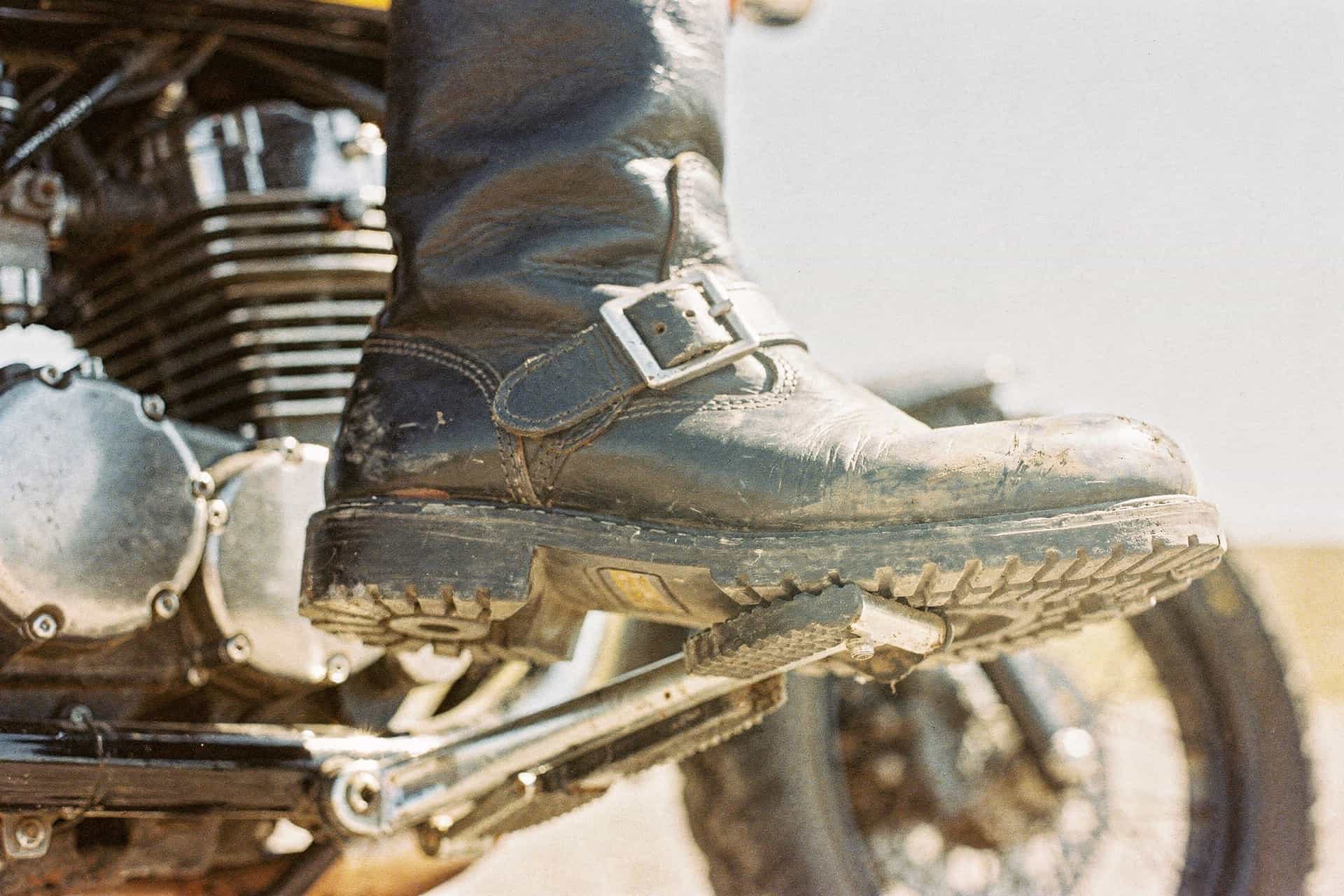
The engineer boot predates motorcycle culture. It was designed in the 1930s for - you guessed it - railroad engineers and industrial workers who needed a tall, protective shaft, a steel toe, and a sole that could handle oil-soaked steel platforms. The classic profile: 11-inch shaft, no laces, a single buckle strap at the ankle, pull-on design, and a leather sole or heavy rubber heel.
Riders adopted them because they worked. The tall shaft protects your calf from engine heat. The pull-on design means no laces to catch on pegs or foot controls. The buckle strap cinches the boot tight at the ankle without restricting movement the way a lace-up does.
Chippewa, Wesco, and Red Wing built their reputations on this boot. Wesco’s Boss is still manufactured in Scappoose, Oregon, with a full leather midsole, steel shank, and a sole that can be rebuilt by the factory. A pair runs north of $400 and lasts riders 15 to 20 years with resoling. Chippewa’s 27899 steel-toe engineer has been a working-class staple since the 1950s - less refined than the Wesco but built to absorb punishment at a lower price point.
The downside: engineer boots offer minimal impact armor. No ankle cups, no shin plates, no toe sliders. They protect through material thickness and construction quality, not engineered armor systems. For cruiser and bobber riders who prioritize durability and classic aesthetics over track-level protection, that trade-off works. For aggressive riding, it doesn’t.
We had a guy roll into the shop last year wearing a pair of Wescos he’d bought in 2009. Fifteen years of daily riding, two resoles, and the leather was just starting to show its age. That’s what real construction looks like.
Harness Boots: Engineer’s Louder Cousin
The harness boot takes the engineer silhouette and adds a ring-and-strap harness across the ankle and instep. It’s purely aesthetic - the harness doesn’t serve a structural purpose. But it became the defining boot of 1960s and ’70s biker culture, thanks in large part to Marlon Brando wearing a pair in The Wild One (1953) and every MC rider who followed.
The most iconic version is the Frye Harness 12R, produced by The Frye Company - the oldest continuously operated shoe company in the United States, founded in 1863. It’s a fashion-forward heritage boot that looks right on a bobber but lacks the sole grip and ankle rigidity of a purpose-built riding boot. The leather is thinner than a Wesco, the sole is leather (slippery when wet), and there’s zero armor.
For riders who want the harness look with actual riding performance, Carolina and Double-H make harness boots with oil-resistant rubber soles and more substantial construction. They won’t win beauty contests next to the Frye, but they won’t dump you on a wet gas station apron either.
If you’re building a bobber and the rest of your gear leans toward classic American style, harness boots are the move. Just know what you’re getting: a heritage boot that protects through material, not technology.
Touring Boots: Built for the Long Haul
If you’re putting down serious miles - iron-butt runs, cross-country trips, daily commuting through four seasons - touring boots are a different animal from the classic pull-ons above.
Touring motorcycle boots typically feature:
- Waterproof membranes. Gore-Tex or proprietary membranes that keep water out while allowing sweat vapor to escape. Critical for multi-day rides through unpredictable weather.
- Integrated ankle armor. D3O or hard-shell ankle protectors molded into the boot structure. The ankle is the most commonly injured joint in motorcycle crashes, per NHTSA crash data.
- Comfort soles. Vibram or similar compounds designed for both on-bike grip and off-bike walkability. You can’t walk a mile in a motocross boot without regretting it. Touring boots are meant to feel reasonable at a rest stop or walking through a campground.
- Zipper entry with Velcro storm flaps. Fast on, fast off, sealed against water intrusion.
- Reflective elements. Visibility matters on long highway stretches at dawn and dusk.
Sidi, Alpinestars, and TCX dominate this category. The Sidi Adventure 2 Gore-Tex has become something of an industry standard - waterproof, armored, walkable, and built to survive season after season of touring abuse. Alpinestars’ Belize Drystar and TCX’s Infinity 3 Mid WP are competitive alternatives at different price points.
The trade-off: touring boots look like touring boots. They’re technical, utilitarian, and built for function over form. You won’t see them on a bobber build feature. But if you’re riding 10,000 miles a year, function wins.
Racing and Sport Boots: Maximum Protection, Minimum Subtlety
Track riders and sport bike commuters need a completely different boot. Racing boots prioritize impact absorption, slide protection, and foot articulation at aggressive lean angles. They’re over-engineered for the street but proven life-savers on track.
Key features of sport/racing boots:
- Toe sliders. Replaceable plastic or magnesium pucks on the toe box that let you drag your foot through corners without grinding through the boot.
- Shin plates. Rigid thermoplastic or carbon fiber shin guards that absorb impact in a high-side crash.
- Torsion control. Internal chassis systems that prevent the foot from rotating beyond its natural range during a crash. Alpinestars’ Supertech R uses a dual-compound sole and biomechanical ankle brace system for this.
- Perforated leather. Ventilation panels for track-day heat management, often with microfiber instead of full-grain leather to save weight.
These boots are expensive ($300-$600+), stiff, and awkward to walk in. They’re designed for one thing: keeping your feet attached and functional during the worst moments on a motorcycle.
If you ride a sport bike daily, a mid-tier sport boot like the TCX RT-Race or Alpinestars SMX Plus V2 gives you track-derived protection without the full race-boot penalty. For cruiser and bobber riders, skip this category entirely.
Biker Boots for Women: Same Standards, Different Fit
Here’s what frustrates us: the women’s motorcycle boot market is flooded with “cute” boots that wouldn’t survive a weekend ride. Thin leather, decorative hardware, and fashion soles slapped with a “motorcycle” label.
Women riders need the same protective features as anyone else - oil-resistant soles, ankle support, shift pad reinforcement, and heat-resistant materials. Foot anatomy differs (narrower heel, wider forefoot relative to men), so proper fit matters even more. A boot that’s loose at the heel will slide on the peg and create a dangerous lack of control feel.
Brands doing it right for women’s riding boots:
- TCX Lady series. The Lady Biker WP and Lady Blend WP offer real protection in women’s-specific lasts. Waterproof, reinforced toe and heel, D3O ankle armor.
- Alpinestars Stella line. The Stella Kerry and Stella Faster-3 are built on women’s lasts with the same protection standards as the men’s equivalents.
- Icon 1000 Women’s El Bajo. A lower-profile boot that balances cruiser aesthetics with actual riding protection.
- Frye Veronica Combat. Not a motorcycle boot per se, but it’s full-grain leather, Goodyear welted, and tough enough that many women riders swear by it for cruiser use.
Honest take: the women’s motorcycle boot market is improving, but it’s still years behind the men’s market in terms of variety. Most major boot makers offer two or three women’s models versus fifteen or twenty for men. That’s slowly changing as the riding demographic shifts - women are the fastest-growing segment of new motorcycle riders in the US, according to the Motorcycle Industry Council.
Materials: What Holds Up and What Doesn’t
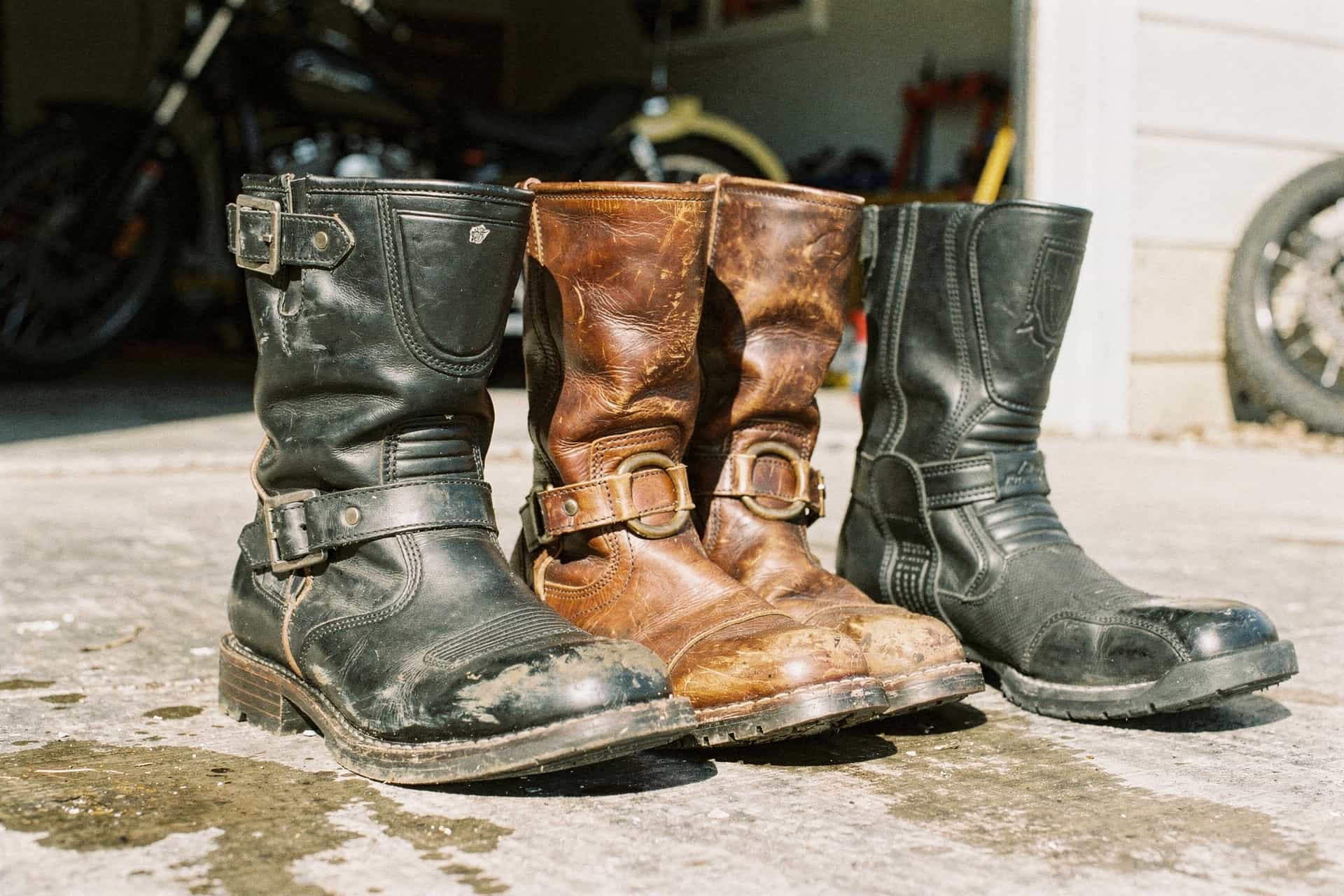
Leather
Full-grain cowhide is the gold standard for motorcycle boots and has been since the beginning. It resists abrasion, blocks wind, develops a patina with age, and can be conditioned back to life after years of neglect. Thickness matters: 1.4mm to 1.6mm is standard for riding boots, with heavy-duty boots (Wesco, Whites) going up to 2.0mm.
Horsehide is denser and more abrasion-resistant than cowhide but harder to break in and less common. Some Japanese boot makers (Rolling Dub Trio, Clinch) use horsehide for their engineer boots, and riders who’ve worn both will tell you horsehide outlasts cow by a factor of two.
Avoid: bonded leather, PU leather, “genuine leather” (the lowest grade of real leather, basically scraps glued together and coated). These materials look like leather on the shelf and fall apart on the road.
Synthetics and Textiles
Modern sport boots use microfiber, Lorica, and Cordura - synthetic materials that offer good abrasion resistance at lower weight. They don’t develop the character of leather and they can’t be reconditioned, but for sport and touring applications, they perform well.
Gore-Tex and similar membranes add waterproofing without the weight and stiffness of a fully waterproofed leather boot. Most touring boots use a membrane liner rather than relying on the outer material to block water.
Soles
Vibram is the benchmark for motorcycle boot soles. Their oil-resistant rubber compounds grip wet and contaminated surfaces that would make a leather sole deadly. The Vibram 100 (lug sole) and Vibram 430 (mini-lug) are the most common outsoles on quality riding boots.
Leather soles look great on heritage boots but are functionally inferior for riding. They’re slippery on wet surfaces, they wear faster than rubber, and they transmit heat from exhaust pipes more readily. If your boots have leather soles and you ride regularly, get a rubber half-sole cobbled on. It’s a $40 fix that dramatically improves safety.
How to Tell If a Boot Will Actually Last
You can evaluate a motorcycle boot in about 60 seconds at a store or from product photos online:
1. Check the sole attachment. Look at where the sole meets the upper. Is there visible stitching running around the perimeter (Goodyear welt or Blake stitch)? Or is it just a glue line? Stitched construction is repairable and generally more durable. If it’s cemented, check reviews for sole separation - it’s the most common failure mode in cheaper boots.
2. Bend the sole. Grab the toe and heel and flex the boot. A riding boot should resist bending, especially through the arch. That rigidity comes from a steel or fiberglass shank embedded in the midsole. It’s what keeps your foot from folding around the peg and what absorbs impact in a crash. If the sole bends easily, the boot has no shank.
3. Squeeze the heel counter. Press on the back of the boot at the heel. It should feel rigid - there’s a thermoplastic or leather board inside that locks your heel in place. A soft heel counter means the boot will deform and your foot will slide around on the controls.
4. Look at the leather thickness. If you can see light through the leather when you hold it up, it’s too thin for serious riding. Quality motorcycle boot leather should feel substantial in your hand, not like a dress shoe.
5. Check the hardware. Buckles, zippers, and D-rings should be metal, not plastic. YKK zippers are the industry standard. If the zipper pull feels flimsy, the rest of the boot is probably built to the same standard.
If you’re riding in biker gear that you expect to hold up season after season, apply the same thinking to your boots. They take more abuse than any other piece of kit you own.
What to Spend
Motorcycle boots exist at every price point, and here’s the uncomfortable truth: below about $150, you’re almost always getting fashion boots with a motorcycle label. The materials, construction, and soles simply can’t hit real riding standards at that price.
Here’s a rough breakdown:
| Price Range | What You Get |
|---|---|
| Under $100 | Fashion boots. Fine for walking around, but minimal protection and short lifespan on a bike. |
| $100-$200 | Entry-level riding boots. Basic protection, cemented soles, synthetic or lower-grade leather. Good for new riders figuring out what they need. |
| $200-$350 | The sweet spot. Quality leather or technical materials, stitched construction, real ankle protection, oil-resistant soles. Brands like TCX, Sidi mid-range, and Chippewa live here. |
| $350-$500+ | Heritage craftsmanship (Wesco, Whites, Nicks) or top-tier sport boots (Alpinestars Supertech, Sidi Vortice). Buy-it-for-life territory. |
We’ve seen riders drop $500 on a motorcycle jacket and then cheap out on boots because “they’re just boots.” Your feet control the bike. They touch the ground at every stop. They’re the first thing to hit pavement in most low-side crashes. Spend accordingly.
While you’re building out your riding kit, check out our full gear collection - we make apparel for riders who actually ride, from tees and hoodies that hold up in the garage to gear built for the road.
Breaking In Riding Boots Without Destroying Your Feet
New motorcycle boots - especially full-grain leather engineer and harness boots - need a break-in period. Wearing stiff, unbroken boots on an 8-hour ride is a mistake you only make once.
The method that works:
- Wear them around the house first. Two to three hours a day for a week. Walk, climb stairs, flex your ankles. This molds the footbed and softens the leather at the flex points without subjecting your feet to prolonged pressure.
- Condition the leather. Apply a light coat of Obenauf’s Heavy Duty LP or Sno-Seal to the exterior, focusing on the flex crease across the vamp and the shaft where it meets your calf. This softens the leather without over-saturating it.
- Ride short distances. First rides in new boots should be 30-60 minutes. Your feet will tell you where the boot binds or rubs. Wear thick wool socks (Darn Tough or Smartwool) during break-in - they cushion pressure points and wick moisture.
- Don’t speed it up with water or heat. Soaking leather boots to speed break-in weakens the fibers and can warp the sole. Let time and wear do the work.
After 40-50 hours of wear, a quality leather boot conforms to your foot. That’s when it goes from “a boot” to “your boot” - and when the real comfort starts.
Keep Them Alive: Basic Boot Maintenance
A $400 pair of boots that you never maintain will die faster than a $200 pair that you care for. Leather is skin. Treat it that way.
- Clean after every wet ride. Wipe down with a damp cloth to remove road salt, grime, and bug residue. Let them air dry away from direct heat - never put leather boots near a radiator, heater vent, or in direct sun. Heat dries leather out and causes cracking.
- Condition every 2-3 months. Leather conditioner replaces the oils that riding, rain, and sweat strip out. Obenauf’s, Bick 4, or even Lexol work. Avoid mink oil on lighter leathers - it darkens them significantly.
- Resole before they’re gone. When the tread on your soles wears smooth, don’t wait until the midsole is exposed. A cobbler or the manufacturer can resole welted boots for $80-$150, and you’ll get another 5-7 years out of them.
- Store upright with boot trees. Boot trees (cedar if possible) maintain the shaft shape and absorb moisture between wears. Boots that collapse and crease at the ankle develop permanent weak points.
Now Lace Up
The best motorcycle boot is the one you’ll actually wear every ride - not the one that sits in your closet because it’s uncomfortable, not the fashion boot that looks good but offers nothing when things go sideways, and not the track boot that’s overkill for your Sunday morning cruiser ride. If you’re just getting started and building your first kit, our motorcycle beginner’s guide walks through which gear to prioritize and in what order.
Figure out how you ride, what you ride, and what conditions you face. Then buy the best boot you can afford in that category. Take care of it. Resole it when the tread goes. A single pair of well-chosen, well-maintained riding boots will outlast five pairs of cheap alternatives and protect you better every mile.
Your bike is built, not bought. Your boots should be chosen the same way - with intention, knowledge, and zero compromise.
Sources
- RevZilla - Motorcycle Boot Buyer’s Guide - Comprehensive overview of boot types, construction methods, and protection standards.
- NHTSA - Motorcycle Safety - Federal crash data on motorcycle injuries, including lower extremity injury frequency.
- Motorcycle Industry Council - Owner Survey Data - Demographic data on U.S. motorcycle riders, including growth in women riders (19% of owners per 2018 MIC survey).
- SATRA - EN 13634: Protective Footwear for Motorcycle Riders - European boot certification standard covering abrasion, cut resistance, rigidity, and impact protection.
- Wesco Boots - Made in Scappoose, Oregon - Heritage boot manufacturer producing the Boss Engineer boot since 1939.