Two hours into a summer ride through the Ozarks last year, a rider we know pulled over, ripped off his gloves, and stuffed them in a saddlebag. Brand new. Eighty bucks. Too tight across the knuckles, cutting circulation to his ring and pinky fingers. He rode the rest of the day barehanded, and a wasp sting on his throttle hand nearly put him in a ditch outside Branson.
Wrong motorcycle glove size does not just wreck comfort. It wrecks control. Gloves that are too tight restrict blood flow and reduce grip strength. Gloves that are too loose bunch up under your palm, delay throttle response, and can slide right off in a crash. Getting the fit right takes five minutes with a tape measure. Here is how to do it, what the numbers mean, and how to match your measurements to the right glove for the kind of riding you actually do.
How to Measure Your Hand for Motorcycle Gloves
You need one tool: a flexible fabric tape measure. If you do not have one, a piece of string and a ruler work fine.
Step 1: Measure Your Hand Circumference
This is the primary measurement every glove manufacturer uses.
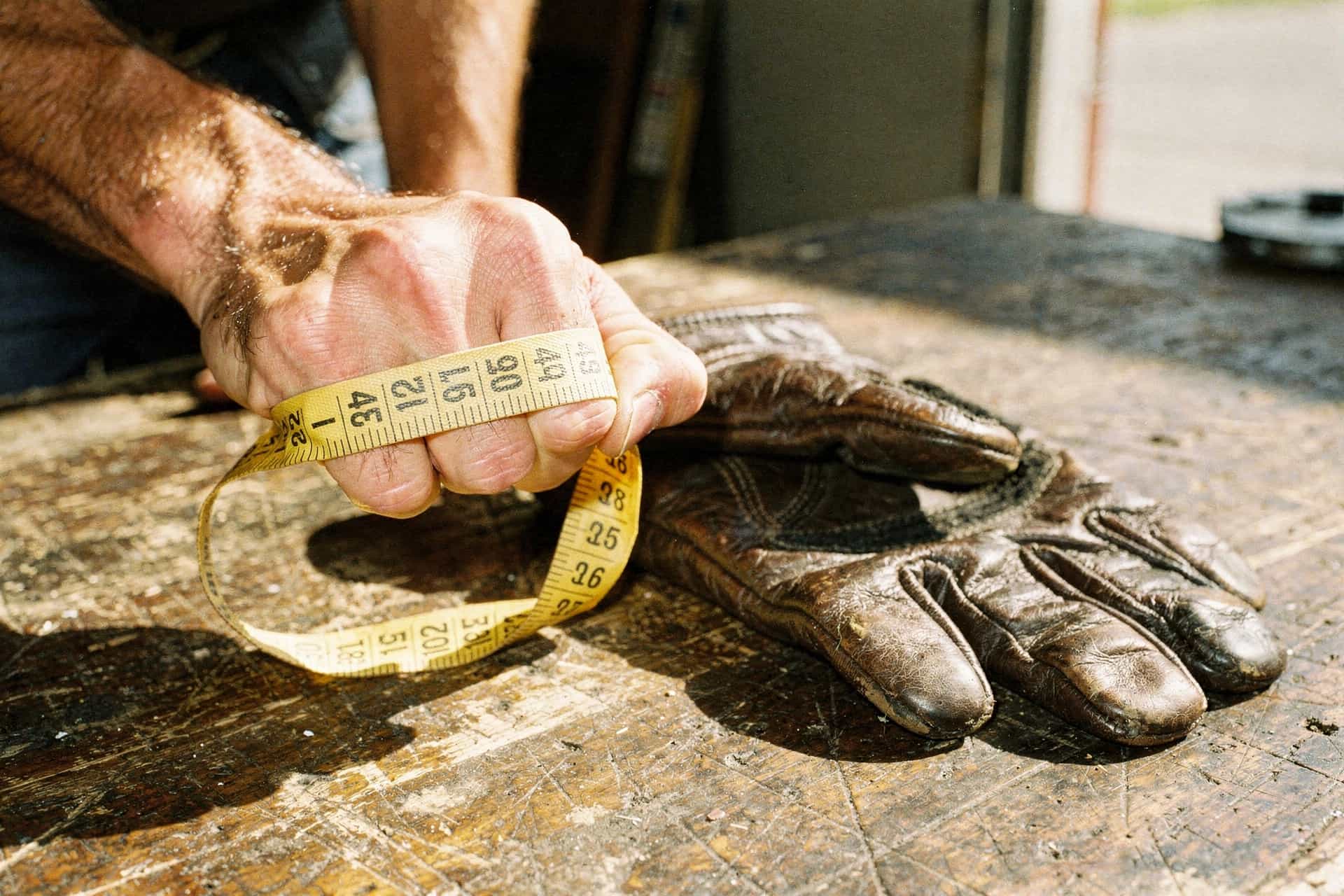
- Wrap the tape measure around your dominant hand at the widest point - across the knuckles, just below where your fingers meet your palm.
- Make a loose fist while measuring. Your knuckles expand when gripping handlebars, and you need gloves that accommodate that movement.
- Read the circumference in inches. Write it down.
Most adult hands fall between 7 and 11 inches. If you are between whole numbers, round up to the nearest quarter inch.
Step 2: Measure Your Hand Length
Some manufacturers use hand length as a secondary sizing reference, especially for gauntlet-style gloves.
- Place a ruler flat on a table.
- Align the base of your palm (where your wrist meets your hand) with the zero mark.
- Measure to the tip of your middle finger with your hand flat and fingers together.
Average hand length for men runs 7.0 to 8.5 inches. For women, 6.5 to 7.5 inches. This measurement matters most for gloves with longer fingers or pre-curved designs.
Step 3: Always Measure Both Hands
Your dominant hand is almost always slightly larger - sometimes by a quarter inch or more. Use the bigger measurement. A glove that fits your dominant hand perfectly but squeezes your non-dominant hand is still a bad fit; your dominant hand is the one working the throttle, and that is the one that needs room to move.
Reading a Motorcycle Glove Sizing Chart
Sizing is not standardized across brands. An XL from Alpinestars fits differently than an XL from Icon or Biltwell. Always check the specific manufacturer’s chart. That said, here is the general range most brands follow for men’s motorcycle gloves:
| Size | Hand Circumference (inches) | Hand Circumference (cm) |
|---|---|---|
| S | 7.5 - 8.0 | 19 - 20 |
| M | 8.0 - 8.5 | 20 - 22 |
| L | 8.5 - 9.0 | 22 - 23 |
| XL | 9.0 - 9.5 | 23 - 24 |
| XXL | 9.5 - 10.0 | 24 - 25 |
| XXXL | 10.0 - 10.5 | 25 - 27 |
Women’s gloves typically start at XS (6.5 inches / 16.5 cm) and run through L (8.0 inches / 20 cm). Some brands offer unisex sizing, but the finger length ratios differ - women’s gloves have proportionally shorter fingers relative to palm width.
A couple of things the chart will not tell you:
- Finger length varies independently from circumference. Two riders with identical 9-inch palm measurements can have very different finger lengths. If you have long fingers and short palms, check reviews for “runs short in the fingers” comments.
- EU sizing uses a different scale. European glove sizes are numbered (7, 8, 9, 10, etc.) and correspond roughly to hand circumference in French inches. A size 9 EU glove fits approximately a 9-inch hand.
Glove Materials and How They Affect Fit
The material your glove is made from changes how the size feels on your hand - and how it feels after 500 miles versus the first time you pull it on.
Leather
Full-grain cowhide or goatskin is the traditional choice and still the gold standard for abrasion resistance. According to testing data published by the British Standards Institution, quality leather gloves offer approximately 4 seconds of slide protection at 30 mph - significantly more than unlined textile. But leather has a break-in period. New leather gloves should feel snug, almost tight. After 3 to 5 rides, the hide stretches and molds to your hand shape. If leather gloves feel comfortable right out of the box, they will be loose within a month. We had a guy bring a pair of barely-used Ropers into the shop once, complaining they were “falling apart.” They were not falling apart - he had bought a size too large and the leather had stretched past the point of useful grip.
Goatskin is thinner and more supple than cowhide, breaks in faster, and works well for warm-weather riding. Cowhide is thicker, more durable, and better suited to year-round use.
Textile (Cordura, Mesh, Nylon)
Textile gloves fit true to size from day one. No break-in. No stretch. What you feel in the store is what you get at mile 1,000. This makes sizing more straightforward but less forgiving - if a textile glove is even slightly off, it stays that way.
Mesh gloves, popular for summer riding, run looser by design to allow airflow. Size down if you are between sizes in mesh.
Kevlar and Aramid Blends
Kevlar-lined gloves add cut and abrasion resistance without the bulk of full leather. The Kevlar layer sits inside the shell, so it does not change the external dimensions much. But it does reduce the internal volume slightly. If a manufacturer offers Kevlar-lined and unlined versions of the same glove, the Kevlar version will feel about a half-size smaller.
If you are looking to gear up across the board - gloves, jackets, boots, and everything in between - our complete biker gear guide breaks down what matters for every category. And if you want to browse what we carry, check out the Bobber Brothers shop.
Gauntlet vs. Short-Cuff Gloves: Sizing Differences
The two main glove styles fit differently, and the sizing considerations are not identical.
Gauntlet Gloves
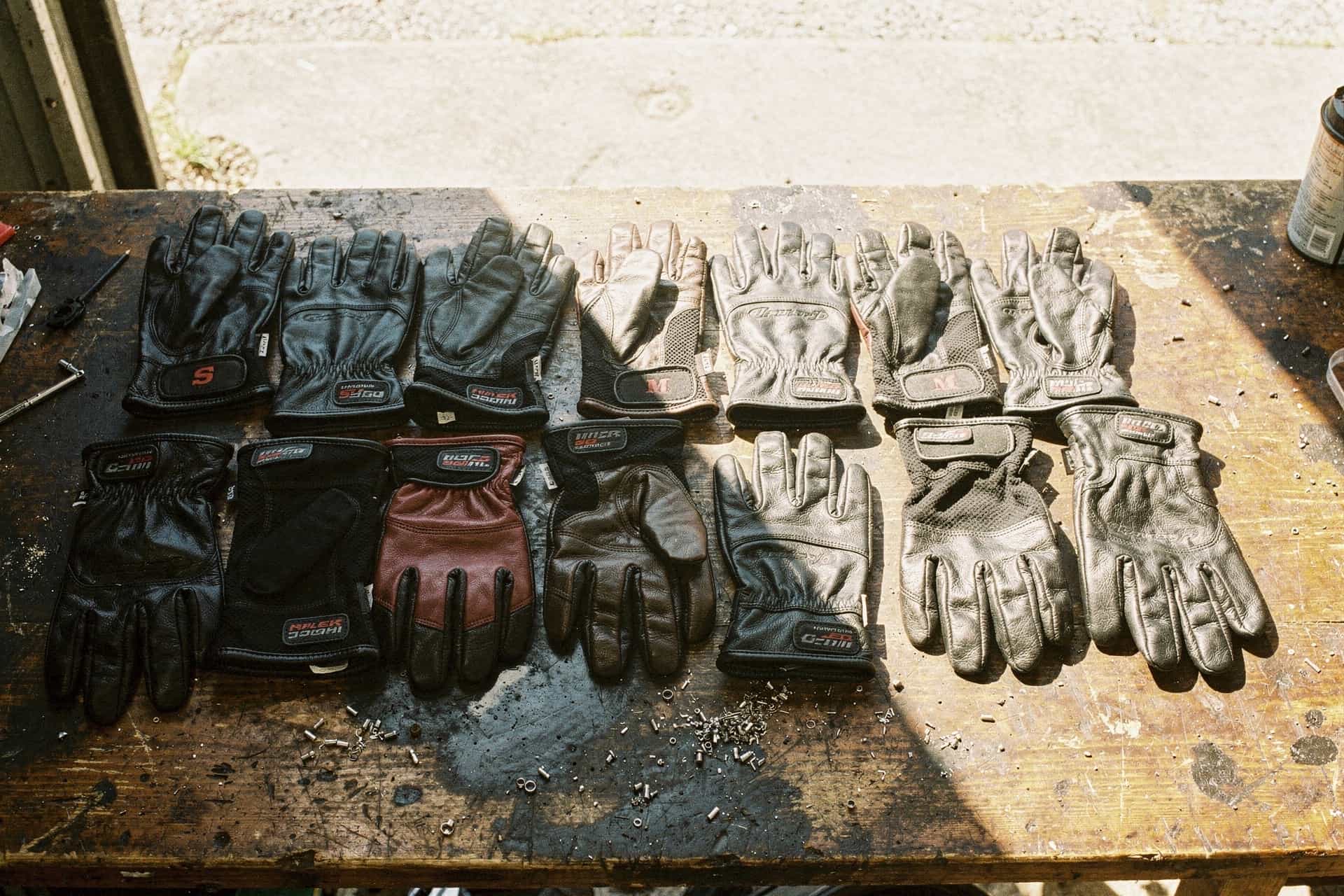
Gauntlet gloves extend past your wrist and over the cuff of your jacket. They are the better choice for highway riding, cold weather, and rain - the extended cuff prevents wind, water, and debris from entering at the wrist. Sizing a gauntlet involves one extra variable: forearm circumference. If you have thick wrists or forearms, check whether the gauntlet cuff adjusts with Velcro or a buckle. A gauntlet that fits your hand perfectly but will not close around your wrist is useless.
Short-Cuff Gloves
Short-cuff gloves end at or just below the wrist bone. They are lighter, cooler, and easier to get on and off. Riders who spend a lot of time in stop-and-go traffic or need to use their phone at gas stops tend to prefer these. Sizing is simpler - hand circumference is the only measurement that matters. The trade-off is less wrist protection and an opening for wind and water where the glove meets your jacket sleeve.
Honest take: most of us in the garage reach for short-cuff gloves 80% of the time. Gauntlets come out for cold-weather rides and long highway stretches. Having one pair of each covers everything.
Seasonal Sizing Considerations
Your motorcycle glove size is not static across seasons. Temperature changes what you need and how things fit.
Summer Gloves
Summer gloves prioritize ventilation. Perforated leather, mesh panels, minimal lining. They run thinner and fit closer to your measured size. The danger here is buying too tight - your hands swell slightly in heat, and a glove that fits perfectly in an air-conditioned store can feel like a tourniquet at a July stoplight in Phoenix. If you are on the border between sizes in summer gloves, go up.
Winter and Cold-Weather Gloves
Insulated gloves add thermal liners (Thinsulate, fleece, or similar) that eat up internal space. A rider who wears a Large in summer gloves often needs an XL in winter gloves from the same brand. The RevZilla gear guide recommends sizing up one full size for insulated gloves as a starting point, then checking the specific manufacturer’s cold-weather sizing chart.
Winter gloves also need enough room for blood to circulate freely. Tight gloves in cold weather are worse than slightly loose ones - restricted blood flow accelerates numbness and frostbite risk. Your fingers should be able to wiggle freely inside the fingertips.
Three-Season and Transitional Gloves
These split the difference with light insulation and partial ventilation. They usually fit true to your measured size. A solid three-season glove handles roughly 45 to 80 degrees Fahrenheit before you need to swap to a dedicated hot or cold weather pair.
Touchscreen Compatibility and Fit
Most gloves made after 2018 include touchscreen-compatible fingertips - conductive thread or pads on the index finger and thumb that let you use your phone or GPS without removing the glove. The fit consideration here is specific: the conductive pad must make full, flat contact with your screen. If the fingertip of the glove extends past your actual fingertip by more than a quarter inch, the pad floats above the screen and you end up mashing your phone like you are wearing oven mitts.
This is where finger length measurement matters most. If you have short fingers relative to your palm width, look for gloves with pre-curved fingers or brands that run short in the finger department (Held and REV’IT tend to). If you have long fingers, Alpinestars and Dainese tend to cut longer.
Common Sizing Mistakes
We hear this question in the garage every week: “I ordered the right size, why don’t these fit?” Almost always, it comes down to one of these:
Measuring over your knuckles instead of below them. The widest part of your hand is across the knuckle line, not above it. Measuring too high gives you a smaller number and a glove that is too tight.
Not making a fist while measuring. Your hand circumference increases by roughly half an inch when you make a fist. Since you grip handlebars in a fist position, your relaxed-hand measurement will mislead you.
Ignoring the break-in factor for leather. Leather stretches. Textile does not. Sizing leather gloves like textile gloves means they will be sloppy within a few weeks.
Buying based on a brand’s “universal” size. There is no universal motorcycle glove size. A Biltwell Medium and a Dainese Medium are different gloves for different hands. Always check the specific chart.
Trying gloves on at the wrong time of day. Your hands are slightly larger in the afternoon than in the morning due to normal fluid distribution. If you are trying on gloves in a store, go after lunch for the most representative fit.
How a Properly Fitted Motorcycle Glove Should Feel
Pull the glove on. Close the wrist strap. Now check:
- Fingertips: Your fingers should touch the end of each finger stall or come within an eighth of an inch. More than a quarter inch of empty space means the glove is too long. Bunched fabric at the fingertips kills dexterity.
- Palm: The glove should sit flat against your palm with no bunching or bridging. Make a fist - the leather or textile should move with your hand, not against it.
- Knuckle protectors: Hard knuckle armor (TPU, carbon fiber, or similar) should sit directly over your knuckles, not shifted toward your fingers or wrist. Misaligned armor protects nothing.
- Wrist closure: Snug but not cutting off circulation. You should be able to slide one finger between the strap and your wrist.
- Grip test: Wrap your hand around a handlebar grip or a broom handle. The glove should not rotate on your hand or slip when you twist your wrist.
If the glove passes all five checks, it fits. If it fails even one, try a different size or a different brand. No amount of break-in fixes fundamentally wrong dimensions.
Your Hands, Your Ride
Every piece of gear between you and the road matters. Gloves sit right at the top of that list because your hands are doing all the work - throttle, clutch, brake, signals. A glove that fits right disappears. You stop thinking about it and start thinking about the road. That is the whole point. If gloves are your first gear purchase, our motorcycle beginner’s guide walks through the full kit - what to buy first, what to spend, and how to prioritize protection before your first real miles.
Measure once. Check the chart. Match the material to your riding season. And if you are building out the rest of your kit, our biker gear guide covers everything from lid to boots.
Ride safe. Grip tight.
Sources
- Motorcycle personal protective equipment - Wikipedia - EN 13594:2015 protective glove standard with Level 1/Level 2 certification tiers, abrasion, and impact testing requirements.
- RevZilla - Motorcycle Glove Sizing & Buyer’s Guide - Sizing charts, material comparisons, and seasonal glove recommendations.
- Alpinestars - Size Charts - Manufacturer-specific glove sizing reference for hand circumference and length.
- RevZilla - How to Size and Buy Motorcycle Gloves - Overview of glove construction, materials, and fit considerations.