

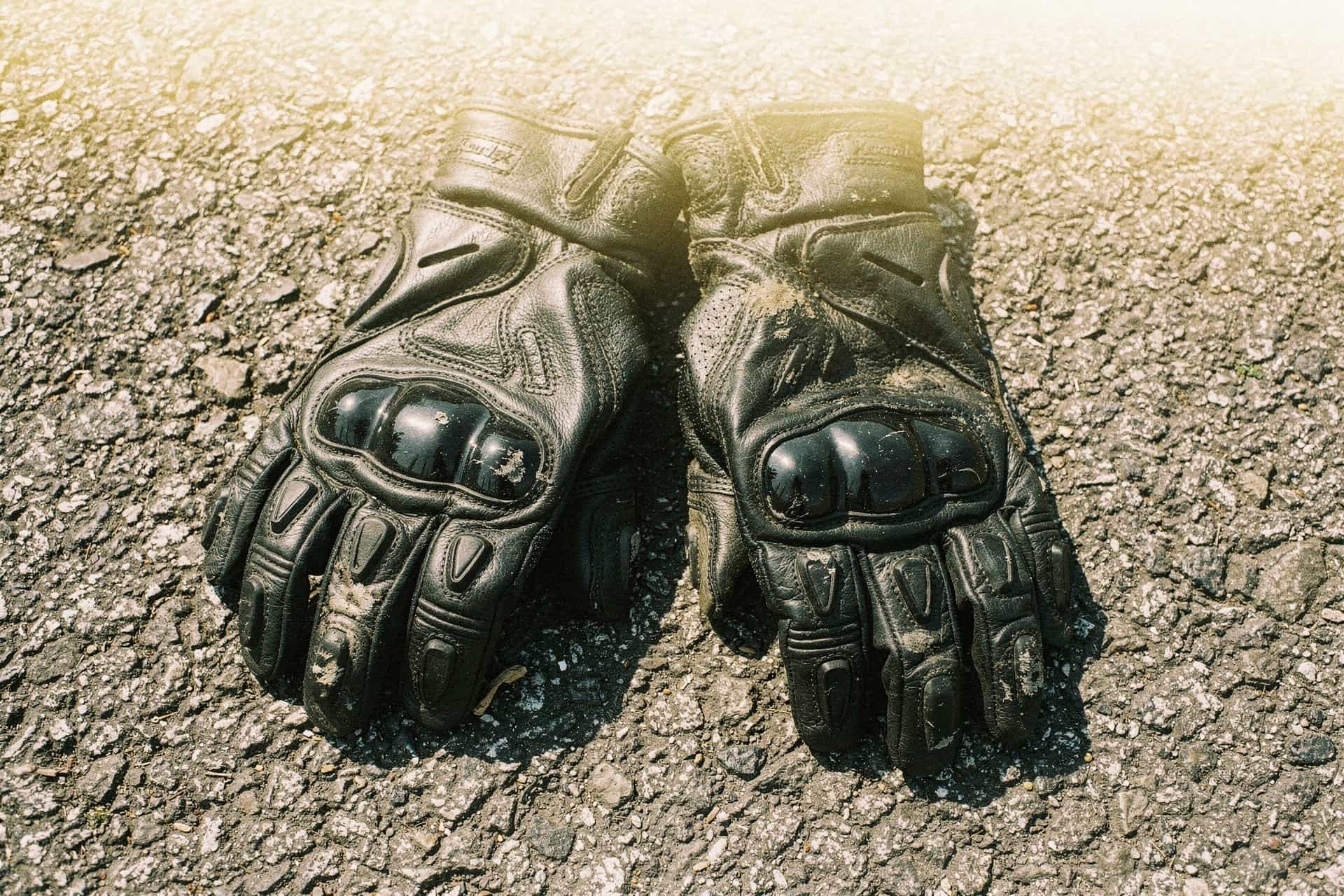
Watch slow-motion footage of almost any lowside and you will see the same move. The bike goes, the rider goes, and both hands shoot out toward the asphalt before the brain has a vote. It is pure reflex. Nobody lands on their shoulder on purpose.
That reflex is exactly why motorcycle gloves with palm sliders exist. Your palms hit first, and what happens in the next quarter second decides whether you walk away with scuffed leather or spend the next season in a cast. This guide covers the injury sliders are built to stop, how the Knox system works, what the CE label on a glove really tests, and how to pick a pair that protects without killing feel on the controls.
The Injury Sliders Are Built to Stop
The scaphoid is a small, boat-shaped bone on the thumb side of your wrist. The American Academy of Orthopaedic Surgeons says a scaphoid fracture “usually occurs when you fall onto an outstretched hand, with your weight landing on your palm” (OrthoInfo). That is a textbook description of a rider going down.
Three things make this bone a bad one to break:
- It hides. OrthoInfo notes that with some scaphoid fractures “the pain is not severe and may be mistaken for a wrist sprain.” It is easy to tape it up, keep riding, and only find out weeks later.
- Its blood supply runs backward. Blood enters the end nearest the thumb and flows back toward the forearm. A break near the forearm end can cut that supply off, which is why these fractures heal slowly and sometimes not at all.
- The downtime is long. OrthoInfo says you may need a cast or splint “for up to 6 months or until your fracture has healed.” Six months of no clutch hand is a lost riding season.
Honest take: we have heard more “I thought it was just a sprain” wrist stories around the garage than almost any other crash story. The bone is small, the pain is quiet, and the bill comes later.
The Grab Effect: Why Leather Alone Falls Short
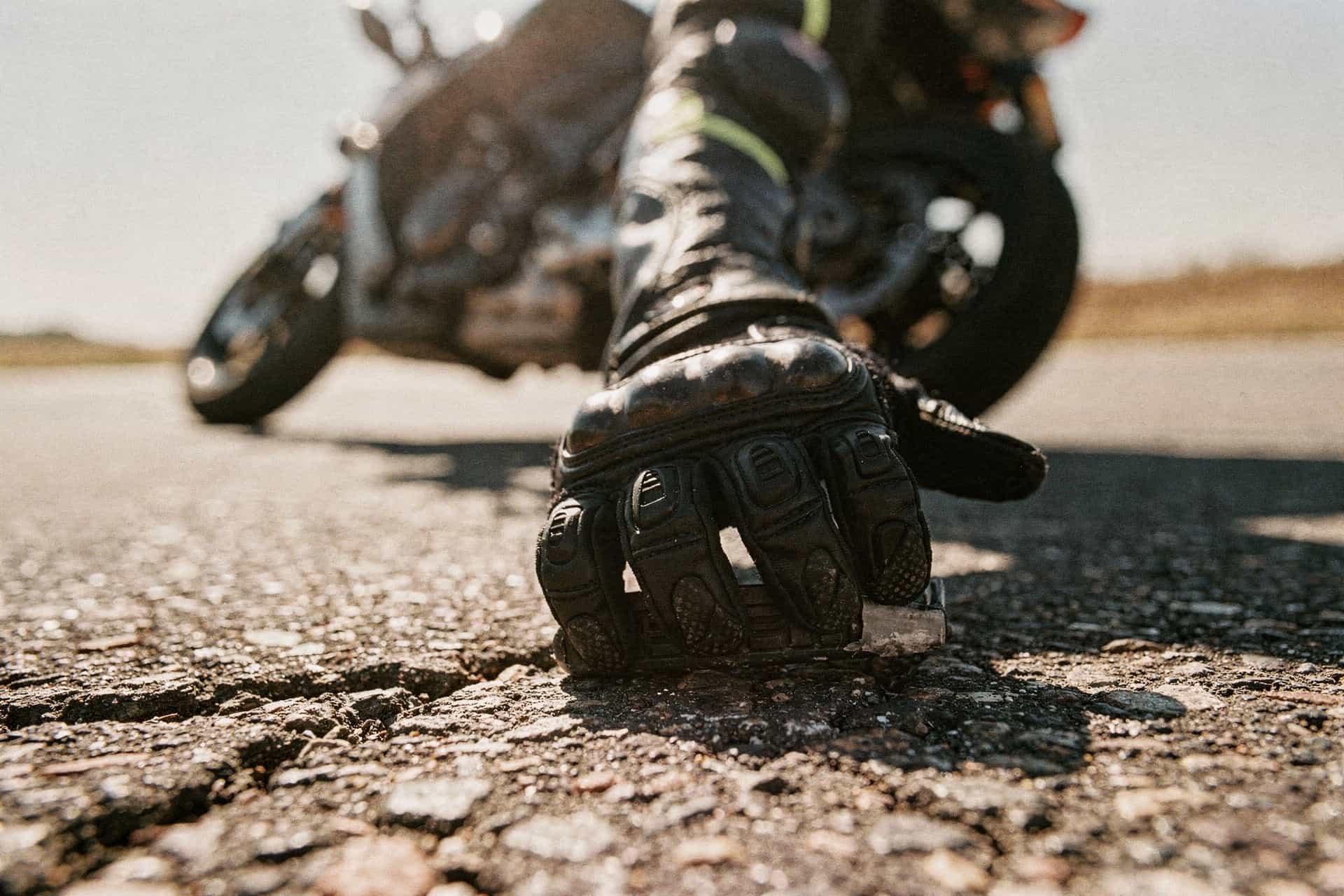
Leather is great at one job: not wearing through while it slides. It is less great at the moment of first contact. A leather palm can bite into the pavement for a split second. Your hand stops. Your body, still doing whatever speed you were doing, keeps going over the top of it.
That combination of compression and hyperextension is what glove makers call the grab effect. Olympia Gloves describes it as the outstretched hand being compressed and bent back as it catches the ground, and the fix as letting the hand “slide at the same speed and remain in front of the body” (Olympia Gloves).
So thicker leather is not the answer by itself. A thick cowhide palm and a thin goatskin palm can both grab. What changes the outcome is a hard, slick surface at the heel of the hand that skates instead of sticking.
How Palm Sliders Work
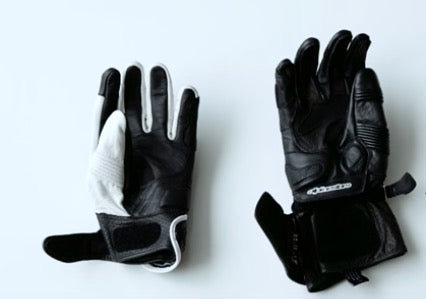
Palm sliders are hard pads stitched or bonded to the heel of the palm, right where your weight lands when you catch yourself. They work on the same idea as knee sliders on a track bike: plastic on asphalt slides, leather on asphalt can stick.
Common materials:
- LDPE (low-density polyethylene) - the same family of plastic Knox uses for its SPS parts. Slick, tough, and cheap to replace.
- TPU (thermoplastic polyurethane) - harder and often molded into shaped plates on sport and touring gloves.
- Carbon fiber or composite - usually on race gloves, sometimes paired with a plastic slider at the heel.
The slider does not stop abrasion by itself. Its job is the first hit. The leather or textile around it still has to survive the slide that follows.
Knox SPS: The System That Set the Standard
British armor maker Knox built the idea into a patented design called the Scaphoid Protection System, or SPS. Knox’s own description is short and clear: SPS “works by attaching 2 parts to the palm of the glove, making a bridge over the scaphoid,” and those parts “act as a slider eliminating the grab effect and scaphoid injuries” (Knox Lab).
Why two parts instead of one big plate? One part covers the heel of the palm over the scaphoid area. The second works as a bridge that stops the hand from catching and twisting as it lands. A single big plate would also make the palm stiff, and a stiff palm is a glove you stop wearing.
Knox holds patents on the design (EP1594378 and US8671463, listed on Planet Knox’s patent page) and supplies the parts to other glove makers through its Knox Lab parts business. That is why you will see “SPS” or “Knox SPS” printed on the palm of gloves from brands that are not Knox. Knox later released a dual-compound version that pairs LDPE with a softer thermoplastic rubber for comfort (Ultimate Motorcycling).
What the CE Label Tests (and What It Does Not)
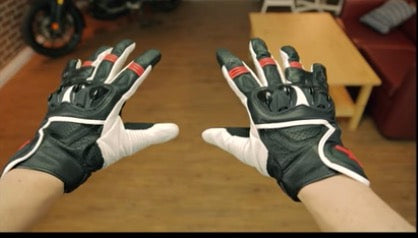
Palm sliders are one feature. The CE label tells you how the whole glove performs. In Europe, motorcycle gloves are certified to EN 13594:2015, and a certified glove carries a motorcycle pictogram, the standard number, and a level.
Here is what that level means:
| Level 1 | Level 2 | |
|---|---|---|
| Palm impact abrasion (mean) | 4 seconds or more | 8 seconds or more |
| Minimum cuff past the wrist line | 5 mm | 50 mm |
| Wrist restraint pull test | 25 N | 50 N |
| Knuckle impact protection | Optional (marked KP if passed) | Required |
The abrasion numbers come from MotoHut’s breakdown of the standard; the cuff and restraint numbers come from test lab SATRA, which also confirms the palm abrasion test is run on a Cambridge machine with a P120 grit belt.
Now the catch. None of those pass marks is a slider test. A glove can earn Level 1 with a plain leather palm. So when you shop, read the label for abrasion and restraint, then look at the palm with your own eyes. If there is no hard pad at the heel of the hand, there is no slider, whatever the box says.
Outside Europe, there is another data point worth a look. MotoCAP, a government-backed Australian program launched in 2018 with testing at Deakin University, buys gear anonymously and publishes protection ratings for jackets, pants, and gloves (MotoCAP testing process). Gloves tend to score lower than jackets, and one repeat reason is weak wrist restraint or no impact protection at the wrist (RideApart). A glove that comes off your hand in the first tumble protects nothing, sliders or not.
How to Shop for Gloves With Palm Sliders
Use this list in the store or when the box shows up at your door.
- Find the slider. Hard pad on the heel of the palm, ideally on the outer edge where your hand lands first. Knox SPS or a similar two-part design is the gold standard.
- Check the label. EN 13594, Level 1 at minimum, Level 2 or “1 KP” if you want certified knuckle protection.
- Pull test the wrist. Close the strap, make a fist, and try to pull the glove off by the fingertips. If it moves, it will leave your hand in a crash. A second closure at the cuff is worth having.
- Check the cuff. Gauntlets that tuck under your jacket sleeve close the gap between glove and jacket. Short cuffs are cooler, but you give up coverage.
- Grip the bars. Wrap your hand around a grip. The slider should sit at the heel of your hand and not dig into your palm. If it hurts in the store, it will hurt more at hour three.
- Nail the size. Sliders only work when they sit where your hand hits. A glove that shifts on your hand moves the slider out of place. Our guide on how to measure motorcycle glove size takes five minutes and a tape measure.
We keep one rule in the shop: if a glove fails the pull test, it goes back in the box, no matter how good the slider looks.
Sliders on Cruiser and Classic Gloves
A lot of cruiser and bobber riders skip sliders because the classic glove look is plain leather. We get it. A pair of soft, unarmored deerskin motorcycle gloves feels great on the grips and breaks in around your hand like nothing else.
The trade-off is real, though. Most traditional ropers, drivers, and fringe gauntlets have no slider, no knuckle armor, and no CE label. That is fine for a run to the store if you accept the risk, but it is not the same protection as a certified glove with a hard palm.
The good news is the market has caught up. Plenty of makers now build short-cuff and gauntlet gloves in plain black or brown leather with a low-profile slider on the palm and hidden knuckle armor. From across the parking lot they look like classic gloves. On the pavement they behave like modern ones.
Care and Replacement
Sliders are sacrificial parts. They are supposed to get scraped.
- After any crash, inspect the palm. A slider with a deep flat spot or cracks has done its job. Replace the gloves or, on gloves that allow it, the slider itself.
- Check the stitching around the slider. If the thread is worn through, the pad can tear off on the next hit.
- Keep the leather conditioned. Dry, cracked leather around a slider fails faster. Let wet gloves air dry at room temperature and skip the heater.
If You Already Went Down on Your Hands
Maybe you are reading this after the fact. You tucked the front in a gravel corner, caught yourself on your palms, and your wrist has been a little sore ever since. Do not wait it out.
OrthoInfo points out that lingering wrist pain after a fall deserves a doctor’s look, because prompt treatment helps prevent the long-term problems a missed scaphoid fracture can cause. Tell the doctor you fell on an outstretched hand and show exactly where it hurts. A plain “it is probably a sprain” is how these breaks get missed. A few weeks off the bike now beats a wrist that never heals right.
Gloves are one piece of the kit. For what goes on the rest of your body, from helmet to boots, our complete biker gear guide breaks it down by priority, and our guide to what to wear on a motorcycle shows how the pieces layer across the seasons. If you are new to riding and building your first kit, start with our beginner’s guide to motorcycles.
Once the protective gear is sorted, the off-bike stuff is where the culture lives. Browse the Bobber Brothers collection for tees, hoodies, and caps built by riders.
Sources
- OrthoInfo (American Academy of Orthopaedic Surgeons) - Scaphoid Fracture of the Wrist - How scaphoid fractures happen, why they get mistaken for sprains, blood supply, and cast times.
- Knox Lab - Gloves & Boot Parts - Knox’s description of the Scaphoid Protection System, the grab effect, and LDPE slider parts.
- Planet Knox - Patents - Knox patent listing for the SPS protective glove design.
- Ultimate Motorcycling - Knox Scaphoid Protection System Explained - How SPS works and the dual-compound LDPE and thermoplastic rubber version.
- Olympia Gloves - Scaphoid Protection in Motorcycle Gloves - The grab effect, compression and hyperextension of the wrist, and how sliders keep the hand moving with the body.
- SATRA - EN 13594:2015 Protective Gloves for Motorcycle Riders - Test lab summary of the glove standard: abrasion method, cuff length, restraint, and knuckle impact.
- MotoHut - Motorcycle Glove CE Ratings Explained - Level 1 and Level 2 abrasion time requirements.
- MotoCAP - Testing Process - How the Australian program buys and tests gloves for protection.
- RideApart - MotoCAP Is Testing How Safe Motorcycle Gloves Really Are - Why many gloves score low, including weak wrist restraint and missing wrist impact protection.