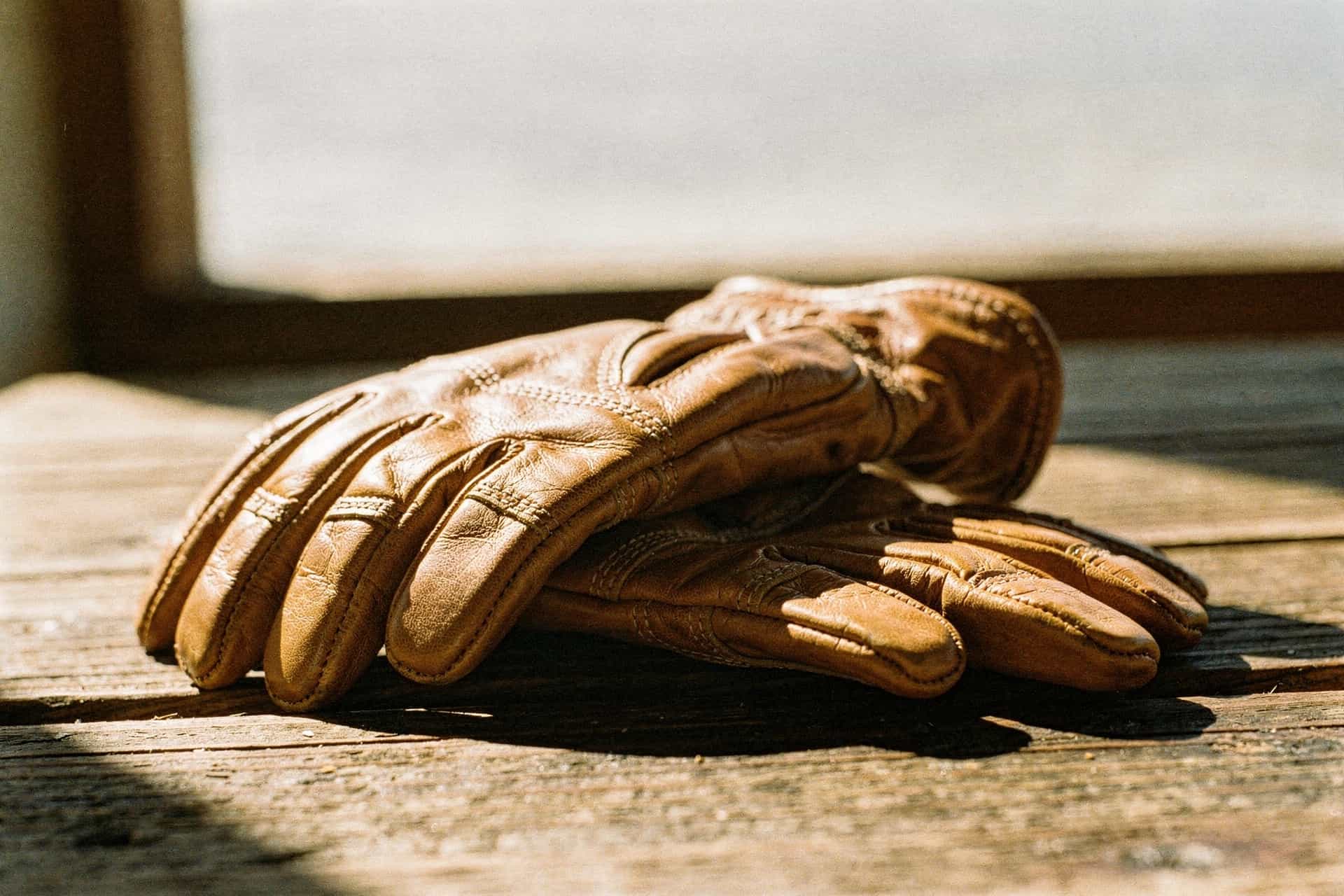
The first mile in a new pair of cowhide gloves feels like holding the bars with oven mitts. The first mile in deerskin feels like you forgot to put gloves on. That difference is why so many cruiser and bobber riders keep a pair of deerskin motorcycle gloves in the saddlebag long after they have tried everything else.
But soft is not the same as safe, and a lot of what gets written about deerskin reads like a sales tag. So here is the straight version: what deerskin does well, where it falls short, how it stacks up against the other leathers, and how to buy and care for a pair so it lasts.
Why Deerskin Feels Different
Leather is a web of collagen fibers. How tight that web is decides how the leather behaves. In deer hide the weave is looser than in cattle hide, which is why deerskin stretches more, springs back better, and stays soft after years of use (Legendary USA).
For a rider, that looser weave shows up in three ways:
- Almost no break-in. Fox Creek Leather, which makes gloves in cowhide, deer, and elk, rates the break-in time on deerskin as “basically none,” against “a few rides” for cowhide (Fox Creek Leather).
- Feel on the controls. Thin, supple leather lets you feel the clutch lever and the throttle return. Olympia Gloves says deerskin allows nearly as much touch as bare fingers (Olympia Gloves).
- It molds to your hand. After a few weeks, a deerskin glove takes on the shape of your grip. That is the part riders talk about most, and it is real.
Rain, Sweat, and Why Deerskin Dries Soft
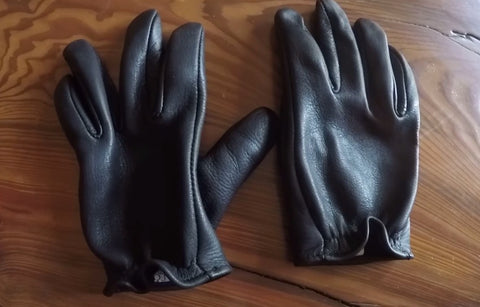
Every rider has pulled a pair of cowhide gloves off the garage shelf the morning after a wet ride and found two stiff, curled claws. Deerskin handles that better than most leathers.
Churchill Glove, which has made deerskin gloves in the US since 1897, puts it plainly: “Get them wet, no problem. Churchill deerskin gloves dry to their original soft condition” (Legendary USA). Fox Creek rates both deer and elk as drying soft after rain without extra care, while cowhide keeps its softness only “with prompt care.”
Two things to keep straight:
- Water resistant is not waterproof. Deerskin carries natural oils that shed light rain and road spray. Ride through a real storm and water will soak through to your hands. If you ride in heavy rain often, you want a glove with a waterproof membrane or a liner.
- Drying soft still needs a slow dry. Heat is the enemy. Legendary USA, which sells Churchill gloves, says to let wet deerskin air dry at room temperature and never put it in a dryer (Legendary USA care guide).
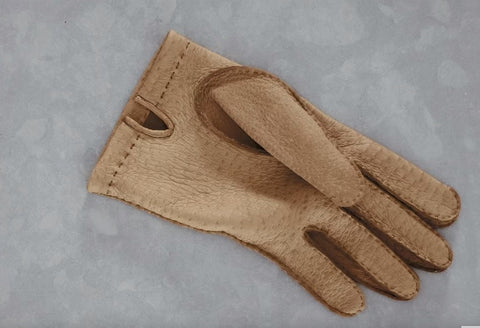
Deerskin vs. Cowhide, Elk, Goatskin, and Kangaroo
No leather wins every category. Here is how the three classic cruiser glove leathers trade off, based on Fox Creek Leather’s comparison:
| Leather | Comfort out of the box | Abrasion resistance | After getting wet | Break-in |
|---|---|---|---|---|
| Deerskin | Excellent | Moderate to high for its weight | Dries soft | Basically none |
| Elk | Very good | Highest of the three | Dries soft | One short ride |
| Cowhide | Fair to good | High | Stays soft only with prompt care | A few rides |
Glove makers do not all agree on abrasion. Sullivan Glove calls deerskin “tough as nails” but still says cowhide offers “superior durability, abrasion resistance, and overall toughness” (Sullivan Glove). Olympia Gloves describes deerskin as very soft and durable, and calls it “the only leather that can get wet and still dry soft” (Olympia Gloves).
Two more leathers come up a lot. Goatskin can be cut lighter than cowhide for better feel, but the thin versions give up some durability. Kangaroo is prized for being soft and strong at the same time, which is why you see it on race gloves, and Olympia notes it can cost about twice as much as mid-priced leathers.
Honest take from our end: if we are doing a long, cold, maybe-wet day on a cruiser, deerskin or elk comes out of the saddlebag. If we are riding fast, or riding somewhere a crash is more likely, we reach for a certified glove with armor. Different jobs, different gloves.
The Protection Question Nobody Puts on the Tag
Here is what the soft-leather marketing skips. Most classic deerskin gloves, the ropers, drivers, and fringed gauntlets you see at every rally, are just leather. No palm slider. No knuckle armor. No CE label.
In Europe, motorcycle gloves are certified to EN 13594:2015. To pass even Level 1, the palm has to survive an impact abrasion test on a machine with a P120 grit belt, and the glove needs a wrist restraint that holds under a pull test (SATRA). Level 2 roughly doubles the required abrasion time and makes knuckle impact protection mandatory (MotoHut).
An unlined deerskin driver glove was never designed to that test. That does not make it useless. It keeps sun, wind, bugs, and gravel off your hands, and some leather is a lot better than none. But it is not the same as a certified glove.
The other gap is the palm. When you fall, your hands go down first, and a leather palm can grip the road while your body keeps going. That is the classic way riders break the scaphoid bone in the wrist. Gloves with palm sliders use a hard plastic pad at the heel of the hand so it skates instead of sticking. A growing number of makers now build deerskin or elk gloves with a slider and hidden knuckle armor, which gets you most of the feel with a lot more protection. If you want the soft glove and the safety net, that is where to look.
How to Size Deerskin Gloves
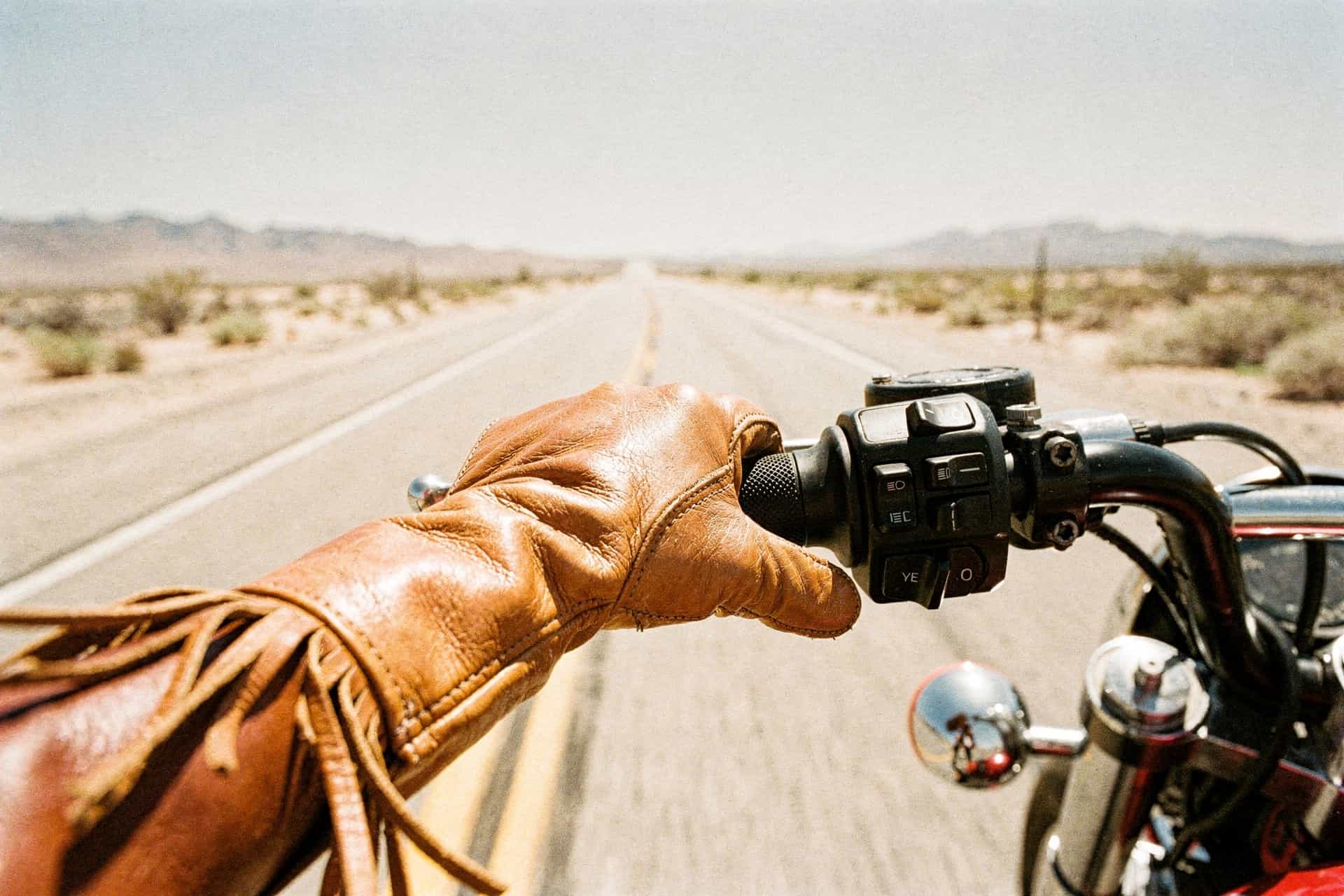
Deerskin stretches, but only one way. Olympia Gloves explains that the leather stretches across the width of your hand with wear, while the fingers do not stretch much in length (Olympia Gloves). That shapes how you buy:
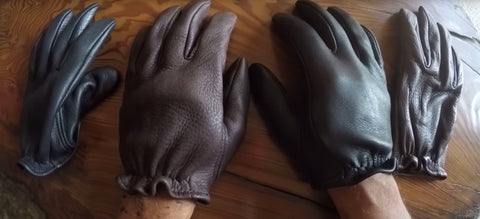
- Across the knuckles: snug. A deerskin glove that is comfortable across the palm on day one will feel loose in a month.
- Finger length: right the first time. Your fingertips should just reach the ends. Too short now means too short forever.
- Wrist: check the closure. A snap or strap that holds the glove on your hand matters more than people think. A glove that slides off in a fall protects nothing.
If you do not know your size yet, our step-by-step guide on how to measure motorcycle glove size takes five minutes with a tape measure. Measure your throttle hand, since it is usually the bigger one.
Styles and Which Rider They Suit
Deerskin shows up in almost every classic glove style. Here is who each one is for:
- Gauntlet. Long cuff that tucks over your jacket sleeve and blocks wind at the wrist. The pick for highway miles and cooler mornings.
- Fringed gauntlet. Same cuff, with fringe that flaps in the wind. Mostly a look, and the fringe can catch on things when you wrench.
- Short-cuff driver or roper. Light and quick to pull on and off at gas stops. Cooler in summer, with less coverage at the wrist.
- Lined gloves. Cotton, fleece, or insulated liners for cold weather. A liner takes up room inside, so you may need to size up.
- Fingerless. Popular in hot weather and in the garage. On the bike, they leave your fingertips bare, which is exactly the skin that hits first.
Deerskin in the Cold
Deerskin is a better three-season glove than it looks. Olympia Gloves credits the interwoven fiber structure with blocking a fair amount of wind and cold, and suggests adding a liner when the temperature drops. That matches what we see on early spring rides: an unlined deerskin gauntlet handles a cool morning, and a thin liner underneath stretches it further before your fingers start to complain. Below that, you want a real insulated winter glove or heated grips. Remember the sizing rule, too. A liner eats room inside the glove, so a pair bought snug for summer may be too tight to wear with one.
Made in the USA and What It Costs
A lot of the best-known deerskin gloves come from American makers who have been at it for generations. Churchill Glove, for example, says four generations of the family have made deerskin gloves since 1897, using domestic whitetail deerskin (Legendary USA).
Domestic, hand-cut gloves cost more than imported ones. What you are paying for is usually better leather selection and stitching that holds. What you are not automatically paying for is crash certification, so check the tag for EN 13594 if protection matters to you.
Care That Keeps Deerskin Soft for Years
Deerskin is low maintenance, but not no maintenance.
- Wipe after the ride. A slightly damp cloth takes off road grime, bug guts, and sweat salt.
- Air dry, always. Room temperature only. No heater, no dryer, no glove propped against the woodstove.
- Reshape while damp. Pull the fingers straight and let them dry flat or lightly stuffed.
- Condition only when it needs it. When the leather starts to feel dry or looks dull, a small amount of conditioner or lanolin brings it back. Overdoing it makes the glove greasy on the grips.
- Store flat and cool. Do not leave gloves balled up in a hot saddlebag all summer.
We have seen deerskin gloves that outlived two bikes because the owner did these five things. We have also seen a brand-new pair ruined in one night on a campfire drying rack.
Where Deerskin Fits in Your Kit
Deerskin is a comfort-first glove. It fits the classic look of a stripped-down bobber motorcycle, it feels great on long cruiser days, and it forgives a little rain. Pair it with a certified glove for the rides where a crash is more likely, and you have covered both ends.
Gloves are one piece of the puzzle. Our biker gear guide covers jackets, boots, and helmets in priority order, and our guide to what to wear on a motorcycle shows how gloves fit into a full outfit across the seasons.
Round out your kit with our biker caps, hoodies, and accessories - all built for actual riders.
Sources
- Fox Creek Leather - Cowhide vs. Deerskin vs. Elkskin Leather - Maker comparison of abrasion, comfort, water handling, stretch, and break-in across glove leathers.
- Olympia Gloves - What You Need to Know About Deerskin Motorcycle Gloves - Deerskin water resistance, widthwise stretch, feel, and conditioning.
- Olympia Gloves - Which Leather for Gloves? - Cowhide, goatskin, kangaroo, and deerskin compared, including kangaroo cost.
- Legendary USA - Churchill Glove, Made in USA Since 1897 - Churchill history, whitetail deerskin, and why deerskin dries soft.
- Legendary USA - How to Clean Deerskin Motorcycle Gloves - Cleaning, air drying, storage, and conditioning.
- Sullivan Glove - Deerskin vs Cowhide Gloves - A maker’s view that cowhide is tougher and more abrasion resistant than deerskin.
- SATRA - EN 13594:2015 Protective Gloves for Motorcycle Riders - What the CE glove standard tests: palm abrasion, cuff, restraint, and knuckle impact.
- MotoHut - Motorcycle Glove CE Ratings Explained - Level 1 and Level 2 abrasion time requirements.