
The first time you open an aftermarket Harley parts catalog, it is thicker than the owner’s manual, the service manual, and the phone book combined. Chrome everything. Six kinds of air cleaner. Forty seats. Every page promises your bike will finally feel like yours.
Most of it can wait. The parts that change your riding the most in year one are not the loud ones. They are the ones that touch your body: where you sit, where the wind hits, where your hands and feet land, and how you carry your stuff. Get those right and every mile gets better. Get them wrong and you will own a shiny bike you do not want to ride for more than an hour.
Here are the five upgrades we would buy first on almost any Harley, what to look for in each, and the two legal traps that catch riders who skip straight to performance parts.
Before You Spend a Dollar: Warranty and Emissions
Two rules shape the whole aftermarket, and most riders only half know them.
Aftermarket parts do not void your warranty by themselves. In 2022 the Federal Trade Commission took action against Harley-Davidson over warranty terms that implied coverage would be void if owners used independent shops or third-party parts. Under the FTC order, Harley must tell owners in its warranty that “using third-party parts will not void this warranty” (FTC). The catch: a maker can still refuse to cover damage an aftermarket part actually caused. Bolt on a seat and your engine warranty is safe. Install a cam wrong and the bill is yours.
Emissions rules are real, and Harley learned it the expensive way. In August 2016 the Justice Department and the EPA announced a settlement over about 340,000 “super tuners” that let owners change how the engine ran and raised hydrocarbon and NOx emissions. Harley agreed to a $12 million civil penalty and to get California Air Resources Board certification for any tuners it sells in the future (EPA). For you, the lesson is simple: if a tuner, intake, or exhaust is going on a street bike, look for a CARB Executive Order number in the listing.
Neither rule touches the five upgrades below. That is part of why they come first.
1. The Seat
The stock seat on most bikes is built to fit an average rider and to look good on the showroom floor. You are not average, and you do not ride on the showroom floor.
A seat change fixes a long list of complaints. Too much weight on the tailbone, legs cramping after an hour, sliding forward into the tank under braking: more often than not, the seat is part of the answer.
What to look at:
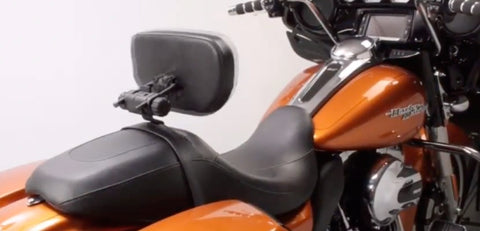
- Seat height and reach. A lower seat helps shorter riders flat-foot at stops. A taller or more padded seat gives long-legged riders more room at the knee. Moving an inch changes your reach to the bars and pegs, so think about all three together.
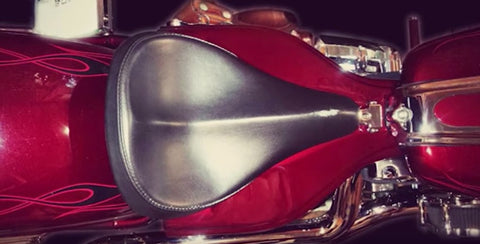
- Solo or two-up. A solo seat cleans up the rear of the bike and is the classic bobber look. If you carry a passenger, a two-up seat or a detachable pillion pad keeps both options open.
- Shape over padding. A wider, shaped seat that spreads your weight usually beats a thick slab of soft foam. Soft foam feels great in the parking lot and bottoms out by lunch.
- Backrest. A driver backrest or a detachable sissy bar pad changes long days more than most riders expect.
Honest take: we have watched a lot of riders blame their back, their bars, or their bike for pain that went away with the right seat. Ride a buddy’s bike with a different seat for an hour before you buy. It is the cheapest test there is.
2. Wind Protection: Windshield, Wind Deflector, or Quarter Fairing
Wind is fun for the first 30 minutes. After three hours on the highway, it is a workout for your neck and shoulders, and it is tiring in a way you do not notice until you are making bad decisions.
Your options run from small to big:
- Quarter fairing or small deflector. Takes pressure off your chest and keeps the stripped-down look. On XL builds, a Sportster quarter fairing is the classic choice.
- Sport or short windshield. Moves the wind up to your shoulders and helmet. A good middle ground for mixed riding.
- Full windshield. The most protection for touring days and cold mornings, and the most buffeting if the height is wrong for you.
Height matters more than brand. A shield that ends right in your line of sight is the worst of both worlds. A common starting point is a top edge you can look over, not through, from your normal riding position. If you get helmet buffeting, try a little taller or a little shorter before you give up on the idea.
Detachable mounts are worth paying for. Windshield on for the trip, off for bike night.
3. Luggage and Racks That Come Off
Every rider eventually needs to carry more than a wallet. The question is whether the bike has to look like a pack mule the other 300 days of the year.
Harley’s answer is its Detachables system: docking points bolted to the bike that let a sissy bar, luggage rack, or Tour-Pak rack click on and off without tools. The docking hardware is model-specific. Touring bikes, Softails, and Sportsters each use different kits, and fitment changes by year, so check your exact model code before you order (Harley-Davidson). Aftermarket makers also build racks and bars that fit the same docking points.
What to think through:
- Weight limits. Racks and sissy bars have load ratings. A loaded tail bag hanging off the back changes how the bike steers at speed.
- Hard bags vs. soft bags. Hard bags lock and keep rain out. Soft bags and swing-arm bags suit bobbers and Sportsters and come off in seconds.
- The passenger. A sissy bar with a pad makes a passenger far happier on a long day, and it gives you a strap point for a duffel when you ride solo.
4. Controls, Grips, and Bars
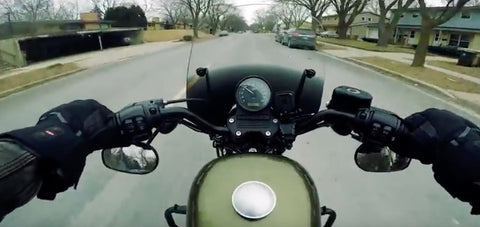
Your hands and feet are where you talk to the bike. If the reach is wrong, you feel it in your wrists, knees, and lower back.
- Forward controls vs. mid controls. Forward controls stretch your legs out, which suits taller riders and highway cruising. Mid controls put your feet under you, which gives more control in corners and when you stand on the pegs over a pothole.
- Grips. Thicker or more padded grips cut vibration and hand fatigue on a big twin. Thinner grips give more feel. Check whether your bike has a throttle-by-wire system before you order, because grips and throttle sleeves are not always interchangeable across model years.
- Handlebars. Bars change your whole riding position. Apes, drag bars, and pullbacks each put you in a different spot. Our guide to motorcycle handlebar types walks through the trade-offs. Remember that taller bars can need longer cables, brake lines, and wiring, which turns a quick swap into a weekend.
We see this in the garage every season: a rider bolts on tall bars for the look, then spends the summer with numb hands and a sore neck. Sit on the bike, reach for where the new bars would be, and hold it for five minutes before you buy.
5. Engine Guard (and Covers)
Plenty of parts lists put chrome engine covers here. Covers are fine. They are the easiest way to change the look of a bike, and swapping a derby or timer cover is a good first wrenching job.
But if you only buy one part in this category, make it an engine guard, the tubular bar that bolts to the frame in front of the engine. In a tip-over in the driveway or a slow drop in a gravel lot, the guard takes the hit instead of your cases, your tank, and your leg. Many riders also mount highway pegs to it, which gives your legs a second position on long days.
Things to check:
- Fitment by frame. Guards are specific to model family and year. A guard for a Softail will not bolt to a Sportster.
- Clearance. Make sure it clears your pipes and floorboards or pegs, and that your forward controls still work with it on.
- Finish. Black holds up better than chrome if you ride in salt or rain.
What About Performance Parts?
Air cleaners, exhausts, and tuners are where most riders want to start. We get it. Nothing beats the first ride after a set of pipes.
Do it after the bike fits you. Then do it legally. A high-flow air cleaner and exhaust usually need a matching tune to run right, and that tuner is exactly the kind of device the 2016 EPA settlement was about. Buy parts with a CARB Executive Order number for a street bike, and keep the stock parts in the garage. And before you go loud, read up on what loud pipes save lives actually means, and what the data says.
If you ride an XL, our breakdown of Sportster 1200 performance upgrades covers what makes a real difference and what is just noise.
Building a Bobber Instead?
If the plan is to strip the bike down rather than add to it, the parts list flips. Bobber builders cut fenders, drop the seat to a solo, lose the passenger pegs, and hunt for parts that take weight off rather than put it on. Start with what makes a bobber motorcycle, then look at the best Harley bobber builds for ideas on what other builders kept and what they tossed.
And if you want the backstory on the machine you are about to wrench on, from the flathead to the Milwaukee-Eight, our Harley-Davidson history guide covers every engine generation.
If you ride a Harley, our Built Not Bought biker tees and hoodies are designed for riders who respect the heritage and do their own wrenching.
Sources
- Federal Trade Commission - FTC Takes Action Against Harley-Davidson and Westinghouse for Illegally Restricting Customers’ Right to Repair (2022) - The warranty case and the required statement that third-party parts do not void the warranty.
- FTC - Final Orders in Right-to-Repair Cases Against Harley-Davidson, MWE Investments, and Weber (October 2022) - Final approval of the order.
- U.S. EPA - Harley-Davidson Clean Air Act Settlement - About 340,000 tuners, the $12 million civil penalty, and the CARB certification requirement for future tuners.
- U.S. Department of Justice - Harley-Davidson to Stop Sales of Illegal Devices (August 2016) - The original settlement announcement.
- Harley-Davidson - Motorcycle Docking Hardware Kits - Detachables docking hardware for sissy bars, racks, and Tour-Pak racks by model family.