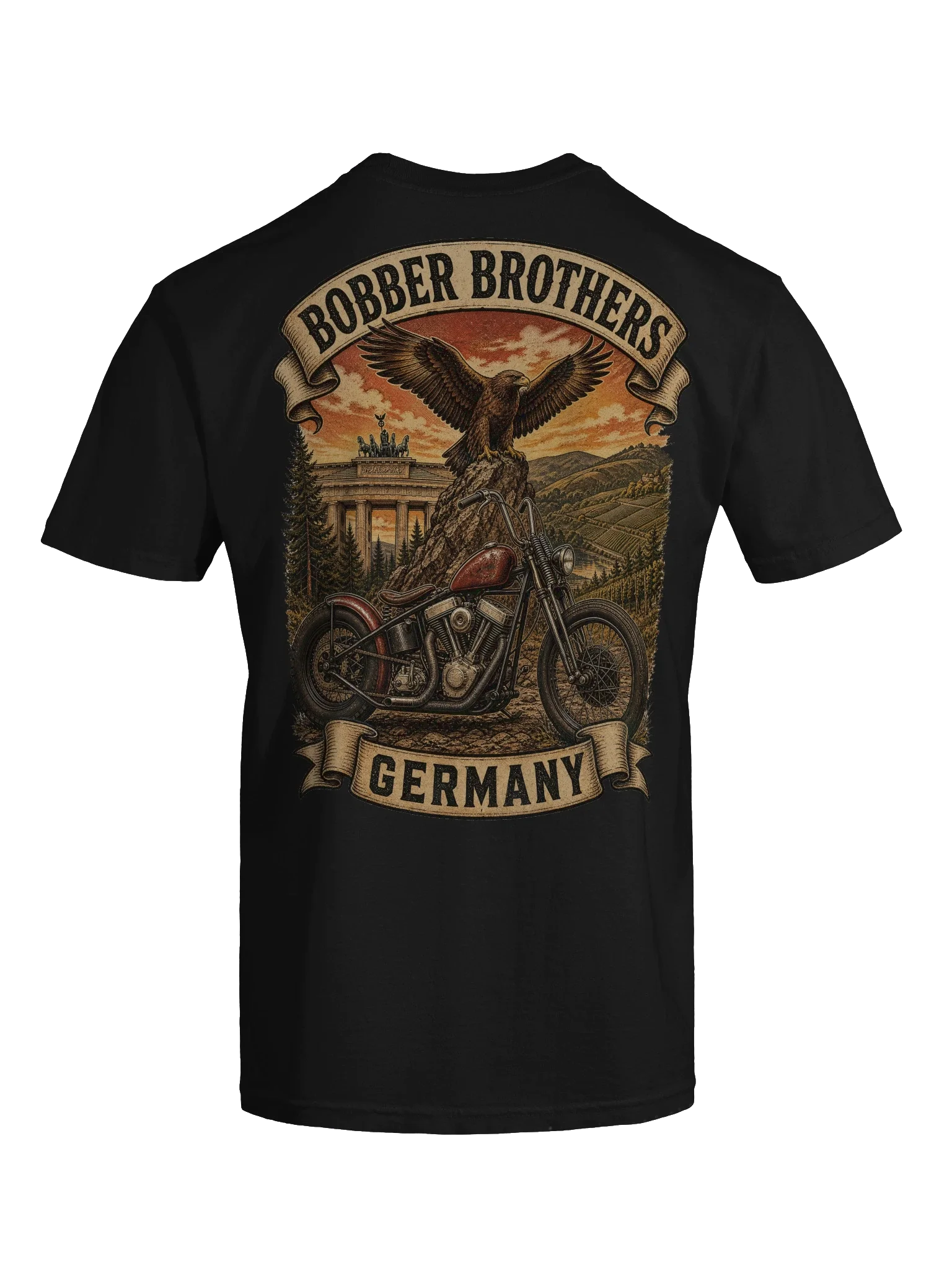
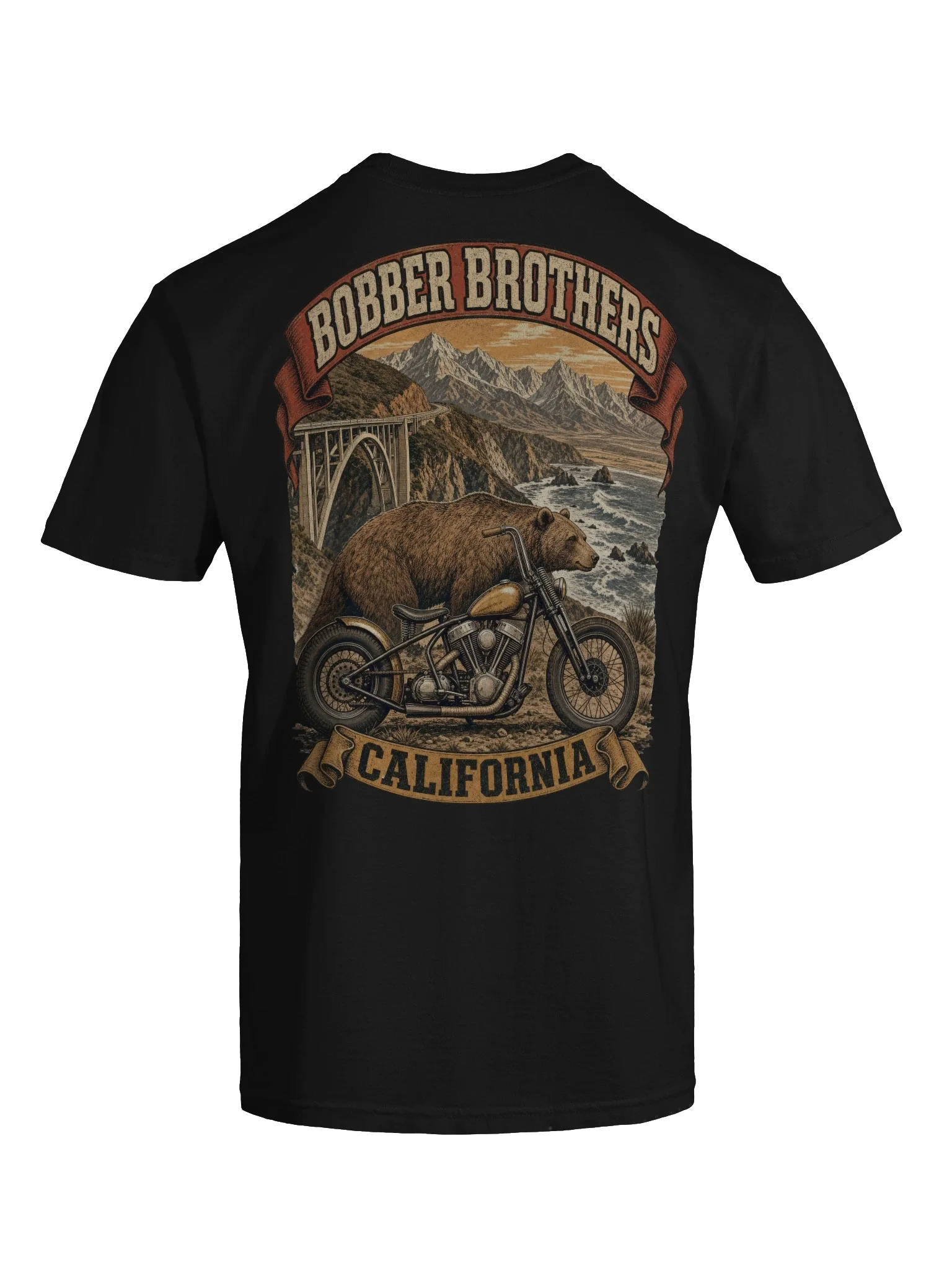
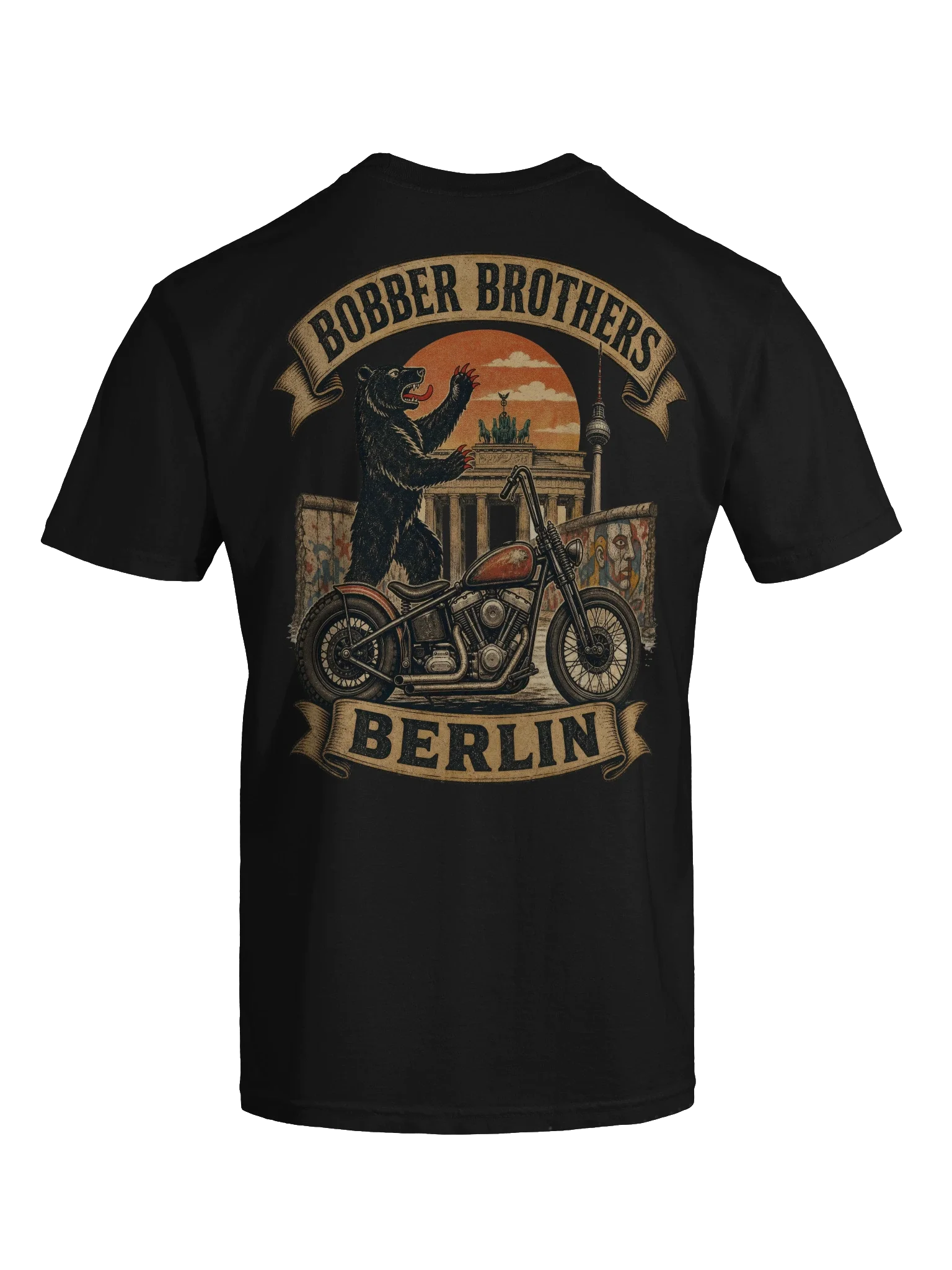
Somewhere in a garage right now, a rider is staring at a bone-stock Softail and thinking about what it could be. The rear fender is too long. The exhaust is too quiet. The seat is built for two, and nobody else is riding. That moment, when you stop seeing the factory bike and start seeing the bobber hiding inside it, is where every Harley-Davidson bobber build begins.
The hard part comes next, and it is not aesthetic. It is picking the donor. Get that wrong and you spend the whole build fighting the motorcycle instead of shaping it.
How We Picked These Platforms
This is a comparison of donor platforms, not a gallery. Every platform below was judged on the same four questions, and we say which way each one falls rather than calling all of them great.
- Donor supply. How many clean, unmodified examples are realistically available, and how long is the production run behind them. A long run means parts, manuals and knowledge.
- Parts depth. Whether the aftermarket makes model-specific bolt-on fenders, seat brackets, exhausts and lighting mounts. This is the single biggest predictor of whether a first build finishes.
- How much the factory already did. Some Harleys arrive most of the way to bobber proportions. Some need everything.
- What the platform costs you after the build. Maintenance load, parts sourcing, and how much of the bike stays ridable rather than becoming a project.
Two things we deliberately do not do. We do not publish donor price bands, because used Harley values move by region, season and condition fast enough that a printed number is wrong within a year; check current sold listings and a dated valuation source instead. And we do not describe specific customer bikes we cannot attribute to a named builder, because an unverifiable build story is not evidence of anything.
Quick Pick: Harley Bobber Donor Platforms
| Platform | Best for | Why builders choose it | What it costs you |
|---|---|---|---|
| Air-cooled Sportster (XL) | A first Harley bobber | Compact chassis, 82 lb lighter than the cited Street Bob, deep bolt-on catalog | 883 power is thin above highway speed |
| Softail (used, M8 or Twin Cam) | Big Twin torque with a rigid look | Hidden rear suspension, factory hardtail silhouette | Heaviest finished bike, highest donor cost |
| Dyna (1991-2017) | Riders who push the chassis | Rubber-mounted Twin Cam, exposed shocks, strong handling reputation | Fixed supply, values hold firm |
| Shovelhead / Panhead | Period-correct old iron | Sound, mechanical character, genuine vintage presence | Maintenance, parts sourcing, patience |
For most builders the answer is still the Sportster. For Big Twin torque the practical route now is a used Softail, since the cheap factory blank canvas is gone. For a garage project with real patina, old iron wins on character and loses on everything else.
The Sportster: Where Most Builders Start
The air-cooled Sportster became a default Harley bobber donor, and the reasons are structural rather than sentimental.
The XL Sportster ran from 1957 to 2022. Harley’s own Sportster history puts the Evolution engine into the line in 1986 at 883cc and 1100cc, with the 1200 replacing the 1100 in 1988. That gives the air-cooled Evo Sportster a 36-year run of a fundamentally similar design, which is why the parts catalog is as deep as it is.
The chassis is the real argument. Harley’s published figures for the 2018 XL883N list a 59.6 inch wheelbase, 30 degrees of rake, 4.6 inches of trail and 564 pounds in running order. Compare that with the 2026 Street Bob at 64.2 inches of wheelbase, 30 degrees of rake, 6.2 inches of trail and 646 pounds. The Sportster is shorter, lighter and quicker steering before you touch a bolt, which is exactly what a bobber is trying to become.
Read the Torque Figure, Not the Horsepower Rumor
Harley never published a horsepower rating for the air-cooled Evolution Sportster in its US model materials. The number Harley stood behind on the 2018 XL883N is 53.8 lb-ft of torque at 3,750 rpm, and 73 lb-ft at 3,750 rpm on the XL1200C. Every “the 883 makes about 50 horsepower” figure in circulation traces back to a third-party dyno run or a European homologation document, and almost none of them state dyno type, correction factor, or whether the figure is at the crank or the wheel. Our Iron 883 specification breakdown works through the published numbers year by year.
The practical version: an 883 is comfortable in town and on back roads and runs out of enthusiasm at sustained highway speed. If most of your riding is interstate, start with a 1200 rather than planning a big-bore kit you have not budgeted for.
The Donor Lessons That Actually Cost Money
Buy 2014 or later if the budget allows. The 2014 model year brought larger front and rear brake components, an ABS option, a new harness, and a speedometer display with a digital tachometer and gear indicator. Keyless ignition came with the optional Smart Security System rather than every 2014 Sportster. The brake and electrical changes make this a useful year boundary, but confirm the options fitted to the actual donor.
Rubber mounts start in 2004. Sportsters from 2004 onward isolate the engine in the frame. Pre-2004 rigid-mount bikes vibrate noticeably harder. Some builders want that. Nobody should discover it after buying.
Fuel injection starts in 2007. A carbureted and an injected Sportster require different fuelling tools, but not every muffler change requires rejetting or calibration. Follow the instructions for the exact intake and exhaust combination and verify the running condition. Harley’s own accessory instructions require calibration for some high-flow systems and omit it for others.
The factory already did the styling work on some models. The Iron 883 ships blacked out with drag bars, a solo seat and a short rear fender. A 1200 Custom ships with chrome, forward controls and a full fender. Starting from the Custom means more work and more freedom. Starting from the Iron means a weekend of subtraction. Neither is wrong, but paying an Iron premium and then replacing the parts it came with is money spent twice.
Our Sportster bobber build guide goes through the donor years, the mod order and the mistakes in detail, and the Sportster chain conversion guide covers the one drivetrain change that opens up gearing and rear tire clearance.
The Softail: Big Twin Torque in a Rigid Silhouette
The Softail exists to solve one problem. Riders wanted the look of a hardtail without the ride of one, so Harley hid the rear suspension under the transmission. From three feet away the frame reads rigid. From the saddle it is not. That trick is the entire reason bobber builders keep coming back to the platform.
What Changed, and Why the Old Advice Is Stale
Two changes matter for anyone reading older Softail bobber advice.
Harley consolidated the Softail range onto the Milwaukee-Eight 117 for the 2025 model year, replacing the 107 and 114 engines used before it. Harley’s current Street Bob listing shows the 2026 bike with the Milwaukee-Eight 117 Classic, 98 horsepower at 4,600 rpm, 120 lb-ft at 2,500 rpm, and 646 pounds in running order.
And the Softail Standard, which was the cheapest way into a Big Twin blank canvas, was dropped after the 2024 model year. If a guide tells you to walk into a dealer and buy a Softail Standard, that guide is out of date. The bike is now a used-market proposition, and a good one, because it was the least dressed-up Softail Harley built.
Street Bob: A Starting Point, Not a Finished Product
The Street Bob is Harley’s most direct nod to the tradition: mini apes, bobbed rear fender and a blacked-out engine. For 2026 Harley offers a lower-priced solo trim in Dark Billiard Gray, but a solo seat is not universal across every configuration. It leaves the dealer looking like somebody already built it.
That is also the trap. The factory exhaust has to meet noise and emissions rules, and the suspension and seat specification depend on the trim. A productive Street Bob build can stay small: choose a legal exhaust and complete any calibration its instructions require, set up the suspension for rider weight, then address seat comfort and lighting only where the actual bike needs it. Frame work on a bike that already has the proportions right is money looking for a problem.
The Softail Trade-Off, Stated Plainly
You are buying torque and a rigid look and paying for it in weight. The cited 2026 Street Bob is 82 pounds heavier in running order than the cited 2018 Iron 883 before either is modified. Finished weights vary with model, year and parts, so that comparison is more honest than assigning one weight to every Softail or vintage build. If low mass is the priority, start with the Sportster. If Big Twin torque and the hidden-shock silhouette matter more, the Softail earns its extra weight.
Our hardtail versus softail comparison covers what you actually give up if you decide the hidden suspension is not enough and start looking at a rigid rear section.
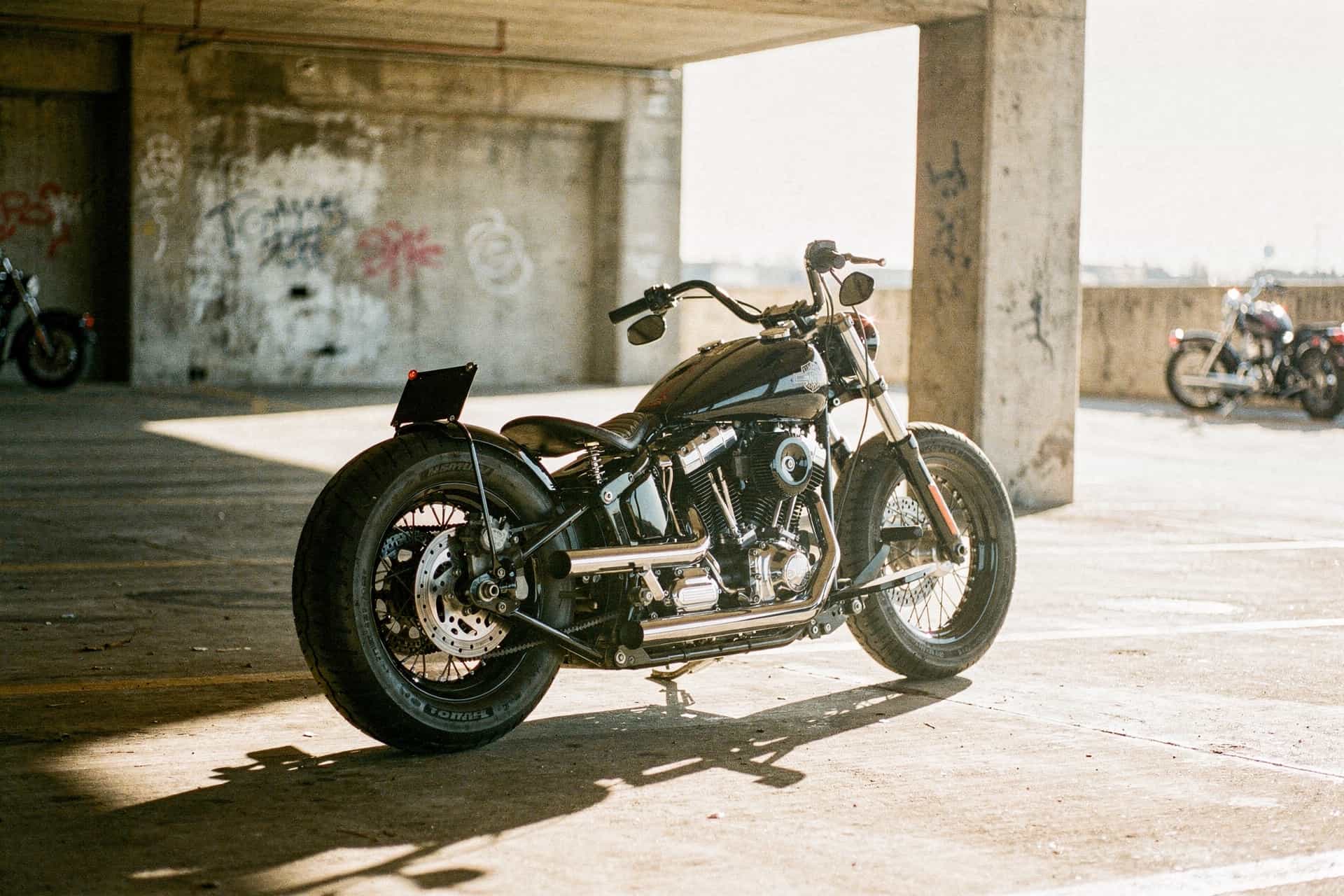
The Dyna: The Rider’s Platform
Harley merged the Dyna into the Softail chassis for 2018, which makes the Dyna a fixed-quantity platform. Nothing new is coming, and values have stayed firm. Riders know these bikes handle differently, and for builders who ride hard rather than park pretty, that difference is the point.
The Dyna used a traditional steel tube frame with exposed twin rear shocks and a rubber-mounted engine. The 1991-1998 Dynas used the Evolution Big Twin; Twin Cam Dynas followed from 1999 through the platform’s final 2017 model year. The rubber mounts isolate the engine from the frame, so the engine can move visibly at idle and smooth out as speed rises. The 1982 FXR is where that rubber-mounted handling lineage started.
For a bobber specifically, the Dyna has one clear advantage and one clear disadvantage. The exposed shocks and visible frame tubes suit a style built on showing the machine rather than hiding it. And the same exposed rear end means there is no hardtail illusion to inherit, so the finished bike reads as a stripped motorcycle rather than a rigid one.
Be Careful With Twin Cam Numbers
Most 2007 and later Dynas ran the Twin Cam 96, which Harley lists at 1,584cc. There is no single honest stock output figure for it: Harley’s published torque varied by model family, and chassis dyno results depend on intake, exhaust, calibration, tire, test gear and dyno type. Treat any “a Stage 2 Dyna makes X horsepower” claim as a description of one specific bike on one specific dyno unless the run sheet is published with it. Our Twin Cam 96 guide works through the displacement confusion, the cam-chest design and what to actually check on a used one.
Shovelheads and Panheads: The Old Iron
Harley’s own engine timeline puts the Panhead at 1948 to 1965 and the Shovelhead at 1966 to 1984. Both are overhead-valve Big Twins, and both are named for the shape of their rocker covers. They are later chapters in bobber history, not its starting point: the recognizable postwar style began on earlier Harley and Indian machinery, the Panhead arrived in 1948, and the Shovelhead followed in 1966.
Building on old iron is a different activity from building on a modern Softail. Oil control, charging and ignition condition all need inspection. Panheads and early Shovelheads may use points that need periodic adjustment, while later Shovelheads can have factory electronic ignition. Parts and service needs vary sharply by year and by the modifications made over decades, so inspect the actual motorcycle rather than buying from a family-name checklist.
The reason to do it anyway is that nothing else sounds like it, and nothing else carries the same history. If that trade reads as obviously worth it to you, it probably is. If it reads as a lot of hassle, believe that instinct, because the hassle is real and it does not go away after the build.
Two practical notes. A Shovelhead or Panhead bobber is not a low-attention daily rider for most people, and planning it as one leads to a bike that sits. And if you want to start from a frame and wheels rather than a complete donor, our old-school bobber rolling chassis guide covers that route, which is often more honest about cost than buying a tired complete bike and replacing everything anyway.
For the wider engine lineage behind all of this, our Harley-Davidson history guide lays out how each family got its character.
Where to Look at Builds You Can Actually Attribute
Build inspiration is only useful when you can tell who built the bike and what is underneath the paint. That rules out most of what circulates without attribution.
The most productive place to look is a named shop with a documented body of work. Exile Cycles, founded by Russell Mitchell in Sun Valley, California, is a useful study for bobber builders even though the shop is better known for choppers, because the design language is pure subtraction: no chrome, visible welds, exposed motor, nothing decorative left on the bike.
Beyond individual shops, invitational shows put builders and machines in the same room, which is where attribution actually happens. Born Free, The One Moto Show and Mama Tried all feature bobber builds every year alongside every other custom style, and the entry lists tell you who built what.
Our own galleries are organized the same way: the remarkable bobber builds roundup and the blue-collar builds collection are there to show range rather than to sell one recipe.
The Mods That Actually Matter, In Order
Regardless of platform, the changes that turn a stock Harley into a bobber are the same short list, and they are worth doing in this order.
Rear fender. Bobbed or replaced. The single most defining visual change. Late Sportsters, Dynas and Softails have model-specific choices, but fitment still depends on year, frame, tire and suspension travel. Old-iron frames may need fabrication rather than a universal bolt-on promise.
Solo seat. The passenger seat and pegs come off and a sprung saddle goes onto a conversion bracket. This changes the silhouette more than any other single part, because it empties out the middle of the bike.
Exhaust, with legal and fuelling requirements checked first. Choose a system approved for the bike and jurisdiction. Some high-flow intake and exhaust combinations require carburetor or ECM work; some muffler-only kits do not. Follow the component instructions and verify the running condition rather than treating every exhaust swap as the same job.
Bars and controls. Drag bars, tracker bars, Z-bars or mild risers. Nothing above shoulder height. Budget for cables and brake lines if the height change is significant, because that is the part people forget.
Lighting and plate mount. The stage that eats the most hours and gets the least credit. Do it before paint.
Final drive, only if the build needs it. Belt is quiet and low maintenance, which is why modern Sportsters and Softails use it. Chain gives more gearing options and more rear tire clearance at the cost of cleaning and adjustment. Change it because the build requires it, not for the look.
If you want to rep the culture while you wrench, our full collection and tees are made for garage duty. They are not protective riding gear, so ride in real gear.
Build Philosophy: Subtract, Don’t Add
The thing that separates a good Harley bobber from a mediocre one is not the parts list or the budget. It is knowing when to stop.
The style is reductive by definition. Every part that stays on the bike should be there because it does something. That is harder than it sounds, because the Harley aftermarket is the largest in motorcycling and every catalog page argues for one more bolt-on. The builds that end up getting ridden rather than trailered are the ones where the builder resisted that.
So pick the donor for the bike you actually want to end up with, check what the factory already did before you pay to redo it, and start pulling bolts. Nothing on this list needs a welder to begin.
Sources
- Harley-Davidson - Sportster history - the manufacturer’s timeline for the 1957 XL and the 1986 arrival of the Evolution engine in 883 and 1100cc, with the 1200 replacing the 1100 in 1988
- Harley-Davidson - history of Harley-Davidson engine types - the factory year ranges used above for the Panhead (1948-1965), Shovelhead (1966-1984), Evolution (1984-1999), Twin Cam (1999-2017) and Milwaukee-Eight (2017-present)
- Harley-Davidson - Street Bob - the 2026 Street Bob specification cited above: Milwaukee-Eight 117 Classic, 98 horsepower at 4,600 rpm, 120 lb-ft at 2,500 rpm, 646 pound running-order weight, 64.2 inch wheelbase, 30 degree rake and 6.2 inch trail
- Total Motorcycle - 2018 Harley-Davidson Iron 883 specifications - reproduction of Harley’s published XL883N spec sheet, including 53.8 lb-ft at 3,750 rpm, the 59.6 inch wheelbase, 30 degree rake, 4.6 inch trail and 564 pound running-order weight
- Total Motorcycle - 2018 Harley-Davidson 1200 Custom specifications - the published XL1200C figures used above, including 73 lb-ft at 3,750 rpm and the 4.5 gallon tank
- Harley-Davidson Sportster - Wikipedia - cross-check for the 2004 move to rubber engine mounts, the 2007 switch to fuel injection, the itemized 2014 revisions and the end of Evolution Sportster production in 2022
- Motorcycle.com - Harley-Davidson updates the Softail lineup for 2025 - the 2025 consolidation of the Softail range onto three versions of the Milwaukee-Eight 117 and the resulting six-model lineup
- TopSpeed - the Harley-Davidson Softail Standard is discontinued - reporting that the Softail Standard was dropped after the 2024 model year and did not return for 2025
- Harley-Davidson - 2026 Nightster - current 481 pound running-order weight used to limit the Sportster weight comparison to traditional donors
- Harley-Davidson HOG magazine - 2014 Sportster changes - contemporary account of the brake and electrical changes, optional ABS, and optional Smart Security System with keyless ignition
- Harley-Davidson - Sportster accessory slip-on mufflers - model-specific installation requirements without a blanket ECM-calibration instruction
- Harley-Davidson HOG magazine - postwar bobber history - places stripped postwar bobbers before the Panhead and Shovelhead eras discussed here
- Harley-Davidson - Extreme Flow air cleaner installation - an official high-flow example whose instructions require ECM calibration for all listed models