

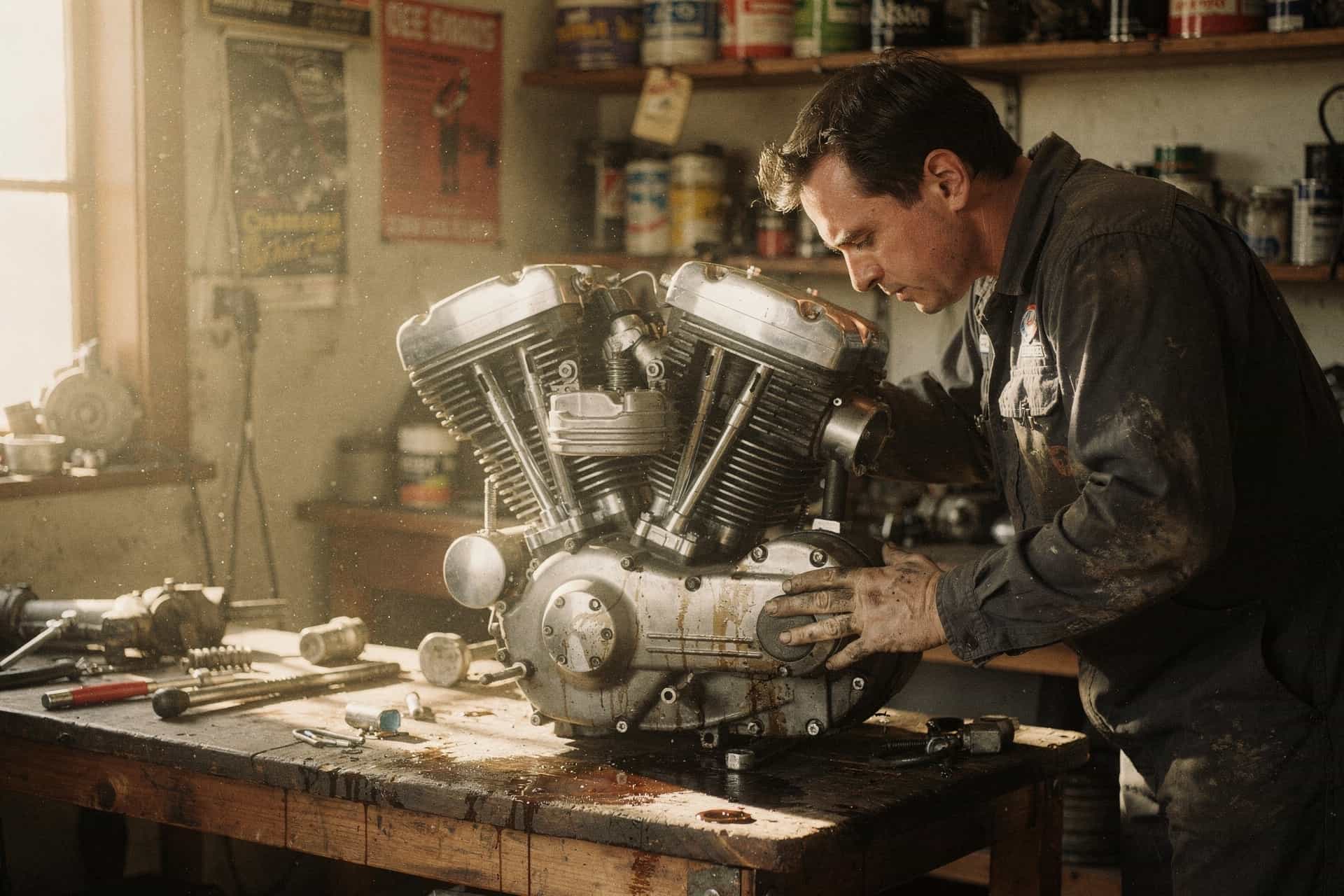
The number causes more confusion than it should. Convert exactly and 96 cubic inches equals about 1,573 cc. Harley-Davidson nevertheless lists the Twin Cam 96 at 1,584 cc because “96” is the nominal engine name, while the production bore and stroke calculate to roughly 96.6 cubic inches.
That distinction matters when you compare specifications, order parts, or decode a used bike. The Twin Cam 96 arrived across Harley’s Big Twin range for 2007, but the rubber-mounted TC96 and counterbalanced TC96B did not leave every chassis in the same year.
This guide separates factory design facts from model-dependent output, then covers the checks that matter when you own or inspect one.
Twin Cam 96: Full Specifications
The TC96 replaced the Twin Cam 88 across Harley’s standard, non-CVO Big Twin range for 2007, increasing factory-listed displacement from 1,450 cc to 1,584 cc. The bore stayed at 3.750 inches and the stroke increased from 4.000 to 4.375 inches. Factory CVO models used the larger Twin Cam 110 that year.
| Spec | Value |
|---|---|
| Designation | Twin Cam 96 (TC96) |
| Configuration | 45-degree V-twin, air-cooled, OHV |
| Displacement | 96 ci (1584cc) |
| Bore | 3.750” (95.25mm) |
| Stroke | 4.375” (111.13mm) |
| Compression | Model and year specific; 2007 US manuals list 9.2:1 Touring and 8.9:1 Softail |
| Fuel system | Electronic Sequential Port Fuel Injection (ESPFI) |
| Cam drive | Primary and secondary chains with tensioners |
| Oil system | Dry sump |
| Factory output | Varies by model, year, market, and calibration |
Is 96 Cubic Inches 1,573 cc or 1,584 cc?
Both numbers appear because they answer different questions:
- A straight unit conversion uses 1 cubic inch = 16.387064 cc, so 96 ci equals about 1,573 cc.
- The production engine uses a 3.750-inch bore, 4.375-inch stroke, and two cylinders. That geometry calculates to about 96.6 ci, or 1,584 cc.
- Harley rounded the engine family name to Twin Cam 96 while publishing the production displacement as 1,584 cc.
Use 1,584 cc when identifying the Harley engine. Use about 1,573 cc only when answering the pure math question “96 ci to cc.”
How Much Horsepower Does a Twin Cam 96 Make?
There is no honest single number for every stock Twin Cam 96. Harley’s published torque figures varied across model families, and chassis dyno results measure power at the rear wheel after drivetrain losses. Intake, exhaust, calibration, tire, test gear, and dyno type all change the result.
When comparing a claimed figure, require three details: exact model year, whether the engine was stock, and whether the number came from the crank or rear wheel. A bare horsepower number without those details is not a useful specification.
Two Variants: TC96 and TC96B
Harley built two versions:
TC96 (Dyna and Touring): Rubber-mounted in the frame. The isolation mounts control vibration without the Softail version’s internal balancer. Factory literature shows that engine availability changed by model and market rather than on one universal final date.
TC96B (Softail): Rigidly mounted in the frame with internal balancing to control vibration. The 2007 US Softail manual lists 8.9:1 compression, while later manuals list other specifications. The 2013 international manual includes both TC96B and TC103B tables, so market and model matter.
The variants share an engine family and displacement, but the balancing system, cases, mounts, and application-specific parts matter. Confirm fitment by exact model and part number rather than assuming every TC96 and TC96B component interchanges.
What It Replaced and Why
The Twin Cam 88 ran from 1999 through the 2006 model year before the 96 became the standard non-CVO Big Twin displacement for 2007. The new engine gained stroke, factory electronic fuel injection across the standard range, and a revised cam-support and oiling arrangement. CVO applications followed their own displacement schedule.
The most important cam-chest distinction is often missed: the TC96 arrived with hydraulic cam-chain tensioners. It did not carry over the original TC88’s spring-loaded tensioner system unchanged.
Symptom-Led TC96 Inspection Boundaries
No defect is universal to every TC96. Age, service history, chassis, market, and modifications change the risk. The sections below explain how to bound an inspection when a symptom or service record points to one of these systems. They are not a ranked list of TC96 failure rates.
1. Cam-Chain and Cam-Chest Inspection
The inner cam chain runs between the crankshaft sprocket and the cam plate. The original Twin Cam 88 used spring-loaded tensioner shoes. The Twin Cam 96 parts catalog instead shows primary and secondary cam-chain tensioners with the revised cam support plate. That difference is why TC88 repair advice should not be copied directly onto a TC96.
For 2007, Harley introduced hydraulic cam-chain tensioners on the TC96. Oil pressure controls shoe loading instead of the earlier fixed spring pressure. The shoes and chains remain wear components, and noise from the cam chest can also come from lifters, bearings, oil pressure, or another rotating part.
Possible reasons to inspect the cam chest include:
- Rattling or ticking from the cam chest at cold startup
- Noise that fades as oil pressure builds but returns at idle
- Metallic debris in the oil filter
Do not diagnose tensioner wear by sound alone. Record oil pressure and inspect the drive against the factory wear limits. A replacement chain drive retains hydraulic control. A gear-drive conversion removes the chains, but it is not a universal fix. S&S’s instructions require checking pinion-shaft runout before installation and set the permitted limit for that specific kit. Use the instructions supplied with the exact parts rather than transferring one number to another kit.
2. If Noise Points to the Primary Drive
The compensator is a spring-loaded shock absorber built into the engine sprocket. It dampens the pulsing torque of the V-twin so the primary chain doesn’t experience shock loading.
Wear or looseness in the compensator and primary drive can produce noise or lash, especially as load changes at low engine speed. The sound is not unique enough to identify one part without inspection.
Do not identify a compensator by a generic “clunk” alone. Primary-chain adjustment, clutch components, fasteners, and transmission lash can create similar noise. Inspect the primary drive using the model-year service procedure before ordering parts.
3. If Operating Heat Seems Abnormal
The TC96 is air-cooled, and heat load changes with model, calibration, ambient temperature, traffic, and operating condition. Compression also varies by model year and application, as the 2007 Touring and Softail manuals demonstrate.
Heat felt by the rider is not enough to diagnose an engine fault. Use the fuel grade in the owner’s manual, keep the cooling surfaces and oil level correct, and investigate pinging, warning lights, or abnormal operation rather than masking them with an unverified calibration change.
4. If the Battery Is Not Charging
This is not TC96-specific. The stator generates electricity and the regulator controls charging-system output. A fault in either part, the battery, or their connections can leave the bike undercharged.
Low battery voltage, intermittent connections, a regulator fault, or a stator fault can overlap. Test the battery and charging system with the voltage and resistance procedure for the exact model before replacing either component.
Our rule for a used TC96 is to buy the service history and condition, not a forum reputation. A cold inspection, exact part numbers for modifications, and model-year procedures tell you more than a generic list of engine problems.
Performance Upgrades: Unlocking What’s There
The TC96 responds to intake, exhaust, calibration, and cam changes, but the result depends on the complete combination. Parts that fit one year or chassis may not fit another.
Stage I: Air + Exhaust + Tune
An intake or exhaust change can alter airflow enough to require a matching calibration. Confirm legal use, exact fitment, calibration support, and the effect on the complete system before ordering parts.
The calibration must match the actual hardware. Judge the result with comparable before-and-after dyno pulls and an air-fuel check, not a catalog peak number.
Stage II: Cams
Choose a cam around bike weight, gearing, measured compression, exhaust, and the RPM range you use. Confirm whether it is designed for chain or gear drive, then check valve-to-piston clearance, spring requirements, pushrod needs, crankshaft runout limits, calibration, and exact model-year fitment in the manufacturer’s instructions.
Stage III: Big Bore
Harley’s factory Stage I documentation uses 3.875-inch cylinders and matching pistons to convert a Twin Cam 96 to 103 cubic inches while retaining the 4.375-inch stroke. A 4.000-inch bore with that stroke is the factory geometry shown for a 110, not a 103. Aftermarket combinations must be checked against the kit maker’s exact fitment, clearances, compression, and calibration requirements.
A big-bore build changes compression, heat, calibration, and component loading. Treat it as an engine combination, not a bolt-on horsepower promise.
How It Compares to Other Twin Cams
| Engine | Cubic Inches | Bore x Stroke | Years | Output |
|---|---|---|---|---|
| Twin Cam 88 | 88 ci | 3.750” x 4.000” | 1999-2006 | Model-dependent |
| Twin Cam 96 | 96 ci | 3.750” x 4.375” | Introduced 2007 | Model-dependent |
| Twin Cam 103 | 103 ci | 3.875” x 4.375” | Phased in by model | Model-dependent |
| Twin Cam 110 | 110 ci | 4.000” x 4.375” | CVO and select models | Model-dependent |
The TC96 increased stroke relative to the TC88. Factory tables show the TC103 using a 3.875-inch bore with the same nominal 4.38-inch stroke, while the 110 uses a 4.000-inch bore. That geometry does not establish parts interchangeability. Cases, balancing, cam-support parts, heads, electronics, chassis mounts, and market-specific assemblies can differ, so confirm every part by application and part number.
The TC96 in Each Chassis
The 96-inch motor lived in three families, and the riding experience differs across them. If the engine is a donor for one of the best Harley bobber build platforms, identify whether it is the rubber-mounted TC96 or counterbalanced TC96B before planning the frame, mounts, and electronics.
Dyna: The unbalanced TC96 is rubber-mounted. Harley’s 2013 Dyna owner’s manual lists engine code 4 for the 1,585 cc Twin Cam 96 and code M for the 1,690 cc Twin Cam 103. That is direct evidence that both displacements existed in that model-year family, not a reason to assign one engine to every 2013 Dyna.
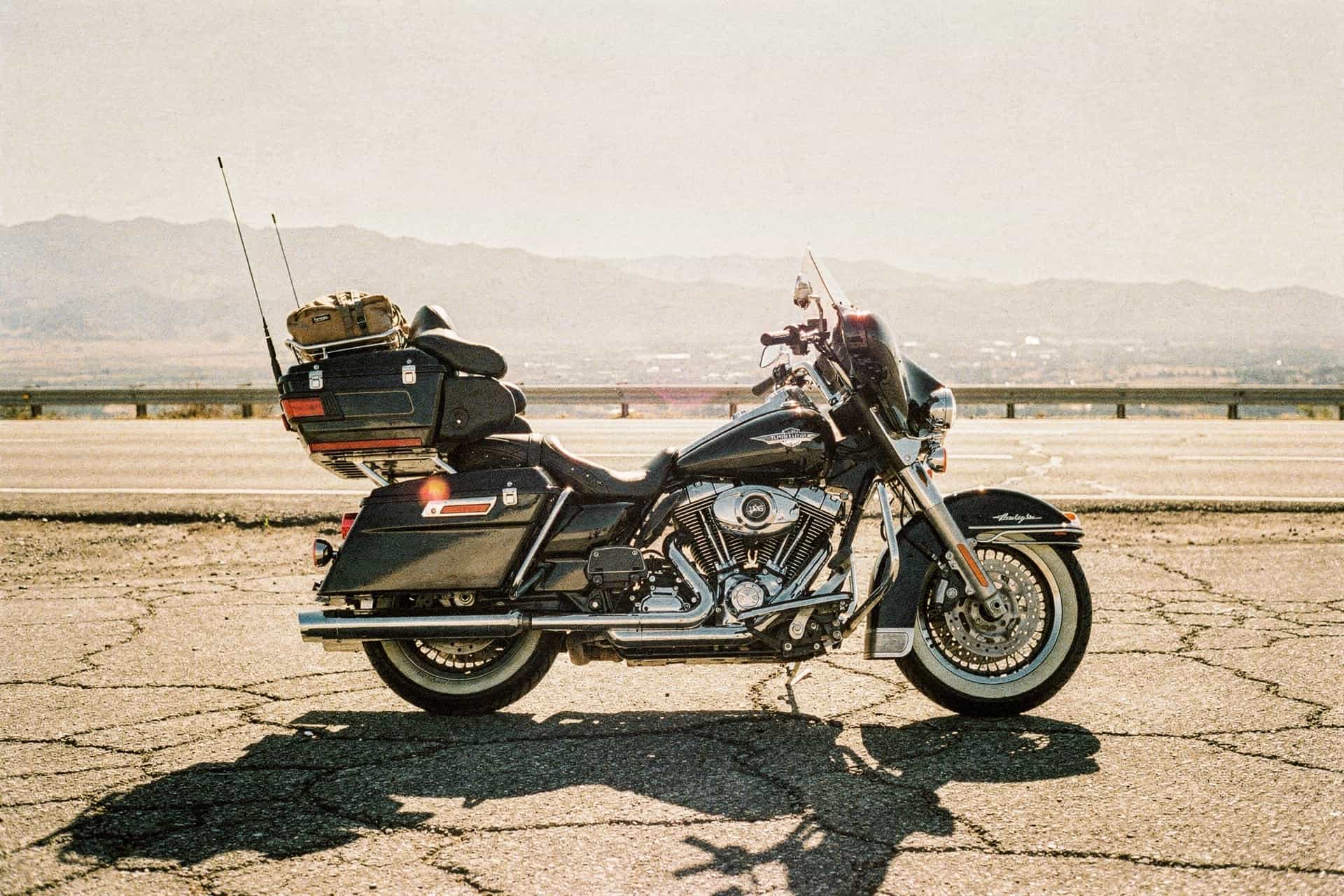
Touring: The unbalanced TC96 is rubber-mounted. The 2007 US Touring manual lists a 9.2:1 compression ratio, 1,584 cc displacement, and 93 ft-lb of torque at 3,000 rpm for that documented application. Do not carry that torque figure into another year or model without its manual.
Softail: The TC96B is rigidly mounted and internally balanced. The 2007 US Softail manual lists 8.9:1 compression and 91 ft-lb at 3,000 rpm. A 2009 US Softail manual lists 9.2:1, showing why a single compression figure cannot cover the whole production run.
Buying a Used TC96: The Questions That Matter
If you’re shopping for a used Harley with the Twin Cam 96:
“Is there a documented service history?” Match invoices to the VIN and mileage. A gear-drive conversion is not proof of good maintenance by itself, and a stock hydraulic cam drive is not an automatic defect.
“What has been changed?” Ask about intake, exhaust, calibration, cams, cylinders, compensator, charging parts, and clutch work. Verify brands and part numbers where possible. A poor calibration can matter more than odometer mileage.
“Can it be inspected cold?” A cold start can expose starting, oil-pressure, smoke, and noise issues hidden by a pre-warmed engine. Do not diagnose a part from sound alone.
“Were maintenance intervals followed?” Use the schedule for the exact model and year. Check records for engine, primary, transmission, brake-fluid, and chassis service rather than relying on oil color alone.
Decode the VIN. Before you hand over money, run the VIN and compare it with factory model-year information. VIN character meanings vary by year and market, so use the correct table rather than a universal single-character rule.
Living with the TC96
The Twin Cam 96 sits between the 88 and the larger factory Twin Cams that followed. Its revised cam drive is different from the early TC88 system, but condition still depends on service history, parts, calibration, and the exact application. An intake, exhaust, or calibration change should be judged as a complete combination rather than by a generic price or horsepower promise.
Understand the exact application, verify the service history, and diagnose symptoms before buying upgrade parts.
For more on the engine lineage, our Harley-Davidson history guide covers every generation from the Flathead forward, while the Evolution engine guide covers the motor family that preceded the Twin Cam. If you are selecting spark plugs for a TC96, confirm the exact model-year fitment in the cross-reference chart.
Ride hard. Look right doing it. Check out the collection - we make gear for riders who actually ride. If you live in the garage, the In Gasoline We Trust tee fits the work.
Sources
- Harley-Davidson - 2007 Softail Owner’s Manual - factory TC96B bore, stroke, displacement, compression, and torque specifications
- Harley-Davidson - 2007 Touring Owner’s Manual - factory TC96 Touring specifications used for the chassis example
- Harley-Davidson - 2013 Dyna Owner’s Manual - factory VIN engine codes and TC96 specifications
- Harley-Davidson - 2013 International Owner’s Manual - factory TC96B and TC103B specifications showing market-dependent availability
- Harley-Davidson - Screamin’ Eagle Twin Cam Stage Kits - factory 96-to-103 big-bore kit description
- Harley-Davidson - Twin Cam 96 Camshaft Parts - factory parts breakdown for the revised cam drive
- S&S Cycle - OES Gear Drive Camshaft Installation Instructions - kit-maker requirement to measure pinion-shaft runout and follow the kit-specific limit before fitting gear-drive cams
- NIST SI Units - Volume - US customary and metric volume conversion guidance supporting the cubic-inch conversion