

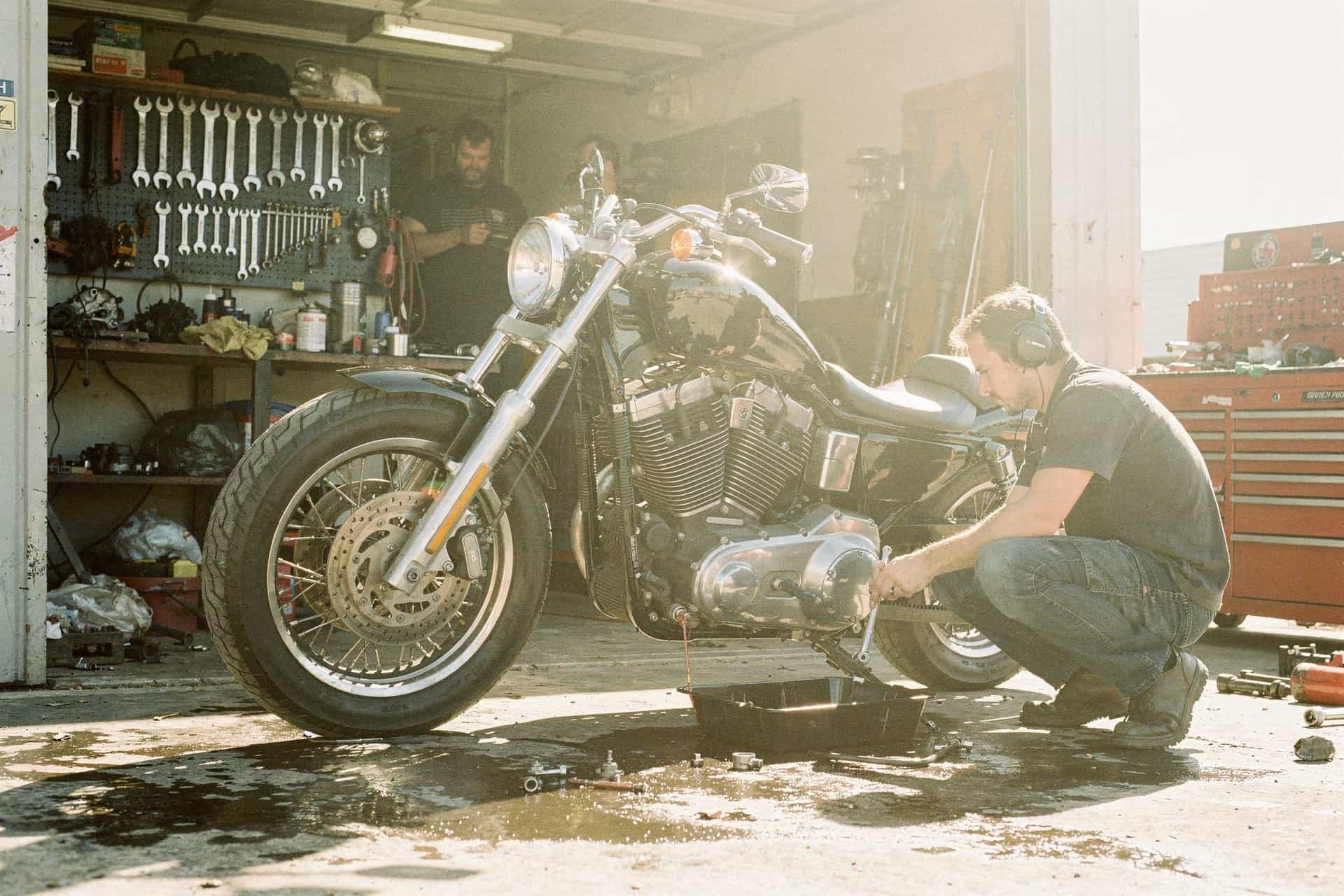
A few years back, a guy rolled into our shop with a new Street Bob at about 2,500 miles. He’d never done the 1,000-mile service. “It’s just an oil change,” he said. “I’ll get to it.” We drained that oil into a pan and held it up to the light. You could see the metal flake suspended in it - tiny particles catching the fluorescent like glitter in a jar.
That’s what break-in does. And that’s why the 1,000-mile service exists.
Your brand-new Harley-Davidson needs attention at the 1,000-mile mark. It’s not a dealer upsell. It’s not optional. It’s a mechanical necessity driven by what happens inside a new engine during its first hours of operation. We’ve walked a lot of first-time Harley owners through this, and the riders who take it seriously get better-running bikes for longer. Here’s what the service includes, what it actually costs, and whether you should hand it to a dealer or do it in your garage.
Why This Service Exists
A brand-new engine is not a finished engine. The internal components - piston rings, cylinder walls, valve seats, transmission gears, cam chain tensioners - are machined to tight tolerances but they’re not fully mated to each other yet. That mating process is called break-in.
During the first 500 to 1,000 miles, metal surfaces wear against each other and shed microscopic particles. Those metal shavings circulate in the oil. The piston rings seat against the cylinder walls, creating the compression seal that determines how much power your engine makes - and holds - for the rest of its life.
The 1,000-mile service drains that contaminated break-in oil, replaces the filter that’s been catching metal debris, and gives a mechanic the chance to inspect everything while the bike is on a lift. The objective is straightforward: flush the break-in contamination and verify nothing went sideways during the first thousand miles.
If that oil stays in there - loaded with metal particles - it becomes an abrasive slurry that accelerates wear on every moving surface it touches. Bearings, journals, cam lobes, gear faces. The damage is cumulative and invisible until something fails at 15,000 miles and the shop finds scoring that traces back to contaminated oil at mile 1,200.
What’s in the Service
The 1,000-mile service covers significantly more than an oil change. Here’s the complete breakdown based on the factory service manual.
All Three Oils Changed
Harley-Davidson big twins use three separate lubricant reservoirs (with one exception noted below). All three get drained and replaced at the 1,000-mile service.
Engine oil and filter. The centerpiece. The factory-fill break-in oil comes out and gets replaced with Harley-Davidson Screamin’ Eagle SYN3 Full Synthetic or an equivalent meeting H-D specifications. The oil filter is replaced - not cleaned, replaced. The break-in filter is loaded with metal particles and cannot be effectively cleaned. Milwaukee-Eight engines hold roughly 5 quarts of engine oil.
Primary chaincase fluid. The primary chaincase houses the primary chain connecting the engine to the transmission. That chain, the compensator sprocket, and the clutch pack all shed material during break-in. Harley recommends their Formula+ primary chaincase lubricant or SYN3. Capacity is typically about 1 quart.
Transmission lubricant. The transmission gears are seating against each other during break-in, and the lubricant collects the resulting particles. Drain and refill with Harley-Davidson transmission lubricant or SYN3.
Important note: On Milwaukee-Eight Softail models, the engine and transmission share the same oil sump. One oil change covers both. Touring models with the Milwaukee-Eight have separate engine and transmission sumps, so they require separate drain-and-refill operations.
The Inspection Checklist
Beyond fluid changes, the 1,000-mile service includes a comprehensive inspection of critical systems. This is why the service takes 1 to 2 hours even at a well-equipped shop - it’s not just drain-and-fill.
Brake system: Pad thickness, rotor condition, caliper operation, fluid levels in front and rear reservoirs, lines and fittings inspected for leaks or chafing.
Tires and wheels: Pressure adjusted to spec, tread depth checked, unusual wear patterns noted. Spoke tension checked on spoke wheels - uneven tension causes wobble.
Drivetrain: Drive belt tension and condition checked for proper deflection, cracks, or fraying. Clutch adjustment verified - free play at the lever needs to meet spec.
Controls: Throttle cable free play checked, both cables verified for smooth operation. All hand controls inspected.
Engine: Idle speed verified and adjusted if needed. Air cleaner element inspected. Fuel lines and fittings checked for leaks.
Exhaust system: Gaskets and mounting hardware inspected for leaks.
Electrical: Switches, lights, horn, turn signals all verified functional. Battery terminals checked for cleanliness and tightness, charge level confirmed.
Chassis: Steering head bearings checked for play or roughness. Front forks inspected for leaks. Rear shock preload verified. All critical fasteners - engine mounts, axle nuts, handlebar clamps, riser fasteners, exhaust hardware - torqued to spec.
Spark plugs: The factory replacement interval on Milwaukee-Eight engines is 30,000 miles, but at 1,000 miles the plugs get pulled and inspected for proper color and gap. A new engine running rich, lean, or with ignition timing issues will show it on the plugs early.
What It Costs at a Dealer
Dealer pricing varies by location. Based on reports from Harley forums and owner communities, here’s the realistic range:
- Parts (oil, filter, primary fluid, transmission fluid, O-rings): $50-$80
- Labor (1-2 hours at typical shop rates of around $135/hour): $135-$270
- Total dealer cost: $300-$600+
Reported real-world dealer bills include $440, $569, and approximately $575 CAD after taxes. Some dealerships offer the 1,000-mile service as a flat-rate package in the $300-$450 range. Others bill hourly and add parts at retail markup.
Things that push the cost higher: dealerships in expensive metro areas charge more per hour. Additional issues discovered during inspection (a seeping seal, a loose connection) add labor and parts. Using a different oil brand than the factory fill may carry a price difference.
The Harley-Davidson Extended Service Plan (ESP) sometimes includes the 1,000-mile service depending on the coverage level purchased with the bike. Check your warranty documentation.
Is the Dealer Price Worth It?
You’re paying for two things at the dealer: certified technicians who know the inspection checklist without thinking about it, and a documented service record in your maintenance book.
That documentation matters. If you file a warranty claim at 8,000 miles and can’t show records of the 1,000-mile service, Harley-Davidson has grounds to push back on the claim. They may not - but the leverage is theirs. A stamped service book from an authorized dealer eliminates that conversation entirely.
Doing It Yourself
The 1,000-mile service is one of the most accessible DIY jobs on a Harley. If you own basic hand tools, a torque wrench, a drain pan, and a service manual for your specific model, you can handle this in a home garage.
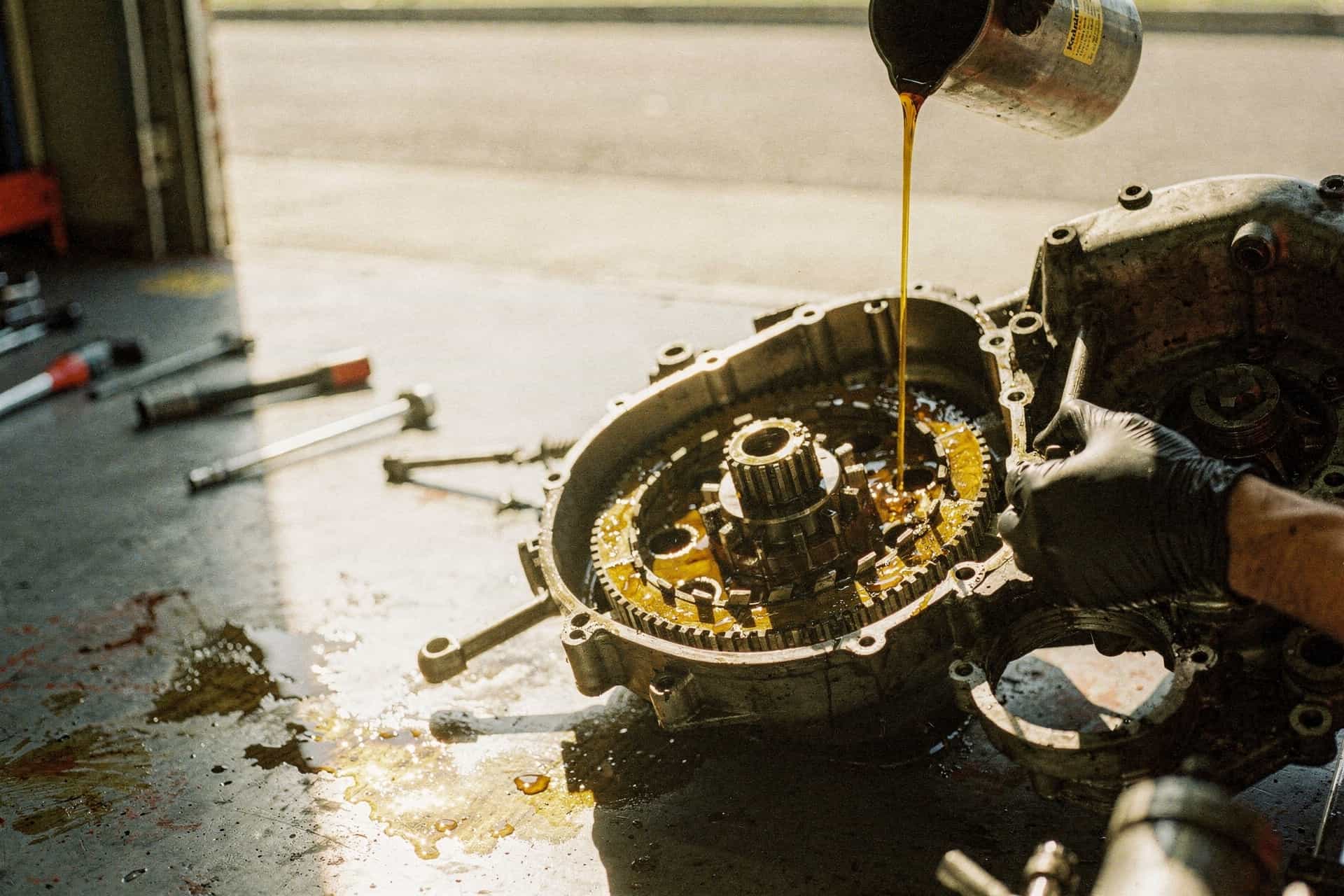
Parts List
- Engine oil: 4-5 quarts of SYN3 or equivalent
- Oil filter: OEM or quality aftermarket (K&N is a popular option)
- Primary chaincase fluid: 1 quart (skip on Softail M8 - shared sump)
- Transmission fluid: 1 quart (skip on Softail M8 - shared sump)
- Drain plug O-rings: replace every time
- Basic tools: socket set, Allen keys, Torx bits (Harley uses a lot of Torx and Allen fasteners), torque wrench
- Drain pan and shop towels
- Service manual for your specific model and year
DIY Cost
Forum members doing the job themselves report parts costs in the range of $85 to $95 for all three oils, a quality filter, and O-rings. One commonly cited setup: Amsoil synthetic oil, K&N filter, and replacement O-rings for about $85 total.
Compare that to $300-$600 at the dealer. The savings are significant. The tradeoff is your time - 1 to 2 hours if you’ve done it before, 3 to 4 hours your first time - and the warranty documentation question.
The Magnuson-Moss Reality
Harley-Davidson cannot legally void your warranty for performing your own maintenance. The Magnuson-Moss Warranty Act specifically prohibits manufacturers from requiring you to use authorized service providers as a condition of warranty coverage.
However, you need to document what you did, when, and with what products. Keep receipts for oil and filter. Take photos during the process. Record the date and mileage. If a warranty claim arises, this documentation proves you maintained the bike properly.
The caveat: if a specific failure is caused by improper maintenance - wrong oil viscosity, cross-threaded drain plug, ignored torque specs - the warranty won’t cover that particular failure regardless of who did the work. Do it right, document it, and the warranty stands.
What Happens If You Skip It
We’ve heard every version of this. “It’s just an oil change.” “The dealer wants too much.” “I’ll do it at 2,000.”
Here’s what actually happens when the 1,000-mile service gets skipped:
Metal contamination accumulates. Those microscopic metal shavings from break-in stay suspended in the oil and cycle through the engine, transmission, and primary. They act as an abrasive compound on bearing surfaces, cylinder walls, and gear faces. Every mile after the service was due makes it worse.
Piston ring seating gets compromised. Break-in oil is formulated to allow controlled wear between rings and cylinder walls. Leaving it in past its useful life means the rings may not seat properly. The consequences - lower compression, higher oil consumption, reduced power - are permanent.
Small problems stay hidden. The inspection portion of the 1,000-mile service catches issues early: a loose fastener, a slow brake fluid leak, a belt tracking wrong. At 1,000 miles, these are quick fixes. At 5,000 miles, they’re failures.
Your service record has a gap. Even though Magnuson-Moss prevents Harley from voiding your warranty outright, a gap in documented maintenance weakens your position in any warranty dispute.
The 1,000-mile service costs $85 in parts if you do it yourself. Skipping it can result in accelerated internal wear that shortens engine life by tens of thousands of miles. The math is simple.
Service Schedule After the First 1,000
The 1,000-mile service is just the opening checkpoint. Harley-Davidson’s recommended schedule continues on a repeating cycle:
| Interval | Service |
|---|---|
| 1,000 miles | Full service - all three oils, filter, comprehensive inspection |
| 5,000 miles | Oil and filter change |
| 10,000 miles | Full service - oils, filter, inspection, plus additional items |
| 15,000 miles | Oil and filter change |
| 20,000 miles | Major service - everything above plus brake fluid flush, spark plugs on some models |
This cycle repeats. Oil changes every 5,000 miles. Full inspections every 10,000. Major service every 20,000. Your service manual has the complete schedule for your specific model.
Between scheduled services, check your oil level regularly (warm engine, level surface, bike upright), monitor tire pressure, and watch brake pad thickness. If something changes - a new noise, a vibration, different clutch engagement - don’t wait for the next scheduled date. Get it looked at.
Break-In Riding for the First 1,000 Miles
Since we’re on the subject, here’s how to ride during break-in to give your engine the best possible start.
Vary your RPM. Don’t sit at a constant speed on the highway for 200 miles. The piston rings need varying loads and speeds to seat against the cylinder walls evenly. Ride around town. Take different routes. Use different gears. Let the engine work through its rev range naturally.
Stay out of the redline. Don’t wind a new engine to the limiter. Harley’s owner’s manual says under 3,000 RPM for the first 50 miles, then up to 3,500 RPM from 50 to 500 miles. Gradually extend into the full rev range between 500 and 1,000 miles. The internal surfaces need time to mate before they see maximum stress.
Don’t lug it either. Low RPM under heavy load - climbing a hill in too high a gear - puts excessive stress on connecting rod bearings and piston pins. Downshift when the engine is laboring. The sweet spot during break-in is moderate RPM under moderate load.
Bed the brakes progressively. New brake pads and rotors need to bed in just like engine components. Gradually increase braking force over the first few hundred miles. Avoid repeated hard stops from high speed until the pad material has transferred properly to the rotor surface.
Warm it up, but don’t idle it to death. Modern fuel-injected Harleys don’t need ten minutes of warm-up. Start it, let it idle for 30 to 60 seconds until the idle stabilizes, then ride gently for the first few minutes. Extended idling is actually worse for break-in than gentle riding - the engine needs load to seat the rings.
Wrenching Is Part of the Culture
The 1,000-mile service has been part of Harley ownership since the Knucklehead era. Earlier bikes needed valve adjustments, points inspection, and manual ignition timing at this interval. The specific checklist has evolved with the technology, but the core principle hasn’t changed: new engines need early attention.
For diagnosing issues between services, our guide to Harley-Davidson diagnostic codes covers pulling and interpreting the onboard diagnostics on Milwaukee-Eight and Twin Cam bikes. If you’re noticing hard starting or rough idle, bad crank position sensor symptoms are worth understanding. And our Harley-Davidson history guide traces the engineering evolution from Flathead to Milwaukee-Eight - every generation needed that first oil change.
If you’re newer to Harleys or motorcycling in general, our motorcycle beginner’s guide covers the fundamentals from licensing through gear. The MSF motorcycle course is worth taking even if your state doesn’t require it - structured training on a small bike teaches you habits that protect you and your new Harley both. And for understanding the full range of machines out there, each with their own maintenance needs, the types of motorcycles guide covers every category.
Take care of the first service. Your engine returns the favor for the next hundred thousand miles.
Check out the shop if you need something for the garage while that oil drains.
Sources
- Harley-Davidson Maintenance Schedules (PDF) - Harley-Davidson Service Information Portal - official factory maintenance intervals for Sportster, Dyna, Softail, and Touring models
- 6 Harley-Davidson Maintenance Essentials - Harley-Davidson USA - official guidance on routine motorcycle maintenance
- How to Perform a 10,000-mile Service on a Harley-Davidson - RevZilla Common Tread - detailed walkthrough of Harley service procedures and fluid specifications
- Magnuson-Moss Warranty Act - Federal Trade Commission - full text of the federal law protecting consumer maintenance rights
- Businessperson’s Guide to Federal Warranty Law - FTC - FTC guidance on warranty obligations and prohibited tying arrangements
- Harley-Davidson Extended Service Plans - Harley-Davidson USA - official coverage details for extended service plans