
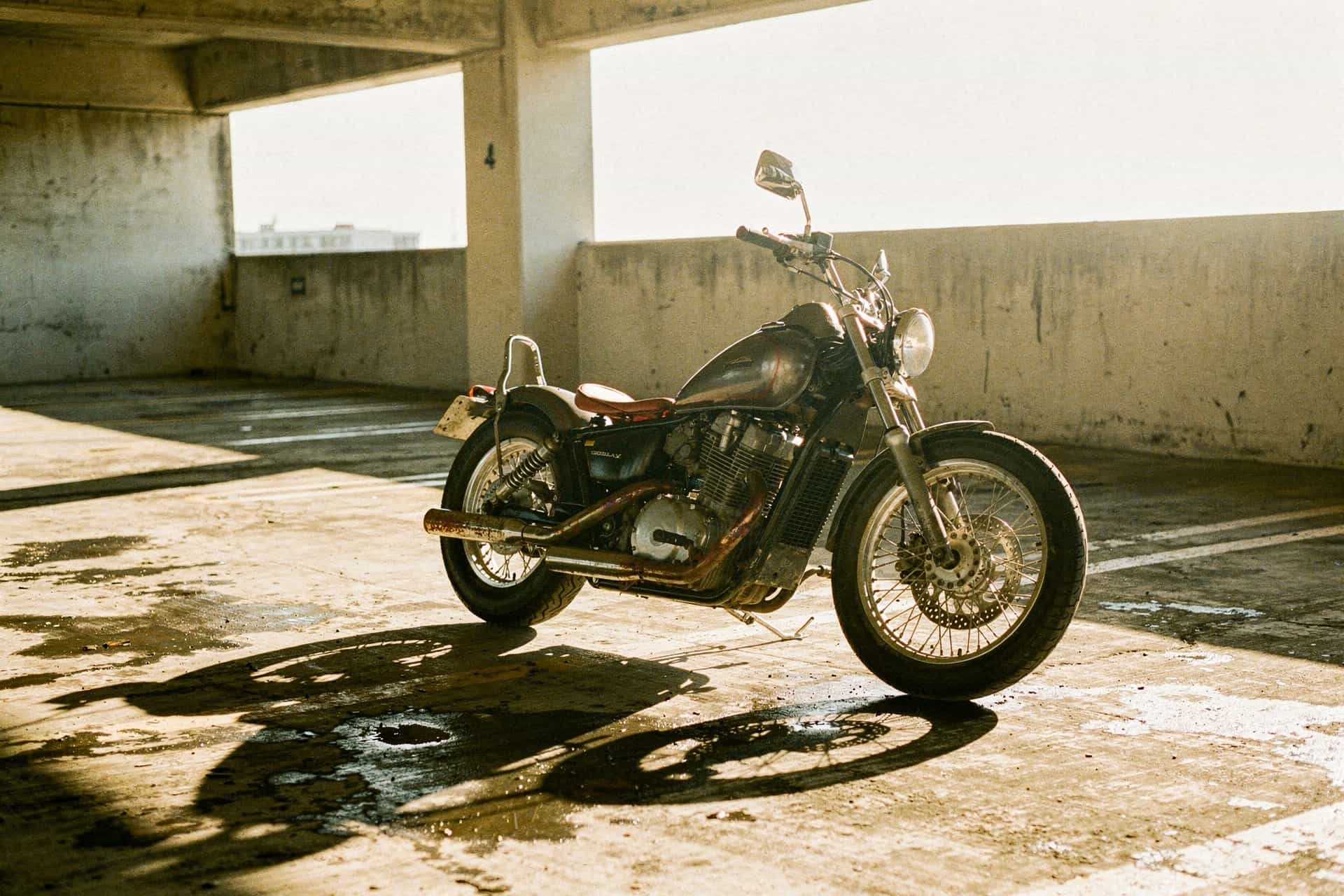
Park a VT600 Shadow VLX next to a VT750 Shadow Aero with the bodywork off both, and they read as the same bike. Same liquid-cooled V-twin silhouette. Same low, long stance. Same fat rear tire under a fender you already want to cut.
They are not the same bike. One of them will take a weld-in hardtail, a sprocket swap and a different rear wheel. The other will fight you on all three, because the final drive is a sealed shaft housing bolted to the swingarm.
That single spec decides more about a Honda Shadow bobber than displacement, model name or year does. Get it right and the platform is one of the most forgiving bobber donors ever built. Get it wrong and you will find out halfway through a teardown that the parts you wanted do not exist for your bike. If you are still working out what makes a bobber a bobber, start there. If you already know, start with the drivetrain.
Correction: an earlier version of this guide described the VT600 as a shaft-drive motorcycle. That was wrong. Honda’s published 2003 VT600C Shadow VLX specification sheet lists an O-ring-sealed chain as the final drive, and every build recommendation that followed from the shaft claim has been rewritten below.
The Main Shadow Donors, Sorted by Final Drive
Honda used the Shadow name from 1983 onward across several unrelated chassis, and reused model names across different drivetrains. The Shadow Spirit 750, for example, is a chain bike as a VT750DC and a shaft bike as a VT750C2. Here is what actually matters at the point of purchase.
| Model | Code | Years | Engine | Final drive |
|---|---|---|---|---|
| Early Shadow models | VT500C / VT700C / early VT750C / VT800C | 1983-1988 (varies by model) | Several early Shadow chassis and displacements | Shaft |
| Shadow VLX | VT600C / VT600CD | 1988-2007 (US) | 583cc liquid-cooled 52-degree SOHC V-twin, three valves per cylinder | Chain |
| Shadow ACE 750 | VT750C / VT750CD | 1998-2003 | 745cc liquid-cooled 52-degree SOHC V-twin | Chain |
| Shadow Spirit 750 | VT750DC | 2001-2007 | 745cc, twin CV carburetors | Chain |
| Shadow RS | VT750RS | 2010-2013 | 745cc | Chain |
| Shadow Aero 750 | VT750C | 2004-2024 US model years | 745cc | Shaft |
| Shadow Spirit 750 | VT750C2 | 2007-2013 US model years verified here | 745cc | Shaft |
| Shadow Phantom | VT750C2B / VT750CBS | 2010-2025 US model years | 745cc, PGM-FI on later US models | Shaft |
| Shadow 1100 (Spirit, ACE, Sabre) | VT1100C / VT1100C2 | 1985-2007 | 1099cc liquid-cooled 45-degree SOHC V-twin | Shaft |
Two things fall out of that table straight away. First, every Shadow over 750cc is shaft drive, so the big-bore route and the flexible-chassis route are mutually exclusive on this platform. Second, the chain bikes are mostly the older, cheaper, carbureted ones, which is convenient if you are building on a budget and inconvenient if you wanted fuel injection.
What Chain Versus Shaft Actually Changes on the Build
This is not a maintenance-preference argument. It changes which parts you can buy.
Rigid rear ends. A weld-in hardtail moves the rear axle. On a chain bike that is fine, because the chain run just gets longer or shorter and you adjust it out. On a shaft bike the driveshaft is a fixed length and the pinion gear has to stay in correct mesh with the ring gear in the final-drive housing. Move the axle and you have to shorten or lengthen a driveshaft and re-establish that alignment. TJ Brutal Customs sells a 50 percent weld-on hardtail kit made specifically for the 1988-2007 VT600 VLX, built from 1.125 inch OD by .120 wall DOM tube and listed at $219.99 when we checked their catalog in August 2026. We did not find an equivalent direct-fit kit for any VT750 or VT1100 from the usual chopper-parts suppliers. That absence is the story. A shaft-drive Shadow hardtail is a fabrication job, not a kit install. Our hardtail versus softail breakdown covers what you are trading away in ride quality before you commit.
Gearing. Chain drive means a countershaft sprocket costs less than a tank of fuel and changes your whole highway character. Shaft drive means the ratio you bought is the ratio you keep. On a light, low-geared bobber that matters more than it does on a stock cruiser, because stripping 40 or 50 pounds off a bike changes how it pulls.
Rear wheels and tires. A chain bike lets you space, offset and re-lace with far more freedom. A shaft bike ties the rear hub to the final-drive splines, so a wider wheel or a different rim size usually means adapting or replacing the entire hub assembly.
What you gain from shaft. No exposed chain to clean, tension or spray across the fender you just built. The final drive is still a service item: Honda specifies hypoid gear oil and an oil-level check in the Shadow owner manual. On a bike you intend to ride hard and keep mostly stock underneath the bodywork, shaft is the lower-maintenance ownership experience. It is only a problem if your build plan touches the rear end.
VT600C Shadow VLX: The Lightest Way In
Honda’s published specification for the VT600C lists a 583cc liquid-cooled 52-degree V-twin with a single-pin crank, SOHC three-valve heads with two spark plugs per cylinder, a single 34mm CV carburetor, a wide-ratio four-speed gearbox on US models, and O-ring-sealed chain final drive. The chassis figures are 63.0 inches of wheelbase, 25.6 inches of seat height and 452 pounds dry, on a 100/90-19 front and a 170/80-15 rear.
Read those numbers as build constraints rather than sales copy.
The 35-degree rake is more relaxed, or more raked out, than the steering geometry on many stock cruisers. That is why the VLX looks right stripped, and it is also why changing front ride height without checking the resulting rake, trail and clearance can produce handling you did not intend. The 170-section rear tire means you do not need a fat-tire kit to get the proportions people want from a bobber. The rear brake is a drum, so any rear-wheel change has to keep the backing plate and torque arm anchored properly, and that is a safety item rather than a styling one. The single-shock rear suspension with the triangulated swingarm already reads as a hardtail from ten feet away, which is the strongest argument for leaving the suspension alone and spending the money on the fender, seat and bars instead.
The 583cc engine is derived from Honda’s Transalp motor and is happier in the middle of the rev range than at the top of it. If you plan to ride two-up or spend real time above 70 mph, this is the wrong Shadow. If you are new to wrenching in general, our motorcycle beginners guide covers the maintenance and gear basics worth having in place before you start cutting anything.
VT750: Four Different Motorcycles Wearing One Number
The 750 is where most Shadow buyers get burned, because the badge on the tank does not tell you what is in the swingarm.
VT750C and VT750CD Shadow ACE (1998-2003) run chain final drive with a five-speed gearbox, twin CV carburetors and a three-valve head with two plugs per cylinder. Honda’s specification for the 2003 VT750CD lists 500 pounds dry, a 63.9 inch wheelbase and a 27.6 inch seat.
VT750DC Shadow Spirit (2001-2007) is the chain-drive Spirit, the one most builders mean when they say a 750 Spirit is the best Shadow bobber base. European figures put it at about 44 bhp at 5,500 rpm. It runs lower gearing than the ACE and carries the chopper-flavoured bodywork that comes off easily.
VT750C Shadow Aero (2004-2024 US model years), VT750C2 Shadow Spirit (2007-2013 US model years verified here) and VT750C2B Shadow Phantom (2010-2025 US model years) are all shaft drive. The Phantom is the one that stings, because it looks closest to a finished bobber straight off the showroom floor: blacked-out engine, minimal chrome, low seat and fuel injection on the later US bikes. It is a great bike to own and a restrictive one to modify below the seat line. As of August 2026, Honda’s US catalog shows the 2025 Phantom as the latest Shadow listing and does not list a 2026 Shadow model.
VT750RS Shadow RS (2010-2013) went back to chain drive in a more upright roadster chassis. It is the rarest of the group in the US and worth knowing about if a cheap one turns up.
Fuel delivery does not split cleanly by final drive. The chain-drive 750s in this guide are carbureted, but early shaft-drive Aeros and C2 Spirits were carbureted too. Later US shaft models use PGM-FI. After an intake or exhaust change, follow the component maker’s instructions and verify mixture and running condition for that exact year and configuration. Some systems require jets or calibration; a muffler-only change does not make the same demand on every Shadow.
VT1100: Displacement With Strings Attached
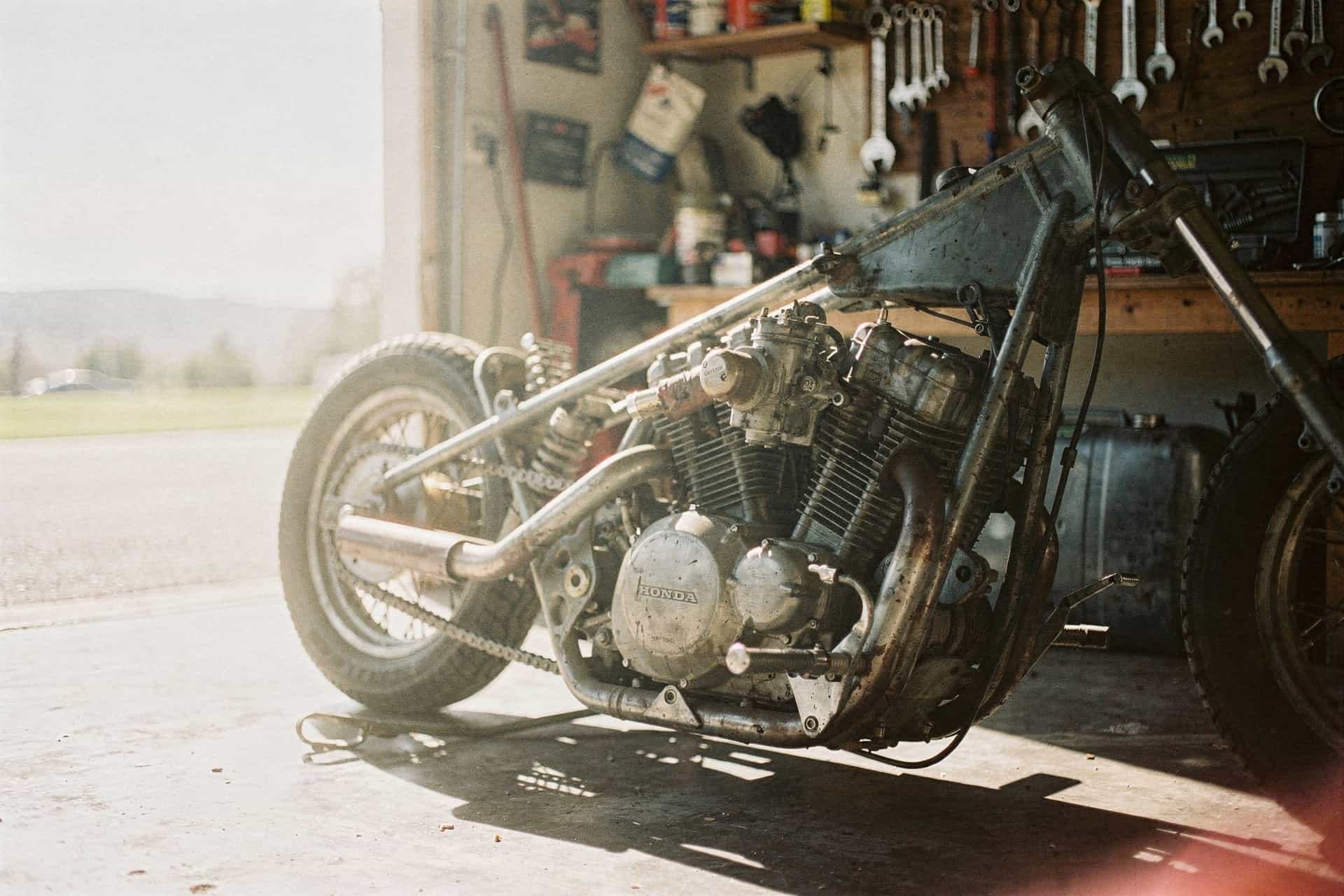
The VT1100 family, sold in variants including the Spirit, ACE and Sabre, uses a 1099cc liquid-cooled 45-degree V-twin, a five-speed gearbox and shaft final drive. Crankpin arrangement, carburetion and chassis specifications vary by model and year, so do not apply one Sabre specification to the whole family. Honda’s published 2002 VT1100C2 Sabre sheet describes that model’s offset-dual-pin crankshaft, SOHC three-valve heads, self-adjusting hydraulic lash and twin 36mm CV carburetors, and lists 573 pounds dry, a 64.6 inch wheelbase and a 27.2 inch seat.
Two honest observations follow from that.
The hydraulic valve adjusters are a real ownership advantage. The VT600 and VT750 use screw-and-locknut adjusters that need checking on a schedule, and skipping that is how a cheap Shadow turns into a top-end job. The 1100 removes that chore entirely.
The weight is a real build disadvantage. The cited stock dry figures are 573 pounds for the 2002 Sabre and 452 pounds for the 2003 VLX, a 121 pound gap before either is modified. Finished weight depends on the parts removed and added. Combine that starting mass with shaft drive and the 1100 rewards a restrained bolt-on build far more than a radical one. Strip the touring hardware, shorten the fender, fit a solo seat, sort the lighting, and leave the chassis alone.
How to Tell What You Are Actually Buying
Sellers get this wrong constantly, and so do listing titles. Check the bike, not the ad.
- Look at the right side of the swingarm. Sealed housing bolted around the rear hub means shaft. Exposed sprocket, chain and axle adjuster slots means chain.
- Read the model code, not the tank badge. Use the frame label, title and a model-year-specific VIN reference together. Do not expect the literal DC, C2 or C2B sales code to appear unchanged in every VIN. DC and RS donors in this guide are chain; C2 and C2B are shaft. Plain C on a 750 depends on the year, which is exactly why step one exists.
- Check the carburetor or throttle body. This dates the fuel system, not the final drive. Chain-drive 750s and early shaft-drive 750s can both have carburetors. Confirm chain or shaft at the rear wheel.
- Confirm the transmission for the exact model. A US-market VLX gives you four speeds. The ACE 750, Spirit 750, Aero, Phantom, RS and VT1100 donors covered in detail here use five. Earlier Shadow generations vary and need their own manual.
What Actually Drives the Cost of a Shadow Bobber
We are not going to publish a donor price band, because used values move by region, condition and season fast enough that any number printed here would be wrong within a year. Check current sold listings and a values reference before you negotiate.
What we can tell you is what pushes the total up or down, in order of impact:
- Fabrication versus bolt-on. A hardtail, a hand-formed fender and a relocated battery box triple the labor of a bolt-on build. On a shaft bike, add a driveshaft modification to that list.
- Fuelling. Budget jets or ECM work only when the selected intake and exhaust combination requires it. The instructions for the exact parts and model decide whether this is a cash cost at all.
- Wheels and tires. Leaving serviceable stock rims and the stock-size rear tire avoids an upgrade cost. Re-lacing to a different diameter is one of the most expensive single decisions on the bike.
- Getting it legal again. Lighting, plate mounting and mirror requirements vary by state and country, and riders routinely underbudget the wiring and brackets needed to pass an inspection after a fender chop.
- Paint. Rattle can to a real booth job is the widest cost range on the entire build and changes nothing mechanical.
If you want to rep the culture while the bike is in pieces, our full collection and tees are built for garage duty, not for protection. Ride in real riding gear.
The Mistakes That Cost Shadow Builders the Most
Buying a Phantom or an Aero for a hardtail build. The single most expensive mistake on this platform, and the reason the drivetrain table sits near the top of this page.
Cutting the frame before test-fitting. Clamp the fender, the seat and the rear wheel in place and sit on it before a grinding disc goes near a frame tube. Frame cuts are one-way.
Changing intake or exhaust parts without checking the required fuelling work. Use the instructions for the exact parts, model and year, then verify the running condition. A full high-flow system may need jets or calibration; not every muffler swap does.
Changing ride height without measuring the result. The VLX already runs 35 degrees of rake. Fork position, rear ride height, tire size and suspension travel interact, so there is no safe universal instruction to lower one end first. Use model-correct components, calculate the geometry change, and verify tire, fender and chassis clearance through full travel.
Leaving the wiring half-finished. Shadow harnesses are well built and dense. Label before you cut, use model-correct terminals or sealed crimp splices with the proper tool, add strain relief, and route the loom where a fender chop cannot chafe it. Follow the service manual rather than making solder the default for every joint.
Shadow Versus the Other Budget Donors
Against the Yamaha V-Star. Similar money, similar displacement classes, air-cooled engine aesthetics that some builders prefer over the Shadow’s radiator. The V-Star 1100 is also shaft drive, so the same rear-end constraints apply. Our V-Star bobber guide covers that platform in detail.
Against the Kawasaki Vulcan. Fewer model-specific bolt-on parts, more fabrication expected. Fine if you weld, frustrating if you do not. See the Vulcan bobber series comparison.
Against the Suzuki Intruder. Comparable donor prices and a similarly deep parts pool, with its own fitment quirks covered in our Intruder bobber guide.
Against a Harley Sportster. The Sportster wins on sound, aftermarket depth and resale. The Shadow wins on purchase price and on how little the engine asks of you. Both make honest bobbers. If you are weighing the Harley route, our best Harley bobber builds guide lays out the donor tradeoffs.
Against another Honda. If chain drive and an air-cooled V4 sound interesting, the VF750C Magna build guide covers a very different Honda path to the same silhouette.
Pick the Drivetrain, Then Pick the Bike
Decide what you are going to do to the back of the motorcycle before you buy the front of it. If the plan includes a rigid rear end, a gearing change or a different rear wheel, buy a chain bike and buy the VLX if the budget is tight. If the plan is a clean bolt-on build with a shortened fender, a solo seat and better lighting, any Shadow will do it and the shaft bikes will ask less of you afterwards.
The Shadow earned its reputation as a bobber donor honestly. Just make sure the one in the listing is the Shadow you actually need.
Sources
-
Total Motorcycle - 2003 Honda VT600C Shadow VLX specifications - reproduction of the published VLX specification sheet, including the O-ring-sealed chain final drive, engine layout, gearbox, wheelbase, seat height, dry weight and tire sizes cited above
-
webBikeWorld - Honda VT750DC Shadow Spirit - model-year coverage, chain final drive and the 44 bhp at 5,500 rpm figure for the chain-drive Spirit
-
webBikeWorld - Honda VT750C Shadow Aero - confirms shaft final drive across the 2004 onward Aero, and the 745cc 52-degree engine shared with the other 750s
-
Total Motorcycle - 2003 Honda VT750CD Shadow ACE Deluxe specifications - chain final drive, five-speed gearbox, dry weight, wheelbase and seat height for the ACE
-
Total Motorcycle - 2002 Honda VT1100C2 Shadow Sabre specifications - 1099cc 45-degree engine, self-adjusting hydraulic valve lash, shaft final drive and the 573 pound dry weight
-
Honda Shadow model overview - cross-check for the model code and final-drive split across the VLX, ACE, Spirit, Aero, Phantom, RS and VT1100 variants
-
TJ Brutal Customs - 50 percent weld-on hardtail kit, Honda Shadow VT600 VLX 1988-2007 - fitment, tube specification and listed price checked August 2026
-
Honda - 2024 Shadow Aero specifications - latest US Aero model year listed by Honda, with PGM-FI and shaft final drive
-
Honda - 2025 Shadow Phantom ABS specifications - latest US Phantom listing checked in August 2026, with PGM-FI and shaft final drive
-
Honda - 2024 Shadow Phantom owner’s manual - Honda’s final-drive oil level and refill procedure