The Twin Kawasaki Forgot - And Builders Never Did
Kawasaki spent most of the 1970s chasing horsepower. Fours were king. The Z1 900, the KZ650, the KZ1000 - those were the machines that got the magazine covers and the bragging rights at the drag strip.
Then in 1976, Kawasaki quietly released a parallel twin. No fanfare. No racing pedigree. Just a 745cc DOHC vertical twin bolted into a straightforward steel frame. The KZ750 showed up, did its job, and got largely ignored by the speed crowd.
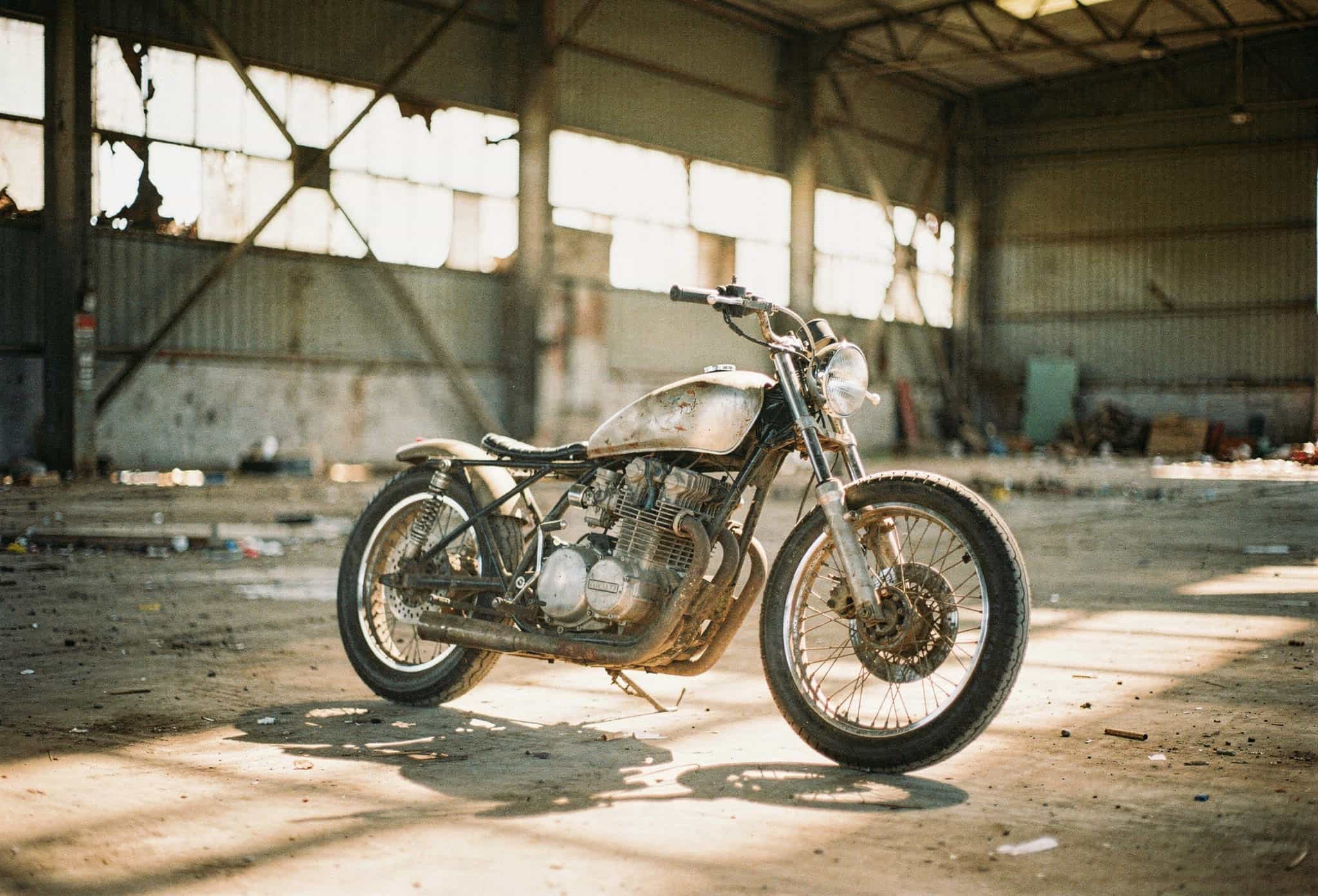
Fifty years later, that same engine is sitting in garage builds across the world. Bobber builders figured out what Kawasaki’s marketing department never bothered to say: this is one of the most overbuilt, underpriced Japanese twins ever made. And it strips down to a bobber like it was designed for it.
How the KZ750 Came to Exist
By the mid-1970s, the big vertical twin was far from dead. Triumph was still selling the Bonneville. Yamaha had carved out real territory with the XS650. Norton was hanging on with the Commando. There was a proven market for riders who wanted torque and simplicity over multi-cylinder complexity.
Kawasaki saw the gap. Their earlier attempt at the mid-displacement market - the two-stroke triples like the H2 750 - had earned a reputation as violent, unpredictable machines. Brilliant, but not for everyone. The KZ750 was the opposite approach entirely: a civilized, reliable twin that regular riders could live with every day.
The engine was genuinely advanced for 1976. Double overhead cams, two valves per cylinder, a five-speed gearbox, and electronic ignition. Kawasaki borrowed the DOHC layout from their racing program but tuned the KZ750 for midrange torque rather than peak horsepower. The result was 55 horsepower at 7,000 RPM and around 45 lb-ft of torque - numbers that were competitive with the Triumph T140 and XS650 but delivered with Japanese reliability (Kawasaki Heavy Industries, 1976 KZ750 specifications).
Production of the twin ran from 1976 through 1982, with the B-series models (1976-1979), the G-series (1980), and the CSR M-series (1982). Kawasaki also reused the KZ750 name for an inline-four starting in 1980 - a completely different motorcycle that shares nothing but the badge. When builders talk about the KZ750 bobber, they mean the twin. Always the twin.
Factory Specs Worth Knowing
Before you buy one, know what you are working with. These numbers come from the original KZ750 twin:
- Engine: 745cc air-cooled parallel twin, DOHC, 2 valves per cylinder
- Power: 55 hp @ 7,000 RPM
- Torque: ~45 lb-ft @ 6,000 RPM
- Compression: 8.5:1
- Ignition: Electronic CDI (no points to mess with)
- Transmission: 5-speed, chain final drive
- Frame: Steel double cradle
- Wheelbase: 57.3 inches
- Seat height: 31.5 inches
- Dry weight: ~495 lbs (stock, fully dressed)
- Fuel capacity: 4.0 gallons
That 495-pound stock weight drops fast once you start pulling parts. Ditch the stock fenders, airbox, passenger pegs, signals, and side covers and you are looking at a bike in the low 400s. That is bobber territory.
Why the KZ750 Works as a Bobber Platform
Not every motorcycle strips down well. Some bikes lose their structural integrity when you start cutting. Others look wrong with the bodywork removed - proportions that only make sense when everything is bolted on.
The KZ750 is not one of those bikes. Here is why builders keep coming back to it:
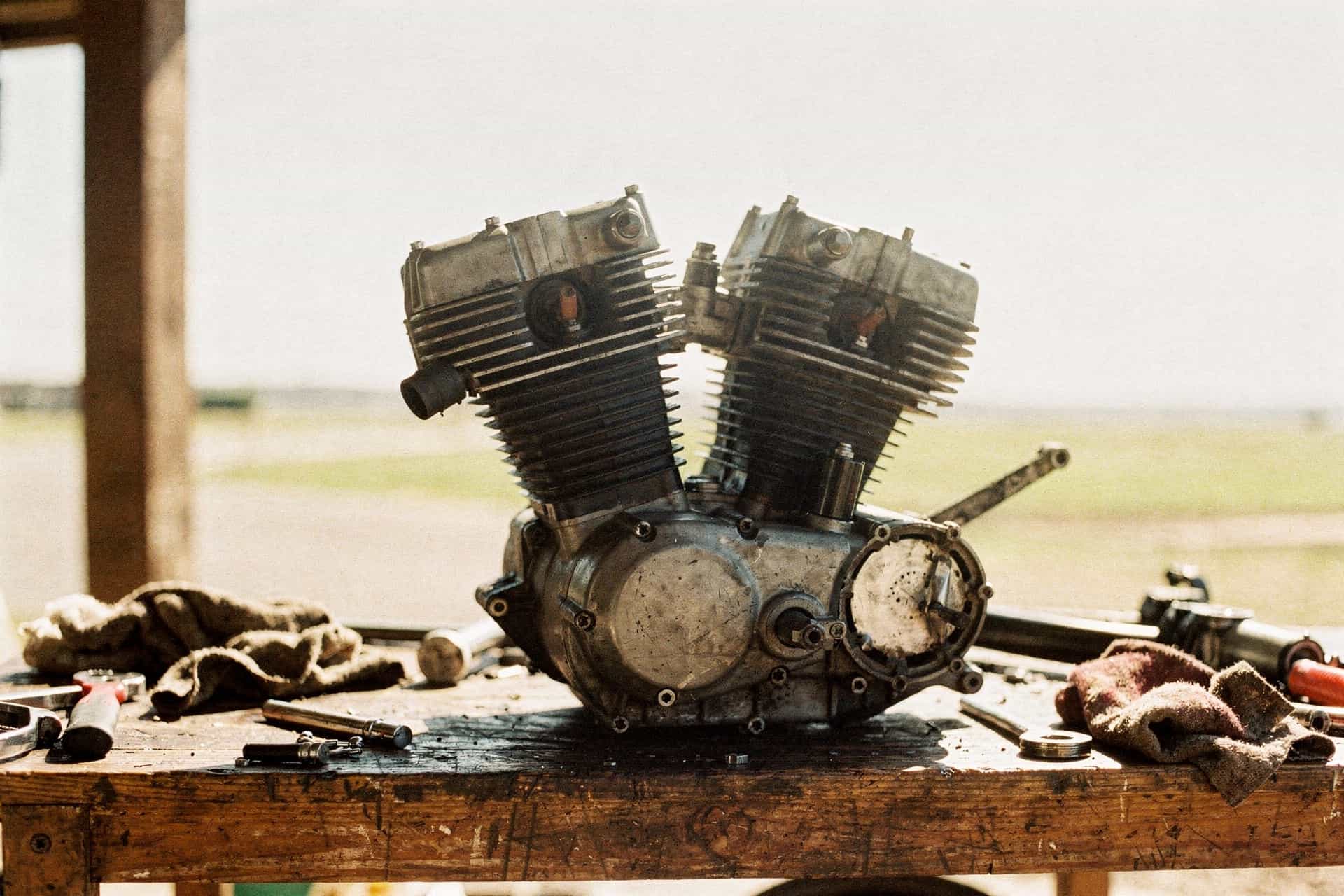
The engine is the visual centerpiece. That DOHC twin is a good-looking motor. Wide, finned cylinders with the cam chain running up the center and the overhead cam covers on top. Once you clear out the airbox and stock exhaust, the engine dominates the frame - exactly what a bobber should do.
The frame geometry is already right. Stock rake is around 27 degrees with a 57-inch wheelbase. That is almost textbook bobber stance without touching the neck. Compare that to a CB750 four, where the engine width forces a wider frame and the proportions fight you the whole way.
Electronic ignition from the factory. This is a bigger deal than people realize. No points. No condenser. No fiddling with timing. The CDI system on the KZ750 just works, decade after decade. We’ve seen KZ750 builds roll into the shop with the original ignition module still firing clean after 40-plus years.
Parts are cheap and everywhere. The KZ750 twin was not a rare bike. Kawasaki sold thousands of them. Engines, frames, transmissions, carbs - you can find them on eBay, in salvage yards, and at swap meets for a fraction of what comparable Triumph or Harley parts cost. That low entry cost also makes the KZ750 one of the best platforms for newer builders - if that is you, our motorcycle beginners guide is worth a read before you start cutting.
Torque curve suits the bobber riding style. A bobber is not a drag bike. You want grunt in the midrange, not a peaky powerband that requires wringing the throttle to 9,000 RPM. The KZ750 twin delivers its torque low and flat, which means relaxed cruising in top gear and enough snap to pull away from intersections without downshifting.
The Build: Stripping a KZ750 Down to Bobber Bones
Every build is different, but the KZ750 bobber follows a general sequence that most builders land on. This is not a step-by-step manual - it is the framework. Your choices are your own.
Frame and Rear End
The stock KZ750 subframe is too long and too heavy for bobber proportions. Most builders cut the subframe behind the rear shock mounts and weld a new loop or hardtail section. A 180-degree hoop is the simplest option and keeps things clean. If you want a true hardtail, aftermarket rigid rear sections are available from shops like Ryca Motors and TC Bros, though you will need to verify fitment for the KZ750 specifically since most kits are designed for XS650 or Sportster frames.
Honest take: if you are daily riding this thing on anything but perfect roads, keep the rear suspension. A hardtail KZ750 looks incredible parked. It beats you up after 30 miles on rough pavement.
Front End
Stock forks are serviceable. They are conventional 36mm tubes - nothing fancy, but they do the job. Progressive Suspension makes drop-in springs (part number 11-1109) that firm up the front end and lower the bike about an inch. If the fork seals are leaking, rebuild them while you are in there. OEM-spec seals from All Balls Racing run about $15.
Some builders swap the entire front end for wider USD forks from a sportbike donor. It looks aggressive, but it changes the steering geometry significantly. Unless you know how to calculate trail and offset, stick with the stock forks and better springs.
Seat and Tank
The stock tank is a 4-gallon unit that sits well on the frame. Its proportions work with a bobber look, so most builders keep it. If you want something smaller, Harley Sportster peanut tanks (2.4 gallons) can be adapted with custom mounts, but you are sacrificing range for aesthetics.
For the seat, a solo spring saddle mounted to a flat seat pan is the standard move. Companies like Lowbrow Customs and Biltwell carry universal-fit solo seats that work on the KZ750 with minor bracket fabrication. Measure the distance between your frame rails before ordering - the KZ750 backbone is narrower than a Harley frame.
Exhaust
The stock exhaust is heavy, restrictive, and ugly. It is the first thing to go. Your main options:
- 2-into-1 collector: Best for performance. A merged header with a single outlet keeps exhaust velocity high and frees up visual space on both sides of the engine. Cone Engineering and Spark Exhaust make universal-fit collectors that can be welded to custom header pipes.
- Straight drag pipes: Loud, simple, and cheap. Two individual pipes running straight back, cut to length, with or without baffles. They look right on a bobber. They also sound like a jackhammer at idle and will cost you some midrange torque without retuning the carbs.
- Shorty megaphones: A middle ground. Individual headers into short reverse-cone mufflers. Good sound, decent performance, clean look.
Whatever you choose, you will need to rejet the carburetors. The KZ750 runs Mikuni BS34 carbs from the factory. Going from a restrictive stock exhaust to open pipes leans out the mixture. Bumping the main jet 5-10 sizes and adjusting the needle clip position will get you in the ballpark. A proper dyno tune is worth the $150 if you have access to one.
If you are deep into a KZ750 build and need some fresh gear for the garage - or just want to rep the bobber life - check out our t-shirt collection. Built for riders, not fashion magazines.
Electrics
The KZ750’s wiring harness is 1970s Japanese complexity at its finest. Thirty-plus-year-old connectors, faded color codes, and enough wire to rig a small house. Simplifying the electrics is not optional on a bobber build - it is survival.
A Motogadget m-Unit Blue or a simpler Revival Cycles prism kit will replace the entire stock harness with a single control box. Wire in your ignition, starter, headlight, tail light, and kill switch. That is it. Everything else is dead weight.
Keep the stock CDI ignition module and pickup coil. They are reliable. The only electrical component on the KZ750 that you absolutely should not mess with is the charging system - the stock alternator and regulator/rectifier work fine and replacing them with aftermarket units is a rabbit hole of compatibility problems.
Wheels and Tires
Stock wheels are wire-spoked 19-inch front and 18-inch rear. Those sizes work perfectly for a bobber. A 100/90-19 front and 130/90-18 rear is a common tire combination. Firestone Champion Deluxe or Shinko 270 Super Classic tires give the right vintage look.
If the stock spokes and rims are in good shape, have them re-laced and trued rather than replacing them. A professional re-lace with new stainless spokes runs $200-300 per wheel and gives you factory-correct fitment with fresh hardware.
Parts Sourcing: Where to Find KZ750 Donor Bikes and Components
The KZ750 twin is not a sought-after collector bike, which works in your favor. Prices for running examples have held steady at $1,500-3,000 depending on condition and location. Non-running project bikes show up for $500-1,000 regularly.
Best sources:
- Facebook Marketplace and Craigslist - local pickup saves shipping costs on a 500-pound bike
- eBay - the largest selection of KZ750-specific parts, especially NOS (new old stock) items
- Kawasaki Kz750 Twin Owners Facebook Group - active community with classified listings and technical knowledge
- Z1 Enterprises (z1enterprises.com) - one of the best online sources for vintage Kawasaki OEM and reproduction parts
- Partzilla (partzilla.com) - OEM parts diagrams with cross-reference to current availability
We had a guy bring a KZ750 into the shop last spring that he picked up for $800 off Marketplace. Non-running, barn-stored for fifteen years. Carb clean, fresh fuel lines, new battery, and a valve adjustment - it fired on the third kick. That is the kind of engine we are talking about here. These things want to run.
Common Problems and What to Watch For
The KZ750 twin is reliable, but it is also a 45-plus-year-old motorcycle. Know what you are getting into:
Cam chain tensioner. The automatic tensioner can wear out and allow the cam chain to slap. You will hear it as a metallic rattling noise at idle that goes away under throttle. Manual tensioner conversions are available and eliminate the problem permanently.
Second gear. The KZ750 five-speed has a known weakness in second gear. Hard shifts or aggressive clutch dumps can chip the engagement dogs. If a KZ750 pops out of second gear under acceleration, the transmission needs to come apart. Not a dealbreaker, but check for it on any potential purchase.
Carb synchronization. Twin carb setups are sensitive to being out of sync. The Mikuni BS34 carbs need to be balanced with a vacuum gauge set - do not try to do it by ear. Out-of-sync carbs cause uneven running, poor fuel economy, and one cylinder running hotter than the other.
Charging system. The stock regulator/rectifier can fail with age. Symptoms are a dead battery after short rides or dim headlights at idle. A replacement unit from Rick’s Motorsport Electrics (part number 10-104) is a direct bolt-on upgrade with modern components.
Petcock and fuel lines. Original vacuum-operated petcocks get stiff and leak. Replace with a manual petcock - it is simpler and more reliable for a bobber with no vacuum lines.
The KZ750 Bobber Compared to Other Japanese Platforms
The KZ750 is not the only Japanese twin that makes a good bobber. Here is how it stacks up against the usual suspects:
| Feature | KZ750 Twin | Yamaha XS650 | Honda CB750 | Suzuki GS750 |
|---|---|---|---|---|
| Engine type | Parallel twin DOHC | Parallel twin SOHC | Inline four SOHC | Inline four DOHC |
| Displacement | 745cc | 654cc | 736cc | 748cc |
| Power | 55 hp | 53 hp | 67 hp | 65 hp |
| Weight (stock) | ~495 lbs | ~455 lbs | ~510 lbs | ~520 lbs |
| Aftermarket support | Moderate | Excellent | Excellent | Limited |
| Typical donor price | $1,500-3,000 | $2,500-5,000 | $3,000-6,000 | $1,500-3,000 |
| Bobber suitability | Excellent | Excellent | Good (wide engine) | Fair (four-cyl proportions) |
The XS650 gets more love in the bobber scene, but it costs twice as much for a clean donor and the SOHC engine is less advanced than the KZ750’s DOHC setup. The CB750 has the aftermarket depth but the inline-four width works against bobber proportions. The GS750 is a capable bike that nobody builds because the parts support is not there.
The KZ750 sits in a sweet spot: advanced engine, good proportions, low entry cost. It is the thinking builder’s choice.
What a Bobber Really Is - And Why the KZ750 Fits
A bobber motorcycle is a stripped-down machine with everything unnecessary removed. The style originated in the 1940s when returning GIs took military-surplus bikes and “bobbed” the fenders, cut the frames, and threw away anything that added weight without adding function.
The KZ750 follows that same logic without fighting you. The frame is simple enough to modify. The engine is strong enough to handle reduced weight. The geometry does not need radical changes. You are not building against the bike - you are building with it.
That is the difference between a good bobber platform and a bad one. A bad platform forces you to solve engineering problems that the original designers never intended. A good one gets out of the way and lets you focus on making the bike yours.
If you are hunting for riding gear, stickers, or lifestyle apparel to go with your build, take a look at our full collection. We make stuff for people who build, not people who browse.
KZ750 Builds Worth Studying
There is no shortage of KZ750 bobber builds online. A few stand out for what they teach about the platform:
The Kott Motorcycles KZ750 (based in Los Angeles) demonstrated that the KZ750 twin can be pushed into cafe-bobber territory - clip-ons, rearsets, and a short tail section that showed the engine off. Dustin Kott’s builds are well-documented and prove the KZ750 frame takes modification well.
Several builders in the Kawasaki Vulcan bobber community have crossed over to the KZ750 platform, bringing V-twin bobber aesthetics to the parallel twin layout. The crossover works because both platforms share Kawasaki’s approach to overbuilding mechanical components.
Builders coming from Yamaha V-Star 1100 bobber projects often find the KZ750 lighter and more agile, though with less low-end torque. It is a different riding experience - more responsive, less planted - and some riders prefer that for city riding and short-distance cruising.
Now Get Building
The KZ750 twin is sitting in barns, garages, and backyards across the country right now. Most of them are forgotten. A few hundred dollars and a weekend of wrenching gets you a running donor bike. A few weekends more and you have a bobber that nobody else on the road is riding.
That is the real appeal here. You are not building a bike that ten thousand other guys already built. You are taking an overlooked machine and turning it into something that earns a second look at every stoplight.
Find the bike. Strip it down. Make it yours.
Sources
- Motorcycle Classics - “Kawasaki KZ750” - production history, specifications, and model year details for the KZ750 twin
- Old Bike Australasia - “1976 Kawasaki KZ750: The big twin you’ve never heard of” - original road test data and factory specifications
- Rider Magazine - “Retrospective: Kawasaki KZ750-E: 1980-1982” - later twin production years and model variants
- Z1 Enterprises - vintage Kawasaki OEM and reproduction parts reference
- Walker, Mick. Kawasaki: The Complete Story. Crowood Press, 1997 - Kawasaki’s product strategy during the 1970s twin-cylinder program