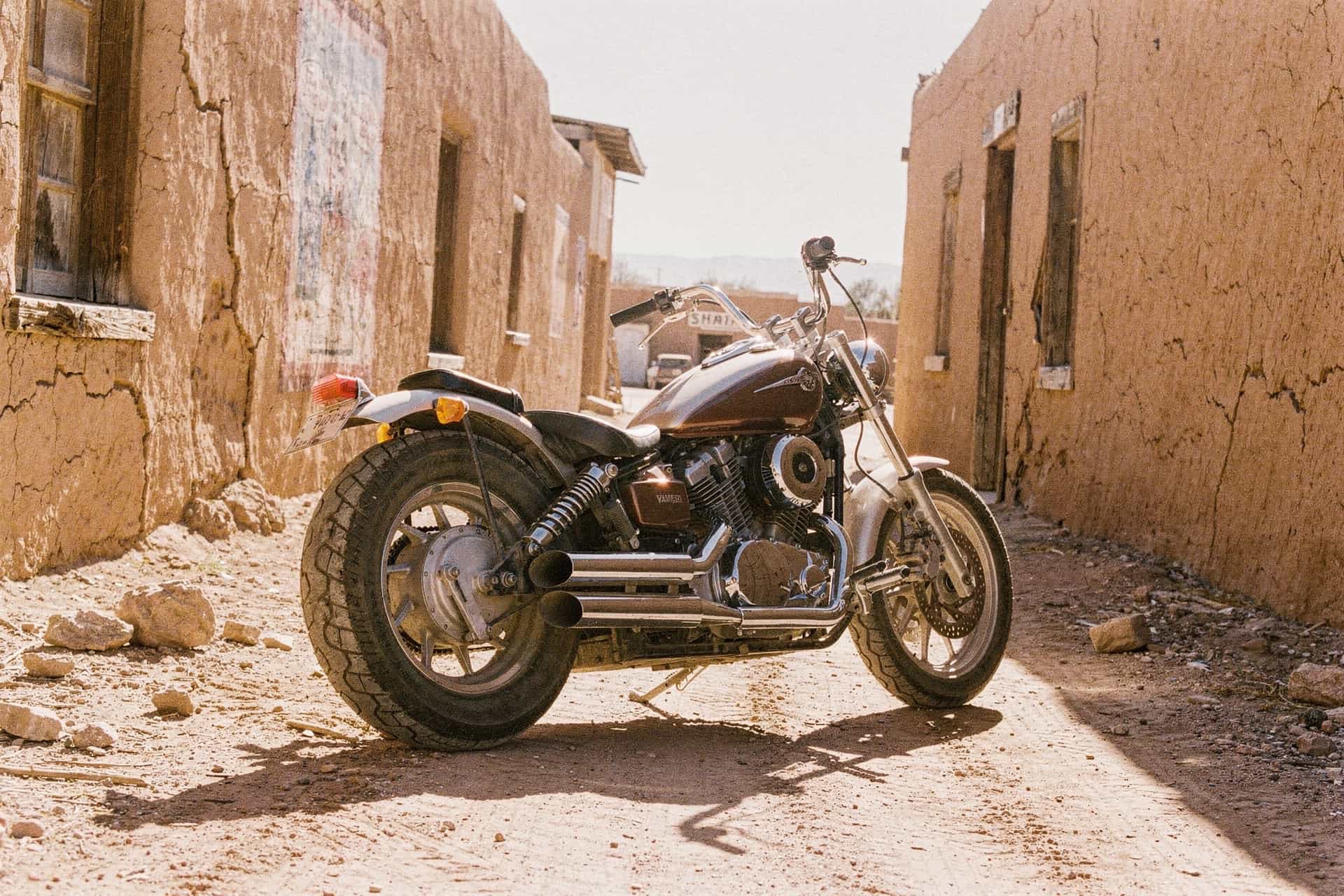
A dented tank, a cracked seat and oxidized chrome is the standard condition of a V-Star that has spent a decade behind somebody’s garage, and it is also the standard starting point for a good bobber. Strip it to the frame, hoop the rear, drop a solo seat over the axle, black out the engine, and the bike stops looking like a used mid-2000s cruiser. That is the V-Star in one sentence: cheap to buy, hard to kill, and built on a V-twin that takes to bobbing without a fight.
Yamaha’s V-Star line, sold as the DragStar outside North America, spans two engines that dominate the budget bobber scene: the 649cc V-Star 650 and the 1063cc V-Star 1100. Both use a 75-degree air-cooled V-twin descended from the Virago family, both use shaft drive, and both routinely trade under $3,000. Low buy-in, mechanical simplicity, and a silhouette that already leans toward bobber territory is why these are among the most converted cruisers anywhere.
650 or 1100: Pick the Platform First
Everything else in a V-Star build follows from this decision, so make it before you buy.
| If you want | Pick | Why |
|---|---|---|
| Low-and-slow classic bobber feel | 1100 | Published torque peaks near 2,500 rpm, so it pulls without revving. That delivery is the whole bobber character |
| Your first build | 650 | Lighter, cheaper to buy, cheaper to make mistakes on, and easier to move around a garage alone |
| A bike you will actually corner | 650 | Roughly 100 lb lighter than the 1100 in comparable trim |
| A hardtail conversion | 650 | Less weight punishing you over bad pavement with no rear suspension |
| Least cutting and welding | Either Custom model | Custom trim on both has a simpler subframe than Classic trim, which carries floorboards, valanced fenders and bag mounts |
| Long-term parts supply | 650 | It stayed in production far longer, so used and aftermarket parts are more plentiful |
Neither answer is wrong. The 1100 is the better platform for the classic bobber stance and feel. The 650 is the better platform for a lighter, more nimble bike and a lower-risk first project.
The rest of this covers history, published specs, the mods that matter, and the known faults to check before money changes hands.
From Virago to DragStar: How the V-Star Happened
The V-Star story starts with the Yamaha Virago, which launched in 1981 as the XV750. That bike introduced Yamaha’s 75-degree air-cooled V-twin - an engine architecture the company would use, refine, and refuse to abandon for over two decades. The Virago grew into 250, 535, 750, and 1100cc variants across the 1980s and early 1990s, earning a reputation for being unkillable daily riders.
By the mid-1990s, Yamaha wanted something that looked less like a Japanese interpretation of a cruiser and more like an actual American-style cruiser. The result was the DragStar, launched in 1996 as the XVS400 in Japan and the XVS650 in Europe. North America got the 650 in 1998 under the V-Star name, and the 1100 followed in 1999.
The 1100 was not a new engine. It was a significantly reworked version of the Virago 1100’s V-twin - same 75-degree cylinder angle, same air-cooled architecture, but with revised cam profiles, updated carburetion (two Mikuni BS34 constant-velocity carbs), and a new crankcase that allowed the engine to sit lower in the frame. Yamaha also gave the 1100 a completely new double-cradle steel frame, swapped the Virago’s shaft-drive layout for a cleaner routing, and dropped the seat height to a low 27.2 inches.
The 650, meanwhile, got its own purpose-built 649cc single-overhead-cam V-twin producing around 40 horsepower. Lighter, narrower, and even lower to the ground, the 650 was positioned as a first or second bike - and it turned out to be one of the best-selling midsize cruisers Yamaha ever made.
Both models ran all the way to 2009 (the 1100) and 2017 (the 650, eventually replaced by the V-Star 250 and Bolt in various markets), giving the aftermarket decades to develop parts.
V-Star 650 vs. 1100: The Specs That Matter for a Bobber Build
Not every cruiser makes a good bobber. What matters for a conversion is weight distribution, frame geometry, engine character, and how easily the rear section can be cut. Here is where the two V-Stars stack up.
The power and torque figures below come from period manufacturer literature and secondary spec references, not a modern standardized dyno, and published weights vary between sources depending on whether they are dry or wet. Treat them as the right shape rather than exact numbers.
V-Star 650 (XVS650)
- Engine: 649cc, 75-degree air-cooled V-twin, SOHC, 2 valves per cylinder
- Power: Approximately 40 hp at 6,500 rpm
- Torque: Approximately 37 lb-ft at 3,000 rpm
- Drive: Shaft
- Wet weight: Around 545 lbs (Classic), 511 lbs (Custom)
- Seat height: 27.4 inches
- Production: 1998-2017 (various markets)
V-Star 1100 (XVS1100)
- Engine: 1063cc, 75-degree air-cooled V-twin, SOHC, 2 valves per cylinder
- Power: Approximately 62 hp at 5,750 rpm
- Torque: Approximately 63 lb-ft at 2,500 rpm
- Drive: Shaft
- Wet weight: Around 628 lbs (Classic), 606 lbs (Custom)
- Seat height: 27.2 inches
- Production: 1999-2009
The 650 is the lighter, more forgiving platform. If you are building your first bobber or want something that handles well in city traffic, the 650 makes sense - and if you are still getting your footing as a rider, our motorcycle beginners guide is worth reading before you commit to a build. It is also significantly cheaper to buy - running $1,200 to $2,500 in decent condition.
The 1100 has a fat, lazy torque curve that hits hard from idle. That low-rpm pull is what makes the 1100 feel like a much bigger bike than it is, and it is the reason most riders who build V-Star bobbers gravitate toward the 1100. You do not need to rev it. You roll on the throttle and the bike just goes. For a stripped-down bobber with no fairing and minimal weight, that kind of torque delivery is exactly what you want.
The DragStar Name and Global Variants
If you are shopping for a V-Star internationally, you need to know the naming. In North America, it is the V-Star. Everywhere else - Europe, Japan, Australia - it is the DragStar (XVS series). Same bikes, same engines, same frames.
There is also the DragStar 400 (XVS400), sold primarily in Japan. It uses a 399cc version of the V-twin and is a solid bobber base for riders in markets with tiered licensing. The 400 shares many frame dimensions with the 650, so a lot of aftermarket parts cross over.
One detail that trips people up: the V-Star 650 came in two sub-models, the Classic and the Custom. The Classic has valanced fenders, a wider rear tire, and a more traditional cruiser look. The Custom has a raw, stripped-down style with drag-style bars and a slimmer profile. For bobber builds, the Custom is the better starting point because you are going to remove half the Classic’s bodywork anyway.
Same goes for the 1100. The 1100 Custom already has a cleaner visual starting point for a bobber than the 1100 Classic, which comes loaded with floorboards, a windshield, and saddlebag mounts.
Core Mods: What a V-Star Bobber Conversion Actually Involves
“What do I actually need to do to bob a V-Star?” Here is the real list, not the fantasy build-thread version.
Rear End
The single biggest visual change on any bobber is the rear. On the V-Star, this means either fabricating a hardtail rear section (welding new frame rails and eliminating the rear suspension) or - the more common approach - keeping the stock swingarm and shortening the rear fender. Most builders chop the subframe, weld on a hoop or flat plate, and mount a solo seat on springs directly above the rear axle.
The V-Star 1100’s stock subframe is relatively easy to cut because it is a bolt-on section on the Custom model. The 650 Custom is similar. The Classic models on both platforms have more integrated subframes, which means more cutting and welding.
Seat
A solo spring seat is standard for any bobber. On the V-Star, most builders use a universal bobber seat pan mounted to the frame rails or a custom bracket. The 1100 has wider frame rails than the 650, so seat fitment is not interchangeable between the two without modification.
Front End
Stock V-Star forks are serviceable but heavy-looking. Common upgrades include swapping to narrower aftermarket triple trees, adding fork gaiters or boots, and in some cases doing a full fork swap from a sportier donor bike. On the 650, some builders have successfully fitted Yamaha XS650 front ends for a vintage look.
Exhaust
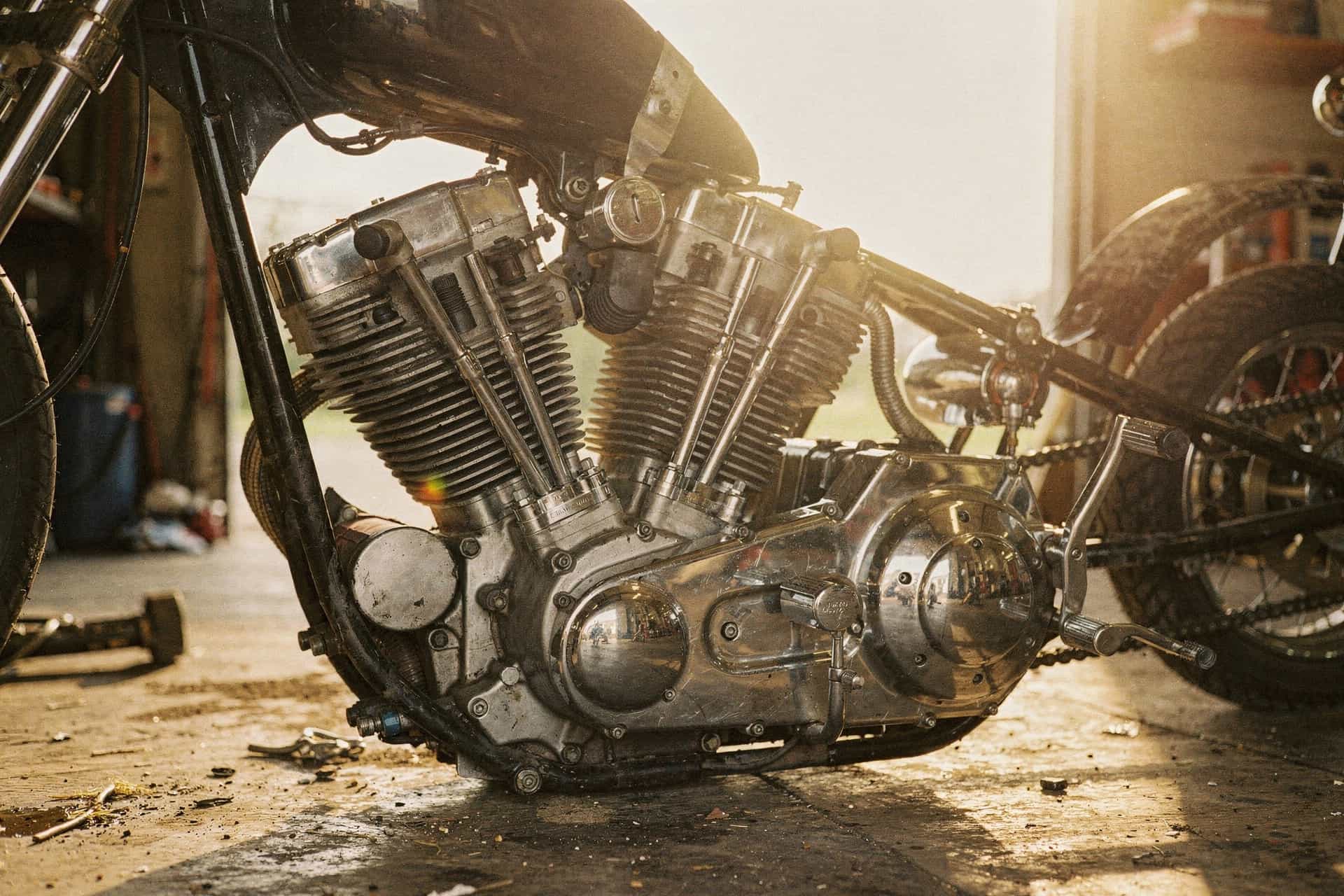
The stock exhaust on both V-Stars is quiet and heavy. Most bobber builders swap to a 2-into-1 exhaust or straight drag pipes. The 1100 responds well to exhaust changes - the engine note with open pipes is deep and aggressive, matching the bobber aesthetic. Just remember: if you change the exhaust on the 1100, you will want to rejet the carbs (or adjust the fuel mixture on fuel-injected later models of the 650) to avoid running lean.
Tank and Fenders
Some builders keep the stock V-Star tank because it already has a low, classic profile. Others swap to a smaller Sportster-style peanut tank or a Mustang tank for a more traditional bobber look. Either way, the V-Star’s frame tunnel accommodates most aftermarket tanks with minor bracket work.
For fenders, the front gets either removed entirely or replaced with a short, flat fender. The rear gets chopped to sit tight over the tire.
If you are deep into building your V-Star and need gear to match the build, check out our full collection - we make stuff for builders, not bystanders.
Electrical and Lighting
Bobbing a V-Star means relocating the battery (often under the seat or in a side-mount box), stripping the stock wiring harness of unnecessary connectors, and swapping to a smaller headlight and LED turn signals. The V-Star’s wiring is straightforward compared to modern fuel-injected bikes, which is another reason these things are popular with first-time builders.
Real V-Star Bobber Builds Worth Studying
Talk is cheap. Here is what the V-Star platform looks like when someone actually commits to the build.
The Flat-Black 1100
One of the most replicated V-Star bobber styles is the murdered-out 1100. Flat black paint on the tank and frame, blacked-out engine covers, solo seat, chopped rear fender, and drag bars. This is the “gateway bobber” build - relatively simple, under $1,000 in parts on top of the bike purchase, and the result looks nothing like the stock cruiser. The key to making this build work is in the details: matching the black on the engine to the frame (use high-temp engine paint, not rattle can), cleaning up the wiring, and getting the seat height right.
The Hardtail 650
The V-Star 650 hardtail conversion is a more serious build. It requires cutting the rear frame and welding in rigid struts or a full hardtail section. The payoff is a clean, classic bobber profile with an unbroken line from the steering head to the rear axle. The 650’s lighter weight (around 511 lbs stock on the Custom) makes it more tolerable as a hardtail than the 1100 - less unsprung weight pounding your spine on bad roads. Builders in this category often pair the hardtail with a springer front end for a full vintage look.
The Café-Bobber Hybrid
A growing trend with V-Star 650s is the café-bobber crossover - clip-on bars, a solo cowl seat, rear-set foot controls, but with the chopped fender and stripped-down bodywork of a bobber. It is not traditional, but the 650’s lighter chassis handles the repositioned weight well. These builds tend to attract riders who want the bobber look but actually ride aggressively.
Honest take: the 1100 is the better platform if you want that classic, low-and-slow bobber feel. The 650 is the better platform if you want to actually carve corners or build something lighter and more nimble. Neither is wrong. It depends on how you ride.
Why the V-Star Beats Other Budget Bobber Platforms
The V-Star is not the only cheap cruiser you can bob. The Honda Shadow and Kawasaki KZ750 are both solid platforms. But the V-Star has a few edges.
Shaft drive. No chain to tension, clean, adjust, or replace. On a bobber where you have stripped away bodywork and exposed the drivetrain, shaft drive looks cleaner and requires zero maintenance beyond fluid changes every 10,000 miles.
Parts availability. The 650 stayed in production for roughly two decades and the 1100 for about ten years, across North America, Europe, Japan and Australia. We have not found a published global sales total, so we will not invent one, but the practical result is visible in any parts catalog: bolt-on bobber kits, frame sections and exhaust systems built specifically for these bikes.
The V-twin character. That 75-degree V-twin layout produces a slightly uneven firing order that gives the engine a loping, rhythmic pulse. It is not a Harley’s 45-degree potato-potato, but it has personality. On a bobber with open exhaust, the V-Star sounds like a proper motorcycle, not a sewing machine.
Low seat height. Both V-Stars sit low - 27 inches or under. That is lower than most Sportsters and almost every metric cruiser competitor. For a bobber, where you want the rider sitting in the bike rather than on top of it, that geometry is a gift.
Repping your build with the right gear matters. Our tees are made for riders who wrench on their own bikes - not for people who trailer theirs to shows.
Common Problems and What to Watch For
No platform is perfect. The faults below are the ones that come up consistently in owner forums and buyer guides for these bikes. They are widely reported rather than factory-documented, so treat them as things to check on a specific bike rather than certainties about every bike.
Carb icing on the 1100. The V-Star 1100’s Mikuni carbs are known for icing in cold, humid conditions - typically below 40 degrees Fahrenheit. Symptoms are rough idle and stalling. The fix is a carburetor heat kit or simply not riding in freezing weather, which most bobber riders do not do anyway.
Stator failures. Both the 650 and 1100 have a reputation for stator failures, especially on higher-mileage bikes. If you are buying a V-Star with over 30,000 miles, test the charging system before you commit. A replacement stator runs $80-$150 in parts.
Cam chain tensioner (650). The 650’s automatic cam chain tensioner can wear out over time, leading to a rattling sound at startup. Aftermarket manual tensioners fix this permanently for about $40.
Rear tire size (1100). The 1100 Custom runs a 170/80-15 rear tire, while the Classic also runs a 170/80-15 but on a 16-inch front wheel. If you are building a bobber and want to change tire size, factor in shaft drive alignment. Going too wide on the rear can cause clearance issues with the shaft drive housing.
None of these are deal-breakers. They are just things you need to know so you are not surprised at 11pm on a Wednesday with a half-assembled bike in your garage.
Your Move
The Yamaha V-Star - whether you start with the 650 or the 1100 - is one of the most proven bobber platforms outside of the Harley Sportster. It is cheaper to buy, easier to maintain, and the aftermarket has caught up to the point where you can build a clean V-Star bobber without fabricating a single part from scratch if you do not want to. Or you can go full custom and weld your own hardtail. The platform supports both approaches.
Find a V-Star Custom with decent compression and clean carbs. Strip it down. Build it up. That is the whole point.
Sources
- RevZilla Common Tread - Yamaha V-Star 1100 buyer’s guide - platform overview, ownership notes, and the commonly reported faults referenced above
- Autoevolution - Yamaha V-Star 1100 Classic - published XVS1100 Classic specifications and performance figures
- VikingBags - Yamaha V-Star 1100 Custom XVS11A specifications - XVS1100 Custom dimensions, weights and drivetrain detail
- VikingBags - Yamaha V-Star 650 Custom XVS65T specifications - XVS650 Custom specifications and model background
- Yamaha Motor - Global history of the XVS and Virago V-twin line - manufacturer collection pages covering the V-twin cruiser lineage the V-Star descends from