


Pull up to any bike night and look at the back half of the customs. Some sit dead flat over the rear wheel, axle bolted straight to the frame, no shocks anywhere in sight. Others have that same slammed, rigid look but soak up the driveway lip without a shudder. Both are running the two frame styles that split the custom world in half: the hardtail and the softail. From ten feet away they can look identical. Underneath, they could not be more different.
A hardtail has a single rigid frame with no rear suspension. You feel every bump, but it is simpler, cheaper, and gives that classic slammed look. A softail hides shocks under the frame, so it keeps the clean hardtail silhouette while cushioning the ride. Rigid honesty against hidden comfort.
Here is how the two frames actually work, where the softail came from, and which one belongs under your build.
What a Hardtail Actually Is
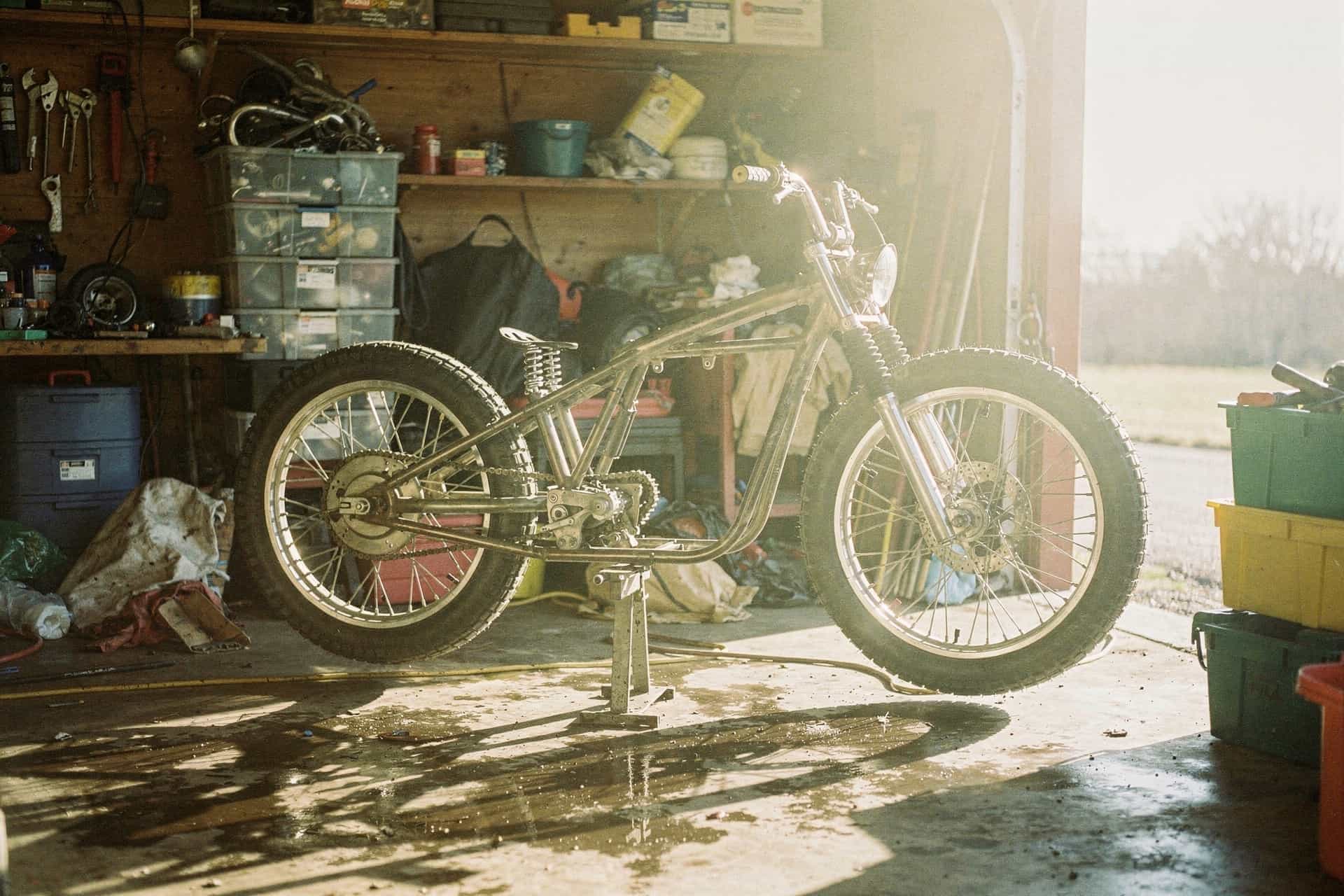
A hardtail is the most basic motorcycle frame you can get. The frame runs from the steering head to the rear axle in one piece. There is no swingarm, no rear shocks, no pivot, no moving parts out back. The rear wheel bolts solid to the frame and never travels. Whatever the road throws at that tire goes straight up through the frame and into you.
The only cushioning on a rigid comes from three places: the front fork, the air in your tires, and a sprung solo seat if the builder fitted one. That is it. This is the frame that defined the early bobber motorcycle and the chopper, and it is still the go-to for builders chasing that dead-flat, back-to-the-bones stance.
Worth knowing: “rigid” and “hardtail” used to mean slightly different things. Before the early 1970s, a bike with no rear suspension was just called a rigid. “Hardtail” originally described the act of converting a swingarm bike back to rigid - you would “install a hardtail” section. Over time the word drifted, and now most riders use hardtail and rigid to mean the same thing. When somebody says their Sportster is a hardtail, they mean the rear end does not move.
The appeal is honest. Fewer parts, less weight, lower cost, and a look that goes straight back to the post-war garages where riders first stripped their bikes down. A rigid frame is also a clean canvas. There is no shock or swingarm in the way, so the rear wheel, the fender line, and the frame rails all read as one uninterrupted line. That is exactly the look a lot of us are chasing when we start a build. If you want to understand how that frame geometry drives the whole stance of a bike, our breakdown of the old-school bobber rolling chassis digs into the raw frame side of it.
How a Softail Hides Its Suspension
The softail exists to answer one question: how do you get the clean rigid look without beating your spine to pieces?
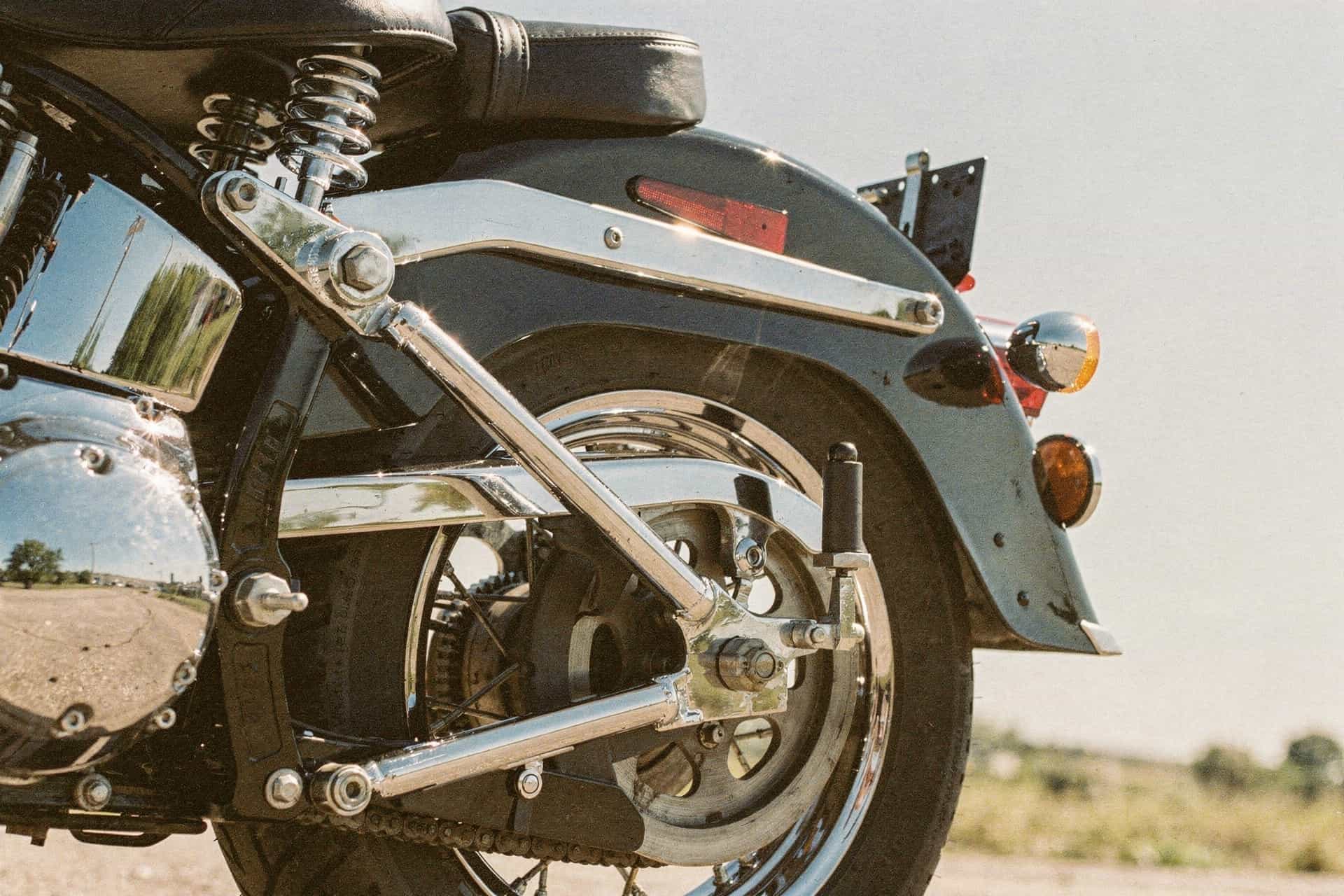
The trick is where the shocks live. A softail runs a rear swingarm like any suspended bike, but instead of standing shocks up on either side of the rear wheel where you can see them, the design tucks the shock absorbers flat, usually under the transmission or gearbox. From the side, the triangle of the frame reads like a rigid. The wheel still travels and still soaks up bumps, but the hardware that makes it happen is hidden. You get the slammed silhouette and a cushioned ride in the same frame.
That idea did not start in Milwaukee. It started with a St. Louis engineer named Bill Davis. Working on his own 1972 Super Glide in 1974 and 1975, Davis built a cantilever setup that hid the springs and shock under the seat, keeping the look of a 1950s rigid. He patented it, built a prototype, and pitched it to Willie G. Davidson in August 1976. Harley passed at first. Davis kept refining it and eventually sold his patents, prototype, and tooling to Harley-Davidson in January 1982.
The payoff came in June 1983, when Harley launched Davis’s concept as the 1984 FXST Softail, with the shocks tucked under the gearbox and the new Evolution engine bolted in. It landed hard. The Softail gave riders the vintage rigid stance they wanted with none of the punishment, and it became one of the most important frames in Harley’s modern history. The name eventually got so common that “softail” is now shorthand for any cruiser that hides its rear suspension this way. If you want the wider story of how Harley got from rigid frames to this design, our Harley-Davidson history guide lays out the full timeline.
Ride Comfort: The Real Trade-off
This is the difference you feel first, and it is not subtle.
On a hardtail, the road talks to you constantly. Expansion joints, tar snakes, potholes, chip seal, railroad tracks - all of it comes straight through the frame into your lower back, your hands, and your neck. Around town at 30 mph on smooth pavement, a rigid is a blast. It feels planted, direct, connected. You feel the bike working. Take that same rigid onto a rough two-lane at highway speed for an hour, and the story changes fast.
Honest take: a rigid will teach you where every bad patch of road in your town lives. Ride 40 miles of neglected backroad on one and you will feel it the next morning - lower back, wrists, the base of your skull. That is not a knock on the frame. It is just physics. No rear travel means no way to absorb the hit. Riders who run rigids full time learn to stand on the pegs over the rough stuff and pick smoother lines, and a good sprung seat helps a lot. But there is no getting around what the frame is.
A softail changes the math. The hidden shocks give you a couple inches of rear travel, and that is enough to take the sharp edge off almost everything. Bumps that would jolt you on a rigid just get rounded off. You can sit in the seat for a full day, load up a passenger, and cross real distance without your body filing a complaint. That comfort is the whole reason the frame exists, and it is why softails took over the cruiser world while true rigids stayed a custom-only choice.
There is a handling piece to this too. A rear wheel that can move keeps the tire in contact with the road over bumps. A rigid wheel skips and hops over rough corners, which costs you traction right when you want it. A softail tracks cleaner through a bumpy bend. On glass-smooth pavement the difference shrinks, but the moment the road turns ugly, suspension wins.
Cost, Build Complexity, Maintenance
Money and wrench time swing hard toward the hardtail, and this is where a lot of first-time builders make their choice.
A rigid frame is cheap because it is simple. No swingarm, no shocks, no linkage, no bushings to wear out. Fewer parts to buy, fewer parts to align, fewer parts to break. A comparable softail costs more to put together because the hidden suspension adds shocks, a swingarm, and alignment work that a rigid rear end simply does not have. For somebody doing their first ground-up build in a home garage, that gap is real money, and the simplicity means fewer ways to get it wrong.
Maintenance follows the same logic. A rigid has almost nothing to service out back. There are no rear shocks to leak, no swingarm bearings to check, no ride height to set. You keep the wheel, the belt or chain, and the brake in order, and the rear end mostly takes care of itself. This is a big part of why rigid frames still show up on so many stripped-down builds - they match the whole minimalist idea.
A softail asks more of you. The hidden shocks, the swingarm pivot, and the extra hardware all need to be set up correctly and checked over time. The engineering that makes the ride smooth is the same engineering that adds parts, cost, and maintenance. It is more bike to look after. None of it is exotic, but it is more than a rigid will ever ask.
One caution on the build side. Turning a swingarm bike into a rigid - a hardtail conversion - looks simple and is not. You are cutting off the rear suspension and welding in a rigid section that carries every load the road delivers. The welds and the alignment have to be right. Done well, you get a clean, slammed, honest machine. Done poorly, the bike tracks crooked, flexes under braking, or cracks down the road. We have seen conversions come through that were laid up by somebody who treated frame welding like patching a lawnmower. If you cannot do the work to a real structural standard, pay someone who can. This is the frame holding you to the bike at 60 mph. It is not the place to save fifty bucks.
Whichever direction you lean, the workshop mindset is the same. If you live in the garage on weekends, our whole Built Not Bought collection is cut from that same cloth - gear made for riders who wrench their own machines.
Side-by-Side
| Factor | Hardtail (Rigid) | Softail |
|---|---|---|
| Rear suspension | None - axle solid to frame | Hidden shocks under transmission |
| Ride comfort | Harsh, every bump comes through | Smooth, absorbs most road shock |
| Long-ride fatigue | High - punishing on distance | Low - built for all-day riding |
| Look | Classic slammed, dead-flat rear | Clean rigid look, but cushioned |
| Build complexity | Simple, few parts | Complex, swingarm and shocks |
| Cost to build | Lower - fewer parts and setup | Higher - more parts and setup |
| Maintenance | Minimal out back | Regular shock and pivot service |
| Handling on rough roads | Wheel skips, loses traction | Tracks cleaner, keeps grip |
| Best rider | Short-hop stylist, smooth roads | Distance rider, mixed roads |
| History | Rigid roots, pre-war origins | Bill Davis design, 1983 Softail |
Which Frame for Your Build?
Start with one honest question: how and where are you going to ride it?
If the bike is a local runner - bike nights, coffee shop laps, short blasts on decent pavement - and the look is the whole point, a hardtail is hard to beat. It is cheaper, simpler, lighter, and it nails that stripped-to-the-bone stance nothing else matches. A lot of the cleanest Harley bobber builds run rigid rear ends for exactly this reason. You accept the harsh ride as the price of the look, and if your roads are smooth and your rides are short, that price is easy to pay.
If you actually cover ground - longer rides, rough roads, the occasional passenger, real distance - a softail earns its keep every mile. You get the same rigid look from ten feet away with a ride your spine will thank you for after a long day in the saddle. For most riders who want one bike that both looks slammed and can go the distance, the softail is the practical answer. It is the reason Harley bet the company on Davis’s design in the first place.
There is also the honest middle path a lot of us land on: build the rigid you always wanted, ride it local, and know its limits. Plenty of riders keep a hardtail for the look and the feel and simply do not point it at a 300-mile day. That is a perfectly good plan. The frame is a choice about how you ride, not a test you pass or fail.
The one thing you should not do is pick the frame blind. A hardtail and a softail can wear the same tank, the same bars, the same paint, and read almost the same in a photo. But they are two different machines to live with. Sit on both. Ride both if you can. The look pulls you in from across the lot, but you are the one who has to ride it home. And if you are still sorting out where your build sits in the custom world, our bobber vs chopper breakdown covers the frame and geometry side of that split too.
Pick the frame that matches your roads, not just your Instagram feed. Then go build it right.
Sources
- Softail - Wikipedia - History of Bill Davis’s hidden-suspension design, the sale of his patents to Harley-Davidson in January 1982, and the June 1983 launch of the 1984 FXST Softail.
- VikingBags - Hardtail Vs. Softail Motorcycles: Differences, Pros, and Cons - Frame construction, ride comfort, cost, maintenance, and handling differences between rigid and softail frames.
- Cardo Systems - Hardtail vs. Softail Motorcycles: Differences, Pros and Cons - Ride feel, long-distance comfort, cost and maintenance trade-offs, and ideal use cases for each frame.
- Timber Town Harley-Davidson - Hardtail vs. Softail Motorcycles - Dealer explanation of the single-piece rigid frame versus the softail’s hidden rear shocks under the transmission.