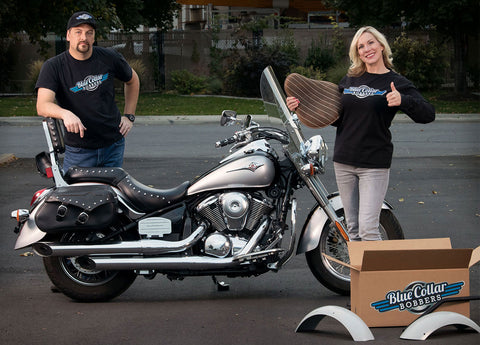
The bike in the driveway is a 2004 Shadow 600 with a windshield, a pair of vinyl saddlebags and a two-up seat the size of a couch cushion. It runs fine. It just looks like somebody’s uncle’s bike, because it was. You want a bobber. You do not own a welder.
That is the exact rider Blue Collar Bobbers builds for. The Utah shop makes bolt-on parts that turn common metric cruisers into bobbers with hand tools. This guide covers who the company is, what the kits include, what fits which bike, what it costs, and what to know before you order.
Who Blue Collar Bobbers Is
The Blue Collar Bobbers site lists the shop in Sandy, Utah, and says it has been in business since 2009. Its FAQ says, “With the exception of the lighting everything is made in Sandy, Utah.” It is a small operation, and the site lists phone numbers rather than a call center.
The company has been around long enough to get outside coverage. The Kneeslider wrote about Blue Collar Bobbers in April 2011, back when the bikes covered were Honda Shadows, Yamaha V-Stars, Kawasaki Vulcans and Suzuki S40 and Volusia models, and install instructions shipped on DVD. The DVDs are gone. The install videos now live on each bike’s page on the site.
One naming trap: TC Bros. Choppers in Ohio once built an XS650 custom it called the Blue Collar Bobber. That bike has nothing to do with the Utah kit company. If you see a springer XS650 in a search for Blue Collar Bobbers, that is the TC Bros. bike.
What Comes in a Kit
The FAQ puts it simply: “We believe there are four basic kits that every bobber should have: a Seat Kit, Rear Fender Kit, License Bracket, and a Rear Light Kit.”
Each one is sold on its own. That lets you spread the cost out, or start with the part that bugs you most. Here is what goes into each, based on the company’s product pages.
Seat kit. The FAQ says all their seat kits are springers. The FAQ also recommends the smaller seats for Shadows, Rebels and Savages, with larger seats for the other bikes. A spring seat is the heart of the bobber look and it is the part you will feel most.
Rear fender kit. The Shadow 600 rear fender kit is a good example. The fender is 1/8 inch thick aluminum with steel reinforcement straps at the mounting points. Brackets and struts are powder coated gloss black to match the frame, and all hardware is included.
License bracket. Moves the plate off the old fender tip. On most conversions it goes to a side mount.
Rear light kit. A new taillight to go with the shorter fender. The FAQ says the stock front lights work with the rear kits.
Handlebars are sold as an add-on for some bikes. The FAQ notes that on the Vulcan and V-Star, shorter bars can hit the tank at full lock, which is why the company recommends risers on those bikes. Shadows and Rebels do not need them. If you are rethinking the bars anyway, our motorcycle handlebar types guide covers what each style does to reach and steering.
What It Costs
Prices below are what the company’s site listed when we checked in September 2026.
| Item | Listed price |
|---|---|
| Rear fender kit, Shadow 600, grey powder coat primer | $303 |
| Rear fender kit, Shadow 600, gloss black powder coat | $323 |
| Seat, fender and license plate kit, Savage S40 | $795 |
| Shipping, average | $70 to $110 |
| Shipping time, per FAQ | 2 to 4 days |
The full catalog runs from small brackets around $120 to bundles near $1,000. For a single bike, the four core kits usually land well under what a custom fabricator would charge for the same work. That is the whole point of the company.
The FAQ says international delivery is available. Riders outside the US should price the shipping and the exchange rate before they commit, because both add up on a heavy aluminum fender.
Which Bikes They Fit
Blue Collar Bobbers kits are model-specific. The FAQ is clear that parts made for one bike will not fit another make. These are the families the site’s bike menu listed when we checked in September 2026.
| Brand | Models in the catalog |
|---|---|
| Honda | Shadow 600/400 VLX, Shadow Aero 750, Spirit 750 chain and shaft drive, Spirit 1100 and Aero 1100, Shadow 1100 Sabre, ACE 750 and 1100, Rebel 250 and 125, VTX 1300 and 1800 |
| Yamaha | V-Star 650, V-Star 1100, V-Star 250 (XV250) |
| Suzuki | Boulevard M50, Volusia (C50) 800, VL1500 (C90), Savage S40, TU250X |
| Kawasaki | Vulcan 400/800, 900, Vulcan S, 1500 and 1600 |
| Others | Harley Softails, Indian Scout |
Always open the page for your exact bike and year. Model families change over time, and the product page is the only thing that tells you whether a kit fits yours.
Five Donors, Five Different Starting Points
The photos below show these bikes in stock form, before any kit goes on. Each is a common Blue Collar donor, and each asks something different of you.
Kawasaki Vulcan 900
A big, heavy cruiser with a long rear fender and a lot of bodywork to lose. It is one of the bikes where the company recommends bar risers if you go with shorter bars. Our Kawasaki Vulcan bobber guide compares the whole Vulcan range as donors.
Honda Shadow Spirit 1100
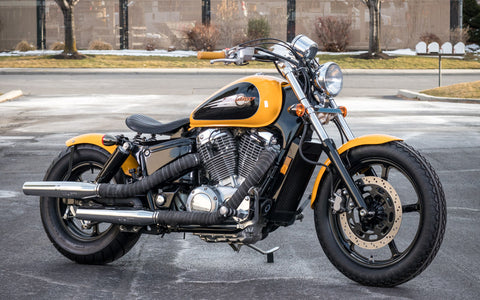
The 1100 is shaft drive, which rules out a cheap hardtail but makes a bolt-on conversion the smart play. A new seat, a short fender and a side-mount plate do most of the work.
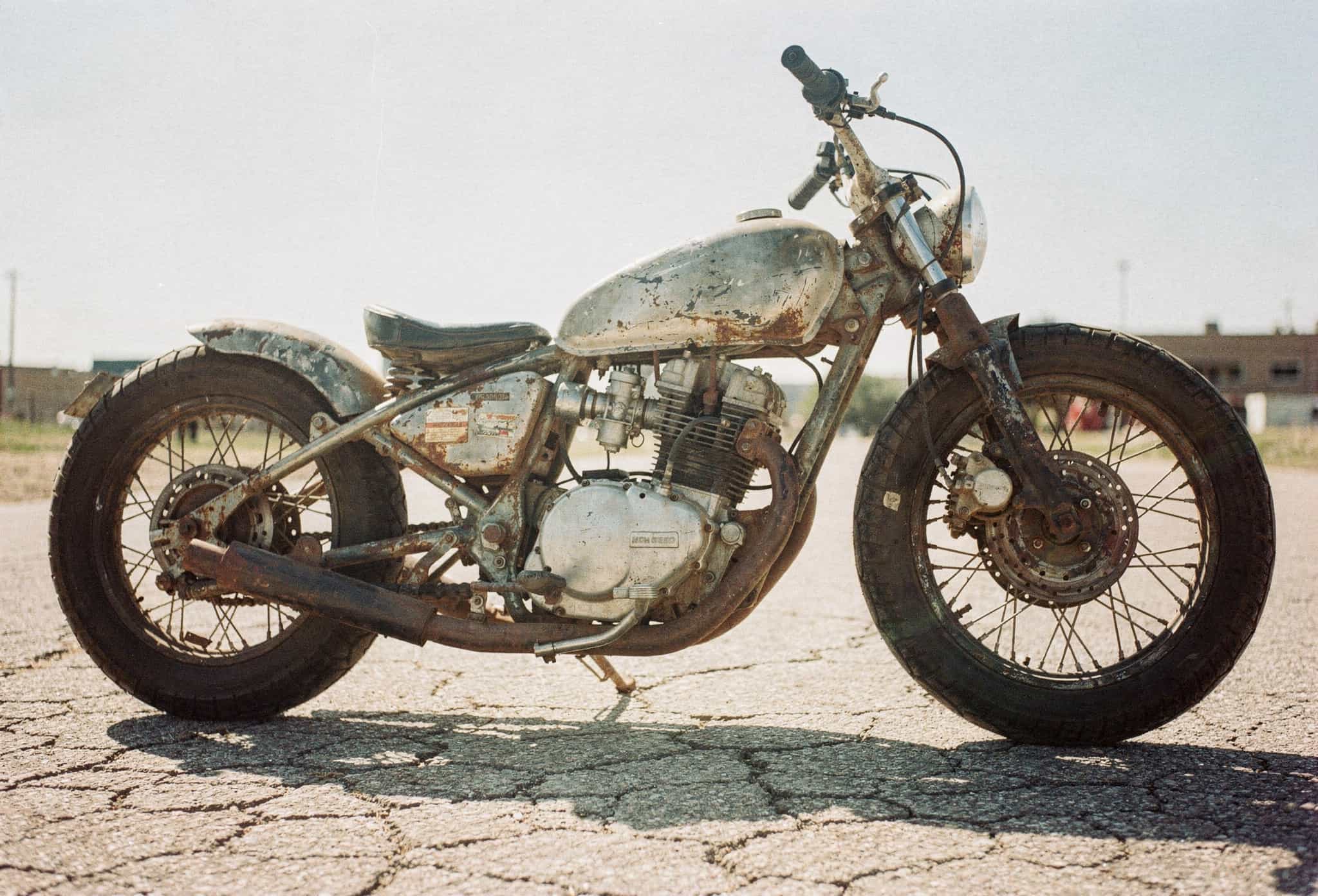
Suzuki Boulevard M50
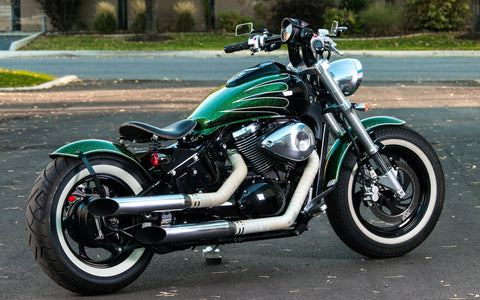
The M50 is one of the Suzukis the company lists. Do not confuse it with the older VS800 Intruder. Our Suzuki Intruder bobber guide explains why an 800 kit is not automatically an Intruder kit.
Yamaha V-Star 650
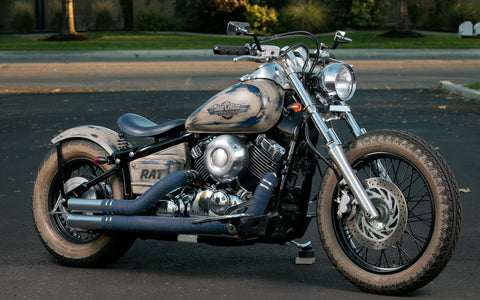
One of the most common metric donors in the country, and cheap. The other bike where risers make sense with shorter bars. For donor prices and the 650 vs 1100 choice, see our Yamaha V-Star bobber guide.
Honda Shadow VLX 600
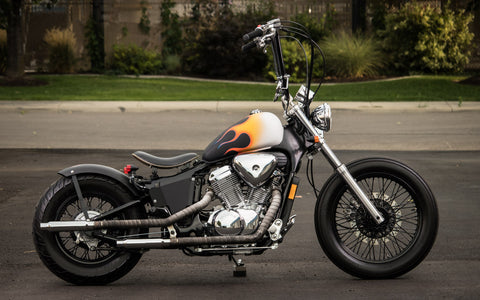
The lightest bike here and the easiest to learn on. It is chain drive, which leaves more options open later if you ever want to go past bolt-ons. Our Honda Shadow bobber guide covers the VLX in depth.
Install: What a Weekend Looks Like
The company’s pitch is bolt-on, no cutting, no welding, all hardware included. That matches how the product pages describe the parts. A realistic plan for a four-kit conversion:
- Watch the video for your bike first. All of it, before you touch a wrench.
- Photograph the stock wiring at the taillight and rear signals before you unplug anything.
- Pull the stock seat, fender and plate hardware. Bag and label every bolt. You may want to sell the parts later.
- Fit the fender kit loosely, check tire clearance by pushing down on the rear, then tighten.
- Fit the seat. Check that it does not touch the fender at full compression.
- Mount the plate bracket and rear light, then wire it and test brake light, tail light and signals.
- Ride it around the block and re-check every bolt.
Our custom bobber build guide covers the steps that come after a bolt-on kit, if you catch the bug.
Bolt-On Kit or Build It Yourself
A kit is not the only way to bob a metric cruiser. Here is how the two paths compare in our experience.
| Bolt-on kit | Fabricate it yourself | |
|---|---|---|
| Tools | Hand tools | Grinder, welder or a friend with one, drill, measuring tools |
| Skill | Basic wrenching and wiring | Welding, layout, fitting and wiring |
| Time | A weekend or two | Weeks of evenings, often more |
| Cost | Fixed, known before you start | Cheap materials, but the hours and mistakes add up |
| Result | Clean, repeatable, easy to reverse | One of a kind, harder to undo |
| Resale | Easy to sell the stock parts and go back | Cut frames are hard to put back |
The kit route wins for riders who want to ride this season, who rent and have no shop space, or who may sell the bike in a year or two. Because nothing gets cut, you can box up the stock seat and fender and put the bike back to stock for a buyer who wants a cruiser.
Fabricating wins when you want to learn to weld, when your bike has no kit, or when you want a look nobody else has. It also costs more than people expect. Steel is cheap. Wheels, discs, grinder wheels, gas and the parts you ruin learning are not.
There is a middle path, too. Plenty of riders start with a kit fender and seat, ride it for a season, and then start making their own brackets and bars once they know what they want. That is a good way to find out whether you like building before you buy a welder.
Before You Order: The Catches
We like bolt-on kits for first builds. They also come with trade-offs that are better to know up front.
No passenger. The company says its fender struts will not support a passenger. If you ride two-up even once a month, a bobber conversion is not for this bike.
Stock seat is out. The fender kit will not work with the stock seat. Budget for the seat kit at the same time.
Wrong-bike parts do not fit. Kits are model-specific. Buying a kit for your buddy’s bike to save money will not work.
Buy the real thing. Cheap look-alike fenders and seats are easy to find on auction sites. Buy from the maker so you get the parts, hardware and brackets the install video actually shows.
Lighting laws still apply. The rear light and plate must meet your state’s rules for placement and visibility.
Honest take: for a rider with a metric cruiser, basic tools and no welder, this is one of the cleanest ways to get to a real bobber stance. It will not make a V-twin cruiser into a hardtail. It will make it look and feel like a bobber instead of a touring bike with the bags off.
Riding one home from Sandy? Our Utah collection is for riders who know those mountain roads. For the rest of the garage crew, our bobber clothing line fits the build.
Sources
- Blue Collar Bobbers - official site. Sandy, Utah location, in business since 2009, catalog and bike families.
- Blue Collar Bobbers - FAQ. Made in Sandy except lighting, the four basic kits, install videos, shipping cost and time, international delivery, riser advice, spring seats, passenger warning.
- Blue Collar Bobbers - Rear Fender Kit Shadow 600. Fender material and thickness, reinforcement, finishes and prices, stock seat and passenger notes, no cutting or welding.
- Blue Collar Bobbers Bolt-On Custom Kits - The Kneeslider. 2011 coverage of the bikes supported and DVD install instructions.
- Blue Collar XS650 Bobber - TC Bros Choppers. The unrelated TC Bros. build that shares the name.