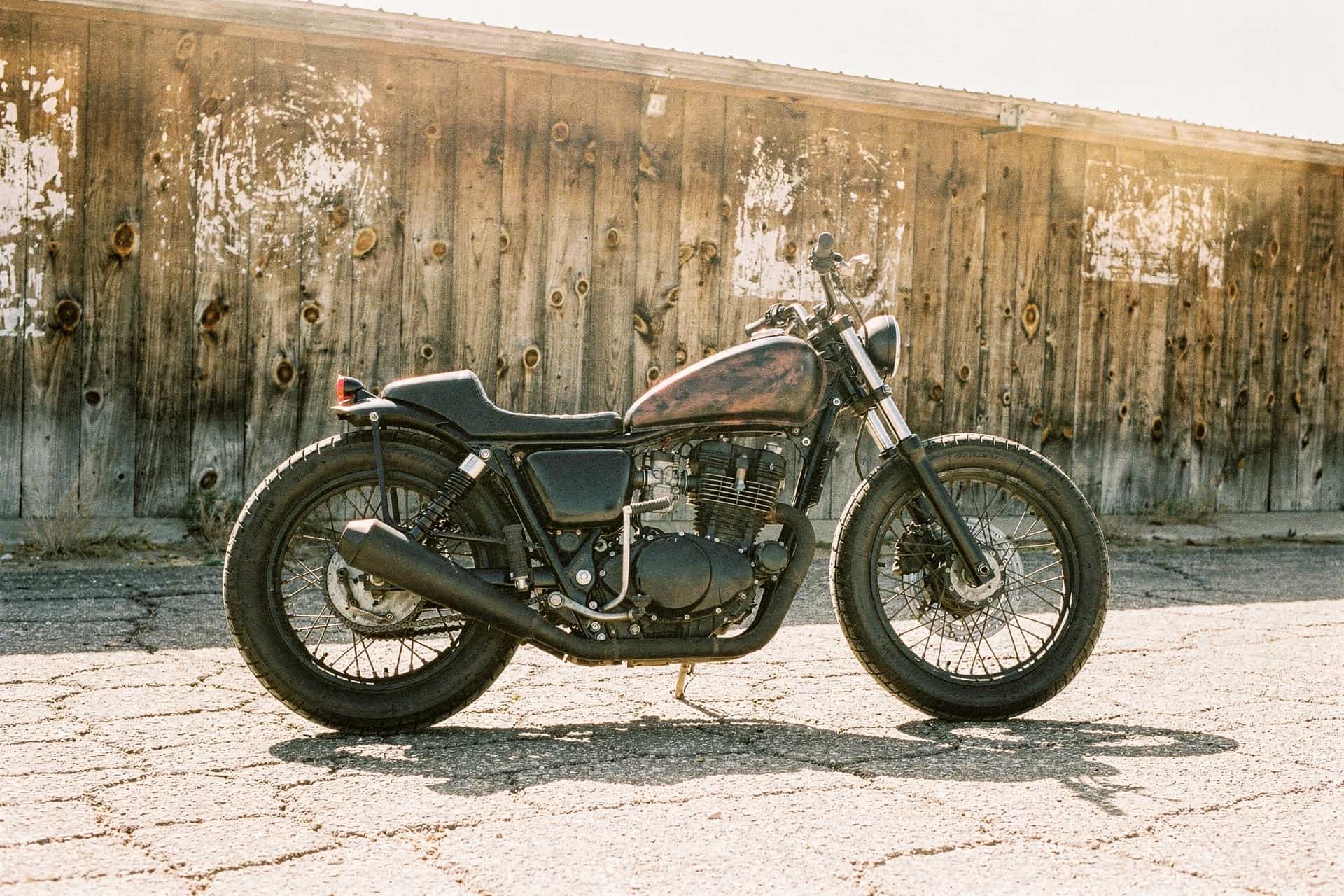
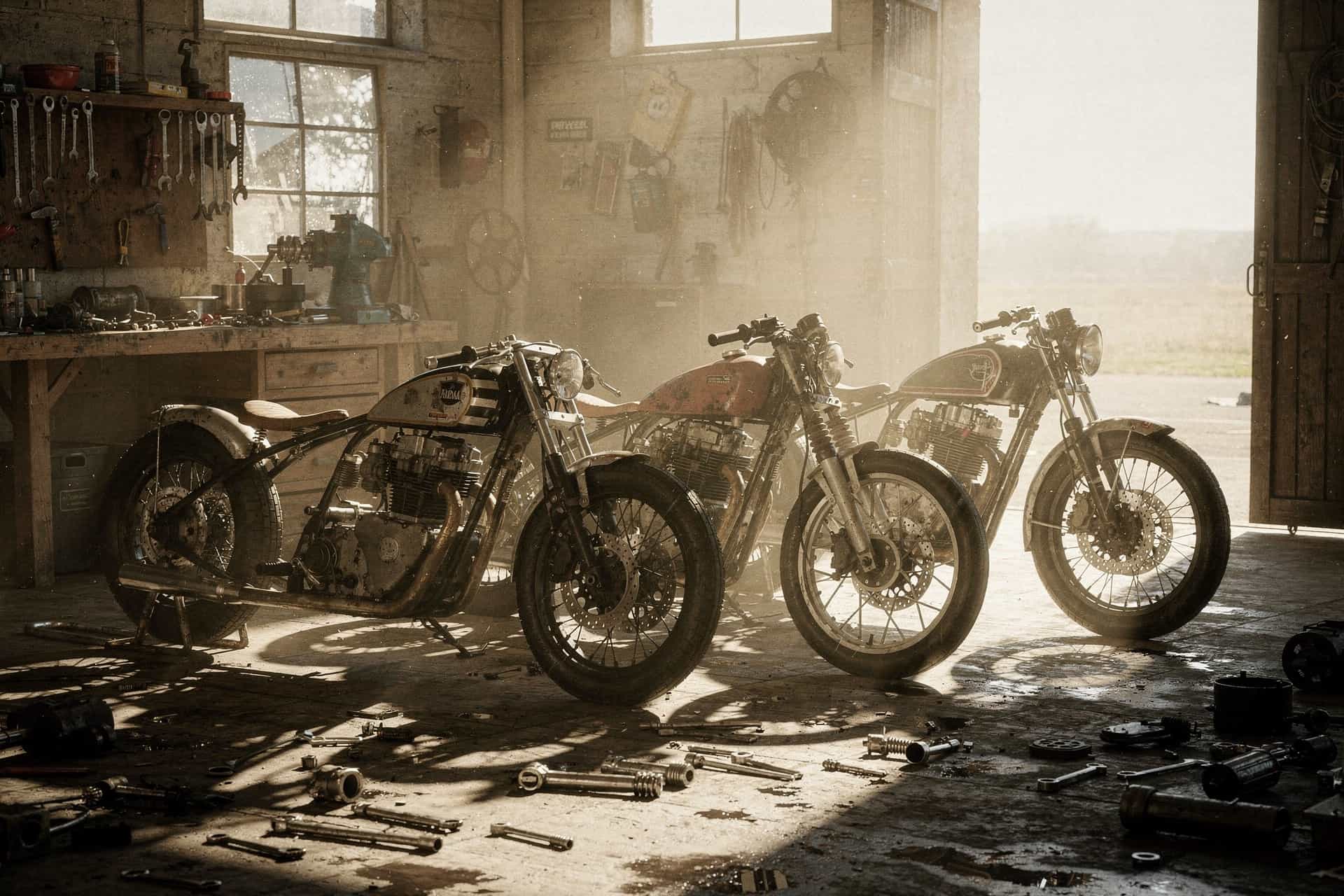
Walk the rows at any custom bike show and you can pick out the great bobbers from across the room. They are not the ones with the most chrome or the loudest paint. They are the ones where nothing looks extra. Every part is there because the bike needs it, and everything else is gone. When a build gets that right, people stop and stare, and they do not always know why.
This is our list of custom bobbers worth studying, from the bikes that started the style to modern builds that push it forward. For each one, we pull out what it teaches you if you are planning a bike of your own. If you want the background first, our guide to what is a bobber motorcycle covers the geometry and the rules.
Where Custom Bobbers Came From
To understand a great modern bobber, you need to know the bikes it is copying. The bobber was not invented by a designer. It came out of garages, dirt tracks, and riders who wanted their bikes to go faster and look meaner.
The Late-1920s Cut-Down
The first builds on our list are not one bike but a whole movement. According to the Wikipedia history of the bobber, the style grew out of the “cut-down,” which showed up in the late 1920s on the Harley-Davidson J-series V-twin. The J was getting old, and riders wanted it to look and ride like something newer.
So they made it lighter. They pulled off the front fender, shortened the rear one, and stripped every accessory they could unbolt. Some went further with a modified frame: a lower seat tube and a shorter wheelbase, for a lower, shorter bike with a sweeping line from the steering head down to the rear axle.
What it teaches: That sweeping line is still the key to a good bobber. Get the stance and the line right, and the rest of the build falls into place.
The 1930s Class C Bob-Jobs
In 1933, AMA Class C racing limited competition to catalogued motorcycles, so racers ran stripped versions of bikes you could buy. Those racers, including the Indian Daytona Scout and the Harley-Davidson WLDR and WR, gave street riders a look to chase.
The first street bob-jobs showed up in the mid-1930s. They looked like the race bikes they copied: plain paint, no extra chrome, no decoration. Just an engine, a frame, two wheels, and a rider.
What it teaches: A bobber started as a performance build. Weight you remove is speed you gain. If a part does not help the bike go, stop, or stay legal, ask why it is still there.
Von Dutch’s Indian Scout Bob-Job
After World War II, bobbers changed. Riders started adding chrome, metal flake paint, pinstriping, and colored upholstery. The most famous name from that era is Kenneth Howard, better known as Von Dutch. Starting in 1946, he began modifying his Indian Scout bob-job with wild paint jobs, per the same Wikipedia history.
That bike helped push the bobber from a plain racer copy toward the painted, personal customs that later grew into choppers. If you want to know where one style ends and the other begins, our breakdown of bobber vs chopper covers it.
What it teaches: Paint is where a bobber gets its personality. A stripped bike gives you a clean canvas, so use it. Just do not let the paint cover up a bad stance.
Modern Custom Bobbers Worth Studying
The old rules still hold, but modern builders have far better tools, parts, and donor bikes. These builds show how the style works on bikes built decades after the first bob-jobs.
2LOUD Grey Matter: A Sportster Hardtail From Taiwan
2LOUD Custom is a shop in Taipei, Taiwan, founded by Ma “Max” Yicheng and Lu Yongyu, per Bike EXIF’s roundup of their best work. Their Grey Matter build starts with a Harley-Davidson Sportster XL1200 and turns it into a hardtail.
Per Bike EXIF’s feature on the build, Max made a custom hardtail section with upper struts that can be removed for Taiwan’s vehicle inspection. He built a peanut tank, an oil tank, and the side panels by hand. The owner is a petite rider, so the backswept bars sit low to fit. The fuel injection is gone, replaced by a Mikuni HSR carb, and the stock belt drive was converted to a gold RK 530 chain.
The wheels kept their stock rims, repainted in glossy metallic and laced with new stainless spokes. They roll on Duro Adlert tires, which hide modern bias-ply construction under a vintage sawtooth tread. A pair of almost symmetrical short straight pipes hide their baffles. The paint is a “cement grey” mix of dark and light silver, with the owner’s name at the base of the tank. A Shorai lithium battery keeps the electrics small.
The Grey Matter is the bobber styled Harley Davidson Sportster XL1200 done at a very high level.
What it teaches: Build for the rider. The bars, seat, and stance on Grey Matter were set for one specific person, and that is why it looks so balanced. Measure yourself on the bike before you order parts.
2LOUD Kawasaki W650 Bobber
The same shop built one of the cleanest Japanese bobbers we have seen on a 2006 Kawasaki W650. Bike EXIF’s writeup says the customer’s brief was simple: make it “cool enough,” and have it ready for his birthday.
2LOUD went well past “cool enough.” The engine got a POSH Japan 803cc kit with a polished finish, fed by Keihin FCR37 carbs with K&N filters. Custom twin headers run through the frame and exit into cone mufflers on each side of the rear wheel. The front forks were restored, shortened, and polished, and the rear got Öhlins shocks and a custom stainless steel swingarm.
The wheels are 19-inch front and 18-inch rear with stainless spokes and Shinko rubber. The front hub is a Yamaha SR400 drum with machined holes. Up top sits a peanut tank with a center rib, a leather bobber seat, and a stubby rear fender. The electrics run through a Motogadget mo.unit, with a Motogadget speedo set into the tank and a Shorai battery hidden near the swingarm pivot. Paint is two-tone silver and blue with a gold foil stripe.
What it teaches: You do not need a hardtail to build a real bobber. The W650 keeps its twin shocks, and it still reads as a bobber because the tank, seat, fender, and tire sizes are right. If a rigid frame is not for you, read our guide to hardtail vs softail before you decide.
2LOUD Kawasaki W800 “Pink Thing”
Before the W650, 2LOUD built a 2016 Kawasaki W800 in a brat-bobber style. Per Bike EXIF’s feature, Max made a slim fuel tank by hand with a neck tunnel inspired by classic enduros. The rear subframe was shortened and re-looped with a kick-up at the back, and the rear shocks are Öhlins.
The fuel-injected W800 needed some work to keep running right. It got an external fuel pump and a Rapid Bike EVO fuel injection and ignition controller with multiple maps. The front brake is a Brembo caliper on a custom adapter plate, and the lighting is all LED. The paint is the part everyone remembers: pink and warm grey, split by a silver foil pinstripe.
What it teaches: Modern fuel-injected donors can make great bobbers, but you have to plan for the electronics. If you move the tank, change the intake, or change the exhaust on an EFI bike, budget for fuel mapping from day one.
Factory Bobbers Are Not Custom Bobbers
Since the late 1990s, factories have sold road-going bobbers of their own. Before that, per the Wikipedia history, bob-jobs were owner-built bikes that showed their owners’ tastes. The late 1990s is also when the old word “bob-job” got shortened to “bobber” in everyday use.
Factory bikes like the Triumph Bonneville Bobber and the Moto Guzzi V9 Bobber are good motorcycles, and they make great bases for a personal build. But they are not what this list is about. A custom bobber is built by someone who picked the donor, made the calls, and did the work. That is what “Built Not Bought” means to us.
Lessons From the Best Custom Bobbers
Look at the bikes on this list side by side and the same rules keep coming back. Here is what we take from them when we plan our own builds:
- Stance first. Every great bobber gets the rear ride height, the tire sizes, and the frame line right before anything else. Paint cannot fix a bad stance.
- Build for your body. Grey Matter’s bars were set for its owner. Sit on the bike, measure your reach, and choose bars, seat, and pegs to match.
- Hardtail is a choice, not a rule. The W650 keeps its shocks and still looks right. Pick the rear end that suits your roads and your back.
- Hide the electrics. Small lithium batteries and compact control units show up again and again in these builds. The less wiring you can see, the cleaner the bike looks.
- Tires carry the look. Vintage-pattern tires like the Adlerts on Grey Matter, or fat rubber on a smaller wheel, change how a bike reads from across the lot.
- Plan the fuel system. Carb swaps and EFI remaps come up in two of the three modern builds. Change the intake or exhaust and you have to feed the engine to match.
- Hand-made parts make the bike. The tanks, oil tanks, and side panels on these builds were made by hand. Even one custom part, like a tank or a seat, can lift a whole build.
Build Your Own
You do not need 2LOUD’s skill to build a bike worth riding. Start with a donor you can afford to cut up, and follow a plan. Our custom bobber build guide walks through the whole process from donor bike to finished ride.
Want more builds to study before you start? These are the ones we send riders to:
- Harley riders: our roundup of Harley-Davidson bobber builds shows what is possible on Big Twins and Sportsters, backed by the deepest parts market of all.
- Kit builders: the Blue Collar Bobbers builds come from a shop that makes kits for garage builders.
- Pure inspiration: Exile Cycles has shaped the bobber and chopper scene for years.
We’ve watched plenty of riders roll a rusty donor into a one-car garage and ride out a year later on something that stops people in parking lots. It is never the budget that makes those bikes. It is the discipline to strip everything that does not belong, and the patience to get the stance right before you pick up a paint gun.
Sources
- Wikipedia - Bobber (motorcycle) - cut-down origins on the Harley-Davidson J-series, 1933 Class C racing, mid-1930s bob-jobs, Von Dutch’s Indian Scout, and the late-1990s shift to the word “bobber”
- Bike EXIF - “Grey Matter: An ingenious Sportster hardtail from 2LOUD” - details on the 2LOUD Grey Matter Sportster XL1200 build from Taiwan
- Bike EXIF - “Greatest Hits: The very best of Taiwan’s 2LOUD Custom” - background on the 2LOUD custom shop, its founders, and its best builds
- Bike EXIF - 2LOUD Kawasaki W650 Bobber - donor, engine kit, carbs, suspension, wheels, and electrics on the W650 bobber
- Bike EXIF - 2LOUD Kawasaki W800 “Pink Thing” - tank, subframe, fuel injection controller, brakes, and paint on the W800 build
- Lowbrow Customs - “History of the Harley-Davidson Sportster” - background on the Sportster as a custom and bobber platform
Honest gear for honest builds: shop our Built Not Bought collection - the line every garage rider in our community starts with. Our t-shirts are designed by riders who build their own bikes.