

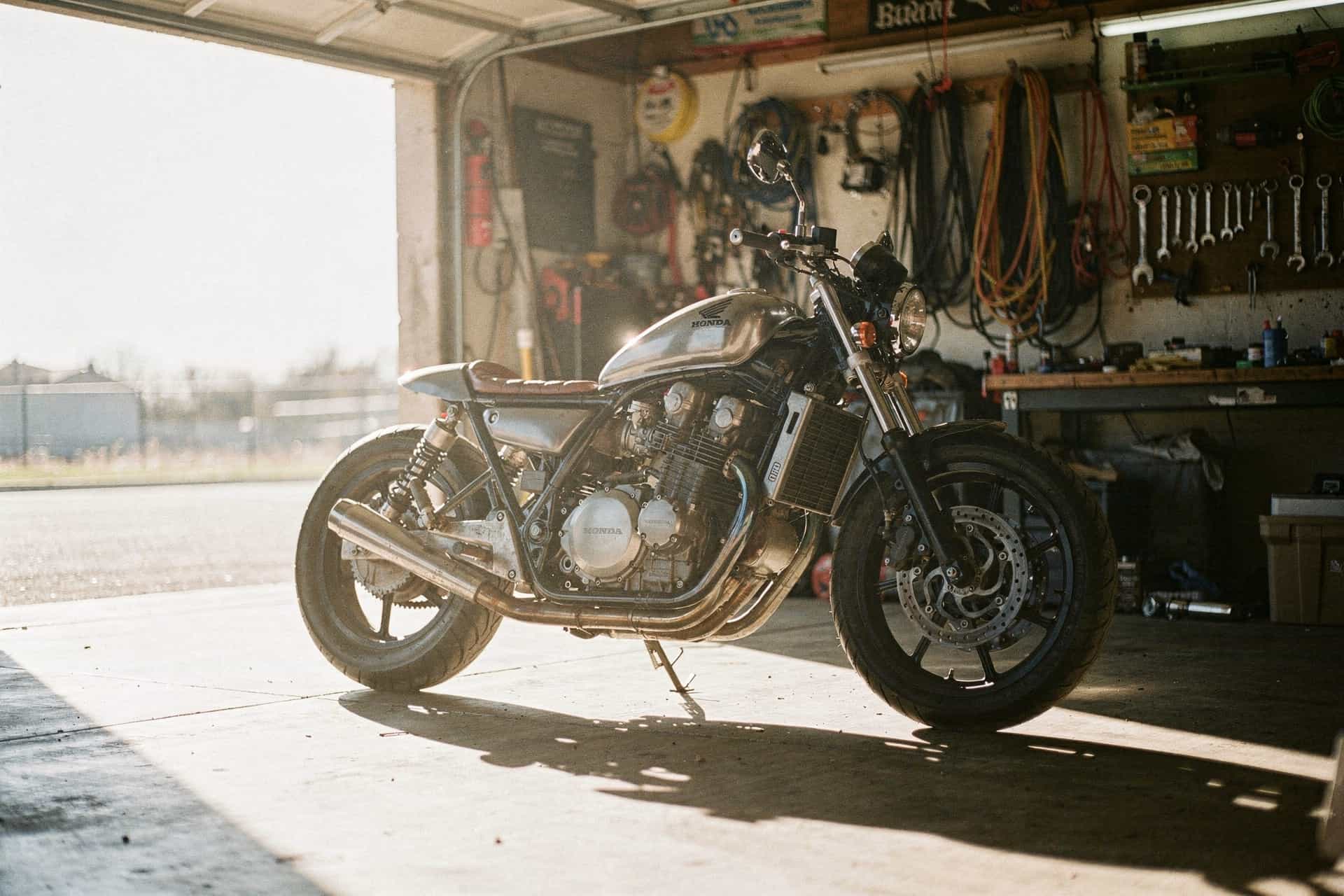
A search for a Honda Magna bobber kit suggests one box of bolt-on parts. No complete kit was verified for every VF generation during this review. The useful approach is a model-specific parts plan built around the donor’s frame, final drive, electrical system, and legal equipment.
Honda introduced the VF750 Magna in 1982 as part of its new liquid-cooled V4 production family. For US-market builders, the relevant runs are the 1982-1986 first generation, redesigned 1987-1988 second generation, and revived 1994-2003 third generation. They share a name and V4 layout, but not one frame or universal parts catalog. The first two generations use shaft final drive. The third-generation VF750C uses chain drive and a different chassis.
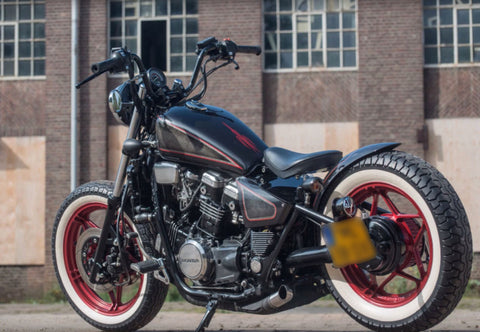
Why the Honda Magna Makes a Great Bobber Base
Many bobber parts catalogs are built around Harley platforms. The Honda Magna brings a different starting point: a compact V4, liquid cooling, and chassis layouts that demand model-specific measurements instead of Sportster-based assumptions.
Honda’s own history identifies the 1982 VF750 Sabre and Magna as its first production models in this liquid-cooled V4 program. The larger VF1100C V65 followed, while the US tariff era also produced the reduced-displacement VF700C. That model split matters because search results often call all of them a “Magna 750.”
The Magna also has a few things going for it as a bobber platform that other bikes do not:
- Distinctive engine layout. Honda built the Magna around a liquid-cooled V4 rather than the V-twin used by most cruiser donors.
- Shaft drive on 1982-1988 bikes. The enclosed final drive creates a clean rear-wheel area, but also limits wheel, swingarm, and final-drive swaps.
- Chain drive on 1994-2003 bikes. Sprocket and chain service is familiar, but parts made for the earlier shaft-drive frame do not bolt on.
- Used-parts reality. Some service parts remain easy to source while model-specific body, exhaust, and electrical pieces can be scarce. Confirm part numbers before cutting a complete original part.
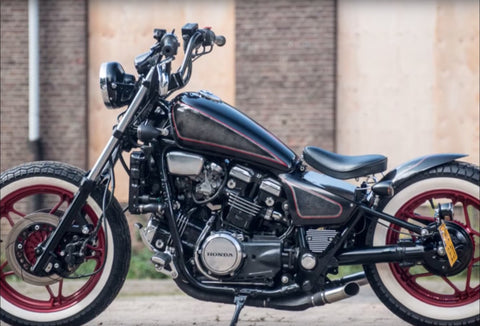
Honda Magna Bobber Kit Fitment by Donor
| Donor family | Final drive | Fitment consequence | Check before ordering |
|---|---|---|---|
| 1982-1983 VF750C V45 | Shaft | Rear wheel, swingarm, fender, and exhaust packaging are tied to the early chassis | VIN, exact year, carburetor condition, charging output, cooling system, brakes, and factory service history |
| 1984-1986 US VF700C | Shaft | The tariff-era 699cc model is not simply a relabeled 750; verify engine and chassis part numbers | Market specification, engine code, exhaust routing, wheel size, controls, and wiring diagram |
| 1987-1988 second-generation Magna | Shaft | Honda introduced a redesigned chassis and bodywork; US displacement and exact designation vary by year and market | Exact model designation and measured mounting points before buying a seat, fender, or exhaust part |
| 1994-2003 third-generation VF750C | Chain | The revived model uses a new frame, chain final drive, rear wheel, bodywork, and wiring | Year-specific manual, chain and sprocket condition, carburetors, charging system, brake condition, and recall status |
Decode the VIN and record the full model designation before buying parts. “Fits Honda Magna” is not enough evidence for a seat hinge, shock, exhaust, control, or electrical component.
Before committing to a donor, inspect the parts that are hardest to replace on that exact model. A cheap running motorcycle can become the expensive option if it needs intact side covers, an original airbox, model-specific carburetor pieces, a radiator, or an unmodified wiring harness. Search current parts diagrams and completed listings by Honda part number, then confirm that the listing photo and dimensions match. Do not cut a sound factory bracket until the replacement plan has been measured on the motorcycle. This sourcing check matters more than a generic kit price because it determines whether the build can be completed safely.
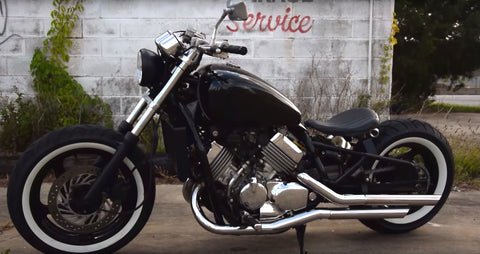
The V4 Engine: What Makes It Special
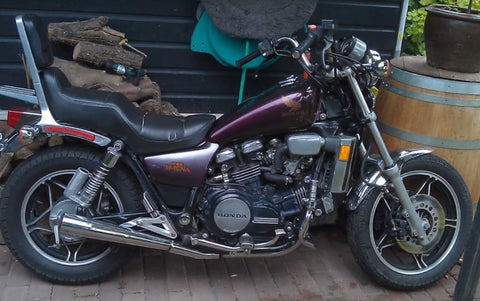
The factory Honda Magna was a cruiser, not a bobber model. Its liquid-cooled V4 is the defining feature of the donor, but output, gearing, and road behavior differ across VF700C, VF750C, and VF1100C variants. A custom bobber retains that packaging complexity even after bodywork is removed.
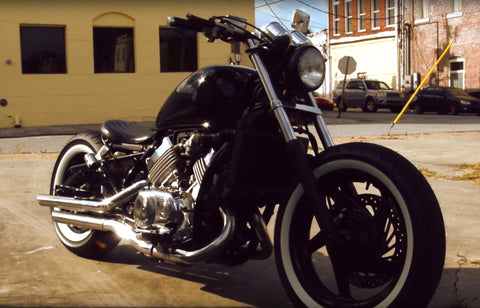
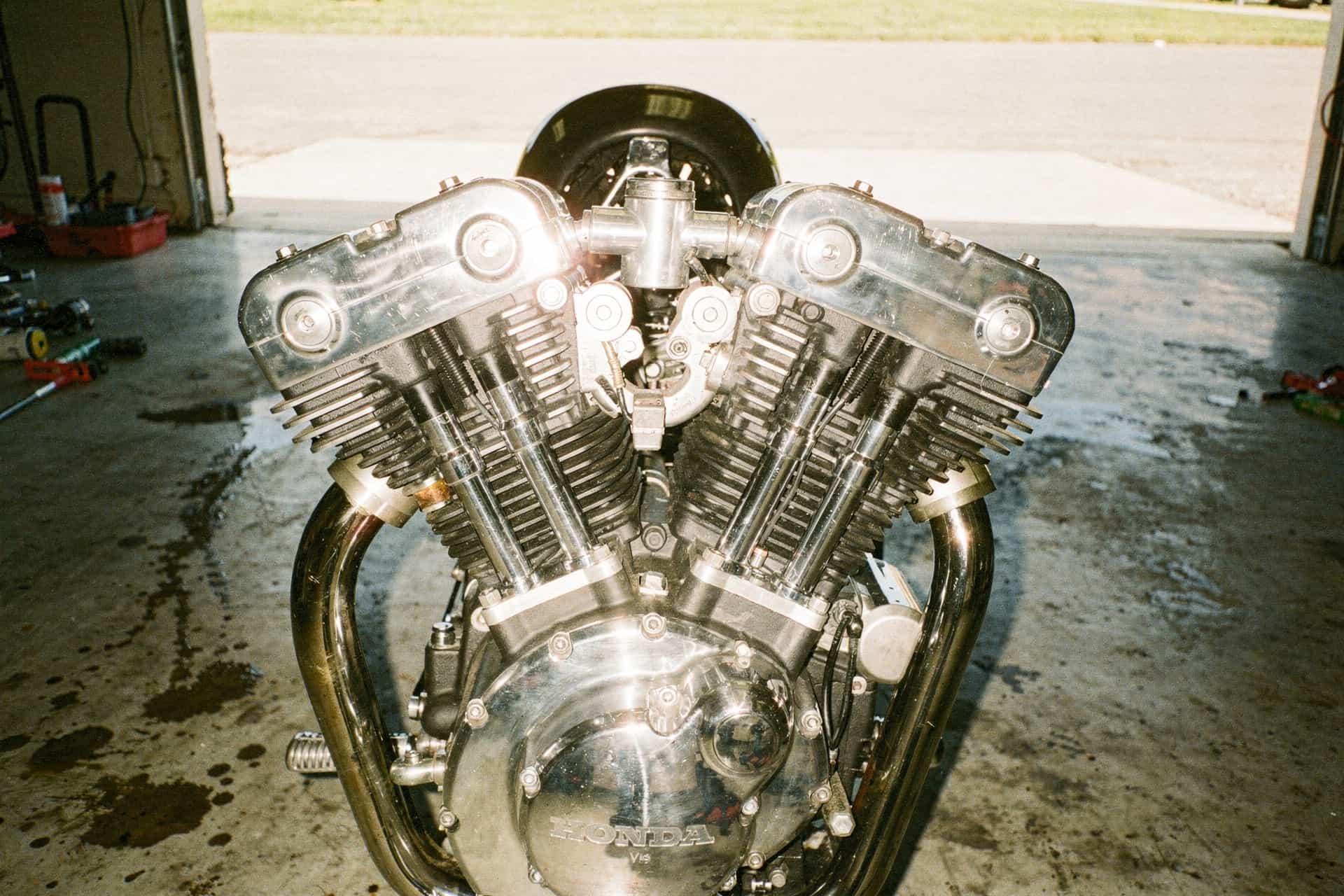
The exact bore, stroke, transmission, gearing, and output depend on model and market. What remains consistent is the packaging challenge: four cylinders, four carburetors on the carbureted VF models covered here, liquid cooling, and tightly routed exhaust headers leave less open space than a simple air-cooled V-twin donor. Use the factory manual for the exact VIN rather than a combined online spec table.
Honda Magna Bobber Kit: Essential Parts List
There is no verified complete off-the-shelf “Honda Magna bobber kit” that covers every generation. The build is modular, and a universal part is only a starting shape. Confirm tire clearance through full suspension travel, mounting strength, wiring load, steering movement, and legal equipment before road use.
Rear End and Fender
This is where every bobber build starts. The stock rear fender on the Magna is big and heavy. Ditching it changes the whole look.
- Rear fender: Measure the mounted tire at its widest point and check clearance at full compression. A nominal universal width does not prove fitment.
- Fender struts: Mounting design depends on whether the fender carries only itself or also carries luggage or a passenger. Structural welding belongs with a qualified fabricator.
- Tail light and plate light: Use approved lamps and preserve required visibility, reflector, and plate-location rules in your jurisdiction.
- Turn signals: Do not delete required safety equipment. LED conversions may need a compatible flasher or load correction.
- Seat: Universal solo-seat hardware normally needs brackets. Check frame clearance, fastener grade, spring travel, and access to electrical components.
Front End Modifications
- Headlight: Match the bucket, lens pattern, wattage or LED driver, connector, and mounting width to the exact bike. Keep the beam aim adjustable.
- Fork covers: Remove them for a cleaner look, or swap to shorter gaiters.
- Front fender: Removing it changes spray control and may affect fork bracing on designs where the fender mount contributes stiffness. Check the exact front end before removal.
- Handlebars: After installation, verify full-lock clearance and make sure brake hoses, throttle cables, clutch lines, and wiring neither pull tight nor bind.
Exhaust
The stock Magna exhaust is quiet and heavy. For a bobber build, most riders go one of two routes:
- Short or slash-cut systems. These can change fueling, noise, heat, ground clearance, and low-speed response. They are not a universal bolt-on recommendation.
- Collector systems. Verify exact year fitment, center-stand and controls clearance, exhaust-gasket condition, and whether carburetor tuning is required. Do not assume a currently advertised Magna exhaust fits both production runs.
Keep in mind: the V4 exhaust note is unique. It does not sound like a Harley and it never will. That is the point. Own it.
Electrical and Cleanup
- Relocated battery box only after confirming terminal clearance, cable size, secure restraint, ventilation requirements, and charging-system compatibility. Lithium conversions need a battery and charging setup designed to work together.
- Wiring cleanup using the year-specific diagram. Preserve fuses, grounds, charging, ignition, starter interlocks, lighting, and other safety circuits. Do not identify a wire by color alone across model years.
- Mirrors: Bar-end or compact mirrors still need a clear rearward field of view and must meet the number, position, and approval rules in the jurisdiction where the bike is registered.
- Gauge relocation or swap. Mini speedo, mounted low or on the bars.
For more ideas on how stripped-down builds come together, take a look at these remarkable bobber motorcycle builds from riders around the world.
Common Magna Bobber Modifications Beyond the Kit
Once you have the basics covered, a lot of builders take it further:
- Lowering shocks. Use model-specific eye dimensions, load rating, travel, and clearance checks. Lowering can reduce cornering and tire-to-fender clearance.
- Tank swap. A custom tank needs secure mounts, steering clearance, compatible petcock and fuel delivery, protected fuel lines, and safe venting. Do not adapt a tank on appearance alone.
- Paint and finish. Flat black, raw metal with clear coat, or a single accent color. Bobbers look best when they are not trying too hard.
- Powder-coated frame. If you are doing a full teardown, get the frame blasted and coated. Satin black is the standard for a reason.
- Foot controls. Forward controls or mid controls depend on riding position and the exact frame. On shaft-drive models, measure clearance around the final-drive and engine components rather than assuming a universal left-side bracket will fit.
If you are thinking about going the rolling chassis route instead of modifying a complete bike, we have a breakdown of old school bobber rolling chassis options worth reading.
Which Magna Model Year Is Best for a Bobber Build?
Not all Magnas are created equal. Here is the quick breakdown:
| Model | Years | Engine | Notes |
|---|---|---|---|
| VF750C V45 Magna | 1982-1983 US, with 750 variants in other markets and later years | 748cc V4 | Early shaft-drive donor. Verify market and year rather than applying a single 1982-1988 spec sheet. |
| VF700C Magna | 1984-1986 US | 699cc V4 | First-generation tariff-era US displacement. Shaft drive, but year-specific parts and specifications still matter. |
| VF700C / VF750C second generation | 1987-1988, depending on market | 699cc or 748cc V4 | Redesigned shaft-drive Magna. Confirm market, displacement, and model code before ordering parts. |
| VF1100C V65 Magna | 1983-1986 | 1098cc V4 | Larger engine and different chassis packaging. Verify V65-specific service and fabrication needs rather than applying 750 parts advice. |
| VF750C third generation | 1994-2003 | 748cc V4 | Revived model with a new chassis and chain final drive instead of shaft. |
There is no universal best year. Choose an early shaft-drive donor if that clean rear layout is central to the build and you can source its model-specific parts. Choose a 1994-2003 VF750C if you prefer the later chain-drive chassis and can work around its four-carburetor packaging. Condition and documentation beat model-year mythology.
For a closer look at the early shaft-drive family, our Honda Magna V45 bobber build explains why the exact year, displacement, and market specification must be confirmed before ordering parts. For the bigger V65 1100cc cousin, the Honda V65 Magna bobber build guide covers the VF1100C donor.
Checks Before Cutting or Ordering Parts
A few things to know before you start cutting:
- Identify the exact donor. Record VIN, model code, market, year, engine number, and final-drive type. Order from part numbers, not a marketplace title.
- Make the stock bike roadworthy first. Check compression, cooling, charging voltage, fuel system, brakes, tires, wheel and steering bearings, suspension, leaks, and open recalls before cosmetic work.
- Create a measured parts plan. Record mounting-hole spacing, tire envelope through suspension travel, shock dimensions, bar and cable travel, exhaust routing, battery dimensions, and electrical loads.
- Keep structural work professional. Do not cut the rear loop or weld seat and fender mounts until a qualified fabricator has confirmed alignment, material, loads, and a safe procedure.
- Price the whole build. Include deferred maintenance, fabrication, paint, electrical parts, fasteners, tires, brake work, tuning, inspection, registration, and professional labor. A seat-and-fender shopping list is not the full cost.
For a different donor comparison, see our best Harley bobber builds and the broader bobber motorcycle guide. If this would also be your first road motorcycle, start with the separate motorcycle beginner guide before choosing an older custom donor.
Rep the Bobber Life
Building a Honda Magna bobber means you are part of something. You chose a different path from the catalog cruiser crowd. You are building, not buying.
Our Built Not Bought motorcycle T-shirts carry the garage message without claiming that apparel is riding protection.
Sources
- Honda Global - 75 Years of Honda History: V4 Production Models - factory history confirming the VF750 Sabre and Magna launch in 1982
- Honda Global - The Joy and Excitement of Motorcycles - Honda’s account of the liquid-cooled production V4 program and VF750 launch
- Honda official 1993 Magna release - factory release for the later-generation 750 Magna and its chassis specifications
- Cycle World - 1987 Honda 700 Magna - period test of the redesigned 1987 shaft-drive Magna
- Cycle World - 1994 Honda Magna 750 - period test documenting the revived model’s new frame, five-speed transmission, and chain final drive
- NHTSA VIN recall lookup - VIN-specific recall check to complete before modifying a donor
- Honda VF700C Magna: One of the Hondas That Harley Built - Ultimate Motorcycling - History of the tariff-era VF700C and its relationship to the VF750C
For the foundation - what bobbers are, where the style came from, and how to build one right - see our what is a bobber motorcycle guide.