
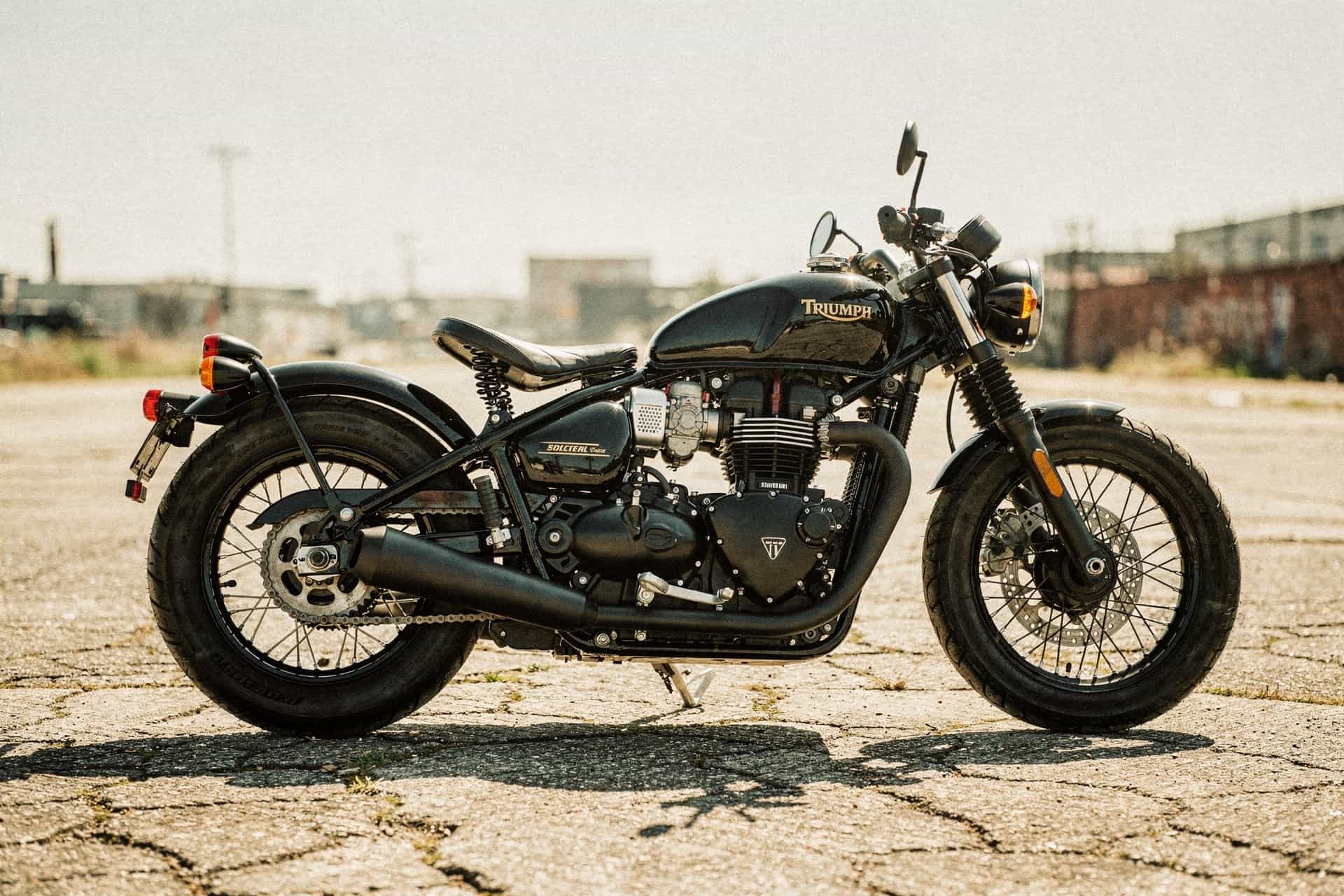
The first time a Triumph Bonneville Bobber rolled through our shop doors, three guys stopped what they were doing mid-wrench. Not because it was loud. Because it looked like someone had already done the work - stripped the fenders, kicked back the bars, slammed the rear - straight from the factory. Triumph didn’t just build a retro cruiser and slap “bobber” on the tank. They studied what builders actually do in garages like ours and then engineered it from scratch.
This guide covers everything you need to know before putting money down on a Triumph Bobber: the engine, the specs, the different model variants, what mods actually make sense, and where this bike falls short. No dealer brochure talk. Just what matters when you’re standing in front of one trying to decide.
How Triumph Built a Factory Bobber That Doesn’t Feel Fake
Most factory bobbers miss the point. They bolt on a solo seat, paint everything black, and call it done. Triumph took a different approach when they unveiled the Bonneville Bobber in October 2016. The 2017 bike reached US dealers in late February and early March 2017 at $11,900 in Jet Black, according to Rider Magazine’s first ride.
The development team - led by Chief Product Officer Steve Sargent - started with the bobber silhouette and worked backward into the engineering. The “swing cage” rear end is a swingarm shaped like a hardtail’s rear triangle, with a monoshock and linkage hidden beneath the seat pan. From the outside, it looks like a genuine hardtail. From the saddle, you actually get suspension travel. That’s not a gimmick. That’s solving the oldest bobber compromise: looks versus livability.
The frame is a tubular steel cradle, but Triumph used a bolt-on rear section so the visual proportions stay tight. The 16-inch rear wheel wears a fat 150-section tire - wide enough to fill the fender gap without looking cartoonish. On the 2017-2020 standard bike, the front rolls on a 19-inch spoked wheel with KYB 41mm conventional forks. Every proportion was deliberate. Triumph hired custom builders as consultants during the design phase, and it shows.
What the 2017 Launch Bike Brought
The first-year bike (you will see it listed as the MY17 Bonneville Bobber) set the template every later version still follows:
- A dedicated Bobber tune. The 1200 twin came from the T120, but a twin-airbox intake, its own exhaust, and its own mapping gave it more low-end power and torque than the T120, per Rider Magazine’s first look.
- Hidden catalytic converters. The Euro 4 cats sit tucked under the engine, so the straight-line pipes stay clean. MCN noted you could pull the slip-on cans and it would look like straight-through pipes.
- A seat that moves. The floating aluminum seat pan slides about 2 inches (MCN measured around 8cm), from a laid-back cruiser spot to a more roadster-like position, with the gauge angle adjustable to match.
- Over 150 genuine accessories at launch, plus two “Inspiration Kits,” so owners could start customizing on day one.
Triumph Bobber Specs: The Numbers That Matter
The heart of the Bonneville Bobber is Triumph’s 1200cc High Torque (HT) parallel twin. This is the same basic architecture as the T120 Bonneville, but with a different tune focused on low-end grunt rather than top-end revs.
Engine & Drivetrain
| Spec | Detail |
|---|---|
| Engine | 1200cc liquid-cooled parallel twin (270-degree crank) |
| Power | 77 hp @ 6,100 rpm |
| Torque | 78 lb-ft @ 4,000 rpm |
| Fueling | Multipoint sequential electronic fuel injection |
| Exhaust | Twin upswept slash-cut “peashooter” mufflers |
| Transmission | 6-speed |
| Final drive | Chain |
| Clutch | Torque-assist slip clutch |
That 270-degree firing order is worth understanding. It gives the engine an uneven firing interval - similar to a V-twin - which produces a loping, characterful exhaust note instead of the flat buzz that parallel twins are known for. Triumph spent serious development time tuning this motor to sound and feel like something from a different era while meeting current emissions standards.
Chassis & Dimensions (2017-2020 Standard Bobber)
| Spec | Detail |
|---|---|
| Frame | Tubular steel cradle |
| Front suspension | KYB 41mm conventional forks, 90mm travel |
| Rear suspension | KYB monoshock with linkage, 77mm travel |
| Front brake | Single 310mm disc, Nissin 2-piston floating caliper |
| Rear brake | Single 255mm disc, Nissin 1-piston floating caliper |
| Front wheel | 19-inch cast/spoked |
| Rear wheel | 16-inch cast/spoked |
| Seat height | 690mm (27.2 inches) |
| Fuel capacity | 9.1 liters (2.4 gallons) |
| Dry weight | 228 kg (503 lbs) |
Two numbers jump out. First, that 690mm seat height - one of the lowest in the segment. Short riders who struggle to flat-foot a Sportster will plant both boots on this thing without thinking about it. Second, that 9.1-liter fuel tank. It looks perfect. It also means you’re stopping for gas every 100-120 miles depending on your right wrist. That’s the bobber trade-off: form costs you range.
What Changed on the Current Bobber
Shopping a newer bike? The current standard Bobber took on most of the hardware that used to be Bobber Black only. Triumph’s current spec sheet lists a 16-inch wire-spoked front wheel, 47mm Showa cartridge forks, twin 310mm front discs with Brembo calipers, a 12-liter (3.2-gallon) tank, a 690-700mm seat height, and 553 lbs wet. Power stays at 77 hp and 78 lb-ft. The bigger tank alone fixes the range complaint that dogged the early bikes, so check the model year before you judge any listing by the numbers above.
Electronics
The Bonneville Bobber doesn’t skimp on rider aids despite its retro look:
- Two riding modes: Road and Rain (switchable traction control adjusts with each)
- ABS: Switchable, standard equipment
- Ride-by-wire throttle: Allows the riding mode calibrations
- Torque-assist clutch: Lighter lever pull, reduces rear-wheel hop on aggressive downshifts
- Immobilizer: Transponder key security system
- USB charging socket: Under the seat
No cornering ABS, no IMU, and no cruise control on the 2017 standard bike (the 2018 Bobber Black added it). This isn’t a tech-loaded tourer. Triumph kept the electronics functional but minimal, which fits the bike’s purpose.
Every Bonneville Bobber Model Variant
Since the 2017 launch, Triumph has released several variants. Here’s how they stack up.
Standard Bonneville Bobber (2017-present)
The one that started it. Wire-spoked wheels, twin peashooter exhaust, solo sprung seat, and the 1200 HT motor. Launched at $11,900 in Jet Black. Colors have rotated through Jet Black, Ironstone, Morello Red, and Matte Sapphire Black across model years. Triumph has since added Euro 5 compliance, the bigger tank, and the Black’s front end, but the look and the motor haven’t changed much - because they didn’t need to.
Bonneville Bobber Black (2018-present)
Triumph took the standard Bobber and turned up the aggression. The Black swaps the wire-spoked wheels for blacked-out cast wheels and drops the front to a fat 16-inch wheel with a 130/90 tire. Front forks get beefier Showa 47mm cartridge forks with improved damping. The front brake upgrades from a single disc to twin 310mm discs with Brembo 2-piston floating calipers - a serious improvement in stopping power. It also added an LED headlight with a daytime running light and one-button cruise control, and the entire bike gets a murdered-out monochrome treatment. Rider Magazine’s test listed it from $13,150 in Jet Black.
The Bobber Black is the variant we’d steer most riders toward. The brake upgrade alone justifies the price difference. A 500-pound bike with a single front disc is manageable, but twin discs with better calipers transform the confidence level in hard stops.
Bonneville Bobber TFC (limited editions)
TFC stands for Triumph Factory Custom - the top of the range. The first Bobber TFC arrived in 2020, limited to 750 numbered bikes worldwide. Triumph brought the name back with another run of 750 individually numbered bikes, and the current TFC spec reads like a builder’s wish list: twin Akrapovič exhausts, fully adjustable Öhlins 43mm upside-down forks and rear shock, Brembo M50 radial calipers on 310mm discs, and carbon fiber bodywork.
If you find a used TFC in decent shape, expect it to hold value - limited numbers do that. But a standard Bobber with a good exhaust and a better shock gets you most of the experience for a lot less money.
What It’s Like to Actually Ride
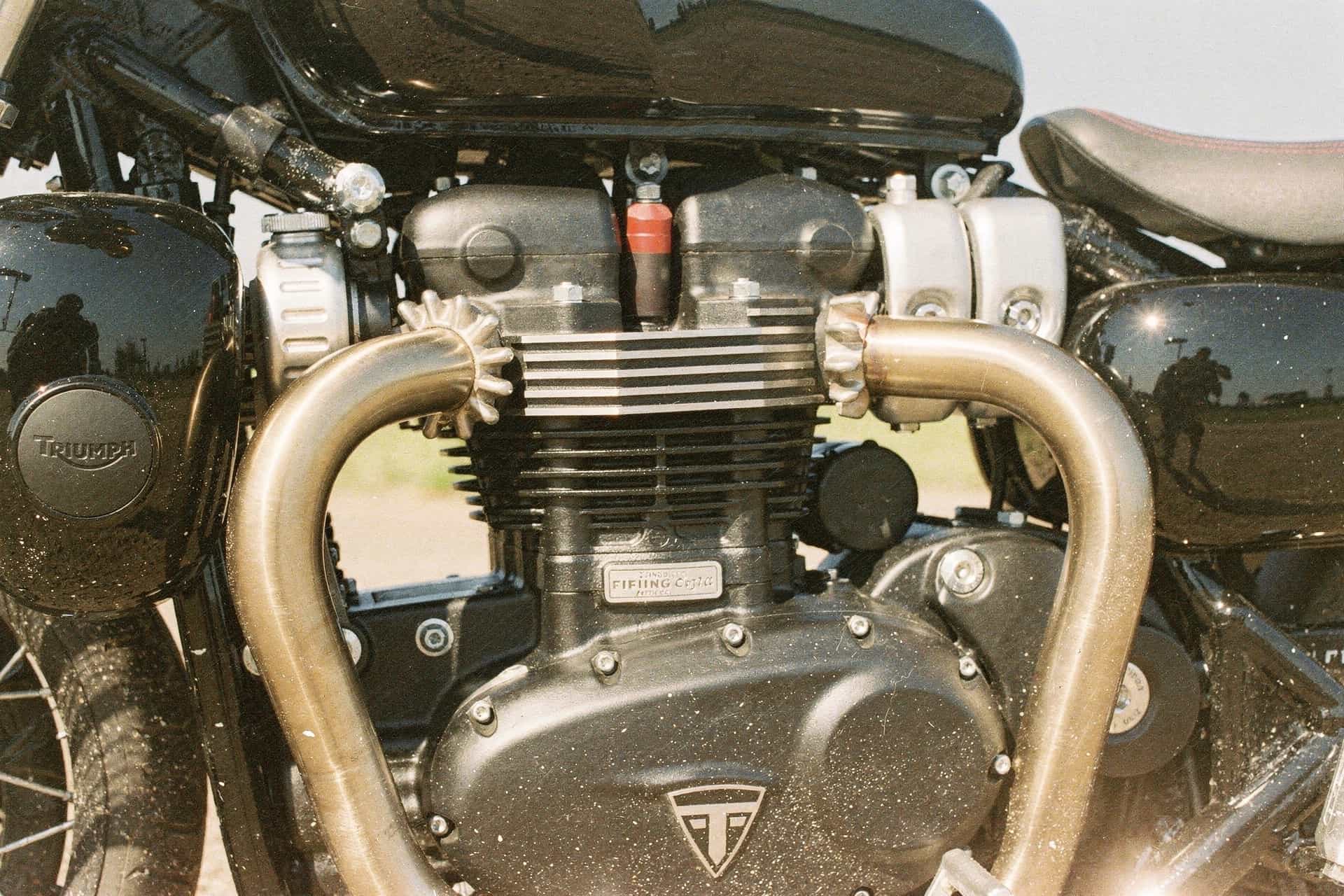
Here’s the honest take from putting miles on one: the Bonneville Bobber is a city bike and canyon scratcher that happens to look like a piece of garage art.
The motor pulls hard from 2,000 rpm. You don’t need to wring it out. Roll on the throttle in third gear at 35 mph and the bike surges forward with real authority. That 78 lb-ft of torque at 4,000 rpm means the midrange is where this engine lives, and that’s exactly where a bobber should operate - between stoplights, through twisting back roads, and across town.
Handling on the early 19-inch-front bikes is surprisingly neutral. The geometry is well-sorted. You can tip it into corners with confidence, though the footpeg feelers will touch down earlier than you expect. Ground clearance is the main dynamic limitation - hard leans will scrape metal.
The seat is where opinions split. The sprung solo saddle looks incredible. It also turns into a punishment device after about 90 minutes of continuous riding. The springs help with small bumps, but the limited rear suspension travel (77mm) means larger road imperfections hit your spine. This is a bike for hour-long rides and weekend blasts, not Iron Butt runs.
We’ve had riders come through our shop asking about long-distance touring on a Bobber. We talk them out of it every time. That tiny fuel tank, that firm seat, that minimal rear travel - the bike is telling you what it wants to do. Listen to it.
Triumph Bobber vs. the Competition
The Bonneville Bobber doesn’t exist in a vacuum. Here’s how it compares to the bikes most cross-shoppers are also considering.
vs. Harley-Davidson Softail Standard / Street Bob
The Harley bobber question comes up constantly. The Softail Standard uses Milwaukee-Eight 107ci (1,745cc) V-twin - significantly more displacement, a bit more torque, and that distinctive Harley sound. The Triumph counters with better fit and finish, more refined electronics, lighter weight, and arguably better handling. The Harley has a massive aftermarket ecosystem. The Triumph has the aesthetic edge straight out of the crate. Your call depends on whether you want a platform to build on or a bike that’s finished from day one.
vs. Indian Scout Bobber
The Indian Scout Bobber uses a 1133cc V-twin making 100 hp - more power than the Triumph. It’s also a sportier riding position with mid-mounted controls. The Triumph feels more deliberate as a bobber design; the Indian feels like a sport cruiser with bobber styling cues. Different bikes for different riders. The Indian is faster. The Triumph is more atmospheric.
vs. BMW R nineT Pure
BMW’s retro play uses an air/oil-cooled 1170cc boxer twin. Similar power, similar weight, but a completely different riding character. The shaft-drive BMW is lower maintenance. The Triumph has more authentic bobber proportions. The BMW is also significantly more expensive.
Best Mods for the Bonneville Bobber
The Triumph Bobber has a healthy aftermarket, and Triumph themselves offer over 150 genuine accessories. Here’s where your money goes furthest.
Exhaust. The stock peashooters are quiet. Too quiet for most bobber riders. A Vance & Hines, British Customs, or Arrow slip-on opens up the sound without requiring an ECU flash. Budget around $500-800. Full systems from Zard or Arrow run $1,200-2,000 and require a tune.
Seat. The stock sprung seat is the bike’s biggest comfort weak spot. British Customs makes a dual seat conversion kit that adds a pillion pad and extends the seat pan. It changes the silhouette but doubles your comfortable range. Alternatively, a gel pad insert for the stock seat buys you another 30 minutes.
Rear suspension. Upgrading the KYB monoshock to an Ohlins or Hagon unit transforms the ride. The stock shock is adequate but not great. A proper aftermarket shock with adjustable preload and rebound lets you actually dial in the rear end for your weight and riding style. Expect $400-700.
Handlebar swap. The stock bars are a swept-back design. Some riders want drag bars, ape hangers, or tracker bars. Triumph’s own accessory catalog includes several options, and LSL, Biltwell, and Renthal all make bolt-on alternatives that work with the stock risers.
LED lighting. Motogadget or Kellermann turn signals clean up the rear end significantly. The stock indicators are functional but bulky relative to the bike’s minimalist design.
If you’re riding a Bonneville Bobber, the gear you put on should be as considered as the bike itself - our biker gear guide covers what to prioritize from head to toe for riders on stripped-down machines. If you’re building a Triumph Bobber to match your own style, you’ll want gear that matches the vibe. Our t-shirt collection was designed by riders who build bikes like this - stripped down, no compromises, and zero corporate logos. Check the full shop if you’re after hoodies, patches, or caps.
Common Issues and What to Watch For
No bike is perfect. Here’s what Bonneville Bobber owners report most frequently.
Chain maintenance. The Triumph uses a chain final drive, which requires regular adjustment and lubrication. Compared to the belt-drive Harleys and shaft-drive BMWs, this is more hands-on. Not a flaw - just reality. Keep a good chain lube and a tension gauge in your garage.
Fuel range anxiety. The 2.4-gallon tank on the 2017-2020 bikes is small. Riders who commute on an early Bobber learn their gas station locations quickly. The later 3.2-gallon tank helps a lot, so if range matters to you, shop newer.
Rear suspension limitations. The hidden monoshock design prioritizes aesthetics over adjustability. Heavier riders (220+ lbs) often find the stock setup bottoms out on sharp bumps. An aftermarket shock with adjustable preload is a near-mandatory upgrade for larger riders.
Heat management. The liquid-cooled motor manages heat better than air-cooled alternatives, but the right leg still catches radiator heat in slow traffic. This is common to the entire Bonneville range, not specific to the Bobber.
Seat comfort. Already covered, but worth repeating: this is the number-one owner complaint in long-term reviews. Budget for a seat upgrade if you plan to ride more than an hour at a stretch.
Is the Triumph Bonneville Bobber Worth It?
The Triumph Bobber does one thing better than almost any factory motorcycle on the market: it delivers a genuine bobber experience without requiring 200 hours of garage time to get there. The proportions are right. The motor character is right. The sound, the stance, the way it sits at a stoplight - all of it reads as authentic in a way that most factory “customs” don’t.
It’s not a long-distance tourer. It’s not a sport bike. It’s not a platform begging for a full custom teardown. It’s a bobber. Built, not bought - except in this case, Triumph already did the building for you.
We’ve seen these bikes come through on group rides, and they hold their own next to garage-built customs costing twice as much. For a rider who wants the bobber look and feel without dedicating a year of weekends to a build, the Bonneville Bobber is the most honest factory option out there. That’s not something we say about many production bikes.
Sources
- Bonneville Bobber Specification - Triumph Motorcycles official specifications and model range
- 2017 Triumph Bonneville Bobber First Ride Review - Rider Magazine first ride with launch price, US on-sale timing, seat adjustment, and specifications
- 2017 Triumph Bonneville Bobber First Look - Rider Magazine on the Bobber tune, twin airbox, hidden catalytic converters, and 150+ accessories
- Triumph Reveal Stunning Bonneville Bobber for 2017 - MCN reveal story on the hidden exhaust cats and sliding seat
- 2018 Triumph Bonneville Bobber Black First Ride Review - Rider Magazine on the Black’s 16-inch front, Showa forks, twin Brembo discs, cruise control, and price
- Triumph Bonneville Bobber Long-Term Review - MCN (Motor Cycle News) long-term owner review
- The Bonneville Bobber Black - Triumph Media press kit for the Bobber Black variant specifications
- Triumph Bonneville Bobber TFC - Triumph official TFC limited edition details