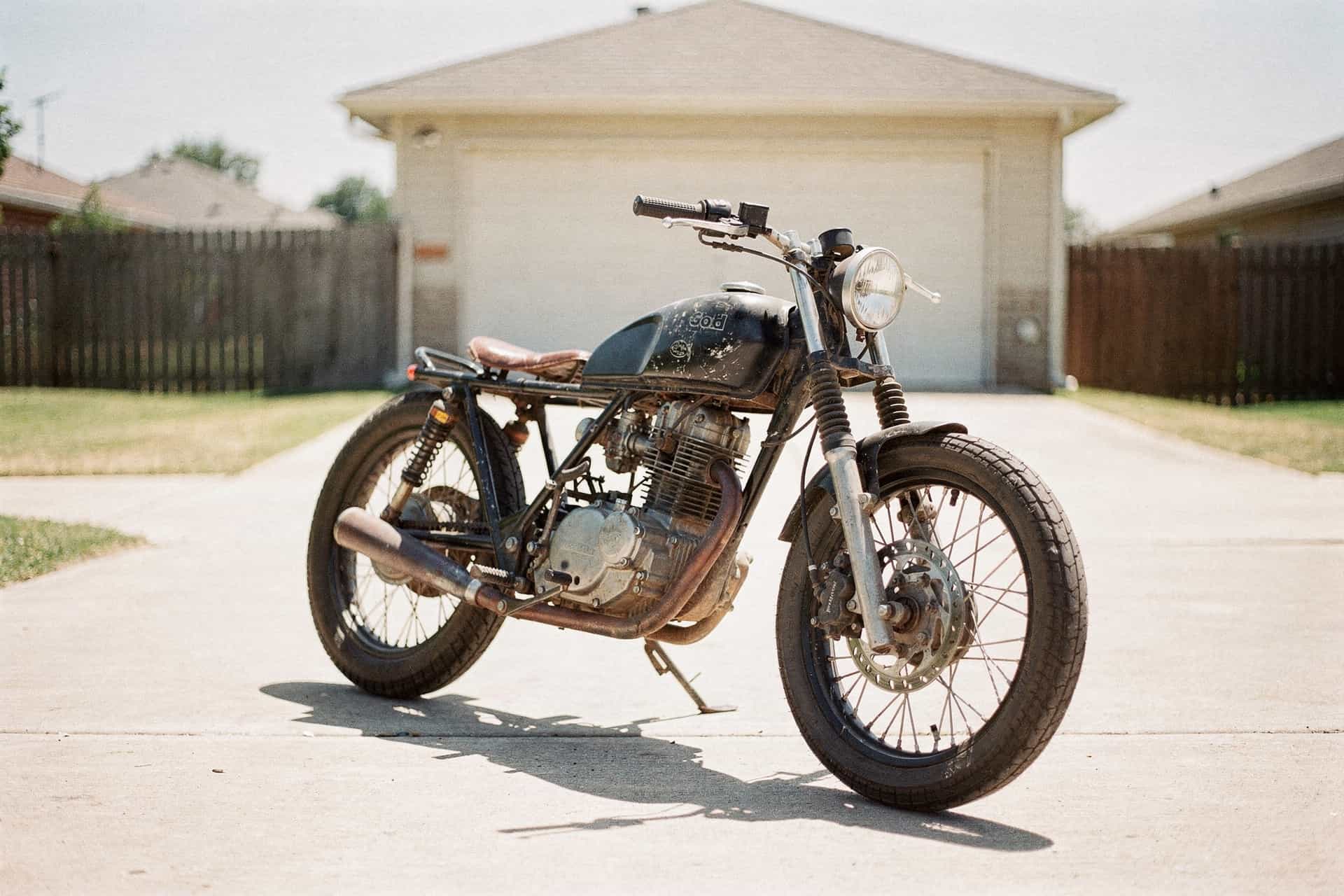
Park a Kikker Hardknock next to a Softail and it looks like somebody left the big bike in the dryer. Same idea, same springer-and-solo-seat stance, but the whole thing weighs 253 pounds and the seat sits 25 inches off the ground. Riders either laugh at it or want one. Usually both.
The Hardknock has been around since 2006, and we hear about it from two kinds of riders. Short riders who cannot flat-foot a full-size bobber. And builders who want a cheap, simple frame to learn on. This guide covers what the bike actually is, the engines, the specs, what it costs, whether it is street legal, and what we would check before handing over cash for a used one.

What the Hardknock Is
Kikker 5150 is based in Brentwood, California, according to its Better Business Bureau listing. The company’s official Hardknock page tells the short history: the bike was “introduced in 2006 as a kit for bike builders,” and “as of 2015 the Hardknock is sold as a street legal motorcycle” with DOT and EPA approval in the United States and EC type approval in Europe and Switzerland.
That split matters. For its first years, the Hardknock was a kit. Whether you could put it on the road depended on your state and how it handled owner-built bikes. Since 2015 you can also buy it as a finished, approved motorcycle. Kits are still sold, and Kikker still pitches them to builders.
It is a real bobber in shape: rigid-look frame, springer front end, solo seat, short fenders, forward controls. It is just built at a much smaller scale than the V-twin customs it copies.
Hardknock Specs
These are the figures Kikker publishes for the current bike.
| Spec | Kikker figure |
|---|---|
| Engines | 49cc, 125cc, 200cc, 250cc single, 250cc V-twin |
| Engine type | Four-stroke |
| Transmission | 4 or 5 speed, depending on engine |
| Starting | Electric start |
| Weight | 253 lb empty |
| Length | 85 in |
| Wheelbase | 58 in |
| Seat height | 25 in |
| Top speed | 90 mph (250cc) |
| Wheels | 16 in, with a 21 in skinny front as an option |
| Brakes | Disc |
| Controls | Jockey shift and forward controls |
| Frame | TIG-welded, powder coated |
| Hardware | Stainless steel fasteners, no plastic parts, internal throttle |
Kikker’s European page repeats the same core specs. You will find other weight figures on spec aggregator sites. Those are often for a different year or engine, so go by the maker’s number and weigh your own bike if it matters.

The Engines: Pick the Right Size
The Hardknock’s best trick is that the frame takes several engines. Kikker says you can “convert a 49cc to a 125cc in 25 minutes or a 49cc to a 250 single or 250 v-twin in 2 hours.”
Here is how we think about each size.
49cc. Built for places where a small engine means lighter licensing rules. Some states treat bikes this size as mopeds or scooters. Check your state before assuming anything, because the rules vary a lot. On the road, a 49 is a town bike, full stop.
125cc and 200cc. Enough to keep up on 35 to 45 mph roads. A good pick for a campground, pit bike or short neighborhood rides.
250cc single. The sensible choice for most adults. It is the engine Kikker’s 90 mph top speed is quoted for.
250cc V-twin. The one people search for, because it gives the tiny bobber a V-twin look. If you want the bike to read like a scaled-down Harley from ten feet away, this is the engine.
One thing to know before you swap engines on a street-legal bike: the title and registration are tied to what the bike was sold as. A 49cc bike registered in a moped class does not automatically become a legal 250 when you bolt in a bigger engine. Talk to your DMV before the swap, not after.
Kit or Complete Bike
Kikker lists complete kits starting at $1,650 and aims them at “qualified builders.” Popular options are priced separately. Kikker lists handlebars at $169, a springer front suspension at $199, seats from $39 to $89, tanks from $99 to $129, and smaller accessories from about $16.
A kit makes sense if:
- You want to learn to wrench on a simple bike before you tackle a big one.
- You want to set it up your way from day one.
- Your state has a clear process for titling an owner-assembled bike.
A complete street-legal bike makes sense if:
- You want to ride it, not build it.
- You do not want to deal with inspections and paperwork for a kit.
- You are buying it for a smaller rider who needs it to just work.
Kikker quotes the finished bike price on request, so we cannot give you a number here.

Who the Hardknock Is For
Short riders. A 25 inch seat is low. Most full-size bobbers sit higher. If you have been tiptoeing every bike you test, this one will put both feet down.
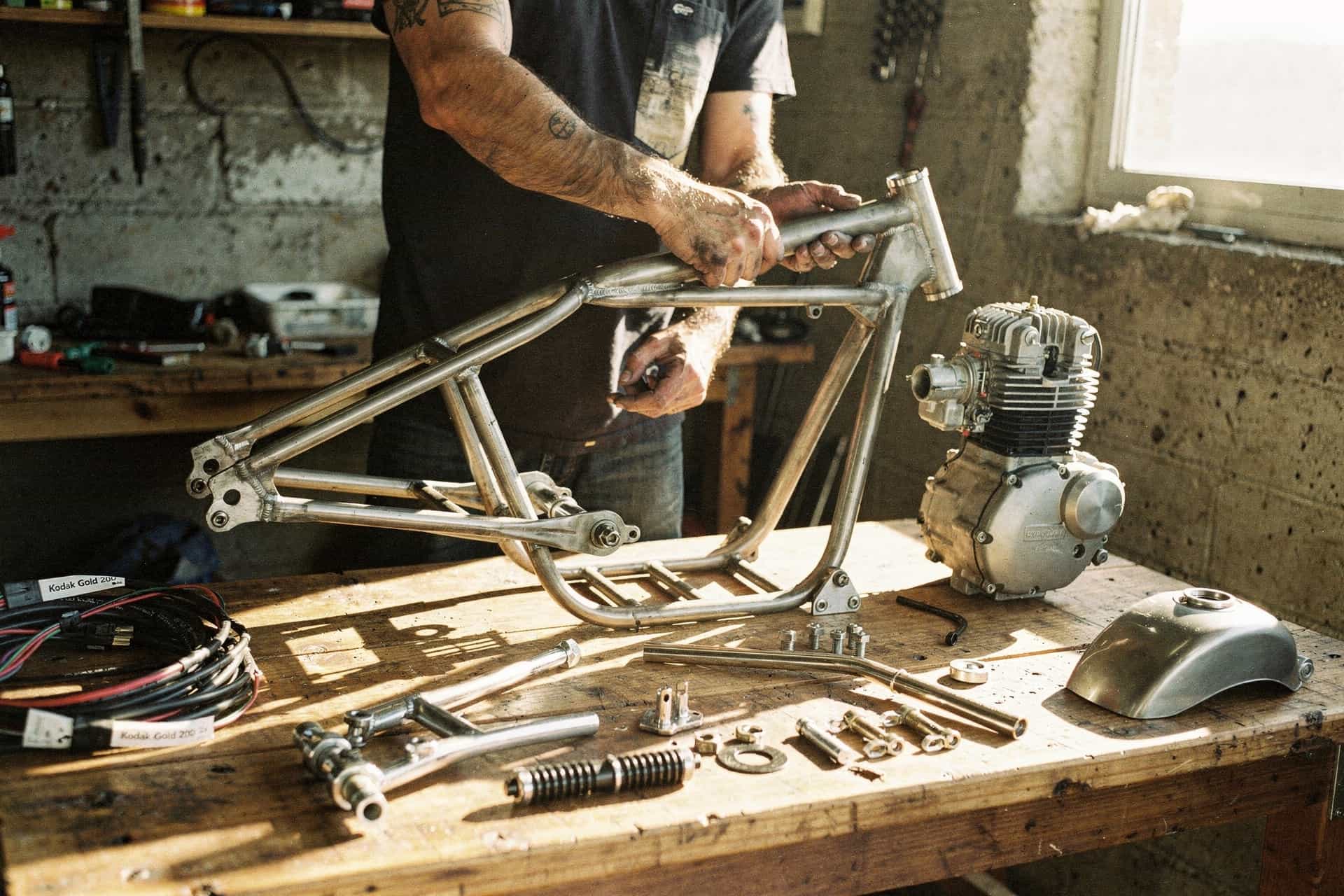
First-time builders. A small four-stroke, a simple frame and a short parts list make it a good first project. You learn wiring, carb basics, chain adjustment and brake bleeding on a bike where mistakes are cheap. Our custom bobber build guide covers the skills that carry over to a bigger build later.
Second bikes. Plenty of riders keep one as a campground, rally or pit bike. At 253 pounds it fits in the back of a pickup.
New riders, with a catch. A 250 Hardknock is light and low, which helps. But it is also a small, short-wheelbase bike with small wheels. If you are brand new, take a motorcycle MSF course first and ride a few different bikes. Our list of the best beginner motorcycle picks covers full-size options too.
Who should skip it. Riders who need to spend real time on the interstate. Tall riders who want to stretch out. And anyone who wants a big V-twin feel. For that, look at a used metric cruiser like the Suzuki S40 bobber or a Yamaha XS400 bobber project.
Buying a Used Hardknock: What We Check
Used Hardknocks show up for sale often, and prices are all over the place. Here is what we look at before buying.
- Paperwork first. Is it a titled street bike or a kit? If it is a kit, does the seller have the manufacturer’s certificate of origin? A kit with no paperwork can be very hard to register. This is the single biggest problem with used kit bikes of any brand.
- Engine size vs title. Make sure the engine in the frame matches what the title says. Swapped engines are common on these.
- Generation. Hardknock Garage sorts parts by HK-I, HK-II and HK-III. Find out which one you are looking at so you know which parts fit.
- Frame welds. Look closely at every weld, especially around the engine mounts, the neck and the rear axle area. Cracks in the powder coat near a weld are a warning.
- Springer front end. Grab the front wheel and try to rock it. Clunks mean worn bushings or loose hardware.
- Wiring. Owner-built kits vary a lot in wiring quality. Look for tidy routing, real connectors and no twisted-and-taped joints.
- Carb and starting. It should start on the button and idle without choke once warm.
- Brakes. Firm lever and pedal, discs not scored.
Honest take: a sweet little bike with a swapped engine and no paperwork for the swap is a garage ornament, not a deal. Check the paper before you check the paint.

Parts and Upgrades
Hardknock Garage is the parts source for genuine Hardknock parts. It sorts parts by generation (HK-I, HK-II, HK-III) and also carries custom Kikker parts and a clearance section. If you cannot find a part, the site lists a phone line: 1-877-545-5150.
The upgrades most riders go for:
- 21 inch skinny front wheel. Kikker lists it as an option. It gives the bike a more old-school look.
- Springer front end. Listed as an option on the Kikker page and sold as a kit on the parts site.
- Handlebars. A simple way to change the look and the fit. Our bobber rolling chassis guide explains how bar height and seat position change the whole stance of a small frame.
- Seats and tanks. Kikker sells several of each.
Keep upgrades light. The Hardknock works because it is small and simple. Pile on heavy parts and you lose the thing that made it fun.
Riding a Small Bobber: What to Expect
Most riders who try a Hardknock have ridden bigger bikes first. A few things feel different right away.
It turns quick. A 58 inch wheelbase and 16 inch wheels make the bike eager to change direction. Great in a parking lot, a little twitchy if you are used to a long cruiser. Relax your grip on the bars and let it steer.
It feels every bump. Small wheels and a short bike do not smooth out potholes the way a heavy cruiser does. Keep your eyes up and your knees loose over rough patches, and keep the tire pressures where they should be.
It is easy to miss in traffic. A small, low bike is harder for drivers to see. Ride like nobody sees you, use your headlight, and think about where you sit in the lane so mirrors pick you up.
Wind hits harder. At 253 pounds, a gust or a passing truck moves the bike more than it moves a 700 pound bagger. Plan routes that keep you off fast, open highways on windy days.
Small engines work hard. A 250 cruising near its top speed is working at high revs for long stretches. Change the oil often and let it warm up before you ride it hard.
It is a blast. Honest take: most riders who get over the size thing grin the whole ride. It is light, it is simple, and it gets looks everywhere. If you remember that it is a small bike and ride it that way, it will reward you.
The Honest Take
The Hardknock is not a big bobber, and it does not pretend to be one. It is a low, light, cheap way into the style, and a decent way to learn to build. Buy the right engine for how you will ride it, get clean paperwork, and it will do exactly what it says.
If you are wrenching on one this weekend, our bobber clothing line is built for the same garage. And if you ride out of Northern California like the folks who make these bikes, check our California collection.
Sources
- Kikker 5150 Hardknock - official page. 2006 launch, 2015 street-legal approval, engine range, conversion times, specs, kit price and option prices.
- Kikker 5150 Hardknock - European page. Same core specs and EC type approval.
- Hardknock Garage. Genuine parts sorted by HK-I, HK-II and HK-III, parts phone line.
- Kikker 5150 - Better Business Bureau. Brentwood, California business listing.