Here is something most people do not know about Biker Boyz: the movie was not Hollywood’s idea. It started with a journalist named Michael Gougis, who wrote a feature for the Los Angeles New Times about African-American motorcycle clubs in Southern California. Gougis embedded with these riders - guys on sportbikes doing organized street races, building crews with real hierarchy, and operating in a motorcycle culture that looked nothing like anything Hollywood had ever put on screen. Filmmaker Reggie Rock Bythewood read that article and saw a film.
The movie that came out of it - released January 2003, starring Laurence Fishburne and Derek Luke - was not a box office hit. It pulled a 22% on Rotten Tomatoes from 94 critics. But for an entire generation of Black riders and sportbike riders of every background, Biker Boyz was the first time their world showed up on a big screen with real actors and a real budget. That matters more than any review score.
We have talked about how motorcycles shaped film and TV across decades of Hollywood history. Most of that history is white guys on Harleys. Biker Boyz cracked that frame open.
From Newspaper Feature to Studio Film
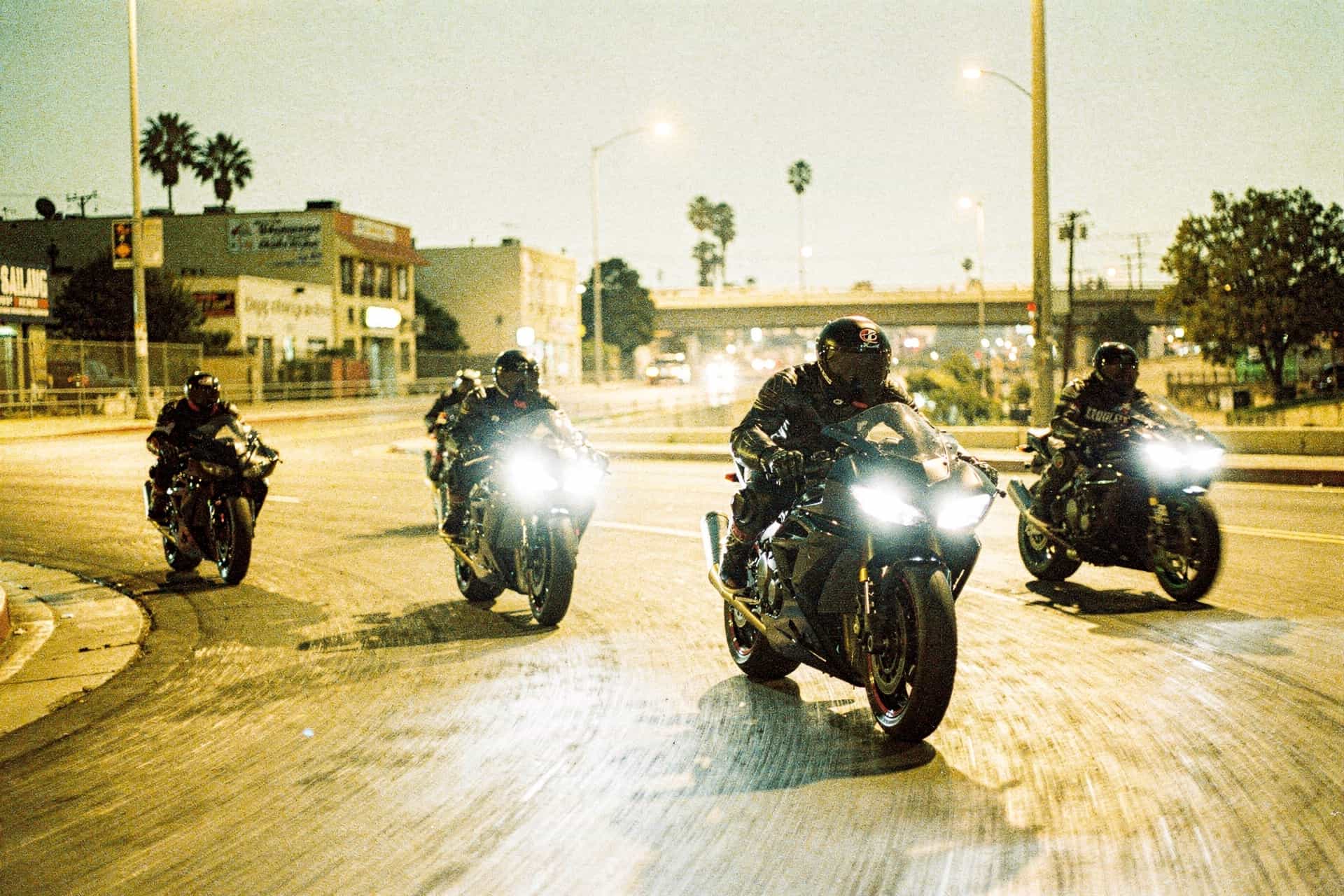
The real motorcycle clubs behind the film’s inspiration were not one-percenter outlaw MCs in the traditional sense. They were sportbike riders - young, mostly Black, organized around speed, skill, and community in the streets of South Central LA and Inglewood. No leather cuts with three-piece patches. No V-twin rumble. These riders wore racing leathers and pushed Japanese inline-fours past triple digits.
Bythewood spent time with multiple clubs in the LA area before writing his script. The fictional “Biker Boyz” crew drew directly from that research. Getting the film greenlit at DreamWorks/Amblin required convincing the studio that a motorcycle movie centered on Black characters could draw a wide audience. They said yes with a reported budget around $24 million - modest by studio standards but enough to attract serious talent.
Real Clubs as Technical Advisors
One detail that separates Biker Boyz from most motorcycle films: real MC clubs served as technical advisors on the production. The credits and production materials list the Valiant Riders, Mighty Black Sabbath MC, G-Zer Tribe, Ruff Ryders, Soul Brothers, Chosen Few MC, Rare Breed, Brothers of the Sun, and Deuces among the organizations that contributed. Many of the background riders in group scenes were actual club members, not extras. When you watch the formation riding and the pre-race energy in the crowd, that authenticity is visible. You cannot fake the way a real crew moves together.
The Cast: Serious Actors on Serious Bikes
Bythewood assembled a roster that gave the project credibility far beyond generic action fare.
Laurence Fishburne as Smoke
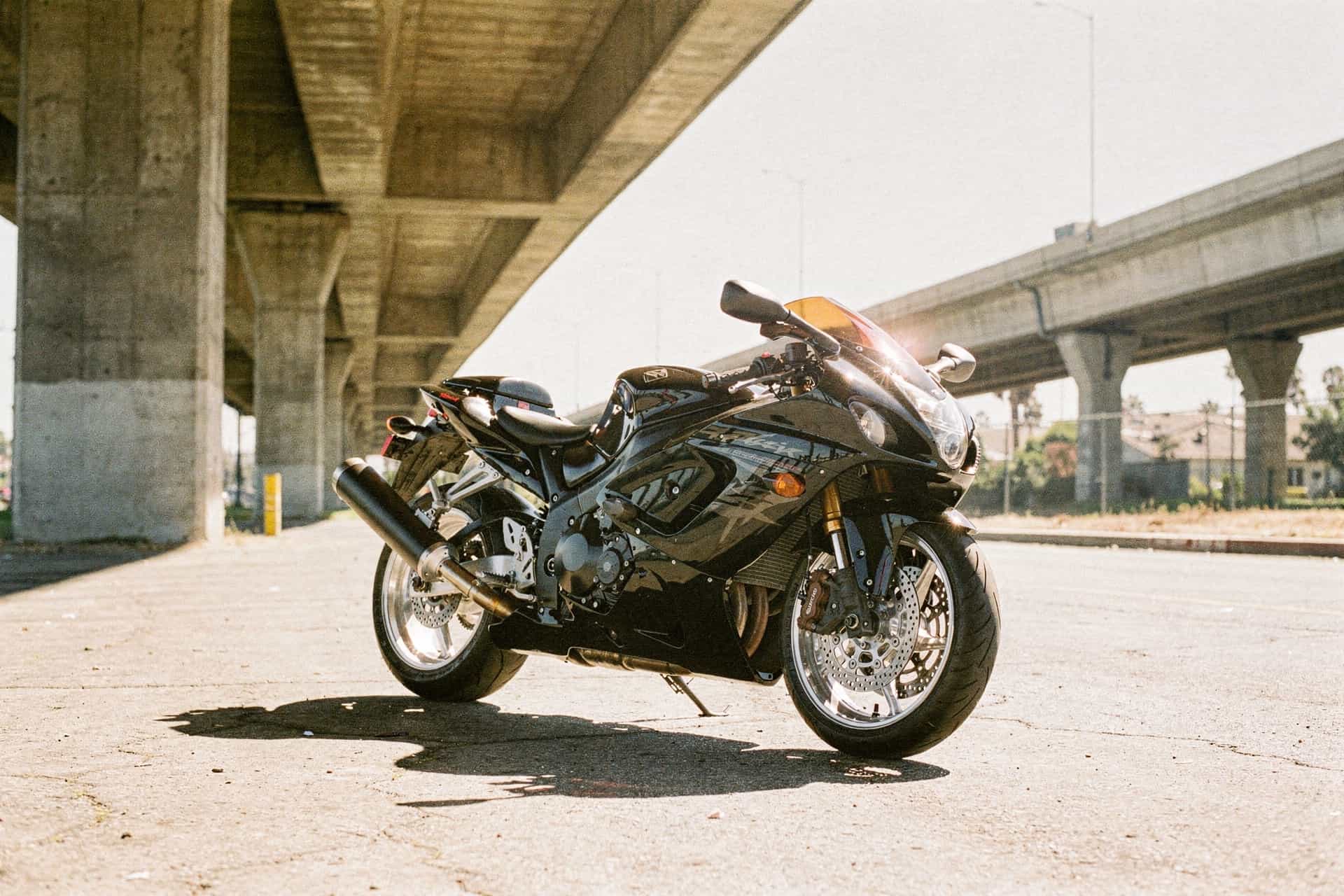
Fishburne plays Smoke, the reigning “King of Cali” - the undefeated top rider in the underground racing scene. Smoke’s bike is a customized 1999 Suzuki Hayabusa GSX1300R - slammed and stretched, with an extended swingarm that made it six inches longer than stock. The Hayabusa was the fastest production motorcycle in the world at the time, running a 1,298cc inline-four making roughly 175 hp. That kind of straight-line dominance fit the character perfectly - Smoke does not just win races, he ends arguments.
Fishburne is a rider in real life - a member of the Guggenheim Motorcycle Club who has been on two wheels for years. He can actually handle a motorcycle, and it shows. The scenes where he is clearly on the bike rather than composited in front of a green screen carry a physical authenticity that most actor-on-motorcycle shots lack.
Derek Luke as Kid
Derek Luke - fresh off his breakout in Antwone Fisher - plays Kid, a young mechanic who challenges Smoke after his father dies in a race. Kid’s weapon is a Suzuki GSX-R1000, the definitive track-bred sportbike of that era. The first-generation Gixxer Thousand (2001-2002) made roughly 160 hp from its 988cc inline-four. In a drag race against Smoke’s Hayabusa, the GSX-R’s lighter weight and sharper reflexes against the Hayabusa’s raw top-end power creates real tension - and the film uses it as a plot point.
The Supporting Cast
The depth of talent in this film is easy to overlook:
- Orlando Jones as Soul Train - comic relief who brings energy to every scene he is in.
- Djimon Hounsou as Motherland - quiet, commanding presence on a Kawasaki. Stole scenes without raising his voice.
- Lisa Bonet as Queenie - one of the few female characters with real weight, connecting the racing world to the family dynamics behind it.
- Terrence Howard, Larenz Tate, Meagan Good, Brendan Fehr - all solid in supporting turns.
- Kid Rock made a cameo. It was 2003. We will leave it there.
The Full Bike Fleet
Beyond the hero machines, the production fielded dozens of period sportbikes:
- Suzuki GSX-R750, GSX-R1000, and Hayabusa GSX1300R
- Kawasaki ZX-12R and ZX-9R
- Yamaha YZF-R1
- Honda CBR954RR
- Ducatis including a 996S ridden by the character Primo
The Hayabusa’s presence as the hero bike alongside the GSX-R fleet gave the film a distinctly Japanese-sportbike identity. The combination of real riding and CG-enhanced sequences gave the race scenes a grounded feel that purely digital motorcycle action never achieves. Having actual club members in the background riding shots made the formation and crowd scenes read as real, because they were.
The Racing Scenes: Energy Over Physics
Riders always have opinions about the race sequences. Here is the honest breakdown.
What Connects
The drag racing scenes captured the real texture of sportbike call-out culture - the trash talk, the pre-race staredowns, the crowd energy before the light drops. Sound design used actual motorcycle recordings, so the Hayabusa’s inline-four howl and the GSX-R scream at the correct frequencies. The nighttime racing sequences, lit by headlights and handheld lights from the crowd, have a genuine underground energy that you cannot manufacture in post-production.
Stunt coordination involved real sportbike riders executing legitimate skill demonstrations - wheelies, stoppies, and high-speed work that was not entirely generated by a computer.
What Does Not Hold Up
Some of the racing physics stretch believability. Bikes accelerate at speeds that exceed their real performance envelopes. Crash scenes are dramatized beyond what any human body would survive. The CGI, even by 2003 standards, shows its seams in certain high-speed composited shots.
Experienced riders spot continuity issues - engine sounds that do not match the visible machine, shifting patterns that make no mechanical sense. Standard movie stuff. But the core energy of those sequences connects, even when the technical details wander.
Why Biker Boyz Mattered: Visibility and Identity
This is where the conversation gets real, and where the film’s legacy outweighs its Rotten Tomatoes score.
A Culture Made Visible
Before Biker Boyz, Black motorcycle culture in America was invisible to mainstream media. Black riding clubs had existed since at least the 1950s. The East Bay Dragons MC in Oakland, founded in 1959, were pillars of their community for decades before anyone with a camera showed up. But Hollywood’s image of a “biker” was almost exclusively white and almost exclusively tied to Harley-Davidsons and outlaw clubs.
Biker Boyz put a different picture on screen. Young Black men and women on Japanese sportbikes, organized into crews with their own codes and hierarchy, racing for pride. It was not perfect representation, but it was representation in a space that had offered none. For riders who had been living that life for years, seeing it reflected back from a movie screen carried weight.
Our motorcycle clubs guide covers the broader history of MC culture from the postwar era forward, including clubs that rarely get mentioned in the usual histories.
The Riding Club Expansion
The early 2000s saw significant growth in organized Black motorcycle clubs across the U.S. Groups like the Ruff Ryders, Iron Elite MC, Sportbike Boyz, and hundreds of regional crews saw membership increases in the years following the film. The sportbike market was booming generally during that period, so attributing the growth entirely to one movie would overstate the case. But Biker Boyz gave the culture a reference point and a recruiting tool.
Bike Night events and organized rides in Atlanta, Houston, Dallas, Miami, and other cities grew significantly through the early-to-mid 2000s. The film’s aesthetic - matching leathers, customized machines, tight formation riding - became a template that real clubs adopted, refined, and built on.
The Stunt Riding Connection
Biker Boyz also intersected with the rise of urban stunt riding. Crews like Starboyz and the 12 O’Clock Boyz in Baltimore were building their own audiences through early internet video around the same time. The film validated the idea that sportbike skill - wheelies, stoppies, highchair riding - was performance art with its own culture and its own rules.
That intersection is complicated. Street stunt riding is illegal and dangerous. People have been seriously hurt and killed. But the cultural energy was and remains real, and Biker Boyz was part of the wave that brought it to a wider audience.
Box Office Numbers and the Afterlife on DVD
Biker Boyz opened January 31, 2003, and grossed about $22 million domestically against its roughly $24 million production budget. By studio math, that is a loss once you factor marketing costs. Critics were mostly negative. The inevitable comparison to The Fast and the Furious (2001) did the film no favors - reviewers who did not understand the distinct culture Biker Boyz was pulling from dismissed it as a two-wheeled imitation.
Where It Found Its Real Audience
Home video changed the equation. DVD sales and rentals were strong, and the film circulated through motorcycle communities for years. If you went to any sportbike meet in the mid-2000s, someone had a copy in their car. It became a communal text - not because it was flawless cinema, but because it was theirs.
That DVD-era audience kept Biker Boyz alive long after theaters moved on. It appears on streaming platforms periodically and still generates conversation in riding forums and social media. Twenty-plus years later, it remains the only major studio film to center Black sportbike culture. That fact alone sustains its relevance.
Where Biker Boyz Sits in the Motorcycle Film Canon
Biker Boyz is not a classic like Easy Rider. It is not a mainstream franchise like Mission: Impossible (which has used motorcycles extensively). It is not a cult documentary like On Any Sunday. What it is, specifically, is the only major studio release to put Black sportbike culture at the center of the story. Two decades on, nothing else has filled that space.
The Top Gun motorcycle reshaped how America thought about sportbikes through a single character and a single Kawasaki. Biker Boyz tried to do something harder - it tried to show an entire subculture. The Harley-Davidson and the Marlboro Man built its cult following around the lone outlaw on a blacked-out cruiser. The Ghost Rider motorcycle sequences went full comic-book fantasy. Biker Boyz aimed for something grounded in a real community, and even where the script stumbled, the foundation held.
For the full arc of how motorcycles have appeared across film and television, our motorcycle culture guide covers everything from Brando’s Triumph to Jax Teller’s Dyna.
What Happened to the Film’s Bikes
The specific machines used in production have scattered. Some were destroyed during stunt sequences. Others sold through production asset liquidation. A handful have surfaced at auctions and in private collections, though verifying provenance on any individual bike is difficult.
The models themselves - the 2002-era GSX-R1000, Hayabusa, and Ducati 996S - have entered classic and collector territory. A clean first-generation GSX-R1000 is a genuinely sought-after machine in the mid-2020s. The Hayabusa stayed in production through a full redesign in 2021, giving it one of the longest continuous nameplates in the sportbike world alongside Kawasaki’s Ninja line.
If the Top Gun GPZ900R is the bike that made sportbikes aspirational for the mainstream, the Biker Boyz fleet represents the moment when an existing, self-sustaining sportbike culture finally got its screen time. Hollywood was not creating something. It was catching up to something that had been there all along.
Where to Watch
Biker Boyz is available for digital rental on most major platforms. The DVD is easy to find secondhand. Watch it knowing it is a 2003 studio film with all the genre tropes that implies. Watch it for the cast, the bikes, and the culture it documented, not for the screenplay.
And if the sportbike world is not where your heart lives - if you are more about V-twins and stripped-down metal - we understand. That is our world too. But motorcycle culture is bigger than any one style, and Biker Boyz earned its chapter. Our best biker movies guide covers the full cinematic landscape. The biker fashion breakdown explores how riding style crosses every genre of the culture. And if you want to carry your riding identity in what you wear, our patches and merch and T-shirts are built for the community, not the costume department.
Sources
- Biker Boyz (2003) - IMDb page with full cast, crew, and trivia including real MC club involvement
- Biker Boyz - Rotten Tomatoes - critical reception and audience scores
- Biker Boyz (2003) - IMDb - cast, crew, and production details
- CBS News - Fishburne’s Biker Boyz - interview with Laurence Fishburne on his real-life riding and the Guggenheim Motorcycle Club
- SlashGear - What Motorcycle Did Laurence Fishburne Ride in Biker Boyz? - Hayabusa GSX1300R identification and specifications
- Gougis, Michael. Feature article on African-American motorcycle clubs. Los Angeles New Times - the original journalism that inspired the film