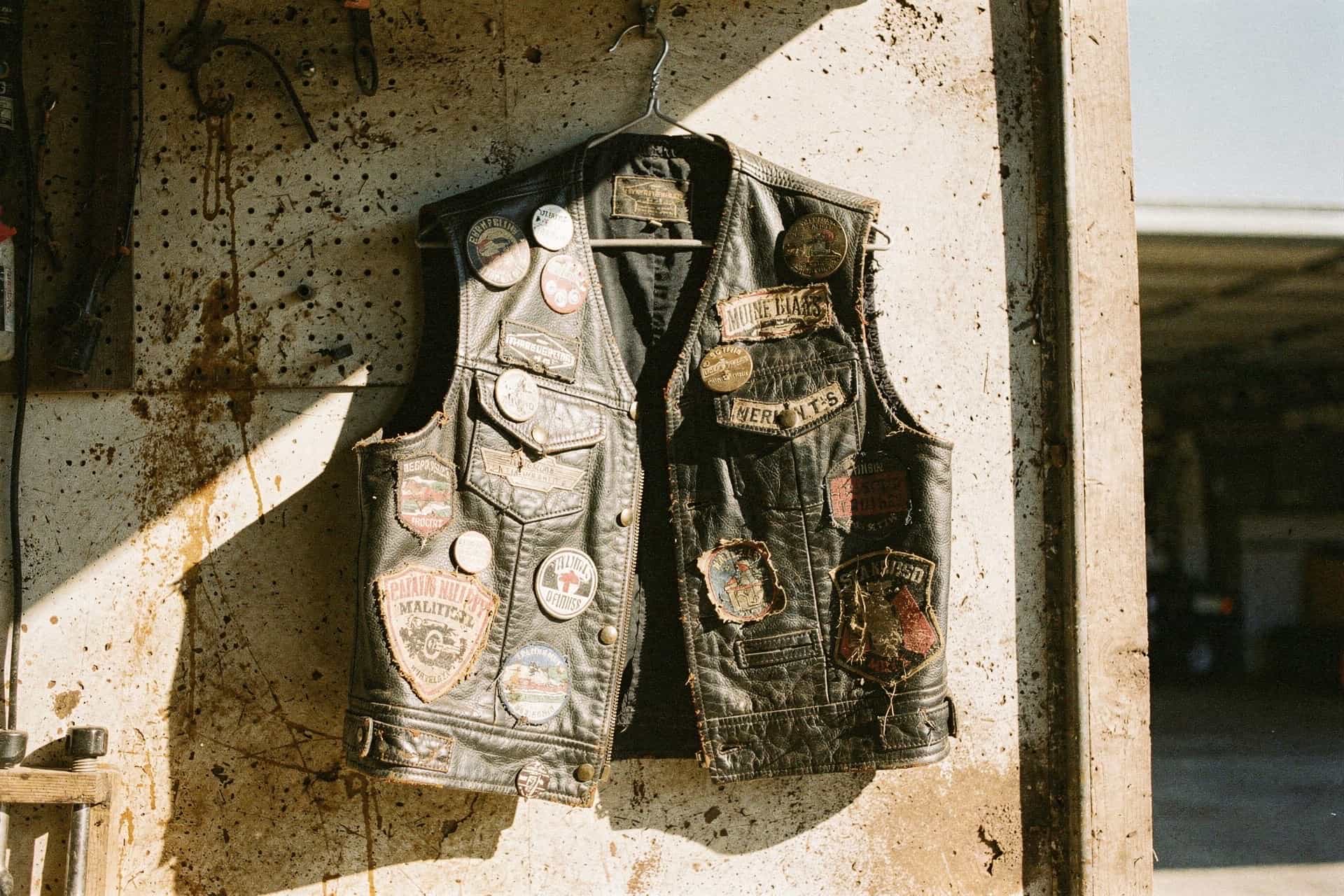
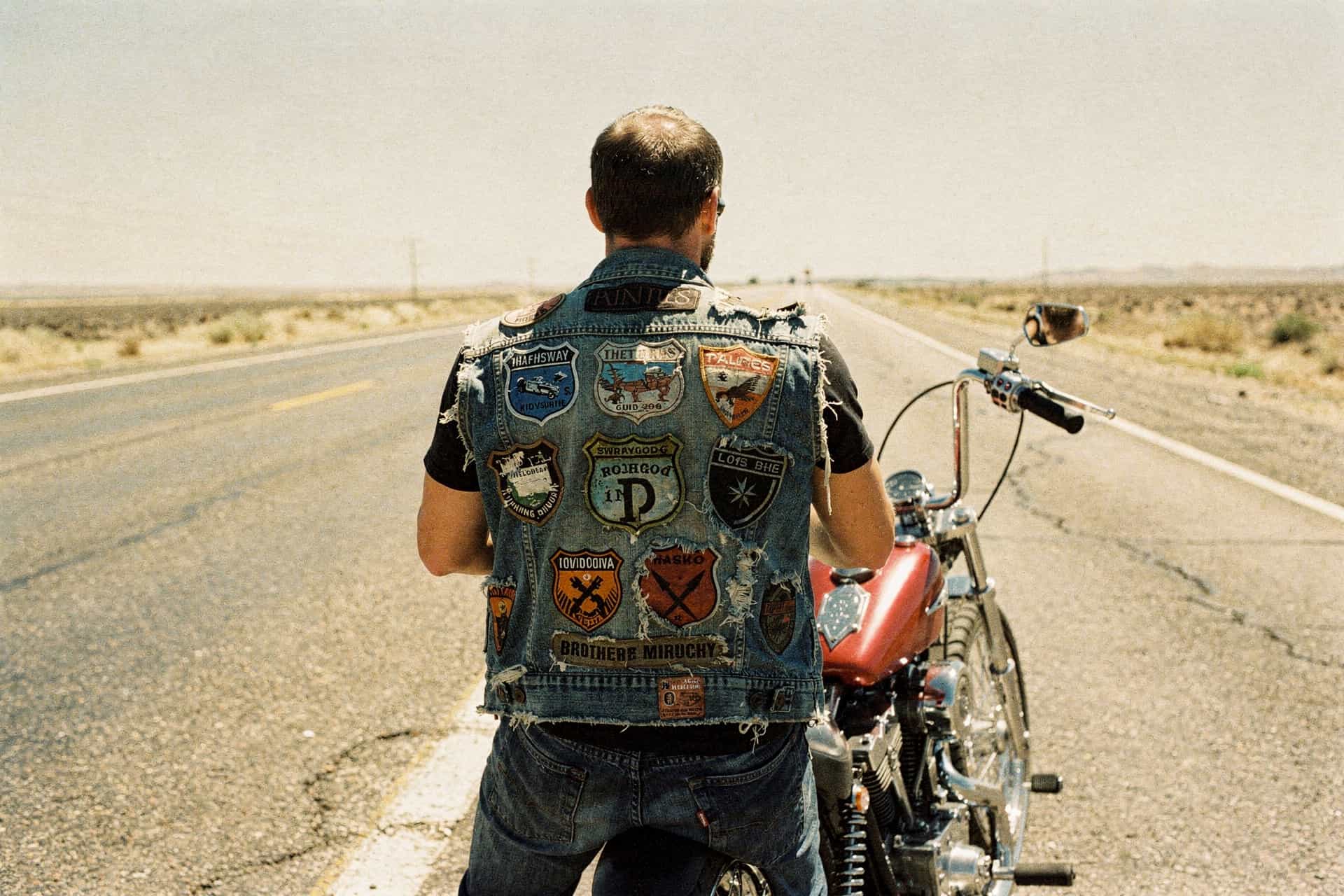
We pulled into a gas station outside Flagstaff last fall, three bikes deep, and a kid - maybe twenty-two, brand new Sportster, zero road character on it yet - walked over and asked where he could buy a vest “like that.” He pointed at our buddy’s denim cut. Eight years of patches, road grime, rally pins, and a coffee stain from a gas station in Tucumcari baked into the fabric. The thing looked like a biography you could wear.
The answer is you cannot buy a vest like that. You build one. Over time, over miles, over the experiences that each patch and mark represents. But you can buy the blank canvas - and choosing the right one is the first real decision in a process that lasts as long as you ride.
This guide covers every type of biker vest, what separates them, how club culture uses them, and what to look for when you are spending actual money. For the broader view of riding gear across all categories, our biker gear guide has the complete breakdown.
Leather Vests: The Original Standard
Leather motorcycle vests have been part of riding culture since before the first MC patches were ever sewn. Early riders wore them for the same reason they wore leather jackets - cowhide was the best available protection against road rash, wind chill, and the general abuse of daily riding. When the postwar motorcycle clubs formed in the late 1940s, the leather vest became the standard foundation for a club’s colors.
Understanding Leather Types
Not all leather is the same animal, and the differences matter more than most riders realize when they are buying their first vest.
Full-grain cowhide is the benchmark for serious riding vests. Full-grain means the leather surface has not been sanded or buffed - it retains the natural grain, which is the strongest part of the hide. Thickness between 1.0mm and 1.2mm balances protection and flexibility. Go above 1.4mm and you get stiffness that restricts movement, especially in warm weather when you are already fighting heat fatigue.
Top-grain leather has been lightly sanded to remove surface imperfections. Smoother and more uniform than full-grain, slightly less durable over decades. Many mid-range motorcycle vests use top-grain because it looks cleaner at purchase and is easier to manufacture with consistent results. For most riders, top-grain is a solid choice that will not let you down.
Split leather - often marketed as “genuine leather,” which is actually a quality indicator pointing downward, not upward - is the inner layer of the hide after the top grain has been separated off. Cheaper, weaker, and ages poorly. Split leather vests look acceptable when new but crack and delaminate faster. If the price seems too good for leather, it is probably split.
Buffalo leather appears in some biker vests, particularly imports. Thicker and heavier than cowhide with a coarser grain. Durable but stiff - it does not conform to the body as naturally as cow. Some riders love the heavy, almost armor-like feel. Others find it too rigid for all-day comfort. Try it on before committing.
What to Inspect Before Buying
- Seam construction - Look for double or triple stitching at stress points: shoulder seams, side panels, pocket attachments. Single-stitch construction will fail under the weight of a loaded, patched vest. This is the first thing that separates quality from junk.
- Hardware - Snaps, zippers, and buckles should be metal. Period. Plastic hardware fails in cold weather and under stress. YKK zippers are the reliability standard. Snap closures work better than zippers for club cuts - easier access and simpler to replace when individual snaps wear out.
- Lining - Lined vests are more comfortable against bare skin and protect the outer leather from body sweat, which degrades hide over time. Satin or polyester linings are standard. Unlined vests breathe better in heat but stain faster from the inside out.
- Pocket depth - Interior pockets need to hold a phone and wallet securely at highway speed. Shallow pockets dump your belongings into your lap at the first hard stop. Test this in the store.
- Back panel - If you intend to wear patches, the back needs to be large, flat, and free of seams running through the center. A three-piece patch set (top rocker, center patch, bottom rocker) requires uninterrupted space. Decorative back seams will complicate patch placement and look wrong.
Breaking In Leather
A new leather vest is stiff. That is just the material doing its job. The break-in takes anywhere from a few hundred to a few thousand miles depending on hide weight and how often you wear it. Speed it along by:
- Wearing the vest around the house, not just on the bike
- Working lanolin-based leather conditioner into the surface (avoid silicone sprays - they seal the pores and trap moisture)
- Flexing the material by hand along the natural fold lines
Do not machine wash leather. Do not dry clean it unless the cleaner specifically handles motorcycle leather. Wipe down with a damp cloth when dirty. Condition twice a year. A leather vest maintained this way lasts decades - we have seen thirty-year-old vests still in active rotation that look better than they did at five years because the leather has developed its character.
Denim Vests: The Working Rider’s Cut
Denim cuts entered motorcycle culture in the 1960s and 1970s as a more accessible alternative to leather. Lighter, cheaper, easier to customize. In club culture, denim is every bit as legitimate as leather - what matters is the patches on the vest, not the fabric underneath them.
Why Riders Choose Denim
A heavyweight denim vest (12oz to 14oz fabric) offers no meaningful abrasion protection compared to leather. That is not its purpose. The denim cut is an identity garment, not a safety garment. It exists to display patches, pins, and the visual story of the rider or the club.
That said, denim has real practical advantages:
- Breathability - Denim moves air far better than leather. For riders in Texas, Arizona, Florida, or anywhere summer temperatures make leather feel like a punishment, denim is the obvious warm-weather choice.
- Weight - A denim vest runs about half the weight of a comparable leather vest. Over eight hours of riding, that difference registers in your shoulders and your stamina.
- Customization - Denim accepts patches, paint, embroidery, and screen printing more readily than leather. Sewing a patch onto denim is a standard sewing machine job. Sewing onto thick leather requires an industrial machine or careful hand work with a leather needle.
- Cost - A quality blank denim vest runs $30 to $80. A comparable leather vest starts at $100 and climbs past $300 for premium materials. The price difference means denim is more forgiving as a platform - you are not afraid to ride hard in a vest that cost you forty bucks.
Choosing Your Denim
The most traditional approach: start with a Levi’s or Wrangler denim jacket and cut the sleeves off. This DIY method has been standard in MC culture since the beginning. You get the advantage of trying the jacket on for fit before cutting, the quality control of a major denim brand’s fabric weight, and a purchase price that often starts at thrift store rates.
If you are buying a purpose-built denim vest, look for:
- Fabric weight - 12oz minimum. Lighter denim will not hold patches securely and wears through at stress points within a season or two of real use.
- Pre-shrunk fabric - Raw (unsanforized) denim shrinks when washed. If your patches are already sewn on when it shrinks, they pucker and distort. Buy pre-shrunk or wash before patching.
- Color - Black is the default across most MC and riding club culture. Traditional indigo works in non-club contexts. White and grey denim vests exist but are rare in the motorcycle world.
Club Cuts: Protocol That Is Not Optional
A “cut” - short for “cutoff” - is a vest worn as the foundation for a motorcycle club’s colors. In club culture, the cut is not casual clothing. It is a uniform, a symbol of earned membership, and in some legal contexts it has been classified as gang insignia by law enforcement. Understanding the rules is not academic - it is practical, and getting it wrong has real consequences.
The Three-Piece Patch System
The standard MC patch layout runs three pieces on the back of the cut:
- Top rocker - A curved patch displaying the club name
- Center patch - The club’s logo or emblem
- Bottom rocker - The chapter’s geographic territory (city, state, or region)
This three-piece configuration is worn by MCs that have established their territory and standing with other clubs in their area. Wearing a three-piece patch without authorization from the dominant club in your region is a serious violation of MC protocol. This is not a suggestion or a guideline. It is a boundary that is actively enforced, and violations lead to direct confrontation.
Our motorcycle clubs guide goes deep on the hierarchy, protocol, and history of MC patch culture. If you are new to this world, read it before you sew anything onto your back.
One-Piece and Two-Piece: The Riding Club Distinction
Riding clubs (RCs) - distinct from motorcycle clubs (MCs) - typically wear one-piece or two-piece patches. A one-piece patch is a single emblem without rockers. A two-piece adds either a top or bottom rocker, but not both.
This distinction is not cosmetic. A riding club wearing a three-piece patch in territory controlled by an MC is making a claim they may not be able to support. The patch hierarchy is enforced, and ignorance is not accepted as a defense. Know the difference before you commit to a patch set.
Front Patch Placement
The front of a club cut follows its own conventions:
- Left chest - Reserved for the club’s property patch or the member’s rank patch (President, Vice President, Sergeant-at-Arms, Road Captain)
- Right chest - Member’s road name, chapter designation, or memorial patches for fallen members
- Left pocket area - Pins, recognition patches, rally pins
- Bottom front - Support patches or affiliated club acknowledgments
The Prospect Cut
Prospects (probationary members) wear a reduced patch set - typically just the bottom rocker and a “Prospect” designation, without the full three-piece back patch. The center patch and top rocker are awarded upon earning full membership. This visual distinction communicates the prospect’s status to other clubs and to the public. It is not hazing. It is a system that has functioned for decades.
Riding Vests vs. Club Cuts: Know What You Are Wearing
Not every biker vest is a club cut. Plenty of riders wear vests with zero club affiliation - personal patches, pins, rally patches, and custom artwork that tell their individual story. The distinction matters in how other riders read you.
The Independent Rider’s Vest
An independent rider’s vest might carry:
- Rally and event patches (Sturgis, Daytona, Laconia, the Galveston rally)
- Riding group patches from non-MC organizations
- Brand patches (Harley-Davidson, Indian, Triumph)
- Humor patches, political statements, memorial patches
- Personal artwork or embroidery
- Military service patches and unit insignias
This is the most common vest you will encounter at open bike nights and public rallies. No formal protocol governs what an independent rider puts on their vest, provided they are not wearing MC-specific imagery they have not earned. That single boundary is absolute.
Functional Riding Vests
Some motorcycle vests are built primarily for riding function rather than identity display:
- Armor pockets - Slots for CE-rated back protectors and chest plates
- Ventilation panels - Mesh or perforated leather sections for airflow management
- Reflective elements - Piping or panels for nighttime visibility
- Adjustment straps - Side lacing or elastic panels for layering over different base layers
These functional vests overlap more with the motorcycle jacket category than with traditional biker cuts. They are riding equipment, not identity garments. Some riders wear them under or over a jacket for layered protection. Others use them standalone in warm weather.
Building Your Vest Over Time
The best biker vests are not purchased complete. They are accumulated, ride by ride, year by year. Each patch and pin represents something that actually happened.
Start With the Blank Canvas
Buy the vest. Wear it. Ride in it. Let it develop its own character - road grime, sun fade, creases from how you sit - before you start adding patches. A vest covered in patches with zero road wear looks like a costume. A vest with three patches and two years of highway dust looks real because it is.
Earn Every Patch
Every patch should represent something true. A Sturgis patch means you actually rode to Sturgis. A wrench pin means you actually turn your own bolts. A memorial patch means you actually lost someone. Do not buy patches for events you did not attend or achievements you did not earn. The riding community is small enough that fabricated credentials get spotted, and the social cost of being caught is high.
Sewing vs. Pinning
Heavy patches should be sewn. Machine stitching works on denim; hand stitching with a leather needle works on hide. Lighter patches and small pins can be pinned, but pins come loose on rough roads and get lost at highway speed. If a patch matters to you, sew it down permanently.
For leather, use a heavy-duty needle (size 16 or 18) and polyester thread. Leather needles have a triangular cutting point that penetrates hide rather than pushing through it. Pre-punch your stitch holes with an awl if the leather is thick. Take your time. Bad stitching on a vest looks worse than no patches at all.
Respect the Timeline
A fully loaded vest takes years. That timeline is not a problem to solve - it is the point. Each addition marks a chapter. When the vest is full - when there is genuinely no room for another patch - you either start a second vest or accept that this particular story, in visual form, is complete. Either way, it represents something real.
The meaning of biker patches goes deeper into what specific patch designs and placements communicate. The motorcycle tattoo ideas piece is the natural companion - if the vest is the identity you build over time, the tattoo is the identity you commit to permanently. Our biker fashion guide extends this conversation to the full riding wardrobe: jackets, boots, and the visual language riders carry on and off the bike. And for the patches themselves, our patches and merch collection carries pieces built for actual riding culture - not generic filler from a novelty catalog. Check our full gear collection for everything else.
Sources
- Barger, Ralph “Sonny.” Hell’s Angel: The Life and Times of Sonny Barger and the Hell’s Angels Motorcycle Club. William Morrow, 2000 - First-person account of MC culture, patch protocol, and vest traditions.
- Outlaw motorcycle club - Wikipedia - Reference on three-piece patch hierarchy, “kutte” vest customs, and club structure documented in academic ethnographies including Daniel R. Wolf’s The Rebels: A Brotherhood of Outlaw Bikers (University of Toronto Press, 1991).
- RevZilla - Motorcycle Vest Buying Guide - Overview of riding vest types, materials, and functional features.