


There are two kinds of words about motorcycles: words from people who ride, and words from people who watched someone else ride. You can hear the difference in a single sentence. The first kind has engine oil in its syntax. The second kind sounds like it belongs on a throw pillow.
We keep a few quotes taped to the wall in our shop - yellowed paper, greasy fingerprints, some of them unreadable at this point. They stay up because they said something true once and they still say it now. The good motorcycle quotes are not inspirational posters. They are field reports from people who spent real time in the saddle and came back with something worth repeating.
What follows is not a random list. Every quote here has context - who said it, when, and why it matters. Because a line without its story is just decoration. And if words on skin are more your speed than words on a page, our piece on motorcycle tattoo ideas covers the ink that carries these same sentiments permanently.
On Freedom and What Two Wheels Do to Your Head
Freedom is the first word riders reach for when non-riders ask why. It is overused. It is a cliche. It is also completely accurate.
”Faster, faster, until the thrill of speed overcomes the fear of death.” - Hunter S. Thompson
Thompson wrote this in Hell’s Angels: A Strange and Terrible Saga (1967), his embedded account of riding with the Hells Angels MC in the mid-1960s. He was not a biker. He was a journalist from Louisville who talked his way into the club’s inner circle and rode with them for about a year before they beat him badly over a money dispute.
The line captures something most motorcycle writing misses: speed and fear are not opposites. They negotiate. You do not eliminate fear by going faster. You overwhelm it. Every rider who has cracked the throttle wide open on an empty stretch of highway at dawn knows exactly what Thompson was describing. It is not recklessness. It is a deliberate exchange - you trade safety for a feeling that nothing else on earth produces.
Thompson’s Hell’s Angels remains one of the most honest pieces of writing about motorcycle culture ever published. It does not romanticize or condemn. It observes. For more on the club culture Thompson documented, our motorcycle clubs guide covers MC history and structure from the postwar era to the present.
”Four wheels move the body. Two wheels move the soul.” - Unknown
This gets attributed to everyone and no one. It has been circulating since at least the late 1990s motorcycle forum era, credited to anonymous blog posts, greeting cards, and occasionally to specific riders who almost certainly did not originate it.
It persists because it is precise. It names the exact difference between driving and riding in twelve words. A car moves you from point A to point B. A motorcycle makes the space between those points into the entire point. The “soul” language sounds soft until you have actually commuted the same route in a car and on a bike back to back. Then it is just accurate reporting.
”Life is too short for traffic.” - Unknown
No verified source. Every rider who has lane-split past a half-mile of stopped cars on a Tuesday afternoon has felt it in their bones. Six words. The entire practical argument for motorcycling, compressed to bumper-sticker size.
On Brotherhood and the People You Ride With
Motorcycles are solo machines, but riding builds bonds that non-riders do not have a frame of reference for. Shared roads, shared breakdowns, shared risk - these produce a specific kind of loyalty.
”If you have to ask, you wouldn’t understand.” - Harley-Davidson advertising, circa 1990s
This line appeared in Harley-Davidson marketing in the 1990s and became one of the most repeated phrases in motorcycle culture. It functions as both a statement and a fence. It says: this experience cannot be translated for outsiders. You know it or you do not.
The marketing genius was turning exclusion into aspiration. It made people on the outside want to cross the line and find out what they were missing. Harley’s team understood that the appeal of motorcycle culture is partly that it is not for everyone. Our Harley-Davidson history guide traces how the brand built an entire identity around that principle - from the factory floor to the cultural phenomenon.
”We’re all just one mechanical failure away from walking.” - Common garage wisdom
Every rider has lived this. The chain breaks. The tire goes flat in the middle of nowhere. The electrical system picks today to stop working. Suddenly you are standing next to a dead machine on the shoulder of a road you cannot pronounce, looking at a long walk and a longer phone call.
This quote - which circulates in dozens of variations through forums and shop conversations - is a reminder of the fundamental vulnerability of two-wheeled travel. It is also why the riding community has an unwritten code: when you see a bike on the shoulder, you stop. It is not a suggestion. One day that will be you.
”Riding is brotherhood. The bike is just the excuse.” - Unknown
Another piece of communal wisdom that belongs to the culture rather than any individual. It surfaces in MC literature, riding club conversations, and late-night garage talk among riders who have been at it long enough to realize the machine is secondary.
We have watched it play out in our own crew. Guys who sold their bikes years ago still show up every weekend. They wrench on other people’s machines. They tell the same stories. They are part of the community because the relationships built through riding outlast the riding itself. The bike gets you in the door. The brotherhood keeps you there.
On Risk and Why We Accept It
Riding is dangerous. The statistics are real and riders know them. The worthwhile quotes on this subject do not pretend otherwise - they name the risk and explain why the trade is still worth making.
”It is not the destination, it is the ride.” - Often attributed to Robert M. Pirsig
This gets credited to Pirsig (Zen and the Art of Motorcycle Maintenance, 1974), though the exact phrasing does not appear in his book. Pirsig’s actual writing is more nuanced - he explored the quality of attention that riding demands and how that attention transforms travel from mere transit into philosophy.
Zen and the Art of Motorcycle Maintenance sold over five million copies and remains the best-selling philosophy book in American publishing history. It is not really about motorcycles - it uses a cross-country ride as a framework for exploring epistemology and value theory. But riders claim it because Pirsig understood something about the riding experience that non-riding philosophers never grasped: the motorcycle forces you to be completely present. You cannot multitask on a bike. You cannot zone out. The machine demands all of you, and in that demand, everything else falls away.
”You live more in five minutes on a bike than some people live in a lifetime.” - Common among racers
The five-minute timeframe is not random. It is roughly the length of a canyon run, a fast highway merge, or a spirited stretch of backcountry road. In those five minutes, you process more sensory data, make more split-second decisions, and experience more raw living than most people encounter in a full week of routine. The quote does not argue that non-riders live less. It argues that intensity and duration are different measurements, and motorcycles max out the first one.
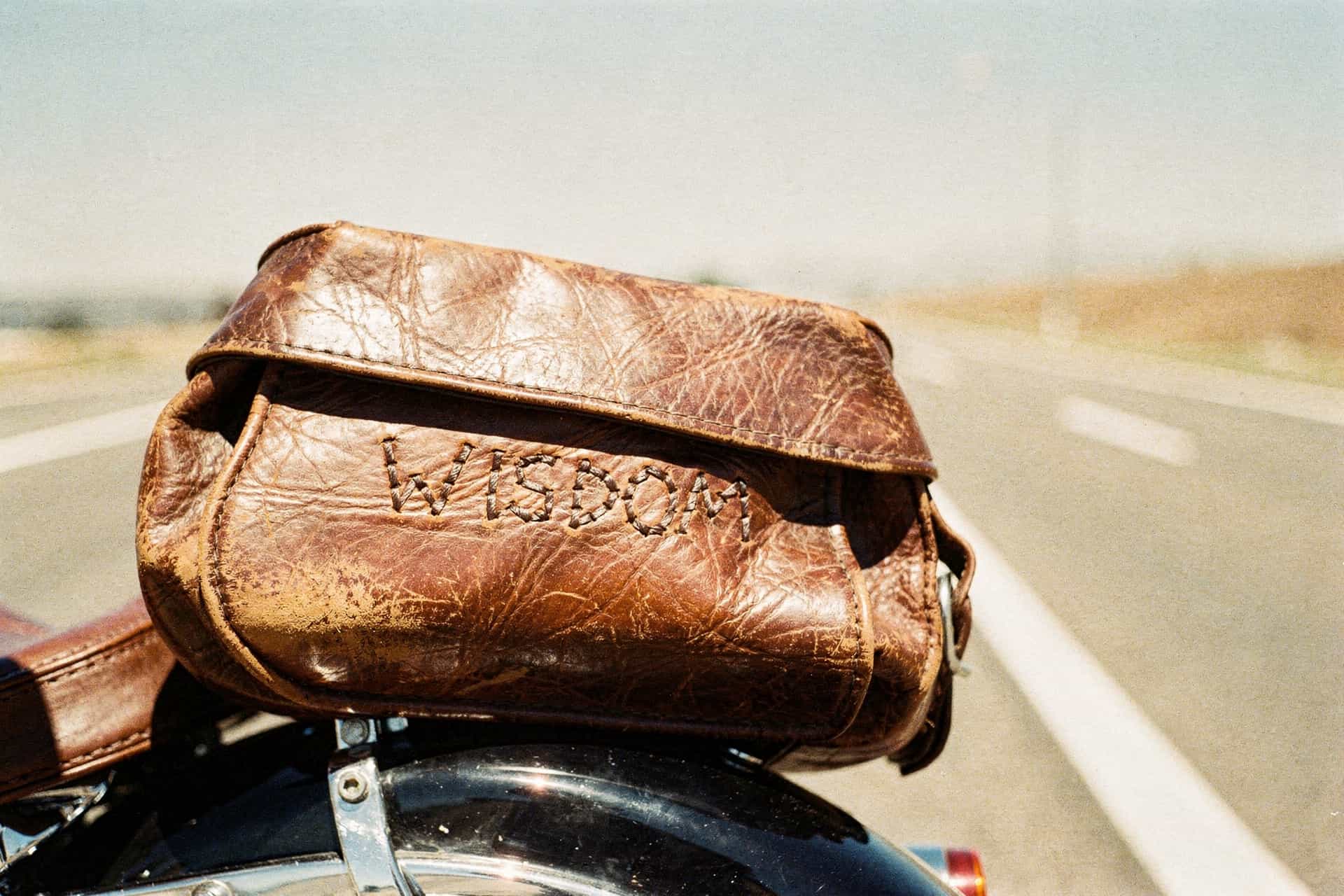
”There are old riders and there are bold riders, but there are very few old, bold riders.” - Adapted from aviation
The original version references pilots. It migrated to motorcycle culture decades ago and has been thoroughly naturalized. This is the experienced rider’s safety talk, delivered without lecturing. It does not say “don’t be bold.” It says “understand the math over time.”
The riders who last - the ones still throwing a leg over the seat at sixty and seventy - are the ones who learned when to push and when to back off. They have fast days and careful days. They recognize that survival is not skill alone. It is judgment applied over thousands of decisions. Our motorcycle beginners guide makes this the central lesson for new riders, because it is the one that actually keeps people alive.
”Any fool can ride fast in a straight line.” - Attributed to various racers
Racing wisdom that translates directly to street riding. Straight-line speed requires nothing but a right wrist and a willingness to hold it open. Cornering, trail braking, reading traffic patterns, maintaining a line through a decreasing-radius turn - that is where riding actually lives. This quote is a quiet rebuke to anyone whose primary brag is peak horsepower. Speed is cheap. Control is earned.
On the Machine Itself
Some of the best motorcycle quotes are about the bikes - what they are, what they mean, and why the relationship between a rider and a machine runs deeper than function.
”A motorcycle is an art object, not just a machine.” - Steve McQueen
McQueen was not performing a lifestyle. He competed in the International Six Days Trial in 1964 as part of the U.S. team. He raced in desert events throughout the 1960s and 1970s. His collection included Triumphs, Husqvarnas, and Indian motorcycles that showed real use, not garage-queen polish.
When McQueen called a motorcycle an art object, he was naming something specific: the motorcycle is a machine where form and function cannot be separated. A well-built bike has proportions, lines, and visual weight that communicate before the engine fires. This is the foundation of the entire custom motorcycle world. Every bobber, every chopper, every cafe racer starts from McQueen’s premise - the machine is worth looking at, not just riding. We see it every day in our world of custom bobber builds.
”Racing is life. Everything before and after is just waiting.” - Steve McQueen
McQueen again. The man earned the right to say this by actually racing - motorcycles and cars, competitively, while simultaneously being the highest-paid actor in Hollywood. He was not cosplaying. He was living a dual life where the racing half felt more real to him than the movie half.
This quote resonates with every rider who has experienced the intensity compression of competition - organized track days, a fast group ride through mountain roads, or just trying to beat your own time on a familiar stretch. When the riding is good, everything else feels like the space between rides.
”I look my best when I take my helmet off after a long ride. I have a glow and a tan and my hair is all mussed up and I have bugs on my face.” - Valentino Rossi
Rossi - nine-time Grand Prix World Champion and the winningest rider in the modern MotoGP era - is as known for his humor as his corner speed. This quote captures the unglamorous reality that no marketing photo shows. After a long ride, you are sweaty, your face carries helmet-padding imprints, and there are insect remains in places you did not know insects could reach.
Rossi raced from 1996 to 2021. Twenty-six seasons. Championships in the 125cc, 250cc, 500cc, and MotoGP classes. When the man talks about riding, he is drawing on more time in a saddle than almost anyone alive. The joke lands because it comes from someone who has earned the right to be unserious about something he took more seriously than anyone.
”Nobody is impressed that you spent $30,000. They’re impressed that you built it yourself.” - Garage wisdom
Not attributed to anyone famous. But spend time in the custom motorcycle world and you will hear a version of this from every builder who has ever stood behind a workbench. A $3,000 bobber assembled from a wrecked Sportster in a one-car garage commands more respect in our circles than a $50,000 showroom queen that has never had its oil changed by its owner.
This is the “Built Not Bought” philosophy that runs through everything we do. It is not gatekeeping. Nobody is saying do not buy a stock bike. It is about recognizing that the act of building transforms the builder as much as it transforms the machine. Your hands on the metal change both of you. Our gear collection exists for riders who understand that principle.
On Women and Riding
The motorcycle world has historically centered men in its stories. Women have been riding since the beginning, and their words about it are just as sharp.
”A woman who rides a motorcycle is in control of her own destiny.” - Attributed to Bessie Stringfield
Bessie Stringfield was the first African American woman to ride solo across the United States, completing the trip in 1930 at age nineteen on a 1928 Indian Scout. During World War II, she served as a civilian motorcycle dispatch rider for the U.S. Army - one of the few women in that role. She continued riding until shortly before her death in 1993 in her early eighties.
Whether this exact quote is directly from Stringfield or a distillation of her documented philosophy, it captures a truth about her life. In an era when Black women were denied basic freedoms, Stringfield used a motorcycle as a tool of autonomy. She rode where she chose, when she chose. The motorcycle was not an act of rebellion - it was self-determination made mechanical. The American Motorcyclist Association inducted her into its Hall of Fame in 2002.
”You don’t stop riding because you get old. You get old because you stop riding.” - Common among women riders’ groups
No verified original source. It circulates through women’s riding organizations and clubs, alongside variations like “age is a number, miles are real.” The women’s riding community tends toward more openly motivational language than the broader biker culture, which defaults to stoicism. Both approaches land in the same place: keep riding. The day you stop is the day the clock starts winning.
Using Quotes Without Sounding Like a Fortune Cookie
Here is the honest truth: most motorcycle quotes sound great on a T-shirt and awkward in conversation. If you show up to bike night reciting Hunter S. Thompson, people are going to give you a look. The culture values doing over talking, always.
The quotes that resonate are the ones that confirm what riders already know from experience. They do not teach. They validate. When “four wheels move the body, two wheels move the soul” hits you, it is because you have already felt the thing. The words just give it a shape you can hand to someone else.
So use them. Print them. Get them tattooed. Tape them to your garage wall next to the Snap-on calendar. Just make sure you have earned the feeling behind them by actually riding - by putting real miles on real roads - and not just scrolling through quotes on your phone.
The best biker movies delivered some of the most memorable motorcycle dialogue ever filmed. The motorcycle culture guide covers how these words and ideas spread through the broader riding community across decades. The biker fashion breakdown explores the visual language that runs parallel to the verbal one - what riders wear carries the same weight as what they say. And if you want to carry these words on your next ride, our T-shirt collection and hoodies are built for the garage and the road, not the algorithm.
Sources
- Thompson, Hunter S. Hell’s Angels: A Strange and Terrible Saga. Random House, 1967.
- Pirsig, Robert M. Zen and the Art of Motorcycle Maintenance: An Inquiry into Values. William Morrow, 1974.
- Ferrar, Ann. Hear Me Roar: Women, Motorcycles, and the Rapture of the Road. Crown Trade, 1996. (Bessie Stringfield biographical material.)
- Valentino Rossi - MotoGP Official Profile - Career statistics and championship record
- AMA Motorcycle Hall of Fame - Bessie Stringfield - Hall of Fame induction details and biography
- Steve McQueen and the 1964 ISDT - Speed Track Tales - McQueen’s motorcycle racing history