The Two-Block Ride Is the One That Gets You
The mental image most riders have of a crash is a highway, at speed, in bad weather. The federal data says otherwise. NHTSA’s 2022 motorcycle crash figures show that 92 percent of fatal motorcycle crashes happened on non-interstate roads, 58 percent happened in daylight, and 97 percent happened in clear or cloudy conditions. Ordinary roads, ordinary weather, ordinary afternoon.
That is the whole argument for gearing up on the short ride to the gas station. Nobody plans to slide down the pavement in basketball shorts. They just did not expect the car in the driveway.
What you wear on a motorcycle splits into two categories that get blurred constantly, including by people selling you things. Protective gear is certified to a standard and rated for abrasion and impact. Everything else is clothing. Both belong in a rider’s closet. Only one of them helps when you go down.
This guide covers both, in the right order: what actually protects you, how to build complete outfits for riding, wrenching, and the parts of this life that happen off the bike, and where riders waste money on gear that fails when it counts.
Gear vs. Clothing: The Line That Matters
Before anything else, learn to read a label instead of a look.
Protective gear carries a certification. Helmets meet DOT FMVSS 218, ECE 22.06, or Snell. Jackets and pants are rated under EN 17092 by class. Armor is rated under EN 1621. Boots are certified under EN 13634. If a garment carries one of those marks, somebody tested it and it earned a number.
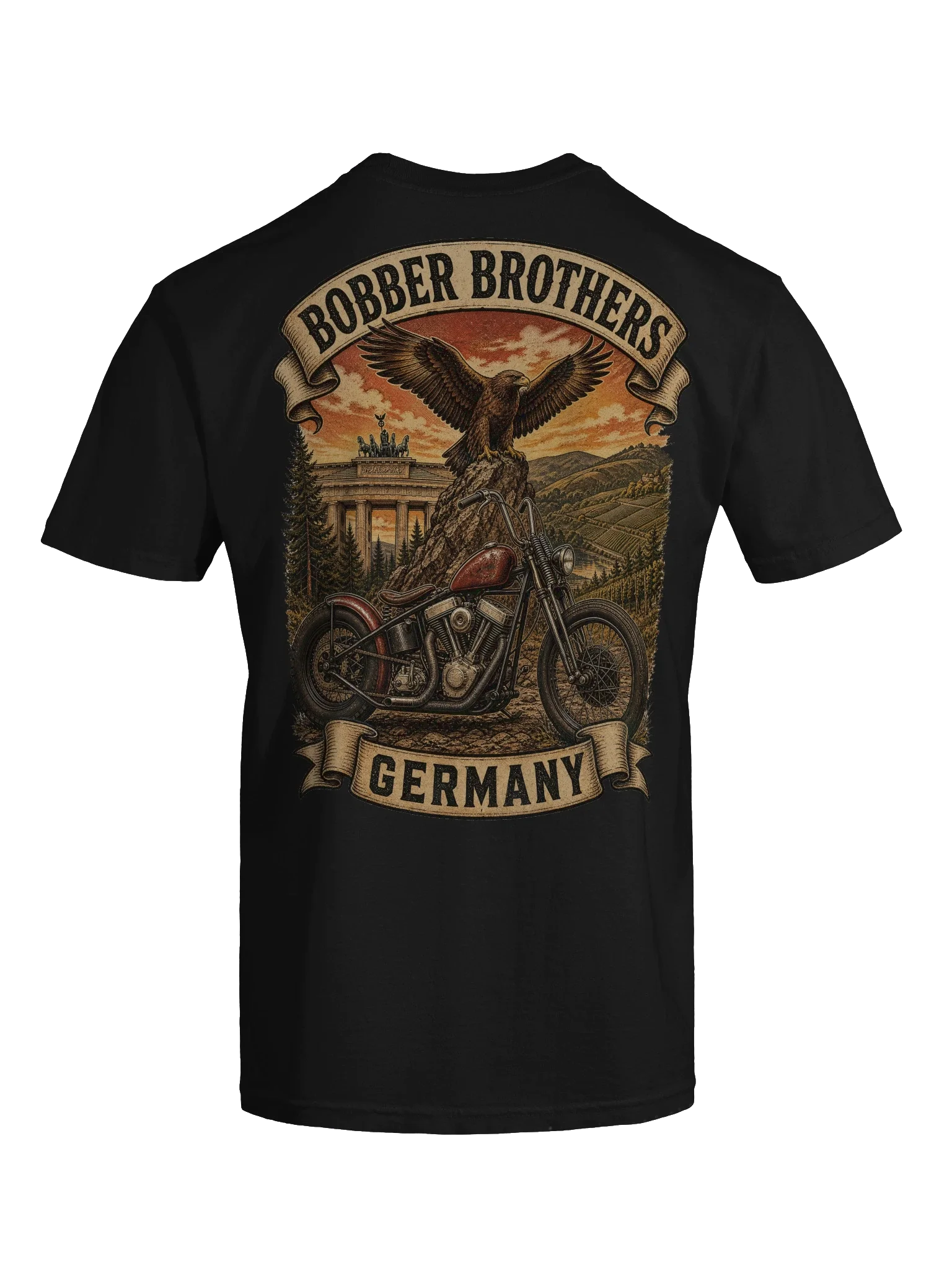
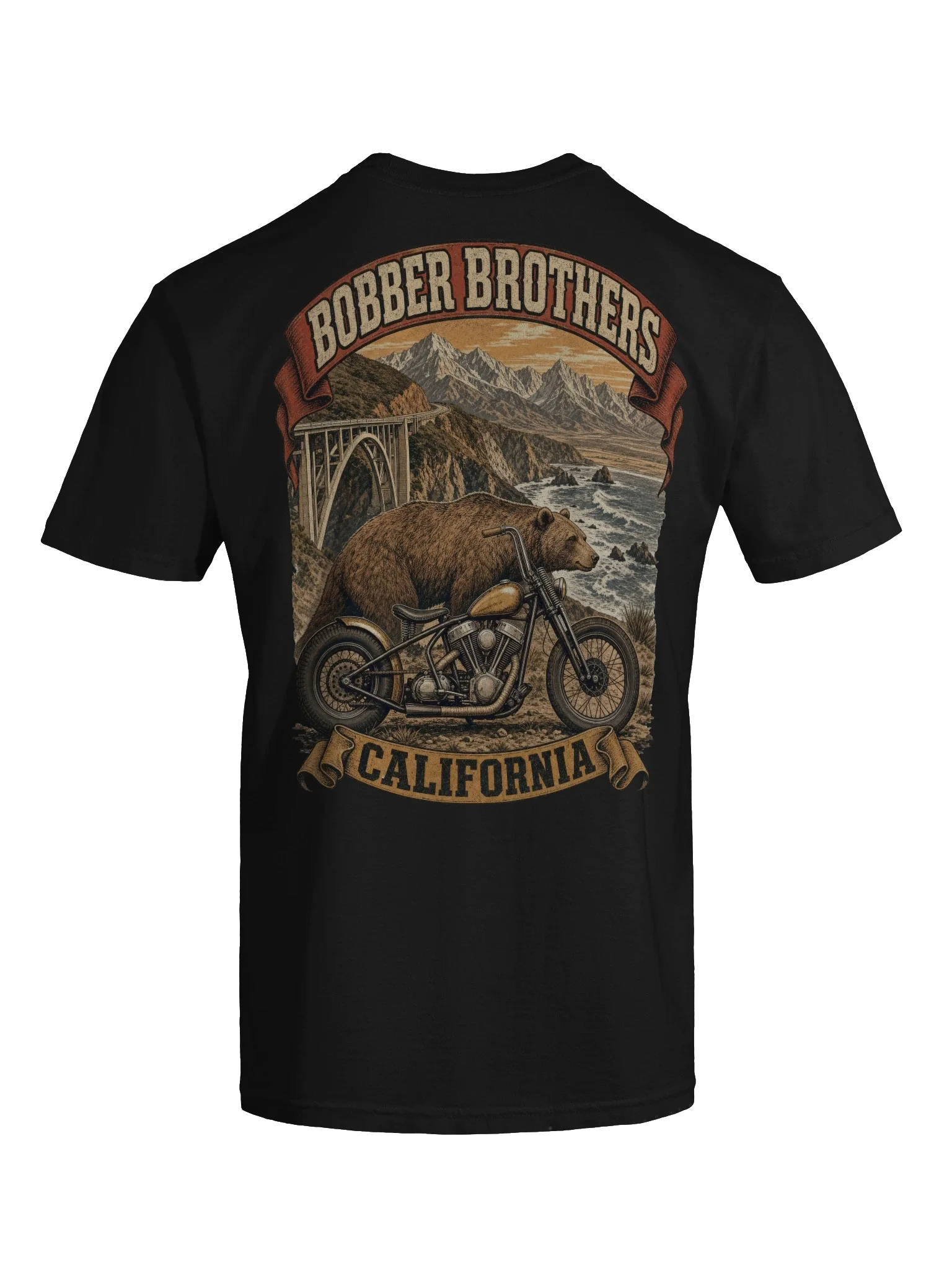
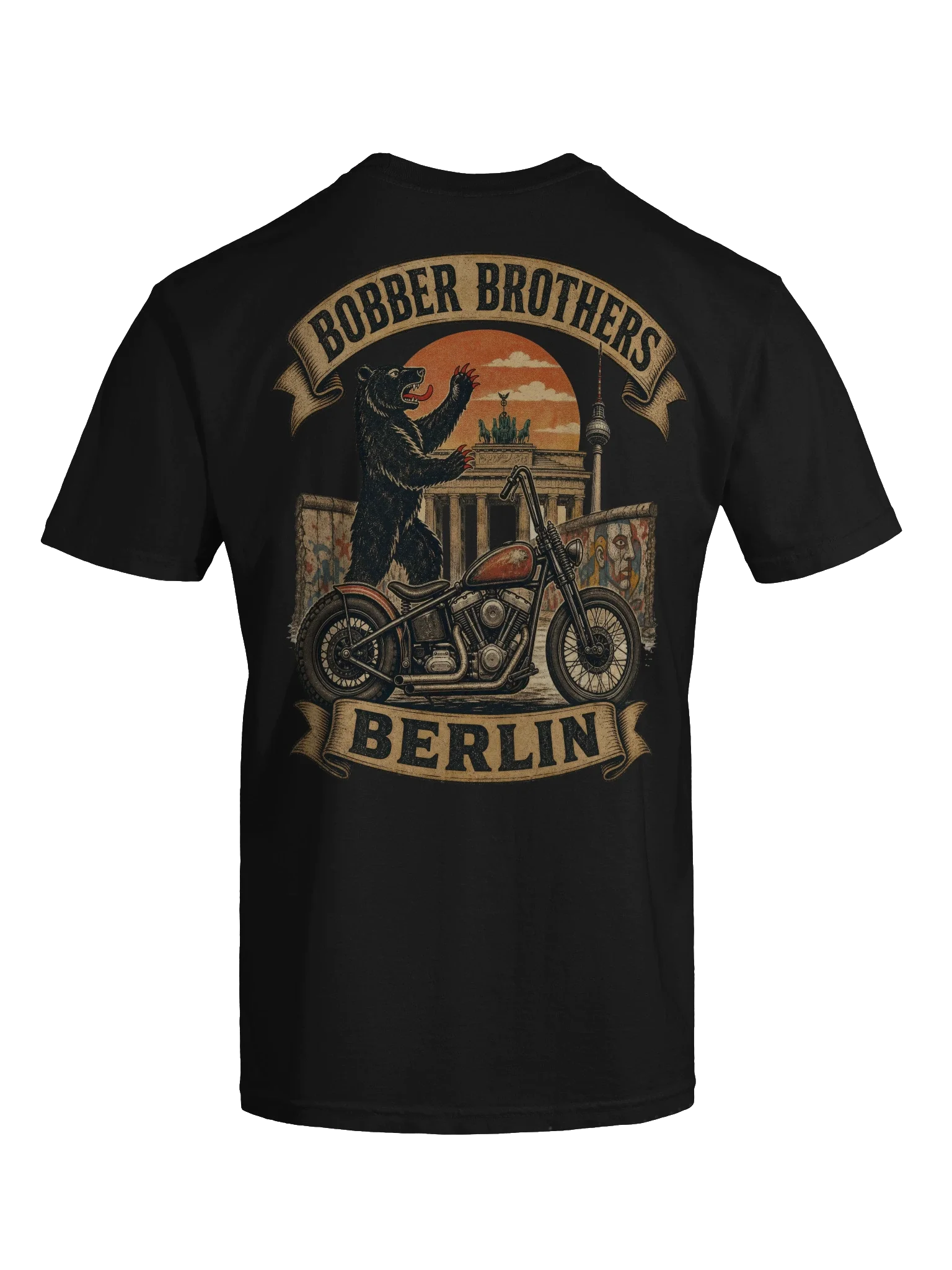
Clothing does not, and that is fine. A heavyweight tee, a hoodie, a vest full of patches, a pair of jeans with no aramid lining - these are what riders wear at the bar, at the swap meet, in the garage, and on the ride home in a car. They carry the culture. They do not carry an abrasion rating.
The failure mode is buying category two while believing you bought category one. A “moto-style” jacket with quilted shoulders and no armor pockets is a coat. A canvas shop jacket is a shop jacket. Nothing about the styling changes what happens at 40 mph on asphalt.
Everything in the next four sections is category one.
The Helmet: Non-Negotiable
Start at the top. The helmet is the single most important piece of protective gear you will ever own.
NHTSA’s National Center for Statistics and Analysis estimates helmets to be about 37 percent effective at preventing fatal injuries to motorcycle operators and about 41 percent effective for passengers. That estimate comes from Calculating Lives Saved by Motorcycle Helmets (DOT HS 809 861), which revised an older 29 percent figure upward after re-analyzing fatal two-up crashes with newer helmet designs. It is a population-level estimate from crash data, not a promise about your crash.
Three main types matter for riders:
Full-face helmets cover your entire head, chin included. They offer the highest level of protection. The chin bar is not decorative - roughly 35% of all impacts to motorcycle helmets occur in the chin area, based on the Dietmar Otte study conducted at Hannover Medical University across thousands of real-world crashes.
Half helmets (brain buckets) cover the top of your skull and nothing else. They meet minimum DOT requirements and are popular in the bobber and cruiser world for their stripped-down look. We get it - the open-air feel is part of the ride. But understand the trade-off you are making.
Three-quarter (open-face) helmets split the difference. They cover the top and sides of your head but leave your face exposed. More protection than a half shell, more airflow than a full-face.
Look for DOT certification at minimum. ECE 22.06 is the current European standard (mandatory for new helmet sales in the EU since January 2024) and generally considered more rigorous in its testing methodology - it tests at multiple impact sites, includes rotational impact testing, and uses a broader range of anvil shapes than the DOT FMVSS 218 standard. Snell ratings go a step further with additional high-energy impact testing.
Fit Matters More Than Brand
A $700 helmet that does not fit your head shape is worse than a $150 helmet that does. Helmets come in three general shapes: round oval, intermediate oval, and long oval. Most American and European manufacturers build intermediate oval. Arai tends toward round oval. If a helmet gives you pressure points after 20 minutes, it is the wrong shape for your skull - no amount of break-in will fix that.
Jackets: Your First Line of Defense
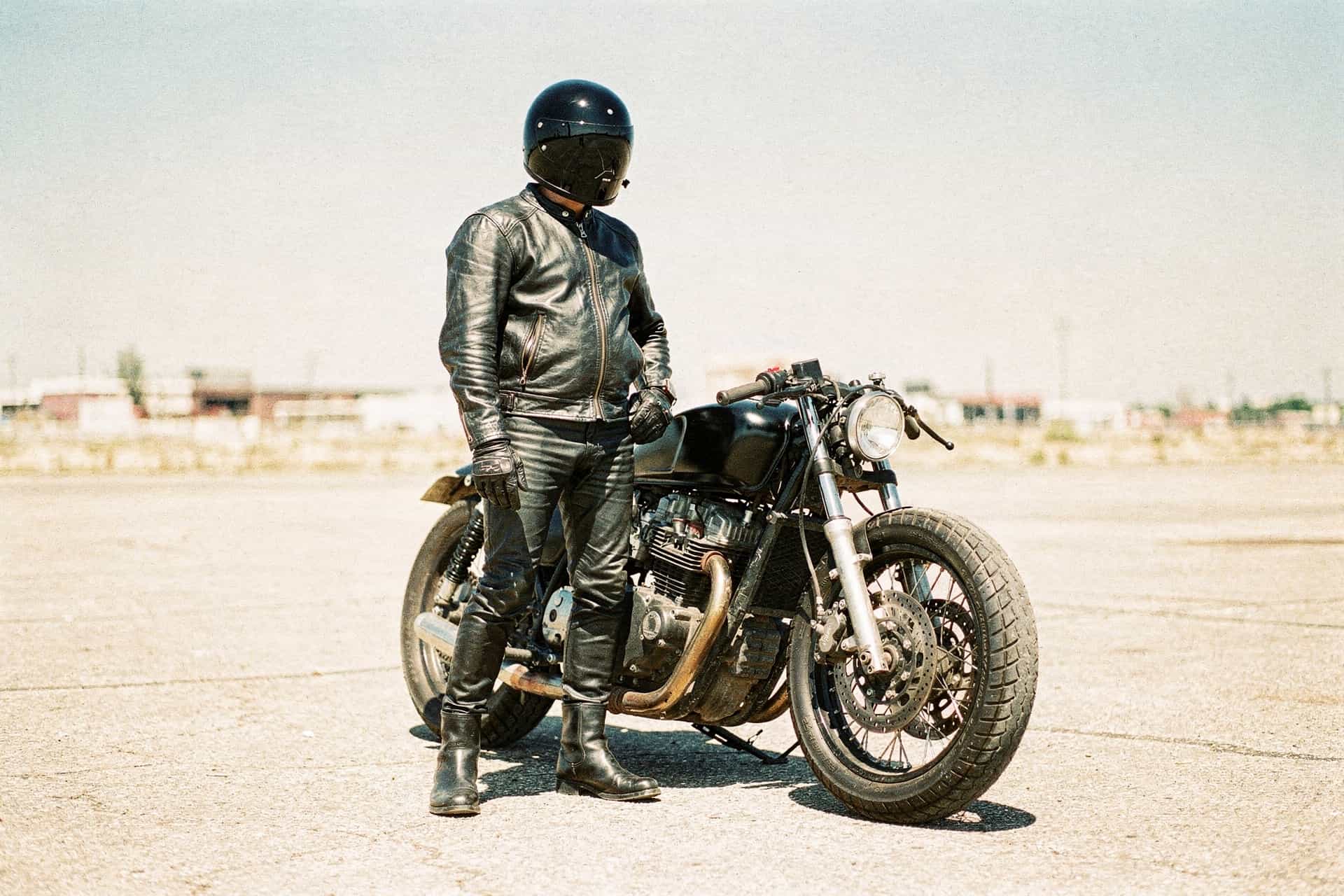
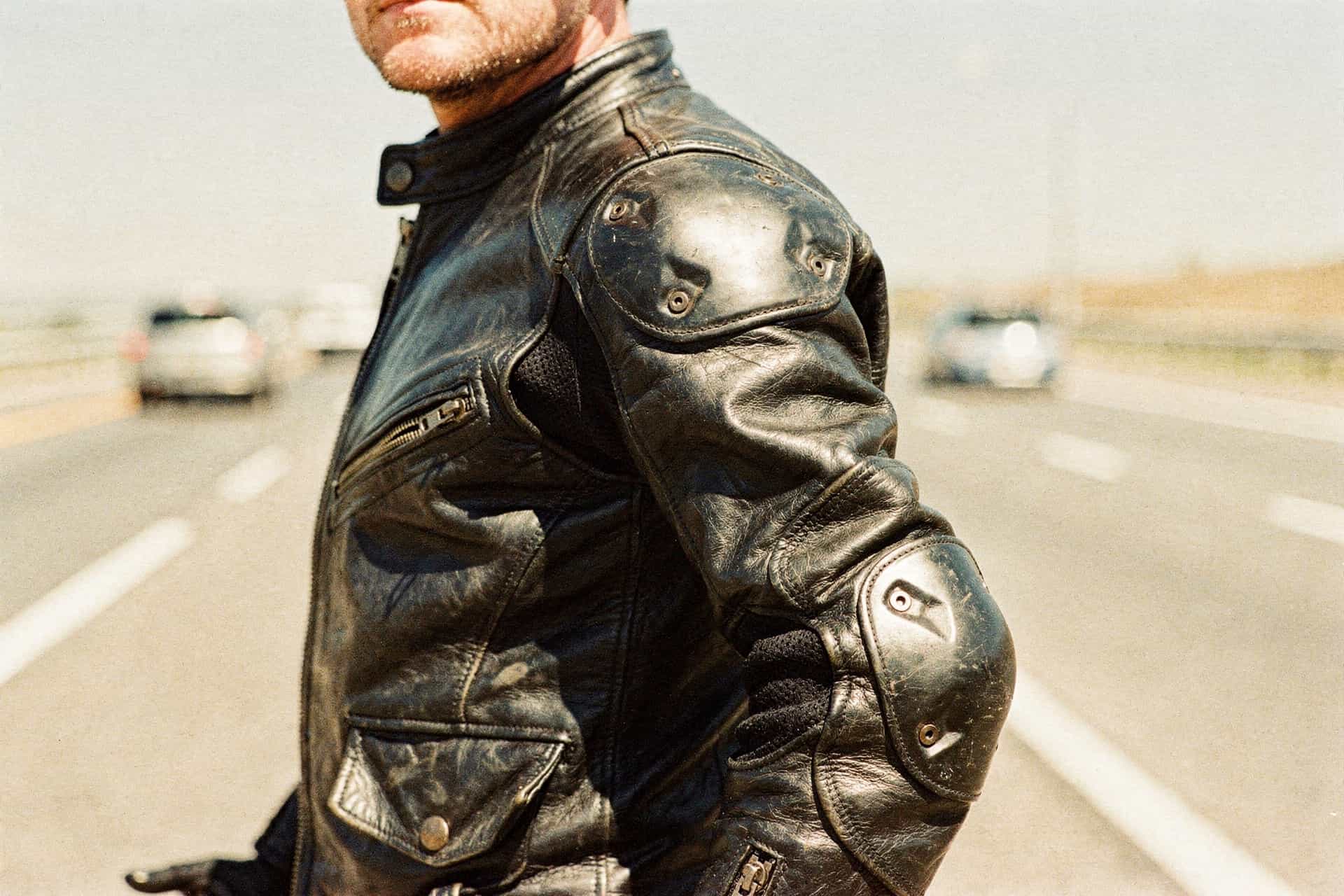
A motorcycle jacket is not a fashion jacket with zippers. A proper riding jacket is an abrasion barrier, an impact absorber, and your primary defense against road rash.
Three materials dominate:
Leather remains the benchmark for abrasion resistance. A quality cowhide jacket of 1.2mm to 1.4mm thickness holds up far longer in a slide than ordinary denim, which is why unlined jeans are the piece riders most often regret. Exact slide times get quoted freely online and are worth ignoring - the number that means something is the EN 17092 class printed on the label. Leather also molds to your body over time and ages well, which is part of why it has been the default biker jacket material since the 1920s.
Textile (Cordura, ballistic nylon) offers versatility. Textile jackets are lighter, often waterproof or water-resistant, and easier to wash. High-denier Cordura (1000D+) provides solid abrasion resistance, though generally not on par with thick leather in a slide.
Mesh is the hot-weather option. Mesh panels maximize airflow when temperatures climb past 90 degrees. The trade-off: reduced abrasion protection compared to solid leather or textile. If you ride through summers in Texas or Arizona, a mesh jacket might be the only thing that keeps you on two wheels instead of in a car.
For a deeper breakdown, check out our guide to the best motorcycle jackets for men - it covers specific models worth your money.
CE Armor: The Ratings That Actually Matter
Modern riding jackets should include CE-rated armor at the shoulders, elbows, and back. The European EN 1621 standard defines two levels:
- CE Level 1 transmits an average of less than 35 kN of force to the body during impact testing (no single strike exceeding 50 kN)
- CE Level 2 drops that to an average below 20 kN (no single strike above 30 kN)
That difference matters. Level 2 armor absorbs significantly more energy before it reaches your skeleton. Back protectors follow their own standard (EN 1621-2), and if your jacket has a foam pad in the back panel instead of a CE-rated back protector, replace it immediately. That foam insert is a comfort feature, not a safety feature.
What Goes Under the Jacket
The layer between your skin and your jacket is where most riders either get it right or suffer for it.
Base layers serve two jobs: moisture management and comfort. A synthetic or merino wool base layer wicks sweat away from your skin, which matters because wet skin against leather or textile creates friction, hot spots, and general misery after 30 minutes in the saddle.
Cotton absorbs sweat and holds it. On a cool morning, that wet cotton layer will chill you. On a hot afternoon, it will stick to your back like a second skin. Either way, it is working against you.
A motorcycle tee is a base layer and an off-bike shirt. Under an armored jacket it does its job. On its own it is a shirt, and cotton gives up in a fraction of a second on asphalt.
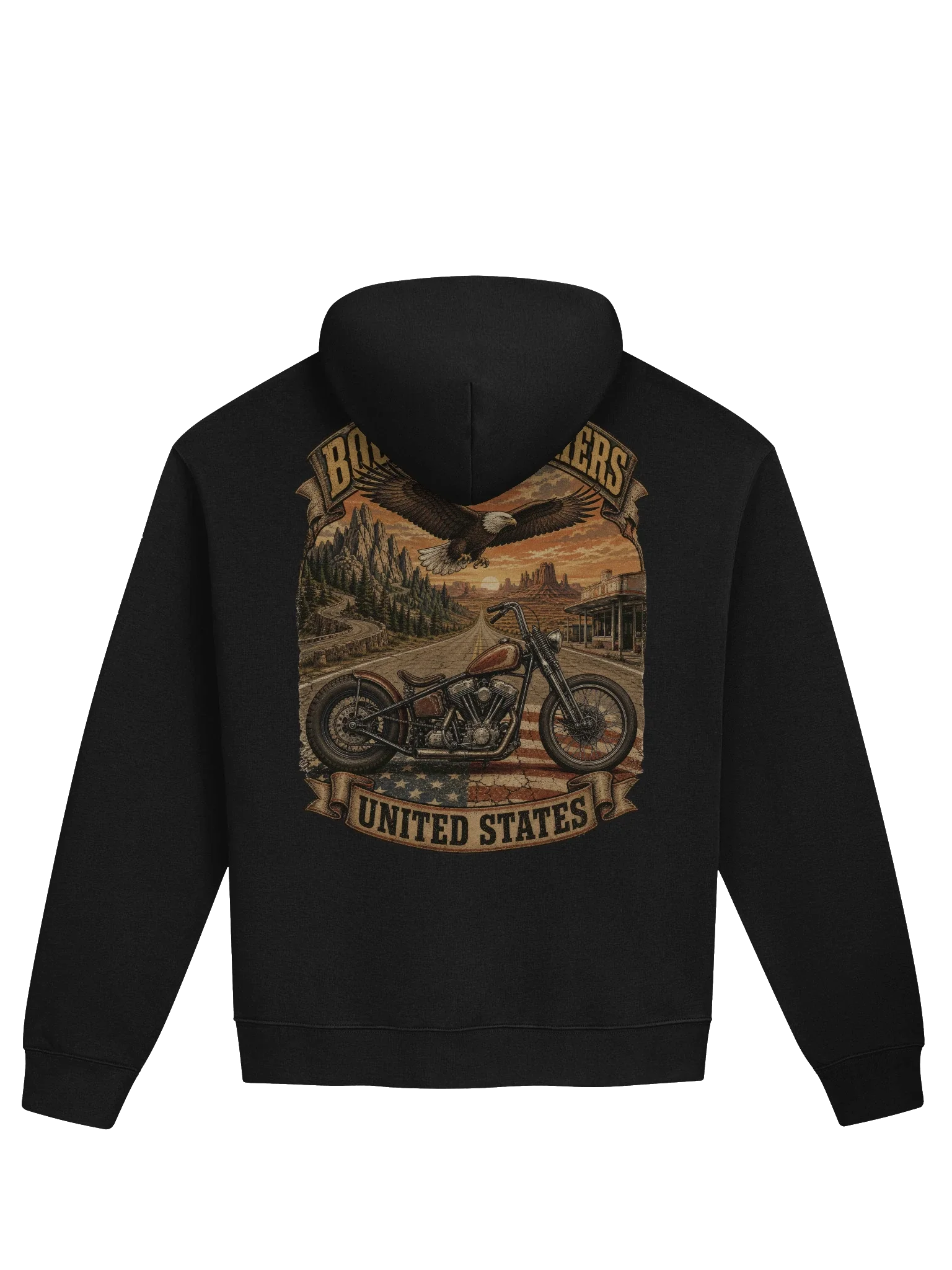
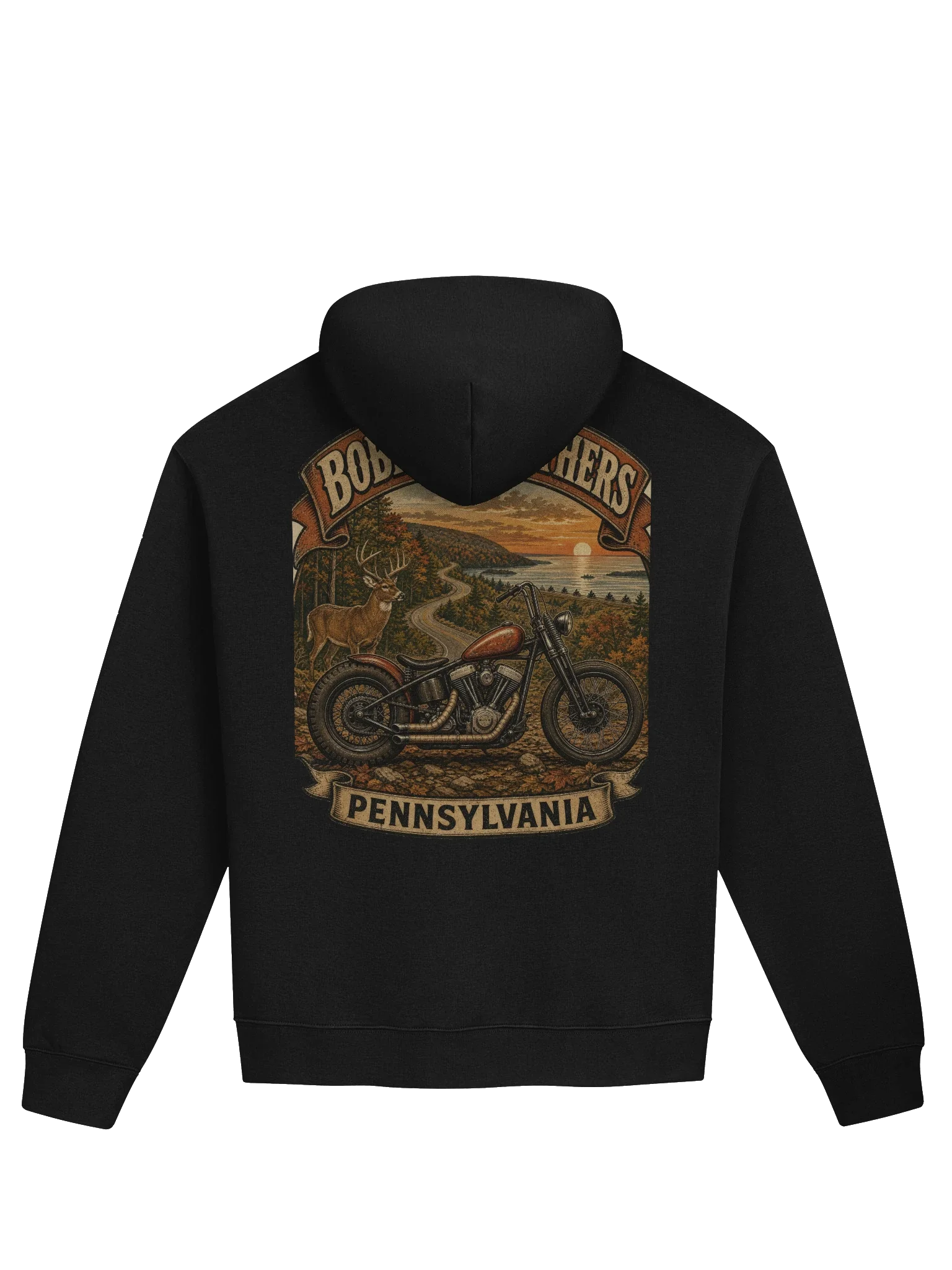
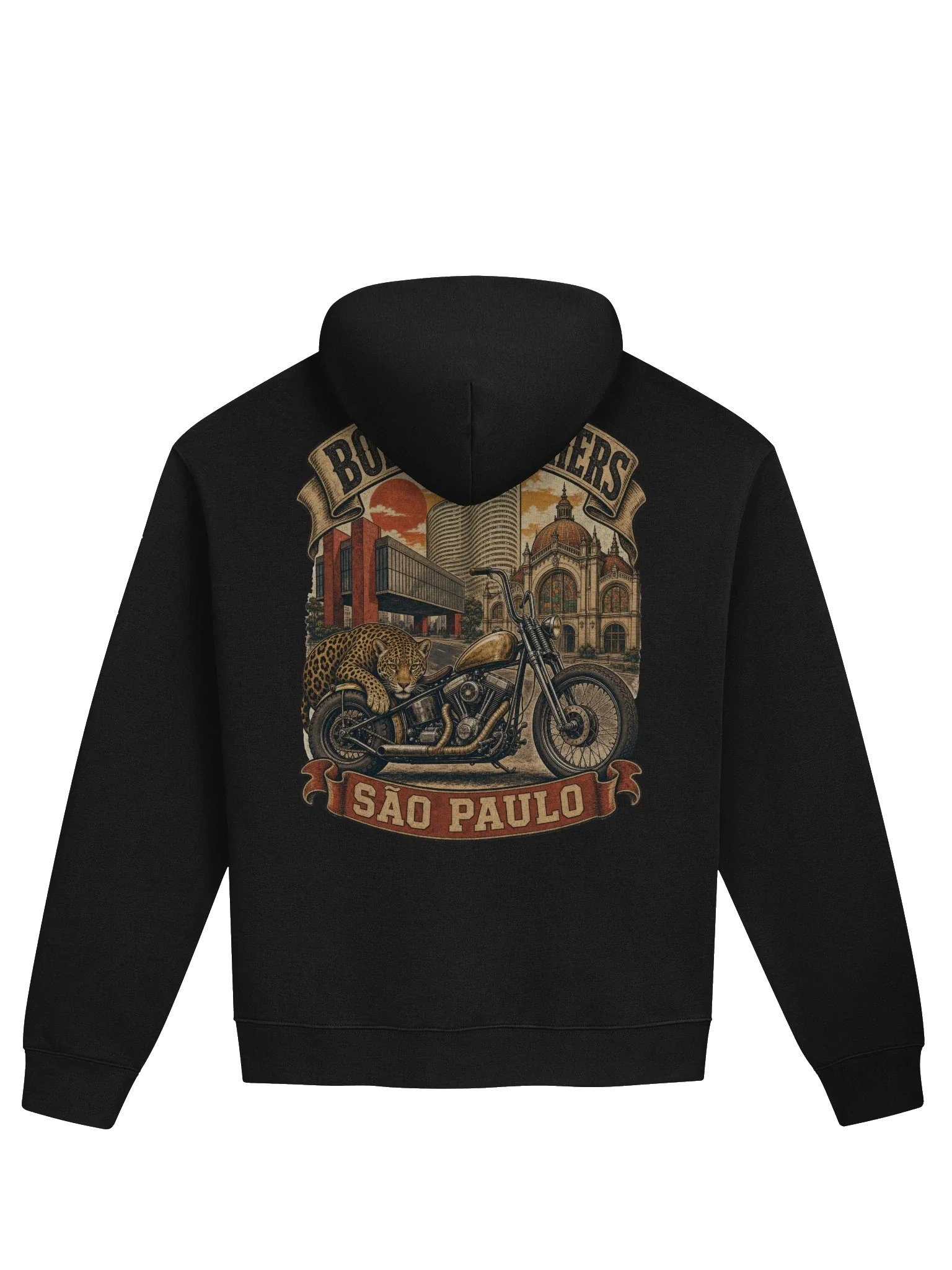
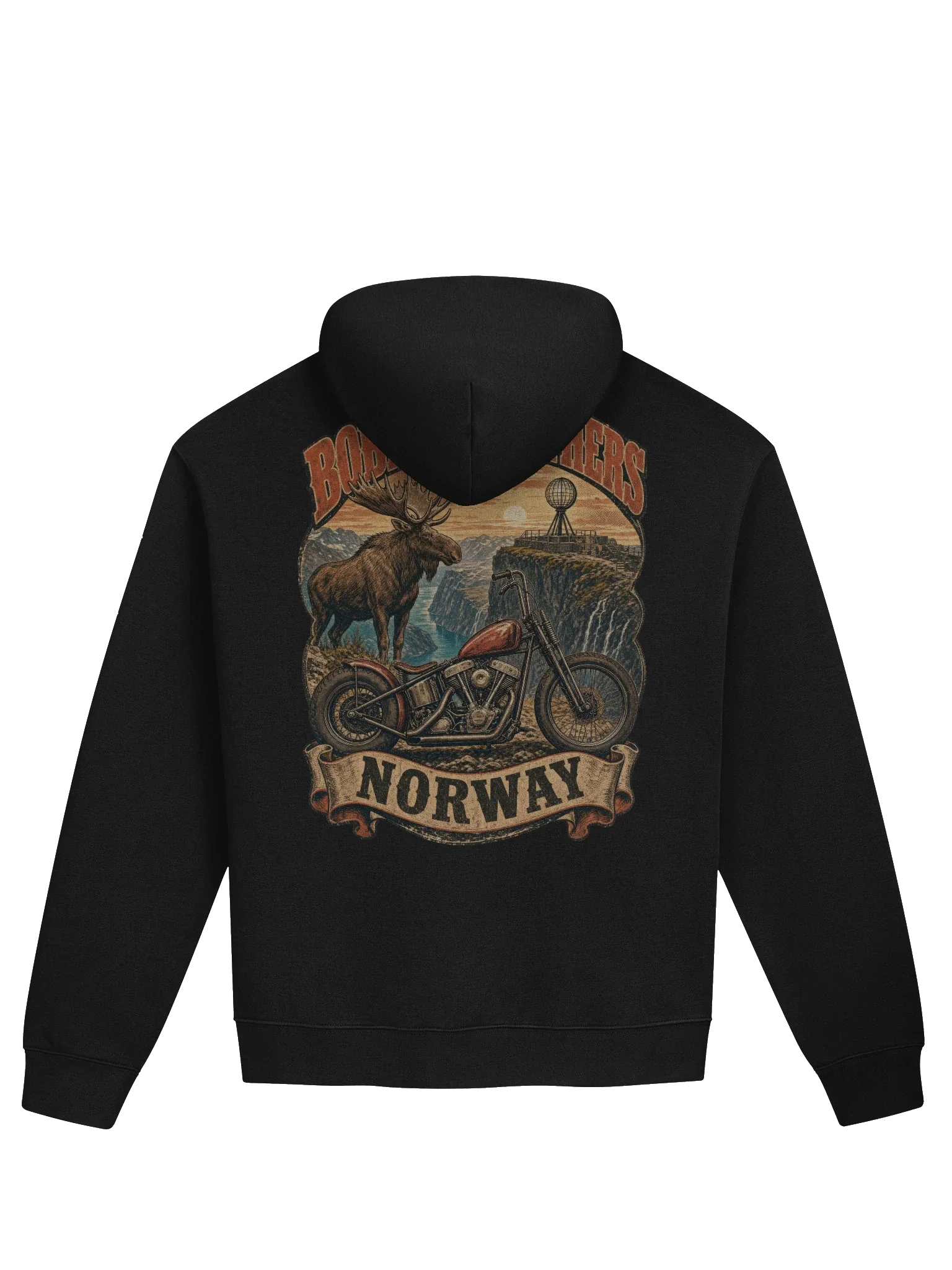
Same rule for a hoodie. A hoodie is a warmth layer under a jacket and a good thing to have on when you get where you are going. It is not an outer layer for riding, and no amount of thickness makes fleece an abrasion barrier. Our motorcycle hoodies are built for the garage, the campfire, and the ride home in somebody’s truck - not for taking a slide.
Pants: The Forgotten Piece
Here is where most riders cut corners. A full leather jacket over jeans and sneakers is the most common half-measure in motorcycling, and it makes no sense. Your legs are just as exposed as your upper body in a crash - arguably more, since your knees and hips are the first things to hit pavement in a low-side.
Riding jeans with Kevlar or Dyneema lining are the minimum for anyone who wants protection without looking like they are suiting up for a track day. Good riding jeans look identical to regular denim. The aramid fiber lining in the impact zones (hips, knees, seat) adds abrasion resistance measured in seconds of slide time rather than fractions of a second.
Leather pants or chaps provide excellent abrasion resistance. Full leather pants offer the most coverage. Chaps leave the seat and inner thigh exposed but protect the front and outer leg - and they can be thrown on over jeans for rides and stripped off at your destination.
Textile overpants are the practical commuter option. Pull them on over work clothes, ride to the office, take them off. Not glamorous, but functional.
The European EN 17092 standard rates motorcycle garments across five classes: C and B (supplementary protection), A (basic), AA (standard road), and AAA (maximum, typically racing leathers). Class AA is the sweet spot for street riders - it offers meaningful abrasion and impact protection without the bulk and weight of race-spec Class AAA gear.
Boots: Ankle Protection Is Everything
Your ankles are fragile. They are a collection of small bones, tendons, and ligaments that were not designed to handle a motorcycle falling on them at a stop or twisting during a low-speed drop.
What a motorcycle boot needs:
- Ankle coverage - above the ankle bone, period. Anything that sits below the ankle is a shoe, not a motorcycle boot
- Oil-resistant sole - your foot will be on slick surfaces at gas stations and parking lots
- Shift pad or reinforced toe - the top of your left foot takes a beating from shift lever contact over thousands of miles
- Stiff sole - a sole that flexes like a running shoe offers zero support if you need to plant your foot hard to keep the bike upright at a stop
Dedicated motorcycle boots certified to EN 13634 are the protective choice because the standard tests abrasion, impact cutting, and transverse rigidity. Engineer, harness, and work boots may cover the ankle and resist oil, but those traits alone do not prove motorcycle protection. Sneakers, sandals, and flip-flops provide even less coverage.
The injury that convinces riders is almost never a dramatic one. A heavy cruiser tipping over from a standstill at a gas pump puts several hundred pounds through the top of a foot, and low-cut shoes offer nothing there. That is a stationary bike in a parking lot, which is why “I am only going a few blocks” is not a reason to skip boots. Our biker boots guide breaks down the styles and what to look for in the sole and shank.
Gloves: Protect What You Earn Your Living With
When a human being falls, the first instinct is to throw out your hands. On a motorcycle, this means your palms, fingers, and wrists are among the first contact points with the pavement.
Quality motorcycle gloves need:
- Palm sliders or reinforcement - usually a double layer of leather or synthetic material on the palm and heel of the hand
- Knuckle protection - hard or soft knuckle armor to prevent fractures
- Wrist closure - a strap or gauntlet that keeps the glove from being ripped off in a slide
- Pre-curved fingers - flat-cut gloves cause hand fatigue because you are fighting the material to grip the bars
Deerskin is popular in the cruiser world for its softness and natural water resistance. Cowhide and goatskin are tougher. Gauntlet-style gloves cover the wrist and tuck under your jacket cuff - important because exposed skin between your glove and sleeve is exposed skin.
Layering for the Seasons
No single biker outfit handles every riding condition. The riders who stay on two wheels year-round are the ones who understand layering.
Summer (85F+)
- Moisture-wicking base layer
- Mesh or perforated leather jacket
- Riding jeans with ventilation panels or Kevlar-lined denim
- Ventilated gloves
- Light-colored helmet (dark helmets absorb more heat)
- Hydration - not gear, but you will fade fast without it
Spring and Fall (50-75F)
- Merino or synthetic base layer
- Mid-layer (hoodie, fleece, or biker tee depending on temperature)
- Leather or textile jacket with liner
- Standard riding jeans or textile pants
- Full-finger leather gloves
- Neck gaiter for wind protection below the helmet
Winter (Below 50F)
- Thermal base layer (top and bottom)
- Insulating mid-layer (fleece or heavy hoodie)
- Windproof outer jacket with thermal liner
- Heated grips or heated glove liners (game changer below 40F)
- Wind-blocking pants or overpants
- Winter-rated gloves with gauntlet cuffs
- Balaclava under helmet
The biggest mistake cold-weather riders make is dressing for the temperature at departure and ignoring the extra heat loss from moving air. Using the National Weather Service wind-chill formula as a rough comparison, 45F air with 60 mph wind feels near 32F on exposed skin. Motorcycle fairings, clothing, sun, and rain change the real load, so treat that number as a planning aid rather than a precise cockpit reading.
Four Outfits That Cover a Rider’s Year
Most “biker outfit” advice is a pile of individual products. What riders actually need is a small number of complete kits they can grab without thinking. Here are four, with the protective pieces marked so nothing gets confused for something it is not.
1. The Everyday Ride Kit
The one you wear to work, to the shop, and to the store. Every piece here is certified protective gear.
- Full-face or three-quarter helmet, DOT or ECE 22.06 certified
- Leather or textile jacket with CE Level 1 or 2 armor at shoulders, elbows, and back
- Aramid-lined riding jeans, ideally EN 17092 Class AA
- Short riding boots with ankle coverage and an oil-resistant sole
- Short-cuff leather gloves with palm reinforcement
- Base layer of merino or synthetic, never cotton
This is the kit that has to be easy to put on, because the ride you skip gear for is the two-mile one.
2. The Long-Day Kit
Highway miles, changing weather, and hours in the saddle change the priorities from convenience to endurance.
- Full-face helmet with a fresh visor and a pinlock insert
- Jacket with a removable thermal liner and a waterproof shell or packable rain layer
- Class AA or AAA pants, or textile overpants that go on over what you are already wearing
- Tall boots that seal against water running down your leg
- Gauntlet gloves that tuck under the jacket cuff, plus a lighter pair for the warm middle of the day
- Neck gaiter, earplugs, and reflective elements for the last hour after sunset
Pack for the weather at the far end of the ride, not the weather in your driveway. If you are heading to an event, our rally packing list covers what goes in the bag beyond what is on your body.
3. The Garage Kit
Wrenching is a different hazard profile. Nothing here is abrasion gear, and none of it should be worn as riding gear.
- Heavyweight cotton tee or a long-sleeve shirt you do not care about
- A hoodie or shop jacket for cold concrete mornings
- Steel-toe or composite-toe work boots, because dropped parts are the real risk on a garage floor
- Safety glasses for anything involving a grinder, a wire wheel, compressed air, or brake cleaner
- Mechanic’s gloves for handling parts, nitrile gloves for fluids
- No loose sleeves, no dangling drawstrings, nothing that can catch in a spinning wheel or a belt
The one thing riders skip most often here is eye protection, and eyes do not heal.
4. The Off-Bike Kit
Bike night, the swap meet, the bar after the ride, the rally campsite. This is clothing, and it is allowed to be exactly that.
- Tee or long sleeve that says something about what you ride and who you ride with
- Leather vest or jacket, worn open, carrying whatever you have earned the right to wear
- Jeans and boots you can stand in all day
- A cap or a bandana, because rally sun is relentless
The mistake is letting kit four creep into kit one. A vest and a tee at a bar is culture. The same outfit at 45 mph is skin on asphalt.
Visibility: Being Seen Is Staying Alive
Motorcycle outfit choices affect more than crash protection. They affect whether the driver on their phone sees you before they turn left across your lane.
NHTSA data consistently shows that the most common multi-vehicle motorcycle crash involves a car turning left in front of an oncoming motorcycle. The driver’s most common statement: “I didn’t see them.”
You do not have to wear a high-visibility vest (though it works). Lighter-colored helmets, reflective piping on jackets, and even a reflective strip on the back of your boots all contribute. The goal is not to look like a construction worker - it is to break up the visual pattern enough that a distracted driver registers your presence.
For our complete guide to building your riding wardrobe from the ground up, head over to the biker gear guide. It covers everything from jackets to gift ideas for the rider in your life.
Where Identity Fits
You can look right and be protected at the same time. The two are not in conflict, as long as you know which piece is doing which job.
A leather jacket with CE armor in it tells people something about who you are before you say a word, and it holds up in a slide. A graphic tee says you wrench on your own machines, and it does nothing at all in a slide. Both are honest. Only one of them is gear.
That visual language runs all through motorcycle culture: patches, helmets, denim, leather, and the small details riders use to show where they fit. None of it is a trend cycle. It settled into place over decades because it came out of what riders actually wore.
We built our apparel for riders who want to carry that with them off the bike. It is clothing, not protective equipment, and we would rather say that plainly than let a good tee get mistaken for armor.
What to Skip
Not everything marketed to riders is worth buying.
Novelty helmets that do not meet DOT standards. They exist. They are sold at rallies. They will not save your life.
Fashion leather jackets with no armor pockets. A thin lambskin jacket from a department store will tear apart in a slide faster than you can process what happened.
Riding shoes that look like sneakers but claim motorcycle protection. Some are legitimate. Many are sneakers with a logo and a $50 markup. Check for CE certification (EN 13634 for motorcycle boots) before buying.
Cheap gloves without palm reinforcement. Your hands are worth more than the $15 you saved.
Build Your Kit Over Time
Nobody needs to drop $2,000 on a full biker outfit in one day. Build it piece by piece. If you are new to riding and figuring out where to start, our motorcycle beginner’s guide covers everything from getting licensed to dressing for your first ride.
Start with the helmet. That is your life. Then a jacket with proper armor. Then gloves. Then boots. Then pants. Head injuries drive motorcycle fatality outcomes, which is why the helmet leads the order and why the rest follows the parts of you that hit the ground first.
Every certified piece you add is a layer between you and the asphalt. Every uncertified piece is a shirt. Buy both, know which is which, and never let the second one stand in for the first.
Ride smart. Dress for the slide, not for the ride.
Sources
- NHTSA - Calculating Lives Saved by Motorcycle Helmets (DOT HS 809 861) - the source of the 37 percent operator and 41 percent passenger helmet effectiveness estimates, including the methodology that revised the earlier 29 percent figure.
- NHTSA - Motorcycles: 2022 Data - 2022 crash circumstances used here: 92 percent of fatal motorcycle crashes on non-interstate roads, 58 percent in daylight, and 97 percent in clear or cloudy conditions, plus helmet use rates by state.
- NHTSA - Motorcycle Safety - Federal rider safety guidance and the agency’s summary of helmet effectiveness.
- COST 327 Motorcycle Helmet Study - Dietmar Otte’s research on helmet impact distribution showing ~35% of impacts to the chin bar area.
- UNECE Regulation No. 22 (ECE 22.06) - Current European motorcycle helmet safety standard including rotational impact testing.
- SATRA - EN 17092: Protective Clothing for Motorcycle Riders - European garment protection standard with Class A through AAA ratings.
- SATRA - EN 1621: Motorcyclists’ Protective Clothing Against Mechanical Impact - CE armor force transmission standards for limb, back, and chest protectors.
- SATRA - EN 13634: Protective Footwear for Motorcycle Riders - the motorcycle-footwear standard and its abrasion, impact-cut, and rigidity tests.
- National Weather Service - Understanding Wind Chill - the exposed-skin wind-chill model, formula, limits, and assumptions used for the 45F comparison.