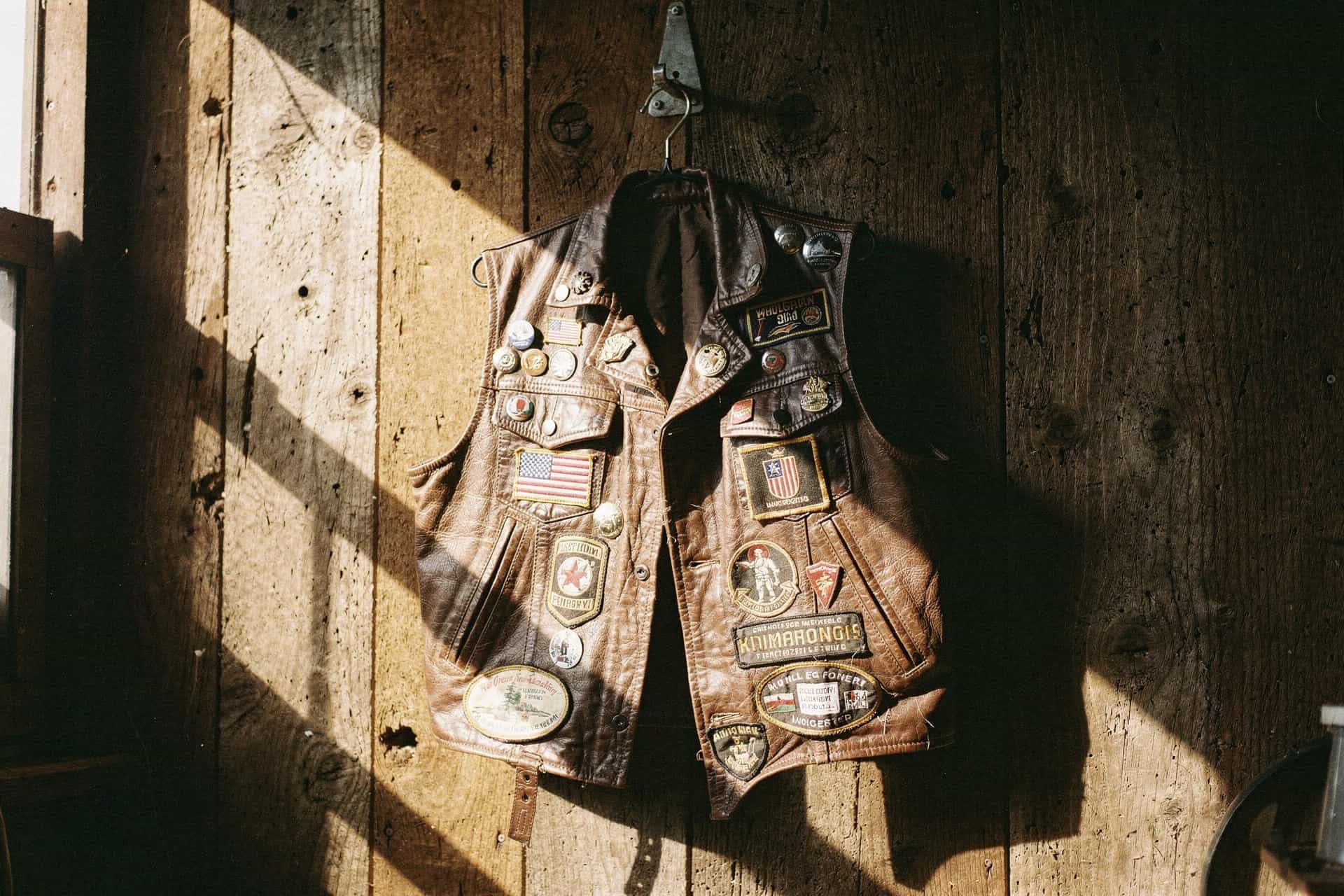
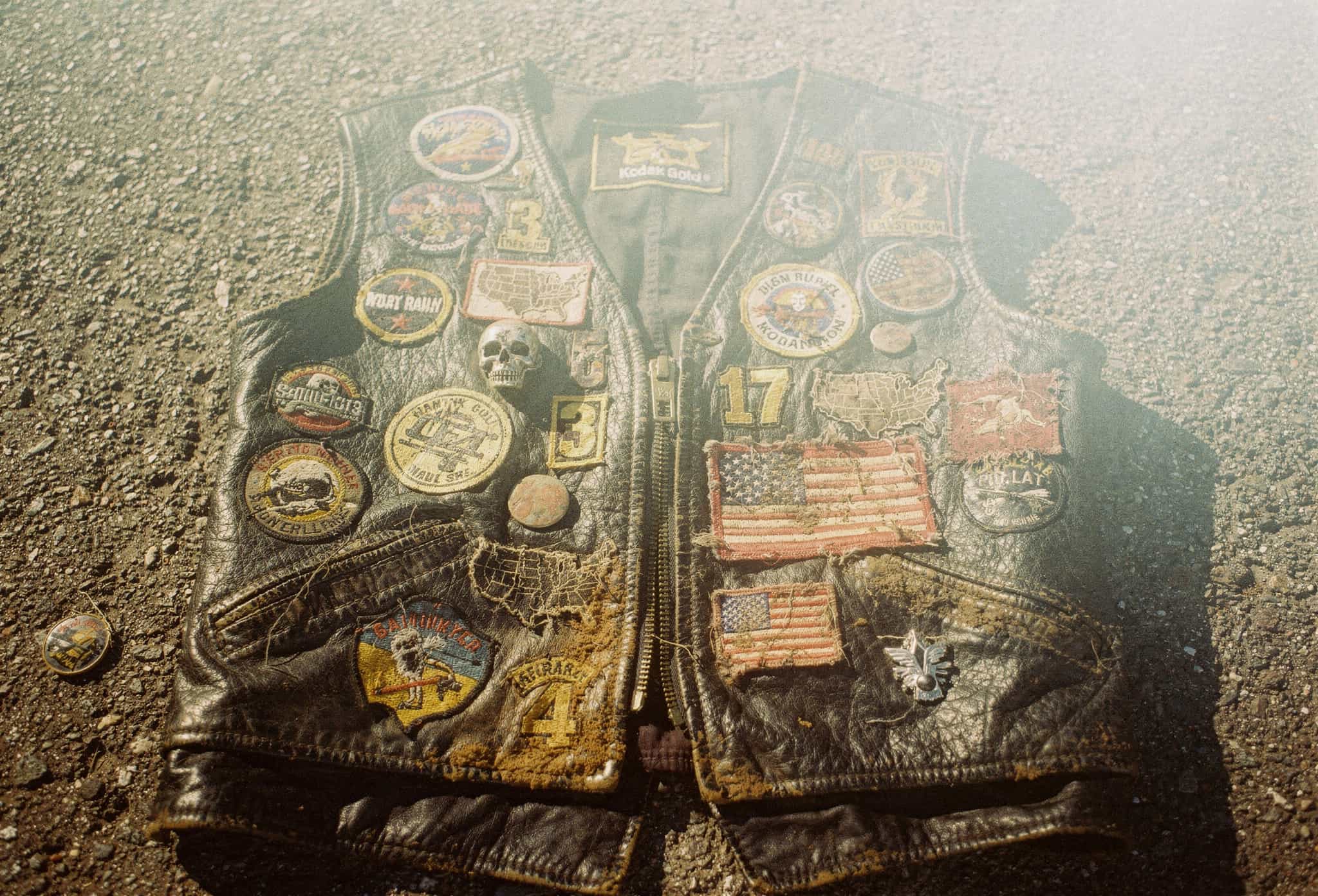
A leather vest covered in patches tells a story if you know how to read it. Club name across the top. Territory on the bottom. Emblem dead center. Side patches marking years on the road, rallies attended, brothers lost. Every stitch is placed on purpose.
Here is the short answer before the details. Back patch format tells you the type of organization: one piece for most riding clubs, three pieces with a bottom rocker for a traditional motorcycle club. The 1%er diamond marks an outlaw club that operates outside American Motorcyclist Association sanctioning. Everything smaller than that - side patches, numbers, colors, role badges - is written by each club for itself, and it changes by club, region, and decade.
That last part is where most patch guides go wrong, including older versions of this one. So read what follows as the common conventions riders will recognize, with the parts that are actually documented marked as such.
Jump to a section:
- Why no patch glossary is universal
- Back patch formats: one, two, and three piece
- Rockers and territory
- The one percenter diamond
- MC, RC, and the other letter patches
- Role and officer patches
- Memorial, military, and event patches
- Symbols people argue about
- Where patches sit on a vest
- Protocol that holds across clubs
- Patches outside the club world
Why No Patch Glossary Is Universal
There is no governing body for motorcycle club patches. Clubs write their own bylaws, issue their own patches, and decide what each one means inside their own organization. Academic work on outlaw clubs describes these as separate organizations with their own rule sets rather than chapters of one culture, which is why a meaning that is correct for one club can be flatly wrong for the club parked next to it.
Three kinds of patch claims are genuinely documented, and they are worth separating from the rest:
- Format conventions. One-piece, two-piece, and three-piece back patches are recognizable designs, but their organizational meaning varies by club and region.
- Legal status of specific emblems. Several clubs hold registered marks on their patch designs. The Ninth Circuit’s January 2023 opinion in United States v. Mongol Nation dealt with exactly that question, affirming a district court’s refusal to forfeit a club’s collective membership marks to the government.
- Individual club histories. The design origin of a named club’s center patch can often be traced through club publications, court exhibits, and reporting. We cover those in outlaw MC patch meanings, which sticks to the emblems with a documented paper trail.
Much of the standard online patch glossary - color codes, number patches, wing patches - circulates without a primary source. Treat those lists as folklore unless a named club, court record, or credible history documents the meaning.
Back Patch Formats One Two and Three Piece
The back of a vest is the part that identifies affiliation. Law enforcement identifier material and court exhibits both focus on back patches for that reason, and riders read them the same way.
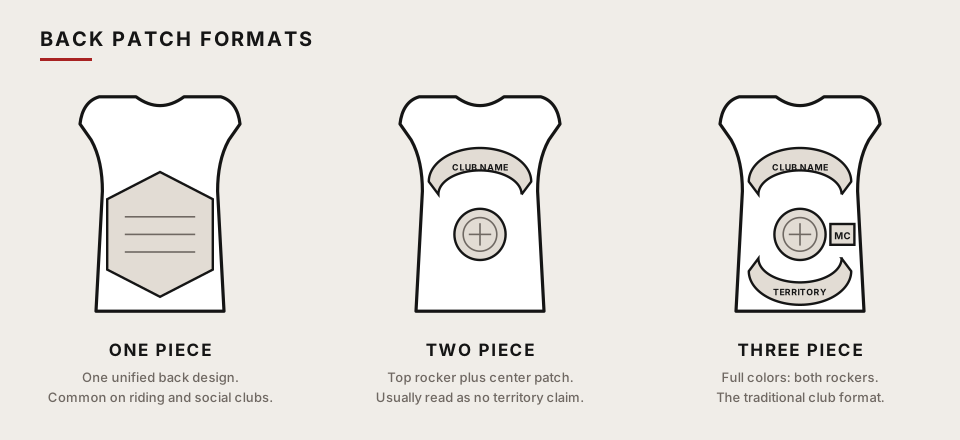
The rockers and emblem below are blank placeholders. We draw them that way on purpose, because several real club emblems are registered marks and reproducing them here would be exactly the mistake this article tells you to avoid.
One-Piece Patches
A single patch on the back is often used by riding clubs, social riding groups, and independent organizations. It may carry the group’s name and logo in one unified design. The design alone does not prove whether that group makes a territorial claim.
The American Motorcyclist Association charters clubs across the country and provides applications, insurance options, and event-sanctioning services. Its charter page describes the program, but it does not establish a patch format or a universal club structure. One piece is not a lesser patch. It is simply one design that a group may choose.
Two-Piece Patches
A two-piece back patch pairs a top rocker with a center emblem and leaves off the bottom rocker. Riders generally read that as a club that is not claiming a territory - sometimes by choice, sometimes because the question has not been settled with the established club in the area.
Treat that reading as a regional custom. It is widely understood in some parts of the country and means very little in others.
Three-Piece Patches: The Full Colors
Three separate pieces - top rocker, center emblem, bottom rocker - is the traditional motorcycle club format, and it is what riders mean when they say a club is flying colors.
- Top rocker: the club’s name, arched across the top of the back.
- Center patch: the club’s emblem. The death head, the skull with crossed pistons, the fire giant, whatever design that club has used.
- Bottom rocker: the area the club claims, usually a state, city, or region.
Many traditional motorcycle clubs use a three-piece patch, but the format alone does not establish hierarchy, bylaws, or a territorial claim. The pillar page on how clubs are organized, from prospect to president, is our complete guide to motorcycle clubs, and it keeps the same rule this page does: club-specific customs stay labeled as club-specific.
Rockers and Territory
Rockers are the curved strips above and below the center patch. The top rocker names the club. The bottom rocker is the piece that carries weight.
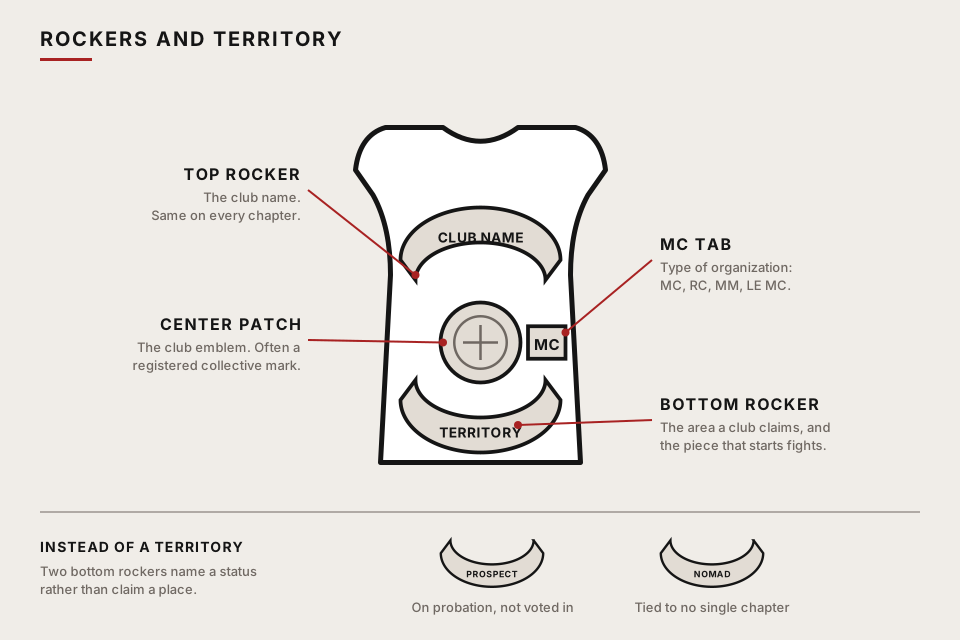
When a club puts a state or city on a bottom rocker, it is declaring that area as its own. In much of the United States, the established club in a region expects to be consulted before another club displays a bottom rocker there. That expectation is enforced by the clubs themselves. It has no legal standing, and it is not uniform - the practice is strong in some regions and largely absent in others.
The US Department of Justice’s archived outlaw motorcycle gangs profile describes territorial conflict as a defining feature of how the major clubs operate, and disputes over claimed areas run through the documented case history. That archived material is dated, so use it for the pattern rather than for a current count of who claims what.
Two rocker positions replace a territory name rather than claim one. A prospect often wears a bottom rocker reading “PROSPECT” during the probation period. A nomad, a member not attached to a specific chapter, may wear “NOMAD” in that position. Both are common conventions rather than universal rules.
The One Percenter Diamond
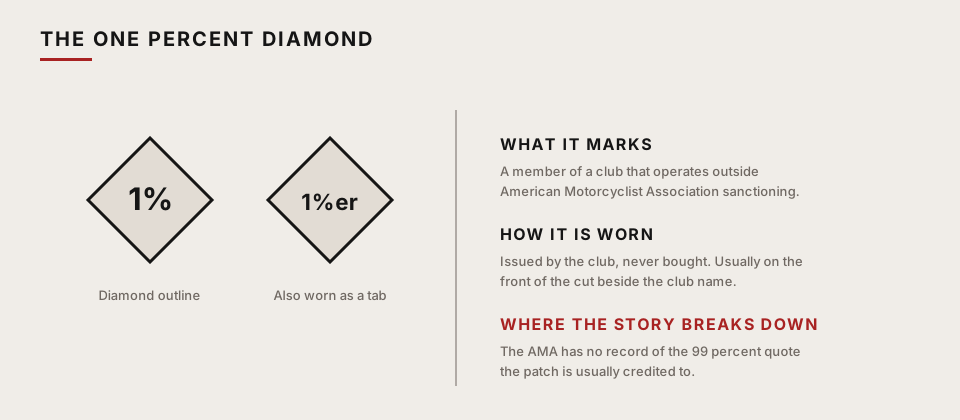
The small diamond containing “1%” or “1%er” is the most recognized symbol in biker culture and the most misreported. The story attached to it goes back to the 1947 gathering at Hollister, California, an AMA-sanctioned Gypsy Tour that drew far more riders than the town expected and produced a Life magazine photograph that shaped the public image of motorcycling for decades.
The part that gets repeated as fact is that the AMA responded by saying 99 percent of motorcyclists are law-abiding, leaving the other one percent to claim the label. The AMA has said it has no record of ever issuing that statement, and researchers who went looking for the original quote found magazine correspondence rather than an AMA press release. RevZilla’s retrospective on the 75th anniversary of Hollister walks through what the contemporary reporting actually said versus what the story became.
What the patch means today is clearer than where it came from. A 1%er diamond identifies a member of a club that operates outside AMA sanctioning and by its own code. It is issued by the club, not bought, and wearing one without membership is the single fastest way to be asked hard questions in a parking lot. Our full breakdown of the 1%er label and its history covers the origin dispute in detail.
MC RC and the Other Letter Patches
Letter patches identify the type of organization. They appear on the back beside the center patch or on the front of the cut.
| Letters | Meaning | What riders read into it |
|---|---|---|
| MC | Motorcycle Club | Traditional club structure with officers, bylaws, and in most regions a territorial claim |
| RC | Riding Club | Riding and social group, lighter structure, no territorial claim |
| MCC | Motorcycle Club or Motor Cycle Club | Usage varies by organization and country; check the named club’s own description |
| MM | Motorcycle Ministry | Faith-based riding organization |
| LE MC | Law Enforcement Motorcycle Club | Club whose members are serving or retired law enforcement |
MC is the designation that carries the most weight, because it tells other clubs to expect the traditional structure and the protocol that goes with it. In regions where the established club expects a conversation before a new MC starts flying colors, putting those two letters on a vest is not a design decision. If you are forming a group, that is a question to ask locally rather than to answer from an article.
Role and Officer Patches
Officer patches say what a member does inside the club. The titles below are the ones riders encounter most often, and the duties attached to them come from published club structures rather than from any shared rulebook.
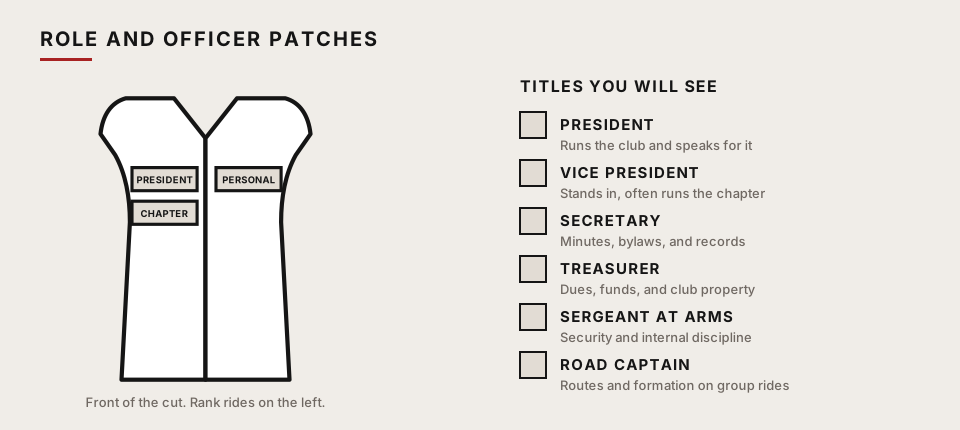
- President, vice president, secretary, treasurer: the officer roles, usually worn on the front left chest.
- Sergeant-at-arms: responsible for club security and internal discipline.
- Road captain: plans routes and controls formation on group rides.
- Prospect: a probationary member who has not been voted in.
- Nomad: a member not tied to a specific chapter.
Sonny Barger’s memoir Hell’s Angel is the most direct firsthand account of how these roles work day to day, and it is useful reading. It documents one club, from one era, from one member’s perspective. It is not evidence of how any other club assigns titles.
Memorial Military and Event Patches
These are the least contested patches on a vest and often the most personal.
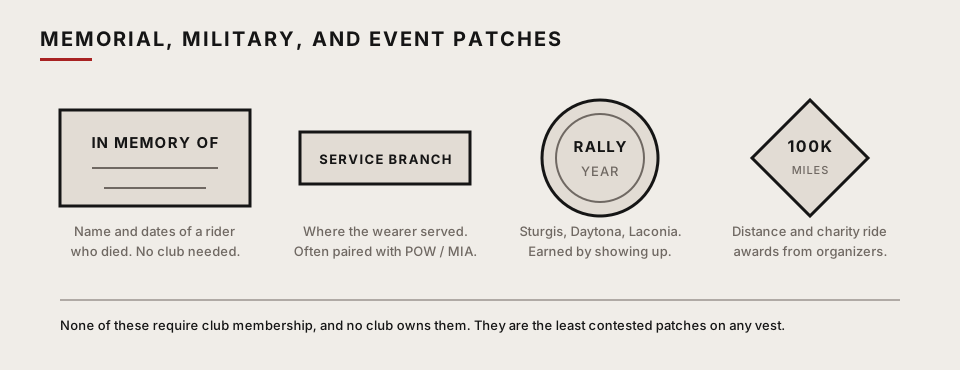
- In Memory Of patches: carry the name and dates of a member or friend who died. Frequently the patch a rider protects hardest.
- POW/MIA patches: common among veteran riders.
- Service branch patches: Army, Navy, Marines, Air Force, Coast Guard, identifying where the wearer served.
- Rally patches: Sturgis, Daytona Bike Week, Laconia, ROT Rally. Earned by showing up.
- Mileage and charity ride patches: awarded by organizations and event promoters for distance milestones or participation in a benefit run.
None of these require club membership. A rider with no club affiliation can wear a memorial patch for a friend or a Sturgis patch from a trip they made, and nobody in the culture treats that as a problem.
If you want patches that say something about how you ride without borrowing anyone’s colors, our patches collection is original Bobber Brothers artwork. It is not club insignia and does not imitate any club’s design.
Symbols People Argue About
This is the section where most patch articles start inventing. Here is what we can and cannot support.
- FTW: commonly expanded as “Forever Two Wheels” and, in outlaw circles, as something considerably blunter. Both readings are in active use, which makes context the only reliable guide. We traced the origins and competing meanings of FTW separately.
- DILLIGAF: an attitude acronym, no club significance attached to it.
- AFFA: “Angels Forever, Forever Angels”, specific to one club and meaningless on anyone else’s vest.
- Number patches: the claim that a given number encodes a drug reference or a club rank appears in dozens of online glossaries and in no primary source we have been able to verify. Some clubs do assign meaning to numbers internally. Assuming you know which meaning applies is guesswork.
- Wing patches: widely described online as a color-coded system for acts a member has performed. No club document, court record, or academic source confirms a shared code. Treat the published lists as rumor.
- Skull imagery: used by clubs, by independent riders, and by apparel brands. It carries no fixed meaning across those groups.
The pattern is consistent: the further a patch sits from the back of the cut, the less any outsider can reliably tell you about it. If you want the terminology that goes with all of this, our biker slang dictionary covers the vocabulary riders actually use.
Where Patches Sit on a Vest
Placement follows a layout most riders will recognize, though clubs adjust it and no version of it is official:
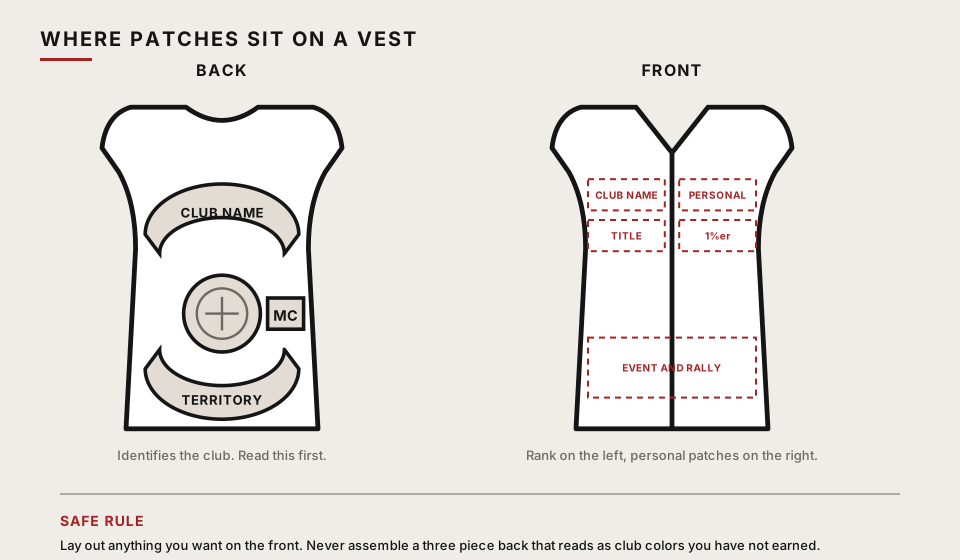
Back of vest
- Top rocker across the shoulders
- Center patch in the middle
- Bottom rocker across the lower back
- MC or RC designation patch beside the center patch
Front left chest: club name, officer title, or chapter designation.
Front right chest: personal patches, attitude patches, memorial patches.
Lower panels and sides: event patches, rally badges, mileage awards.
Riders who deal with the culture regularly will tell you placement matters nearly as much as the patch itself, because a title patch in an unexpected spot reads as someone who assembled a vest from pictures. If you are building out the rest of your kit - jacket, boots, gloves - our biker gear guide covers what protects you and what is just apparel. Patches and cuts are identity, not protective equipment.
Protocol Depends on the Club
Published memoirs, club materials, and court records document practices for particular clubs and eras. They do not create a universal code. The safest general guidance is limited:
Do not copy a named club’s insignia. Some club emblems are legally protected collective membership marks, as the Mongol Nation litigation shows.
Ask the wearer about an unfamiliar patch. A generic online glossary cannot tell you what a specific club intended.
Do not present yourself as a member of a club you have not joined. Beyond that basic point, membership, prospecting, and vest rules are club-specific.
Territory, advance contact, prospect patches, and vest handling are often described as if every club follows the same rules. The sources here do not support that claim. If those details matter, use the named club’s published material or a source tied to that organization and period.
Patches Outside the Club World
Most patched vests on the road have nothing to do with motorcycle clubs. Independent riders, weekend riders, and rally regulars run patches that are pure personal expression:
- Brand patches: Harley-Davidson, Indian, Triumph, Honda, riders repping their machine
- Cause and advocacy patches: veteran organizations, awareness ribbons, charity runs
- Humor patches: the biker world has a dry, dark sense of humor and the patches show it
- Custom patches: one-off designs made for a rider, a shop, or a group of friends
The line is simple. Club patches carry protocol. Personal patches are open to anyone. Lay yours out however you want, with one exception worth repeating: do not assemble something that reads as a three-piece club configuration unless you are actually in that club.
Our t-shirt collection runs the same garage-built graphics on heavyweight cotton if you would rather wear the attitude than sew it on. Bobber Brothers has no affiliation with any motorcycle club, and none of our designs copy club insignia.
Read the Vest Not the Glossary
Next time you are parked next to a rider with a loaded cut, you can read the parts that are actually readable. The back tells you the type of organization and, if there is a bottom rocker, the area they claim. The front tells you rank. The rest is that rider’s own history, and the only reliable way to learn what a specific patch means is to be told by the person wearing it.
That is also the safest habit to build. Assuming you know what someone’s patch means, based on a list you read online, is how outsiders get themselves into conversations they did not want.
Sources
- American Motorcyclist Association - AMA chartered clubs - the AMA’s charter program and services for affiliated clubs; it does not prescribe a patch format
- American Motorcyclist Association - History of the AMA - official organizational timeline and context for the disputed 99 percent attribution
- RevZilla - 75 Years Ago, Hollister Began Changing the Image of Motorcycling - review of the contemporary 1947 Hollister reporting and the mythology built on it, supporting the 1%er origin section
- US Department of Justice - archived outlaw motorcycle gangs profile - federal classification of the major clubs and the role of territory. Archived material, so its descriptions are historical rather than current
- FBI - 2015 National Gang Report - dated federal assessment that identifies outlaw motorcycle groups by their colors and insignia
- United States v. Mongol Nation, No. 19-50176 (9th Cir., January 6, 2023) - appellate opinion on a club’s collective membership marks, supporting the point that specific club emblems carry legal status
- Barger, Ralph “Sonny.” Hell’s Angel: The Life and Times of Sonny Barger and the Hell’s Angels Motorcycle Club. William Morrow, 2000 - firsthand account of officer roles and patch practice, valid for that club and era only
- Barker, Thomas. Biker Gangs and Transnational Organized Crime. Routledge, 2nd edition, 2014 - academic survey supporting the point that club rule sets are organization-specific rather than shared
- Thompson, Hunter S. Hell’s Angels: The Strange and Terrible Saga of the Outlaw Motorcycle Gangs. Random House, 1967 - contemporaneous embedded reporting on 1960s club iconography