A rider hears someone say “church” at a clubhouse and assumes they mean a religious service. In that club it may mean a formal meeting. In another group the word may not be used at all. That context problem is why biker slang needs more care than a one-line internet definition.
Biker slang developed over decades in garages, on highways, and inside clubhouses. Organized motorcycle clubs existed before World War II, while returning veterans helped shape the postwar club boom and some of its language. Mechanical shorthand came from workshops, and regional phrases moved between clubs, racing, touring, and custom-bike scenes. To understand how those strands connect, our motorcycle culture guide maps the wider history.
This dictionary organizes motorcycle slang by context rather than treating every phrase as universal. Club language varies by organization, region, and era. Shop and road terms also shift between American, British, Australian, and European riders.
MC Culture and Club Terminology
Motorcycle club language is some of the most guarded slang in the riding world. The definitions below describe common published usage, not bylaws for every organization. Do not infer membership, rank, criminal conduct, or permission from a patch or acronym alone. If you’re interested in the deeper history behind club structure, our complete guide to motorcycle clubs covers the distinctions.
1%er / One Percenter - A person identifying with outlaw motorcycle club culture. A familiar origin story links the term to a “99 percent law-abiding” statement after the 1947 Hollister event, but the exact wording and attribution are disputed. Do not present it as a verified quotation. Some clubs use a diamond-shaped 1% patch.
99%er - A rider using the contrast with 1%er culture to identify as outside the outlaw-club world. It is self-description, not an official legal category.
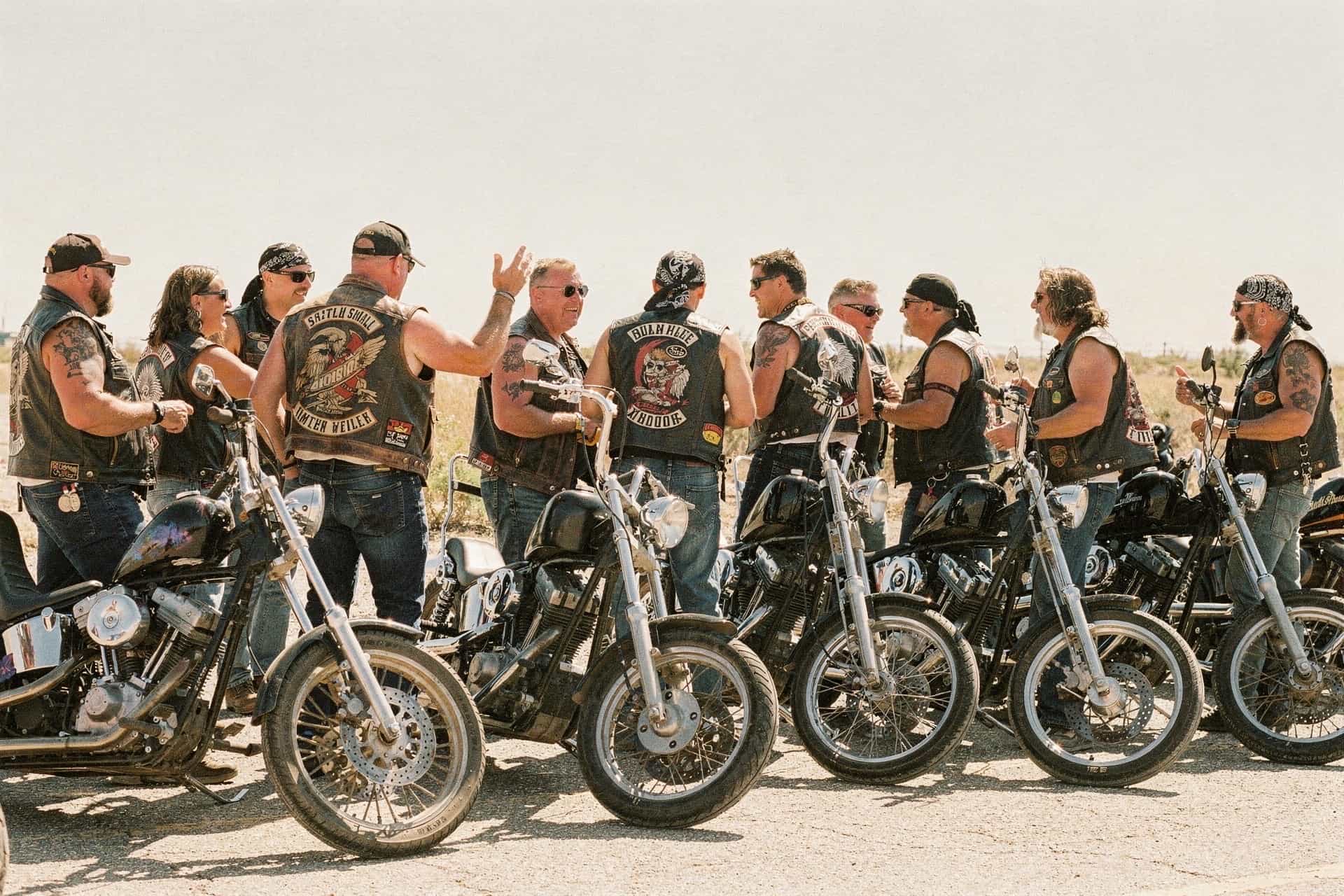
Back patch / Colors - The large emblem or set of patches on the back of a vest. Some clubs use a three-piece arrangement with top and bottom rockers around a center emblem, while others do not. Read more about how biker patch meanings vary.
Church - In some clubs, a formal meeting. Frequency, attendance, and access rules depend on that club.
Citizen - Informal slang used by some riders for a person outside their riding or club circle. Usage is regional and far from universal.
Cut - A sleeveless leather or denim vest. In some club settings it carries membership patches or colors. Patch placement, ownership, and handling rules belong to the specific organization. For a deeper look at how usage varies, see our biker patches guide.
Earned, not bought - A phrase used in some clubs and riding circles to distinguish membership patches or recognition from ordinary merchandise. What must be earned and how it is awarded depend on the organization.
FTW - Stands for “Forever Two Wheels” or, in its more common outlaw usage, something less printable. We wrote a full breakdown of what FTW means in biker culture.
Hang-around - In clubs that use the stage, a person who socializes with members before any prospect or membership decision. It is not a universal rank.
Nomad - In clubs that use the designation, a member not assigned to an ordinary local chapter. Authority, travel, reporting lines, and patch layout are club-specific.
Old Lady - Slang for a rider’s wife or long-term partner. Some people use it affectionately and others reject it, so context and the person’s own preference matter.
Patch holder / Full patch - In clubs using this language, a full member permitted to wear that club’s membership patch. Patch design and any preceding stages vary.
Prospect - A candidate for full membership in a club that uses a prospect stage. Duties, duration, voting, and permitted patches vary by organization.
Property patch - A relationship or support patch used in some club circles. Meaning and wearer choice vary, and it should not be described as a universal status or rule for women around motorcycle clubs.
Road Captain - A ride-planning or ride-leading role used by many clubs and groups. Route, formation, briefing, and on-road authority depend on that organization.
Road name - A nickname used within a club or riding group. Some groups give the name to the rider, while others use ordinary self-chosen nicknames.
Rocker - A curved patch above or below a center emblem. In a common three-piece layout the top carries a name and the bottom may carry a place, but design and meaning vary. Never infer a universal territorial rule from shape alone.
Club Acronyms That Need Context
Search results often turn club-specific initials into generic “biker code.” That is a mistake. These abbreviations can identify support for a named organization, and meanings can change outside that setting.
SYLO / SYLB - “Support Your Local Outlaws” and “Support Your Local Bandidos.” Outlaws-affiliated merchandise uses SYLO beside the full phrase, while a Swiss federal legal report documents the SYLB expansion. Both are organization-specific support slogans, not general greetings and not proof that the wearer is a member.
NFFN - No authoritative public source was located for a universal biker expansion. Unsourced acronym pages attach the letters to named groups, but the surrounding club name, patch, or event is required before assigning a meaning.
BFOL - No stable biker meaning could be verified in the public sources reviewed for this update. General acronym directories give unrelated expansions. If the letters appear on clothing or a patch, the surrounding name and symbol matter more than an unsourced internet definition.
“No cops, no lops” - This phrase appears in search queries, but we found no authoritative source establishing a standard motorcycle meaning for “lops.” Do not repeat a confident expansion without the exact club, event, image, or regional context.
Wrench Talk: Shop and Mechanical Terms
These are common workshop terms, but knowing the word is not a substitute for a service manual or trained mechanical judgment.
Ape hangers - Tall handlebars that raise the rider’s hands above shoulder height, sometimes as high as head level. They are common on choppers and some custom bobbers. For the broader stripped-down build philosophy behind custom bars and stance, see our bobber motorcycle guide.
Baffle - An internal component of a muffler that reduces exhaust noise. Removing or changing baffles can make the exhaust louder. Straight pipes omit conventional mufflers and baffles, but they are not automatically the same thing as open headers.
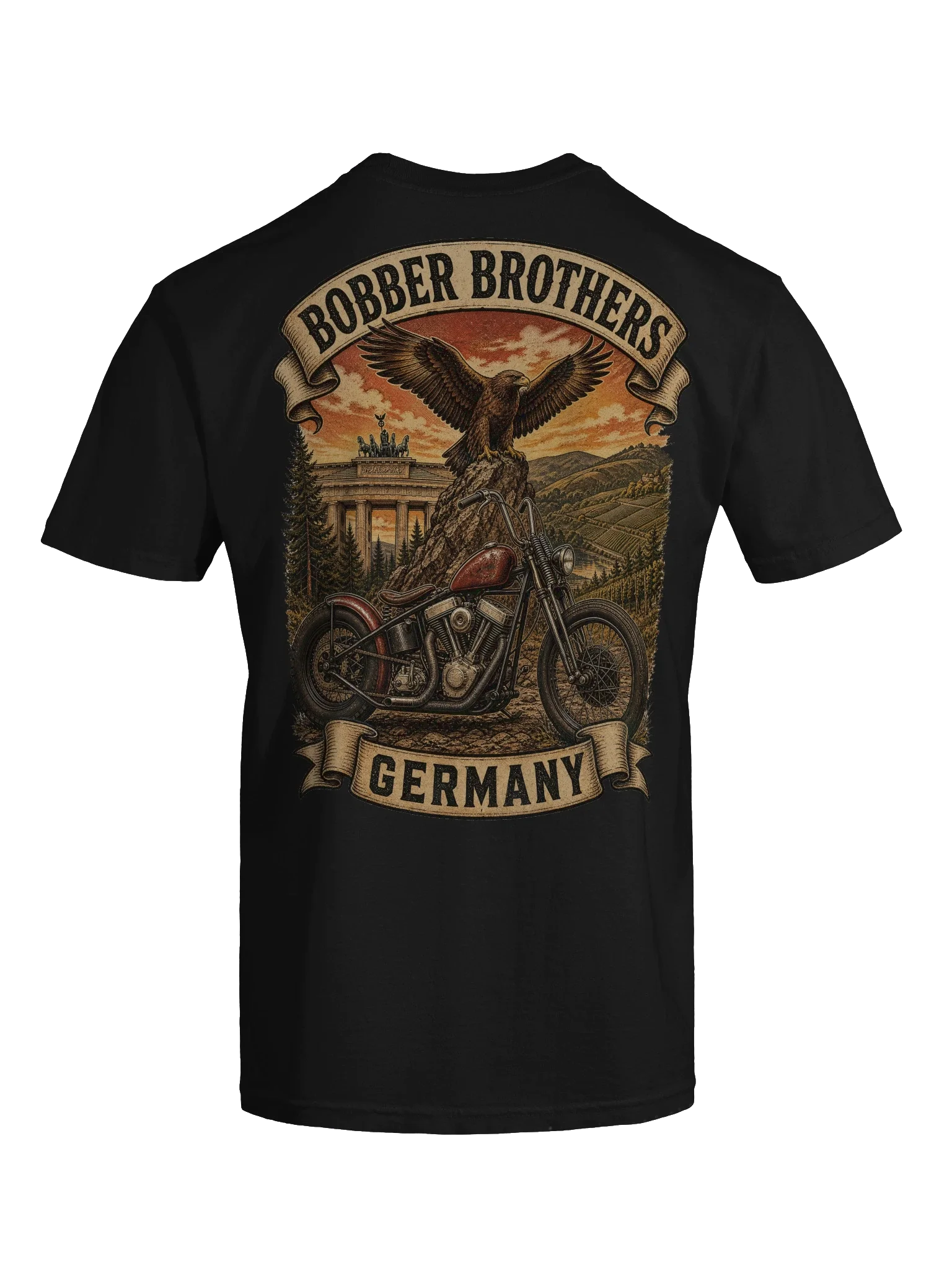
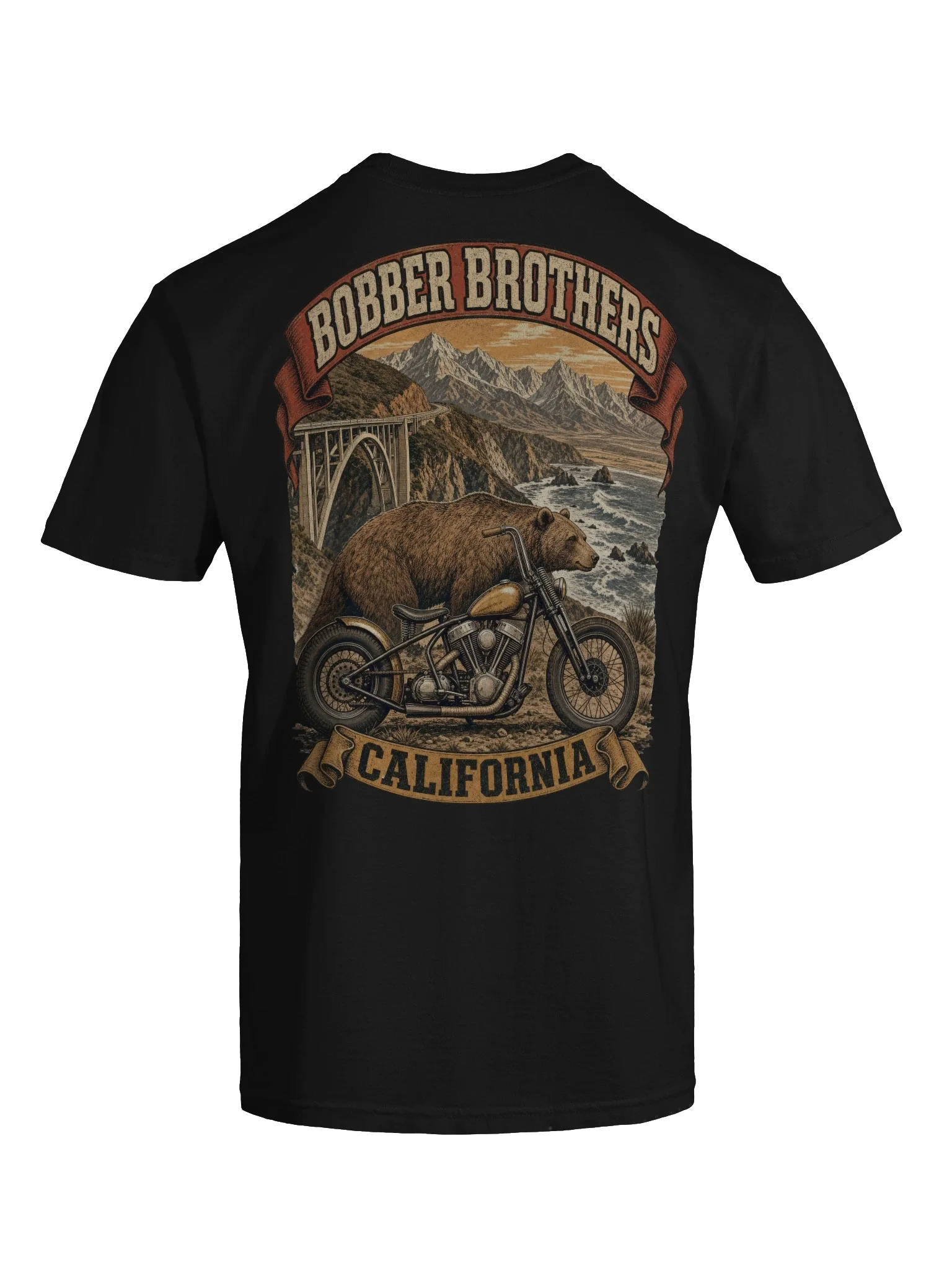
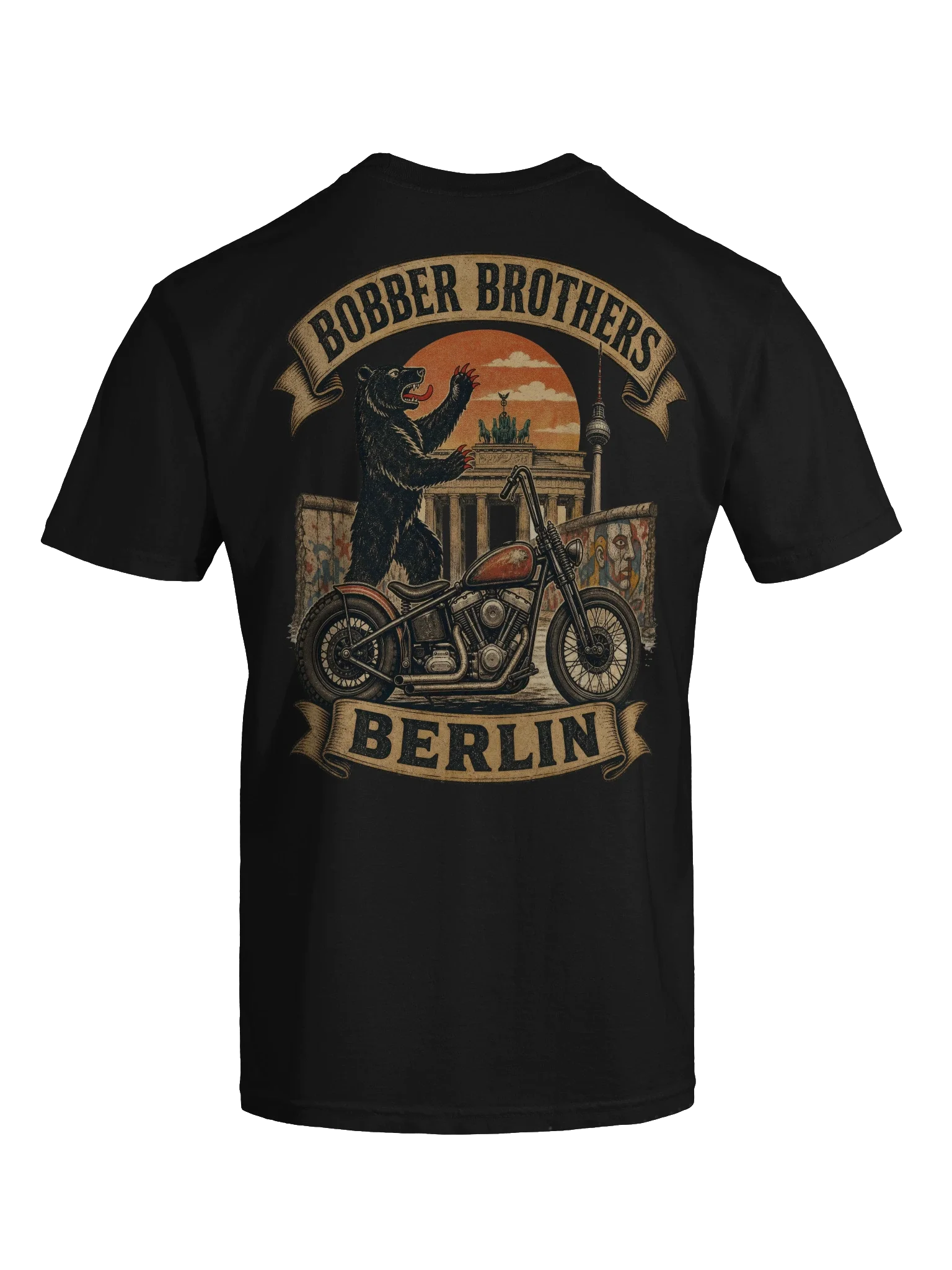
Bobber - A stripped-down custom motorcycle with the rear fender “bobbed” (shortened), solo seat, minimal chrome, and anything unnecessary removed. The whole philosophy is less is more. It’s what we live for.
Bottom out - When suspension uses all available travel and reaches its limit. Load, spring rate, preload, damping, worn parts, and road input can all contribute, so the phrase describes the event rather than diagnosing one failed component.
Bored out - An engine whose cylinder bore has been increased to support a larger piston and greater displacement. A complete conversion also depends on compatible cylinders or machining, pistons, clearances, fueling, and the exact engine family.
Chopper - A heavily customized motorcycle, typically with an extended front end, altered frame geometry, and stripped-down profile. The name is commonly linked to cutting or “chopping” stock motorcycles, but individual builds vary widely in length, noise, and handling.
Donor bike - A used, damaged, or incomplete motorcycle bought as a source of parts. Verify title status, part numbers, condition, and model-year compatibility before treating it as a bargain.
Drag pipes - Short, minimally silenced exhaust pipes developed for competition use. Noise and emissions legality depends on the jurisdiction and motorcycle, so check local rules before road use.
Hardtail - A frame with no rear suspension. The axle mounts directly to the frame. Hardtails give a raw, old-school ride feel but will rattle your kidneys on rough pavement. Classic bobber choice.
Jiffy stand - Harley-Davidson’s term for the motorcycle’s side stand. Riders may still call it a kickstand or side stand in ordinary conversation.
Jugs - The cylinders on a V-twin engine. “Nice jugs” at a bike show means something completely different than what civilians think.
Kicker - A kick-start mechanism. Pre-electric-start Harleys (and some modern retro builds) use a kicker to fire the engine. Getting the timing right on a kick-start Shovelhead takes practice - and a strong right leg.
Knucklehead / Panhead / Shovelhead / Evo / Twin Cam - Common Harley Big Twin engine nicknames and production ranges. Knucklehead ran from 1936-1947, Panhead from 1948-1965, Shovelhead from 1966-1984, the Big Twin Evolution from 1984-1999, and Twin Cam from 1999-2017. Sportster Evolution engines are a separate family produced from 1986-2022, so “Evo” does not always mean the 1984-1999 Big Twin.
Pipes - Exhaust system. “Nice pipes” is a genuine compliment at any bike gathering.
Rake - The steering-head angle relative to vertical. Rake works with trail, wheelbase, tire size, and suspension height, so changing one number alone does not guarantee stability or safe handling.
Sissy bar - A vertical bar or backrest behind the seat. Depending on its design, it may support a passenger back pad, secure luggage, or serve mainly as a styling element.
Springer - A front fork design that uses external springs instead of internal hydraulic tubes. Springer forks were standard on Harley Big Twins through 1948, replaced by hydraulic forks on the 1949 Hydra Glide. The retro look makes them popular on bobber and chopper builds.
Wrench - Used as both a noun (the tool) and a verb (to work on a bike). “I’ve been wrenching on that Panhead all weekend” means someone spent their free time elbow-deep in an engine.
If you spend time wrenching in the garage, chances are you’re wearing something oil-stained and lived-in. Our patch collection is made for riders who actually build - not just buy.
Road Slang: What Riders Say While Riding
These terms get used on group rides, during pit stops, and over intercoms. Some are practical safety calls. Others are just how riders describe what’s happening around them.
Brain bucket - Informal slang for a helmet, often a small open-face or half helmet. The nickname says nothing about certification, fit, or legality. Check the label and the rules where you ride.
Cage / Cager - Slang some riders use for a car or truck and its driver. The terms are common in English-language riding circles, but not every rider uses them.
Counter-steer - The steering input used to initiate a lean: press the right handgrip to lean and turn right, and press left to lean and turn left. Learn and practice the technique through a recognized rider-training course.
Getting off - Crashing. “He got off on the highway” means someone went down, not that they pulled over.
Grabbed a handful - Applied a control abruptly, usually the front brake or throttle. In braking context it implies a sudden, poorly controlled input rather than proper progressive braking.
Hammer down - Slang for accelerating hard or running at high speed. It describes an aggressive pace, not a safe riding instruction.
Iron butt - A rider who covers extreme distances without stopping. The Iron Butt Association certifies rides of 1,000 miles in 24 hours (SaddleSore 1000) and 1,500 miles in 36 hours (Bun Burner 1500). The even more extreme Bun Burner Gold requires 1,500 miles in 24 hours. The term also describes anyone who can sit in a saddle for an unreasonable number of hours.
Lane splitting - Riding between lanes of traffic. Laws and official definitions change by jurisdiction, and lane filtering may be treated differently from splitting moving traffic. Check current local law before doing it.
Left turn of death - Rider slang for an oncoming vehicle turning left across a motorcycle’s path. NHTSA treats intersections and failure to detect motorcycles as major risk areas, but this phrase is not an official crash category.
Riding bitch - Sitting on the passenger seat behind the rider. Not a commentary on gender - anyone on the back seat is riding bitch.
Road rash - Skin abrasion from sliding on pavement after a crash. The main argument for wearing proper gear instead of just jeans and a T-shirt.
Rubber side down - A common farewell meaning “stay safe” - keep the rubber (tires) on the ground and don’t crash.
Slab - The highway or interstate. “I’m sick of the slab” means a rider is tired of boring straight highway miles and wants to find some twisty back roads.
Squid - A rider with no skills and no gear. Typically seen on a sport bike wearing shorts, flip-flops, and no helmet, weaving through traffic at 90 mph. The term may come from “Squirrelly Kid” or from what a rider looks like after sliding across pavement in shorts. Either way, it’s not a compliment.
T-CLOCS - The Motorcycle Safety Foundation’s pre-ride inspection checklist: Tires and Wheels, Controls, Lights and Electrics, Oil and Other Fluids, Chassis, and Stands. Inspection time depends on the bike and what the check finds.
Tar snake - The dark sealant strips used to fill cracks in pavement. Grip can change with temperature, moisture, sealant type, and crossing angle, so avoid abrupt steering or braking inputs over them.
Twisties - Winding mountain or back roads with lots of curves. The opposite of the slab. Where riding actually gets fun.
Bike Types and Rider Categories
Bagger - A motorcycle equipped with hard saddlebags, usually a touring-style bike like a Harley Road Glide or Street Glide. The term is straightforward - it’s a bike with bags.
Bark-o-Lounger - A joking label for a large, comfortable touring motorcycle fitted with features such as luggage, audio, navigation, and passenger accommodations. It is usually playful or dismissive rather than a formal bike category.
Bobber - See the shop section above, but worth repeating: bobbers are stripped-down builds focused on simplicity. Fenders cut short, solo seat, nothing that doesn’t need to be there. It’s the philosophy we build our whole brand around.
Cafe racer - A lightweight, speed-focused custom motorcycle associated with the British rocker scene. Published origin stories differ on whether the name described riders gathering at transport cafes, racing between stops, or merely styling road bikes to resemble racers. Clip-on handlebars, rear-set pegs, and a low riding position are common features, not a universal specification.
Crotch rocket - A sport bike. Usually Japanese (Suzuki GSX-R, Yamaha R1, Kawasaki Ninja, Honda CBR). The riding position puts your weight forward over the tank with your feet kicked back. Fast in a straight line, miserable on a long day.
Rat bike - A motorcycle that looks rough on purpose. Primer paint (or no paint), rust, mismatched parts, and zero concern for appearances. The opposite of a show bike. Function over form, taken to its logical extreme.
RUB - Rich Urban Biker. A dated, usually dismissive label for an affluent recreational rider. It describes a stereotype, not a reliable judgment about someone’s skill, mileage, motorcycle, or place in riding culture.
Weekend warrior - Someone who only rides on weekends, usually in good weather. Not necessarily an insult, but it’s not a compliment either. It suggests the rider treats motorcycling as a hobby rather than a way of life.
Bar Talk and General Biker Expressions
Backyard - A rider’s home territory. The roads they know by heart. “That’s my backyard” means the rider knows every pothole and speed trap on that stretch of road.
Born to ride - Self-explanatory. The belief that riding motorcycles isn’t a choice but a calling. Tattooed on more forearms than anyone can count.
Chrome won’t get you home - A reminder that cosmetic upgrades don’t make a bike reliable. All the chrome accessories in the world won’t help when your primary chain snaps 200 miles from the nearest shop.
Keep the shiny side up - Another way of saying “don’t crash.” The shiny side (chrome, paint) should stay pointed at the sky.
Loud pipes save lives - The argument that a loud exhaust makes a motorcycle more noticeable to car drivers. Whether this is actually true is debated endlessly. What’s not debated: loud pipes annoy your neighbors at 6 AM on a Saturday.
One last ride - A funeral procession for a fallen rider, often with the deceased’s motorcycle being ridden or towed at the front. One of the most emotional traditions in biker culture.
Put it on its side - Crashed or deliberately dropped the motorcycle. Modern rider training teaches controlled braking and swerving rather than intentionally laying a bike down, which removes braking and steering control.
Scoot - Another word for motorcycle. Shorter and more casual than “motorcycle” or “bike.” “Nice scoot” is an easy compliment.
Shiny side up, rubber side down - The full version of the farewell. Keep the painted and chromed parts pointed at the sky and the tires on the road. In other words: don’t wreck.
The look - A nod or head tilt some riders exchange when passing. Whether riders acknowledge one another depends on traffic, location, and circumstance.
If you want to wear the garage side of motorcycle culture, our motorcycle T-shirts use original Bobber Brothers artwork without copying club colors or support marks.
Slang That Gets Misused
A few terms get thrown around by people who don’t ride, and the misuse drives actual riders crazy.
“Gang” vs. “Club” - News coverage and law-enforcement sources sometimes use “gang” where members and supporters use “club.” The terms are not interchangeable: motorcycle clubs range from informal riding groups to structured organizations, and club membership alone does not establish criminal conduct.
“Hog” - A longstanding nickname for a Harley-Davidson. The Library of Congress connects it to Harley racer Ray Weishaar and the factory racing team’s pig mascot, which joined victory laps in the 1920s. Harley-Davidson later used H.O.G. for the Harley Owners Group founded in 1983.
“Biker” vs. “Motorcyclist” - Some riders use “motorcyclist” for anyone who rides and reserve “biker” for a stronger cultural identity. Others use the words interchangeably, so context matters more than a fixed rule.
Your Turn to Use It
Biker slang isn’t something you memorize from a list. You pick it up on rides, in shops, and over cold beers at rally campgrounds. The terms in this guide will keep you from standing there blank-faced when someone asks you to grab a wrench and check the jugs on their Panhead - but the real education happens when you throw a leg over a bike and start logging miles.
If your group gives you a road name, its meaning comes from that group and the story behind it.
Sources
- American Motorcyclist Association - A Brief History of the AMA - official organizational history and evidence that organized US motorcycle clubs predate World War II
- Motorcycle Safety Foundation - T-CLOCS Inspection Checklist - official pre-ride inspection protocol
- NHTSA - Motorcycle Safety - official guidance on motorcycle visibility, intersections, and crash risk
- Harley-Davidson - History of Engine Types - official Knucklehead, Panhead, Shovelhead, Evolution, and Twin Cam production timelines
- Iron Butt Association - SaddleSore 1000 Guidelines - official rules for the SaddleSore 1000 and Bun Burner distance certifications
- Swiss Federal Department of Justice and Police - Report on prohibited extremist symbols - government source documenting SYLB as a club-specific support acronym
- Outlaws Apparel - self-published organization-specific merchandise placing SYLO beside the full Support Your Local Outlaws phrase
- Lowbrow Customs - Harley-Davidson Engine Timeline: Big Twins - detailed production years for each Harley engine generation
- Library of Congress - Ray Weishaar - institutional account connecting Harley’s “hog” nickname to the racing team’s pig mascot