There is a stretch of road outside London called the North Circular. In 1959 it had a roundabout, a transport cafe with a jukebox, and a mob of leather-clad kids on tuned British twins. They picked a record on the box, rode out to a fixed point, and tried to make it back before the song ended. The trip was about three miles. To pull it off you had to hit a hundred miles an hour. They called it “doing the ton,” and the bikes they did it on are why we have the words cafe racer at all.
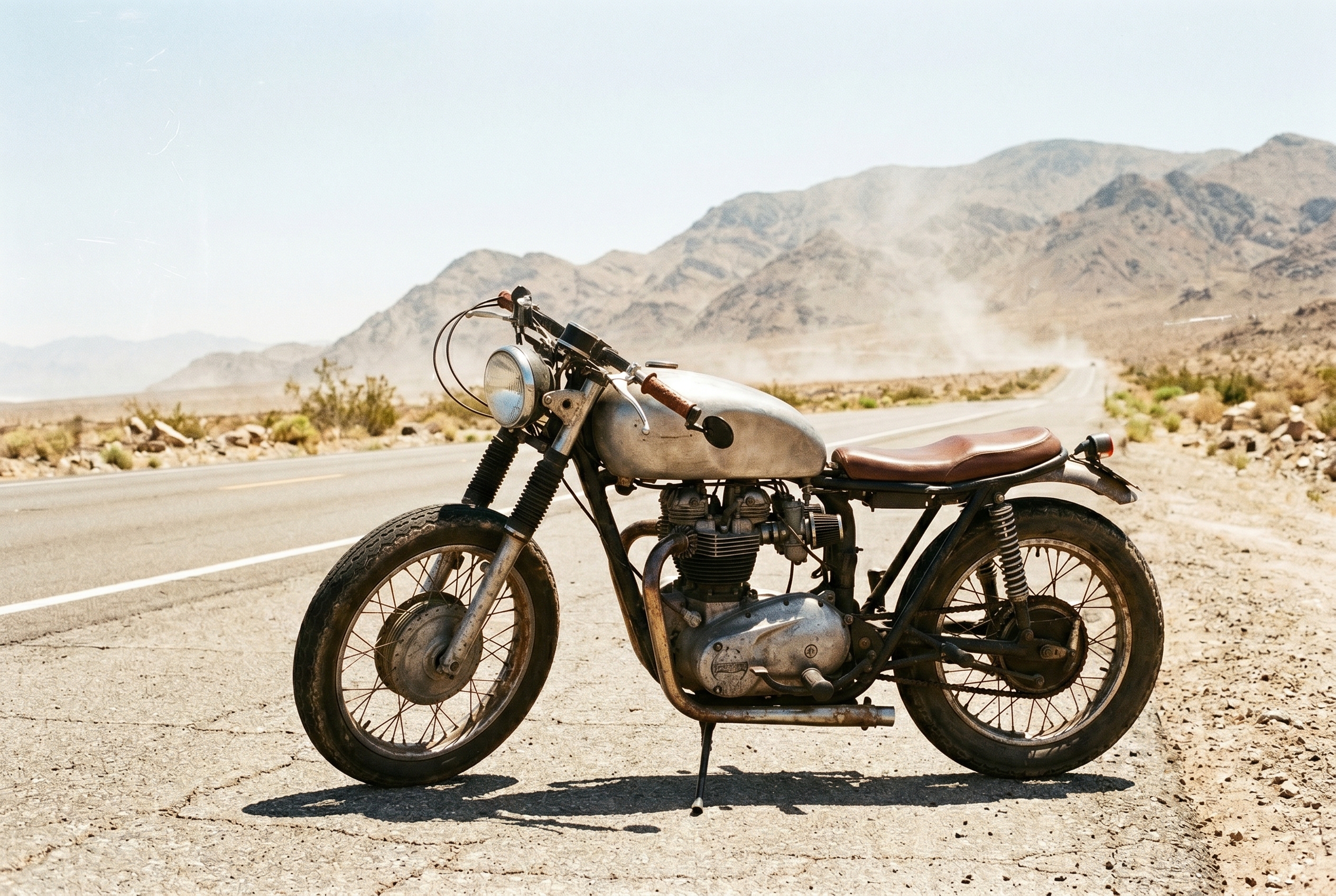
A cafe racer is not a brand and it is not really a model. It is a build philosophy: take a sport-leaning street bike, strip the fat, drop the rider into an aggressive crouch, and tune the engine to chase a number. The original racers ran to a cafe and back. The modern ones still look like they belong on a sweep of empty B-road at 6 AM on a cold morning.
This is what makes a cafe racer, where it came from, and why it still pulls in builders fifty years after the Ace Cafe scene faded.
What Makes a Cafe Racer Motorcycle
Strip every cafe racer down to its parts and the same handful of features show up. None of them are decorative. Each one came from someone trying to go faster on a stock bike with a hacksaw and welder.
- Clip-on handlebars. Mounted to the fork tubes below the top yoke instead of bolted to a bar mount. Forces the rider into a forward, weight-on-wrists position. Better aero, better front-end feel under hard braking.
- Rearset footpegs. The stock pegs sit under your hips for cruising. Rearsets push them back and up so the rider tucks into a crouch and gets the legs out of the wind.
- Single seat with a tail hump. Mostly cosmetic but functional. The hump tucks the rider’s back out of the airflow and looks the part. Solo seat, no pillion, one job.
- Bikini fairing or cowl. Small handlebar fairing, sometimes a half cowl over the headlight. Cuts wind without adding weight. Bates-style sealed-beam round headlights are the period-correct choice.
- Megaphone exhaust or reverse-cone muffler. Lighter than stock pipes, louder, and the conical shape was thought to help low-end pulse tuning on tuned twins. Whether it actually does much is a separate argument.
- Slim tank with knee dents. Smaller fuel capacity, lower weight, deeper cutouts so the rider can grip the tank with their thighs through corners.
- No mirrors, no signals, no fuel gauge. The original cafe racers ran on the road but were built for race-shop ergonomics. Anything that did not help you go faster came off.
The proportions matter as much as the parts. A proper cafe racer sits long and low, with a flat or slightly rising line from the rear axle to the fuel cap. The rear of the seat hump should meet the tail in a single visual line. Get the line wrong and the bike looks bobbed or chopped, not raced. We have seen plenty of builds where someone slapped clip-ons on a 1990s sportbike, called it a cafe racer, and got the geometry completely wrong. The aesthetic only works when the donor bike has the right bones.
The Ace Cafe and the Rockers
The cafe racer scene started at a few transport cafes around London in the late 1950s, but the Ace Cafe on the North Circular Road became the spiritual home. Built in 1938 to serve truckers heading in and out of London, it was open 24 hours and had two things motorcycle culture needed: cheap food and a working jukebox. By the late fifties it was packed with young riders calling themselves Rockers, in opposition to the scooter-riding Mods who hung around different parts of the city.
The Rockers wore black leather jackets, white t-shirts, jeans turned up at the cuff, and engineer boots. Greased back hair under a pudding-bowl helmet. They listened to American rock and roll, and they rode tuned British twins because that was what was on the secondhand market and what could be made faster cheaply.
The “ton-up boys” name came from the goal of every meaningful ride. Hit the ton (100 mph) on the way home from the cafe. Most British streetbikes of the era could do maybe 90 mph in showroom trim. Getting to 100 required engine work, weight reduction, and a willingness to ride hard on roads that were not built for it. The Ace Cafe scene treated the public road as a race track, which got Parliament’s attention, but for a stretch of years it was a self-contained subculture with its own bikes, music, fashion, and code.
The original Ace Cafe closed in 1969 when the M1 motorway pulled traffic away. It reopened in 1997 and runs today as a heritage motorcycle venue with regular meets. Walk in on a summer Sunday and you will still see Triumph twins parked in the same spots as 1962.
Some of this culture overlapped with the same brotherhood ethos that built the American outlaw motorcycle club scene - both grew out of postwar boredom, military surplus, and a refusal to play it safe. The Rockers took it in a different direction, but the source material is the same.
The Triton and Other Original Cafe Racers
If there is a single most famous cafe racer build, it is the Triton. The recipe: take the engine out of a Triumph Bonneville (650cc parallel twin, fast and cheap to tune), drop it into the frame of a Norton featherbed (the best-handling chassis of the 1950s). Result: a bike with the best motor and the best handling parts of two different manufacturers. Nobody was building Tritons at the factory. Riders built them in garages because the combination was better than anything you could buy.
A few other classic donor bikes mattered:
- Triumph Bonneville T120 (1959-1972). The Bonnie was the bike. 650cc parallel twin, eight valves, twin carbs, real performance for the money. Half the cafe racers in any old Ace Cafe photo are Bonnies.
- Norton Manx and Norton Dominator. The Manx was Norton’s racing single, the Dominator their road-going twin. Both used the featherbed frame, which became the gold standard for handling.
- BSA Gold Star. Single-cylinder 500cc, race-bred, the lightweight option. Heavy in solo trim but fast.
- Royal Enfield Continental GT (1965). The first factory cafe racer. Royal Enfield built a 250cc cafe-styled bike from the factory with clip-ons, rearsets, and a humped seat. Mostly aimed at younger riders who wanted the look without having to weld a bracket.
We hear this question in the garage every week: was the Triton the first cafe racer? Honestly, no. Riders had been hybridizing British twins since the late 1940s. The Triton just got the most attention because it actually worked, was reproducible, and looked the part. By the mid-sixties the formula was a recognized scene rather than a few one-offs.
Modern Cafe Racer Motorcycles You Can Buy
The factories went away from cafe racers in the late 1970s when Japanese sportbikes redefined what fast looked like. The scene came back hard in the late 2000s as riders got tired of fully faired sportbikes and wanted something that did not require a tuck and a $3,000 leather suit just to commute. Today there are real factory cafe racers again, and a handful of bikes that fit the formula even if the marketing team did not call it that.
| Bike | Engine | Notes |
|---|---|---|
| Triumph Thruxton RS | 1200cc parallel twin | The closest thing to a factory Triton. Brembo brakes, Showa forks, real performance. |
| BMW R nineT Racer | 1170cc boxer twin | Half-fairing, low clip-ons, the most aggressive ergos in the modern lineup. |
| Royal Enfield Continental GT 650 | 648cc parallel twin | Direct descendant of the 1965 GT. Cheap, simple, looks right. |
| Kawasaki W800 Cafe | 773cc parallel twin | Air-cooled, retro-styled, cafe trim available from the factory. |
| Honda CB Cafe (custom builds) | Various | The CB350, CB450, and CB750 SOHC are the most common modern donor bikes for custom cafe builds. |
Honest take: if you want a real cafe racer experience at a usable price, the Royal Enfield Continental GT 650 is the value pick. If you want the closest thing to a factory Triton with modern reliability, the Thruxton RS is the answer and you will pay for it. The R nineT Racer divides riders. Some love the aggressive position. Some find the clip-ons too low for anything over an hour.
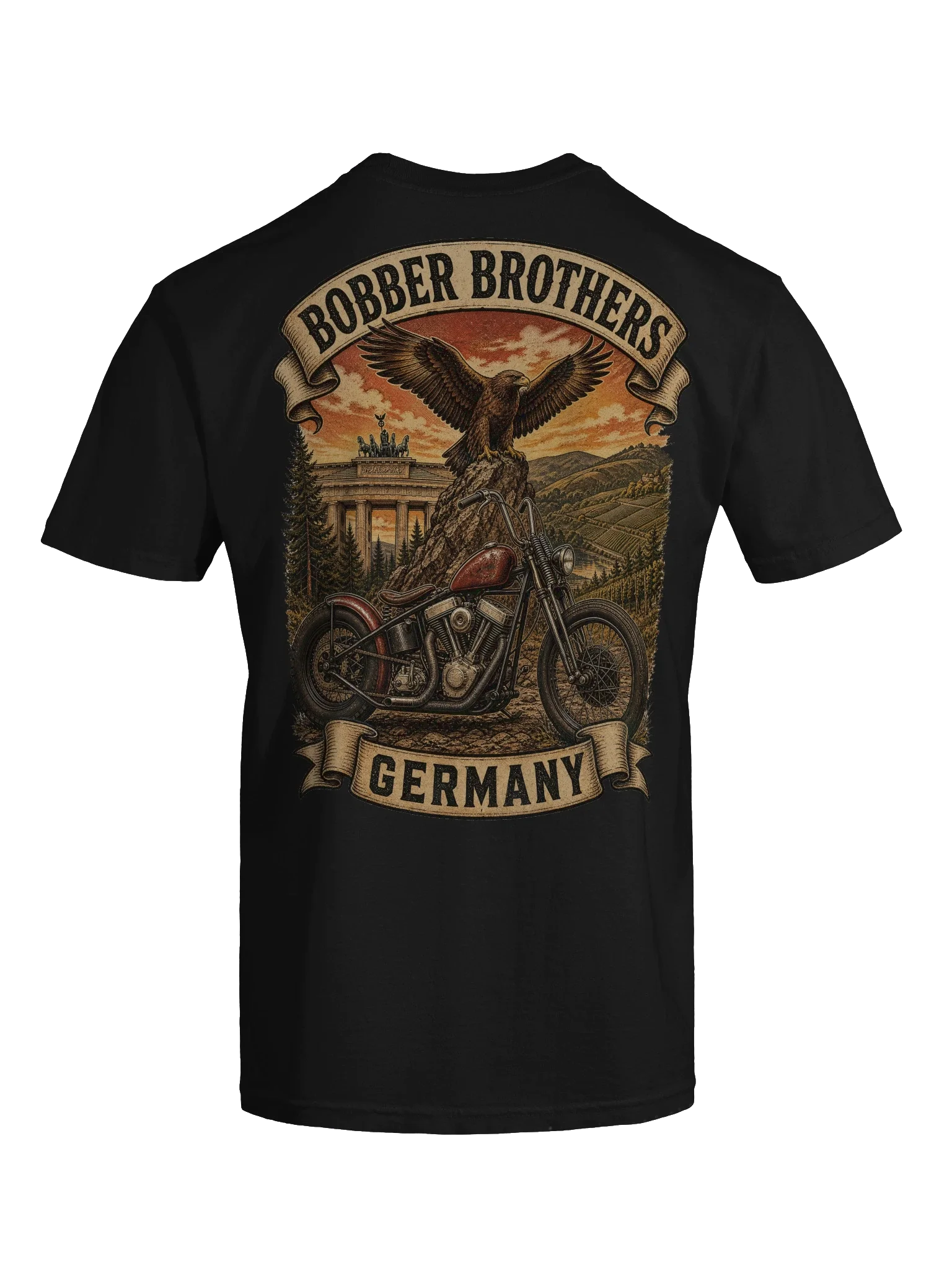
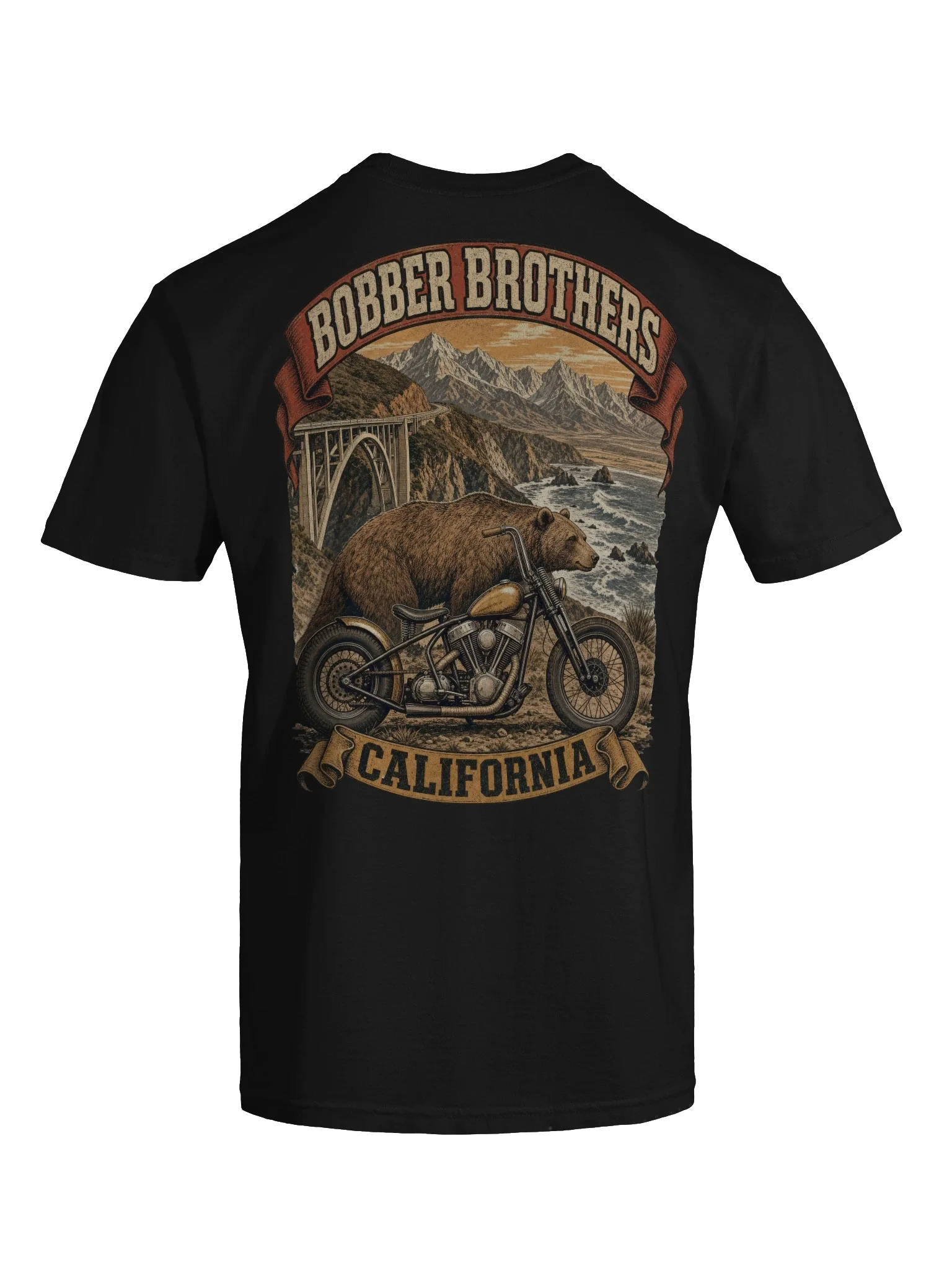
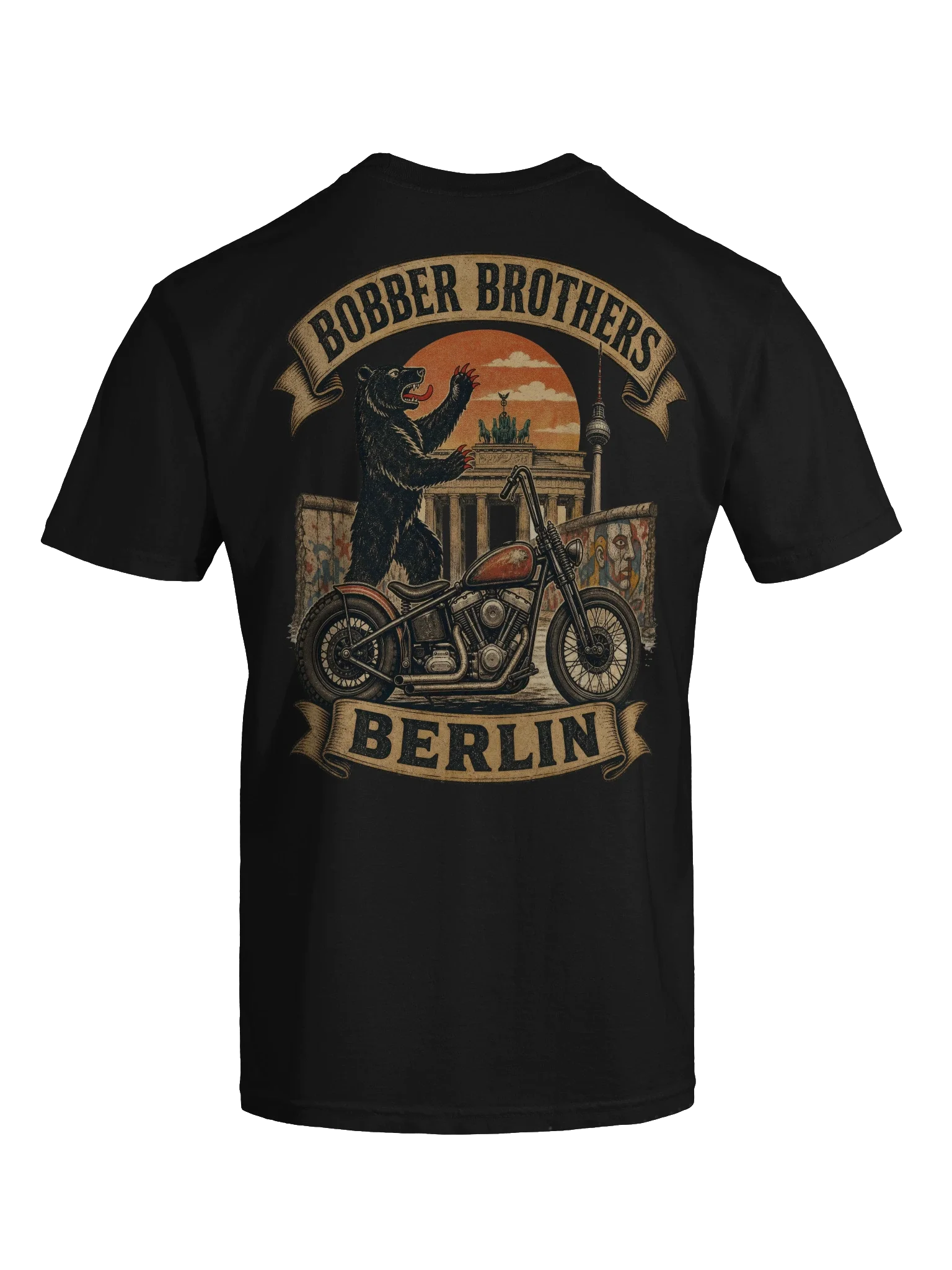
If you ride one of these, you already know that gear matters. Open visor, leather, denim, tucked into the bike. We build motorcycle clothing for that exact aesthetic. Our biker t-shirts and graphic tees carry the same garage-built spirit, designed to look right under a leather jacket on a cold morning ride to a cafe.
How to Build a Cafe Racer
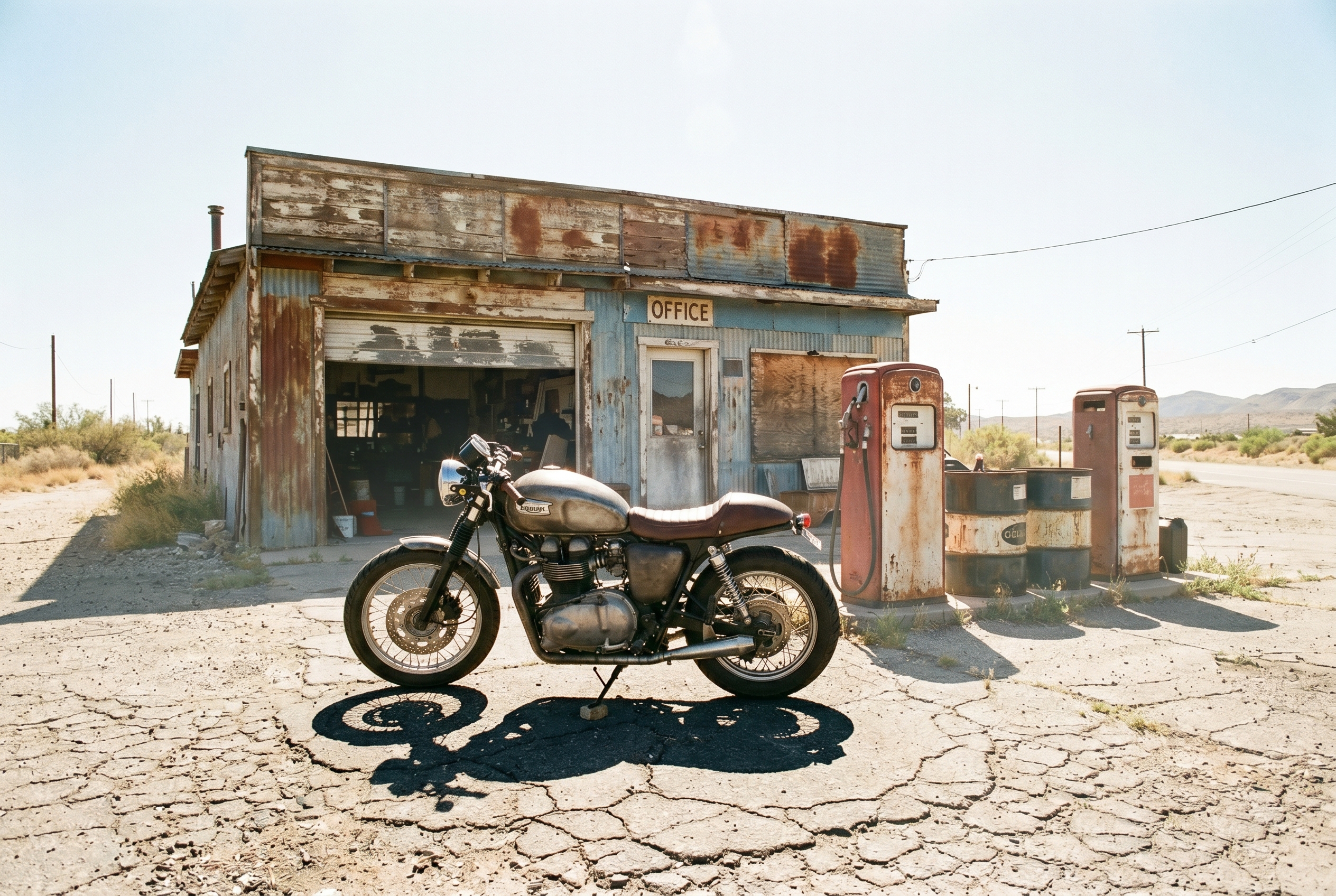
Most cafe racers on the road today are custom builds, not factory bikes. The donor matters more than anything else. Start with the wrong bike and you will fight the geometry forever. Start with the right one and a weekend in the garage gets you most of the way there.
Best donor bikes for a first cafe racer build:
- Honda CB350/CB450 (1968-1976). Cheap, reliable, plenty of aftermarket support. Skinny enough to look right.
- Honda CB550/CB750 SOHC (1969-1978). Slightly bigger, more power, same easy parts story.
- Yamaha XS650 (1970-1985). Vertical twin, plenty of cafe racer aftermarket, sounds great with a megaphone.
- Suzuki GS series (mid-70s to mid-80s). Underrated. Cheap to find, durable, the GS750 and GS850 make good donors.
- Royal Enfield Bullet 500. Already half cafe-styled from the factory. Easier path.
Stay away from anything with a fairing-integrated frame, plastic bodywork that is structural, or modern electronics that get angry when you remove sensors. You want a frame that holds the engine, a tank, two wheels, and not much else.
The minimum-effort cafe racer build, in order:
- Strip every plastic and chrome part down to the frame, tank, motor, and wheels.
- Source clip-on handlebars sized for your fork diameter (35mm, 36mm, 38mm typical for vintage Japanese).
- Source rearset pegs that match the bolt pattern of your bike. Tarozzi makes universal rearsets that fit most 1970s Japanese twins.
- Pick a seat. Aftermarket cafe racer seat pans with the tail hump are widely available. Get one that fits your tank line.
- Sort the exhaust. A reverse-cone megaphone shouts the loudest but check your local sound rules.
- Replace the stock headlight with a 7-inch round Bates-style sealed beam.
- Bin the speedometer cluster. Replace with a single round face mounted between the clip-ons.
- Lose the turn signals if local law allows. Otherwise use the smallest LED bullet signals you can find.
- Tank: keep stock if it fits the line. If not, source a slimmer tank. The Honda CR-style tank is a popular swap for CB builds.
- Paint and finish. Most cafe racers are painted in solid colors with simple stripes - British racing green, gloss black, silver. Resist the temptation to over-graphic.
The build can run anywhere from $1,500 to $15,000 depending on parts, paint, and how much engine work you do. We have seen builds in our shop that came out perfect for under $2,500 and others that cost $20,000 and looked overdone. Restraint is the entire game.
Cafe Racer vs Bobber vs Scrambler
Riders new to custom motorcycles often mix these three styles up. They are different builds with different purposes.
| Style | Purpose | Key Features |
|---|---|---|
| Cafe Racer | Speed on pavement | Clip-ons, rearsets, hump seat, fairing, slim tank |
| Bobber | Stripped cruiser, solo seat | Bobbed (shortened) fenders, hardtail or short rear suspension, solo seat, big tires |
| Scrambler | Mixed-surface road and dirt | High exhaust, knobby or dual-sport tires, upright bars, skid plate |
Cafe racers and bobbers came from completely different scenes. Cafe racers are British, fast, and built for road speed. Bobbers are American, low, and built for cruising. The two styles overlap in the strip-it-down ethos but the geometry, ergonomics, and intent are opposite. A cafe racer wants to corner. A bobber wants to roll.
Builders sometimes blend the two, and you get something that looks neither here nor there. Pick a lane.
What Most Riders Get Wrong
A few mistakes show up over and over in cafe racer builds.
- Wrong donor bike. Modern sportbikes do not become cafe racers. The bones are wrong. Find a 1970s standard.
- Clip-ons too low. Aggressive ergonomics look great parked at the cafe and ruin your back on a 50-mile ride. Set them slightly above the top yoke for street use.
- Removed everything that looked stock and called it done. A cafe racer needs a clean visual line from front to back. Hacking parts off without rebuilding the silhouette gives you a parts bike, not a cafe racer.
- Loud exhaust on a stock motor. A megaphone on an unmodified engine sounds rough, not fast. If you are going to run an open pipe, do the carb jetting and ignition timing to match.
- Treating it like a museum piece. Cafe racers were ridden hard. The original Ace Cafe scene was about going fast, not posing. If your bike never sees redline, it is a bar stool with wheels.
One thing we learned the hard way on a CB750 build a few years back: get the tank-to-seat line right before you finalize anything else. We had the engine sorted, the wheels rebuilt, the bars and pegs in place, and then the seat hump sat half an inch too tall and the whole bike looked off. Took the tank off the bike, mocked it up against three different seat pans, finally found the right combination. Everything else flows from that single line.
Where the Scene Goes From Here
The cafe racer revival peaked around 2018. Custom builders like Auto Fabrica, Bunker Custom, and Kingston Custom were turning out high-end pieces at car prices, magazines were running custom features every month, and bike shows started carving out cafe-only categories. The scene has settled since, but it is not dead. The factory bikes are still being made. Honda still sells CB-styled retros. Triumph keeps the Thruxton in production. Royal Enfield is selling Continental GTs in volume.
What changed is who is building them. The newer wave of cafe builders is younger, more international, and more willing to mix the formula. Cafe-scrambler hybrids. Cafe with electric drive. Cafe with three-cylinder engines. Some of it works. A lot of it does not. The original Ton-up Boys would probably laugh at most of it and then quietly admire the ones that go fast.
If you want to see where the scene is now, two places: Bike Shed London and Wheels and Waves in Biarritz. Both pull a few thousand cafe racers and customs every year. The bikes that show up there are still where the future of the scene gets argued.
Sources
- Wikipedia: “Cafe racer” - foundational background on Ace Cafe and the Rockers scene
- Triumph Motorcycles: Thruxton 400 official page - factory specs and design intent
- Wikipedia: Ace Cafe - venue history from 1938 to current operation
- Bike EXIF: cafe racer tag archive - documented modern custom builds with technical breakdowns
- Wikipedia: Royal Enfield Continental GT - modern factory cafe racer reference