

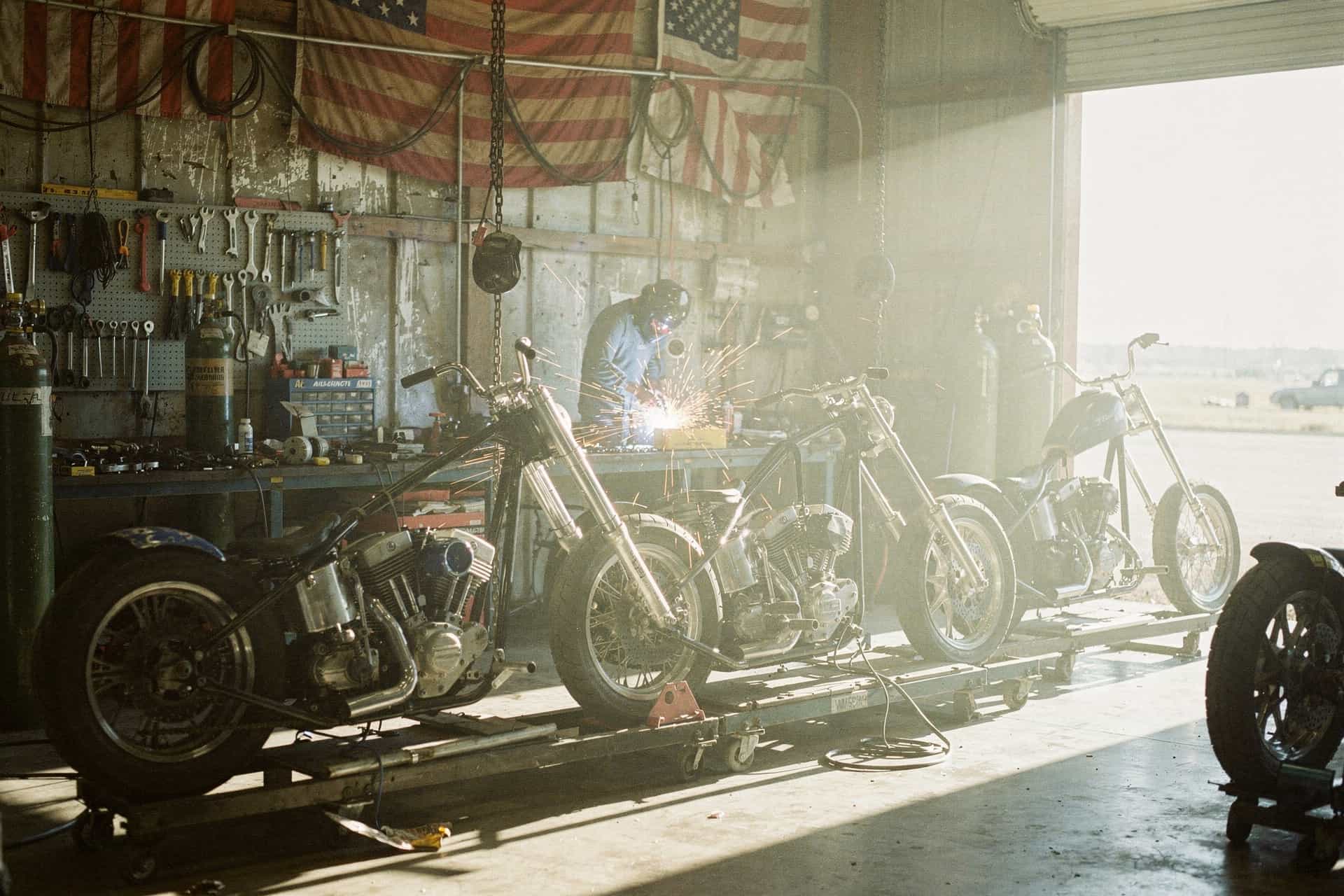
Most people searching for Orange County Choppers today are asking one of two questions: what happened to the shop, and is it still around. The short answers are that the television empire came apart between 2008 and 2018, and that OCC itself survived, moved to Florida, and put a new series on the air in February 2026.
Below is the dated version, with each claim tied to when it happened and who reported it. The Teutul story is heavy on repeated internet folklore, so the timeline comes first and the color comes after.
OCC Timeline: The Dated Version
| When | What happened |
|---|---|
| Before OCC | Paul Teutul Sr. runs Orange County Ironworks, a steel fabrication business handling railings, structural steel, and custom metalwork |
| 1999 | Paul Sr. leaves the Ironworks and founds Orange County Choppers in Rock Tavern, New York, with Paul Teutul Jr. as lead designer and fabricator |
| 2002 | Pilgrim Films shoots a documentary on the shop that becomes a pilot |
| 2003 (March 31) | American Chopper premieres on Discovery Channel |
| 2007 | Paul Jr. takes a 20 percent stake in Orange County Choppers Holdings and signs an employment agreement |
| 2007 (December) | The series moves to Discovery’s sister channel TLC; the first TLC season premieres January 17, 2008 |
| 2008 | The purpose-built OCC headquarters opens at 14 Crossroads Court, Newburgh, New York |
| 2008 (late) | Paul Jr.’s employment at OCC Holdings is terminated; he keeps his 20 percent stake |
| 2009 (January) | A letter agreement modifies the 2008 employment contract so Paul Jr. returns as an independent contractor, and gives Paul Sr. an option to buy his shares |
| 2009 (April) | Paul Jr. leaves OCC for good and builds out Paul Jr. Designs |
| 2009 (November) | Paul Sr. exercises the buyout option; litigation follows |
| 2010 | The original series run ends; Senior vs. Junior premieres on TLC on August 12 |
| 2010 (December 14) | The Appellate Division, Second Department holds the buyout option is not valid or enforceable |
| 2016 (March) | The Newburgh headquarters building is sold at auction through Ten-X; OCC stays on as a tenant under a ten-year lease |
| 2018 (early March) | Paul Sr. files Chapter 13 bankruptcy days before the Discovery revival airs |
| 2018 (May 28) | American Chopper returns on Discovery for a revival season |
| 2021 (June) | The OCC Road House and Museum opens in the Clearwater area of Florida |
| 2025 (November) | Paul Sr. announces a new series on social media |
| 2026 (February 21) | Orange County Choppers Original premieres on MotorTrend and Discovery Channel |
Is OCC Still in Business?
Yes. This is the single most-searched question about the shop, and the answer has changed over the years, so date it: as of August 2026, Orange County Choppers is an operating business.
The company’s own news page lists the shop running as the OCC Road House in the Clearwater area of Florida, alongside a Harley-Davidson dealership, and promotes the current Orange County Choppers Original series. Paul Sr. also runs a YouTube channel under his own name. The Hudson Valley chapter is over, which is why so many people who drive to Newburgh looking for the shop come away confused.
What did not survive was the scale. At the show’s peak, OCC was a dozens-of-employees operation with a purpose-built headquarters and a corporate-build backlog. What exists now is a working custom shop attached to a destination venue and a television production. Same name, different business.
How OCC Started: Rock Tavern, New York, 1999
Orange County Choppers did not start as a television property. It started as a father-son side project in Rock Tavern, New York, a hamlet in Orange County about 60 miles north of New York City.
Paul Teutul Sr. had been running Orange County Ironworks, a fabrication shop handling railings, structural steel, and custom metalwork. It is the reason the OCC builds had the fabrication chops they did: the family had been bending and welding steel for money long before a camera showed up. The Ironworks is now owned and managed by another son, Daniel Teutul.
In 1999, Paul Sr. left the Ironworks and founded Orange County Choppers with Paul Jr. as lead designer and fabricator. The pitch was simple and, at the time, unremarkable: one-off custom choppers for paying customers. No catalog bikes.
The Newburgh headquarters that most people picture when they think of OCC came almost a decade later, in 2008, at the top of the boom. That distinction matters when you read old articles: the “original location” queries are about Rock Tavern, not Newburgh.
Paul Teutul Sr.: The Verifiable Version
Paul John Teutul Sr. was born May 1, 1949, in Yonkers, New York, and grew up in Pearl River. He served in the United States Merchant Marine during the Vietnam War era before going into steel fabrication.
Paul Sr. was OCC’s owner and decision-maker, but he also brought hands-on experience from steel fabrication and building motorcycles before OCC. The company’s current team page describes him as creating and building bikes. During the show’s peak, Paul Jr. and the crew often handled the design and fabrication seen on screen while Paul Sr. directed the shop. His forceful management style became the engine of the show.
That is where the biography stops here. Everything else that circulates about his private life, his health, and his relationships is either unsourced or sourced to sites that copy each other, and this page does not repeat it.
American Chopper: How the Show Ran
Pilgrim Films approached OCC in 2002 about a documentary. It became a pilot, and the pilot became American Chopper, which premiered on Discovery Channel on March 31, 2003.
The formula was tight: the crew builds a themed chopper against a deadline while Paul Sr. and Paul Jr. argue. Part fabrication show, part family drama, and it worked well enough that Discovery ran it for four years before moving it to sister channel TLC in December 2007, with the first TLC season landing January 17, 2008. The spin-off Senior vs. Junior premiered on TLC on August 12, 2010 and ran to a final episode on December 17, 2012. Discovery revived the original title with a season that premiered May 28, 2018.
The cultural effect is hard to overstate for anyone who was not around for it. Before OCC, most of the public associated choppers with outlaw films. After OCC, people who had never sat on a motorcycle were arguing about rake and stretch. Our motorcycle TV show roundup puts the series in context against everything that came before and after it.
The Firing, the Lawsuit, and Paul Jr.
Paul Teutul Jr., born October 2, 1974, grew up in the Ironworks shop and became the creative side of OCC. He designed and fabricated most of the builds people remember from the show’s peak, with a preference for clean lines and theme bikes that told a story.
The father-son conflict was not staged, and the exit was not a single event either. The court record from the shareholder case is the cleanest place to read it, because it fixes dates the television edit blurred:
- 2007. Paul Sr. offered his son a stake in the business. Paul Jr. took 20 percent of Orange County Choppers Holdings and signed an employment agreement.
- Late 2008. Paul Jr.’s employment was terminated after a run of disagreements. He kept the 20 percent stake. This is the firing everyone remembers, and it happened before the end of 2008, not in 2009.
- January 2009. With the television deal at risk, father and son signed a letter agreement modifying the 2008 employment contract. Paul Jr. came back, but as an independent contractor rather than an employee. The same agreement gave Paul Sr. an option to buy all of Paul Jr.’s shares at fair market value, using a valuation procedure the two of them would agree on later.
- April 2009. Paul Jr. left OCC for good and put his effort into Paul Jr. Designs.
- November 2009 onward. Paul Sr. exercised the option. A trial court enforced it on April 21, 2010, and on December 14, 2010 the Appellate Division, Second Department reversed and declared the option not valid or enforceable, because leaving the valuation procedure to a future agreement made it an agreement to agree.
So the popular one-line version, “Paul Sr. fired Paul Jr. in 2009,” compresses a termination, a contractual return, a second departure, and a two-year lawsuit into a single sentence. Paul Jr. founded Paul Jr. Designs in Montgomery, New York, and has continued custom builds and broader design work since. He appeared on the 2018 revival, which put both shops on screen at once.
If you have ever tried to build a bike in a garage with your own father or son, none of this needs explaining.
Cody Connelly, Vinnie DiMartino, and Mikey
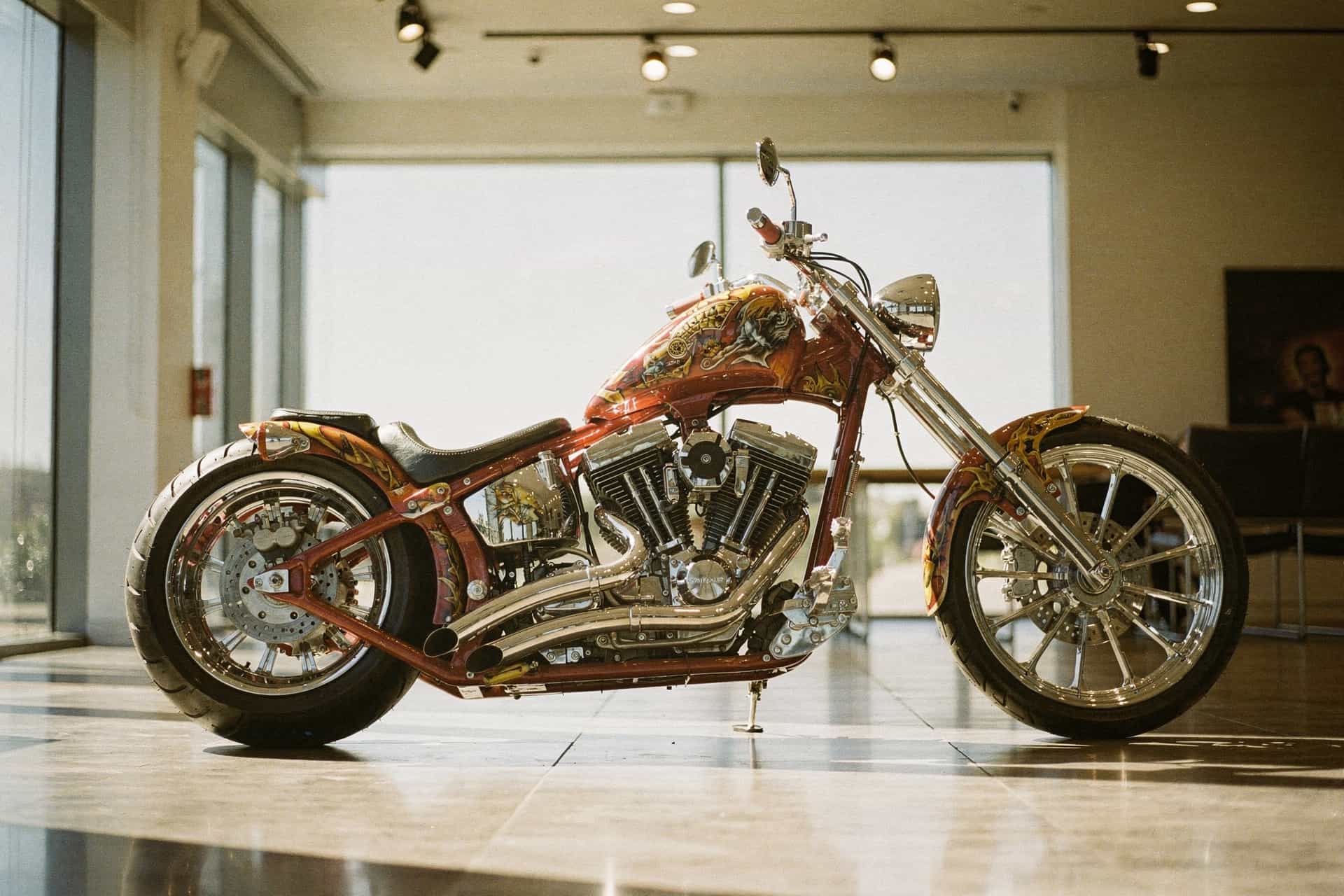
Three cast members account for most of the “where are they now” traffic.
Cody Connelly joined in 2001 while still in high school and left OCC in 2007, alongside Vinnie DiMartino, for V-Force Customs. A January 2026 secondary cast report links him to a demolition and excavation company in Pine Bush, New York; the company site does not state his surname or ownership. Our full Cody Connelly update has the dated timeline and the sourcing limits.
Vinnie DiMartino worked at OCC from 2002 to 2007 and was the shop’s most consistently skilled fabricator during the peak years, the one who turned Paul Jr.’s sketches into rolling motorcycles. He founded V-Force Customs, later worked with Paul Jr. Designs, and now runs DiMartino Motorsports doing car, bike, and truck work.
Michael “Mikey” Teutul was the comic relief rather than a builder, and no dated report places him back in the motorcycle industry.
Iconic OCC Builds
The drama is what people remember, but the shop did produce a body of work that pushed theme-build fabrication further than anyone else was taking it at the time.
- The Jet Bike. Built for the pilot episode and themed around a jet plane. It was styled like an aircraft, not powered by one: no turbine, no jet engine. If you have read otherwise, that is internet folklore.
- The Black Widow. All black, spider web detailing, aggressive lines, and Paul Jr.’s design. It carried the first two episodes of season one in early 2003.
- The Fire Bike. A season-one tribute to the firefighters lost on 9/11, carrying the number 343 and incorporating steel recovered from Ground Zero.
- The Liberty Bike. Built in April 2003 using actual copper from the Statue of Liberty along with artifacts from its restoration.
- The POW/MIA Bike. A military tribute centered on Vietnam veterans, with the POW/MIA logo worked through the build, from season one in early 2004.
- Corporate theme bikes. Dozens of them, for tool companies, sports franchises, heavy equipment manufacturers, and beverage brands. Purists hated them. They also paid for the building.
For builds from the opposite end of the philosophy, where the goal is subtraction rather than spectacle, our best Harley bobber builds roundup and our Harley Ironhead chopper guide are the counterweight.
Riding the chopper lifestyle goes beyond the garage. If you want to wear it too, our hoodies and graphic tees are built for riders who live it.
The OCC Bicycle and the Merchandise Era
At the peak of the show, OCC partnered with Schwinn on a line of OCC-branded chopper bicycles. Not motorized: pedal bikes with ape hangers, stretched frames, and custom paint, sold through mass retailers.
It was a smart play. It put the brand in front of a much larger audience than a custom shop could ever reach and turned OCC into a name that kids recognized. It also marks the point where OCC stopped being a bike shop with a TV show and became a licensing operation with a bike shop attached, which is a large part of why the collapse hit so hard when the licensing dried up.
What Actually Went Wrong
The failure was not one event. It was a sequence.
The market moved first. The 2008 financial crisis gutted demand for $80,000 theme choppers. Corporate marketing budgets for novelty builds went with it. The entire custom chopper boom that OCC helped inflate deflated at the same time, and shops that had opened during the boom closed across the country.
The show lost its engine across 2008 and 2009. Terminating Paul Jr. in late 2008, patching it up in January 2009, and then losing him for good that April removed the conflict the format was built on. The original run ended in 2010, and the franchise carried on as Senior vs. Junior with two rival shops instead of one arguing family.
The real estate came apart. The Newburgh headquarters, built in 2008 at the top of the market, was sold at auction in March 2016 through the auction company Ten-X. Paul Sr. said publicly at the time that the change of ownership did not affect the motorcycle business, because OCC held a ten-year lease letting it stay on as a tenant regardless of the new owner.
The personal finances followed. In early March 2018, days before the Discovery revival aired, Paul Sr. filed for Chapter 13 bankruptcy. Reporting from March 2018 said the filing listed more than 50 creditors owed $1,070,893.44 against a stated worth of $1,801,729, with his home in foreclosure. His representative described it as personal restructuring tied to a tax assessment. Chapter 13 is a reorganization filing rather than a liquidation, which is why the business kept operating through it.
Then it moved. The OCC Road House and Museum opened in the Clearwater area of Florida over a grand-opening weekend of June 25 to 27, 2021, next to a Harley-Davidson dealership, and the Hudson Valley era ended.
The 2026 Series
Paul Sr. announced a new series on social media in November 2025, and Orange County Choppers Original premiered on February 21, 2026, running on MotorTrend and Discovery Channel. The pitch is a return to the shop’s roots rather than a family-conflict format.
Not everyone came back. Cast coverage published in early 2026 named returning members and noted that some original cast are absent. Cody Connelly is not among the named returners, which is the accurate way to put it: no offer, and no refusal, is on the record either way.
What OCC Actually Left Behind
Love the builds or hate them, OCC did something nobody else managed. It took a subculture that had lived in garages and small shops since the 1960s and put it in front of millions of people every week.
The downstream effect was real. Builders like Billy Lane and the shops in our Detroit Choppers roundup were doing serious work before and after OCC, and a lot of them got customers because a Discovery audience learned what a custom bike was. Some of those viewers became riders. A few became builders.
The theme bikes have not aged well, and plenty of riders prefer the stripped-down logic of a Suzuki Intruder bobber build done in a home garage for a fraction of the money. That is a fair preference. It does not change the reach.
The wider culture around riding gets its full breakdown in our motorcycle culture guide: rallies, films, lifestyle history, and the rider scene.
Sources
- Orange County Choppers official news page. Primary source for the shop’s current Florida location, the OCC Road House, and the current television series.
- Meet the Orange County Choppers team. Primary company source describing Paul Sr. as OCC’s founder with a role in creating and building its motorcycles.
- SlashGear - What Happened to the American Chopper Cast. January 2026 secondary reporting connecting Cody Connelly to Revel Ranch Excavation; the linked Cody profile documents the limits of that attribution.
- Sold: Orange County Choppers Building - WPDH, March 10, 2016. Contemporaneous reporting on the auction of the Newburgh headquarters at 14 Crossroads Court, the 2008 build date, the Ten-X auction, and Paul Sr.’s statement about the ten-year lease.
- American Chopper’s Paul Teutul Sr. Files For Bankruptcy Days Before Show’s Revival - Motorcycle.com, March 5, 2018. Source for the Chapter 13 filing date, the creditor count, the $1,070,893.44 debt figure, the $1,801,729 stated worth, and the foreclosure.
- American Chopper on Discovery. Series page for the original Discovery run and the revival.
- American Chopper - Pilgrim Media Group. Production company record for the documentary-to-series origin.
- Orange County Choppers Original - TVmaze. Network and premiere-date record for the 2026 series.
- Orange County Choppers - Wikipedia. Company founding, Rock Tavern origin, and location history.
- Paul Teutul Jr. - Wikipedia. Birth date and the founding of Paul Jr. Designs.
- Paul Teutul Sr. - Wikipedia. Source for the May 1, 1949 birth in Yonkers, the Pearl River upbringing, the Merchant Marine service, the Orange County Ironworks background now managed by Daniel Teutul, and the 1999 founding of OCC.
- American Chopper - Wikipedia. Source for the March 31, 2003 Discovery premiere, the December 2007 move to TLC and January 17, 2008 TLC premiere, Paul Jr.’s late-2008 firing and final April 2009 departure, the August 12, 2010 Senior vs. Junior premiere and December 17, 2012 finale, and the May 28, 2018 revival premiere.
- Teutul v Teutul, 2010 NY Slip Op 09248 (2d Dept, December 14, 2010). Court record for Paul Jr.’s 2007 stake and employment agreement, the 2008 termination, the January 2009 letter agreement returning him as an independent contractor, the share-purchase option, and the holding that the option was not valid or enforceable.
- Business Divorce, American Chopper Style - New York Business Divorce, May 2010. Detailed account of the January 2009 letter agreement, the option terms, and the April 21, 2010 trial-level decision.
- Orange County Choppers bikes - Wikipedia. Build record for the jet plane-themed pilot-episode Jet Bike, the Black Widow, the Fire Bike and its 343 and Ground Zero steel, the Liberty Bike’s Statue of Liberty copper, and the POW/MIA build.
- OCC Road House and Museum, Bert’s Barracuda Harley-Davidson opens this week - Tampa Bay Business and Wealth, June 22, 2021. Contemporaneous reporting on the June 25 to 27, 2021 grand opening of the Florida facility.