

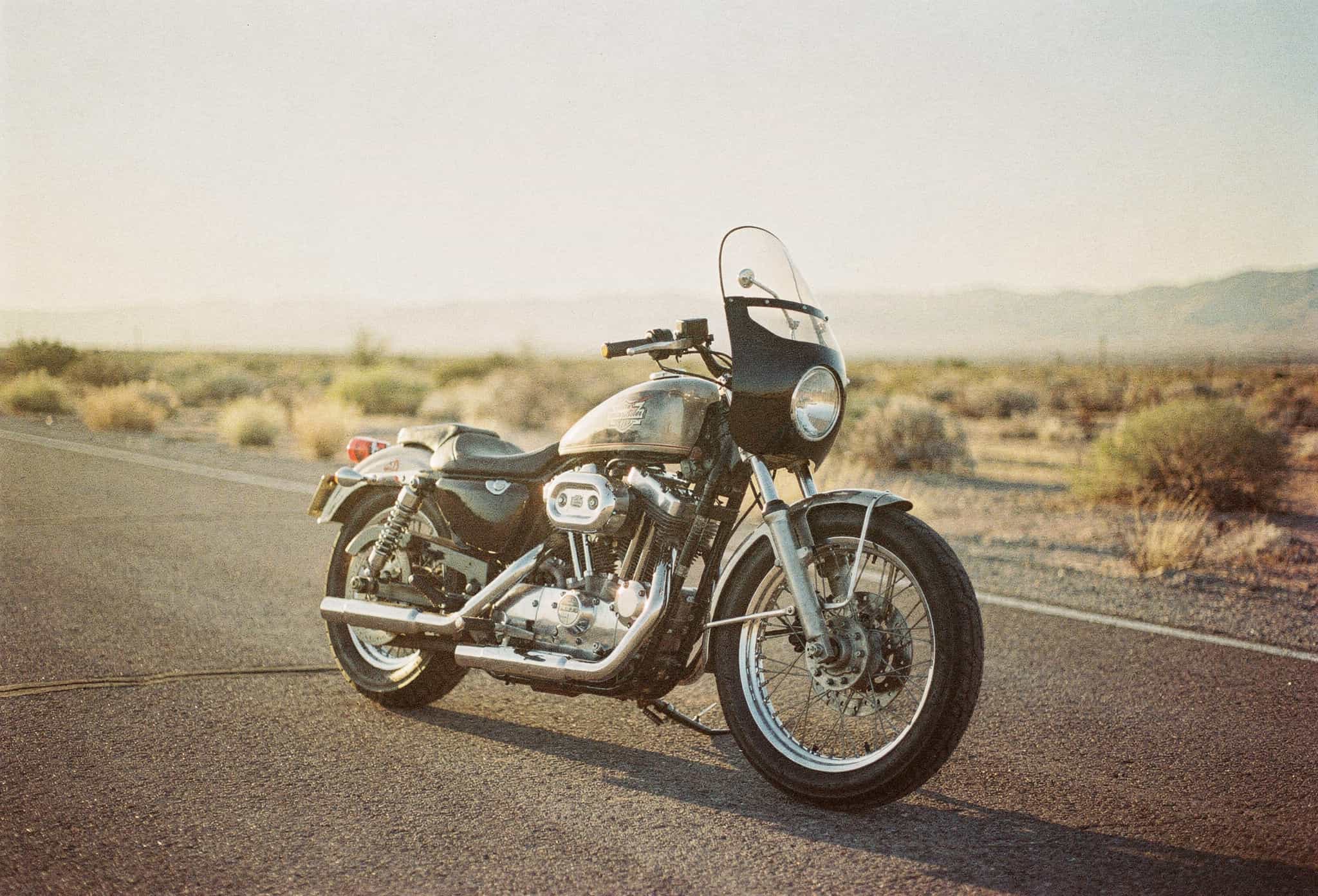
Seventy miles into a cold interstate run on a naked Sportster, you start to feel it. Your chest is taking the full blast, your arms are holding you on the bars like you are doing a slow push-up, and every truck you pass shoves you around. A small fairing will not fix all of that. It will fix enough of it that you notice the difference in the first ten minutes.
A quarter fairing is the smallest real fairing you can put on a Sportster. It wraps the headlight, pushes the wind off your chest and hands, and keeps the bike looking lean. This guide covers what fits which Sportster, why Harley’s own kit leaves out some of the most popular models, what the universal options do differently, and what the install actually takes.
Quarter Fairing, Bikini Fairing, Club Style: The Names
Riders use these names loosely, so here is how we use them.
- Headlight visor: a small cowl over the headlight. Mostly looks, very little wind protection.
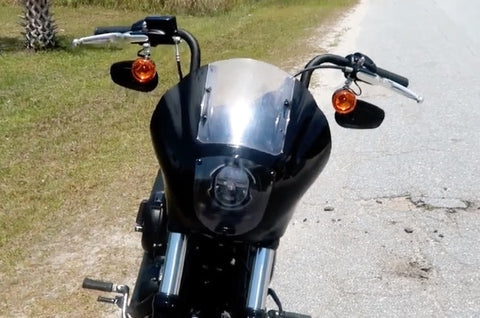
- Quarter or bikini fairing: a compact shell around the headlight with a short screen. It moves wind off your chest and hands but leaves your head in clean air or light buffeting.
- Club style fairing: a quarter fairing shape made popular on Dyna and FXR builds. Usually fork-mounted, often paired with taller bars.
- Frame-mounted fairing: bolted to the frame, so it does not turn with the bars. The FXRT and touring bikes use this layout. Much more protection, much more weight.
Everything on this page is fork-mounted. The fairing turns with the front end, which keeps the install simple but puts some extra weight on the steering.
Harley’s Own Quarter Fairing: Fitment
The factory option is the H-D Detachables Quarter Fairing Kit, part number 57070-98. A Harley dealer listing from Motor Saloon gives the fitment as:
Fits ‘88-later XL (except XL Custom, XL1200X, XL1200N, XL1200T, XL883N and ‘11-later XL883L), FXR and ‘95-‘05 Dyna models (except FXLR, FXDXT and FXDWG).
The same listing says it requires the Detachable Docking Hardware Kit 58164-96A, came primed or in Vivid Black, and shows it as no longer for sale there. That means you are hunting new old stock, dealer leftovers or used kits. If you buy used, make sure the docking hardware and mounting brackets come with it. The fairing alone does not bolt on.
Read the exclusion list carefully, because it cuts out a big part of the Sportster family:
| Excluded from 57070-98 | What it is |
|---|---|
| XL Custom models | 883 Custom and 1200 Custom |
| XL1200X | Forty-Eight |
| XL1200N | Nightster |
| XL1200T | SuperLow 1200T |
| XL883N | Iron 883 |
| XL883L from 2011 | SuperLow |
If you ride an Iron, a Nightster or a Forty-Eight, Harley’s kit is not your answer. That is where the universal fairings come in.
Watch the Dyna dates
Some fitment lists on the web claim the fairing fits “1985-2005 Dyna” models. That cannot be right. Wikipedia’s Dyna entry records the Dyna chassis arriving in 1991 with the limited-production FXDB Sturgis. Harley’s own listing covers 1995-2005 Dynas. If you are fitting one to a 1991-1994 Dyna, treat it as a custom job and check the brackets on the bike first. If you want the full story on that platform, our Harley Dyna guide covers every generation.
Know Your Fork Before You Order
Fork-mounted fairings clamp to the fork tubes, so the tube diameter decides what fits. Lowbrow Customs’ fork identification guide lays out the Sportster sizes:
- 35mm: Sportsters and FX models from the mid-1970s to 1986
- 39mm Narrow Glide: Evolution Sportsters from the late 1980s on, and FXR models
- 49mm: the Forty-Eight from 2016
Lowbrow lists the 39mm fork from 1987 on some models, while most Sportster timelines put the switch on the 883 and 1200 at 1988. Harley’s fairing listing starts at 1988. If you have a 1987 or 1988 bike, do not trust the model year. Measure the outside diameter of the upper fork tube with calipers.
Also check the headlight. Many Sportster quarter fairings are built around a 5-3/4 inch headlight. If your bike has a different size or an aftermarket light, sort that out first.
We have seen more than one fairing sit in a garage for a month because the rider bought the right fairing with the wrong clamps. Measure first. It takes two minutes.
Universal Quarter Fairings
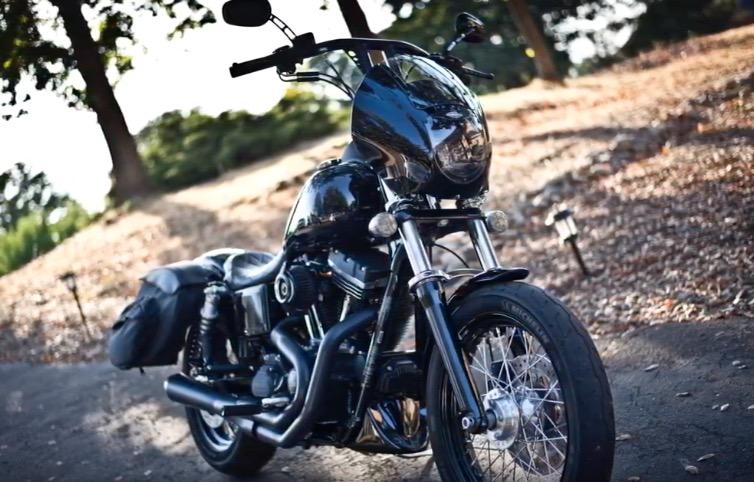
For Dark Custom Sportsters, or for anyone who cannot find a Harley kit, universal fairings are the usual route. They come with adjustable clamps that fit a range of fork sizes.
Burly Brand’s Outlaw fairing is a common example. According to RevZilla’s listing, it has a molded ABS shell and an acrylic windscreen, with black powder-coated steel brackets that fit 35mm to 49mm forks. Burly’s product page lists it for bikes with a 5-3/4 inch headlight. RevZilla warns that turn signals, the headlight, the visor or the gauges may need to be moved, and that the fairing may need paint or bodywork.
That warning is the honest part of every universal fairing. “Universal” means the clamps will grab your fork. It does not mean every part on your bike will be where the fairing expects it.
Cheaper no-name fairings with 39mm clamps are sold all over the big online marketplaces. Some are fine. Some have thin plastic, sloppy brackets and screens that crack at the bolt holes. Look at the brackets in the photos before you look at the price. A fairing that shakes at 70 mph is worse than no fairing.
What the Install Really Takes
The bolt-on part is a couple of hours in the garage for most riders. The fiddly part is everything around it.
- Measure fork tubes and headlight. Confirm clamp size and headlight diameter before anything comes apart.
- Mock it up loose. Hang the fairing on the forks and turn the bars lock to lock. Watch for the fairing hitting the tank, the gauges or the bar controls.
- Sort the turn signals. On many Sportsters the front signals sit where the fairing wants to be. Plan where they go, and use proper connectors if you extend the wiring.
- Mount the headlight. Some kits reuse your headlight bucket, others need the light moved into the fairing. Aim the beam again after you are done.
- Check cables and lines. Throttle cables, the clutch cable, brake lines and wiring must move freely through full steering travel with no pinching.
- Torque and recheck. Tighten clamps to the maker’s spec, then recheck after the first ride. Vibration finds loose bolts fast on a Sportster.
If you have bars with a lot of rise, or you plan to swap bars at the same time, check how the fairing and the bars work together before you commit. Our motorcycle handlebar types guide covers the bar side of that equation.
Buying a Used Harley Kit
Because the factory kit is out of production at many dealers, a lot of them change hands used. What we look at before handing over money:
- Part numbers. The fairing should carry 57070-98 or come with proof it is the Harley piece. Ask for photos of the inside, not just the painted face.
- Docking hardware and brackets. Without the 58164-96A docking kit and the mounting brackets you have a plastic shell and a project. Get both, or price them before you agree on the fairing.
- Cracks at the mounting points. Look closely around every bolt hole and bracket tab. Stress cracks there usually mean the fairing was dropped or overtightened.
- Screen condition. Scratched or crazed screens are hard to see through at night. Budget for a new screen if it looks cloudy.
- The seller’s bike. Ask what it came off. If it came off a model on Harley’s exclusion list, it may have been modified to fit, and those modifications may or may not suit yours.
How a Fairing Changes the Ride
A quarter fairing weighs little, but it hangs off the front of the forks, away from the steering axis. You will feel a little more weight when you turn the bars at walking pace, and slightly slower steering on fast direction changes. Most riders stop noticing within a few rides.
The bigger change is at speed. With the blast off your chest, the pressure moves up to your helmet. On a short screen that is usually clean air. On a taller screen, the edge of the wind can hit right at eye level and shake your head around. That is why we keep saying shorter is often better.
Crosswinds feel different too. The fairing gives side wind something to push on, and you may notice the front end move a little more on gusty days. It is not dangerous on a well-fitted fairing, but a loose clamp makes it worse. Check the bolts.
Paint and Finish
Primed fairings are exactly that: primed. The factory kit came in primer or Vivid Black, and most universal fairings ship unpainted or in plain black. Budget for paint if you want it to match the tank. A clean satin or gloss black is the easy answer and suits almost every Sportster.
On a blacked-out Iron or Forty-Eight, a plain black fairing with a short smoked screen keeps the look tight. On a bobber build, think hard about whether you want one at all. A quarter fairing is a practical part, and it pulls the bike toward a club style look. Our Sportster bobber builds show the other direction.
Is a Quarter Fairing Worth It?
For riders who do regular highway miles on a Sportster, yes. The wind pressure off your chest and hands is the difference between wanting to stop every 50 miles and riding until the tank runs dry. A 3.3-gallon tank on most Sportsters means that is not that far anyway, which is the nice part: a quarter fairing gets you comfortably from one gas stop to the next.
It will not make a Sportster a touring bike. Your head still sits in the wind, and depending on your height and the screen, you may get some buffeting at helmet level. Try a few screen heights if the kit allows it. Shorter often beats taller on a small fairing.
If you are still choosing the base bike, our Harley Iron 883 specs guide and Sportster history and buyer’s guide cover which Sportster models are which. When the fairing is on and the bike is out, our biker apparel is made for riders who wrench on what they ride. For the full Harley timeline, see the Harley-Davidson history guide.
Sources
- H-D Detachables Quarter Fairing Kit 57070-98 - Motor Saloon Harley-Davidson - Harley’s fitment list, exclusions, finishes and required docking hardware kit 58164-96A
- Harley-Davidson Dyna - Wikipedia - the Dyna chassis arriving in 1991 with the FXDB Sturgis
- Harley-Davidson fork types and how to identify them - Lowbrow Customs - Sportster fork diameters by era and how to measure them
- Burly Outlaw Bikini Fairing - RevZilla - universal fairing materials, 35-49mm clamp range and relocation warning
- Outlaw Fairing - Burly Brand - manufacturer product page and headlight fitment