

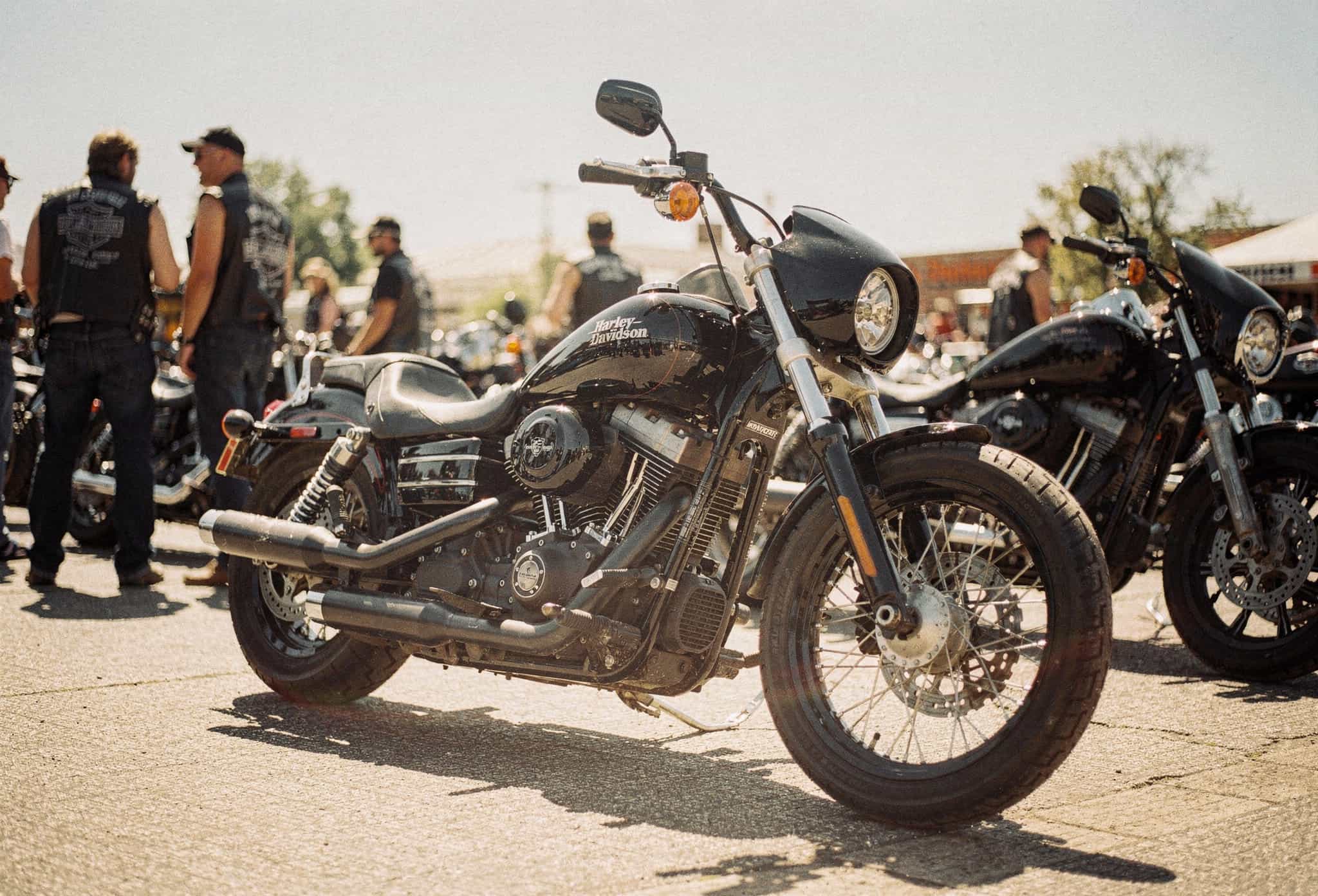
A buddy showed up to bike night last month on a 2016 Low Rider S he paid more for than its original sticker price. Nine years old, 22,000 miles, and he outbid three other buyers to get it. Nobody at the table blinked. That’s the Dyna market right now.
Harley-Davidson discontinued the Dyna after the 2017 model year. The corporate logic was sound - consolidate two overlapping platforms into one. The rider logic said otherwise. Walk into any bike night in America and count the Dynas. Street Bobs with clubstyle fairings, Low Riders with bags, Super Glides stripped raw. The used market is fierce because the supply is fixed and the demand keeps climbing. We’ve watched Dyna prices hold steady or rise since the day Harley killed the platform, and there’s no sign of that reversing.
We’ve had Dynas in the shop for years - builds, repairs, upgrades. The loyalty around this chassis is different from anything else in the Harley lineup. It’s not nostalgia. These are riders who found a motorcycle that does exactly what they want and refuse to accept the replacement.
How the Dyna Came to Exist
The Dyna chassis solved a specific engineering problem: how to build a Big Twin that handles well and isolates engine vibration without burying the motor’s character under counterbalancers.
The FXR (1982-1994) had already proved that rubber-mounting a Harley engine worked. The FXR was a genuine sport bike by H-D standards - excellent handling, solid engine isolation, loyal following that persists to this day. But the FXR was expensive to manufacture. Its frame was complex. Harley needed something cheaper to build that kept the rubber-mount concept alive.
The answer was the FXDB Dyna Sturgis, introduced in 1991 - named after the Sturgis rally and launched as a limited-production model. The Dyna Glide chassis used a new frame with larger-diameter tubes and fewer complex junctions. Simpler to weld, cheaper to assemble, and it looked more like a traditional Harley than the FXR, which mattered to the styling department.
The engine at launch was the 80-cubic-inch Evolution - the same Evo we covered in our Harley-Davidson history guide. That motor served the platform well through the 1990s before the Twin Cam 88 arrived in 1999.
The Rubber-Mount System: Why It Matters
Every Harley Big Twin uses a 45-degree V-twin with a single-pin crankshaft. That design creates inherent vibration. At idle, it’s character. At highway speed for 300 miles, it’s fatigue - numb hands, loose fasteners, rattled fillings.
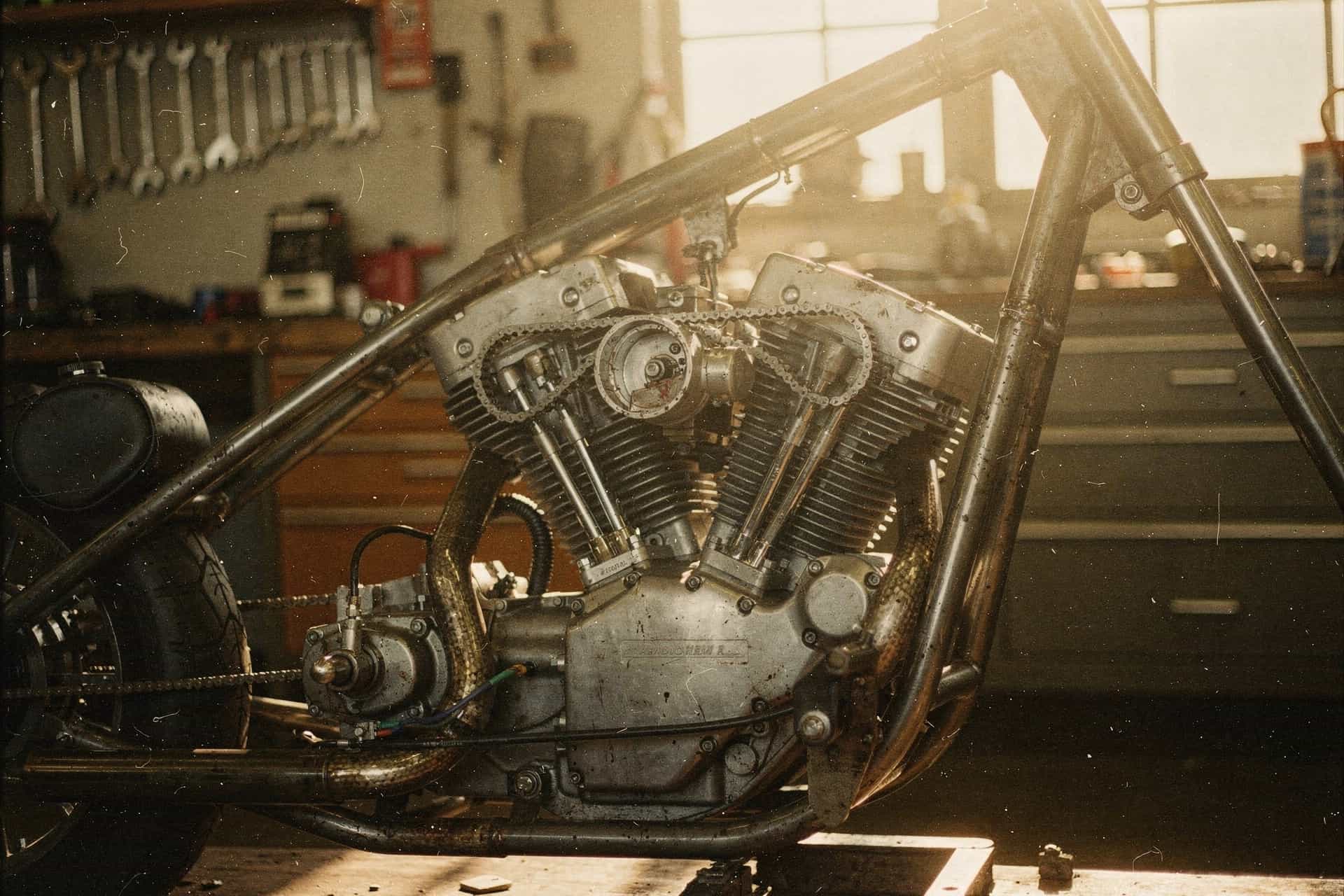
The Dyna’s rubber-mount system uses two isolation mounts - front and rear - connected by a rigid plate. The engine and transmission assembly floats within the frame on these mounts. Metal links prevent lateral movement while allowing controlled vertical and rotational play.
The result: you feel the engine’s pulse at idle and low RPM. That classic Harley thump is right there between your knees. But as RPM climbs, the mounts absorb the high-frequency vibration that would otherwise destroy you on a long day. It’s a compromise - more character than the FXR’s mount system, less vibration than a solid-mount Softail. Most riders who’ve spent time on both will tell you the Dyna hits the sweet spot.
The Softail, by comparison, bolted the engine rigidly to the frame and added a counterbalancer to the Twin Cam 88B to suppress vibration at the source. Different philosophy. The Dyna lets the engine shake naturally and isolates the rider from it. The Softail kills the shake before it starts. Neither is wrong, but they feel fundamentally different.
Every Dyna Model: 1991 Through 2017
Twenty-six years of production gave the Dyna platform some of the most popular models Harley ever built. Here’s the full family, as documented by the enthusiast community.
FXDB Dyna Sturgis (1991)
The first Dyna. Belt drive, 80” Evo, blacked-out treatment. Named after the Sturgis rally and produced as a limited run for one year in this configuration. It launched the platform and established the formula - rubber-mount Big Twin with a stripped aesthetic.
FXDB Daytona / FXDC Dyna Glide (1992)
The line expanded in its second year. The Daytona carried rally-themed cosmetics, while the Dyna Glide broadened the platform’s market presence beyond the limited Sturgis model.
FXDWG Dyna Wide Glide / FXDL Dyna Low Rider (1993)
Two models that replaced the FXR lineup and signaled Harley’s commitment to the Dyna as its mid-chassis platform. The Wide Glide brought chopper-inspired styling - 21” front wheel, raked triple trees, drag bars, and flame graphics in some years. The Low Rider offered a lower seat height, forward controls, and chrome touches. Both ran through 2017.
FXDS-CONV Dyna Convertible (1994-2000)
Detachable saddlebags and windshield. Harley’s pitch was a Dyna that could go from stripped cruiser to light tourer with a few minutes of wrench time. Modest following, discontinued after 2000.
FXD Dyna Super Glide (1995-2010)
The base model. No frills, no windshield, no bags - just the rubber-mount frame, a Big Twin, and two wheels. Harley’s most affordable Big Twin for most of its run. Received the Twin Cam 88 in 1999, fuel injection starting 2004, then the Twin Cam 96 in 2007. The Super Glide was the canvas - riders customized them relentlessly because they started simple and cheap.
FXDX Super Glide Sport (1999-2005)
The performance Dyna. Adjustable suspension front and rear, dual front disc brakes, and the Twin Cam 88. The FXDX was the closest thing to an FXR successor in handling focus. Its discontinuation in 2005 still frustrates the sport-touring crowd.
FXDC Super Glide Custom (2005-2014)
Chrome-heavy Super Glide variant with pulled aluminum wheels, chrome covers, and two-tone paint options. Returned to the lineup in 2005 after a brief absence. Sat between the base Super Glide and the Low Rider in trim level.
FXDB Dyna Street Bob (2006-2017)
This is the one that defined the late-era Dyna. Introduced in 2006, the Street Bob was the first Dyna to wear a matte “denim” black finish - a look that became an industry standard. Bobbed rear fender, mini-ape handlebars, solo seat, blacked-out engine. A factory bobber before every manufacturer had to have one in the catalog.
The Street Bob became the default platform for the clubstyle movement. Add a fairing, add bags, add a stage kit, and you’ve got a machine that rips. The aftermarket for Street Bob parts alone could sustain a small economy.
FXDF Dyna Fat Bob (2008-2017)
The muscular Dyna. Dual headlights, 180mm rear tire, cast wheels, aggressive bodywork. Harley’s modern muscle cruiser within the Dyna family. Wider stance, heavier look, and a Twin Cam 96 (later 103) that moved the weight without complaint.
FXDLS Dyna Low Rider S (2016-2017)
The final boss. Harley dropped the Screamin’ Eagle Twin Cam 110 into the Low Rider chassis - the only Dyna to ever get the 110 from the factory. Mid-year 2016 introduction with premium 49mm cartridge front forks, dual front disc brakes, cruise control, mid-mount controls, and a solo seat. Two model years. That’s all riders got before the platform vanished. The Low Rider S was Harley admitting the Dyna could be more than a cruiser. It was fast, it handled well, and it looked mean. Used prices reflect the scarcity.
Engine Progression Through the Platform
| Years | Engine | Displacement | Key Changes |
|---|---|---|---|
| 1991-1998 | Evolution | 80 ci (1340cc) | Carbureted, air-cooled |
| 1999-2005 | Twin Cam 88 | 88 ci (1450cc) | New cam architecture, carb then EFI |
| 2006 | Twin Cam 88 | 88 ci (1450cc) | Dyna gets hydraulic cam chain tensioners first |
| 2007-2011 | Twin Cam 96 | 96 ci (1584cc) | EFI standard, all Big Twins get hydraulic tensioners |
| 2012-2016 | Twin Cam 103 | 103 ci (1690cc) | More displacement, more torque |
| 2016-2017 | Twin Cam 110 (Low Rider S) | 110 ci (1801cc) | Screamin’ Eagle motor, Dyna exclusive |
One detail worth noting: Dyna models received hydraulic cam chain tensioners in 2006, a year before the rest of the Big Twin lineup. The spring-loaded tensioners on the 1999-2005 Twin Cam 88 were the platform’s biggest mechanical weakness. The hydraulic system was a massive improvement - one mechanic reported inspecting tensioner pads at 100,000 miles and finding them still within spec on the revised system.
The chassis stayed fundamentally the same across all 26 years - rubber-mount Big Twin, separate transmission, conventional forks on most models. If you knew how to work on one Dyna, you could work on any of them.
Why Harley Killed It
In 2018, Harley launched the Softail on an entirely new frame. Rigid-mount Milwaukee-Eight engine with internal counterbalancers, stiffer and lighter frame than either the old Softail or the Dyna. Models like the Street Bob, Low Rider, and Fat Bob moved to the Softail chassis. The Dyna designation disappeared.
From corporate: one chassis, one engine family, fewer SKUs, simpler manufacturing. The new Softail was measurably better in some ways - stiffer frame, better suspension, more power from the M-Eight.
From the rider side: the new Softail Street Bob rides differently than a Dyna Street Bob. The solid-mount M-Eight with counterbalancers feels different from a rubber-mount Twin Cam. The frame geometry is different. The weight distribution is different. Riders who’d spent years dialing in their Dynas - suspension, bars, ergonomics, power mods - had to start over with a platform that shared a name but not a feel.
And the rubber-mount feel? Gone. You can’t replicate it with counterbalancers. The way a Dyna transmits just enough vibration at idle to remind you there’s a V-twin between your knees, then smooths out at speed - the M-Eight Softail doesn’t do that. It’s smoother everywhere. Some riders call that refinement. Others call it sterile.
Why Used Dynas Keep Climbing in Price
Since production ended, Dyna prices have done something unusual for motorcycles: held steady or climbed. Several forces are driving it:
The clubstyle movement. The Dyna Street Bob became the default platform for clubstyle builds - fairing, bags, performance suspension, Stage IV Twin Cam making real horsepower. Social media pushed this hard, and every rider who wants a clubstyle Dyna competes for a fixed supply.
No replacement. The new Softail Street Bob serves a different rider. Dyna loyalists aren’t crossing over. They’re buying used, which tightens supply further.
Aftermarket depth. Twenty-six years of production built an enormous parts ecosystem. Suspension from Ohlins and Legend, fairings from Memphis Shades and Klock Werks, exhaust from Bassani and Two Brothers, fuel management from Dynojet and Vance & Hines. You can build a Dyna into almost anything.
Mechanical simplicity. Pre-2012 Dynas have no CAN bus electronics. Cable throttle, not ride-by-wire. Separate engine and transmission that makes service accessible. These are garage-friendly machines in an era of increasingly locked-down motorcycles.
Expect to pay $8,000-$14,000 for a clean Street Bob or Low Rider with reasonable miles. A Low Rider S in good condition? $15,000-$20,000 or more. These aren’t deals. They’re the market confirming what riders already knew.
Common Issues to Watch For
No platform is perfect. If you’re shopping used:
Cam chain tensioner wear (Twin Cam 88, 1999-2005). The spring-loaded tensioner shoes on pre-2006 Twin Cam engines could wear through, allowing the chain to skip and cause catastrophic engine damage. If you’re looking at a 1999-2005 Dyna, this should already be addressed - either with Harley’s hydraulic cam chain tensioner upgrade kit (P/N 25284-11), updated tensioner shoes, or a gear drive conversion from S&S or Andrews. Ask the seller. If they don’t know what a cam tensioner is, walk.
Compensator sprocket noise. The spring-loaded shock absorber on the engine sprocket develops free play over time, producing a metallic clunk at idle in gear. Aftermarket compensators from Baker Drivetrain fix this permanently. Not immediately dangerous, but a $500+ repair that’s a negotiation point.
Front motor mount cracking. High-mileage Dynas can develop cracks where the rubber isolator attaches to the frame. Inspect carefully on any Dyna over 50,000 miles.
Stator and regulator failure. The charging system on Twin Cam Dynas can fail, especially on bikes with added electrical accessories. Check charging output during a test ride - voltmeter should read above 13V at 2,000 RPM.
For engine-specific details, our 96 cubic inch motor guide covers the TC96 found in 2007-2011 Dynas, and the Twin Cam engine issues are well-documented across the enthusiast community.
Dyna vs. FXR vs. New Softail
Riders argue about this endlessly. We’ve heard all sides.
The FXR (1982-1994, limited 1999-2000) is the Dyna’s predecessor and, in many opinions, the better-handling platform. Stiffer frame, more refined rubber-mount system. But FXRs are rare, expensive, and getting older. Finding a clean one is a project in itself.
The Dyna (1991-2017) is the pragmatic choice. More available, cheaper, nearly as capable with the right suspension upgrades, and backed by a deeper aftermarket. Twenty-six years of production means there’s a Dyna out there for every budget.
The new Softail (2018+) is objectively the most capable machine. Better suspension, more power, lighter frame. But it’s a different riding experience. If spec sheets matter more than feel, the Softail wins. If the way a motorcycle makes you feel matters - ride a Dyna back-to-back with a Softail and decide for yourself.
Buying a Dyna: Practical Advice
Pick your era. Evo Dynas (1991-1998) are raw and simple but down on power. Twin Cam 88 bikes (1999-2005) are solid but check the cam tensioners. TC96 and TC103 bikes (2007-2017) are the sweet spot - enough power, fuel injected, modern enough for daily use.
Check service records. Dynas are simple to maintain, but they still need maintenance. Regular oil changes, primary service, and brake fluid matter. A bike with a folder of receipts beats “I always did my own maintenance” with no documentation.
Ride it. A Dyna should idle with a rhythmic rock, not a harsh shake. It should pull cleanly through the RPM range. Listen for cam chain noise at startup and compensator clunk at idle in gear.
Inspect the frame. Check for cracks at the steering head, motor mounts, and swingarm pivot. Look for repainted areas, misaligned bodywork, bent levers - signs of a previous crash.
Know your VIN. Before you hand over money, decode the VIN to confirm year, model, and engine displacement match the seller’s claims. It takes two minutes and can save you from buying a misrepresented bike.
Whether you’re building a bobber or going clubstyle, the Dyna earned its reputation the old-fashioned way - by being a great motorcycle for a long time. Harley can discontinue the name. They can’t discontinue what riders feel when they swing a leg over one.
Rep the culture while you ride. Browse our collection - we make gear for riders, not mannequins.
Sources
- Death of the Dyna…Wait, What?! - Cycle World - analysis of Harley’s decision to discontinue the Dyna platform
- A Brief History of Harley-Davidson’s Big Twin - Motorcyclist - Big Twin engine lineage from Evolution through Milwaukee-Eight
- Harley-Davidson Releases All-New Softail Line, Kills Dyna - RevZilla Common Tread - detailed coverage of the 2018 platform consolidation
- Harley-Davidson Twin Cam V-Twin Motorcycles - History of the Big Twin - Cycle World - Twin Cam engine development and Dyna application history
- Harley-Davidson Dyna Models Explained - TopSpeed - comprehensive guide to every Dyna model variant
- Understanding Twin Cam 88 Issues - S&S Cycle - cam chain tensioner technical details and upgrade solutions
- Harley-Davidson Dyna Slashgear Twin Cam Engine Problems - common Twin Cam mechanical issues and maintenance guidance