

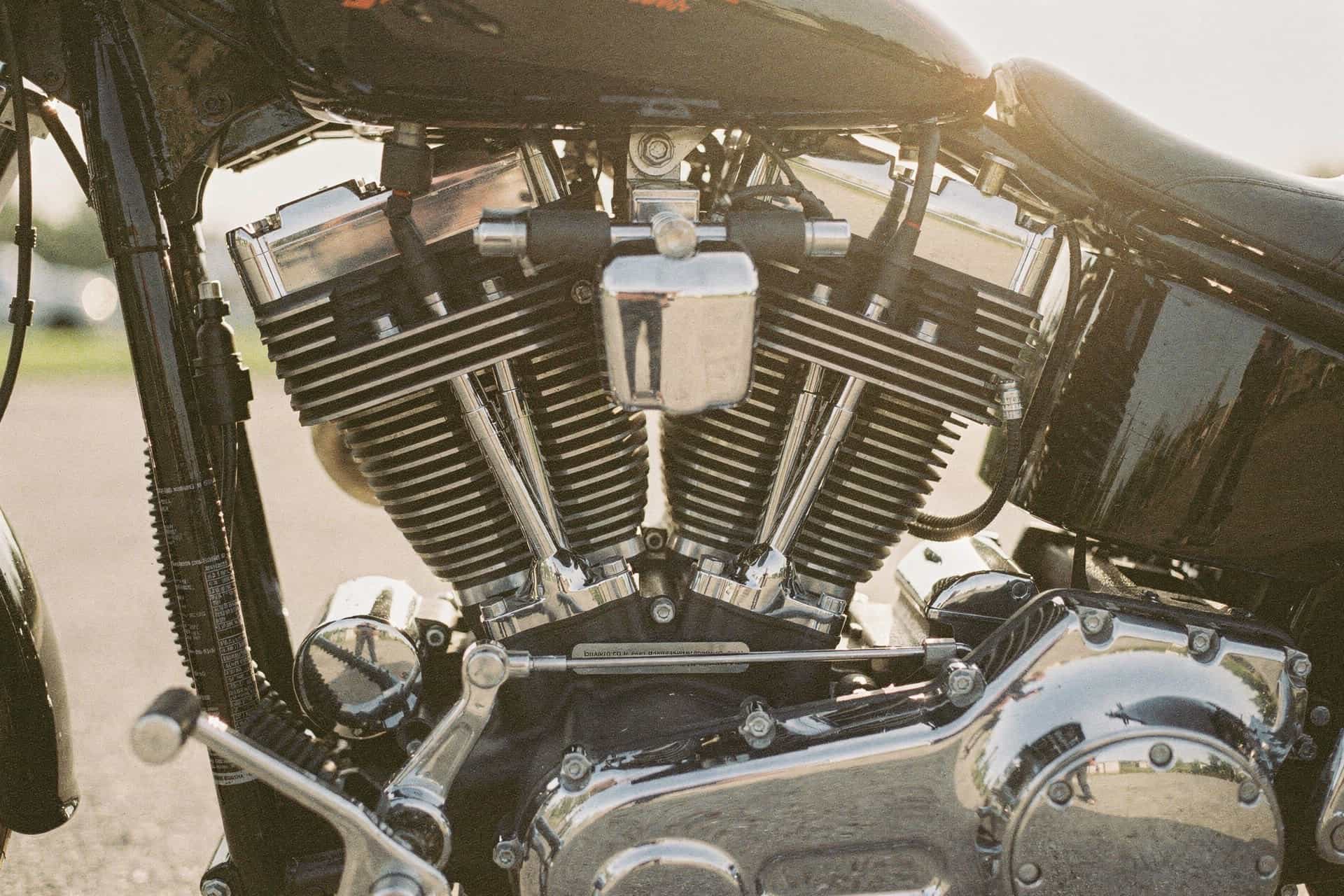
Ask what a Twin Cam 103 makes and you get two answers that never quite line up. Harley’s own spec sheet gives a torque figure and no horsepower at all. The internet gives horsepower numbers that came off a dynamometer, usually with no mention of which dyno, which correction factor, or what exhaust was on the bike.
Both numbers are real. They measure different things in different places, and converting between them with a rule of thumb is where most 103 discussions go wrong.
This guide separates them. What the cited Harley release actually supports, where exact model-year sheets are still required, what a rear-wheel dyno figure is, and what is left once unsupported ranges are removed.
The Short Answers
Displacement: 103 cubic inches, which is 1,690 cc. Bore 3.875 inches (98.4 mm), stroke 4.375 inches (111.1 mm), compression 9.6 to 1 on the 2012 specification.
Torque: Harley’s 2012 rollout announcement claimed up to 100 ft-lb of peak torque. It was a family-level maximum, not one universal rating for every 103-equipped model.
Horsepower: There is no factory number to quote. Harley’s US model-year specifications for this engine listed torque and left horsepower off the sheet.
Rear-wheel figures: Those come from dynamometers, not from Harley, and they are not comparable to the crank figure above without knowing exactly how they were measured.
What Harley’s 2012 Release Actually Proves
The phrase “the 103” covers rubber-mounted, counterbalanced, High Output and Twin-Cooled applications. The available factory rollout release supports a deliberately narrow set of claims.
| Factory statement | Scope | Limit |
|---|---|---|
| Up to 100 ft-lb peak torque | Harley’s 2012 Dyna, Softail and Touring rollout | A maximum, not every model’s rating |
| Approximately 6 percent more peak torque than the Twin Cam 96 it replaced | Models covered by the 2012 announcement | Not a horsepower claim |
| 103 standard on all 2012 Dyna, Softail and Touring models except Street Bob and Super Glide Custom | 2012 US lineup | Does not describe later High Output or Twin-Cooled ratings |
Softails rigid-mount the 103B and use internal counterbalancers, while Dyna and Touring applications use rubber mounting. Cooling, intake, exhaust, calibration and model year also differ, so the counterbalancers alone do not explain the rating spread.
The lesson worth taking from that table: there is no single “Harley 103 torque number.” There is a number for your model in your model year, and it is on that model’s specification page.
Harley’s own comparison, when the Twin Cam 103 became standard equipment for 2012, was that the engine “produces up to 100 ft lbs. peak torque, an increase of approximately 6 percent over the Twin Cam 96 engine it replaces.” Displacement increased from 96 to 103 cubic inches, about 7.3 percent. Torque did not rise in a fixed one-to-one ratio with displacement.
Why There Is No Factory Horsepower Number
The cited US Twin Cam material publishes torque and leaves horsepower off the specification. It does not explain that editorial choice, so claims about Harley’s marketing motive or how riders use the rev range would be inference rather than factory fact.
What it means for this guide: the cited US model-year material supplies no factory horsepower figure, so this article does not invent one.
Crank Versus Rear Wheel: How to Read a Dyno Number
This is the reconciliation that makes the rest of the article usable.
Harley’s figures are crank figures, measured on an engine dynamometer to a standard test method, with the engine in a controlled configuration.
Rider dyno figures are rear-wheel figures, measured with the bike on a chassis dyno, with everything between the crank and the tire still in the loop: primary drive, clutch, six-speed transmission, belt final drive and the tire itself.
Those two measurements are not interchangeable, and here is the part most articles get wrong: you cannot convert between them with a fixed percentage. Drivetrain loss is not a constant. It varies with tire pressure, tie-down tension, chassis dyno type, roller inertia, gear selected for the pull, oil temperature and drivetrain condition.
Six things change a rear-wheel number on the same motorcycle:
- Dyno type. An inertia dyno and a load-cell dyno measure differently.
- Correction factor. SAE, STD and DIN corrections produce different results from the same run. A number quoted without its correction factor is incomplete.
- Exhaust and intake. Stock, slip-ons and a full system are three different engines as far as the dyno is concerned.
- Tune. A stock emissions calibration and a flashed map do not make the same curve.
- Ambient conditions. Air temperature, pressure and humidity, which is what the correction factor is trying to normalize.
- Mechanical condition. A tired drivetrain, a slipping clutch or an under-inflated tire quietly eats output.
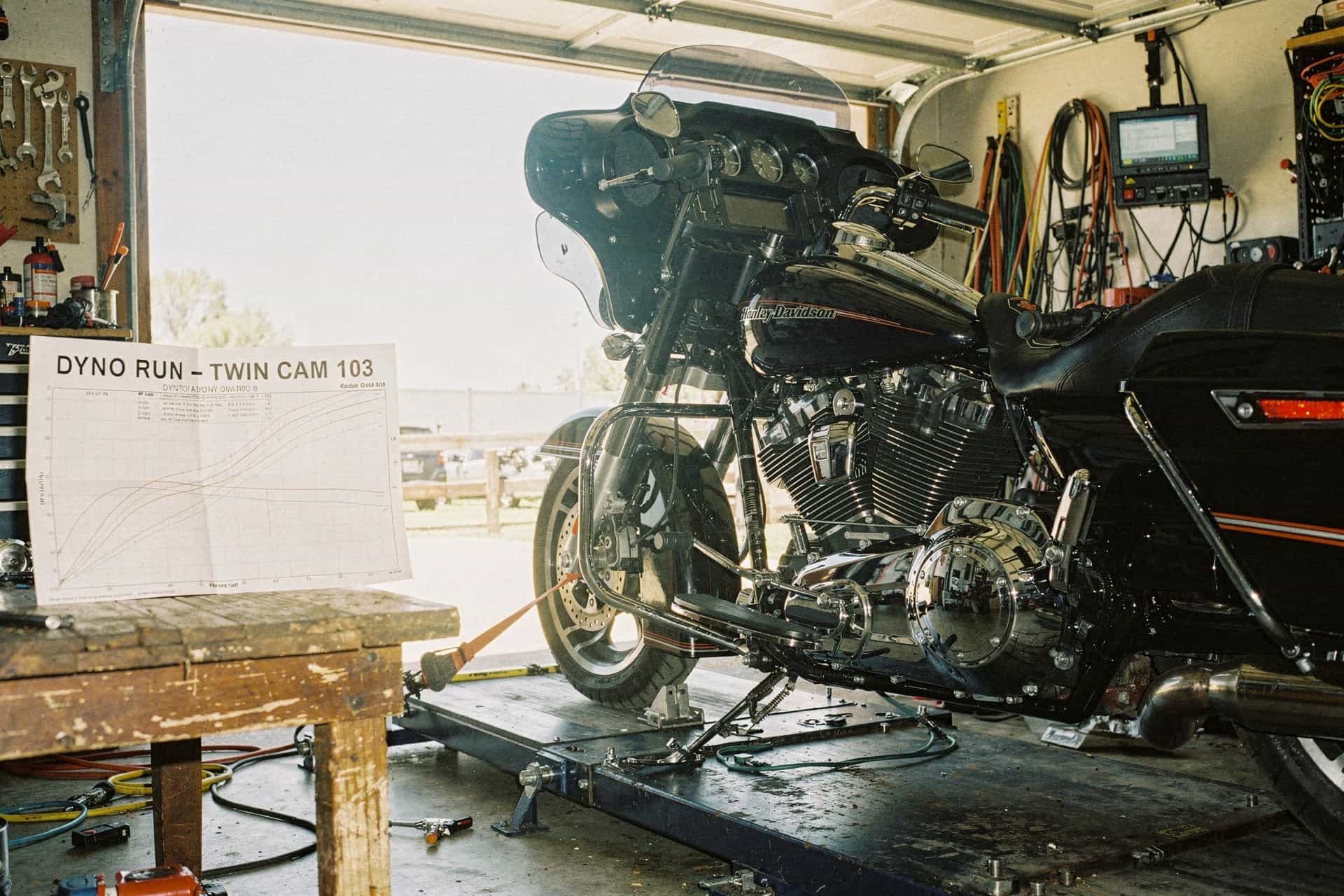
One rider-posted dyno sheet for a stock 103 shows roughly 72.8 horsepower at 5,500 rpm and 84.4 ft-lb at 4,250 rpm at the rear wheel. That is one bike, one dyno, one day, and the run conditions are not fully documented. It is a useful data point and it is not a specification. Earlier versions of this article turned that single pull into a “typical range” of 68 to 75 rear-wheel horsepower and then back-calculated a crank figure from it. Neither of those numbers was ever supported, and both have been removed.
The honest position: the single sheet above cannot establish a stock range. A defensible rear-wheel figure must stay attached to its run sheet, bike configuration, correction factor and dyno.
Comparing the 103 to What Came Before and After
Comparisons only work when both sides are the same kind of measurement. The sources used here support one direct factory comparison and one limit.
| Comparison | Supported statement |
|---|---|
| Twin Cam 103 against Twin Cam 96 | Harley’s 2012 release claimed approximately 6 percent more peak torque for the replacing 103 applications |
| Twin Cam 103 against Milwaukee-Eight | Compare exact model-year specification sheets using the same test method; do not mix a chassis-dyno result with a factory engine-torque rating |
Earlier versions of this page claimed the Milwaukee-Eight made 15 to 20 percent more power across the board. That mixed torque and horsepower, ignored model variants and had no same-method source, so no replacement percentage is given here.
For the engine the 103 grew out of, our Twin Cam 96 guide covers its specifications and its known failure points in detail.
Which Bikes Got the 103, and When
The Twin Cam 103 first appeared in 2003 in the FLHRSEI2 Screamin’ Eagle Road King, a CVO model, long before it became a mainstream option.
Harley’s 2011 announcement is the clean reference point for the mainstream rollout: for 2012 the Twin Cam 103 powered all Dyna, Softail and Touring models with the exception of the Dyna Street Bob and the Dyna Super Glide Custom. Those two carried the 96 before moving to the 103 later.
Touring, roughly 2012 to 2016: Road King, Street Glide, Electra Glide Ultra Classic, Road Glide, Ultra Limited.
Dyna, 2012 to 2017: Fat Bob, Low Rider, Wide Glide, Switchback, with Street Bob and Super Glide Custom joining later.
Softail, 2012 to 2017: Fat Boy, Heritage Softail Classic, Slim, Breakout, Deluxe. All counterbalanced 103B.
CVO models of the period generally ran the larger 110 rather than the 103. 2017 was the split year: Touring moved to the Milwaukee-Eight while Dyna and Softail ran the Twin Cam for one more season before the 2018 Softail platform consolidated both lines on the M8.
If you are working out which engine is actually in a used bike, decode it rather than trusting the badge. Our Harley VIN decoder guide covers which positions identify the engine family and what those tables can and cannot prove.
The 103 Against the 96: What Actually Changed
The 103 and the 96 share a 4.375 inch stroke. The extra displacement came from bore, 3.875 inches against 3.750 inches, with new pistons and cylinders and a recalibrated fuel map. Because the crankshaft stroke did not change, big-bore kits can take a 96 to 103 cubic inches without touching the bottom end.
Compression stepped up from 9.2 to 1 on the Touring 96 to 9.6 to 1 on the Touring 103. Higher compression makes the engine more sensitive to fuel quality, which is the practical reason riders notice the difference in hot weather or under a heavy load rather than on a cool morning.
The cam chain tensioner system carried over unchanged, which matters more than any of the above.
Known Issues
Cam chain tensioner wear. The hydraulic tensioners use wear shoes that need inspection under the service procedure for the exact model and year. A gear-driven cam conversion is only an option when measured crankshaft runout is within the gear manufacturer’s limit. Otherwise the chain-drive repair path remains. There is no factory failure mileage quoted in the sources used here, so no universal interval or conversion price belongs in this guide.
Heat on air-cooled Touring bikes. Air-cooled 103 Touring models, particularly those before the Twin-Cooled variants arrived, run hot in slow traffic. That is a characteristic of a large air-cooled twin in stop-and-go use, not a defect.
Compensator wear. The primary drive compensator is a known wear item across the Twin Cam family. A clunk or click at idle, especially on the transition between drive and overrun, is the usual first symptom.
Oil sumping after sitting. Twin Cams can accumulate oil in the crankcase when parked for a while. Let a cold engine idle rather than revving it, and let oil pressure stabilize.
If a running fault has you chasing sensors, our crank position sensor guide explains why a code names a circuit rather than a part.
Upgrades, and What Can Honestly Be Claimed About Them
The 103 responds well to breathing and tuning work. That much is not controversial. The output numbers attached to that work are, so here is what can and cannot be stated.
What can be stated. Fuel Moto’s Twin Cam 103 camshaft shootout is a back-to-back comparison of cam profiles run by one shop on one engine in one configuration. That is exactly what makes it useful for ranking cams against each other, and exactly what makes it unsuitable as a prediction of what your bike will make. Read it as a comparison, not a promise.
Component manufacturers publish their own claims for their own parts. S&S, for example, has published results in the region of 101 horsepower and 105 ft-lb from a cammed 103 in their test configuration. That is a manufacturer claim about a specific build, and it is a legitimate thing to cite as long as it is labeled as one.
What cannot be stated. Earlier versions of this article gave horsepower and torque ranges for Stage 1, Stage 2 and Stage 3 builds, plus percentage gains and price brackets, none of which had a source. Those have been removed rather than reworded. A cam and exhaust package makes what it makes on your engine, with your tune, in your climate, and the only figure that describes your bike is the one from your dyno sheet.
What holds up regardless of the numbers. Intake, exhaust, cam and calibration changes have to be evaluated as one configuration. Follow each component manufacturer’s instructions and verify the result on the actual motorcycle rather than combining advertised peak figures from different builds.
Buying a 103-Powered Bike
Ask about the tensioners. Have they been inspected or converted, and is there paperwork. A bike with unknown cam chest history is not a dealbreaker, it is a budget line.
Ask for service records. The scheduled services on this platform include primary and transmission fluid, and a documented history is worth paying for.
Ask how it was used. A bike that spent its life in slow city traffic has heat-cycled harder than one that covered highway miles.
Listen at cold idle. Chain rattle from the cam chest and a clunk from the primary are both audible before they are expensive.
Confirm the variant. A Softail 103B, a Touring 103 and a High Output 103 are three different specifications. Decode the VIN and check the model-year spec sheet rather than the tank badge.
What the 103 Is Actually For
Read the model-year torque sheet rather than substituting an unsupported horsepower estimate. It tells you the documented peak for that exact application, while a chassis dyno shows what that individual motorcycle delivers at the rear wheel.
The Harley-Davidson history guide places the Twin Cam in the wider engine lineage. Riders drawn to the rubber-mount chassis story should read up on the FXR platform, and anyone weighing the Sportster route instead can start with the 1200 upgrade path.
Turning a 103 bike into a custom bobber? Breathing mods and visual stripping go together naturally. Throw on a Bobber Brothers tee for the wrench sessions.
Sources
- Harley-Davidson - More Harley-Davidson Models With Twin Cam 103 Power in 2012 - manufacturer announcement stating up to 100 ft-lb peak torque, the approximately 6 percent increase over the Twin Cam 96, and which 2012 models received the engine
- 2012 Harley-Davidson Twin Cam 103 V-Twin Engine specifications - Total Motorcycle - published 2012 specification sheet: 1,690 cc displacement, 98.4 mm bore, 111.1 mm stroke, 9.6 to 1 compression, and the 100 ft-lb at 3,500 rpm rating
- History of Harley-Davidson engine types - Harley-Davidson USA - official engine family history and model-year context for the Twin Cam and Milwaukee-Eight generations
- Harley-Davidson Twin Cam engine - Wikipedia - reference overview used for the 2003 FLHRSEI2 CVO first application and the Twin Cam variant list
- H-D Twin Cam 103 camshaft shootout - Fuel Moto University - one shop’s back-to-back cam comparison on a single Twin Cam 103 in a single configuration, cited as a ranking of cam profiles rather than a general output prediction
- S&S cams for the Harley-Davidson Twin Cam 103 - Cyril Huze Post - reported manufacturer performance claim for an S&S cam package on a 103, labeled as a manufacturer claim for a specific build
- Stock 103 dyno results thread - HDForums - rider-posted rear-wheel dyno sheet cited as a single documented run, not as a typical range