Somewhere around 1956, Harley-Davidson’s engineering department had a problem. Their K-model flathead was getting humiliated on the street by Triumph Thunderbirds and BSA Gold Stars - British bikes with overhead-valve engines that made more power from smaller displacements. Harley’s Big Twin Panheads were too heavy for younger riders. The competition was stealing an entire generation of motorcyclists, and Milwaukee knew it.
The fix was the XL Sportster. Launched in 1957, it jammed an overhead-valve V-twin into the K-model’s unit-construction chassis, immediately leapfrogging the British twins in torque while keeping the compact frame that actually fit riders under six feet tall. That first 883cc Ironhead made around 40 horsepower - nothing by modern standards, but enough to embarrass a Bonneville off the line and establish a bloodline that would run for 65 years.
The Sportster became the longest-running nameplate in Harley-Davidson’s history. From drag strips to backroad bobbers, from beginner bikes to flat-track legends, the XL family did it all. This is the complete story - every engine era, every major model shift, and what you need to know if you’re buying one.
The Ironhead Era: 1957-1985
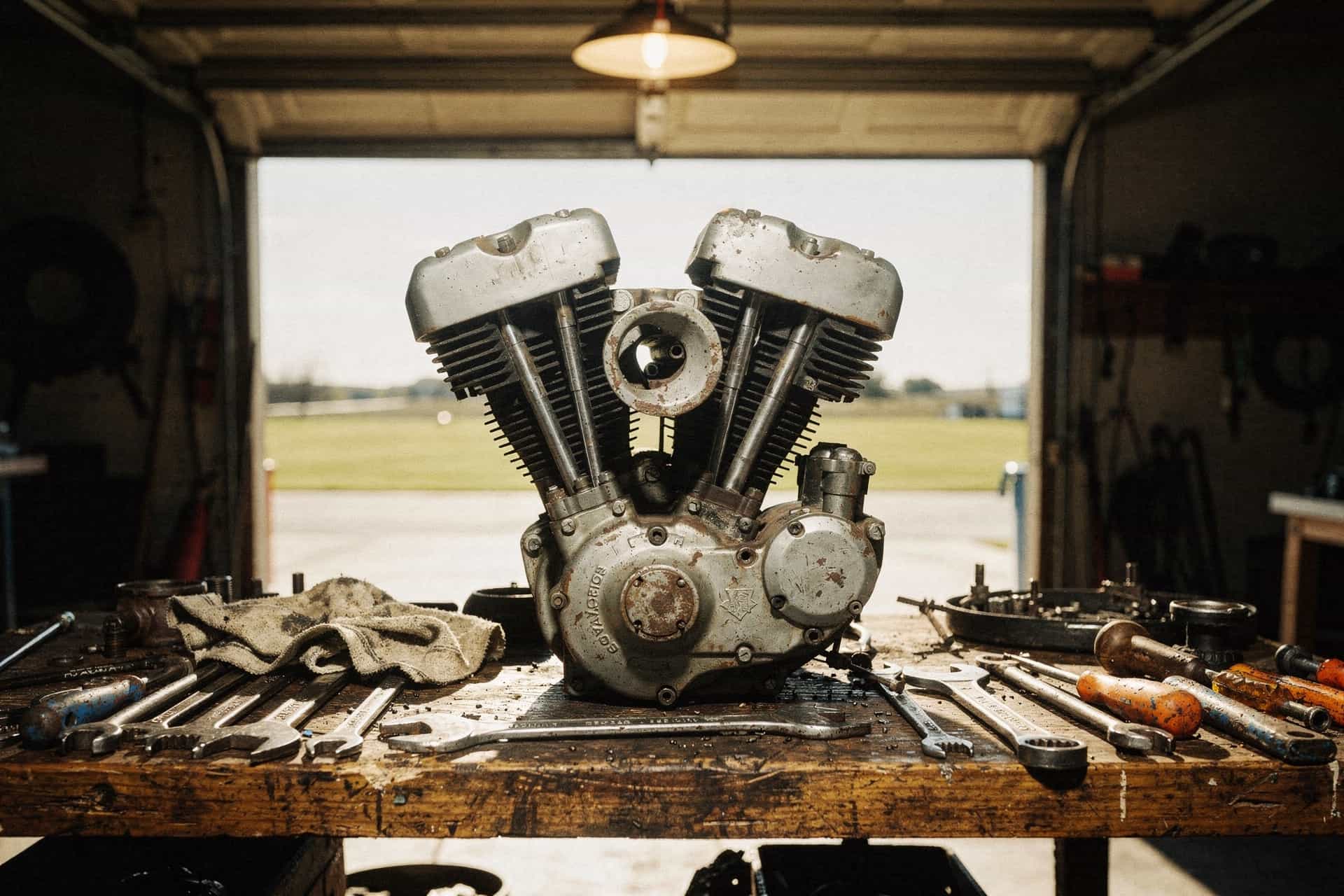
The original XL Sportster debuted in 1957 with an 883cc (54 cubic inch) overhead-valve V-twin that Harley internally called the Ironhead - named for its cast-iron cylinder heads and barrels. The engine used a 45-degree V angle, four cams, and pushrod-actuated overhead valves. Unit construction (engine and transmission sharing a single case) carried over from the K-model, making the Sportster mechanically distinct from Harley’s Big Twin lineup from day one.
That first XL made roughly 40 horsepower. By 1958, Harley offered the XLCH - the “CH” standing for “Competition Hot.” The XLCH came with a magneto ignition, smaller peanut tank (2.1 gallons), higher-compression pistons, and a stripped-down look that became the visual template for every Sportster bobber built since. Where the base XL was a sport-touring machine with a larger tank and lower compression, the XLCH was a streetfighter. Riders who wanted to race ran the XLCH. Riders who wanted to cruise bought the XL. This split personality defined the Sportster for decades.
Growing Displacement
In 1972, Harley bumped the Sportster to 1000cc (61 cubic inches) by increasing the bore. The XLCH and XLH (the touring-oriented model with an electric starter added in 1967) both got the larger engine. Power climbed to roughly 61 horsepower, and the bike gained a front disc brake - a long-overdue upgrade from the drum setup.
The 1000cc Ironhead stayed in production through 1985. These late-model Ironheads are the ones most riders remember, and opinions on them are sharply divided. The engine leaked oil. It vibrated hard enough to crack mirrors. The points ignition needed constant fiddling. But the sound - a mechanical, clattery bark with a deep exhaust note - is something the later Evolution engine never quite replicated. We’ve had riders bring Ironhead Sportsters to events and the engine noise alone turns more heads than any chrome-dripping bagger in the parking lot.
XR-750: The Flat-Track Legend
You can’t tell the Sportster story without the XR-750. Introduced in 1970 as a flat-track racing machine, the XR-750 used an Ironhead-derived engine with alloy heads (replacing the cast iron that overheated on the track). After a rocky 1970 debut with iron heads that ran too hot, the revised 1972 alloy-head XR-750 became the most dominant dirt-track motorcycle in AMA history.
Cal Rayborn, Jay Springsteen, Scott Parker, and Chris Carr all won championships on the XR-750. The bike racked up more AMA Grand National wins than any other machine. Evel Knievel didn’t race one - he jumped them, making the XR-750 arguably the most photographed motorcycle of the 1970s. Production ran from 1970 all the way to 2008, nearly four decades of competitive dominance on a basic air-cooled pushrod twin.
The XR-750’s legacy bled directly into street models. The 2008 XR1200 - a short-lived street-legal Sportster with XR-inspired bodywork, twin exhaust, and 91 horsepower - was the most aggressive Sportster Harley ever built. It sold poorly in the US but developed a cult following in Europe, where riders understood what a hooligan street-tracker was supposed to feel like.
The Evolution Engine: 1986-2022
By the mid-1980s, Harley-Davidson was fighting for survival. The 1981 management buyout from AMF had saved the company from corporate neglect, but the motorcycles themselves needed serious engineering attention. The Ironhead Sportster leaked, vibrated, and couldn’t match the reliability of Japanese competitors selling for less money.
The answer arrived in 1986: the Evolution Sportster engine. Often called the Evo, this was a ground-up redesign that kept the 45-degree V-twin configuration and unit construction but replaced the cast-iron heads and cylinders with aluminum alloy. The aluminum construction cut weight, improved heat dissipation, and dramatically reduced oil leaks - the Ironhead’s most persistent reputation problem.
The Evolution Sportster launched with two displacements: 883cc and 1100cc. In 1988, Harley dropped the 1100 and replaced it with a 1200cc variant that would remain in production for 34 years. Both engines used electronic ignition (replacing the Ironhead’s points system), hydraulic valve lifters (reducing maintenance), and an improved oiling system that actually kept the lubricant inside the engine.
What Made the Evo Different
The technical changes were significant. The Evolution Sportster engine uses four individual gear-driven camshafts - one per valve - with the cam lobes arranged sequentially. The pushrods run parallel to the cylinder axis rather than at an angle. This layout creates a unique valve train geometry that’s different from both the Ironhead Sportster and the Big Twin Evolution (which uses a single cam with four lobes).
Compression ratios climbed. The 883 ran approximately 8.9:1 to 9.0:1 compression depending on model year, with the 1200 at 9.0:1 in early years and climbing to 10.0:1 on later models like the XL1200S Sport. Bore and stroke for the 883: 3.00 x 3.81 inches. For the 1200: 3.50 x 3.81 inches - same stroke, bigger bore. This meant the 1200 was essentially an 883 with larger cylinders bolted on, which became the basis for every aftermarket big-bore kit on the market.
Peak power numbers for the Evolution Sportster were modest by sportbike standards but perfectly adequate for what the bike was. The 883 made approximately 50-52 horsepower and 54 lb-ft of torque at the crank. The 1200 made roughly 60-67 horsepower depending on model year and exhaust configuration. The power delivery was all midrange - a fat torque curve from 2,500 to 4,500 RPM that made the Sportster a satisfying around-town bike even in stock form.
The Rubber-Mount Revolution: 2004
If there’s a single model year that separates “old” Evo Sportsters from “modern” ones, it’s 2004. That year, Harley-Davidson moved the Sportster from a rigid-mount frame to a rubber-mounted engine configuration, isolating engine vibration from the chassis. The company also redesigned the frame entirely, giving the Sportster a new look and improved handling.
The difference in ride quality is substantial. Rigid-mount Sportsters (1986-2003) transmit every combustion pulse directly through the frame into your hands, feet, and spine. At highway speed, the vibration numbs your fingers and blurs your mirrors. Some riders consider this essential character. Others call it a design flaw.
Rubber-mount Sportsters (2004-2022) are dramatically smoother. The engine still rumbles - it’s a 45-degree V-twin with a single crank pin, so perfect balance is mechanically impossible - but the chassis doesn’t amplify it. Mirrors stay readable. Bar-end numbness disappears. For a daily rider or a bobber build, the 2004+ platform is the practical choice.
We’ve worked on both generations in our shop. Honest take: if you’re building a weekend-only bobber and you want maximum character, a rigid-mount 1200 sounds and feels rawer. If you’re riding the thing 40 miles to work every day, buy a 2004 or later and save your wrists.
Notable Evolution-Era Models
The 36-year Evolution Sportster run produced dozens of model variants. These are the ones that moved the needle:
XLH 883 Hugger (1988-2003): Lowered suspension dropped seat height to around 27 inches, making it the go-to recommendation for shorter riders and new riders. The Hugger opened the Sportster up to an audience that had been physically locked out of Harleys. It was the best-selling Sportster model for most of its production run.
XL 1200S Sport (1996-2003): The hottest factory Sportster of the rigid-mount era. Adjustable suspension, dual front disc brakes, higher-lift cams, and revised porting pushed output to around 65 horsepower at the rear wheel - serious numbers for an air-cooled pushrod twin. These are sought-after on the used market and command a premium over standard 1200s.
XL 1200N Nightster (2007-2012): Blacked-out everything. Black powdercoated engine, matte-finish tank, fork gaiters, solo seat, drag bars. The Nightster was Harley’s response to the dark-custom trend, and it landed perfectly. At 57 horsepower with a bobbed rear fender, the Nightster practically begged to be stripped down further. It’s still one of the most popular Sportster variants for bobber conversions.
XL 1200X Forty-Eight (2010-2022): The peanut-tank Sportster. That tiny 2.1-gallon tank sitting on a fat-tire, wire-spoke, blacked-out chassis made the Forty-Eight the closest thing to a factory bobber Harley ever sold. Range was terrible - 70 to 90 miles on a tank - but the proportions were perfect. If you’re looking at the evolution of how Harley viewed the Sportster, the Forty-Eight marks the moment the company fully embraced the custom builder aesthetic.
XL 883N Iron 883 (2009-2022): The entry-level dark custom that became Harley’s volume Sportster. Blacked-out engine, drag bars, mid-mount controls, and a price point under $9,000 new made the Iron 883 the gateway drug for an entire generation of Harley riders. Used examples now sell for $3,500-$5,500, making them the cheapest route into the Sportster platform.
XL 1200CX Roadster (2016-2020): Inverted front forks, a flat tracker-style seat, clip-on-adjacent handlebars, and an aggressive riding position made the Roadster the most sport-oriented Sportster since the XL 1200S. It also got dual front disc brakes and fully adjustable rear shocks. Harley killed it after five years, and prices on clean examples have been climbing since.
If you’re building a Sportster project or just repping the brand, our full collection has gear designed specifically around the HD heritage - from shop-floor tees to hoodies built for the garage and the road.
The 1200 Sportster: Why It Became a Legend
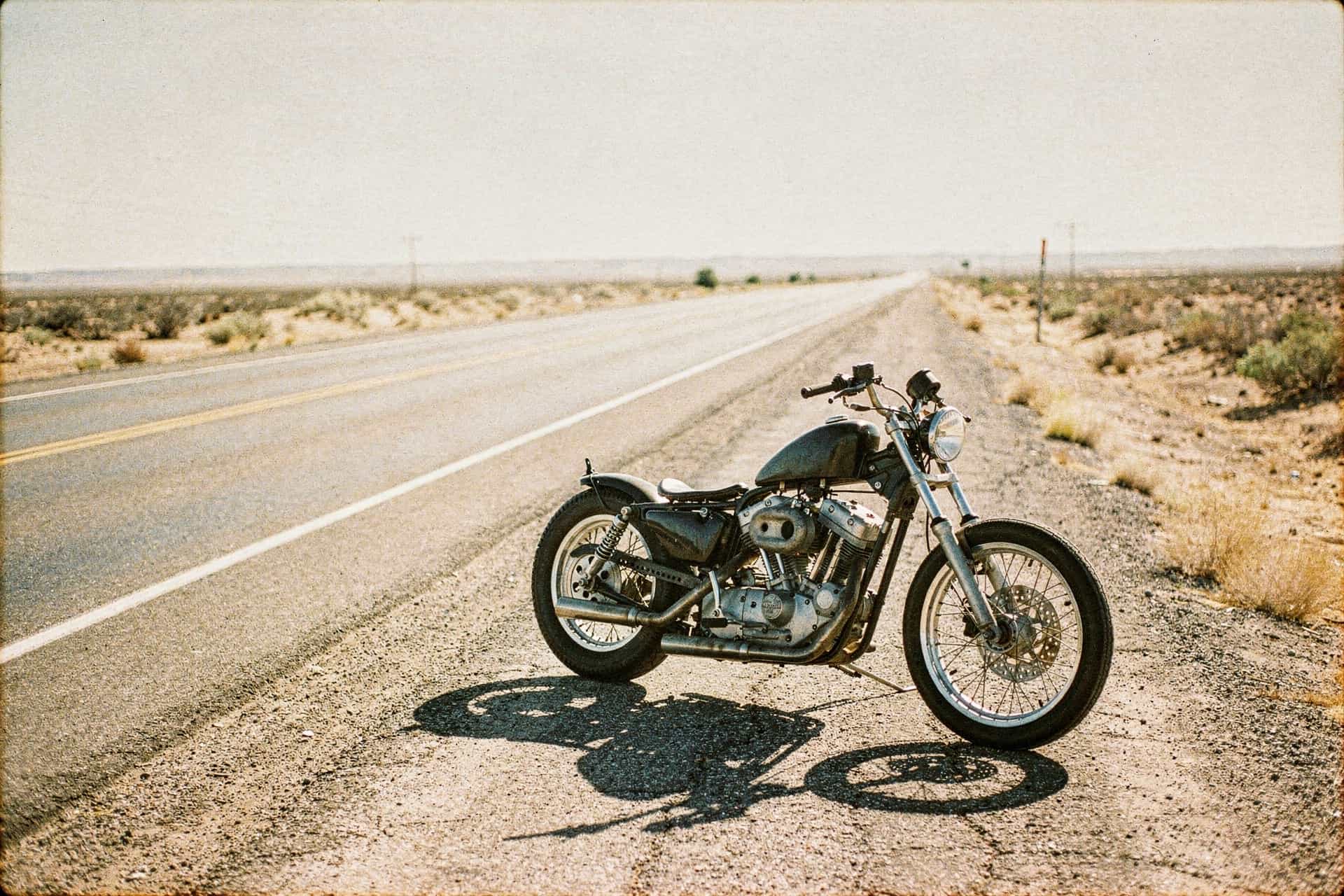
The Harley-Davidson 1200 Sportster deserves its own section because it became something larger than just a motorcycle model. For 34 years (1988-2022), the 1200cc Evolution Sportster sat at a unique intersection: enough power to be genuinely fun, small enough to be manageable, cheap enough to be accessible, and simple enough to work on in a single-car garage with basic hand tools.
The 1200 Sportster engine is a 73.4-cubic-inch air-cooled V-twin with a 3.50-inch bore and 3.81-inch stroke. It runs a gear-driven cam system, hydraulic lifters, and electronic fuel injection (from 2007 onward; earlier models used a CV carburetor). The engine bolts directly into the frame as a stressed member on rigid-mount versions, contributing to overall chassis stiffness.
What makes the 1200 matter for custom builders is its aftermarket support. The engine shares architecture with the 883, meaning big-bore kits from companies like Hammer Performance and S&S Cycle can take an 883 out to 1200cc or 1250cc using the same cylinder jugs. Going the other direction, 1200-to-1250 kits exist from S&S (the Hooligan kit), Zipper’s Performance, and others. Stroker kits can push displacement to 1275cc or beyond, though at that point you’re stressing the bottom end beyond factory tolerances.
The crate engine market grew around the Evolution Sportster because of this modularity. Harley-Davidson sold complete 883cc and 1200cc crate engines through its Genuine Motor Parts catalog for decades, allowing builders to drop a factory-fresh long block into an older chassis. Third-party builders like S&S Cycle and Ultima offered their own Sportster-compatible crate motors with higher compression, performance cams, and ported heads. For anyone building a Sportster from a bare frame - whether it’s a hardtail bobber or a custom tracker - crate engines eliminated the need to source and rebuild a used powerplant.
Two things are worth knowing before you shop for one. First, a crate motor is a long block, not a motorcycle: exhaust, intake, tuning, and often the clutch and primary are your problem, and that is where crate budgets go wrong. The same trap sank plenty of Big Twin builds around the race-only SE120R, which quoted its horsepower with a parts list the crate did not contain. Second, the used crate market is now larger than the new one for air-cooled Sportsters, because Harley stopped building the platform in 2022. Our Evo crate motor guide covers who still supplies these, what the fitment traps are, and what a fair price looks like.
The End of an Era: 2022 and the Revolution Max
In 2020, Harley-Davidson CEO Jochen Zeitz announced the “Hardwire” strategy, a plan to refocus the company on its most profitable segments and modernize the lineup. The Sportster was about to change more dramatically than it had since 1957.
The last air-cooled Evolution Sportster - a Gunship Gray 883 - rolled off the line on November 18, 2022, closing out the 2022 model year. After 36 years, the Evo Sportster was done. In its place, Harley introduced the 2021 Sportster S - a radically different motorcycle built around the Revolution Max 1250T engine.
The Revolution Max is a 1252cc liquid-cooled 60-degree V-twin with double overhead cams, four valves per cylinder, and variable valve timing. It makes 121 horsepower and 94 lb-ft of torque - nearly double the output of the outgoing Evolution 1200. The engine is a stressed member of the chassis (no traditional frame cradle), the suspension is fully adjustable with inverted forks and a piggyback reservoir rear shock, and the bike weighs 502 lbs wet. By the numbers, it’s closer to a Ducati Monster than an old Iron 883.
2022 Nightster: The New Entry Point
In 2022, Harley launched the Nightster - a smaller-displacement sibling using the Revolution Max 975T engine. This 975cc liquid-cooled V-twin makes 90 horsepower and 70 lb-ft of torque, slotting below the Sportster S as the new entry into the Sportster family.
The 2022+ Nightster keeps the Sportster name and some of the visual DNA - solo seat, blacked-out engine, minimal bodywork - but shares almost nothing mechanical with the Evolution Sportster it replaces. Gone are the air-cooled cylinders, the pushrod valve train, and the traditional frame. In their place: water jackets, DOHC heads, ride-by-wire throttle, a six-speed transmission, and a full suite of electronics including cornering ABS, traction control, and multiple ride modes.
For Harley purists, this was divisive. The air-cooled Sportster was the last mechanical link to the Ironhead, which was the last link to the K-model, which descended from the original WL flatheads. That unbroken chain of pushrod, air-cooled V-twin engineering stretching back to the 1930s - gone.
For riders who evaluate motorcycles on performance rather than heritage, the new platform is objectively better. More power, better handling, superior brakes, and technology that actually competes with European and Japanese sport-cruisers.
The Lineup as It Stands in 2026
Harley expanded the Revolution Max Sportster range into three models and has held that shape since. The Nightster Special arrived as a mid-tier option with the 975T engine plus a headlight mini-fairing, full Showa suspension, cruise control, a passenger pillion, and a Bluetooth TFT display: a touring-capable Nightster for riders who wanted the smaller engine with more road-trip practicality.
| 2026 model | Engine | Output | MSRP, base colour |
|---|---|---|---|
| Nightster | Revolution Max 975T | 90 hp | 9,999 US dollars |
| Nightster Special | Revolution Max 975T | 91 hp at 7,500 rpm, 72 lb-ft at 5,750 rpm | 12,499 US dollars |
| Sportster S | Revolution Max 1250T | 121 hp | 15,999 US dollars |
Two things stand out in those numbers. A liquid-cooled, ride-by-wire, 90 horsepower Nightster now starts under ten thousand dollars, which is roughly where the last air-cooled Iron 883 sat. And the spread from the entry Nightster to the Sportster S is six thousand dollars, which makes the middle model the one worth test riding rather than the one worth skipping.
Add the destination charge, currently 730 dollars on the Sportster S, and note that non-standard colours run 450 to 650 dollars extra. New Revolution Max Sportsters carry a 24-month limited warranty.
Sportster Buyer’s Guide: What to Look For
If you’re shopping for a Sportster - whether for a bobber build, a daily rider, or a weekend cruiser - the model year matters more than almost anything else. Here’s how to think about it.
Ironhead Sportsters (1957-1985)
Buy one if: You want a project bike with maximum mechanical character, you’re comfortable wrenching regularly, and you value sound and soul over reliability. Ironheads are the only Sportsters that sound like Ironheads.
Watch for: Oil leaks (unavoidable on any Ironhead - budget for gaskets and seals), electrical gremlins on the 6-volt models (1957-1964), worn cam lobes (common on high-mileage examples), and frame cracks near the steering head on hard-ridden bikes. A complete, running 1000cc Ironhead typically sells for $4,000-$8,000 depending on condition and year. Early 883cc XLCH models (1958-1971) command higher prices, especially if they retain the magneto ignition.
Rigid-Mount Evo Sportsters (1986-2003)
Buy one if: You want an affordable, reliable bobber platform with old-school vibration character. These are the sweet spot for budget builds - mechanically sound engines that are far easier to maintain than Ironheads, but with enough V-twin shake to remind you what you’re riding.
Watch for: The 1986-1990 models used a 4-speed transmission (5-speed came in 1991). Belt drive arrived in 1991 on the 883 Deluxe and all 1200 models, and became standard across all Sportsters by 1993 - earlier models run chain final drive. The 1998+ models got a stiffer frame. Clean examples run $2,500-$5,000 depending on displacement and mileage.
Rubber-Mount Evo Sportsters (2004-2022)
Buy one if: You want the best overall Sportster ownership experience on the Evolution platform. Smoother ride, modern fuel injection (2007+), and the deepest aftermarket support of any Sportster generation. These are the practical choice for daily riders and builders who plan to ride their projects, not just stare at them.
Watch for: The 2004-2006 models still used carburetors. Electronic fuel injection (EFI) arrived in 2007 and eliminated cold-start headaches and altitude-compensation issues. Cam chain tensioner wear is the most common mechanical issue - listen for a rattling noise at startup that fades after a few seconds. The fix is a hydraulic tensioner upgrade or gear-driven cam conversion, running $300-$600 in parts. Clean rubber-mount Sportsters sell for $3,500-$7,500 depending on model and year.
Revolution Max Sportsters (2021+)
Buy one if: You want maximum performance from the Sportster name and you’re not attached to the air-cooled aesthetic. The Sportster S is a genuinely fast motorcycle. The Nightster is a capable all-arounder. Both handle better than any previous Sportster by a wide margin.
Watch for: These are first-generation designs on a new platform. Early Sportster S models (2021-2022) had some ECU mapping quirks and a rear shock that some riders found too stiff for street use. The 2023+ models refined the calibration. Dealer markup on new models has largely disappeared as inventory normalized. The Nightster’s 975cc engine has proven reliable in its first years of production, with no widespread mechanical issues reported through major owner forums.
The Sportster’s Place in Harley-Davidson History
Across 65 years of air-cooled production and a Revolution Max era still running, the Sportster served as Harley-Davidson’s proving ground. New technology hit the Sportster first - overhead valves (1957), aluminum engine construction (1986), rubber mounting (2004), liquid cooling and DOHC (2021). It was the test bed, the entry-level gateway, the flat-track racer, the drag strip weapon, and the bobber builder’s favorite canvas, all running under the same XL designation.
The Sportster also served a less glamorous but equally important role: it kept Harley-Davidson alive during lean years. When Big Twins were too expensive for younger riders in the 1960s, the Sportster brought them into the brand. When Japanese manufacturers dominated the reliability conversation in the 1980s, the Evolution Sportster proved Harley could build a modern engine. When the Dark Custom movement took hold in the late 2000s, the Iron 883 and Nightster gave a new generation of riders a reason to walk into a Harley dealership instead of a Triumph or Indian showroom.
More Sportsters have been bobbed, chopped, tracked, stunted, wrecked, rebuilt, and passed between riders than any other motorcycle in American history. That’s not marketing copy - that’s what happens when you build the same basic motorcycle for six decades and make it easy to customize.
Whether you’re hunting for a $3,000 Iron 883 to strip down in your garage or lining up a Sportster S for canyon carving, the XL family covers the full spectrum. Check our full gear collection for what to wear while you’re at it.
Sources
- Harley-Davidson Sportster Motorcycle History - Cycle World Classics Remembered - complete model history from 1957 XL through modern era
- 50 Years of the Harley-Davidson XR-750 Evolution - Cycle World - XR-750 racing history and AMA championship dominance
- The Evolution and Revolution of the Sportster Line - RevZilla Common Tread - Ironhead to Evolution to Revolution Max engine transitions
- History of Harley-Davidson Engine Types - Harley-Davidson USA - official engine history including Ironhead and Evolution Sportster designs
- Genesis of an Evolution - Cycle World (August 1985) - original coverage of the Evolution engine development program
- 2026 Sportster S - Harley-Davidson USA - current model specifications, MSRP, destination charge, and warranty term
- 2026 Nightster - Harley-Davidson USA - current base model pricing and Revolution Max 975T specification
- 2026 Nightster Special - Harley-Davidson USA - current mid-tier pricing, output figures, and equipment list
- Harley-Davidson Sportster History: Blowing Away Big Twins Since 1957 - Lowbrow Customs - detailed XLCH and XLH model specifications across production years