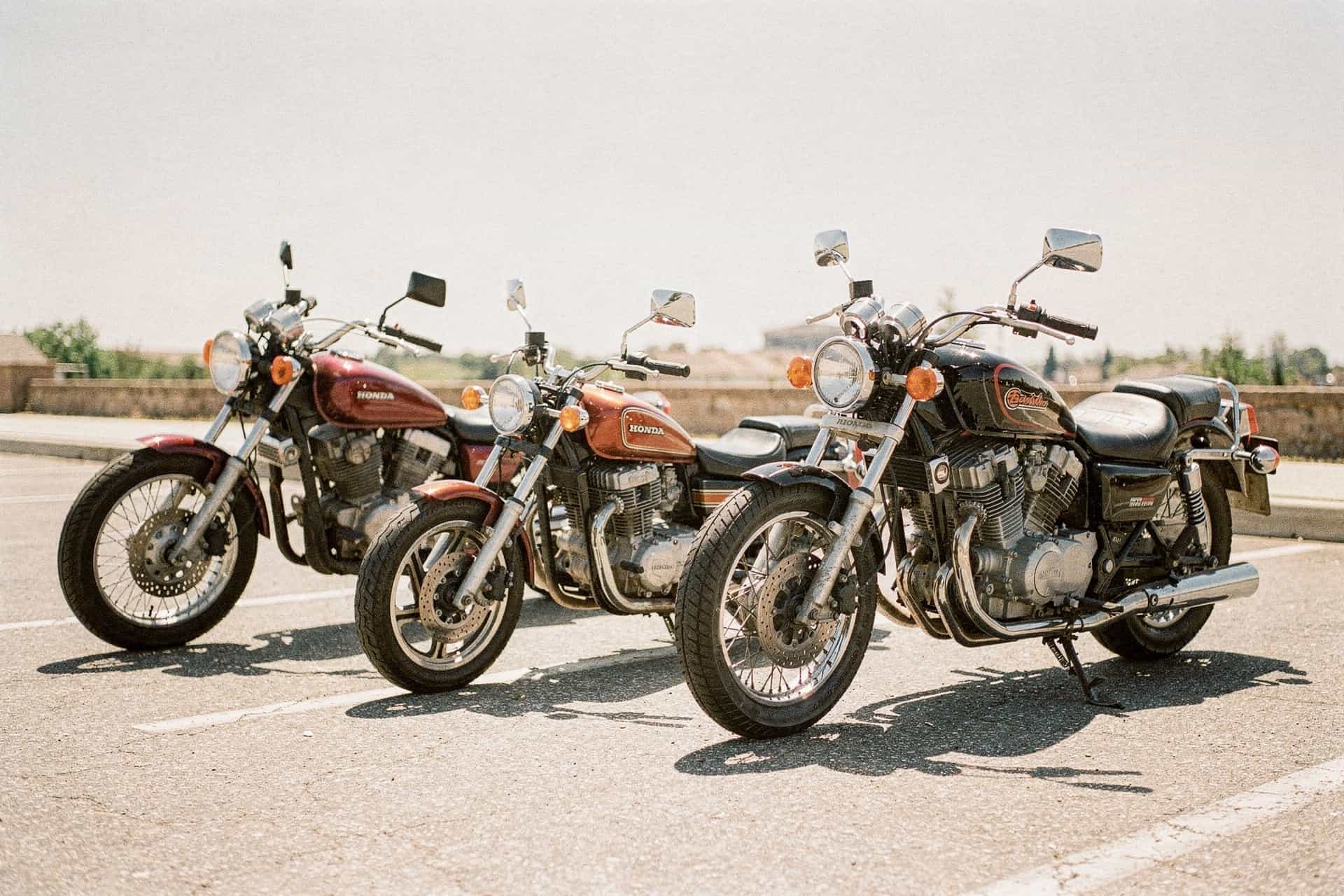
Pull into any bike night and you’ll see them parked side by side. One is long and low, a wide padded seat stretching back over a full rear fender, floorboards up front, saddlebags hanging off the sides. The other sits next to it looking like the same bike went through a shredder - solo seat, chopped fender barely covering the tire, everything unnecessary gone. Same engine family, same feet-forward stance, wildly different machines. That’s the bobber and the cruiser in one frame.
A bobber is a stripped-down cruiser - the same machine a cruiser is, minus the passenger seat, the fenders, and the bulk. Both share feet-forward roots and big V-twin hearts, but a bobber cuts weight for a lighter, more agile, solo ride, while a cruiser keeps the long wheelbase and big seat for comfortable distance riding.
Here’s how the two really differ, why they overlap so much, and which one belongs in your garage.
A Bobber Is a Cruiser That Went on a Diet
The reason people confuse these two is simple: they’re related by blood. A bobber isn’t a separate category of motorcycle the way a sport bike or an adventure bike is. It’s a custom style, and the bike it’s built from is almost always a cruiser.
The word “bobber” comes from “bobbing” - cutting down or removing bodywork to shed weight and clean up the lines. You start with a factory cruiser, then you strip it. Off comes the front fender. The rear fender gets bobbed short so it hugs the tire. The passenger seat, the pillion pad, the sissy bar, the big touring windshield, the saddlebags - all of it goes. What’s left is the essential machine: frame, engine, two wheels, one seat.
So when riders ask “is a bobber a cruiser,” the honest answer is that a bobber is a cruiser with the fat trimmed off. Motorcycle references treat the bobber as a subset of the cruiser family - a stripped custom built to reduce mass and increase performance, not a factory class of its own. The DNA is identical. The attitude is not.
That relationship shapes everything else. A bobber inherits the cruiser’s low-slung frame, its V-twin torque, and its relaxed geometry. Then the builder subtracts. Where a bobber splits from a full-blown chopper is that a chopper rebuilds the frame itself - raked neck, extended forks, stretched wheelbase - while a bobber leaves the cruiser’s bones mostly alone and just removes weight. If you want the British-rooted opposite of both, the bobber vs cafe racer split shows how a totally different culture answered the same “less is more” question.
It helps to know where the cruiser itself came from. The cruiser style is modeled on the classic American machines built by Harley-Davidson, Indian, Excelsior, and Henderson from the 1930s through the early 1960s. Those bikes set the template: big-displacement V-twin, low frame, feet-forward stance, torque over top-end power. Everything the modern cruiser is - and everything a bobber inherits - traces back to that era. So when guys started bobbing bikes after the war, they were working from cruiser stock because that’s what was in the driveway. The bobber has always been a cruiser with the fluff cut away, going back 70-plus years.
The engine tells the same story. Both bikes usually run a large V-twin tuned for low-end grunt. That means fat torque down low, less need to bang through the gearbox, and a lazy, tractable powerband that pulls from just off idle. It’s an easygoing way to make power, and it’s identical whether the bike wears a full fender or a bobbed one. A bobber doesn’t change the engine’s character - it just wraps less bike around it.
Ergonomics and Riding Position
Both bikes plant your feet forward. That’s the shared root. On a cruiser and on most bobbers, your feet sit ahead of your torso and your hands come up to meet swept-back bars, so your spine stays upright or leans back a little. It’s the opposite of a sport bike’s tucked, forward-leaning crouch.
The details diverge from there.
A cruiser leans into comfort. Big floorboards or forward pegs, a wide handlebar, and a deep seat give you room to shift around and settle in. The seat height sits low - often under 28 inches - which lets shorter riders flat-foot at a stop. The whole layout is tuned for hours in the saddle without your back or knees screaming.
A bobber pulls that triangle in tighter. The solo seat is thin - sometimes a sprung saddle bolted straight to the frame with barely any padding. Bars might be low drag bars or mid-height buckhorns instead of tall swept-back cruiser bars. Controls can be mids or forwards depending on the build. The result is a more compact, more aggressive-feeling perch. You sit in a bobber, tucked into the machine, rather than lounging on it.
Neither is wrong. One is a recliner. The other is a bar stool. They just answer different questions about how you want to sit for the next hundred miles.
There’s a control angle here too. The cruiser’s laid-back, feet-forward position feels great cruising in a straight line, but it hands you less leverage over the bars, which is part of why a heavy cruiser can feel like more bike than it is at parking-lot speed. Pull weight off with a bobber build and tighten the triangle, and you claw some of that leverage back. Your body sits closer to the controls, and the lighter machine responds with less effort. It’s a small change on paper that you feel every time you paddle the bike backward out of a tight spot.
Weight, Wheelbase, and Handling
This is where stripping parts off actually changes how the bike rides.
Cruisers are big and heavy on purpose. They run an extended wheelbase, a planted low frame, and real mass - which gives them a low center of gravity and rock-solid stability at highway speed. That stability is a feature. A loaded cruiser tracks straight and shrugs off crosswinds. The trade-off is that all that weight and length makes low-speed work harder. Tight U-turns, parking lots, and stop-and-go traffic ask more of you, and the long frame plus limited ground clearance means you scrape pegs if you push hard into a corner.
A bobber sheds a chunk of that weight. Pull the fenders, the passenger seat, the bags, the extra brackets, and you drop real pounds off a cruiser platform. Less mass means the bobber feels quicker to flick, easier to muscle at walking pace, and more willing to change direction. Motorcycle references and builders alike describe a bobber as more agile and quicker-feeling than the cruiser it came from, precisely because there’s less bike to move around.
We’ve swapped a heavy stock touring setup for a bobbed rear and a solo seat on the same donor frame, and the bike felt like it lost a passenger it never had. Slow-speed balance got noticeably lighter, and the front end woke up. Honest take: the difference is real, but it’s not magic. A bobber is still a low, feet-forward machine with cruiser geometry. It corners better than a raked-out chopper, but it’s no canyon carver. You’re gaining nimbleness relative to a cruiser, not turning it into a different animal.
Comfort and Two-Up Riding
Here’s the biggest practical gap between the two, and it’s the one riders feel fastest.
A cruiser is built to carry two people in comfort over distance. The wide seat, the passenger pillion, real rear suspension travel, and room to stretch all add up to a bike you can ride all day and bring someone along. That’s the whole point of the platform - relaxed, long-haul riding with a buddy or a partner on the back.
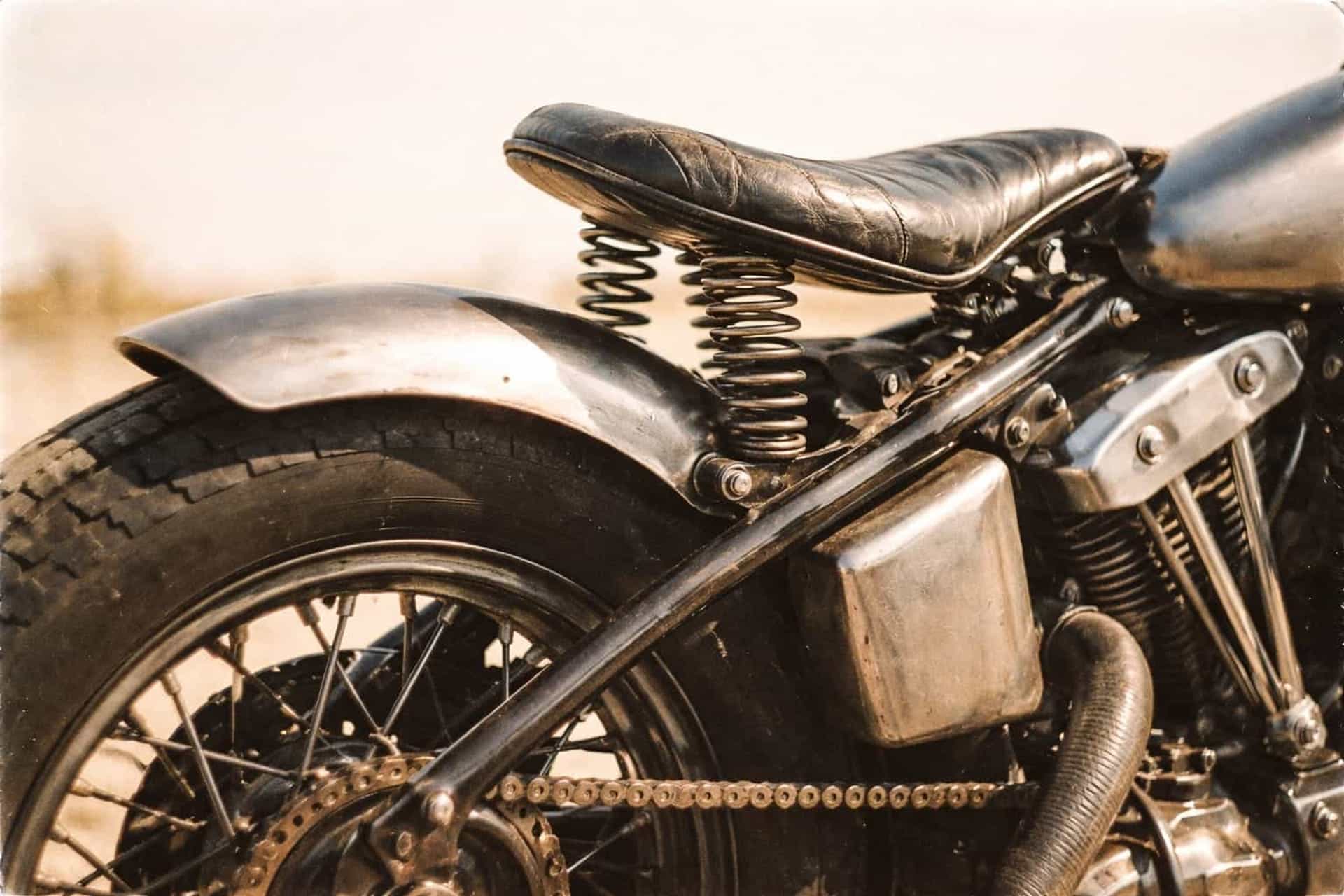
A bobber gives most of that up. The solo seat means solo riding, full stop. There’s usually no passenger seat, no pegs, no sissy bar to lean against. Rear suspension is often minimal, and on a hardtail bobber there’s no rear suspension at all - the frame is rigid and you feel every seam in the road straight up your spine. Over a short ride, that raw connection is part of the appeal. Over 200 highway miles, it’s a conversation with your chiropractor.
So the comfort question comes down to how you ride. If your riding is short blasts to the shop, to bike night, and around town, a bobber’s stiffer, stripped setup is a fair trade for the look and the lighter feel. If you rack up long days, carry a passenger, or tour, the cruiser’s padding and suspension earn their keep. This is the same reason the cruiser stays a go-to first bike for a lot of riders - stable, comfortable, forgiving. Some of the Japanese cruisers that dominated the segment built their reputation on exactly that all-day comfort.
Storage is the quiet part of this too. A cruiser carries hard bags or a big seat you can strap gear to, so a weekend trip is realistic. A bobber, by design, gives you almost nowhere to put anything. No bags, no rack, no room under a seat that’s bolted flat to the frame. Riders who bob their bikes learn fast to travel light or throw a small roll bag on and call it good. It’s another way the two bikes tell you what they’re for: one is packed for the road, the other is stripped for the moment.
Bobber vs Cruiser at a Glance
| Feature | Bobber | Cruiser |
|---|---|---|
| Relationship | Stripped-down custom of a cruiser | The base platform a bobber is built from |
| Wheelbase / size | Cruiser bones, trimmed bodywork | Long, extended, planted |
| Weight | Lighter - parts removed | Heavy on purpose |
| Agility | Quicker, easier at low speed | Stable but harder to muscle slow |
| Riding position | Feet-forward but compact and tucked | Feet-forward, relaxed, roomy |
| Seating | Solo seat, no passenger | Wide two-up seat |
| Comfort over distance | Harsh - thin seat, stiff or rigid rear | Cushioned, built for long hauls |
| Ground clearance | Low | Low, scrapes in hard turns |
| Best use | Short, agile, solo rides around town | Long, comfortable, two-up cruising |
| Ethos | Subtract to the essentials | Comfort and presence |
Which Should You Ride?
Start with how you actually spend your saddle time.
Ride a cruiser if you want comfort first: long days, highway miles, a passenger on the back, and a bike that feels planted at speed. The bigger seat and suspension make it the easier all-rounder, and the low seat height plus low center of gravity make it a genuinely friendly platform for a newer rider building confidence at stops and slow speeds. Cruisers get recommended as beginner bikes for exactly this reason - stable, predictable, and available with smaller engines that are easy to learn on.
Ride a bobber if the look and the lighter feel matter more than plushness. If most of your riding is solo, short-to-medium hauls, and you want a machine that turns heads parked outside the bar, the stripped-down build delivers. A bobber’s low center of gravity carries over from its cruiser roots, so it’s approachable at slow speed too - just be honest with yourself about the stiffer ride and the solo-only seat.
There’s also a difference in ethos worth naming. A cruiser is bought to be ridden as-is - you pick your model, add a windshield or bags, and enjoy it. A bobber is built. The whole point is that no two are alike, because the person who stripped it made a hundred small choices about what stays and what goes. That’s why the bobber sits at the heart of builder culture: it rewards the wrench, the swap meet find, and the late night in the garage far more than a stock cruiser ever asks for. If you like turning bolts as much as turning throttle, that alone can decide it.
One thing we tell riders in the shop every week: you don’t have to choose forever. Plenty of people buy a cruiser, ride it a season or two, then bob it themselves - pull the fenders, swap to a solo seat, drop the bags. That’s the beauty of the relationship between these two. Your cruiser is a bobber waiting to happen, and you can take it as far as you want, one bolt at a time. If you’re chasing a hands-on starting point, our roundup of the best Harley bobber builds shows what riders have done with common cruiser donors. And if you want more on where all this rolling iron came from, the broader motorcycle culture guide puts the styles in context.
Whichever way you lean, the culture is the same one - riders who care what they roll up on. Grab a hoodie for the cold morning rides and wear the life, not just ride it.
The bike you choose says something about how you like to ride. A cruiser says settle in and go the distance. A bobber says cut the excess and keep it raw. Same roots, two answers. Pick the one that matches your miles.
Sources
- Cruiser (motorcycle) - Wikipedia - Defines the cruiser’s feet-forward, hands-up, leaned-back riding position, low seat height, low center of gravity, and V-twin torque character.
- Types of Motorcycles - Wikipedia - Confirms the bobber as a stripped-down subset of the cruiser family, created by bobbing bodywork to reduce mass and increase performance.
- Progressive - What Is a Cruising Motorcycle? - Details cruiser ergonomics, lower seat height, limited suspension travel and cornering clearance, and best-use cases.
- Viking Bags - Different Styles of Cruiser Motorcycles - Lists cruiser sub-styles and describes the bobber as a stripped-down, more agile and quicker version of a cruiser.