


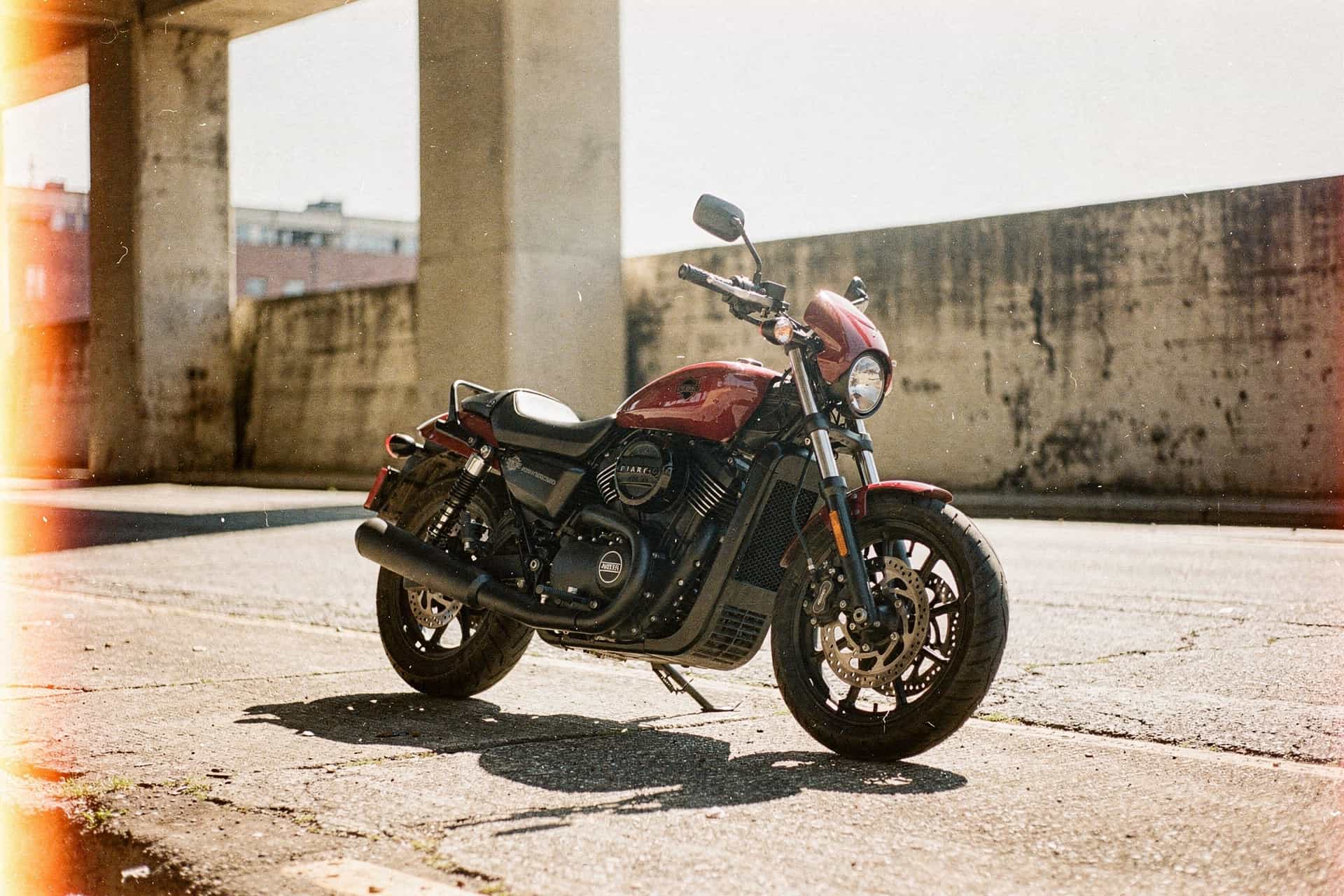
The first time you ride a Street 750 back to back with an Iron 883, the difference hits before you leave the parking lot. No lumpy idle, no shake at the bars, no heat soak from a big air-cooled jug when you sit at a red light. The Revolution X revs out like a Japanese twin, and the whole bike feels a size smaller than anything else in a Harley showroom.
That was the point. The Harley Street family was the Motor Company’s attempt to catch riders who were never going to start on a 560-pound Sportster. It ran from the 2014 model year into 2021, spawned four versions and ended quietly. This guide covers all of them in one place: the XG500, the XG750, the Street Rod and the XG750R flat-track racer.
The Street Family at a Glance
| Model | Code | Years | Engine | Torque (Harley claim) |
|---|---|---|---|---|
| Street 500 | XG500 | 2014-2021 | 494cc Revolution X | 29.5 ft-lb at 3,500 rpm |
| Street 750 | XG750 | 2014-2021 | 749cc Revolution X | 44.5 ft-lb at 4,000 rpm |
| Street Rod | XG750A | 2017-2021 | 749cc High Output Revolution X | 47.9 ft-lb at 4,000 rpm |
| XG750R | race only | 2016 debut | Race-built Revolution X | not published |
Torque figures are from Harley’s 2018 US spec sheets as reproduced by Total Motorcycle. Harley announced the family at EICMA in Milan in late 2013, and the Street’s Wikipedia entry records it as the company’s first all-new platform in 13 years.
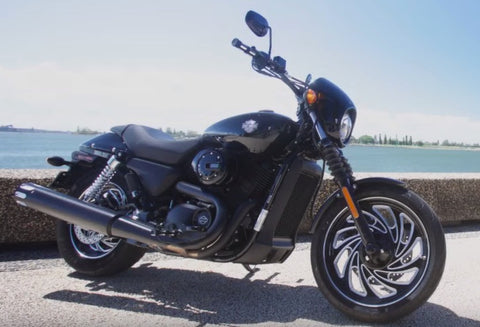
The Revolution X Engine
Everything in this family runs on the same basic motor, and it has very little in common with the rest of Harley’s lineup.
- Layout: 60-degree V-twin, not the 45 degrees of the Sportster and the air-cooled Big Twins
- Cooling: liquid, with a radiator up front
- Valvetrain: single overhead cam per head, four valves per cylinder
- Stroke: 66 mm on every version, so displacement changes come from the bore
- Gearbox: six speeds, with a gear-driven primary at 36/68
- Final drive: belt
It shares a name with the Revolution engine in the V-Rod, but the Street motor is a smaller, separate design. It also has nothing to do with the air-cooled Sportster Evolution engine, which runs pushrods, hydraulic lifters and a much longer stroke.
Short stroke plus overhead cams means the Revolution X likes revs. The torque peak sits around 3,500 to 4,000 rpm, and the power keeps building well past where an Evo Sportster runs out of breath. If you come from a Big Twin, ride it like a different animal. Short-shifting at 3,000 rpm makes it feel flat and slow.
Street 500 (XG500): The Training Bike
The 500 is the one people forget, and it may be the most important of the lot. According to Wikipedia’s Street entry, the Street 500 replaced the Buell Blast in Harley’s rider training program. For a lot of new riders, a Street 500 was the first motorcycle they ever rode.
Harley’s 2018 figures, via Total Motorcycle’s Street 500 spec sheet:
| Spec | Street 500 (2018) |
|---|---|
| Bore x stroke | 69 x 66 mm |
| Displacement | 494cc (30 cu in) |
| Compression | 10.5:1 |
| Torque | 29.5 ft-lb at 3,500 rpm |
| Seat height, laden / unladen | 25.7 in / 28.3 in |
| Weight, as shipped / running order | 492 lb / 514 lb |
| Fuel capacity | 3.5 gal |
| Fuel economy | 64.4 mpg (Harley estimate) |
| Wheels | 17 in front, 15 in rear |
| US MSRP | from $6,899 |
Look at the weight line. The 500 weighs exactly what Harley quoted for the 750, because it is the same bike with smaller cylinder bores. That makes it a heavy 500. You get a low seat and an easy clutch, but the power-to-weight ratio is soft, and on the interstate at 75 mph the little motor is working hard with a full load.
The Street 500 is a good bike to learn on and a frustrating bike to own for three years once you want more power. If you are buying used for a new rider, it is a good pick at the right price. If you are buying for yourself and you have highway miles in your future, skip to the 750. Our beginner motorcycle comparison puts it next to the other usual first bikes.
Street 750 (XG750): The Core Model
The 750 is the core of the range. Same chassis as the 500, 85 mm bore, 749cc, 11:1 compression and 44.5 ft-lb at 4,000 rpm by Harley’s 2018 numbers. Seat height, weight, tank size and wheels are identical to the 500. US MSRP for 2018 started at $7,599.
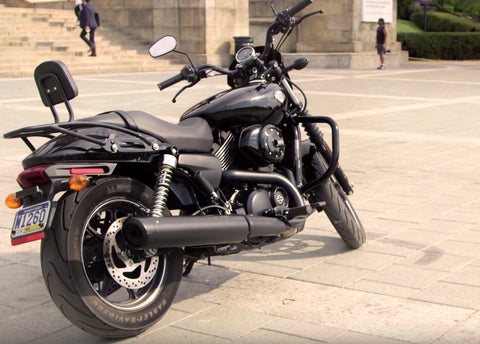
What the 750 does well:
- Traffic. Liquid cooling means it does not cook your thigh in summer gridlock the way an air-cooled Sportster can.
- Low seat. 25.7 inches laden puts almost every rider flat-footed.
- Cheap to run. Harley estimated 54.5 mpg for the 2018 bike.
What it does not do well:
- Suspension. The travel is short and the damping is basic. Broken pavement comes straight through the seat.
- Cornering clearance. Harley lists 28.5 degrees of lean each side. Riders who push find the pegs early.
- Wind. No fairing, upright bars, 3.5-gallon tank. It is a city and back-road bike, not a touring rig.
A lot of Street 750s ended up as custom projects because they were cheap and plentiful. The flat-track look suits the bike: narrow bars, a number-board side panel, a smaller seat and a short tail. If you are after the bobber look instead, the air-cooled Sportster is still the easier base. Our Sportster bobber builds show where that road goes.
Street Rod (XG750A): The One That Handled
For 2017 Harley answered the loudest complaints about the 750 with the Street Rod. According to Cycle News’ full test, the changes were real, not cosmetic:
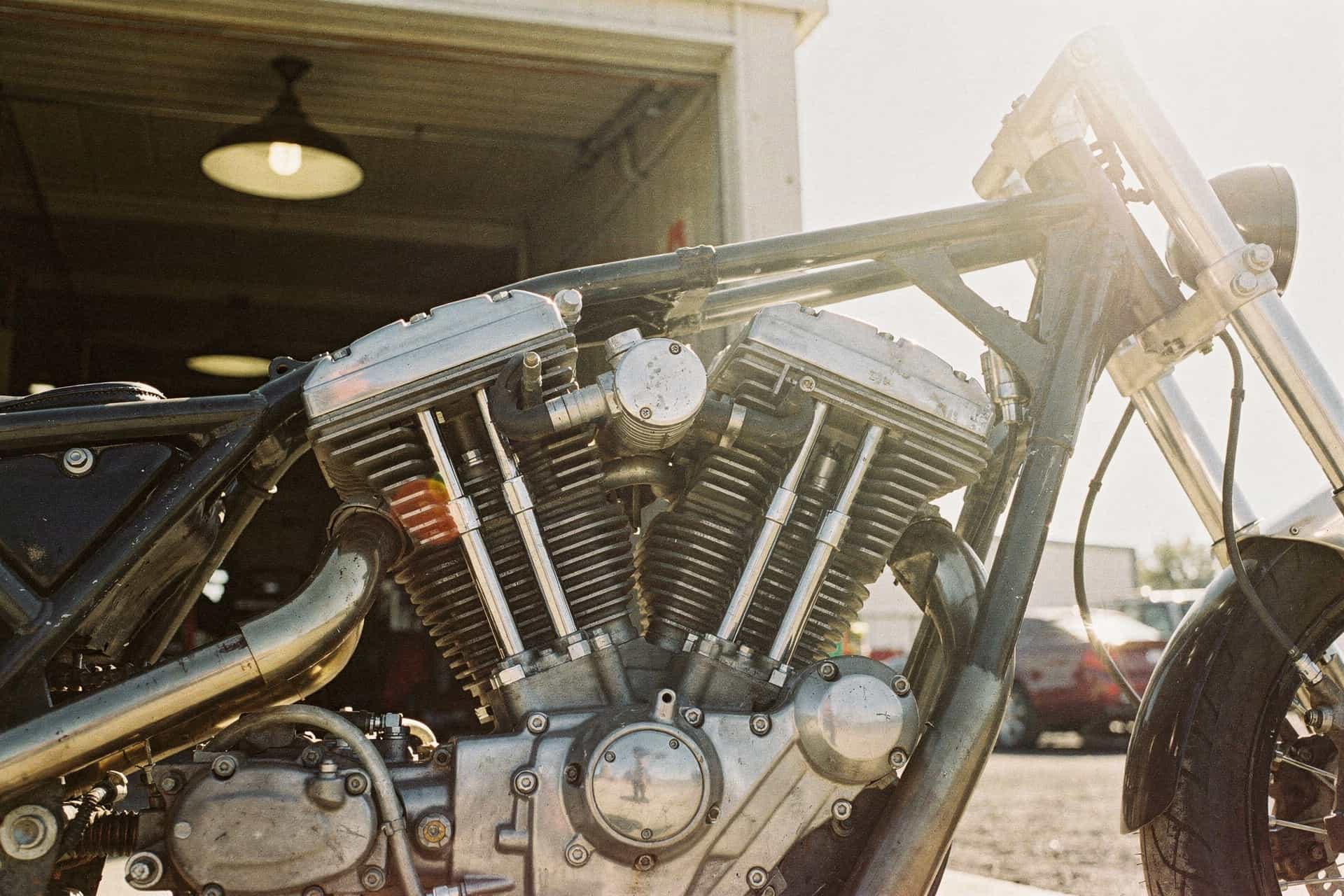
- High Output Revolution X: higher-lift cams, new pistons for 12.0:1 compression, a 42 mm twin-bore throttle body in place of the 38 mm single-bore unit, and a rev limit raised to 9,000 rpm
- Chassis: 43 mm inverted fork, piggyback rear shocks, steeper 27-degree rake and less trail
- Wheels: 17 inches front and rear with wider radial tires
- Clearance: lean angle up to 37.3 degrees right and 40.2 degrees left, against 28.5 degrees on the standard 750
- Brakes: dual front discs instead of the Street’s single front disc
Harley’s 2018 figures put the Street Rod at 47.9 ft-lb at 4,000 rpm, 525 lb in running order and a 29.8-inch laden seat height. That seat is more than four inches taller than the standard Street, which changes who can ride it comfortably. US MSRP for 2018 started at $8,699.
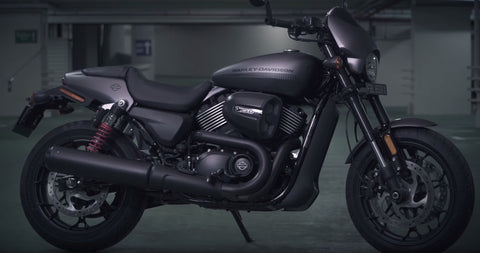
On the dyno, Cycle World measured 64.02 hp at 8,490 rpm and 46.36 lb-ft at 3,720 rpm at the rear wheel on a 2018 Street Rod, about seven horsepower and three pound-feet more than the standard Street 750 it tested. That is honest middleweight power. It does not beat a Yamaha MT-07 on paper, and the extra weight shows in the midrange.
The complaints from road testers were consistent. Cycle News called the low-gear throttle response brusque enough to upset a corner entry, and taller riders found the right-side muffler in the way of their leg. We would add one practical note: riders test-riding a used Street Rod should spend the first ten minutes in first and second gear in a parking lot. If the snatchy throttle bugs you there, it will bug you every day.
Not to be confused with the V-Rod Street Rod
Search “Harley Street Rod” and you will hit two different motorcycles. The older one is the VRSCR Street Rod, a V-Rod variant sold for the 2006 and 2007 model years. Wikipedia’s VRSC entry describes it as the first V-Rod with an inverted Showa fork and Brembo brakes, with mid controls and a claimed 120 horsepower. It shares a name and nothing else with the XG750A. When you shop for parts or read reviews, check the model code.
XG750R: The Race Bike
The XG750R is the reason the Street family matters to anyone who follows American flat track. Harley’s factory team had raced the air-cooled XR750 for decades. American Flat Track’s announcement of the XG750R called it Harley’s first all-new flat track race bike in 44 years. It broke cover at the Springfield Mile in Illinois in May 2016, ridden by factory rookie Davis Fisher, while teammate Brad Baker stayed on the XR750 during the development season.
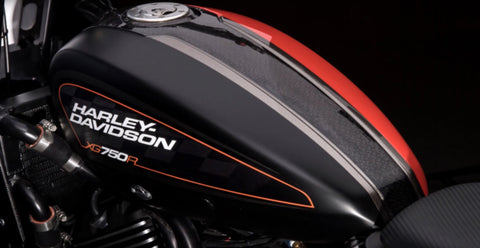
What Harley said about it at launch:
- The engine was a race-modified, liquid-cooled, fuel-injected version of the Street 750’s Revolution X.
- Vance & Hines developed the race engine and the frame, and the frame geometry had nothing in common with the street bike.
- It was built for competition only and was not offered for sale at the time.
For 2017 the factory team switched to the XG750R full time. Cycle World’s report on the change noted that the XR750 it replaced had won 37 AMA Grand National championships in 44 seasons.
The engine grew for customer racing. By 2020, Motorcycle.com’s listing of the Vance & Hines customer bike for the AFT Production Twins class gave 798cc from an 87.75 x 66 mm bore and stroke, 12.6:1 compression and a four-speed gearbox, at $35,999. Note the stroke: the same 66 mm as every street Revolution X. The race engine got its displacement from a bigger bore. Those numbers belong to the customer race bike, not the Street 750 you can buy used.
Where the Street Family Went
Harley built the North American Street bikes in Kansas City and the rest-of-world bikes in Bawal, India. In January 2018, Harley announced it would close the Kansas City plant, which built the Sportster and Street families, and move that work to York, Pennsylvania. Then in 2020 Harley shut its Bawal factory. ZigWheels reported in January 2021 that the Street 750 and Street Rod were gone from the lineup as a result, and the US range dropped the Street models the same year.
That left a gap Harley has only partly filled since. The Revolution Max Nightster is liquid-cooled and modern, but it is a bigger, pricier motorcycle. Our Sportster history and buyer’s guide covers that newer generation.
Buying a Used Street: What to Check
The Street is a simple bike, and used prices are low. That is exactly why you should look closer.
Coolant. This is the only Harley of its era where you need to think about the radiator. Check the level, look for crusty residue around the hoses and the water pump, and make sure the fan kicks on when the bike gets hot at idle.
Belt and pulleys. Look for cracks, frayed edges and missing teeth, and check that nothing has chewed a groove in the rear pulley.
Brakes on early bikes. The standard Street runs a single front disc. Riders coming from bigger bikes often find it weak. Fresh pads and fluid help. Budget for them.
Recalls. Run the VIN through Harley’s service recall lookup before you hand over cash. Our VIN decoding guide explains how to read the number itself.
Parts for the future. With the family out of production, wear parts and service items are still around, but model-specific trim and bodywork get harder to find every year. A crashed Street with cracked plastics can cost more to put right than it is worth.
Which one to buy. For most riders, the Street Rod is the one to hunt for. It has the suspension, brakes and clearance the base bike lacked. Compare current local asking prices for both before you decide. If you are short or brand new, the 750’s 25.7-inch laden seat still wins.
If you ride one, or you built one into a tracker, our Built Not Bought tees are made for riders who wrench on what they ride. For how the Street fits into the bigger picture, the Harley-Davidson history guide walks the full company timeline.
Sources
- Harley-Davidson Street - Wikipedia - EICMA 2013 announcement, 2014-2021 production span, Kansas City and Bawal assembly, bore and stroke, Street 500 in rider training
- 2018 Harley-Davidson Street 750 specifications - Total Motorcycle - Harley’s 2018 XG750 spec sheet: displacement, compression, torque, seat heights, weights, lean angle, MSRP
- 2018 Harley-Davidson Street 500 specifications - Total Motorcycle - Harley’s 2018 XG500 spec sheet
- 2018 Harley-Davidson Street Rod specifications - Total Motorcycle - Harley’s 2018 XG750A spec sheet: High Output engine, seat height, weights, MSRP
- 2017 Harley-Davidson 750 Street Rod full test - Cycle News - engine and chassis changes over the Street 750, lean angles, throttle response criticism
- 2018 Harley-Davidson Street Rod dyno - Cycle World - rear-wheel horsepower and torque, comparison to the Street 750
- Harley-Davidson VRSC - Wikipedia - the 2006-2007 VRSCR Street Rod
- XG750R breaks cover at the Springfield Mile - American Flat Track - Harley’s XG750R announcement, riders, Vance & Hines role, not for sale
- Harley factory team replaces XR750 with XG750R - Cycle World - 2017 switch and the XR750’s championship record
- XG750R Production Twins racer - Motorcycle.com - customer race bike specifications and price
- Harley-Davidson to close Kansas City plant - Motorcycle.com - 2018 announcement and the models built there
- Street 750 discontinued following plant shutdown - ZigWheels - Bawal closure and end of the Street 750 and Street Rod