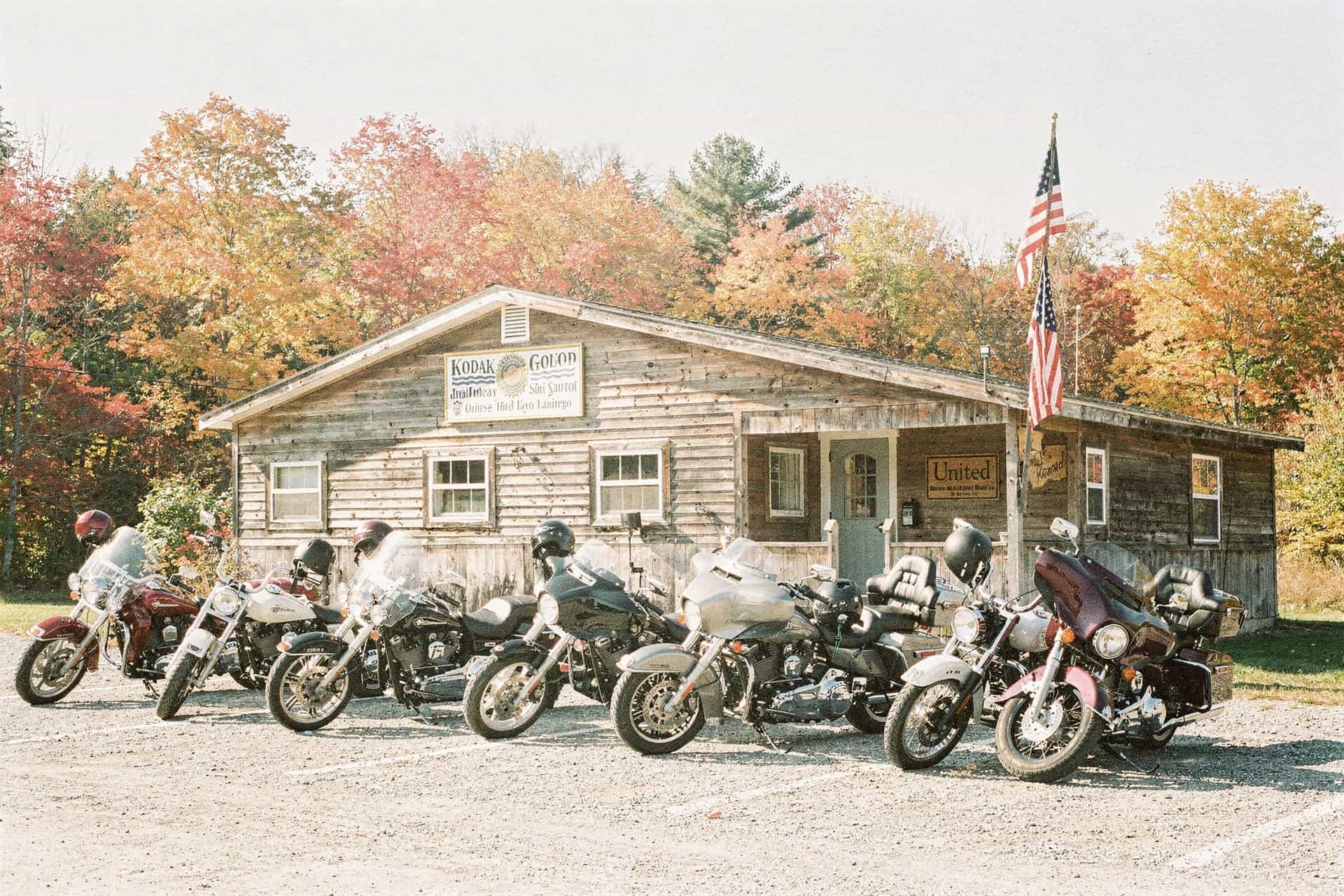
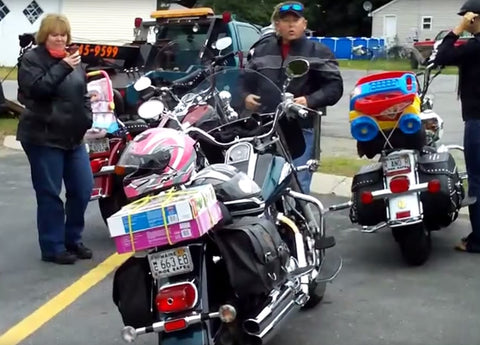
A September Sunday in Augusta. The parking lot at the Civic Center is full of bikes with stuffed animals bungeed to the sissy bars and toy boxes strapped to luggage racks. Grown riders in leather are handing over dolls and remote control trucks, and a lot of them have done this every fall for decades. That is the side of United Bikers of Maine most people see. The other side happens in hearing rooms, on road signs, and in the rules about what you wear on your head.
What UBM Actually Is
United Bikers of Maine (UBM) is a motorcycle rights and safety organization. It has supported community causes since 1975 and marked its 50th year in 2025. It is not a motorcycle club in the patch-and-colors sense. There is no prospect period, no bottom rocker, and no brand requirement. If you ride in Maine, you can join.
That difference matters. In our complete guide to motorcycle clubs we break down how traditional MCs are structured. A rights organization works more like a union for riders: members pay in, organize by region, and push together on the issues that hit everybody who rides, from helmet laws to how drivers treat bikes on the road.
UBM is organized by county. Press coverage names a Kennebec County chapter and county-level officers in Aroostook, which fits a statewide group that has to cover a lot of ground. Maine is big, and a rider in Presque Isle has different roads and different local issues than a rider in Portland.
The Two Lines That Explain UBM
UBM’s motto is “Let Those Who Ride Decide.” Its slogan is “Education Not Legislation.” Those two lines tell you most of what you need to know.
Let Those Who Ride Decide is about choice. The classic example is helmets. UBM’s position has long been that adult riders should make that call for themselves. You can agree or not. Plenty of riders we know would not ride a mile without a full face, and plenty of others want the wind. The point of the motto is who gets to decide.
Education Not Legislation is the method. Instead of adding new laws, the group pushes for training and awareness, both for riders and for the drivers who share the road with them. It is the same thinking behind a lot of rider-rights groups across the country: fix the problem with skill and attention, not with another fine.
Maine’s Helmet Law, Explained Plainly
Maine does not have a universal helmet law. Under Title 29-A, section 2083, a helmet is required for:
- Anyone under 18, whether riding or carrying a passenger, including a sidecar passenger
- Any operator riding on a learner’s permit
- Any operator within one year of passing the road test, at any age
- Any passenger of an operator who is required to wear one
Helmets have to meet DOT’s Federal Motor Vehicle Safety Standard 218 or the older ANSI Z90.1 standard. Parents cannot let a kid under 18 ride without one, and a violation is a traffic infraction. The Maine State Law Library has a plain-language summary if you want to double check.
What that means in real life: if you just got your endorsement, you wear a helmet for your first year, and so does anyone on the back. After that, it is your call as an adult. That is roughly the kind of balance UBM’s motto points at.
Our honest take, from riders who have gone down: choice is fine, but make it a real choice. If you do wear one, spend the money on a lid that fits and meets the standard. Our guide to custom motorcycle helmets covers the painted lids riders actually like wearing.
Look Twice, Save a Life
The other big piece of UBM’s work is driver awareness. Its line is simple: “Look twice, save a life.” When WAGM covered the group’s 50th year, a county officer explained why. After a crash, the first thing a driver usually says is that they did not see the bike.
Anyone who has ridden more than a season knows that feeling. A car at a stop sign looks right at you and pulls out anyway. Bikes are narrow, they hide behind pillars and mirrors, and drivers are scanning for cars. The fix UBM pushes is not a new law. It is getting drivers to take one more look, especially in summer when the bikes come out.
That lines up with what we tell new riders: assume nobody sees you. Ride where you can be seen, cover your brakes at intersections, and have an out. Some riders think loud exhaust helps. We dug into the evidence in our piece on loud pipes save lives, and the answer is less clear than the bumper sticker.
The Toy Run
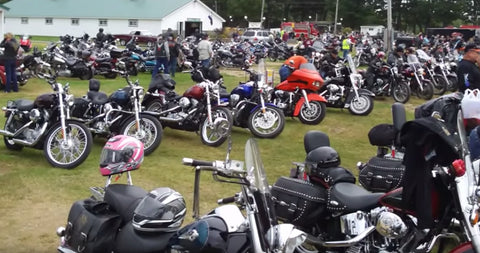
UBM’s best-known event is the annual Toy Run each September. Riders bring toys for Maine kids, and the group works with partners like the Maine Children’s Home to get them to families before the holidays. County chapters run their own warm-up events in the weeks before. In 2025, for example, the Kennebec County chapter held a pre-event in Waterville with donated bikes on display and toys from the local Elks.
The Toy Run also carries the hardest chapter in UBM’s history. In September 2017, during the Toy Run parade on Interstate 95 in Augusta, a chain-reaction crash killed two riders. The National Transportation Safety Board later cited poor planning and communication by both the Augusta police and UBM.
The group changed course. In 2018 the ride came back with about 1,000 riders on a new route that avoided I-95 and used Route 3 into Augusta with the road closed to other traffic. In 2019 UBM dropped the parade entirely, citing growing numbers, distracted drivers, and riders who did not know group riding protocol. Activities moved to the Augusta Civic Center.
That was a hard call for a group built around riding together, and it deserves respect. Plenty of organizations would have quietly kept the parade because it looked good. UBM chose the boring, safer option.
What the 2017 Crash Teaches Every Group Ride
We have ridden in a lot of charity rides, and the lessons from Augusta apply to every one of them:
- Big groups need a plan, not just a start time. Route, road closures, marshals and a clear lead and sweep matter more as the group grows.
- Stagger, and hold your spot. Riders drifting between lanes is how chain reactions start. Keep your line and your gap.
- New riders at the back half. Put inexperienced riders where they have more space and fewer surprises, and brief them before the kickstands go up.
- Skip the highway if you can. Mixed high-speed traffic and a long group do not mix well. A slower road with control is safer.
- You can always leave the group. If the pack is riding over your head, pull out and ride your own ride.
How UBM Fits the Bigger Picture
Rider rights groups exist in most states, and they fill a gap nobody else does. Clubs look after their own members. Manufacturers look after sales. A rights group looks after the rules everybody rides under. UBM’s work sits next to the charity riding you see from groups like Bikers Against Bullies: riders using the size of the community for something bigger than a Sunday cruise.
If you want to learn the language before you show up at your first meeting, our biker slang dictionary covers the terms you will hear. And if you want to see how organized riding varies from region to region, our guide to motorcycle clubs by state maps it out.
Riding Maine: What Local Riders Know
UBM exists because riding in Maine comes with its own set of problems. If you are new to the state or just riding through, here is what the locals learn early.
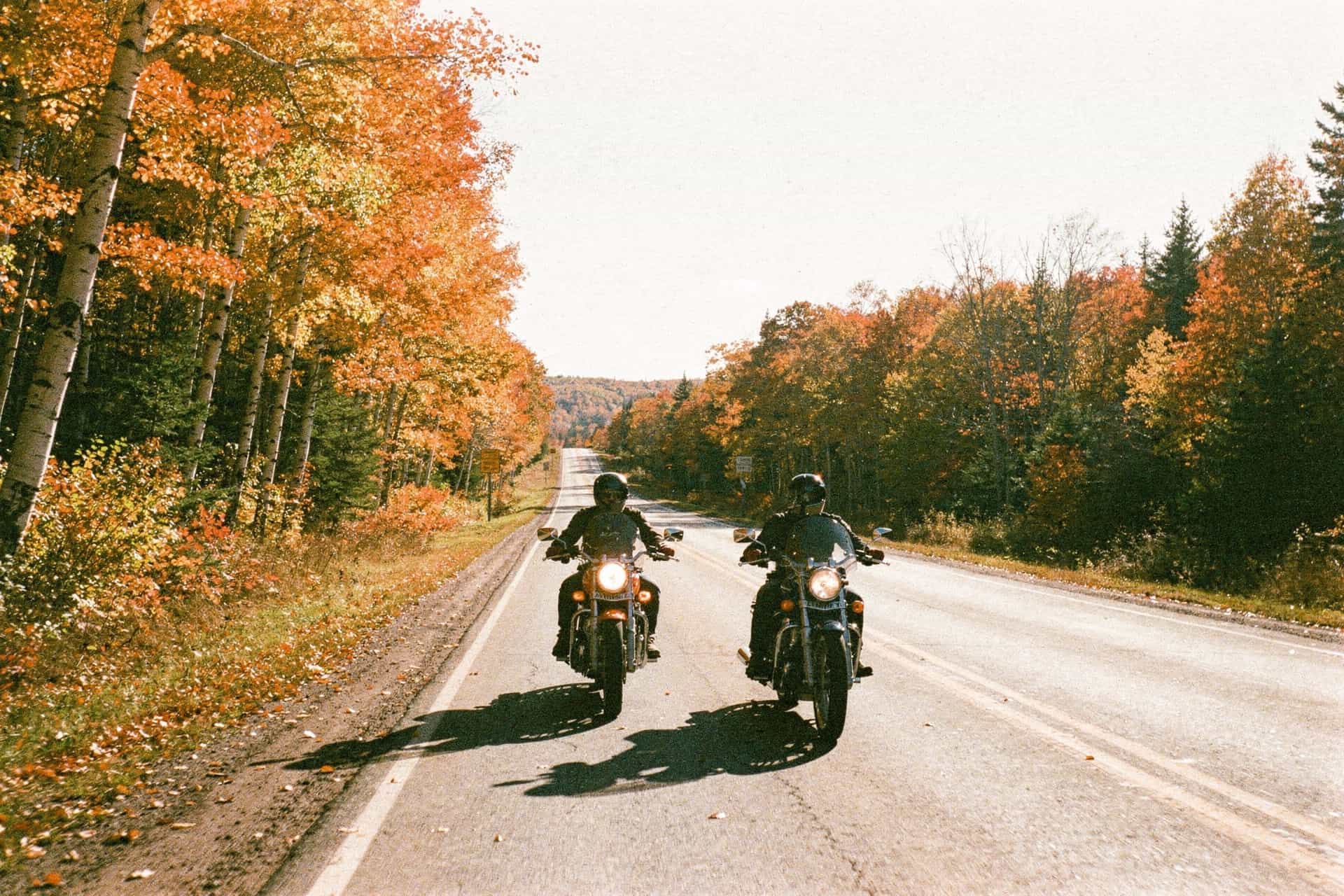
The season is short, so everybody rides at once. Bikes come out of the garage in spring and park again when the cold comes back. That packs a lot of riding, and a lot of new and rusty riders, into a few months. It is exactly why the Look Twice message gets pushed hardest in summer.
Spring roads bite. After a Maine winter, the shoulders and corners are full of leftover sand and the pavement is broken up by frost heaves. The first rides of the year are for knocking the rust off at a sane pace, not for seeing what the bike can do.
Wildlife is real. Deer and moose share the back roads, and hitting a moose on a motorcycle is the kind of crash people do not walk away from. Slow down at dawn and dusk, and use high beams on empty roads.
Tourist traffic on Route 1. The coast road is beautiful and busy. Summer brings rental cars, RVs and drivers looking at lighthouses instead of mirrors. Leave space and assume every car with out-of-state plates might stop or turn without warning.
Weather changes fast. A warm inland afternoon can turn into cold fog on the coast in an hour. Pack a layer even in July.
None of this is unique to Maine, but it all hits harder here. A statewide group that trains, warns and speaks up for riders earns its keep on roads like these.
How to Get Involved
The simplest way in is through your county chapter. Chapters show up at local events, and pre-Toy Run gatherings are a good place to meet people and ask about membership. You do not need a Harley, a club patch, or years of riding. You need to ride in Maine and care about what happens to riders here.
And if you are only passing through on a summer ride up Route 1, you are riding on roads that people like UBM have been looking out for since 1975. Look twice yourself. Riding the coast this summer? Our Maine motorcycle tees and hoodies were made for that trip.
Sources
- United Bikers of Maine to Host Pre-Event to Annual Toy Run - Bangor Daily News - 1975 founding, motto, slogan, county chapters, Toy Run partners
- United Bikers of Maine Mark 50 Years - WAGM TV - 50th year, Look Twice campaign
- Maine Title 29-A, Section 2083 - Maine Legislature - helmet law text
- What Is Maine’s Law on Helmets - Maine State Law Library - plain-language summary
- Poor Planning Led to Toy Run Crash - Bangor Daily News - NTSB findings on the 2017 crash
- Charity Motorcycle Ride Returns After Fatal Crash - Bangor Daily News - 2018 route change and turnout
- Motorcycle Group Eliminates Annual Parade - Bangor Daily News - 2019 decision and reasons
Riders who get it wear it. Browse our graphic tees and hoodies - original biker culture designs only.