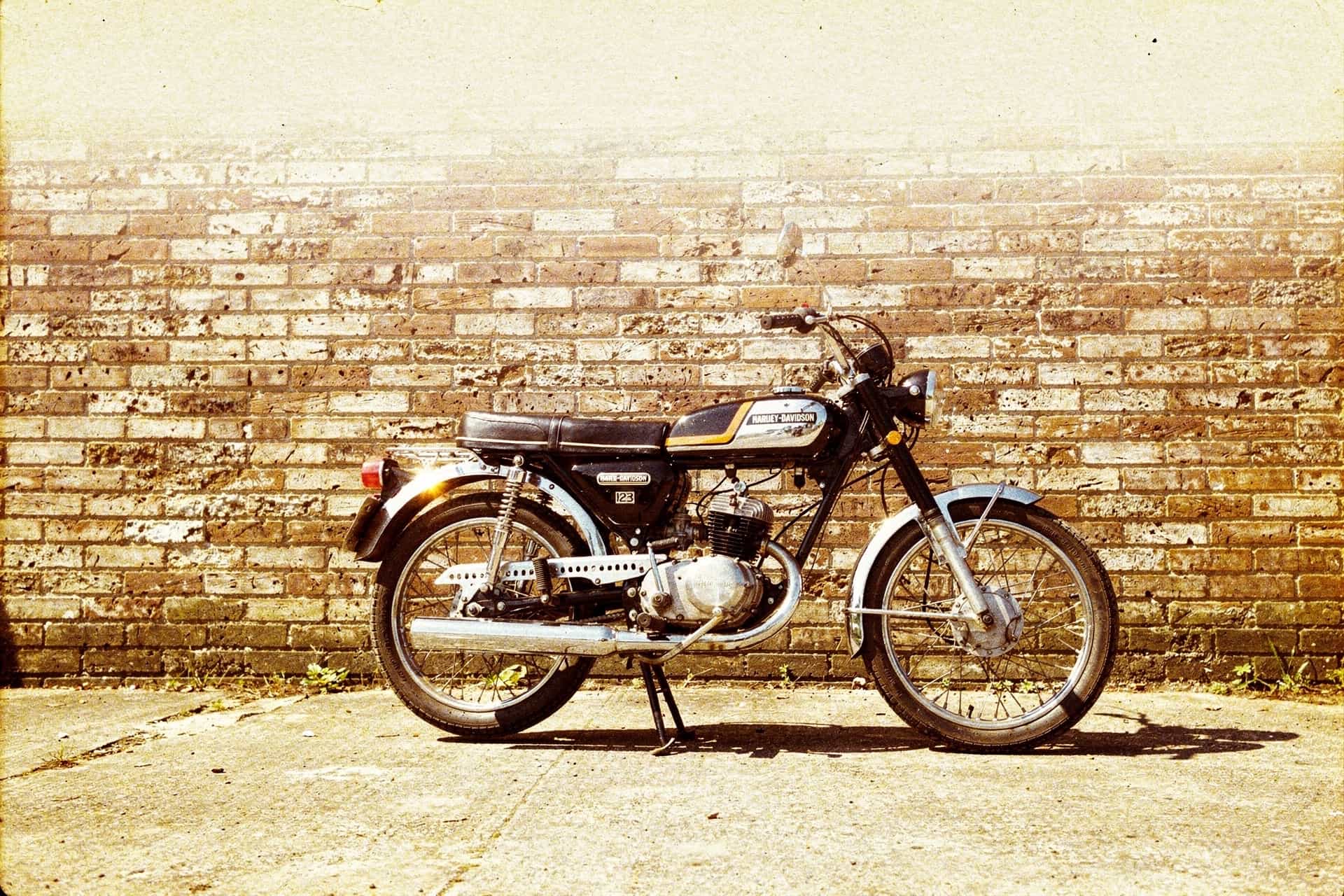
Somewhere in a Harley dealer in 1969, a kid who could not afford a Sportster is staring at a little red bike with high bars and a pipe tucked up along the side. The tank says Harley-Davidson. The engine is a two-stroke from Italy. It looks like something a summer job could pay for. That bike was the Rapido, a small Italian two-stroke with a Harley badge on the tank.
This is the full story of the Harley-Davidson Rapido: where it came from, what it really was under the paint, which specs are solid and which ones the internet keeps getting wrong.
Why Harley Sold an Italian Two-Stroke
By the early 1960s, Honda and the other Japanese makers were selling small, cheap, reliable motorcycles in huge numbers in the US. Harley built big twins and had very little to sell to a new rider on a budget.
Instead of designing small bikes from scratch, Harley bought in. According to Jalopnik’s rundown of brands Harley has owned, Harley took a 50 percent stake in the motorcycle side of Aermacchi, the Italian aircraft maker, in 1960. The joint business was run as Aermacchi Harley-Davidson, and its bikes came off the line in Varese, in northern Italy.
That gave Harley dealers a whole range of small machines: the four-stroke Sprint singles, the little M-50 and M-65 two-strokes, the Baja 100 dirt bike and, from the late 1960s, the Rapido. Cybermotorcycle’s Aermacchi history lists the ML Rapido among Aermacchi’s 125cc models alongside later designs like the SS, SX and SXT.
The deal did not last forever. Cybermotorcycle records that AMF Harley-Davidson sold the Varese factories in 1978, and that Cagiva had taken control by October of that year.
Rapido Specifications
The most complete spec list comes from the National Motorcycle Museum’s 1970 Rapido ML-125S, a restored example donated by Michael Yourtz of Denver, Colorado.
| Spec | 1970 Rapido ML-125S (museum data) |
|---|---|
| Engine | Air-cooled single, two-stroke, piston-port induction |
| Displacement | 124cc |
| Bore x stroke | 52 x 58 mm |
| Compression | 6.6:1 |
| Carburetor | Dellorto |
| Ignition | Magneto |
| Starting | Kick |
| Power | 11 hp |
| Transmission | 3-speed (museum listing) |
| Primary / clutch | Gear-driven primary, wet multi-plate clutch |
| Final drive | Chain |
| Frame | Steel, single down tube |
| Suspension | Hydraulic fork, swingarm with dual shocks |
| Brakes | Drum front and rear |
| Wheelbase | 48 in |
| Tires | 3.00 x 19 front, 3.50 x 18 rear |
| Weight | 225 lb |
| Top speed | 55 mph |
The gearbox question
Here is where Rapido spec sheets fall apart. The museum lists a 3-speed for its 1970 bike. Bike-urious’ feature on a 1971 Rapido describes a 123.5cc engine making 13 hp through a 4-speed, with a top speed of about 72 mph and a weight of 250 pounds.
Some listings quote a 4-speed next to the museum’s other numbers, which mixes two sources. It is quite possible the spec changed between versions and years, but we have not found a factory document that settles it. If you are buying or restoring one, count the gears on the actual bike and match parts to that.
How the Rapido Rode
On paper, 11 to 13 hp does not sound like much. On a 225 to 250 pound bike, it was plenty for a teenager on back roads.
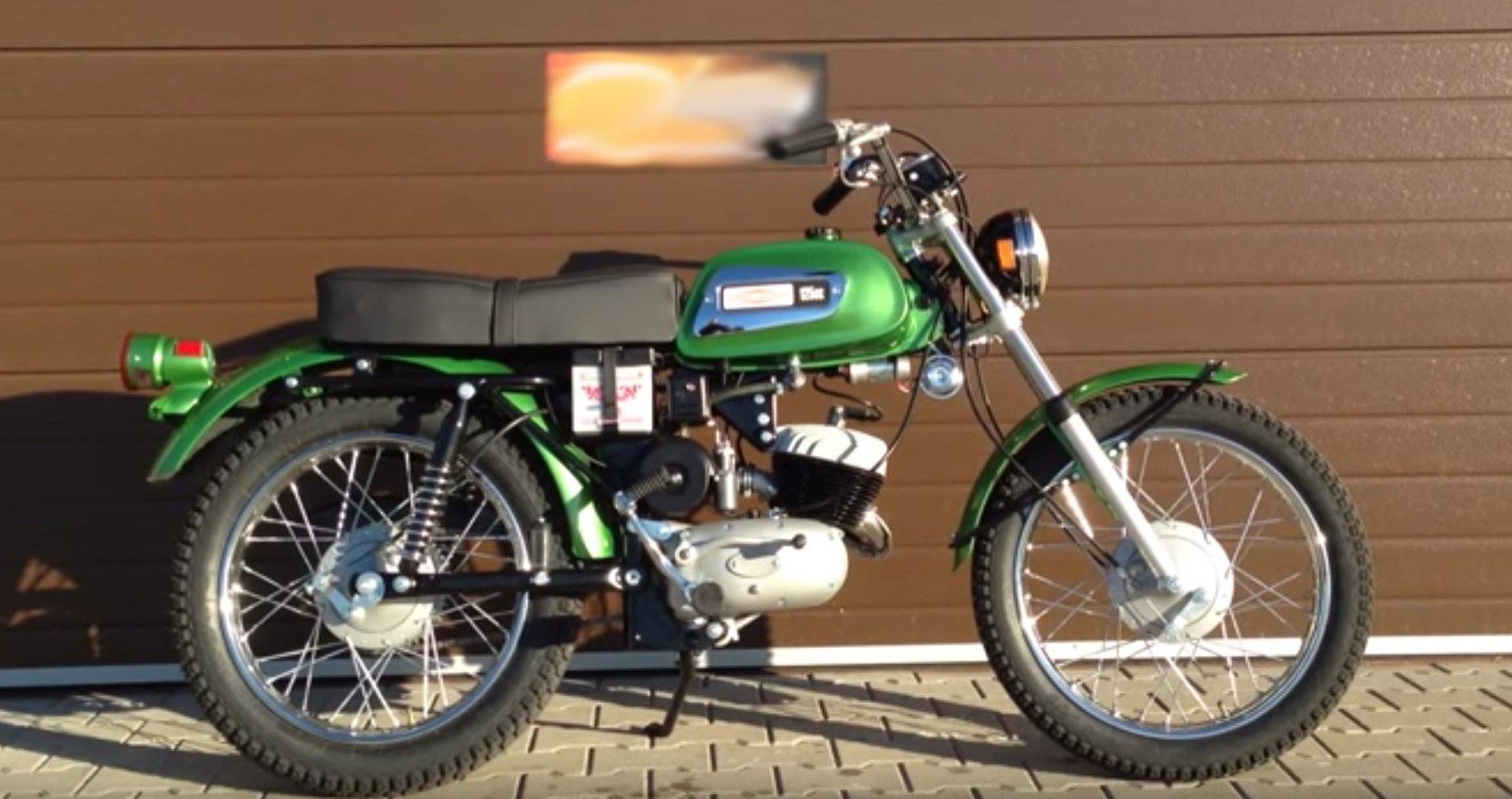
The museum describes the ML-125S as the enduro-styled version, built to catch buyers who did not want the racing look of other Aermacchi models: high bars, an upswept exhaust, a grab rail and candy apple red paint. That street-trail look was exactly what young American riders wanted in the late 1960s.
A couple of things will surprise anyone used to a modern bike.
The controls are Italian. Barn Finds’ write-up of a 1969 ML-125 Rapido notes the shifter on the right and the rear brake on the left. That was normal on European bikes of the era and backwards for most American riders today. Your left foot will want to shift. It will stomp the brake instead.
It runs on premix. Barn Finds reminds readers that you mix the oil and gas for this one. There is no separate oil injection. Get the ratio wrong on the lean side and you risk seizing the engine. Get it wrong on the rich side and you foul plugs and smoke up the neighborhood.
We have seen plenty of old two-strokes come back to life, and the pattern is always the same: fresh fuel at the right ratio, a clean carburetor, a new plug and an honest check of the crank seals. Skip the seals and it will run badly no matter how much you fiddle with the carb.
Bringing a Barn-Find Rapido Back
Most Rapidos for sale have been sitting for years. Before you kick it over, work through the basics in order. None of this is exotic, but skipping a step is how people wreck a cheap old two-stroke.
- Drain every drop of old fuel. Old premix goes stale and gums up everything it touches. Check the inside of the tank for rust with a flashlight while it is empty.
- Pull and clean the Dellorto. Varnish in the jets is the most common reason a Rapido will not start or will not idle. Clean it, check the float and replace worn gaskets.
- Check compression. A two-stroke with low compression will run badly no matter what you do to the carburetor. If the number is low, the piston, rings or crank seals need attention.
- Look at the magneto and plug. A fresh plug and clean points or contacts solve a lot of mystery problems. Weak spark on a magneto bike usually means worn points or a tired coil.
- Replace the rubber. Tires, fuel lines and the chain on a long-parked bike are all too old to trust, even if they look fine.
- Mix the fuel right. Use the ratio in the owner’s manual for your model and stick with it. Guessing is how pistons get scored.
Take your time on the first rides. Short loops close to home, check for leaks and loose bolts when you get back, then go a bit further. A Rapido that has been sorted this way will happily do back-road miles for years.
Model Names You Will See
Rapido listings use a handful of names, and they are easy to mix up:
- M-125 Rapido. The name some price guides use for late-1960s bikes.
- ML-125 / ML Rapido. The common name for the 125cc road bike. Barn Finds’ 1969 example is an ML-125.
- ML-125S. The street-trail, enduro-styled version the museum owns.
Do not confuse the Rapido with the later Aermacchi two-strokes like the SS-125, SX-125 or SXT-125. They share the same factory and some of the same thinking, but they are different bikes with different parts. And do not confuse it with the earlier American-built Harley 125 “Hummer” family, which was based on a German DKW design.
Where the Rapido Fits in the Aermacchi Family
The Rapido sat in the middle of Harley’s small-bike push. Around it were:
- The Sprint. Four-stroke 250 and 350 singles, the most serious road bikes Aermacchi built for Harley.
- The M-50 and M-65. Tiny two-strokes for commuting and fun.
- The Baja 100. A proper 98cc dirt bike. Wikipedia’s Baja 100 entry lists a 5-speed gearbox and class success in the 1971 Baja 1000.
- The X-90 and Z-90. The 90cc minibikes of 1973 to 1975, with a separate oil tank instead of premix.
If the Rapido was the bike for a kid with a summer job, the Z-90 was the one for a kid with a paper route. It is also the one that ended up in a movie. Our Harley-Davidson Z90 page covers that story and the rest of the Aermacchi era in more detail.
Honest take: none of these bikes changed Harley’s fortunes. Honda won the small-bike war, and Harley eventually went back to what it did best. But the Aermacchi bikes are why a whole generation’s first “Harley” was a two-stroke with Italian paperwork. Harley tried the entry-level idea again much later with the water-cooled Harley Davidson Street 500, with its own mixed results.
Buying a Rapido Today
Rapidos come up for sale often enough that you do not need to jump on the first one.
Values. These are not expensive bikes. Barn Finds’ 1969 example with 1,102 miles was offered at $1,875. The restored 1971 Rapido featured on Bike-urious, with 1,969 miles, missed its reserve at $2,325.01 and later sold for $3,100. Condition drives the price. For current numbers, check Hagerty’s valuation tools and recent sold listings for the exact year.
Check the VIN and paperwork. Make sure the frame and engine numbers match the title and the model the seller says it is. Price guides list the model years under different names, so know which one you are looking at.
Look at the engine first. Compression, crank seals and the state of the piston tell you whether this is a weekend fix or a full rebuild.
Plan on sourcing parts. Many Rapido parts are specific to Aermacchi, not Harley, and some come from Italian suppliers. Clubs and specialist parts sellers are your friends here. Budget time as well as money.
Know what you want. A museum-grade original, a rider or a project are three different purchases. A running rider is the easiest way into the old small-Harley world, and a lot more fun than a perfect bike you are scared to use.
These little bikes are a good fit for new riders who want something light and simple for back roads. If you are just starting out, our guide to the best beginner motorcycles compares modern options with the same idea.
And if the Rapido is more of a conversation piece for you than a project, our biker tees and biker hoodies carry the same raw attitude without the premix.
The Short Version
The Rapido was an Italian 125cc two-stroke with a Harley tank badge, built by Aermacchi and sold by Harley dealers from about 1968 to 1972. It was light, cheap and fun, with backwards controls and a thirst for premix. The spec sheets disagree on the gearbox, so trust the bike over the paperwork.
For how the Rapido fits into more than a century of Milwaukee history, from the first singles to the Milwaukee-Eight, read our Harley-Davidson history guide.
Sources
- 1970 Harley-Davidson Rapido ML-125S - National Motorcycle Museum - full specification list, enduro styling and the donor of the museum bike
- 1971 Aermacchi Harley-Davidson Rapido - Bike-urious - 1971 specs (123.5cc, 13 hp, 4-speed, about 72 mph, 250 lb) and the $3,100 sale
- Milwaukee Italian: 1969 Harley-Davidson Rapido - Barn Finds - 1968 to 1972 production years, premix, right-side shifter and left-side rear brake, and a $1,875 asking price
- Motorcycle Brands Owned by Harley-Davidson - Jalopnik - Harley’s 1960 purchase of half of Aermacchi’s motorcycle business
- Aermacchi Motorcycle History - Cybermotorcycle - Aermacchi model list and the 1978 sale of the Varese factories to Cagiva
- Harley-Davidson Baja 100 - Wikipedia - the Baja 100 dirt bike in the Aermacchi lineup
- Hagerty valuation tools - condition-graded values and recorded sales