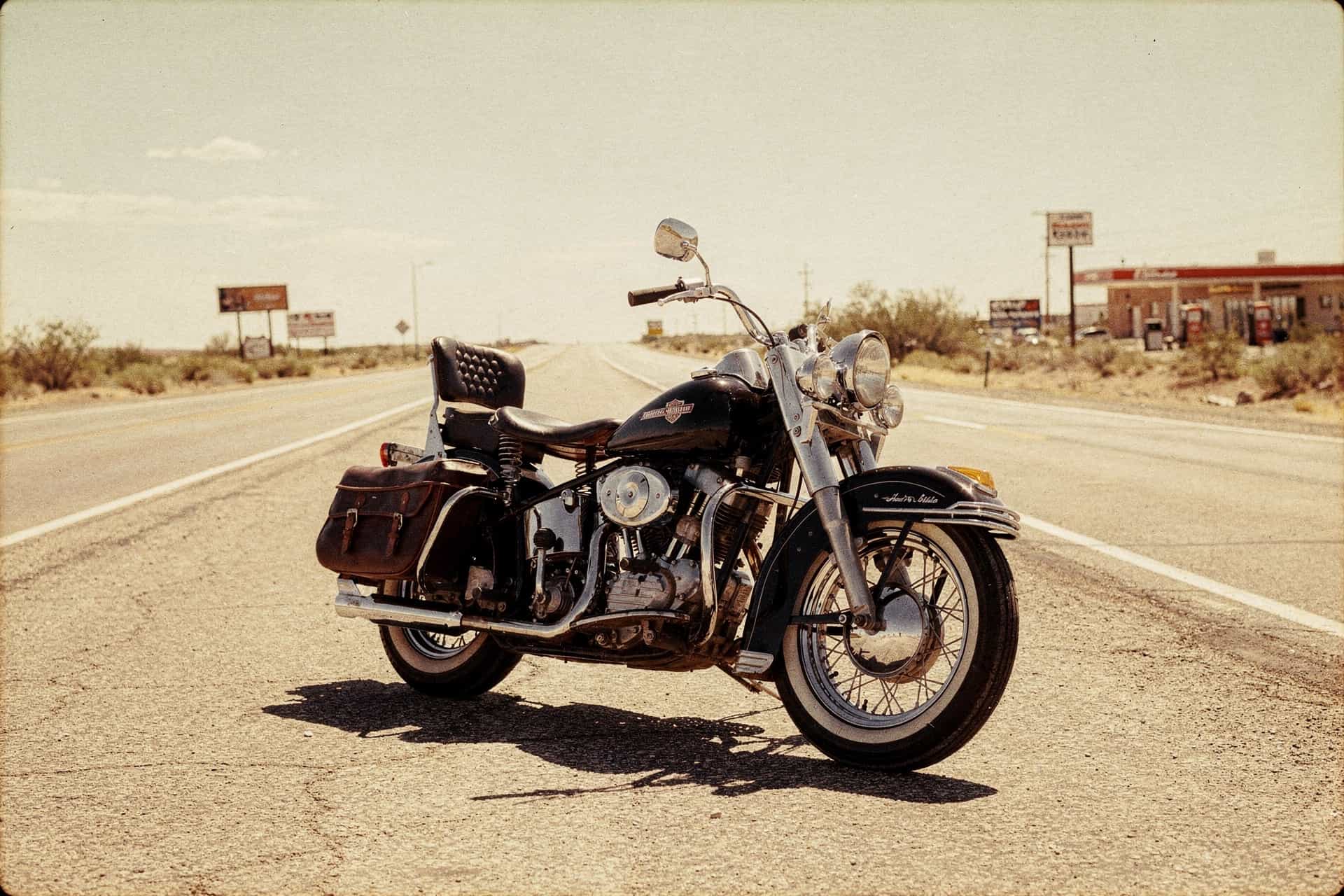
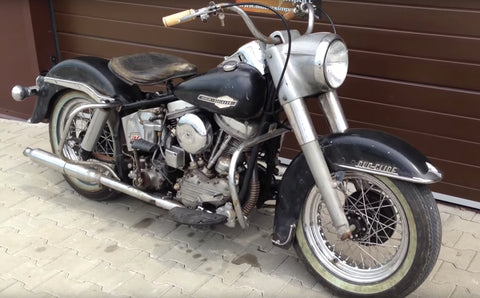
Picture a black and birch-white FLH rolling out of a dealer in spring 1963, fiberglass bags on the back, a buddy seat big enough for two, and a Panhead up front that had been refined for fifteen years. That bike was about as good as a touring Harley got before electric start. It is also one of the most honest old Harleys you can buy today, because the Duo-Glide years sit in a sweet spot: modern enough to ride, old enough to matter.
We have a soft spot for the Duo-Glide. It is the bike that turned the Big Twin from a machine you rode across town into one you could ride across a state. This guide covers the 1963 FLH in detail: what it is, what changed that year, full specs, the four models, original colors, and what to check before you buy one.
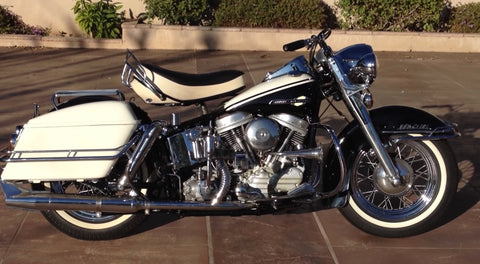
Where the Duo-Glide Came From
The Duo-Glide is the middle chapter of the Panhead story. Harley introduced the Panhead engine in 1948. For 1949 it replaced the old springer front end with a telescopic hydraulic fork, which Harley’s own Electra Glide history calls “a revolutionary telescopic hydraulic front fork” that gave birth to the Hydra-Glide. The rear was still rigid.
Then, as Harley puts it, “by 1958, the motorcycle further evolved with the addition of rear suspension, transforming it into the Duo Glide.” JustPanhead’s 1958 model notes describe the new swingarm frame with rear shocks, which forced changes to the horseshoe oil tank, the frame and the rear fender. Old Bike Barn’s Panhead history adds that 1958 also brought a hydraulic rear brake.
The Duo-Glide name ran from 1958 through 1964. For 1965, Harley added electric start and 12-volt electrics and renamed the bike the Electra Glide. For the full engine story, our Harley Panhead guide covers all eighteen years.
The 1963 Lineup: Four Models
For 1963, Harley offered four Big Twin models, all with the 74 cubic inch Panhead (73.66 ci actual), according to JustPanhead’s 1963 specifications:
| Model | Name | Compression | Shift |
|---|---|---|---|
| FL | Sport Solo | 7.25:1 | Hand shift, foot clutch |
| FLF | Sport Solo Footshift | 7.25:1 | Foot shift, hand clutch |
| FLH | Super Sport Solo | 8.0:1 | Hand shift, foot clutch |
| FLHF | Super Sport Solo Footshift | 8.0:1 | Foot shift, hand clutch |
The FLH is the hot one. Higher compression and a hotter state of tune made it the pick for riders who carried a passenger and luggage and still wanted to run with traffic. If a seller calls a bike an FLH, the engine number prefix and the compression should back it up.
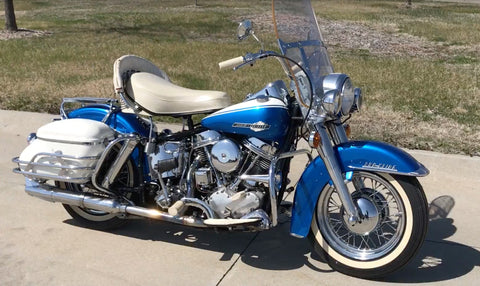
What Changed for 1963
JustPanhead is blunt about it: “There are no model changes in 1963.” But the parts list tells a different story. The 1963 bikes got:
- New gas tank emblems
- Redesigned cylinders with oil passages on the right side, plus an external oil line boss on the right crankcase. This is the start of the external top-end oil feed that ran through 1965 and sent cooler oil to the heads
- Wider rear brake shoes
- Round turn signal housings
- A one-piece kick start pedal
- Fiberglass saddlebags
None of that makes headlines, but it matters to anyone restoring or buying a 1963. The external oil lines, round signals and 1963 emblems are quick ways to check whether a bike is what the seller says it is.
Duo-Glide Year by Year, 1958-1965
The Duo-Glide did not stand still. If you are shopping, these dividing lines help you date a bike and check that its parts belong together.
| Year | Key change |
|---|---|
| 1958 | First Duo-Glide. Swingarm frame with rear shocks, hydraulic rear brake, new oil tank and rear fender, optional dual exhaust |
| 1961 | Single fire ignition with a manual advance dual-point timer, redesigned pushrods, new tank emblem |
| 1963 | New tank emblems, external top-end oil feed, wider rear brake shoes, round turn signals, fiberglass saddlebags |
| 1964 | Primary case breather hole, new oil pressure switch, last year of the dual-point manual advance timer, last Duo-Glide year |
| 1965 | Electra Glide: electric start, 12 volts, new frame, rectangular oil tank on the left, five-gallon tanks |
The 1964 notes come from JustPanhead’s 1964 model page, which says plainly that “there are no model changes in 1964.” The 1965 electric start is the change riders feel most, and a 1963 misses it. Collectors chase the 1965 hardest because it is the last Panhead and the first Electra Glide. For a rider who wants to ride, that can make a 1963 the better value: nearly all the refinement of the last Panheads without paying for a first-year story.
The Ignition Story
The bigger electrical change came two years earlier. For 1961, JustPanhead’s 1961 notes record that “a single fire ignition system is introduced using a Manual advance dual point timer.” Each cylinder got its own set of points, instead of one set firing both plugs at once.
That setup carried through 1963 and 1964. For 1965, the JustPanhead 1965 notes list an automatic advance distributor alongside the new 12-volt system. So a 1963 FLH should have the dual-point manual advance timer. If you find a later distributor, it has been changed, which is common and not a problem as long as you know.
1963 Harley-Davidson FLH Specs
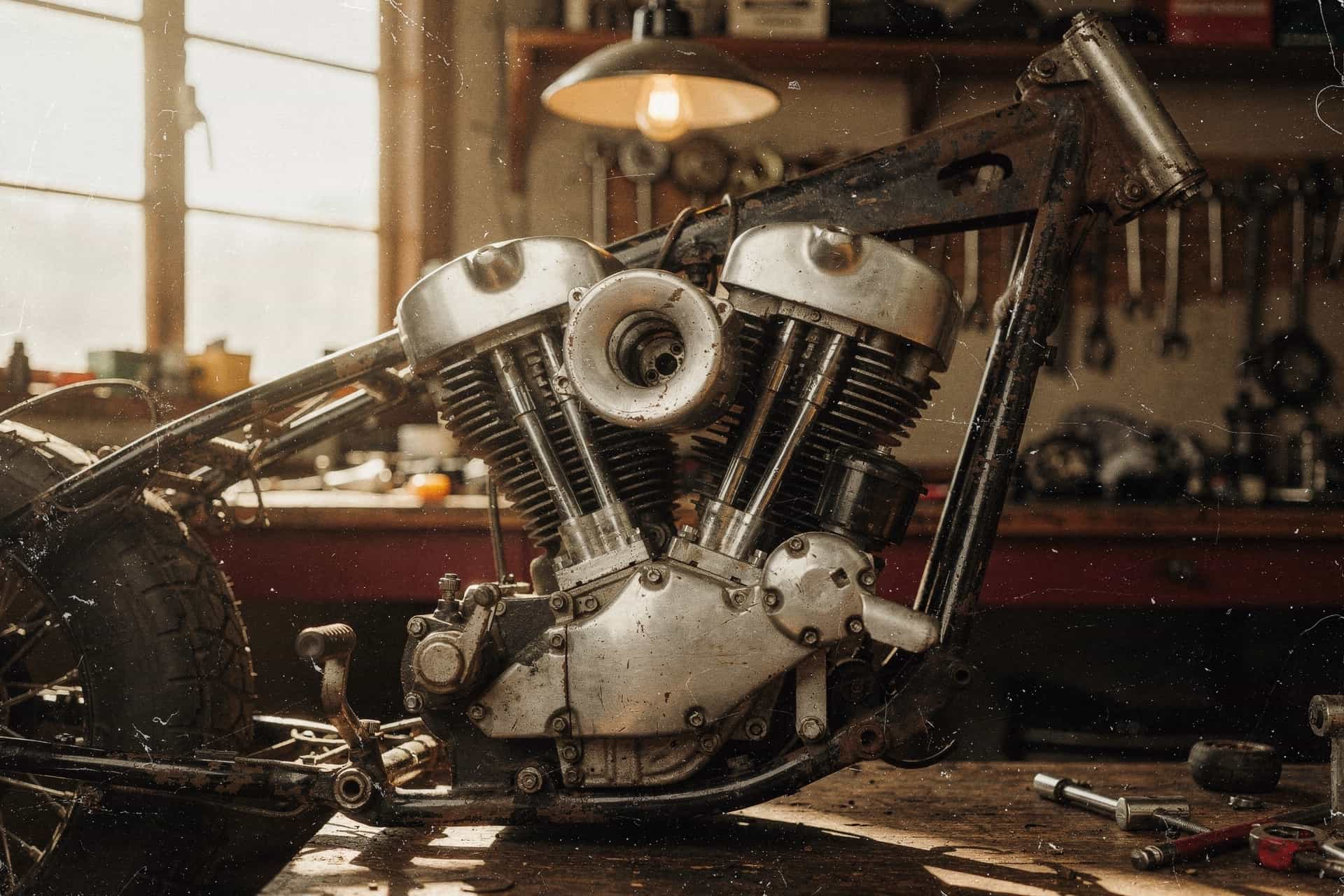
| Spec | 1963 FLH Duo-Glide |
|---|---|
| Engine | Panhead 45-degree OHV V-twin, hydraulic lifters, aluminum heads |
| Displacement | 74 ci nominal, 73.66 ci (1,207cc) actual |
| Compression | 8.0:1 (FLH), 7.25:1 (FL) |
| Power | About 60 hp period claim for the FLH; some databases list 55 hp |
| Carburetor | Linkert |
| Ignition | Single fire, manual advance dual-point timer, 6 volt |
| Transmission | Four-speed, hand shift (FLHF: foot shift) |
| Final drive | Chain |
| Front suspension | Hydra-Glide telescopic fork |
| Rear suspension | Swingarm with twin coil-over shocks |
| Brakes | Drums front and rear, hydraulic rear |
| Tires | 5.00-16 front and rear |
| Fuel capacity | About 3.75 US gal |
| Dry weight | About 670 lb (Bikez) |
| Top speed | About 100 mph |
Power, weight and speed figures come from period claims and the Bikez 1963 FLH listing. Our Panhead guide explains why those old horsepower claims are useful for comparing Panheads to each other and not much else.
A note on the carburetor: some write-ups credit the 1963 with a Schebler. Big Twin Panheads ran Linkert carburetors, and the Panhead guide has the model-by-model detail.
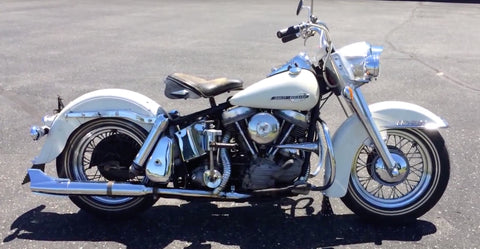
Original 1963 Colors
JustPanhead lists the 1963 colors as Black, Tango Red, Hi-Fi Red, Hi-Fi Purple, Hi-Fi Turquoise, Horizon Metallic Blue, Birch White and Police Silver. Standard paint was two-tone, with the chosen color on the tank top and Birch White side panels.
That matters when you judge a restoration. A 1963 in a color that was never offered is not wrong to own, but it should not be priced like a correct restoration. For tank badges and trim, our guide to Harley tank emblems by year explains why a year-only chart is a starting point and not proof.
How a 1963 FLH Rides
A Duo-Glide is a big, heavy, slow-steering motorcycle by modern standards. With the swingarm and Hydra-Glide fork, it rides far better than the rigid bikes before it. It settles into a 50 to 60 mph cruise and stays there all day.
The things that surprise new owners:
- Hand shift and foot clutch on the FL and FLH. You rock a clutch pedal with your left foot and shift with a lever by the tank. It takes practice, and some riders never warm to it. The FLF and FLHF have the modern layout.
- Kick start only. No button until 1965. A healthy Panhead starts well with the right technique.
- Drum brakes. Plan your stops. The wider rear shoes for 1963 help, but these are 1960s brakes on a 670 lb bike.
- Six-volt electrics. Lights are dim by modern standards. Many owners convert to 12 volts.
Buying a 1963 Duo-Glide: Checklist
A 1963 FLH is a serious purchase. These are the checks we would run before handing over money:
- Read the engine serial. On a Panhead, the serial is stamped on a raised boss on the left crankcase. Harley did not stamp frame numbers until 1970, so there is no engine-to-frame match to check. Look at the boss for grinding, filing or a restamp, and confirm the number matches the title.
- Check the belly numbers. Both crankcase halves carry a number underneath. A matching pair means the cases started life together.
- Confirm the model. FLH versus FL is about compression and tune. Ask how the seller knows, and check the engine prefix.
- Look for 1963 details. External top-end oil lines, round turn signal housings, the one-piece kick pedal and 1963 tank emblems all help date the bike.
- Check the frame type. A Duo-Glide frame has a swingarm and shock mounts. A rigid frame with a Panhead in it is a different bike and a different market.
- Ask about the electrics. Six volt is original. A 12-volt conversion is fine if it is done cleanly and documented.
- Look at the oil feed. A leaking Panhead is normal. One with no oil reaching the rockers is expensive. Warm the bike up and watch the return.
- Ride it or watch it ridden. Especially on a hand-shift FLH, make sure you can actually live with the controls.
- Price it on dated sales. Use Hagerty’s valuation tools and dated auction results for condition-graded values. Asking prices on listings are not evidence.
Originality matters more than mileage on a bike this age. Original paint, tins and fiberglass bags, a clean serial boss and paperwork will move the price more than anything else.
Where the 1963 FLH Sits in Harley History
The 1963 FLH is a late Duo-Glide, which makes it one of the most developed Panhead-era bikes Harley built. Fifteen years of engine refinement, five years of rear suspension, and the new external oil feed all come together here. Two years later, the Electra Glide added a starter and 12 volts. One year after that, the Harley Shovelhead engine replaced the Panhead entirely.
Before all of it came the 1947 Knucklehead, the last year of the engine the Panhead replaced. Put a Knucklehead, a Duo-Glide and an early Shovelhead side by side and you can see Harley turning a stripped-down machine into a real touring bike. Our Harley-Davidson history guide covers the full timeline.
Plenty of Duo-Glide Panheads were also stripped down and chopped over the years, which is part of why complete, original ones are prized now. If you want the other side of that story, our guide on what a bobber motorcycle is explains why riders pulled all that touring gear off in the first place.
Shop the line built by riders who respect the heritage: biker tees and biker hoodies with original artwork.
Sources
- 1963 Model Specifications - JustPanhead - 1963 models, compression ratios, model-year changes and original colors
- 1961 Model Specifications - JustPanhead - introduction of the single fire ignition with manual advance dual-point timer
- 1958 Model Specifications - JustPanhead - Duo-Glide swingarm frame, rear shocks and related changes
- 1964 Model Specifications - JustPanhead - 1964 changes and the last year of the dual-point manual advance timer
- 1965 Model Specifications - JustPanhead - Electra Glide, 12-volt electrics and automatic advance distributor
- Harley-Davidson Electra Glide History - Harley-Davidson - official account of the Hydra-Glide, Duo-Glide and Electra Glide
- Post-War Legend: 1948-1965 Harley-Davidson Panhead - Old Bike Barn - Panhead history including the 1958 hydraulic rear brake
- 1963 Harley-Davidson FLH Duo Glide - Bikez - specification database figures for power, weight, fuel capacity and tires
- Hagerty Valuation Tools - condition-graded values and recorded sales for collector motorcycles