

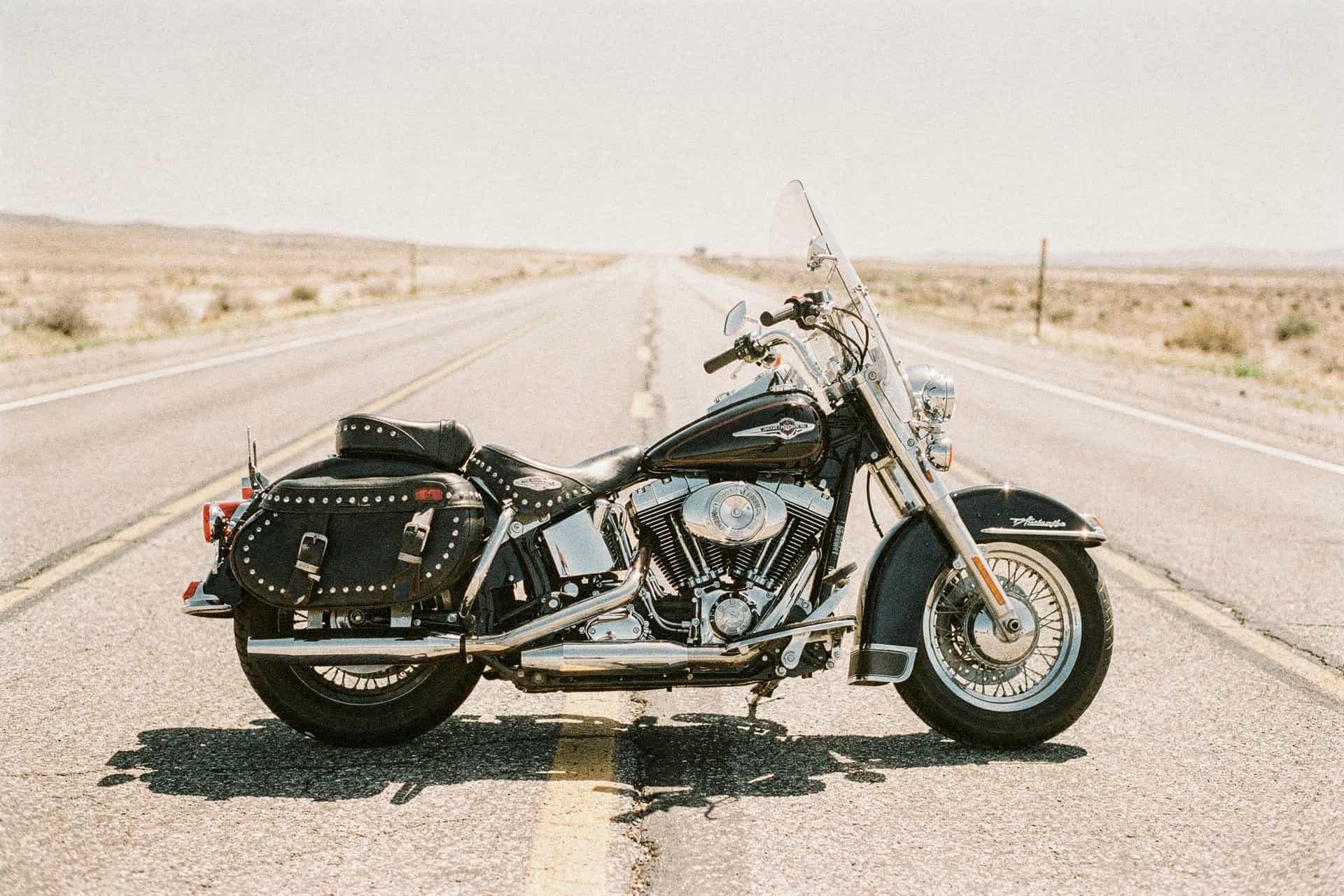
Picture a two-tone silver and black Heritage parked outside a Milwaukee bar in late August 2003, the whole city shaking with open pipes. That was the year Harley-Davidson turned 100, and the Heritage Softail Classic was the bike a lot of riders chose to ride home on. More than twenty years later, those bikes are still out there, many of them on their third or fourth owner. Some are gems. Some have been quietly neglected.
We think the 2003 Heritage is one of the best used entries into big-twin Harley ownership. It is simple, comfortable, low and good-looking in a way that has not aged. This guide covers what makes the 2003 special, the full specs, the 100th Anniversary details, and exactly what to check before you hand over cash.
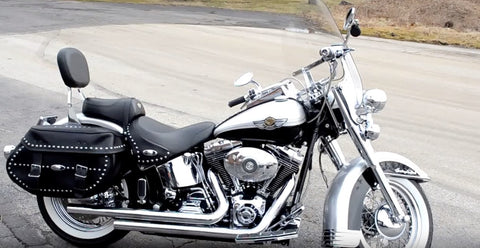
Which Bike Is the “2003 Heritage Softail”?
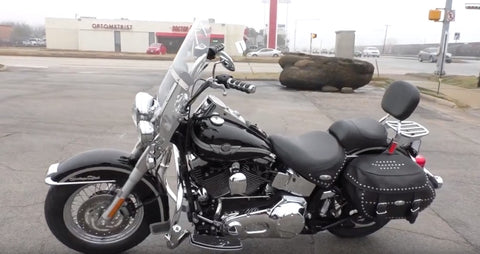
When riders say “2003 Heritage Softail,” they almost always mean the Heritage Softail Classic. Harley sold it in two versions:
- FLSTC - carbureted
- FLSTCI - electronic sequential port fuel injection with a 45mm throttle bore
Both share the frame, the engine, the studded leather bags, the Lexan windshield and the chrome. The “I” on the end of the model code is the only thing that tells them apart on paper. On the bike, look for a carburetor and air cleaner shape versus the injection throttle body.
A Short History of the Heritage
The Softail idea did not start at Harley. The Softail history on Wikipedia credits Bill Davis, a St. Louis engineer, with designing the first softail frame in the mid-1970s. Davis sold his patents, prototype and tooling to Harley-Davidson in January 1982, and the design debuted in June 1983 as the 1984 FXST Softail.
The trick was simple: hide the rear shocks under the transmission so the bike looks like an old rigid frame but rides like it has suspension. Our breakdown of hardtail vs softail frames explains why that matters so much to riders who love the old look.
For 1986 Harley added the Heritage Softail, which copied 1950s styling: a big valanced front fender, a fat fork with covers and a wide saddle. The Classic version added bags, a windshield and more chrome, and it became a fixture of the Softail lineup for decades.
The Heritage ran the Evolution engine until 1999. For 2000, Harley put the new Twin Cam 88 into the Softail family in counterbalanced “B” form. Our Harley Evo engine guide covers the motor it replaced.
Here is where the 2003 sits in the Heritage timeline:
| Years | Engine | What it means for a buyer |
|---|---|---|
| 1986-1999 | Evolution 1340 | Solid-mounted engine, no balancers, more vibration |
| 2000-2006 | Twin Cam 88B | Counterbalanced, five-speed, carb or EFI (the 2003 lives here) |
| 2007-2017 | Twin Cam 96B, then 103B | Bigger engine and six-speed from 2007 |
| 2018 on | Milwaukee-Eight | All-new Softail frame with a single hidden shock |
The 2018 redesign was, in Wikipedia’s words, “the first major change since the introduction of the Twin Cam engine in 2000.” So a 2003 is built on the same basic frame layout that carried the Heritage for eighteen years.
The 100th Anniversary: What Makes a 2003 Different
2003 was Harley’s centennial year. Motorcycle Classics’ account of the 100th Anniversary is clear on two points:
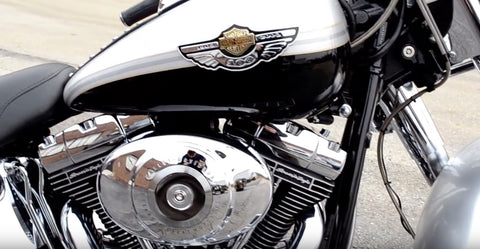
- “Every 2003 bike included 100th Anniversary badging of sorts.” So every 2003 Heritage carries anniversary identification.
- The special paint was a two-tone Sterling Silver and Vivid Black, offered as a one-year scheme on the anniversary models. Regular colors were still available.
For the Heritage Softail Classic, the color list for 2003 included Two-Tone Sterling Silver and Vivid Black, Vivid Black, Gunmetal Pearl, White Pearl, and blue and red pearl finishes, according to Total Motorcycle’s 2003 FLSTC/FLSTCI specification sheet.
The centennial itself was a party. The Open Road Tour ran preview events around the world in late 2002, and the Homecoming in Milwaukee in August 2003 drew riders from every corner. Motorcycle Classics mentions a group of about 250 Japanese riders who chartered a 747. Wikipedia’s Harley-Davidson article lists Elton John, The Doobie Brothers, Kid Rock and Tim McGraw among the performers at the anniversary concert.
Harley offered 28 models that year. If you are shopping the smaller end of the lineup, our guide to the 2003 Sportster 883 anniversary value covers that side.
2003 Heritage Softail Classic Specs
All figures are Harley’s published 2003 specifications as listed by Total Motorcycle.
| Spec | 2003 FLSTC / FLSTCI |
|---|---|
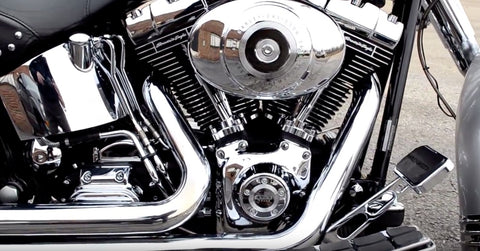
| Engine | Air-cooled Twin Cam 88B, 45-degree V-twin, counterbalanced |
| Displacement | 88 ci (1450cc) |
| Bore x stroke | 3.75 x 4.0 in (95.25 x 101.6 mm) |
| Compression | 8.9:1 |
| Torque | 85 ft-lbs at 3,000 rpm (North America) |
| Fuel system | Carburetor (FLSTC) or ESPFI, 45mm throttle bore (FLSTCI) |
| Transmission | Five-speed |
| Primary drive | Double-row chain, 36/25 |
| Final drive | Belt, 32/70 |
| Front suspension | 41.3mm fork with “beer can” covers, 5.1 in travel |
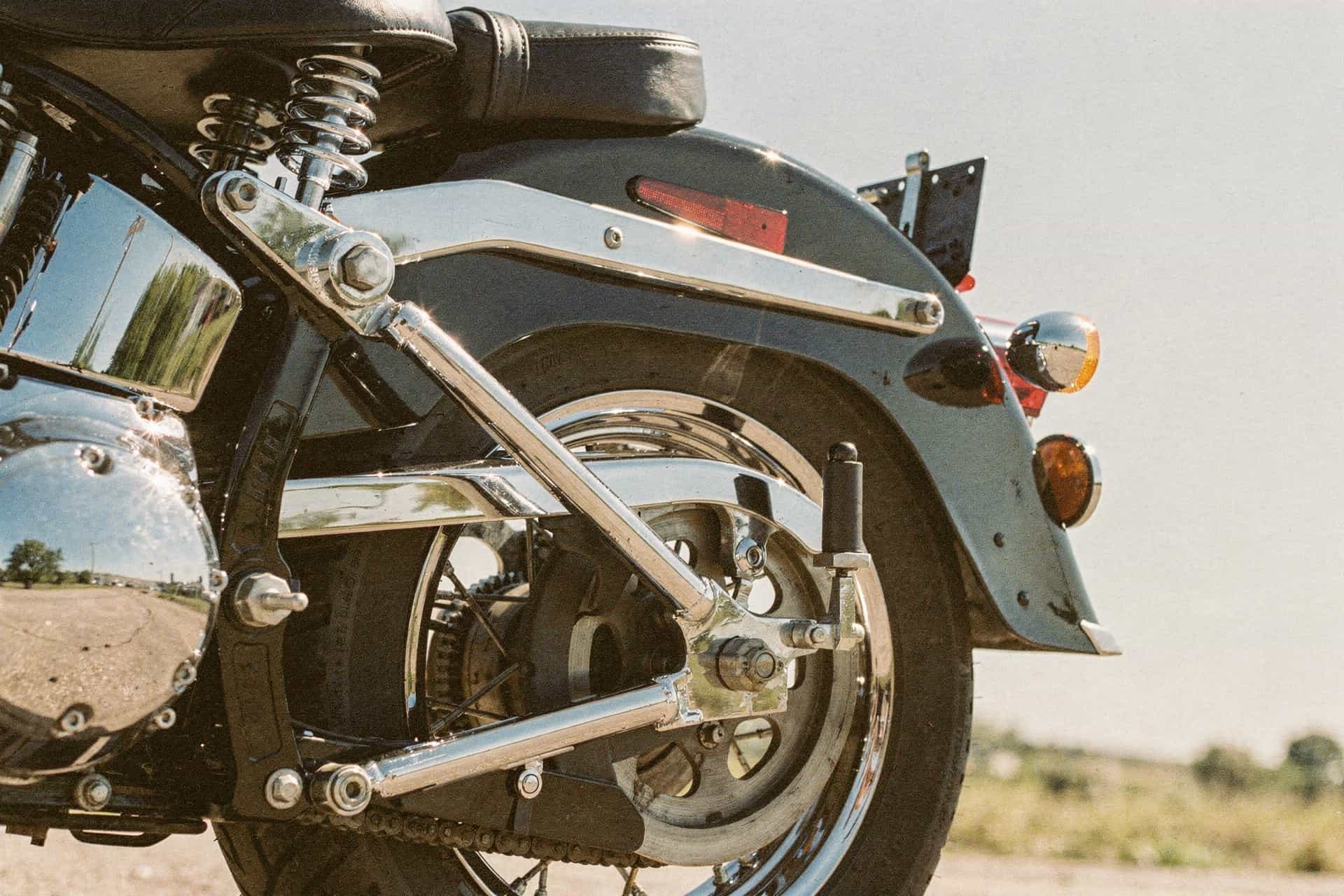
| Rear suspension | Hidden Softail shocks, 4.3 in travel |
| Rake / trail | 32 degrees / 5.8 in |
| Wheelbase | 64.5 in |
| Seat height | 25.4 in laden, 27.4 in unladen |
| Ground clearance | 5.1 in |
| Dry weight | 699 lb |
| Running weight | 738 lb |
| Fuel capacity | 5.0 gal including 0.5 gal reserve |
| Tires | Dunlop MT90B16 front, 150/80B16 rear |
| Brakes | 11.5 in rotors front and rear, dual-piston calipers |
| Lean angle | 28.9 degrees right, 28.1 degrees left |
Two numbers stand out. A 25.4-inch laden seat height makes this one of the easiest big twins to flat-foot at a light. And 85 ft-lbs at just 3,000 rpm means the bike pulls from almost nothing. You ride a Heritage on torque, not revs.
How It Rides
The Heritage is built for easy miles, not for carving. The 64.5-inch wheelbase and 32-degree rake make it calm and planted on the highway. Full-length floorboards, a touring handlebar and a wide saddle with a passenger backrest put you upright and relaxed.
The counterbalancers matter. Earlier Evo Softails bolted the engine solid to the frame and shook hard. The 88B balance shafts smooth most of that out, so what you feel at highway speed is a pulse, not a buzz.
Where it asks more of you is at walking pace. At over 700 pounds running, with a wide front tire and long wheelbase, parking lot U-turns take practice. The floorboards also touch down early. With under 29 degrees of lean each way, you will hear them scrape on a spirited ride long before the tires give up.
The five-speed gearbox is worth knowing about. Softails did not get a six-speed until the 2007 model year, when the Twin Cam 96 replaced the 88. On a 2003, fifth gear at 75 mph means the engine is working a little harder than on later bikes. Most riders never notice. Some fit taller gearing for long trips.
Carb or Fuel Injection?
This is the first question most buyers ask. Our take:
- FLSTC (carb) is simple, easy to tune and easy to modify. If you want to swap pipes and an air cleaner and rejet in your own garage, the carb is friendlier. It can be fussier on cold mornings and at altitude.
- FLSTCI (EFI) starts cleanly, handles altitude and weather changes without fuss, and is the better pick for a rider who just wants to ride. Bigger engine changes need a tuner.
Neither is wrong. Pick the one that matches how much you like wrenching.
Buying Checklist for a 2003 Heritage Softail
A good 2003 Heritage will run for many more years. A neglected one will cost you. When we look at a used Heritage, this is the order we go in:
- Decode the VIN. Confirm the model code (FLSTC or FLSTCI) and the model year digit. Our Harley VIN decoder walks through every position. If the seller calls it an anniversary edition, check that the paint matches the Sterling Silver and Vivid Black two-tone or another listed 2003 color.
- Ask about the cam chain tensioners. The Twin Cam drives its cams by chain, and on this generation the chains ride on spring-loaded shoes that wear over time. Ask whether the cam chest has been opened and the shoes inspected or replaced. Records here are worth real money.
- Listen to it cold. Start the bike yourself. A rattle from the right side of the engine, heavy smoke or hard starting all need an explanation.
- Check the carb or injection. On an FLSTC, look for fuel smell, poor idle or a missing choke cable. On an FLSTCI, check for any check-engine indication and ask whether the engine has been tuned for aftermarket pipes.
- Inspect the belt and primary. Look for cracked or missing belt teeth, and ask when the primary chain was last adjusted and the fluid changed.
- Look at the leather. The studded saddlebags and seat are part of the Heritage look. Dried, cracked or water-soaked leather is expensive to replace with correct parts.
- Check the fork and rear shocks. Oily fork tubes mean seals. Bouncy rear means tired shocks, which are hidden under the bike and often ignored.
- Check the tires and brakes. 16-inch tires age out before they wear out on a garage bike. Check the date codes.
- Ask for the paperwork. Service records, original owner’s manual and anniversary items all add value and tell you how the bike was treated.
Mileage matters less than care. A 40,000-mile bike with a stack of receipts is a safer buy than a 6,000-mile bike that sat for ten years.
Heritage vs Other Softails of the Era
If you are cross-shopping, the closest relative is the Fat Boy, which shares the Softail frame and Twin Cam 88B but trades the bags, windshield and chrome for disc wheels and a more stripped look. Our Harley Fat Boy guide covers each generation.
The Heritage is the better pick if you ride two-up or carry gear. The bags, windshield and passenger backrest come standard, and they are all designed to come off when you want a cleaner look.
A lot of riders also use the Heritage as a base for a stripped-down build. Pull the bags, the screen and the big fenders, and the Softail frame already gives you the hardtail line. Our roundup of the best Harley bobber builds shows how far people take that idea.
Is a 2003 Heritage Worth It Today?
For most riders, yes. The 2003 Heritage Softail Classic is comfortable, easy to live with, simple to work on and backed by a huge aftermarket. The anniversary badging gives it a story, and the two-tone anniversary paint gives the best examples a little extra collector pull.
It is not a fast bike, and it does not pretend to be. It is a bike for riding to breakfast, riding to the coast and riding home the long way. That is exactly what it was built for in Harley’s centennial year, and it still does it well. For the full story of how the company got to its 100th birthday, our Harley-Davidson history guide covers every engine generation and era.
If you ride a Heritage, our Built Not Bought biker tees and hoodies are designed for riders who respect the heritage.
Sources
- 2003 Harley-Davidson FLSTC/FLSTCI Heritage Softail Classic - Total Motorcycle - Harley’s published 2003 specifications, features and colors
- Harley-Davidson 100th Anniversary Celebration, 2003 - Motorcycle Classics - anniversary badging on every 2003 bike, the Sterling Silver and Vivid Black paint, Open Road Tour and Milwaukee Homecoming
- Softail - Wikipedia - Bill Davis, the 1982 patent sale, the 1984 FXST and the 1986 Heritage Softail
- Harley-Davidson Twin Cam engine - Wikipedia - Twin Cam 88 and 88B introduction, chain-driven cams, Twin Cam 96 for 2007
- Harley-Davidson - Wikipedia - date and lineup of the 100th anniversary celebration concert
- 2003 Harley-Davidson FLSTCI Heritage Softail Classic - Bikez - cross-check of engine, dimension and color data for the injected model