

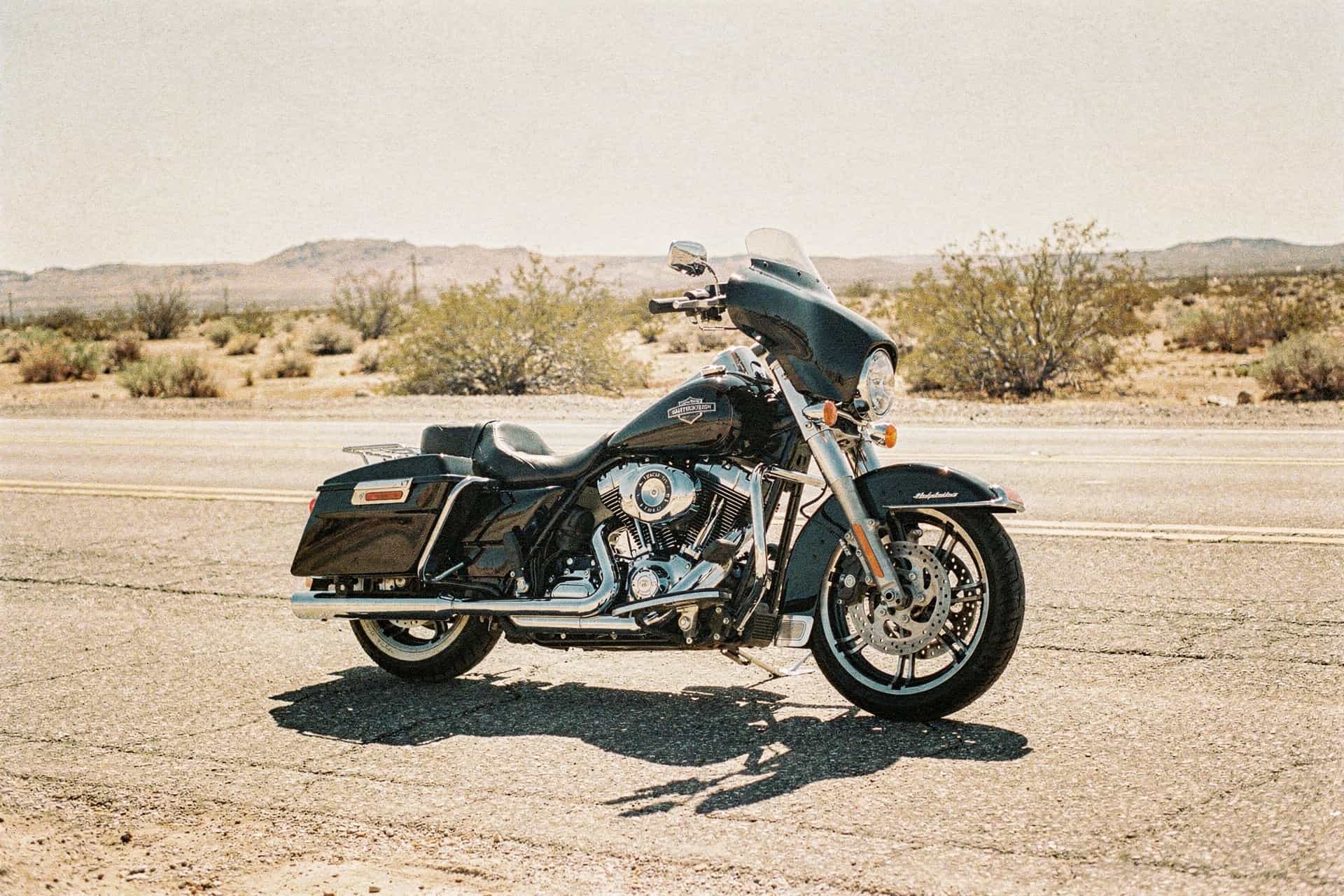
Some riders want a touring bike on Friday and a stripped cruiser on Monday. Harley-Davidson built one bike for both, and called it the Switchback. Unlock two bags, lift off a windshield, and a small bagger turns into a bare Dyna in about the time it takes to finish a coffee. It is one of the most practical bikes Harley built in the Twin Cam era, and one of the most overlooked on the used market today.
We like the Switchback because it solves a real problem. Full dressers are heavy and wide. Bare cruisers are miserable on a 400-mile day. The Switchback sits in the middle, and it does both jobs better than most riders expect.
What the Switchback Is
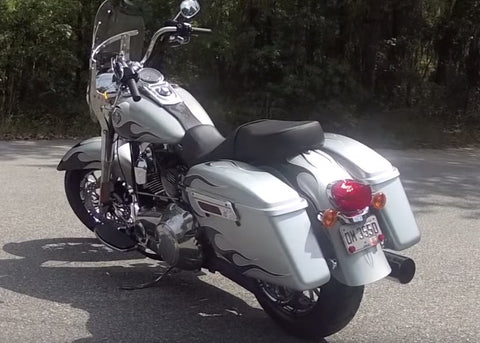
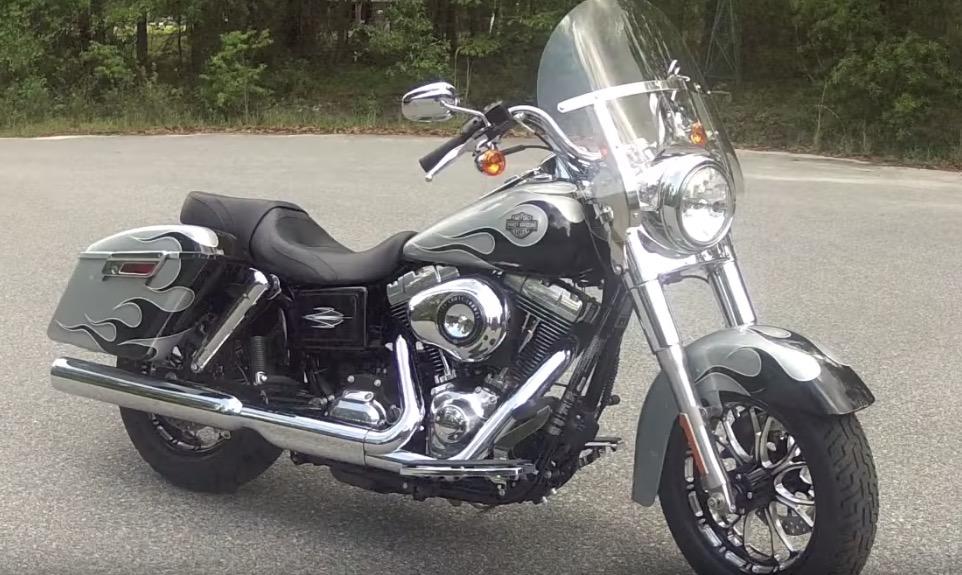
The Switchback carries the model code FLD. The FL in the code tells you the idea: touring-style parts on a Dyna, including a headlight nacelle, a big front fender, footboards, a windshield and hard bags. Under the dress-up parts it is a Dyna, with a rubber-mounted engine and twin rear shocks. Our Harley-Davidson Dyna guide covers the whole platform and why riders still chase it.
The Harley-Davidson Dyna entry on Wikipedia lists the FLD Switchback as a 2012 introduction, and the list of Harley-Davidson models gives its run as 2012 to 2016. Harley then dropped the Dyna family after 2017 and moved some Dyna names into the redesigned 2018 Softail line. The Switchback was not carried over, which is part of why clean ones now draw attention.
2012 Harley-Davidson Switchback Specs
These are Harley’s published 2012 specifications as listed by Total Motorcycle’s FLD Dyna Switchback page.
| Spec | 2012 FLD Dyna Switchback |
|---|---|
| Engine | Air-cooled Twin Cam 103 |
| Displacement | 103 ci (1690cc) |
| Bore x stroke | 3.875 x 4.38 in (98.4 x 111.3 mm) |
| Compression | 9.6:1 |
| Torque | 100 ft-lbs at 3,500 rpm |
| Fuel system | Electronic sequential port fuel injection |
| Transmission | Six-speed Cruise Drive |
| Final drive | Belt, 32/66 |
| Front fork | 41.3mm cartridge fork, 3.86 in travel |
| Rear shocks | 36mm monotube, preload adjustable, 2.13 in travel |
| Rake / trail | 29.9 degrees / 5.84 in |
| Wheelbase | 62.8 in |
| Seat height | 26.1 in laden, 27.4 in unladen |
| Ground clearance | 4.3 in |
| Weight | 696 lb as shipped, 718 lb running order |
| Fuel capacity | 4.7 gal |
| Fuel economy | 42 mpg combined (Harley figure) |
| Wheels | Black five-spoke cast aluminum, 18 in front, 17 in rear |
| Tires | Dunlop 130/70B18 front, 160/70B17 rear |
| Brakes | Single 300mm floating front rotor with 4-piston caliper, 292mm rear |
| ABS | Optional |
| Lean angle | 29 degrees each side |
| 2012 MSRP | $15,999 (Vivid Black), $16,384 (colors) |
The engine is the same Twin Cam 103 our Harley 103 engine guide breaks down in detail. The 2012 Switchback shipped with it.
How the Bags and Windshield Come Off
This is the whole point of the bike, so it is worth knowing exactly how it works.
Saddlebags. The hard bags are about one-third smaller than those on the big touring Harleys, according to Rider Magazine’s 2012 Switchback road test. Each bag is rated for 15 pounds. To remove one, you open it, pull and turn a single knob inside, and it slides off its mounts. To refit, slide it back on and turn the knob to lock it.
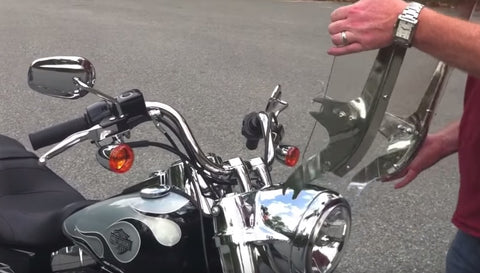
Windshield. The screen sits on four rubber-isolated mounts on the fork and lifts straight off.
With both gone, you have a clean Dyna with a nacelle, footboards and those black five-spoke wheels. No tools, no loose bolts in your pocket. That is what separates the Switchback from a regular Dyna with aftermarket bags bolted on.
How It Rides: What the Road Test Found
Rider Magazine’s test is the best period account of the bike, and it is honest about both sides.
What worked:
- Weight. The test bike, with ABS and the security system, weighed 725 lb wet. Rider called that about 100 pounds lighter than a typical full-size tourer. For comparison, the same test put a Heritage Softail at 760 lb. If you want to see how the Heritage rides by contrast, our guide to the 2003 Heritage Softail covers that bike.
- Handling. The tester found the steering “neutral and responsive, like a bike with a much shorter wheelbase.” The 29.9-degree rake is steeper than a Heritage, and you feel it in tight turns.
- Comfort. Rider praised the “low, all-day comfortable” 27.4-inch seat.
- Power. Rider reported the Twin Cam 103 cleared 70 horsepower and 90 lb-ft at the rear wheel, strong numbers for a stock Harley of the time.
- Range. Test mileage ran from 41.3 to 44.4 mpg, averaging 42.9, for an estimated range of about 202 miles.
What did not:
- Front brake. A single front disc on a 725 lb bike needs “a lot of effort at the lever.” ABS helps, but the lever still asks for a firm hand.
- Suspension on bad roads. With only about 2.1 inches of rear travel, sharp bumps come through. Two-up on broken pavement is where you notice it most.
- Vibration. The tester felt low-frequency vibration at some engine speeds, typical for a rubber-mounted Twin Cam.
The as-tested price was $17,579 with paint, security and ABS.
Packing a Switchback for a Weekend
The Switchback’s numbers tell you how to load it. Rider listed a load capacity of 445 lb, which has to cover you, a passenger and everything you pack. Each bag is rated for just 15 pounds. That is enough for rain gear, a spare layer, tools and a toiletry kit on each side, but not for a week of camping.
A few things that make a weekend easier:
- Pack heavy items low and forward in the bags. Tools and water go at the bottom, close to the bike.
- Use a small tail bag or roll for bulky, light gear. Sleeping bags and jackets weigh little and take up bag space you need for other things.
- Plan fuel around real range. Rider’s 42.9 mpg average and the 4.7-gallon tank work out to about 200 miles. On a loaded, windy day, plan stops at 150.
- Set rear preload for the load. The shocks are preload adjustable. With a passenger and bags, add preload so the short rear travel is not used up before the first bump.
- Leave the windshield on for highway days. Take it off for city riding or hot weather. It takes minutes either way, so there is no reason to pick one setup for the whole trip.
The Switchback in the Dyna Family
The Dyna line started in 1991 with the FXDB Sturgis and grew to include the Super Glide, Wide Glide, Low Rider, Fat Bob and Street Bob, according to Wikipedia’s Dyna history. Nearly all of them were built as stripped cruisers or muscle bikes. The Switchback was the odd one out. The 1994-2000 Dyna Convertible had tried a similar idea with a detachable windshield and saddlebags. The Switchback brought it back with hard bags, an FL-style front end and tool-free removal.
That is why it pulls in a different kind of buyer. Riders who want a Dyna’s rubber-mounted engine and twin-shock chassis, but who also want to carry things, have very few factory options. The Switchback is the cleanest of them.
Who the Switchback Is For
The Switchback suits a rider who does a mix of commuting, weekend loops and a few longer trips a year. It is lighter and narrower than a Road King, easier to push around a garage, and friendlier for shorter riders thanks to the low seat.
It is not a full tourer. The bags are smaller, there is no fairing, and the rear suspension is short. If you ride two-up across the country every summer, a full touring model makes more sense. If you ride solo most of the time and want the option to pack for a weekend, this is the bike.
It also makes a good base for riders who like to change things. Strip it down and the Switchback wears a minimal look well. Riders who love the Dyna’s attitude but still want bags have a lot in common with the Harley Low Rider crowd.
Used Switchback Buying Checklist
Switchbacks were bought by practical riders, and a lot of them got ridden hard. When we look at a used one, this is what we check:
- Decode the VIN. Confirm the FLD model code and the model year. Our Harley VIN decoder explains each digit.
- Test the bag mounts. Remove and refit both bags yourself. The knobs should turn smoothly and the bags should sit tight with no rattle. Worn or cracked mounts mean rattles on the road and parts to buy.
- Ask for the keys. Check that the bag locks work and that the seller has all keys, including for the ignition and any security fob.
- Check the windshield mounts. Look for cracked rubber isolators and scratches on the fork where the screen has been forced on or off.
- Look at the rear shocks. With only 2.1 inches of travel, tired shocks make the ride harsh fast. Many owners have upgraded them. Ask what is fitted.
- Check the front brake. Look at pad thickness and the rotor surface. If the bike has ABS, confirm the warning light goes out after startup.
- Ask about the engine tune. Many Twin Cam 103s have aftermarket pipes and air cleaners. That is fine if the fuel map was tuned to match. Ask for proof.
- Listen for the primary and cams. A cold start should be clean. Rattles from the right side of the engine need an explanation.
- Check the belt. Look for missing teeth, cracks or stone damage.
Our Dyna guide has a longer section on common Dyna issues, and all of it applies here.
Why the Switchback Still Matters
The Switchback was a small experiment that worked. It proved you could take a Dyna, dress it for the road, and still strip it back to a clean cruiser in a few minutes. Harley ended the Dyna line before the idea got a second generation, which leaves the 2012-2016 bikes as the only factory version of this formula.
That makes a clean, well-kept Switchback a smart buy for riders who value function. It is not flashy. It just does a lot of different jobs well, and that is the kind of bike we respect. For the bigger picture of where the Dyna fits in the company’s story, our Harley-Davidson history guide covers every engine generation and era.
Long days on the Switchback call for good gloves, too. Our guide to deerskin motorcycle gloves covers why so many touring riders swear by them.
If you ride a Harley, our Built Not Bought biker tees and hoodies are designed for riders who respect the heritage.
Sources
- 2012 Harley-Davidson FLD Dyna Switchback - Total Motorcycle - Harley’s published 2012 specifications, prices and colors
- 2012 Harley-Davidson Dyna Switchback Road Test Review - Rider Magazine - measured weight, fuel economy, bag and windshield removal, handling, likes and dislikes
- Harley-Davidson Dyna - Wikipedia - Dyna platform history, 2012 FLD introduction and the end of the Dyna after 2017
- List of Harley-Davidson motorcycles - Wikipedia - FLD Switchback model years 2012-2016