
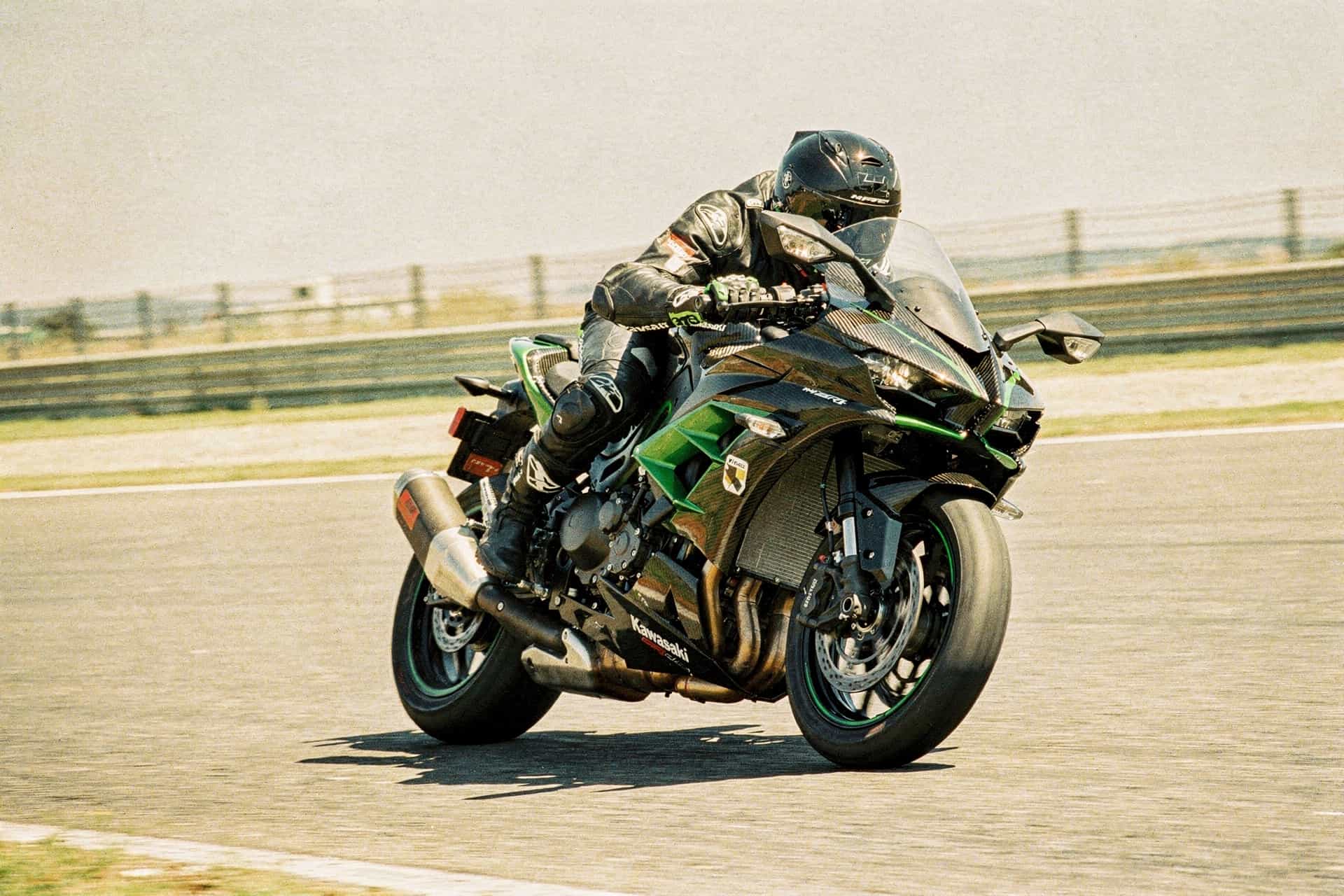
There’s a video of Turkish rider Kenan Sofuoglu on the Osman Gazi Bridge in 2016, tucked behind the windscreen of a Kawasaki Ninja H2R, speedometer climbing past 400 km/h. That’s 249 miles per hour. On two wheels. On a bridge.
We ride bobbers. Our bikes are built for feel, not for velocity - a solo seat, bobbed fenders, and the sound of a V-twin at 65 mph on a county road. But we’d be lying if we said the speed side of motorcycling doesn’t fascinate us. The people who chase top speed records are a different breed of obsessed, and what they’ve built deserves respect.
This is the rundown of the fastest motorcycles ever made, from showroom sportbikes to purpose-built streamliners on the Bonneville Salt Flats. Real numbers. Verified where possible.
Fastest Production Motorcycles
Production bikes are machines built on an assembly line that you can walk into a dealership and buy. Street-legal or track-only, they come with a warranty and a serial number. These are the ones that go fastest.
Kawasaki Ninja H2R - 249 mph (Track Only)
The H2R is the undisputed king. Kawasaki’s supercharged 998cc inline-four produces 310 horsepower - 326 hp with ram air at full speed. That’s more than most sports cars and more than a few supercars.
The catch: the H2R is not street-legal. No headlight, no mirrors, no turn signals. It’s a track-only technology demonstrator. Kawasaki’s gas turbine division - the same people who build jet engine components - designed the centrifugal supercharger. The carbon fiber upper cowl generates downforce at speed. The frame uses aerospace-grade materials.
Kenan Sofuoglu’s 249 mph run on the Osman Gazi Bridge remains the most famous H2R speed demonstration. On closed courses, teams have recorded 248 mph consistently, with claims of higher speeds under ideal conditions.
- Engine: 998cc supercharged inline-four
- Power: 310 hp (326 hp with ram air)
- Weight: 476 lbs dry
- Top speed: 249 mph (recorded)
- Price: Approximately $59,100
Kawasaki Ninja H2 Carbon - 186 mph (Street Legal)
The street-legal sibling. Same supercharged engine, detuned to 240 horsepower for road use. Full lighting, mirrors, and DOT compliance. This is the fastest street-legal production motorcycle you can buy from a major manufacturer.
The H2 Carbon includes every electronic safety system Kawasaki could bolt on: traction control, cornering ABS, launch control, quickshifter. Kawasaki knows what they created and added every safety net available.
The listed top speed of 186 mph is an electronic limit, not a mechanical one. With the limiter removed, the engine has significantly more to give. The 186 mph figure exists because of the gentleman’s agreement - more on that below.
- Engine: 998cc supercharged inline-four
- Power: 240 hp
- Weight: 525 lbs wet
- Top speed: 186 mph (electronically limited)
- Price: Approximately $36,200
Ducati Panigale V4 R - 186 mph
Ducati’s homologation special for the World Superbike Championship. The 998cc Desmosedici Stradale V4 makes 218 horsepower in stock trim. With the optional Akrapovic race exhaust (included but not road-legal), it pushes past 239 hp.
The V4 R exists so Ducati can go racing. The street version is the minimum number of units required to satisfy homologation rules - which means you’re buying something very close to a World Superbike entry with a license plate bracket. The top speed of 299 km/h (186 mph) is the electronic limit matching the gentleman’s agreement.
- Engine: 998cc Desmosedici Stradale V4
- Power: 218 hp (239 hp with race exhaust)
- Weight: 379 lbs dry
- Top speed: 186 mph (electronically limited)
- Price: Approximately $45,500
Suzuki Hayabusa - 186 mph
The Hayabusa is the bike that started the modern top-speed arms race. When the first generation debuted in 1999, it hit 194 mph and shattered every production motorcycle speed record. That achievement directly triggered the gentleman’s agreement that would limit top speeds for the next two decades.
The current third-generation Hayabusa runs a 1,340cc inline-four making 188 horsepower. It’s electronically limited to 186 mph. The engine is mechanically capable of more - it always was.
The Hayabusa sits at the opposite end of the motorcycle universe from the bikes we celebrate - stripped-down bobber builds that prioritize soul over speed. But any machine that defines its entire category earns a nod from us.
Where the Hayabusa truly dominates is the drag strip. Its massive engine in a relatively light sportbike chassis makes it the most popular platform for straight-line speed builds in the world. Turbocharged Hayabusas regularly exceed 200 mph in the quarter mile. The platform has been the backbone of professional and amateur motorcycle drag racing for over two decades.
- Engine: 1,340cc inline-four
- Power: 188 hp
- Weight: 582 lbs wet
- Top speed: 186 mph (limited); 194 mph (first generation, unrestricted)
- Price: Approximately $19,099
BMW S 1000 RR - 190 mph
BMW’s superbike has been embarrassing more established manufacturers since 2009. The current generation makes 205 horsepower from a 999cc inline-four with BMW’s ShiftCam variable valve timing. The M 1000 RR competition version pushes that to 212 hp with titanium connecting rods and carbon fiber wheels.
The electronics package is among the most sophisticated in production motorcycles: six-axis IMU, cornering ABS Pro, dynamic traction control, wheelie control, launch control, and a pit lane speed limiter. German engineering applied entirely to the problem of going very fast and not dying.
- Engine: 999cc inline-four
- Power: 205 hp (212 hp M 1000 RR)
- Weight: 434 lbs wet
- Top speed: 190 mph (derestricted capable of 200+)
- Price: Approximately $18,295 base / $32,495 M 1000 RR
Honda CBR1000RR-R Fireblade SP - 188 mph
Honda completely redesigned their flagship superbike in 2020, drawing directly from the RC213V MotoGP machine. The 999cc inline-four produces 218 horsepower with a 14,000 rpm redline. Semi-active Ohlins suspension, Brembo Stylema calipers, titanium muffler.
The “double R” suffix means this is not the friendly Fireblade from the 2000s. It’s a track weapon that happens to have street equipment.
- Engine: 999cc inline-four
- Power: 218 hp
- Weight: 443 lbs wet
- Top speed: 188 mph
- Price: Approximately $28,999
Aprilia RSV4 1100 Factory - 186 mph
Aprilia’s V4 superbike is the thinking rider’s choice in this class. The 1,099cc 65-degree V4 makes 217 horsepower and has won multiple World Superbike championships, including three titles between 2010 and 2014. The engine character - a screaming V4 that rewards high-rpm commitment - is unlike anything from Japan.
- Engine: 1,099cc V4
- Power: 217 hp
- Weight: 439 lbs wet
- Top speed: 186 mph (limited)
- Price: Approximately $26,999
The 186 MPH Gentleman’s Agreement
After the Hayabusa hit 194 mph in 1999 and the Kawasaki ZX-12R answered with a 190-plus mph machine in 2000, European regulators started talking seriously about banning high-speed motorcycles. The Japanese and European manufacturers saw the threat and cut a deal: voluntarily limit production bikes to 300 km/h (186 mph) electronically.
This gentleman’s agreement has held since 2001. It’s why so many bikes on this list share the exact same 186 mph top speed - they’re all hitting the electronic wall, not their mechanical limit. The engines have more to give. The manufacturers agreed not to let them.
Kawasaki broke the agreement with the H2 and H2R, which is part of what makes those machines historically significant. But the broader agreement persists because manufacturers prefer self-regulation to government regulation. It’s not legally binding. It’s a handshake. And it’s held for over two decades.
Land Speed Records
Production bikes are fast. Purpose-built land speed machines exist in a different dimension entirely.
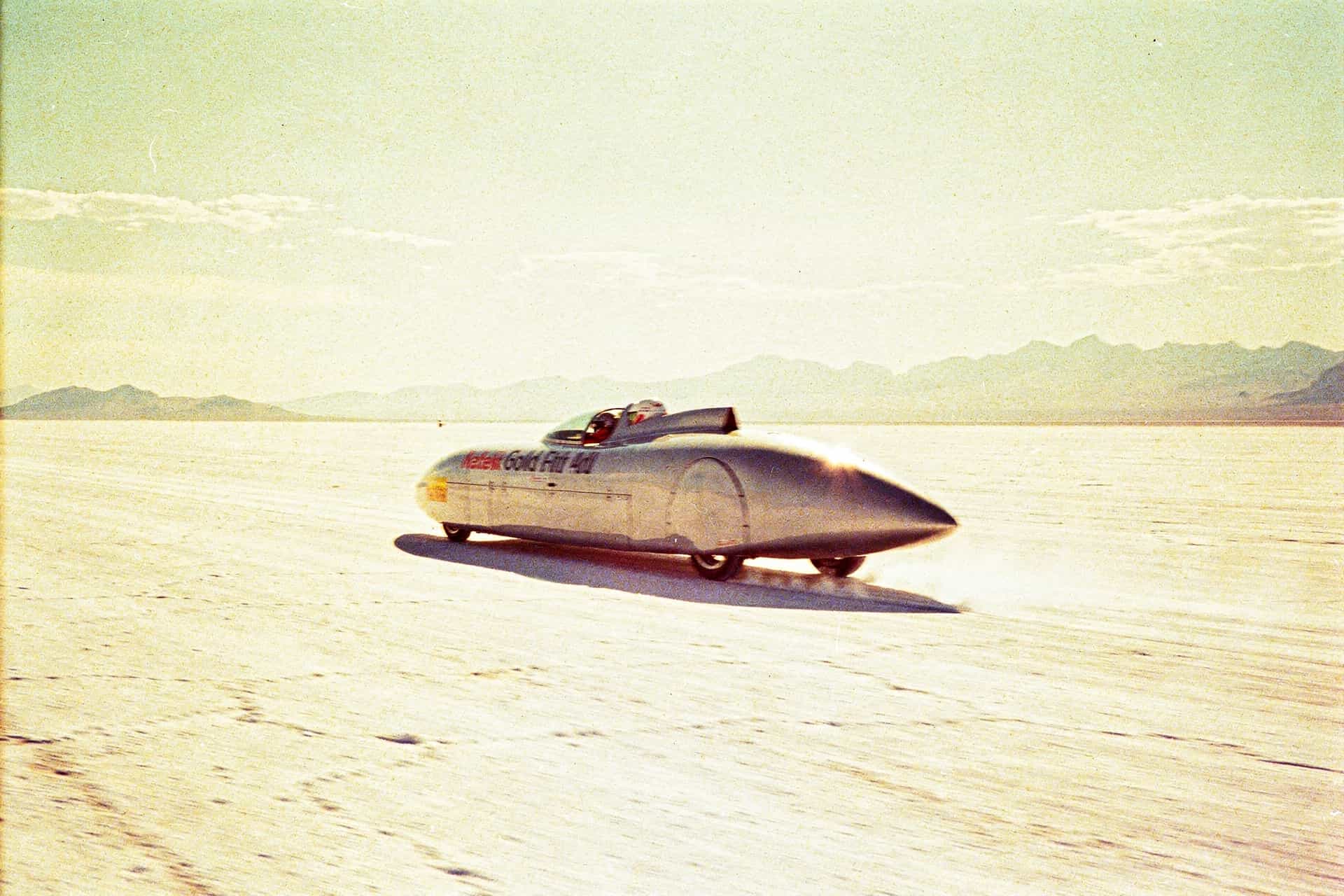
Ack Attack Streamliner - 376.363 mph
The current outright motorcycle land speed record belongs to the Ack Attack streamliner, set at the Bonneville Salt Flats in September 2010. Rider Rocky Robinson piloted the twin-engine machine to a two-way average of 376.363 mph.
The Ack Attack is powered by two turbocharged Suzuki Hayabusa engines producing a combined 1,000-plus horsepower. The rider lies prone inside an enclosed carbon fiber shell. It looks nothing like a motorcycle. But by FIM classification rules, it qualifies - two wheels in a line, engine-powered.
During the 2010 speed week, the Ack Attack reportedly hit 394 mph on a one-way pass. But official records require a two-way average (to eliminate tailwind advantage), so 376.363 mph stands as the number in the books.
BUB Seven Streamliner - 367.382 mph
Before Ack Attack took the record, the BUB Seven held it at 367 mph, set at Bonneville in 2009. Also a streamliner. Also at the salt flats. The land speed community out there is small, obsessive, and largely self-funded. These machines cost enormous sums to build for a few seconds of record-breaking speed on a dry lakebed in Utah.
Fastest Sit-On Motorcycle
The fastest speed recorded on a conventional sit-on motorcycle - no enclosure, rider exposed to the wind - enters the 300-plus mph range at Bonneville. These are heavily modified sportbikes, often turbocharged Hayabusas or Kawasaki ZX-14s, with the rider sitting upright in the airstream. Breaking 300 mph on two wheels with nothing between you and the wind is considered one of the most dangerous pursuits in motorsport.
Fastest Quarter-Mile Machines
Straight-line speed isn’t only about top speed. The quarter mile is the traditional drag racing distance, and motorcycles are among the fastest things through it.
- Top Fuel motorcycle: Under 6 seconds at 230-plus mph. Purpose-built nitromethane-burning machines producing 1,500-plus horsepower.
- Pro Stock motorcycle: Approximately 6.7 seconds at 200-plus mph. Factory-appearing bikes with heavily modified engines.
- Street-legal record: Modified Hayabusas and H2s have run the quarter in the low 8-second range at 170-plus mph.
For reference: a stock Kawasaki H2R runs the quarter mile in approximately 9.0 seconds at 160-plus mph. A stock Hayabusa does it in about 9.7 seconds. Both of those times are faster than a Lamborghini Huracan.
Honorable Mentions
Yamaha YZF-R1M - 186 mph. The R1 has been a benchmark superbike since 1998. The current R1M uses a crossplane inline-four making 197 horsepower with Ohlins electronic suspension and a distinctive engine note unlike any other inline-four. Its World Superbike dominance speaks for itself.
Kawasaki Ninja ZX-10R - 186 mph. Kawasaki’s longstanding superbike contender. The 998cc inline-four makes 203 hp. Jonathan Rea won six consecutive WSBK championships on ZX-10R-derived machines. The street version carries that lineage in a surprisingly livable package.
MV Agusta F4 RC - 186 mph. Arguably the most beautiful motorcycle ever to chase 200 mph. The original F4 design was penned by Massimo Tamburini - the same man who drew the Ducati 916 - and is widely considered the finest sportbike aesthetic in history. The RC version makes 205 hp stock (212 hp with the race kit) and was limited to 250 units.
Why Any of This Matters If You Never Touch 200
You don’t need 200 mph. Nobody does. Riding at those speeds on public roads is reckless and illegal everywhere. We’ll say that plainly.
But the technology developed chasing top speed trickles down to every motorcycle you can buy. The cornering ABS on a $17,000 BMW exists because BMW learned what happens at 190 mph and built systems to intervene before physics takes over. Traction control, quickshifters, variable valve timing, advanced suspension electronics - all of it filtered down from the speed chase.
And there’s something pure about humans strapping themselves to two wheels and running flat-out on a dry lakebed in Utah. It’s not practical. It’s not safe. But it’s the same impulse that made someone look at a bicycle in 1885 and think, what if I put an engine on that?
If your version of speed is the rumble of a V-twin at highway pace on a back road, that’s the right speed. The thrill of riding doesn’t come with a minimum velocity requirement. Our types of motorcycles guide covers every category from sportbikes to cruisers to bobbers. The motorcycle handlebar types guide explains how clip-ons and rearsets contribute to the speed-riding equation. And our motorcycle beginner’s guide plus list of the best starter bikes will get you rolling at whatever pace suits your life.
If you ride something that tops out at 110 and couldn’t care less about the number, we build our whole world around that mindset.
Sources
- Kawasaki - Ninja H2R Official Specifications - factory specifications for the supercharged 998cc inline-four including 322 hp output
- Jalopnik - The History of the Gentleman’s Agreement That Capped Motorcycle Speed - origins of the 186 mph voluntary speed limit and its impact on production motorcycles
- Cycle News - Top 1 Ack Attack: Mike Akatiff, the Man Behind the World’s Fastest Motorcycle - Ack Attack streamliner land speed record details and Bonneville Salt Flats history
- Bennetts - Fastest Motorcycles in the World - comprehensive top speed data across production and track-only motorcycles
- TopSpeed - Kawasaki Ninja H2: 10 Years of the World’s Fastest Superbike - H2 platform history and performance verification
- BMW S1000RR - Wikipedia - factory data and generational history of the ShiftCam inline-four including 0-100 km/h performance
- Suzuki Hayabusa - Wikipedia - Hayabusa specifications across all three generations and its role in the top-speed arms race
If you want to go deeper into the culture around riding - rally calendars, films worth watching, the lifestyle history - our motorcycle culture guide covers it.