Harley-Davidson is still identified with Milwaukee, but the company’s current roster lists Milwaukee as headquarters rather than a motorcycle assembly plant. Its manufacturing and assembly footprint spans several sites and countries, which makes the answer more specific than the familiar shorthand.
Here is the current list, taken from Harley-Davidson’s own facility roster rather than from older articles, plus what each site actually does and what “made in America” means on a motorcycle that no federal rule requires to disclose its parts content.
The Current Plant List
Harley-Davidson publishes its own locations roster, and it lists exactly five manufacturing sites:
| Site | Harley’s own designation | What the designation tells you |
|---|---|---|
| York, Pennsylvania | Vehicle Operations | Sportster, Cruiser, Touring, CVO and LiveWire families named on the current tour page |
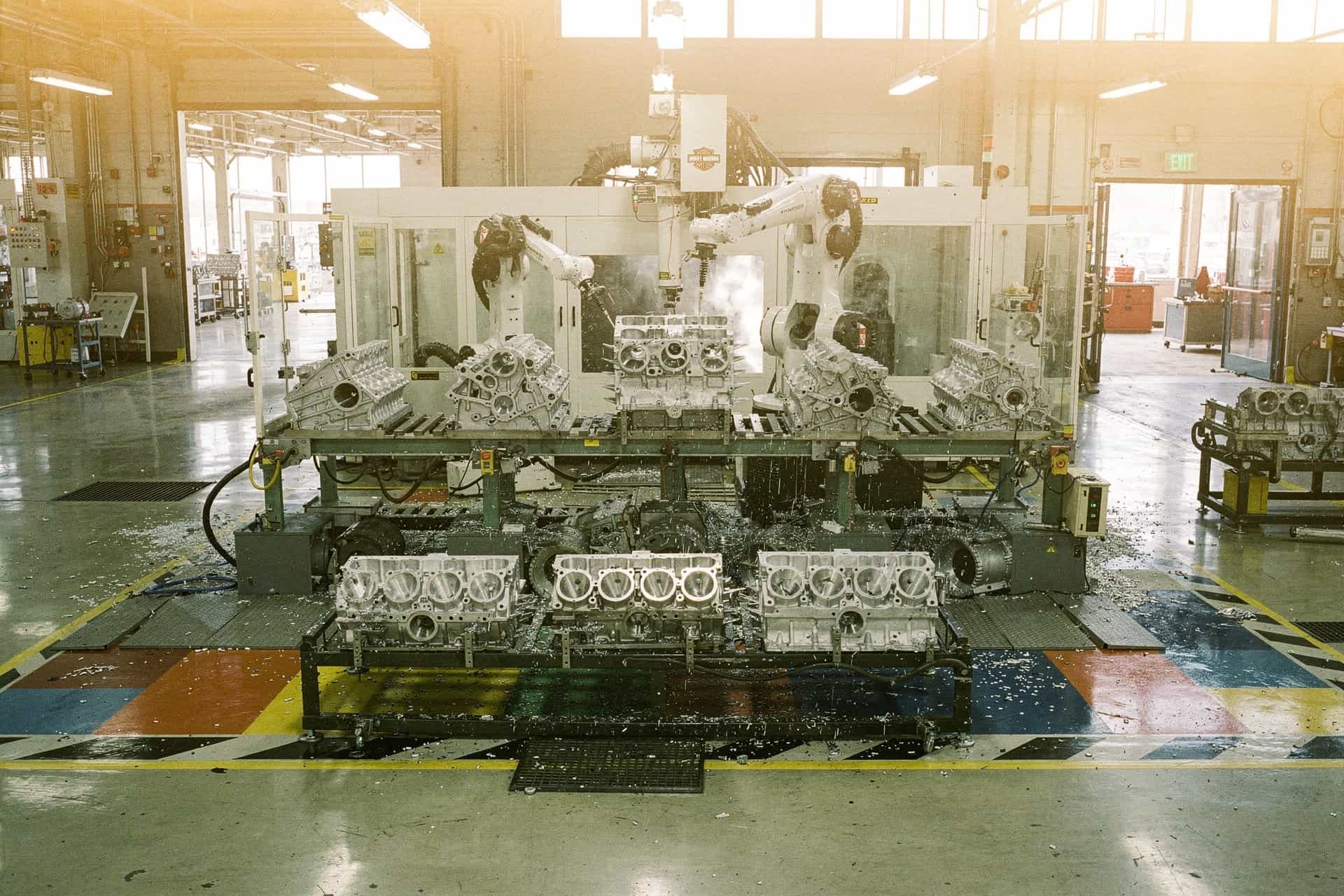
| Menomonee Falls, Wisconsin | Powertrain Operations | Milwaukee-Eight powertrains named on the current tour page |
| Tomahawk, Wisconsin | Tomahawk Operations | Component-parts production and painting in the 2025 Form 10-K |
| Manaus, Brazil | Harley-Davidson do Brasil Ltda Assembly Plant | Brazilian-market assembly from component kits supplied by US facilities and suppliers |
| Rayong, Thailand | Thailand Sales Office and Assembly Plant | Certain Asian and European markets, plus limited Sport and Adventure Touring models for North America |
Harley publishes limited model-family, powertrain, component, and market allocation in its tour page and annual filing. It does not publish a VIN-by-VIN production ledger or a complete part-origin list. The table therefore uses only the current categories the company names and avoids extending them to every model or component.
Everything else Harley-Davidson runs is something other than a factory. Milwaukee is corporate headquarters. Wauwatosa, Wisconsin holds the Product Development Center. Yucca, Arizona is the proving ground and Naples, Florida is an evaluation center. Mountain View, California is LiveWire Labs. None of those bolts a motorcycle together.
Two entries that still show up in older write-ups of this question do not belong on the list. Kansas City, Missouri closed in 2019. Bawal, India is not a Harley-Davidson facility; more on that below.
York, Pennsylvania: Vehicle Operations
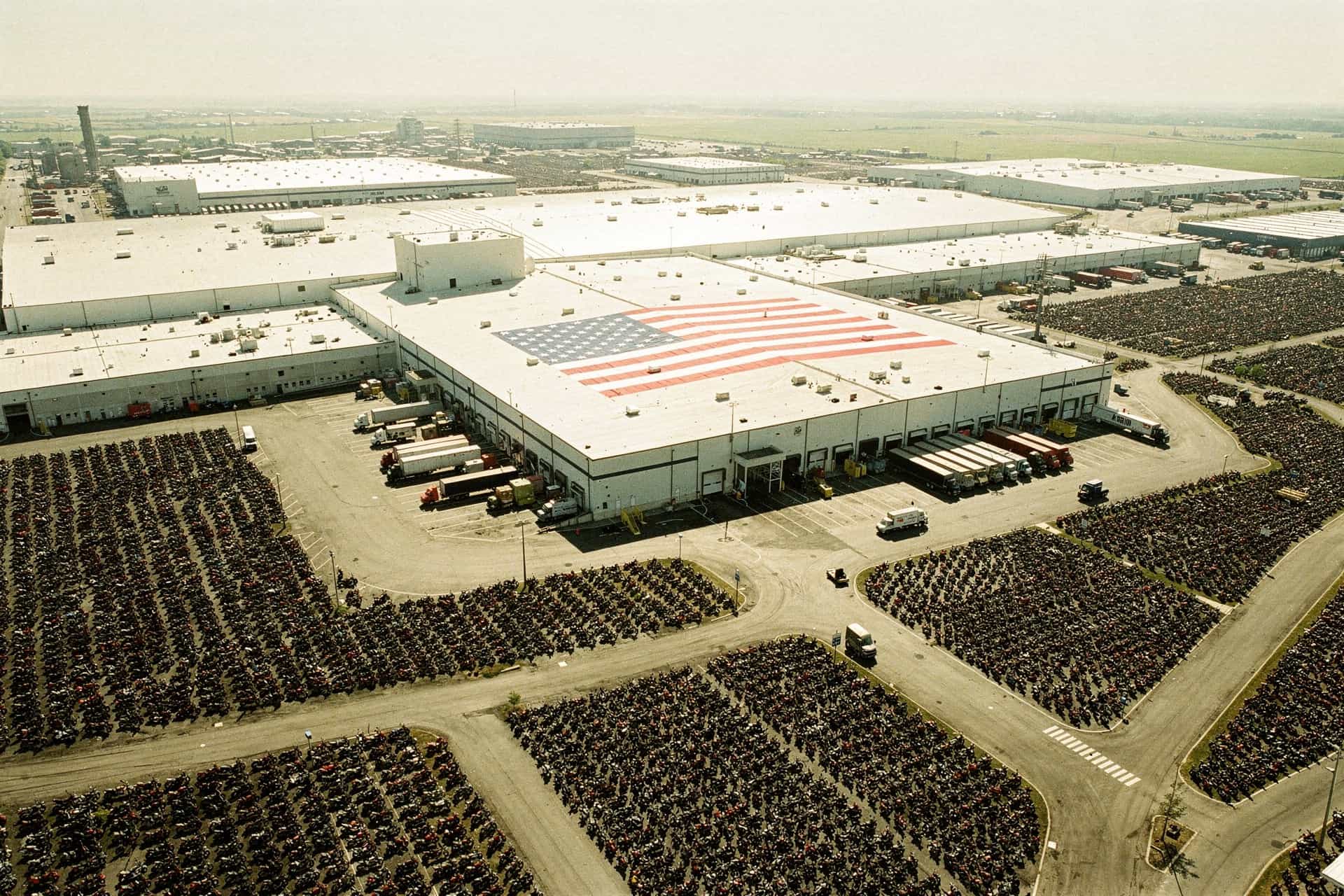
York is the site Harley designates Vehicle Operations. The current factory-tour page associates it with Sportster, Cruiser, Touring, CVO and LiveWire motorcycles. That is an official family-level description, not a statement that every current model in each family is built there or a measure of York’s share of output.
What is documented is that York absorbed the work that used to happen in Missouri. Harley announced the Kansas City closure in January 2018 as part of a restructuring and consolidated that production into York, ending a plant that had run since 1997 and cutting roughly 800 jobs. Kansas City had built Sportsters, Dyna models, V-Rods and the Street 500 and 750. All of those model lines were either discontinued or moved.
The tour situation has changed
If you are planning a ride around a factory tour, read this part carefully. Most of what is written about Harley plant tours online describes how they ran years ago.
Harley-Davidson’s own factory tours page currently states that the York public tours are temporarily closed. There is no published reopening date.
The tour that is running is at Menomonee Falls: a 90-minute “Walk the Line: Engine Manufacturing Tour” through the powertrain plant, offered Monday through Friday for public and private groups. It is a ticketed tour with seasonal pricing and discounts for H.O.G. members, museum passholders and current or former US military, not the free walk-in that York used to be. Book ahead; capacity is limited.
Check the official page the week you plan to go rather than trusting any article, including this one, on tour status. Plant tours open and close for production and safety reasons with little notice.
Menomonee Falls, Wisconsin: Engines and Transmissions
About fifteen miles northwest of downtown Milwaukee, Powertrain Operations builds what Harley considers the heart of the product. The designation covers engines and transmissions, and Harley’s own tour page confirms the engine work directly: the plant runs an “Engine Manufacturing Tour” described as “exploring the heart of a Harley-Davidson motorcycle, the engine.”
Harley’s current tour page explicitly says Milwaukee-Eight powertrains are built at Menomonee Falls. It does not provide a line-by-line allocation, production volume, or destination for every engine, so claims beyond that need a dated factory source.
If you want the story of what those engines replaced, our Harley-Davidson history guide walks the engine eras from the Knucklehead forward.
Tomahawk, Wisconsin: The Plant Nobody Thinks About
Roughly 200 miles north of Milwaukee sits the site Harley lists simply as Tomahawk Operations. It is a manufacturing location on the company’s roster, and it is not a motorcycle plant, which puts it in a category of one among the five.
The origin is the useful part of the record. Harley bought a Tomahawk boat manufacturer in the 1960s for its fiberglass capability, and the plant has produced components rather than complete machines since. The 2025 Form 10-K describes component-parts production and painting without publishing a complete part list. The site is also a footnote in one of Harley’s odder chapters: the company built golf cars for roughly two decades before divesting that line.
Manaus, Brazil: Tariff-Driven Assembly
Harley has assembled motorcycles in Manaus since the late 1990s, inside the Manaus Free Trade Zone, and the company’s roster still carries the site as the Harley-Davidson do Brasil Ltda Assembly Plant. That designation is assembly, not manufacturing of parts, which is the distinction the site name itself is drawing.
The reason is arithmetic. Brazil levies steep import duties on finished vehicles, and local assembly moves a bike out of that category. Harley’s 2025 Form 10-K says Manaus assembles motorcycles for the Brazilian market from component kits supplied by US facilities and suppliers. That does not mean every component is US-made, and it does not disclose each part’s origin.
Rayong, Thailand: The International Plant
Harley opened its Thailand plant in Rayong province in 2018, and it is the site that generated the most heat among American riders.
The trigger was trade policy. When the European Union imposed retaliatory tariffs on US-built motorcycles in 2018, bikes shipped from the United States to Europe suddenly cost far more to land, and Reuters covered the Rayong opening in exactly that context. Harley’s stated position has been consistent: the international plants exist for market access, not to replace domestic capacity.
Harley’s 2025 Form 10-K says Rayong manufactures for certain Asian and European markets and produces limited Sport and Adventure Touring models for North America. That is a dated allocation rather than a permanent routing promise. For a specific motorcycle, use the VIN rather than a general plant summary.
India: Hero Builds It, Harley Badges It
This is the part of the question most articles still get wrong.
Harley-Davidson ran its own Indian assembly operation at Bawal, Haryana until 2020, when it exited India as a standalone business on low volume and high operating cost. Bawal is not a current Harley-Davidson facility and does not appear on the company’s manufacturing roster. Any list that still shows India among Harley’s own plants is describing 2019.
What replaced it is a licensing and distribution partnership with Hero MotoCorp, India’s largest two-wheeler maker. The Harley-Davidson X440, launched in 2023, is designed jointly and manufactured by Hero at its Neemrana plant in Rajasthan, the site Hero calls its Garden Factory, alongside Hero’s own models. Harley does not own or operate that plant.
That is a genuinely different arrangement from Brazil or Thailand. Manaus and Rayong are Harley facilities assembling Harley kits. Neemrana is a Hero facility building a jointly developed motorcycle under the Harley-Davidson name.
What “Made in America” Actually Means Here
This is where the question usually gets emotional and rarely gets precise. Three things are true at once.
Three of the five manufacturing sites are American. Vehicle Operations at York, Powertrain Operations at Menomonee Falls and Tomahawk Operations in northern Wisconsin. That is a real domestic manufacturing base by the standards of any modern vehicle maker.
The parts inside those assemblies are globally sourced. Electrical components, fasteners, bearings, seals, rubber goods and certain castings come from suppliers around the world. That is not a Harley-specific compromise; it is how every volume motorcycle manufacturer on earth operates. There is no modern motorcycle with a 100 percent domestic bill of materials.
No rule makes anyone show you the split. New cars and light trucks in the US carry a parts-content label under the American Automobile Labeling Act, showing US and Canadian content by value plus the countries of origin of the engine and transmission. That regulation, 49 CFR Part 583, applies to passenger motor vehicles and explicitly does not include motorcycles. So a Harley window sticker carries no mandated domestic-content percentage, and nobody publishes one.
Separately, the Federal Trade Commission’s standard for an unqualified “Made in USA” claim on any product is that it be “all or virtually all” made in the United States, which is why manufacturers of complex vehicles generally talk about where a product is assembled rather than making a blanket origin claim. When you see “built in York” rather than “Made in USA” on a Harley, that distinction is doing real work.
The accurate sentence, if you want one to use in the parking lot: Harley builds motorcycles and powertrains in the United States, assembles in Brazil and Thailand as well, and buys parts globally like everyone else. That is both more modest and more defensible than either side of the usual argument, and it has the advantage of matching what the company actually publishes.
If you are new enough to the brand that this is your first pass through the model lineup, our motorcycle beginner’s guide covers what to sort out before your first ride, and our breakdown of the types of motorcycles explains where a cruiser sits against everything else. If a Harley is on your shortlist against lighter options, the best beginner motorcycles comparison puts them side by side.
The Factories That Are Gone
Harley’s manufacturing map has been redrawn several times, and a couple of the closed chapters explain why the company is more comfortable with overseas partners than riders assume.
Japan, 1929-1958. Harley licensed production to a Japanese company that became Rikuo, which built Harley-derived flathead V-twins in Shinagawa, Tokyo, mainly for military and police use. The formal licensing arrangement lapsed in the 1930s, but Rikuo kept building Harley-descended machines under its own name into the 1950s. Those bikes are collector items now. The same era produced Harley’s military work, covered in our piece on the Harley-Davidson XA.
Italy, 1960-1978. Harley bought half of Aermacchi in 1960 and used its Varese plant to build small-displacement Harley-badged singles for European and lightweight markets. Harley sold out in 1978.
Kansas City, Missouri, 1997-2019. The most recent and the most painful for American riders. Consolidation, not a quality problem.
Buying a Used Harley and Wanting to Know Where It Was Built
The VIN answers this. The first character of a 17-digit VIN encodes the country where the vehicle was manufactured, and the digits after it identify the manufacturer and plant. That is more reliable than a seller’s memory or a badge. Our Harley VIN decoding guide walks the positions.
One more practical note for a new-to-you bike, regardless of which plant stamped it: the break-in and first-service schedule matters more to long-term condition than the assembly site does, and our guide to the 1,000-mile service covers what that first visit is for.
Bobber Brothers has been making gear for bobber and cruiser riders since 2014. Our full collection is cut for the garage, not the showroom.
Sources
- Harley-Davidson Locations - Harley-Davidson USA - the company’s own current facility roster: York Vehicle Operations, Menomonee Falls Powertrain Operations, Tomahawk Operations, the Manaus and Rayong assembly plants, plus the non-manufacturing sites and Milwaukee headquarters
- Factory Tours - Harley-Davidson USA - current tour status, including “The public factory tours are temporarily closed” for York and the 90-minute Menomonee Falls engine tour schedule and pricing structure
- Harley-Davidson, Inc. Form 10-K for fiscal 2025 - SEC EDGAR - the annual filing whose Properties item is the company’s audited statement of its principal manufacturing locations, and the document to check against if the careers roster and this article ever diverge
- 49 CFR Part 583, Automobile Parts Content Labeling - eCFR - the parts-content labeling rule, whose definition of a passenger motor vehicle excludes motorcycles
- Made in USA - Federal Trade Commission - the “all or virtually all” standard for unqualified US-origin claims
- Harley-Davidson Closing Kansas City Plant by Summer 2019 - Rider Magazine - the January 2018 closure announcement and consolidation into York
- Harley-Davidson opens first assembly plant in Thailand - Reuters - the 2018 Rayong opening in the context of EU retaliatory tariffs
- Harley-Davidson X440 factory visit: Hero’s Garden Factory - Autocar India - first-hand reporting from the Hero MotoCorp plant at Neemrana, Rajasthan, where the X440 is built
- The Harley-Davidson XA - Silodrome - background on Harley’s pre-war international licensing and military production