


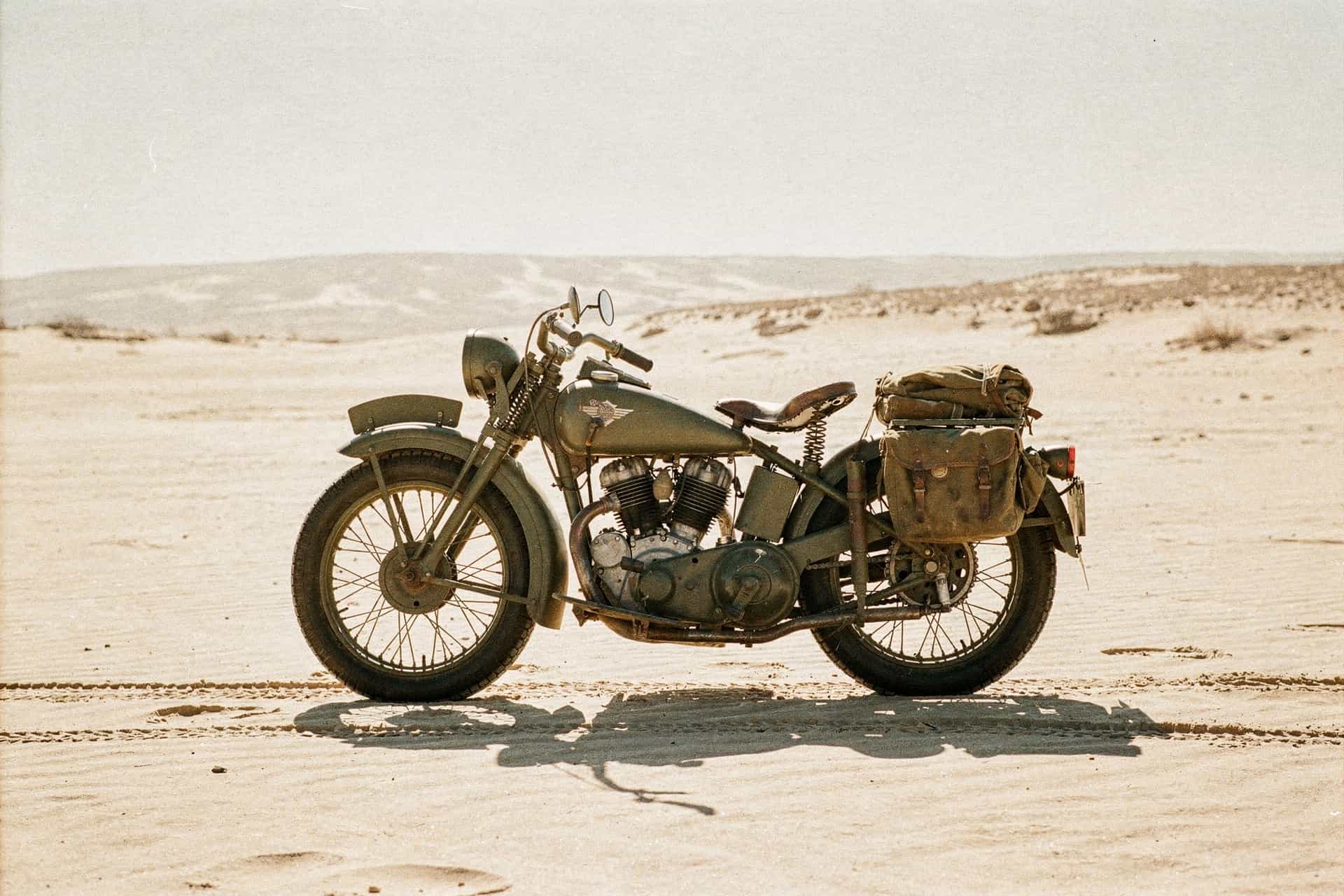
Picture a dirt road in the North African desert in 1941. A German dispatch rider on a BMW twists through sand that would choke a chain drive, and the engine keeps running cool because both cylinders stick out into the wind. American observers noticed. A year later, Milwaukee had built its own version for the US Army, a Harley with two cylinders lying flat instead of standing in a V.
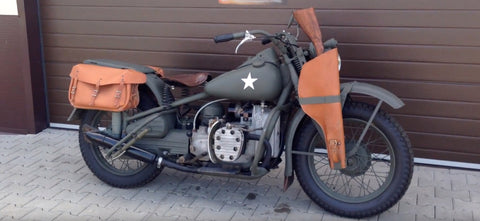
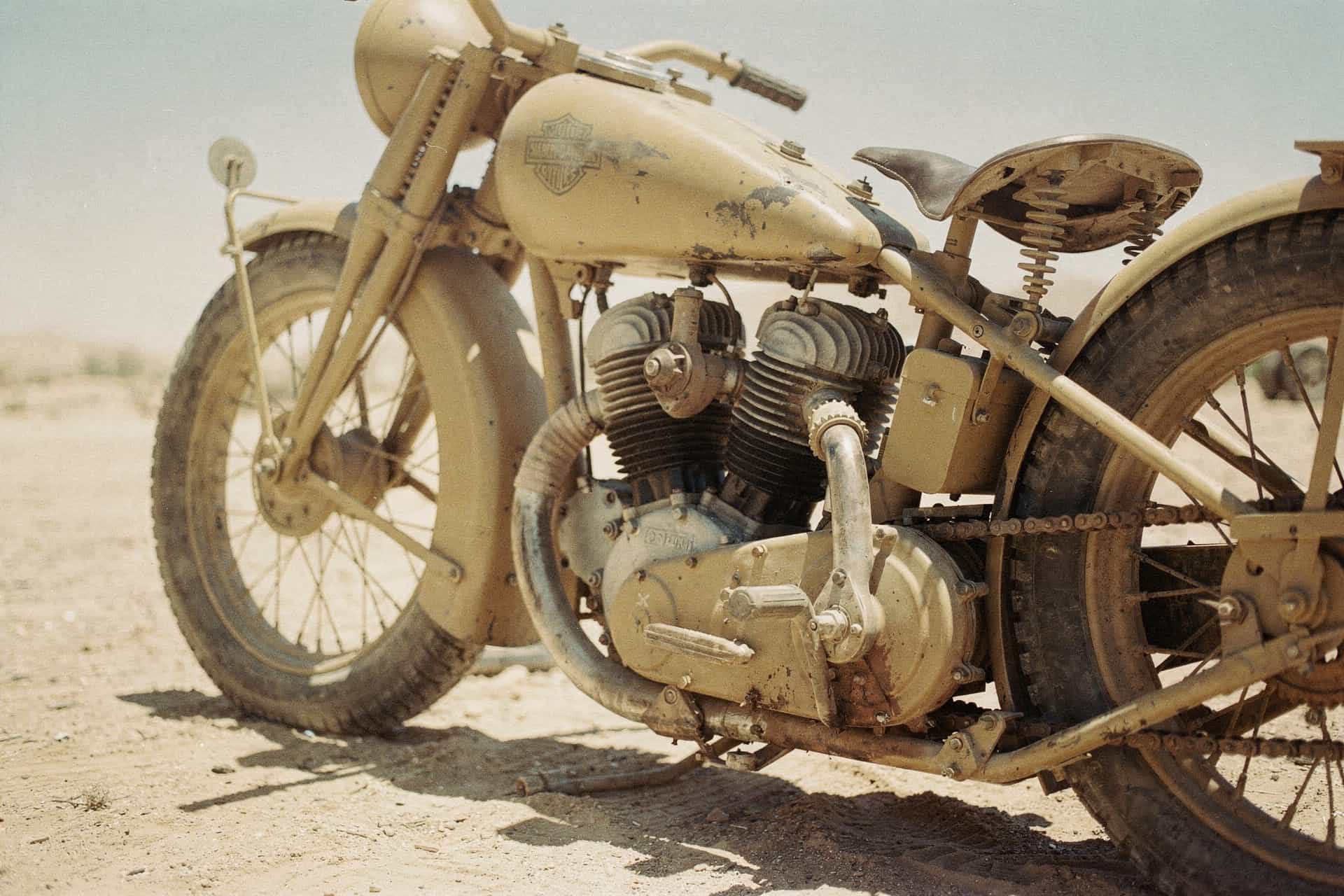
The Harley-Davidson XA (for “Experimental Army”) was a shaft-drive, flat-twin motorcycle, built in a batch of about 1,000 for evaluation. It never went to war in numbers, it never went on sale to civilians, and the Army never placed a follow-up order. It also introduced a control layout that civilian Harleys would not get for another decade.
Why the Army Wanted a Harley That Looked Like a BMW
Harley was already building the WLA, the 45 cubic inch flathead V-twin that became the standard American military motorcycle of the war. The WLA was simple and tough. It also had a chain final drive and a hot-running rear cylinder, and neither is ideal in sand and heat.
The Army asked Harley for something different: a machine with shaft drive and a boxer engine, like the BMWs used by German forces. According to Wikipedia’s XA entry and Military Trader’s spotlight on the 1942 XA, Harley based the engine and drivetrain on the flathead BMW R71, built from 1938 to 1941, rather than on the newer overhead-valve BMW R75.
That choice makes sense once you think like a wartime factory. A side-valve engine is simpler to build, simpler to fix in the field, and Harley had decades of flathead know-how. Copying the proven layout was faster than inventing a new one.
Indian got a similar request. Its answer, the Indian 841, went a different direction: a 90-degree V-twin with the crankshaft running front to back, closer in concept to a Moto Guzzi than a BMW, as Riding Vintage’s history of the XA points out. Both companies built about 1,000 machines. Neither got a second order.
Specifications
These are the figures that the major references agree on.
| Spec | Harley-Davidson XA |
|---|---|
| Years | 1942 (some machines updated in 1943) |
| Engine | Side-valve (flathead) horizontally opposed twin |
| Displacement | 45 ci (740cc) |
| Bore x stroke | 3.063 x 3.063 in (77.8 x 77.8 mm) |
| Compression | 5.7:1 |
| Power | 23 hp at 4,600 rpm |
| Top speed | About 65 mph |
| Transmission | Four-speed, foot shift |
| Clutch | Hand-operated |
| Final drive | Shaft |
| Front suspension | Leading-link fork (some 1943 machines got a telescopic fork) |
| Rear suspension | Plunger |
| Wheelbase | 57.5 in |
| Built | About 1,000 (Riding Vintage gives 1,011) |
Two details in that table deserve a closer look, because they are what make the XA more than a BMW copy with a Harley tank badge.
The Controls Were Backwards, on Purpose
A civilian Harley in 1942 had a foot clutch on the left and a hand shifter on the tank. The XA flipped that. HowStuffWorks’ write-up on the 1942 WLA and XA and Riding Vintage both describe a hand clutch with a foot-shifted four-speed gearbox. RideApart’s look at the XA adds the military logic: the throttle sat on the left grip, so a rider could keep the right hand free for a sidearm, and the kick-starter was on the left as well.
You will see the XA described online with a foot clutch. That is wrong: every detailed source we checked agrees on hand clutch and foot shift.
Why does this matter to a rider today? Because the XA is the first Harley to use the control layout every Harley rider now takes for granted. Civilian Big Twins did not offer a hand clutch with foot shift until the 1952 Harley Panhead option. The Army got there ten years early.
Honest take: if you ever get the chance to ride one, the left-hand throttle is the part that will mess with your head. Your right hand keeps reaching for a twist grip that is not there.
The Cooling Story
The XA’s biggest practical advantage was heat. On a V-twin, the rear cylinder sits in the shadow of the front one and runs hotter. On a flat-twin, both cylinders hang out in clean air.
Wikipedia reports that the XA’s big cooling fins “stuck straight out in the breeze,” reportedly keeping oil temperature about 100 degrees Fahrenheit cooler than a standard Harley 45. Note the “reportedly”: treat it as a period claim, not a modern measurement. The basic idea holds either way. A boxer puts both cylinders in clean air, and for desert service that was the whole point.
Add the shaft drive and you have the second half of the argument. A chain in sand is a grinding paste delivery system. A sealed shaft does not care.
Why the XA Lost Its Job
The XA was a good answer to a question the Army stopped asking.
By the time production got going, the Jeep had proven itself as the general-purpose vehicle of choice. A Jeep carried more people and more gear, it had four-wheel drive, and it did not dump its rider in the mud. Military Trader sums it up plainly: once the Jeep filled most general-purpose needs, the Army did not order more XAs and kept buying the cheaper WLA for the courier and escort work that remained.
That is the part most XA stories skip. The XA did not fail its tests. It was simply more machine than the remaining motorcycle roles needed, and it cost more than the WLA that was already rolling off the line in huge numbers. For the full picture of how the WLA dominated Harley’s war, see our breakdown of the 1940s Harley-Davidson bikes.
XA vs WLA: Side by Side
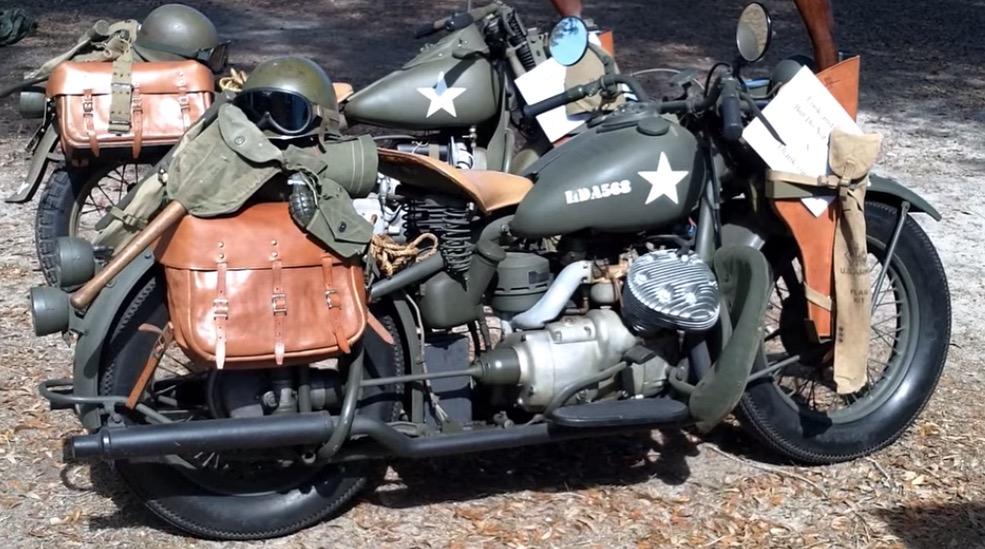
The easiest way to understand the XA is to put it next to the bike that beat it. WLA figures come from the National Motorcycle Museum’s WLA page, XA figures from the sources above.
| Harley-Davidson XA | Harley-Davidson WLA | |
|---|---|---|
| Engine | 45 ci flathead flat-twin | 45 ci flathead 45-degree V-twin |
| Power | 23 hp | 23.5 hp (rated) |
| Gearbox | Four-speed, foot shift | Three-speed, hand shift |
| Clutch | Hand | Foot |
| Final drive | Shaft | Chain |
| Rear suspension | Plunger | Rigid |
| Top speed | About 65 mph | About 65 mph |
| Built | About 1,000 | Over 88,000 during the war, per the museum |
Look at that table and the Army’s decision makes sense. Same displacement, the same power and the same top speed. The XA was cooler-running, better sealed and more comfortable, with an extra gear. But the WLA was already in mass production, every Army mechanic knew it, and the parts pipeline was full. In a war, “good enough and available” beats “better and new” almost every time.
The WLA also found a second life that the XA never had. Thousands of surplus WLAs were sold off after the war, stripped down and ridden hard, and that is part of how the bobber was born. The XA was too rare to play that role.
What Harley Tried to Do With the Engine Next
Harley did not give up on the flat-twin right away. Riding Vintage lists several follow-up projects:
- The Peep, a proposed mini Jeep weighing about 1,000 pounds.
- A blower-cooled stationary power unit for generator work.
- A three-wheeled Servi-Car prototype, never produced.
- The XS, essentially an XA with a powered sidecar wheel for two-wheel drive. Only three were built, and one is known to survive.
None of those projects reached production. After the war, Harley went back to what it knew: 45-degree V-twins. The flat-twin became a dead end in Milwaukee, and the shaft-drive idea did not return to the Harley lineup in any serious way.
If you like the Army side of Harley history, the story did not end in 1945. Decades later the company built the Harley-Davidson MT500, a Rotax-powered single for British and Canadian forces. Different era, same lesson: military contracts reward whatever fits the job cheapest, not the most interesting machine.
Buying, Owning and Spotting a Real XA
With only about 1,000 built, and many used hard or scrapped, a real XA is a rare find. That rarity invites problems.
Paperwork first. An XA should come with a history you can follow. Military disposal records, old registrations, restoration invoices and photos of the engine number before restoration are what give one its value.
Know what civilianized means. Plenty of surplus military bikes were stripped of their Army gear after the war and ridden as cheap transport. A civilianized XA can still be genuine. It is just a different, usually cheaper, market from a correctly restored military machine.
Check the parts that make it an XA. The flat-twin engine, the shaft drive, the plunger rear end and the hand clutch with foot shift are the signature features. A bike missing major XA-specific parts is a project, not a finished collector piece, and specialist parts for these machines are scarce and slow to find.
Price it against real sales. We do not print fixed price bands for bikes this rare, because a few sales can move the number a lot. Grade the bike honestly, then check Hagerty’s valuation tools and dated auction results for the XA specifically. An asking price on a classifieds site is not a value.
Ride it gently. A 23 hp flathead with 1940s brakes is happiest at 45 to 50 mph. That is not a flaw. That is the machine.
If you are the kind of rider who reads about wartime Harleys on a Sunday night, our Built Not Bought biker tees are made for you, and they do not need a Jeep to get around.
Where the XA Fits in Harley History
The XA is a footnote in production numbers and a big deal in engineering terms. It proved Harley could build a shaft-drive boxer when asked. It put a hand clutch and foot shift on a Harley a decade before civilian riders got the option. And it showed how fast a good motorcycle can become irrelevant when a better tool for the job shows up.
Put it next to the civilian bikes of the same years, like the 1947 Harley Knucklehead, and the XA looks like it came from a different company. In a way it did. It came from the Army’s wish list.
For the complete timeline, from the first flatheads to the Milwaukee-Eight, read our Harley-Davidson history guide.
Sources
- Harley-Davidson XA - Wikipedia - engine, bore and stroke, compression, power, top speed, foot shift, suspension, the R71 origin, the 100 degree oil temperature claim, and the cancellation after 1,000 units
- Military Vehicle Spotlight: 1942 Harley-Davidson XA - Military Trader - R71 rather than R75 as the model, 1,000 evaluation units, the Jeep decision and the Army sticking with the WLA
- The Harley-Davidson XA - Riding Vintage - hand clutch and foot shift, the 1,011 production figure, the 1943 telescopic fork, the Peep, the XS sidecar prototype and the Indian 841 comparison
- 1942 Harley-Davidson WLA and XA - HowStuffWorks - foot-shift transmission with hand clutch compared with civilian Harleys of the day
- Harley-Davidson XA: That Time The Motor Company Built A Boxer - RideApart - left-side throttle and kick-start, and the right-hand-free reasoning
- Hagerty valuation tools - condition-graded values and recorded sales for pricing a specific bike
If you ride a Harley, our biker hoodies are designed for riders who respect the heritage.