A Factory Bike That Actually Gets It
We rode an Indian Chief Bobber back-to-back with a custom-built Softail bobber last fall. Same stretch of two-lane road, same afternoon. The custom had ten grand in fabrication and paint on top of the donor bike. The Indian came off the showroom floor looking like someone in their design department actually rides bobbers instead of just studying mood boards.
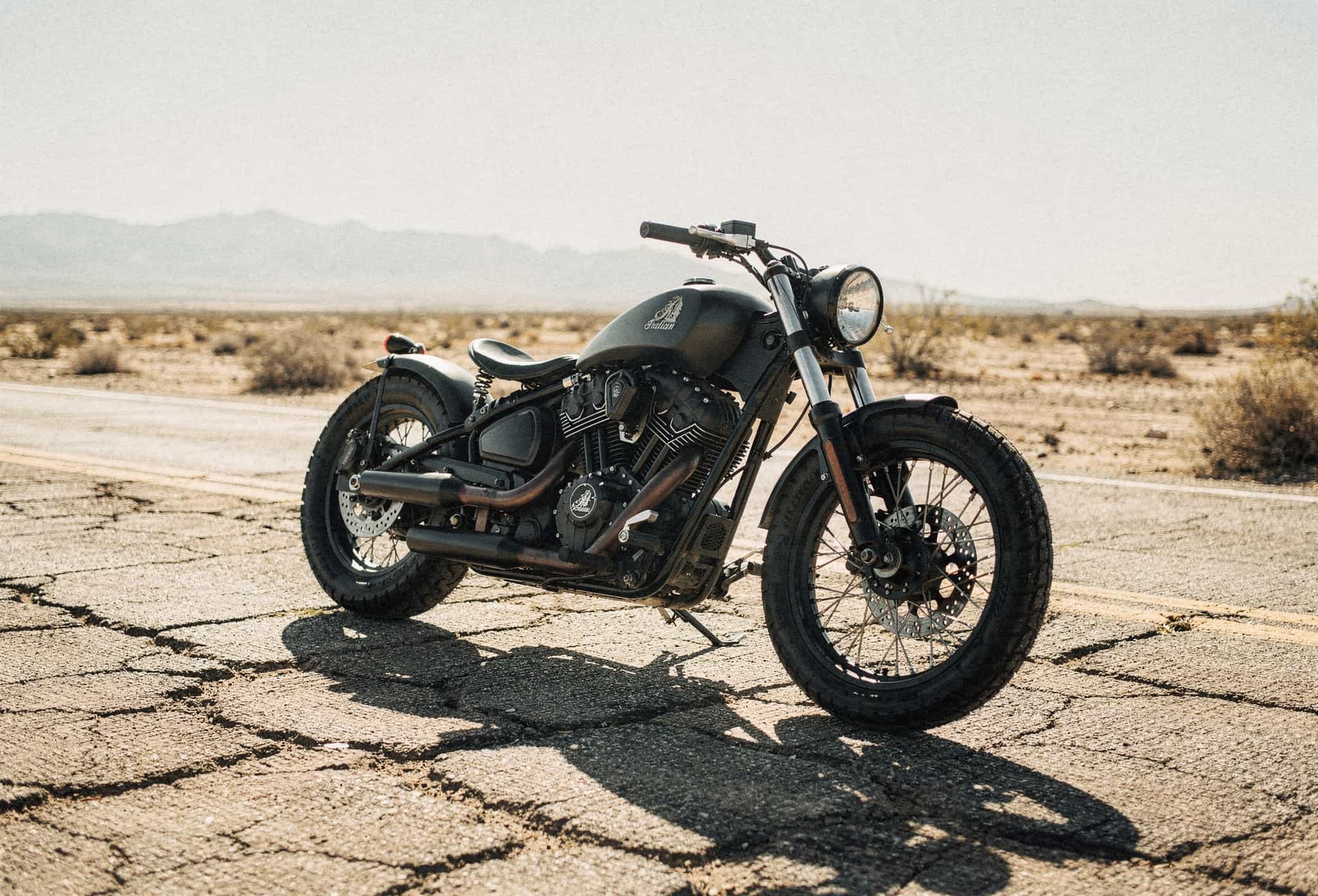
That’s the thing about the 2022-and-later Indian Chief Bobber. It’s not a cruiser with a shorter fender and a “bobber” sticker on the spec sheet. Indian stripped the Chief platform to its frame, rethought the proportions, and built something that reads as a real bobber motorcycle from across a parking lot. The nacelle headlight, the bobbed rear, the mid-mount controls, the blacked-out treatment - it’s coherent in a way that most factory bobbers aren’t.
Whether it’s worth the price tag, and what you can do with it once it’s in your garage, is a longer conversation. Let’s get into it.
The 2022+ Chief Platform Explained
Indian redesigned the Chief from the ground up for the 2022 model year. The previous generation Thunderstroke-powered Chiefs were heavy touring machines with chrome for days. The 2022 reboot went the other direction - three variants sharing one platform, differentiated by wheels, fenders, and finish.
Chief vs. Chief Bobber vs. Chief Dark Horse
| Feature | Chief | Chief Bobber | Chief Dark Horse |
|---|---|---|---|
| Engine | Thunderstroke 111 | Thunderstroke 111 | Thunderstroke 116 |
| Displacement | 1,811cc (111 ci) | 1,811cc (111 ci) | 1,890cc (116 ci) |
| Front wheel | 19” cast | 16” wire spoke | 19” cast |
| Rear wheel | 16” cast | 16” wire spoke | 16” cast |
| Rear fender | Full | Bobbed | Full |
| Seat | Solo w/ pillion pad | Solo (bobber-specific) | Solo w/ pillion pad |
| Finish | Chrome accents | Blacked-out | Full black / dark chrome |
| Starting MSRP | ~$14,999 | ~$15,999 | ~$16,999 |
The Chief Bobber comes from the factory with a bobbed rear fender, a low solo seat, mid-mount controls, and 16-inch wire spoke wheels front and rear. It’s the most aggressive of the three and the one that needs the least work to look like a proper custom.
The Chief Dark Horse gets cast wheels and a full blackout treatment with dark chrome accents plus the Thunderstroke 116 engine. There is also a Chief Bobber Dark Horse that pairs the bobbed styling with the 116 engine, ABS, and Ride Command - starting around $19,499. Some builders actually prefer starting with a Dark Horse variant - more on that below.
Standard MSRP for the base Chief Bobber starts at $15,999 in Black Metallic with the Thunderstroke 111. The Chief Bobber Dark Horse - which upgrades to the Thunderstroke 116, adds ABS, and includes a Ride Command touchscreen - starts at $19,499 in Black Smoke. The specs and riding impressions in this article focus on the Dark Horse variant with the 116.
The Thunderstroke 116: What’s Under the Covers
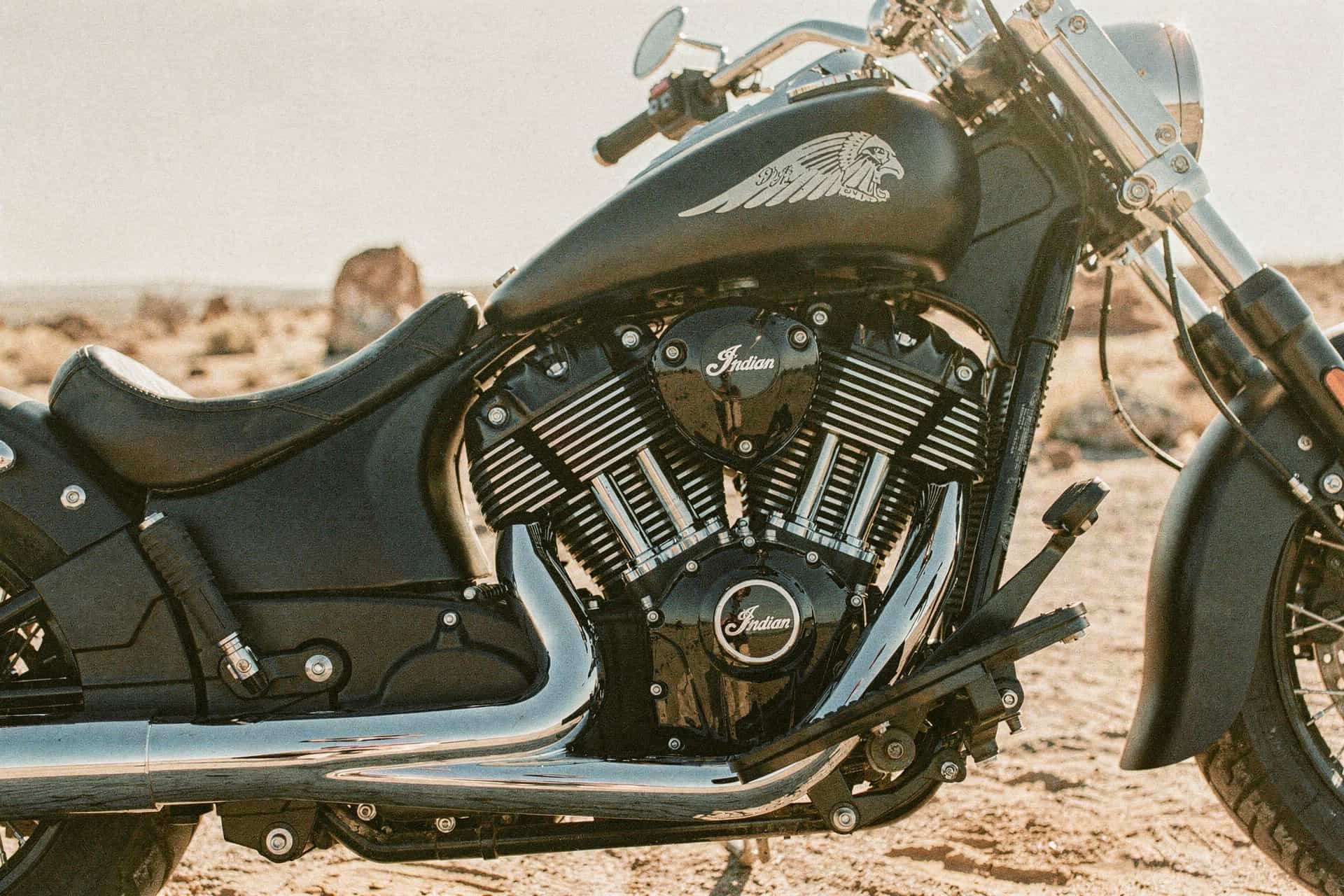
This is the engine that makes the Indian Chief Bobber more than a styling exercise. The Thunderstroke 116 is a 1,890cc (116 cubic inch) air-cooled V-twin - pushrod, two valves per cylinder, single cam. It makes approximately 79 horsepower and 120 lb-ft of torque.
That torque figure is the headline. 120 lb-ft is a wall of low-end force. The Thunderstroke makes peak torque before 3,000 RPM, which means you’re in the meat of the powerband at the RPMs where you actually ride a bobber - low gears, lazy shifts, heavy throttle off the line.
Important note: the Thunderstroke 116 is NOT the PowerPlus engine. Indian uses the PowerPlus in the Challenger, Pursuit, and Sport Chief - that’s a liquid-cooled, DOHC motor with a completely different character. (The FTR uses its own smaller 1,203cc V-twin, which is also a separate platform.) The Thunderstroke is the traditional air-cooled pushrod motor. If someone’s comparing the Chief Bobber’s engine to a PowerPlus, they’re crossing platforms.
Key Engine Specs
- Displacement: 1,890cc / 116 cubic inches
- Configuration: V-twin, air-cooled
- Valvetrain: Pushrod, 2 valves per cylinder
- Horsepower: ~79 hp
- Torque: 120 lb-ft
- Fuel system: Electronic fuel injection, closed-loop
- Transmission: 6-speed manual
- Final drive: Belt
- Weight as shipped: ~670 lbs; running order ~694 lbs (Chief Bobber)
Riding it back-to-back with a Milwaukee-Eight Softail, the Thunderstroke has a different character. Smoother at idle, less of the aggressive lope that Harley guys love. Some riders prefer that polish. Others miss the raw mechanical shake. Neither is wrong - it’s taste, not technology.
Factory Features Worth Keeping
Indian did homework on this one. Several stock features are things custom builders spend real money adding to other platforms:
The Bobbed Rear Fender
Short, clean, hugs the 16-inch rear tire without looking like an afterthought. Most factory “bobber” bikes from other manufacturers bolt on a shorter fender and call it done. Indian designed the Chief Bobber’s rear end as a cohesive piece - the fender, the solo seat, and the license plate bracket all work together visually.
Solo Seat and Ride Position
Low-profile seat with enough padding for a full day if your back cooperates. Seat height sits around 26.0 inches - low enough for most riders to flat-foot both sides at a stop. The mid-mount foot controls keep your knees bent at a natural angle rather than stretching you out like a recliner. After 150 miles on one, no knee or back complaints - something we can’t say about every cruiser with forward controls.
Mid-mount controls on a bobber are actually the historically correct setup. Forward controls are a modern comfort invention. Indian went with what old-school bobbers actually used.
16-Inch Wire Spoke Wheels
The Bobber variant’s 16-inch wire spoke wheels give it a classic, old-school bobber look at both ends. The blackout rims and hubs laced with polished spokes match the stripped-down aesthetic perfectly. The standard Chief uses a 19-inch cast front wheel, giving it a different stance.
Modern Conveniences
The Chief Bobber Dark Horse comes with a 4-inch Ride Command touchscreen display, keyless ignition, USB charging, cruise control, ABS, and selectable ride modes. The base Chief Bobber uses an analog speedometer instead. Pirelli Night Dragon tires come stock on all variants. These are features you don’t think about until you’re on a bike that doesn’t have them.
Modifying the Indian Chief Bobber
Even though the factory bike is well-executed, the custom community has been tearing into these since launch day.
Exhaust
The stock split dual exhaust is quiet and EPA-compliant. Most builders swap to a 2-into-1 for sound and weight savings. S&S Cycle makes a Grand National 2-into-1 for the Thunderstroke 116 that saves about 15 pounds and sounds like it should. Tab Performance and Bassani also offer full systems. Budget $600-$1,200 for a quality full system.
Handlebars
Stock bars are mid-rise. Swapping to drag bars, Z-bars, or mini-apes is an afternoon job. Indian uses 1-inch diameter bars with internal wiring - make sure replacement bars accommodate internal throttle cables or plan to switch to external routing. That internal wiring detail catches people off guard mid-swap.
Air Cleaner
The stock air cleaner works but looks generic. S&S, Lloydz, and Indian’s own accessory catalog offer high-flow cleaners that open up the visual space around the engine. A stage 1 air cleaner paired with a slip-on exhaust won’t need a tune on most models. A full 2-into-1 system will.
Going More Aggressive
Some builders remove the rear fender entirely - side-mount license plate, LED taillight on the axle, rear tire completely exposed. It gives the Chief that raw, unfinished custom look that the factory version only hints at.
The tank shape on the 2022+ Chief is simple enough to paint without spending a fortune on bodywork. Builders have been laying down everything from metal flake to hand-rubbed patina finishes. The flat surfaces take paint well.
Suspension
One thing we’d change from the factory: the rear shocks. Adequate for smooth roads, harsh over expansion joints and broken pavement. Fox or Progressive Suspension makes direct-fit upgrades that genuinely transform the ride. Budget $400-$800 for a meaningful suspension upgrade.
The Dark Horse as a Bobber Starting Point
The Chief Bobber Dark Horse deserves its own section for builders. It shares the Thunderstroke 116 and the same frame as the base Bobber, but adds ABS, Ride Command, and a full blackout treatment.
Some builders start with a Chief Dark Horse (the non-bobber variant) instead of the Bobber because:
- The full rear fender can be bobbed to your preferred length rather than accepting the factory chop
- The Thunderstroke 116 comes standard on the Dark Horse variants, giving more torque than the base Bobber’s 111
- Used Dark Horse models sometimes sell for less than used Bobbers due to lower demand in the resale market
Either starting point gets you to the same place. The Dark Horse just requires one extra step - cutting the fender - to achieve the bobber silhouette.
Chief Bobber vs. Building From an Older Indian
Before the 2022 redesign, builders were making bobbers from Indian Scout and Chief Vintage platforms. Those builds still hold up. Here’s how the paths compare:
Starting With a 2022+ Chief Bobber
Pros:
- Factory bobber stance out of the box
- Thunderstroke 116 with modern EFI and ABS
- Belt drive, full factory warranty
- That Ride Command display is actually useful
Cons:
- $15,999+ new (base), $19,499+ (Dark Horse); $14,000-$16,000 used
- ~694 lbs wet - heavy by any measure
- Less “built it myself” credibility at bike night
Building From an Older Indian Platform
Pros:
- Cheaper entry (used Scout models from $7,000-$10,000)
- More fabrication, more personal
- Lighter result if you strip aggressively
Cons:
- More work and more problem-solving at every stage
- Scout engine (69 or 100 cubic inches) makes considerably less torque
- Older electronics and fuel systems
Both paths are valid. We’ve seen stunning results from both camps. For more on the Scout platform specifically, check out our piece on the greatest Indian Scouts of all time.
Riding the Chief Bobber Honestly
We won’t sugarcoat the weight. At nearly 700 pounds ready to ride, the Indian Chief Bobber is heavy. Not “kind of heavy.” Heavy. At parking-lot speed and in tight U-turns, you feel every pound. New riders or smaller riders will need to be deliberate about slow-speed maneuvers.
Once you’re rolling, the weight disappears. The low center of gravity and wide bars give you confidence leaning into corners. The Thunderstroke’s massive torque means you never feel like you’re asking the engine for something it can’t deliver. Roll on the throttle from a stoplight and the Chief pulls forward with an authority that lighter bikes can’t replicate. This is a straight-line highway machine that wants to eat two-lane roads at 60 mph with a deep rhythmic exhaust note filling the helmet.
The Pirelli Night Dragon tires deserve a mention - they’re a genuine upgrade over what most factory cruisers ship on, and they inspire confidence in corners that the bike’s weight might otherwise undermine.
The Indian Aftermarket in 2026
The parts ecosystem has expanded significantly since the 2022 redesign. Beyond S&S Cycle:
- Klock Werks - windshields and fairing options that add wind protection without killing the bobber lines
- Kuryakyn - foot pegs, grips, mirrors, and lighting matched to the blacked-out aesthetic
- Indian Motorcycle Accessories - Indian’s own catalog covers everything from stage kits to saddlebags for riders converting their bobber into a light tourer
- Mustang Seats - aftermarket seats with better distance comfort while keeping the solo profile
The ecosystem isn’t as deep as Harley’s - nothing is - but it’s mature enough that you won’t struggle to source what you need for a solid build.
Maintenance Notes
The Thunderstroke 116 uses a wet-sump oil system with changes every 5,000 miles per Indian’s schedule. Belt drive is essentially maintenance-free beyond periodic tension checks. Electronic fuel injection eliminates carb tuning entirely. For a big-inch V-twin, the Chief Bobber is remarkably low-effort to keep running.
One item to watch: the stock battery can be marginal in cold climates. If you store the bike over winter, keep a tender connected. The Thunderstroke’s high-compression start draws significant amperage, and a weak battery in March will leave you pushing the bike back into the garage.
Is It Worth the Money
If you want a factory-built bobber from a manufacturer that actually understands the style - not a marketing department bolting on a short fender and charging extra - the Indian Chief Bobber is one of the strongest options available. The Thunderstroke 116 is a real big-inch cruiser motor, the frame geometry is clean, and the blacked-out treatment works without trying too hard.
It’s not cheap. And it’s not light. But if you’ve moved past the budget build phase and want a platform that starts at 90% and lets you add your 10%, the Chief earns its spot.
For a different take on the bobber concept from the build-it-yourself angle, our custom bobber build guide covers the full process from donor selection to first ride. The Yamaha Road Star bobber is a big-displacement alternative that costs a fraction of the Indian but demands more wrench time. For inspiration across platforms, browse the remarkable bobber builds roundup and the best Harley bobber builds. And when you’re ready to wear the culture, the Bobber Brothers collection has you covered.
Sources
- Indian Motorcycle - 2022 Chief Bobber Dark Horse Specifications - factory specifications for the Thunderstroke 116 engine, chassis dimensions, and MSRP
- Cycle World - Indian Chief Bobber and Dark Horse Buyer’s Guide - independent specs, pricing, and comparison across Chief variants
- webBikeWorld - 2022 Indian Chief Bobber Dark Horse Review - detailed review covering engine performance, ride quality, and stock feature evaluation
- TopSpeed - The Overlooked American Cruiser: Indian Chief - Indian Chief history, competitive comparison, and performance analysis
- Indian Motorcycle - 2026 Chief Bobber Dark Horse Specifications - current model year specifications and feature updates
For the broader motorcycle culture - rallies, films, music, and the lifestyle that surrounds riding - see our motorcycle culture guide.