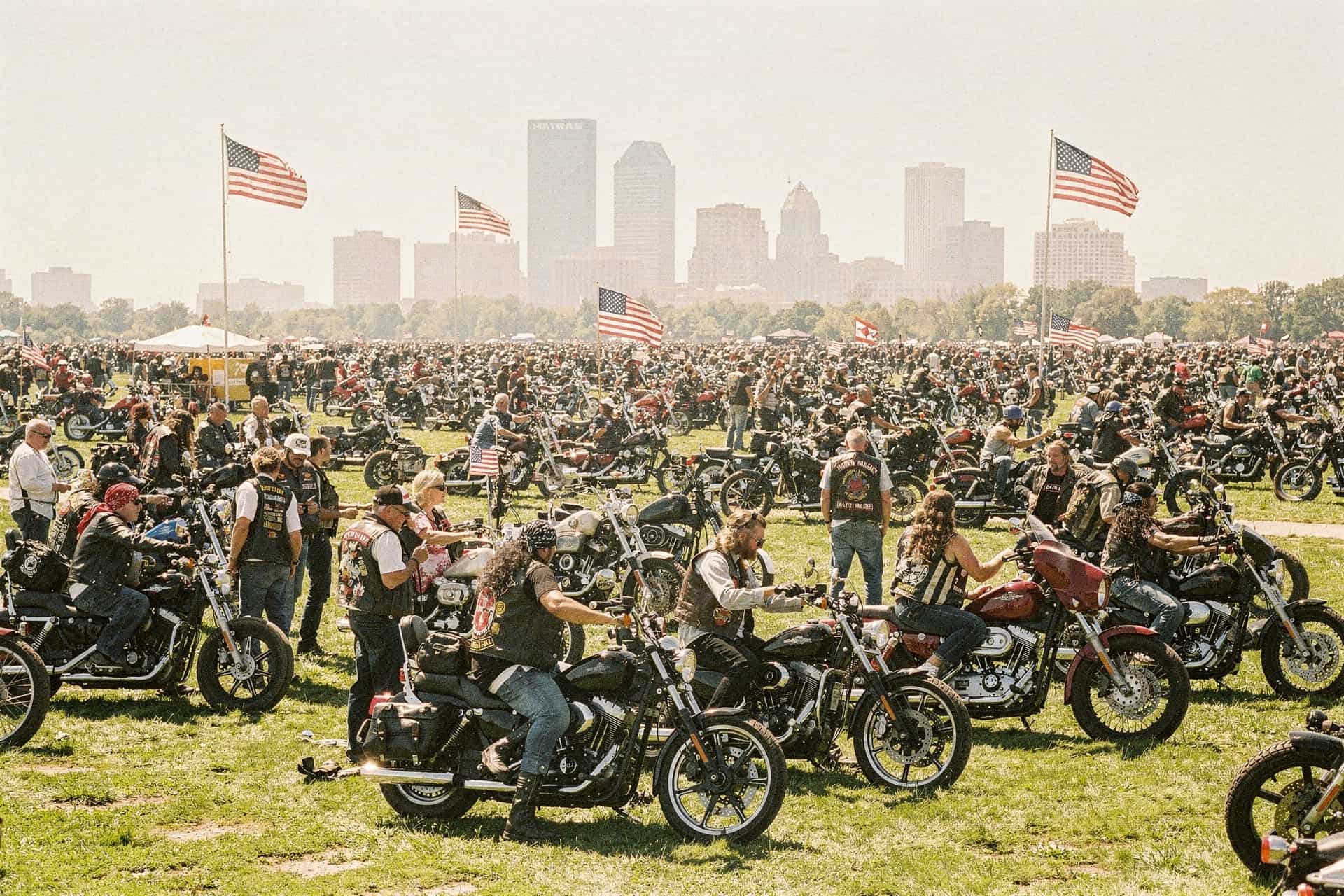
Picture a county fairground in August, a few hundred acres of grass slowly disappearing under tents, trailers and canopies with club names painted on them. Chrome cruisers parked next to sport bikes next to trikes. Grills going before breakfast. Somebody’s sound system playing old soul while somebody else’s plays trap. People who have not seen each other since last August hugging in the middle of the road. That is the National Bikers Roundup, and if you have never heard of it, that says more about who writes motorcycle history than about the Roundup.
This guide covers the Roundup itself: where it came from, how it works, and why it matters.
Where the Roundup Came From
The National Bikers Roundup started in 1977 in Kansas City. Dallas Thibodeaux and Rozell Nunn Jr. organized the first one, and 49 riders showed up. That was it. Forty-nine people and an idea.
The idea was simple. Black riders had motorcycle clubs in cities across the country, but mainstream rallies and much of the motorcycle industry did not treat them as part of the scene. Wikipedia’s summary puts it plainly: the event was overlooked at first because of the country’s history of segregation. So the clubs built their own national gathering, one that would move from city to city and give riders from every region a reason to meet.
It worked. The Roundup grew into a multi-day camping rally that Born To Ride describes as the largest camping motorcycle rally in the USA, with more than 1,000 clubs attending.
The Roundup at a Glance
| Item | What we know |
|---|---|
| Founded | 1977, Kansas City |
| Founders | Dallas Thibodeaux and Rozell Nunn Jr. |
| First year | 49 riders |
| Organized by | African American motorcycle clubs |
| When | Usually August, about five days |
| Where | A different host city each year, back to Kansas City every ten years |
| Size today | Estimates from about 30,000 to 40,000 riders |
| Clubs | More than 1,000 |
| Women | Close to half of participants |
| Format | Camping rally with parades, shows and entertainment |
Sources for these numbers are Wikipedia and Born To Ride. Crowd figures at any free, open camping rally are estimates, so treat them as a range, not a count.
How It Works: A Traveling Rally
Most big rallies are tied to one town. Sturgis is Sturgis. Daytona is Daytona. The Roundup moves. Each year a different host city and venue takes it on, usually a fairground or large open site that can handle tens of thousands of campers. Every tenth year it goes home to Kansas City.
That rotation does a few things. It spreads the economic boost around. It lets riders from every region host at some point, so no one area carries the load forever. And it means the Roundup feels different every year: different roads to ride in on, different local clubs setting the tone, different food on the grills.
It also means you cannot just assume where it is. The official site at nationalbikersroundup.org and the organizers’ social channels are where the host city, dates, vendor info and tent rentals get posted. Always check there first. Third-party rally listings go stale fast.
What You Will Find There
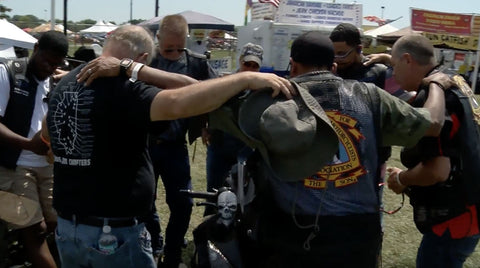
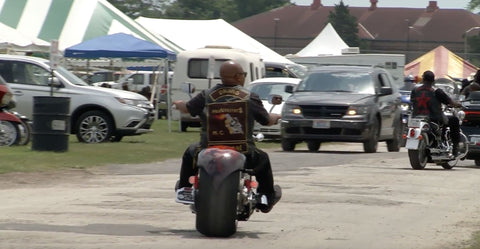
The Roundup is a camping rally first. Most people stay on site, and the camp itself is the event. Clubs set up together, and walking the rows is how you meet people.
On top of that, the Roundup runs a full program. Published accounts list exhibitions, parades, stunt shows, drag racing and live entertainment, plus the kind of contests every good rally has. The “biggest gut contest” is a long-running favorite. It is loud, funny, and exactly as serious as it sounds.
What stands out most in the published accounts is the mix. Close to half the participants are women, which is far higher than at most big rallies. You see families, retirees on touring bikes, young sport bike crews, and old-school chopper riders all in the same field.
Giving Back
The Roundup has a charity side too. Starting in 1998, participants began donating food and money each year to local food programs in the host city. By 2000, Wikipedia records about 9,000 dollars in cash donations plus food. The numbers are modest next to a corporate charity rally, but the idea is right: leave the host city better than you found it.
The Industry Caught Up Late
Big manufacturers ignored the Roundup for years. Harley-Davidson was the first major company to show up, and Honda followed with support, according to Wikipedia. Today the Roundup is recognized as one of the major rallies in the country, but it got there on its own, club by club, without anyone handing it a spotlight.
The Bigger Story: Black Motorcycle History
The Roundup did not come out of nowhere. Black riders have been part of American motorcycling from the start, even when the magazines and the history books left them out.
Bessie Stringfield. Bessie Stringfield was the first African American woman to ride solo across the United States. During World War II she worked as a civilian courier for the U.S. Army, carrying documents between bases on her own Harley. She later founded the Iron Horse Motorcycle Club in Miami and was inducted into the Motorcycle Hall of Fame in 2002. The American Motorcyclist Association named an award for her in 2000.
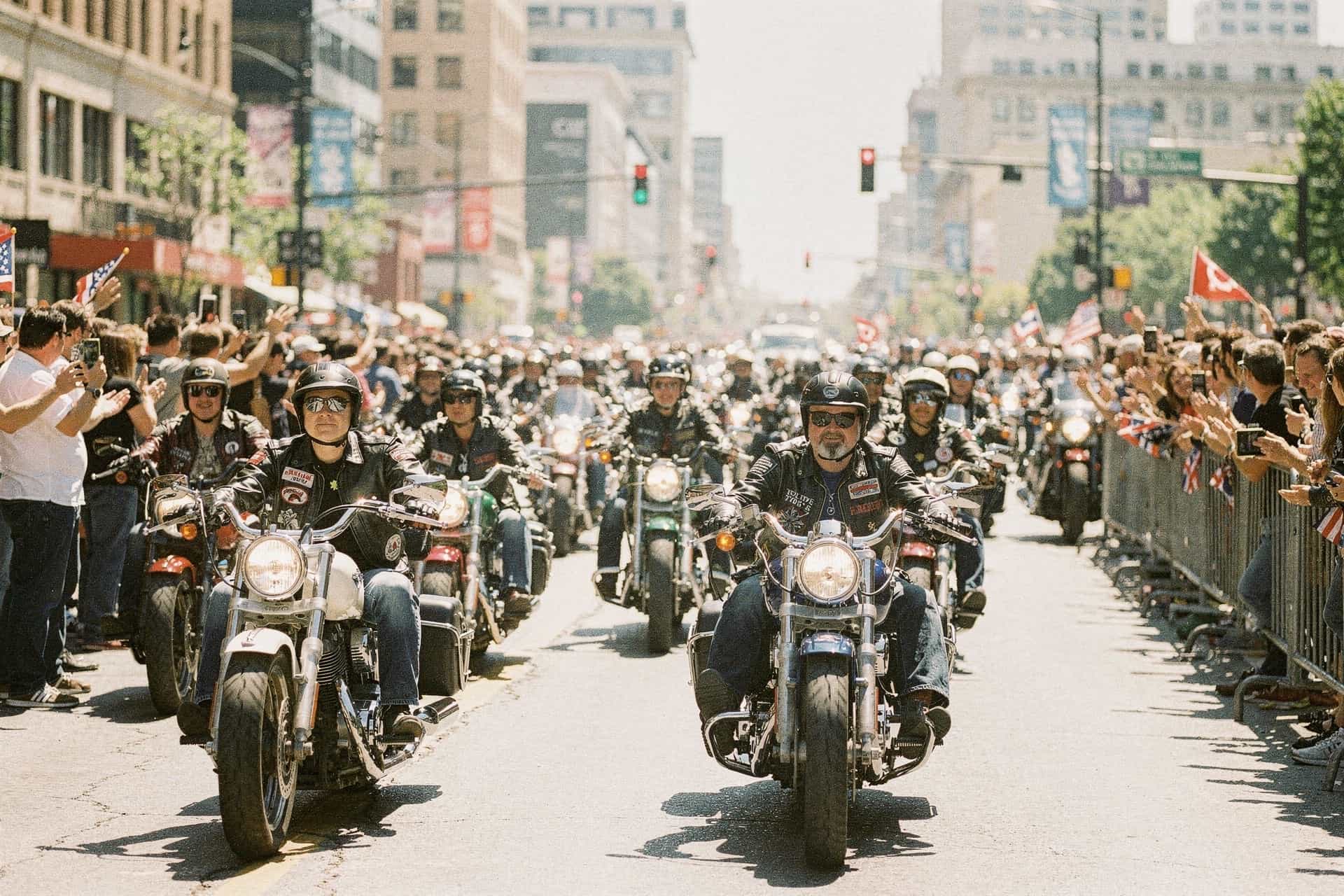
The clubs. Black motorcycle clubs were riding and organizing long before the Roundup gave them a national stage, and the Roundup’s own 1,000-plus club turnout shows how deep that network runs. Our profile of the Chosen Few MC, founded by Black riders in Los Angeles around 1959, covers one of those stories.
Atlantic Beach. On the Carolina coast, the Flaming Knight Riders started the Atlantic Beach Memorial Day BikeFest in 1980, now known as Black Bike Week. It grew into the largest African American motorcycle rally in the country. Our Myrtle Beach biker bar guide covers how it fits into the Grand Strand rally scene.
Sport bike culture. By the 2000s a new generation of Black riders was building a sport bike scene with its own clubs, stunts and style. Hollywood noticed with Biker Boyz, which used real clubs as advisors and background riders.
The Roundup sits at the center of all of this. It is where those threads meet once a year in one field.
How the Roundup Compares to Other Big Rallies
If you know the big rallies, this table helps place the Roundup. The figures come from the sources linked here and in our other rally guides, and every crowd number is an estimate.
| Rally | Started | Where | When | What makes it different |
|---|---|---|---|---|
| National Bikers Roundup | 1977 | New host city every year | August | Traveling camping rally run by Black clubs |
| Sturgis | 1938 | Sturgis, South Dakota | Ten days from the first Friday in August | The biggest crowd, Black Hills roads |
| Daytona Bike Week | 1937 race | Daytona Beach, Florida | Early to mid March | The oldest beach rally, Main Street bars |
| Atlantic Beach Bikefest | 1980 | Atlantic Beach, South Carolina | Memorial Day weekend | Largest African American rally by attendance |
Two things jump out. First, the Roundup and Sturgis share August, so riders sometimes have to pick. Second, the Roundup is the only one on this list with no fixed home. That makes it harder to plan and easier to love, because every year you get a new part of the country.
For the stops on that list, our guides to Daytona Beach biker bars and the Sturgis biker bar scene cover where riders actually end up at night.
A Planning Timeline
Because the host city changes, the Roundup rewards riders who plan early. Here is a simple timeline that works for most rallies of this size:
- Six months out: find the announced host city and dates on the official channels. Talk to your club or riding group about who is going.
- Four months out: book your camping spot or rental tent, or a hotel if you must. Venues near a rally this size fill up.
- Two months out: plan the ride in. Pick roads, not just interstates. Half the fun of a traveling rally is seeing a new region on the way.
- One month out: service the bike. Tires, brakes, fluids, battery. A long August ride in heat is hard on a machine that has been sitting.
- One week out: pack, check the weather along the route, and share your route with someone at home.
We have watched riders skip the service step and spend the first day of a rally hunting for a tire shop in a town they do not know. Do not be that rider.
Riding the Roundup: Practical Tips
If you are going for the first time, here is what we have learned from years of rally camping, applied to the Roundup:
- Check the host city early. The location changes every year. Find it on the official channels and start planning months ahead.
- Camp if you can. The camp is the heart of the event. Hotels miss most of it. Tent and golf cart rentals are often offered through the organizers.
- Plan for August heat. Shade, water and a way to keep your phone charged matter more than one more jacket. Our motorcycle rally packing list covers the camping gear.
- Ride in with a group. Many riders travel with their club. If you ride solo, you will not be solo for long once you get there.
- Respect the colors. Plenty of clubs attend. Be friendly, be curious, and never touch anyone’s bike or club vest without asking.
- Bring food to share. The grills are the social network of the Roundup.
Why It Matters
The mainstream story of American motorcycling usually runs through Hollister, Sturgis, Daytona and a handful of famous clubs. Our own motorcycle culture guide tells that story. The Roundup is the part that story too often skips. It was built by riders who were not invited to the party, so they threw their own, and then kept throwing it for nearly fifty years.
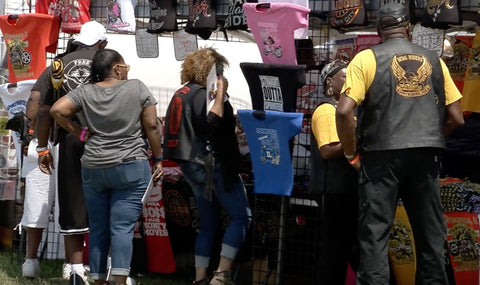
If you ride, it deserves a spot on your list, right next to Sturgis and Daytona. And if you want the rally on your back, our rally town designs cover the big gatherings.
Sources
- National Bikers Roundup - Wikipedia - founding, founders, attendance range, rotation, activities, charity, industry support
- The National Bikers Roundup - Born To Ride - history, size, number of clubs, share of women
- National Bikers Roundup - Official Site - current event info, vendors, rentals
- Bessie Stringfield - Wikipedia - solo cross-country rides, wartime courier work, Iron Horse MC, Hall of Fame
- Black Bike Week - Wikipedia - Atlantic Beach Bikefest history
If the rider lifestyle in this article speaks to you, our biker tees carry original designs rooted in the same culture.