

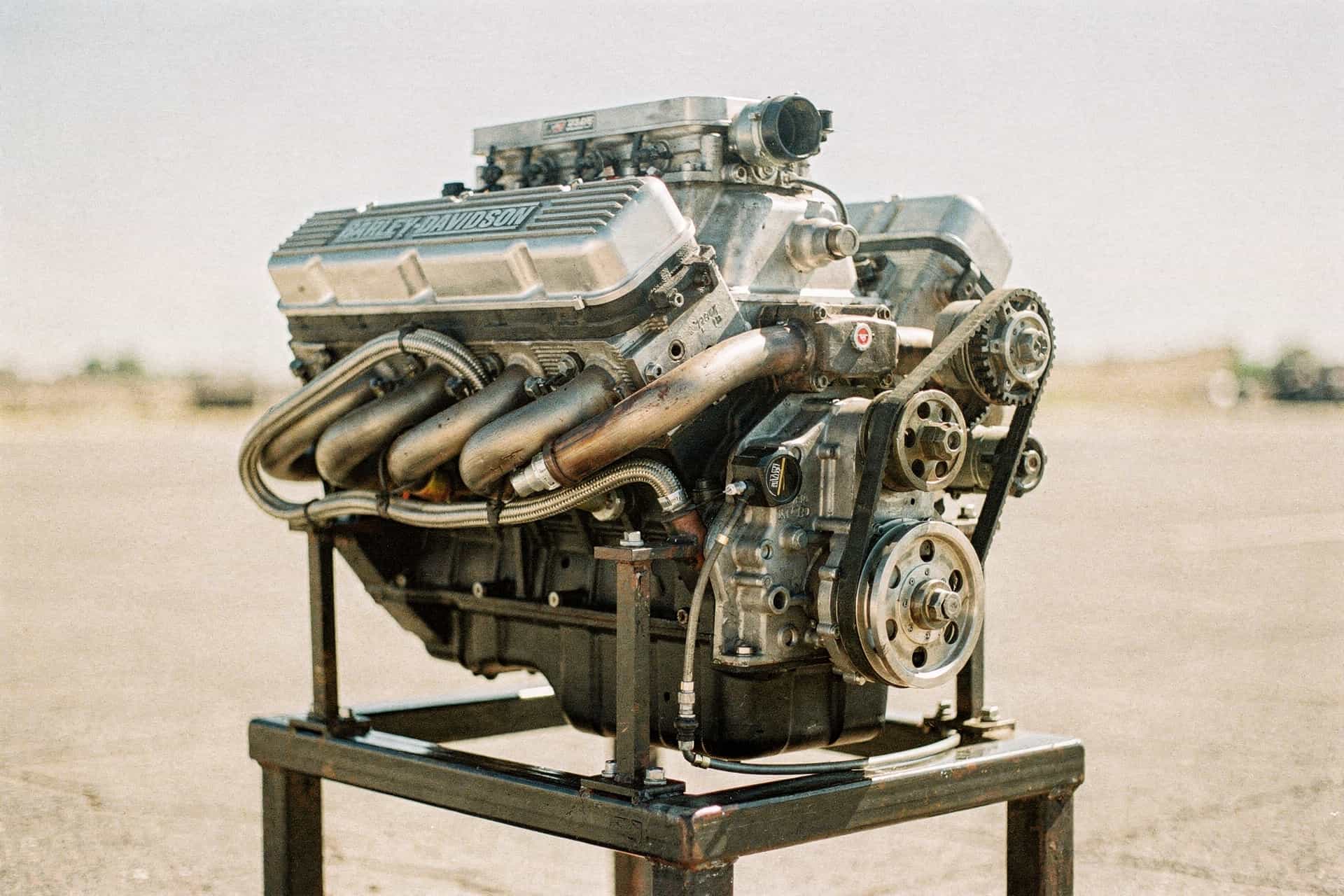
Staging lanes at any Saturday-night eighth mile sound the same until a stroker Twin Cam fires. The idle is uneven, the exhaust note has a hole in it where the emissions plumbing used to be, and everybody standing near the fence turns their head. That is the sound the Screamin’ Eagle SE120R was built to make, and it is also the sound of an engine that will never legally leave the property.
Harley introduced the SE120R as a factory-assembled race crate motor at the end of 2010, for the 2011 season. It is the most aggressive engine Harley ever sold over the parts counter, and it is the one most often bought by people who did not read the two words that mattered: race use.
| Field | Documented detail |
|---|---|
| Displacement | 120 cubic inches |
| Bore and stroke | 4.060 inch big-bore cylinders, 4-5/8 inch SE Pro Stroker flywheel and rod assembly |
| Compression | 10.5:1, nickel-plated forged pistons with Teflon coated skirts, titanium SST rings |
| Valvetrain | SE-266E high-lift cams, CNC-ported MVA heads with automatic compression release |
| Quoted output | 135 plus hp and 137 lb-ft, both at the rear wheel, with supporting parts fitted |
| Fitment | Twin Cam Dyna 2006-2017 and Touring 2007-2016, excluding Twin-Cooled; Softail application under a separate part number |
| Legal status | Race use only. Ships with a Manufacturer’s Statement of Origin, not a street certification |
| Current status | Not in Harley’s crate engine catalogue. The line is now the Milwaukee-Eight 131 and 135 |
What Harley Actually Put in the Crate
The SE120R is a stroker, and that one word explains most of its personality. Harley took the Twin Cam architecture, opened the bore to 4.060 inches, and swung the crank out to a 4-5/8 inch stroke with the SE Pro Stroker flywheel and rod assembly. The extra stroke is where the torque comes from, and it is also why the engine needed parts you will not find on a stock motor: unique piston oilers to keep the skirts fed at that crank throw, and machined lower rocker boxes so the valve spring collars have somewhere to go.
Everything else in the build reads like a parts list somebody spent a long weekend arguing about. Nickel-plated forged pistons with Teflon coated skirts. Titanium SST rings. SE-266E high-lift cams, which are aggressive enough that they are the reason the engine is not street calibrated. CNC-ported MVA heads with automatic compression release, because 10.5:1 with that stroke is more than a starter motor wants to fight cold.
The part that gets undersold is the assembly itself. This came together on Harley’s line, torqued and measured by people doing it for the hundredth time that week, not on a bench in a two-car garage at midnight. For the same reason a factory Evo crate motor is worth more than the sum of its parts, a factory stroker removes the single biggest risk in a big-inch build, which is somebody’s assembly error you do not find until the third pass.
The 135 Horsepower Number and Its Asterisks
Harley quoted 135 plus horsepower at 6,000 rpm and 137 lb-ft of torque at 3,800 rpm. Both figures are at the rear wheel, which is the honest way to quote them and roughly 10 to 15 percent below what the same engine would show at the crank.
Read the conditions before you get excited. That dyno run happened on a 2009 Dyna fitted with the Screamin’ Eagle 58mm throttle body, a Heavy Breather intake, Super Tuner calibration, and a Wegner stainless stepped X-pipe, running open loop with the oxygen sensors out of the system.
Not one of those parts comes in the crate.
We have watched this play out in the shop more than once. A rider buys the motor, drops it in over a weekend, bolts the old exhaust and stock air cleaner back on because the new stuff has not shipped yet, and then cannot understand why the dyno sheet looks like a warmed-over Twin Cam 103. The engine is not the problem. A 120 cubic inch stroker with high-lift cams is a pump, and you cannot choke a pump on both ends and expect the advertised number.
Here is the honest cost list for what the crate leaves out:
- Race exhaust with the right pipe diameter and collector
- High-flow air cleaner and a throttle body large enough to feed 120 cubic inches
- Tuning, which is not optional and is not a download
- The compensator, required on certain model years and not a place to save money behind this much torque
- A clutch that can actually hold 137 lb-ft, because the stock unit will not
Add all of that up and the crate price stops looking like the whole price. That is not a criticism of the engine. It is the difference between buying a long block and buying a running motorcycle, and it is the single most common misunderstanding riders bring to any crate engine conversation.
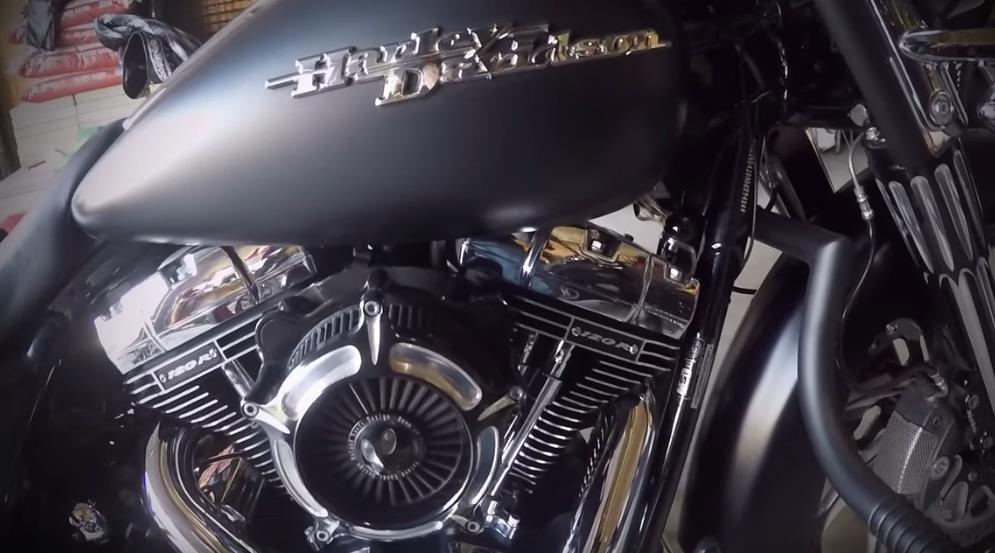
Race Use Only Is a Legal Status, Not a Suggestion
This is where most articles about the SE120R stop being useful, so we will spend some time here.
The SE120R ships with a Manufacturer’s Statement of Origin. That is a document proving the engine exists and who built it. It is not a certificate of conformity, which is what makes an engine legal to operate on a public road in the United States. Harley never sought that certification for this motor, and the SE-266E cams are a large part of the reason why.
The federal picture matters more than most riders think. EPA’s enforcement policy on tampering and aftermarket defeat devices, published in 2020, replaced the memo the industry had been leaning on since 1974. Its practical effect for a rider is that the agency’s longstanding discretion around competition use rests on the owner being able to show the machine really is used solely in competition and really is no longer driven on public roads. EPA has been explicit that it found hundreds of thousands of vehicles sold under a competition-only label that were still on the street, and that volume is exactly why the agency stopped treating the label as self-proving.
The Recognizing the Protection of Motorsports Act, the bill the aftermarket has been pushing for years to write a clean competition exemption into the Clean Air Act, has not passed. Until it does, “I only ride it at the track” is a factual claim you may be asked to support, not a legal category you get to opt into.
There is a practical layer under the legal one. A race-only motor in a street frame is a conversation with your insurer that you will lose after a claim. Most tracks will want to see the machine tech-inspected. And a machine with no oxygen sensors and no catalyst is going to fail any state inspection that looks at emissions hardware.
If your plan involves a licence plate, buy something else. That is not us being cautious. That is the engine doing exactly what it says on the crate.
SE120R Against the Street-Legal SE120ST
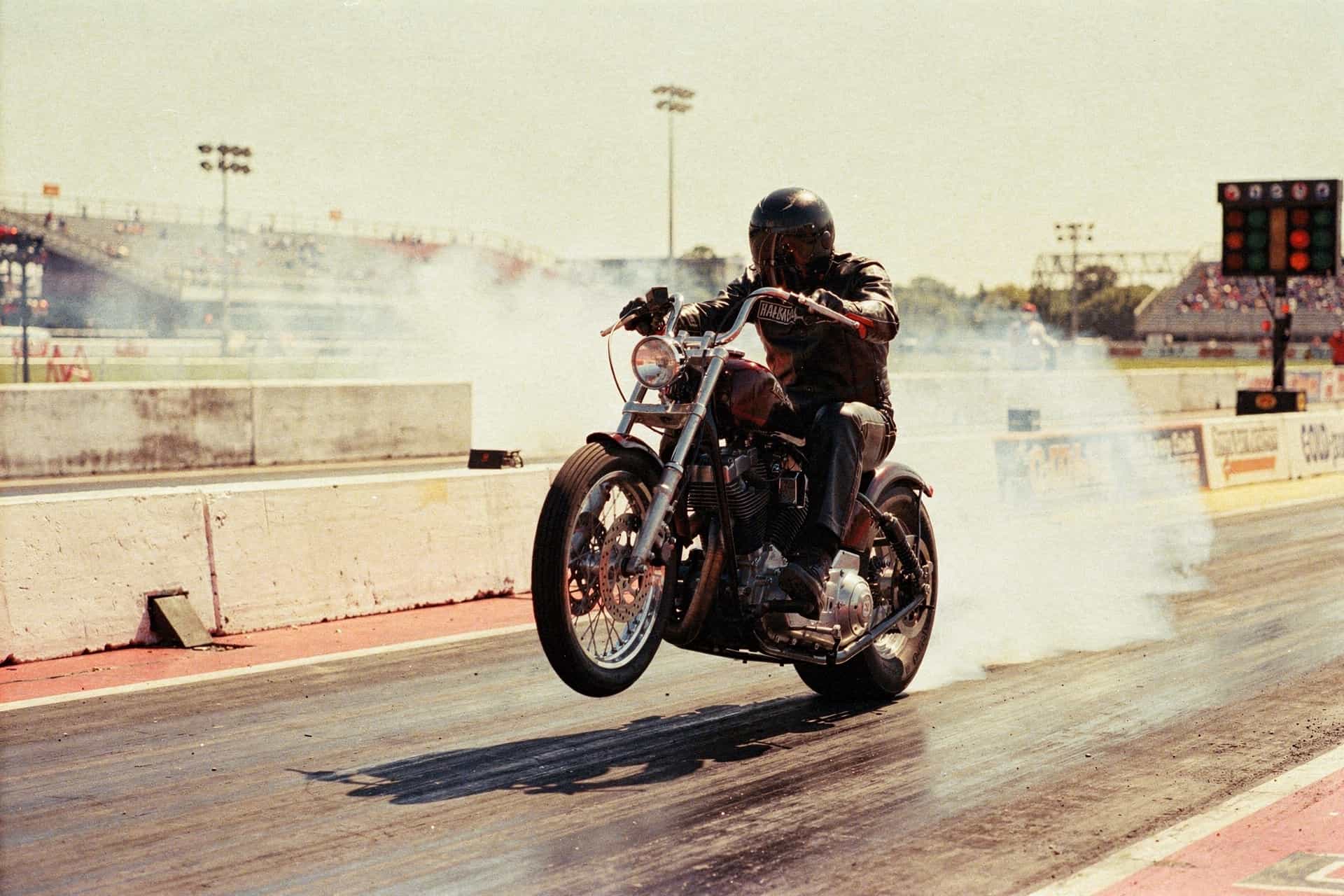
Harley sold a street sibling, and the comparison is the fastest way to understand what the R actually costs you.
| SE120R (race) | SE120ST (street) | |
|---|---|---|
| Displacement | 120 cubic inches | 120 cubic inches |
| Bore and stroke | 4.060 in, 4-5/8 in | 4.060 in, 4-5/8 in |
| Compression | 10.5:1 forged | 10.5:1 forged |
| Cams | SE-266E high-lift | SE-259E high-lift |
| Quoted output | 135 plus hp, 137 lb-ft, rear wheel | 106 hp, 117 lb-ft, rear wheel |
| Street legal | No | Yes, with OE mufflers or the SE Street Performance exhaust |
| Fitment | Dyna 2006-2017, Touring 2007-2016, non Twin-Cooled | 49-state 2015-later Touring, non Twin-Cooled |
| Launch MSRP | Not published in Harley’s current catalogue | 5,695 US dollars in 2015 |
| Warranty | Race engine, sold outside the street warranty structure | One year |
Same displacement, same bore, same stroke, same pistons. The entire difference between a 106 horsepower street engine and a 135 horsepower race engine sits in the camshaft, the calibration, and the certification paperwork. Thirty horsepower is what the emissions envelope costs.
Which is worth knowing, because it reframes the decision. You are not choosing between a fast engine and a slow one. You are choosing between a motorcycle you can ride to the track and a motorcycle you have to tow there.
Fitment, and the Parts That Break Behind It
The SE120R was built to drop into an original-equipment Twin Cam chassis with no frame modification and no engine-mount relocation, which is genuinely one of its best qualities. Dyna 2006 to 2017, Touring 2007 to 2016, with a separate part number covering the Softail application, and Twin-Cooled models excluded across the board.
If you are working on a Dyna, that platform’s frame and mounting layout is covered in our Dyna platform guide, and it is worth reading before you order anything, because Twin Cam mounting changed across the run.
The thing nobody warns you about is what happens downstream. Bolt 137 lb-ft to a driveline designed around roughly 80 and the weakest link finds itself. In practice that means the compensator first, the clutch second, and the primary chain and belt third. One thing we learned the hard way behind a big-inch Twin Cam: the clutch does not fail dramatically, it just starts slipping at the top of second gear and you spend two weekends chasing a fuelling problem that was never there.
The same logic applies at any displacement, which is why our Sportster 1200 upgrade guide spends as much time on what holds the power as on what makes it. Big-inch builds are a systems problem, not an engine problem.
Why It Is Not in the Catalogue Anymore
Harley’s crate engine page today lists two motors: the Screamin’ Eagle 131, rated at 131 lb-ft at the rear wheel for 2017-later Touring models, and the Screamin’ Eagle 135, rated at 143 lb-ft at the rear wheel for 2021-later Touring bikes. Both are Milwaukee-Eight. Both are street-compliant. Both carry a factory warranty, one year on the 131 and two on the 135.
There is no race-only option in that lineup at all.
Two things drove that. Milwaukee-Eight replaced Twin Cam as the Big Twin platform in 2017, which stranded every Twin Cam crate motor on an ageing installed base. And the street engines got good enough that the reason to buy a race motor mostly evaporated. A 135 that you can register, insure, and warranty, making 143 lb-ft at the wheel, answers the question the SE120R was built to answer, without the tow rig.
That means the SE120R is now a used-market proposition. If you find one, you are buying an engine designed for a chassis Harley stopped building nine years ago, from a seller whose assembly and storage history you cannot verify. Check the crate seals, check for the Manufacturer’s Statement of Origin, and price it against what an independent builder charges for a fresh 124 or 128 in the same chassis. Frequently the builder wins.
Who Should Actually Buy One
Short list.
Buy it if you are building a dedicated drag or track machine on a Twin Cam Dyna or Touring frame, you have the exhaust, intake, tuning, compensator, and clutch already budgeted, and you want factory assembly quality without waiting on a builder’s queue.
Walk away if you want a street bike, you are comparing crate price against a built motor without counting the supporting parts, or your reason for wanting 120 cubic inches is a number rather than a class you actually run in. Displacement you cannot use on the road is an expensive way to buy bragging rights, and the Twin Cam guys who are genuinely fast will tell you the same thing.
For the wider story of how Harley got from flatheads to 135 cubic inch crate motors, our Harley-Davidson history guide covers every engine family in order. And if the appeal of a stripped-down machine is more interesting to you than a dyno sheet, what makes a bobber a bobber is a better place to spend a build budget.
The Part the Spec Sheet Leaves Out
The SE120R is a good engine that was sold to a lot of people who wanted a different thing. Nothing on the spec sheet is dishonest. Harley put “race use” on the crate, quoted its horsepower at the rear wheel like an adult, and listed the supporting parts that produced the number. The gap was always between what the engine is and what a rider standing in the parts department wanted it to be.
If you ride, wrench, and would rather wear the culture than argue about camshafts, our t-shirts and the rest of the Bobber Brothers range are original designs built by people who spend their weekends the same way you do.
Sources
- Screamin’ Eagle Crate Engines - Harley-Davidson USA - the current factory crate engine lineup, showing the Milwaukee-Eight 131 and 135 and no race-only option
- New Harley-Davidson SE 120R Race Engine - Cyril Huze Post, November 2010 - launch coverage with the original race-use positioning and dealer availability
- Screamin’ Eagle Pro SE120R Crate Engine - Northbike - dealer specification listing with bore, stroke, piston, cam, head, and fitment detail plus the parts excluded from the crate
- Screamin’ Eagle 120ST Crate Motor Delivers Extreme Bagger Power - Hot Bike - specifications, rear-wheel output, MSRP, warranty, and street-legal conditions for the SE120ST
- H-D Screamin’ Eagle 120ST Crate Motor - Cycle World - independent coverage of the street-legal 120 cubic inch platform
- EPA Tampering Policy: Enforcement Policy on Vehicle and Engine Tampering and Aftermarket Defeat Devices - US EPA - the 2020 policy that replaced Mobile Source Enforcement Memorandum 1A and sets out how competition-use claims are treated
- Recognizing the Protection of Motorsports Act FAQ - SEMA - the aftermarket’s account of why a statutory competition exemption does not currently exist