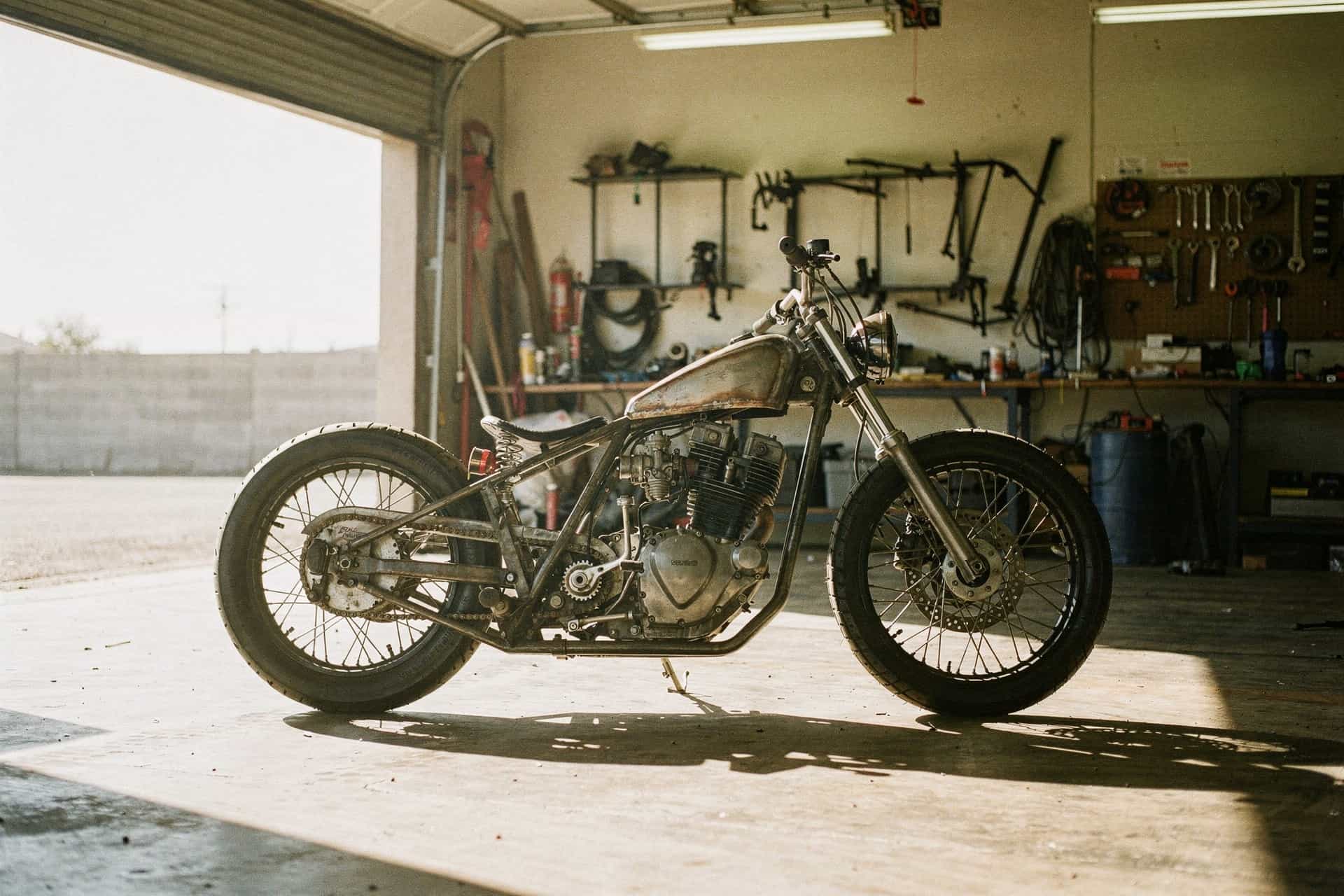
There’s a shop in Sun Valley, California, where the walls are bare concrete and the bikes look like they rolled out of a fever dream. No chrome polish. No billet nonsense. Just raw steel, open primaries, and motors you can hear from three blocks away. That shop belongs to Russell Mitchell, and the name on the door - Exile Cycles - has meant something in the custom motorcycle world for over two decades.
Mitchell didn’t grow up around American V-twins. He came from a small farming village in England, about as far from the Southern California chopper scene as you can get. But somewhere between teenage Triumph rides on narrow English lanes and a one-way ticket to Los Angeles in the early 1990s, something clicked. He saw what American builders were doing with Harley-Davidson Shovelheads and Panheads, and he knew he could push it further.
What came next reshaped how the world thinks about custom choppers.
From English Countryside to Sun Valley Garage
Russell Mitchell arrived in California with mechanical skills sharpened on British bikes and an outsider’s eye for American iron. He founded Exile Cycles in the mid-1990s in Sun Valley - a working-class pocket of the San Fernando Valley, tucked between Burbank and the foothills. Not exactly the glamorous side of LA. Which was exactly the point.
The early days were lean. Mitchell built bikes out of a small garage, doing everything himself - frame jigs, welding, motor work, paint. He had no investors, no business plan, and no interest in building cookie-cutter customs. The philosophy was there from day one: strip everything down to what matters. “Hardcore minimal tough” became the unofficial motto, and it wasn’t just marketing. Every Exile build reflected it.
While other shops chased the billet-aluminum trend of the late 1990s - smooth, polished, computer-designed parts that made customs look like rolling jewelry - Mitchell went the opposite direction. Raw metal. Visible welds. Industrial finishes. His bikes looked like they’d been dragged out of a post-apocalyptic garage, and riders loved them for it.
What separated Exile from the pack wasn’t rebellion for its own sake. Mitchell is a trained engineer who understands metallurgy, stress points, and frame geometry. The bikes look brutal, but they’re precisely built. That tension - between rough aesthetics and mechanical precision - is what made Exile matter.
The Design Philosophy: Less Is the Whole Point
Walk through the motorcycle culture landscape of the early 2000s, and you’ll find two camps. On one side, the “more is more” builders - chrome everything, stretched tanks, 300mm rear tires, airbrushed murals of wolves and lightning. On the other side, shops like Exile that asked a different question: what happens when you remove everything that isn’t essential?
Mitchell’s design rules are almost monastic in their discipline:
- No unnecessary chrome. If a part doesn’t need to shine, it doesn’t.
- Visible fabrication. Weld beads are part of the design, not something to hide.
- Industrial materials. Raw steel, matte finishes, patina that develops over time.
- Function drives form. Every part earns its place on the bike. If it doesn’t serve a mechanical purpose, it’s gone.
- The motor is the centerpiece. Strip away bodywork until the engine dominates the visual frame.
This approach was a direct challenge to the overbuilt customs of that era. And it landed hard. Riders who’d grown tired of show bikes that couldn’t survive a weekend ride saw Exile builds as a return to what motorcycles were supposed to be.
We’ve seen a lot of builders claim the “less is more” mantra over the years. Most of them still bolt on a dozen accessories and call it minimal. Mitchell actually means it. His frames carry nothing extra. His tanks are small. His fenders - when he uses them at all - are thin steel with no filler. That commitment is rare, and it’s why Exile builds hold their value the way they do.
Six Exile Builds That Changed the Game
Exile’s catalog spans dozens of machines, from ground-up custom specials to Harley-Davidson transformations. These six captures the range of what Mitchell’s shop can do.
The HotRod
The HotRod might be the most recognizable Exile build ever produced. It’s a hardtail chopper built on Exile’s own rigid frame with a Harley-Davidson Evo or Twin Cam motor - depending on the era - sitting out in the open with no frame covers or engine guards. The forward controls are simple steel pegs. The tank is narrow and sits low. The exhaust runs tight along the frame rail.
What makes the HotRod iconic isn’t any single feature. It’s the proportion. Mitchell spent years refining the rake angle, the tank-to-seat relationship, and the visual weight distribution until the whole bike reads as a single flowing line from headlight to rear axle. That kind of proportion work doesn’t happen by accident. It takes building the same platform dozens of times and adjusting by millimeters each round.
The HotRod also spawned one of Exile’s most popular trike conversions - the HotRod Trike - proving that Mitchell’s design language translates beyond two wheels.
The Bar Hopper
Where the HotRod is a stripped-down highway machine, the Bar Hopper was designed for exactly what the name says: short rides, city streets, parking lot to parking lot. It sits lower than most Exile builds, with a more relaxed riding position and a wider rear tire for stability at low speeds.
The Bar Hopper showed a different side of Exile’s capabilities. Not every custom needs to be a long-ride chopper. Sometimes you want a bike that turns heads on a five-mile cruise to your local spot and fits in a standard parking space. Mitchell built this bike for the riders who spend more Saturday nights at the bar than on the interstate - and there’s no shame in that.
Exile later adapted the Bar Hopper platform into their Softail Bar Hopper series, applying the same design thinking to Harley-Davidson Softail donor bikes. That crossover between ground-up builds and Harley modifications became a core part of Exile’s business model.
The Black Bull
The Black Bull is one of the heavier Exile builds - more muscle, more presence. It runs a larger displacement motor and carries more visual weight than the HotRod, with a wider rear section and beefier frame tubes. The name fits. This bike sits on the road like something that isn’t moving unless it decides to.
What makes the Black Bull interesting from a design standpoint is how Mitchell maintained his minimal approach at a larger scale. A lot of builders, when they go bigger, start adding bodywork and covers to fill the visual space. Mitchell didn’t. The Black Bull is still stripped. The motor is still exposed. The raw-steel aesthetic holds even at this size. That takes discipline.
If you’re the type who rides a bobber or chopper and wants something with genuine road presence without resorting to bolt-on accessories, the Black Bull blueprint is worth studying.
The Rusty Bloke
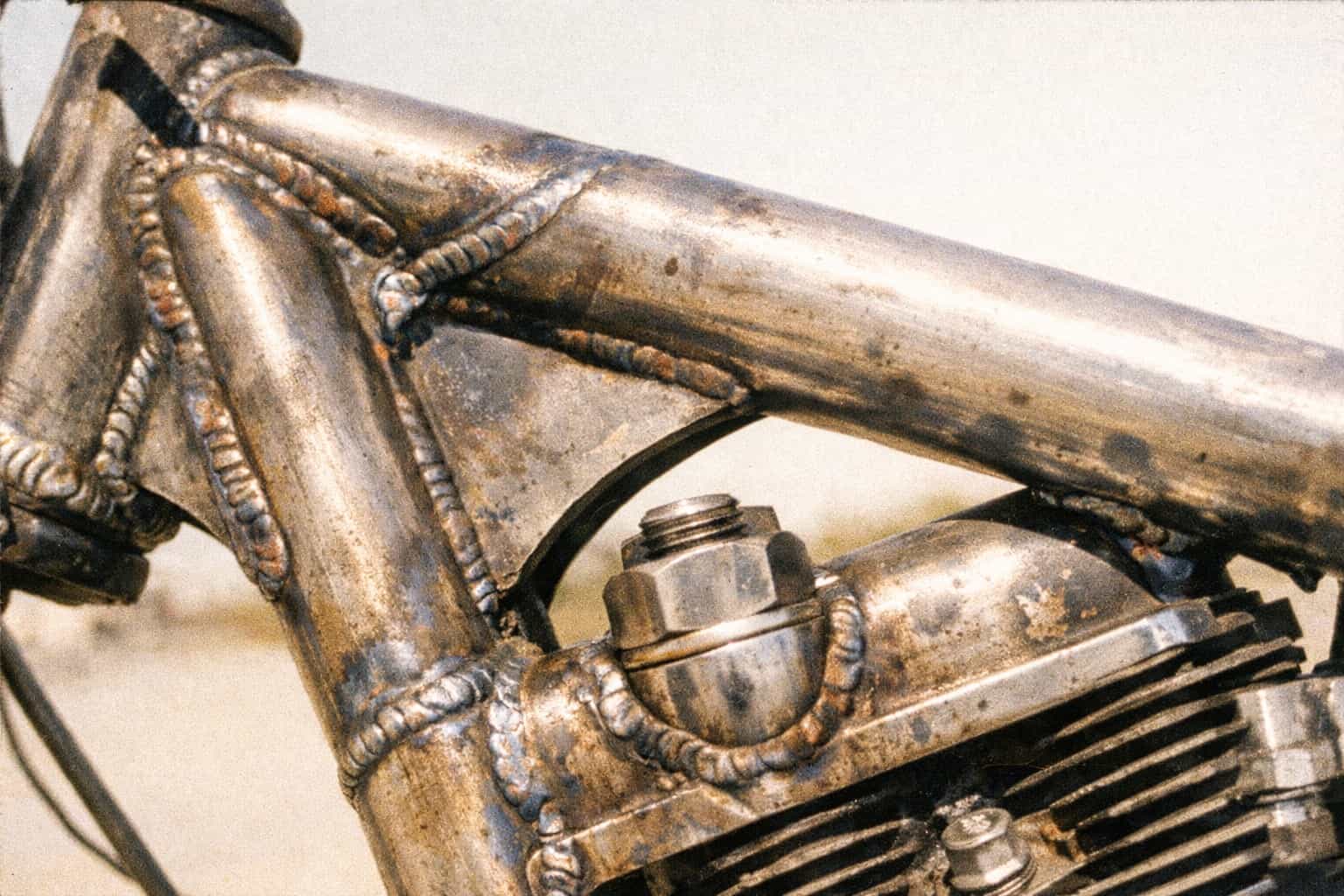
The Rusty Bloke leans hardest into Exile’s industrial aesthetic. The finish is intentionally weathered - controlled patina on raw steel that makes the bike look like it’s been sitting in a barn for forty years, even though every component is new and precisely machined underneath.
One thing most people don’t realize about a controlled-patina finish: it’s harder to execute well than a show-quality paint job. You have to understand how steel oxidizes, how to seal it at exactly the right stage, and how to keep the patina from progressing past the look you want. Mitchell has dialed this process in over years of trial and error. Plenty of other shops have tried to copy the rusted look. Most of them end up with bikes that just look neglected. The Rusty Bloke looks intentional.
This build also represents a broader trend in motorcycle culture - the rejection of perfection as a design goal. Not every bike needs to look like it just rolled out of a dealership. Some riders want a machine that looks like it’s been through something. The Rusty Bloke gives them that without sacrificing reliability.
Pure Sex Dragster
The name alone tells you Mitchell doesn’t take himself too seriously, which is part of what makes Exile builds feel authentic rather than pretentious. The Pure Sex Dragster is exactly what it sounds like - a drag-style chopper with an extended front end, stretched frame, and a motor built for straight-line acceleration.
This build sits outside Exile’s usual wheelhouse. Most of Mitchell’s designs prioritize everyday rideability. The Pure Sex Dragster is a statement bike, built to demonstrate that the stripped-down Exile approach works even at the extreme end of the custom spectrum. The proportions are more aggressive than any other Exile build: longer wheelbase, lower riding position, forward controls pushed out further.
What keeps it from feeling like a gimmick is the execution. Mitchell didn’t just stretch a frame and call it a day. The steering geometry, weight distribution, and structural reinforcement all account for the altered dimensions. It’s not a show prop. It rides.
The Racy Rocker 11
The Racy Rocker 11 sits in Exile’s “X-Harleys” category - bikes that start life as stock Harley-Davidson models and get the full Mitchell treatment. In this case, the donor is a 2011 Harley-Davidson Rocker, which already had a chopper-influenced profile from the factory. Mitchell took that starting point and pushed it hard.
The stock Rocker’s bodywork gets stripped. The fenders get cut or replaced. The exhaust goes from factory quiet to unmistakably loud. The suspension drops. New bars, new controls, new pegs. By the time Mitchell is done, the Rocker’s factory DNA is barely visible. What’s left is an Exile that happens to run a Harley powertrain - which is the whole idea.
The X-Harleys series is where Exile’s philosophy becomes most accessible. A ground-up Exile build is a serious investment. But bringing your existing Harley to Sun Valley for the Mitchell treatment? That opens the door to a much wider range of riders. Exile has done the same thing with Dynas, Night Trains, Street Bobs, and Crossbones - each one gets a unique build name and a distinct identity.
TV, Media, and the Builder Culture Boom
Russell Mitchell became a familiar face during the early 2000s custom motorcycle television boom. He appeared on Discovery Channel’s Great Biker Build-Off - more times than any other builder - as well as Motorcycle Mania IV and his own series Build or Bust. His builds were also featured in publications from Hot Bike to Iron Horse magazine. That exposure put Exile in front of millions of viewers who’d never heard of the shop.
But here’s what separates Mitchell from some of the other TV-era builders: he didn’t pivot to brand licensing and merchandise when the cameras showed up. He kept building bikes. When the chopper TV bubble burst around 2008-2010 - taking several high-profile shops with it - Exile was still in Sun Valley, still fabricating frames, still shipping parts. Builders like Billy Lane and the crews behind Detroit Choppers each brought their own thing to the custom scene during that era, but Mitchell’s staying power comes from never drifting too far from the core work.
Mitchell also hosts the annual “Rider Roundup at the Ranch,” an event at the Exile compound that features the Calendar Bike Building Championship. No corporate sponsors. No admission-price VIP areas. Just builders bringing their work and riders showing up to see it. That kind of grassroots event keeps the shop connected to actual motorcycle culture rather than the entertainment industry version of it.
Complete Bike Kits: Building Your Own Exile
One of the more interesting parts of Exile’s business is their complete bike kit program. Rather than buying a finished motorcycle, you can purchase a kit that includes an Exile frame, front end, wheels, brakes, tank, fender, seat, and controls - everything except the motor and transmission, which you source separately (typically Harley-Davidson Evo or Twin Cam).
This approach speaks directly to the “built not bought” mindset. Mitchell designed the kits so that a competent home mechanic with a decent garage setup can assemble a full Exile chopper. The frame jigs and mounting points are precise enough that everything bolts together without custom fabrication. You still need to handle the motor installation, wiring, and final assembly, but the hard engineering work - frame geometry, rake, trail, axle alignment - is already done.
Exile also sells individual parts: frames, front ends, wheels, tanks, fenders, foot controls, handlebars, and lighting. If you’re building something on a different platform and want one piece of the Exile aesthetic - say, their signature narrow tank or their forward controls - you can buy it separately. If you’re gearing up for a build and need the right apparel for the shop, check out our t-shirt collection or browse the full lineup.
Why Exile Still Matters
The custom motorcycle industry has cycled through trends fast enough to give you whiplash. Fat-tire baggers. Euro-style cafe racers. Adventure-bike influence on cruiser builds. Through all of it, Exile has stayed exactly where Russell Mitchell planted the flag in the 1990s: raw, minimal, and built to ride.
That consistency is worth more than any trend. We’ve had builders come through our shop wearing Exile t-shirts for twenty-plus years. The brand resonates because it represents something real - a guy who left everything he knew, crossed an ocean, and built motorcycles the way he thought they should look. No focus groups. No market research. Just a garage in Sun Valley and a clear point of view.
Mitchell once said that he builds bikes he wants to ride, and if other people happen to like them, that’s a bonus. You can argue whether that’s a sound business strategy, but you can’t argue with the results. Exile Cycles is still here, still building, and still defining what “custom” means for a generation of riders who value substance over flash.
Sources
- Exile Cycles - Official website with build gallery, parts catalog, and company information
- The Russell Mitchell Exile Code - Bikernet - In-depth profile covering Mitchell’s background, design philosophy, and business history
Background reading: our motorcycle clubs complete guide lays out the patches, the politics, and the unwritten rules every rider should know about MC culture.