
The Bike That Wins Trophies Against Sportsters
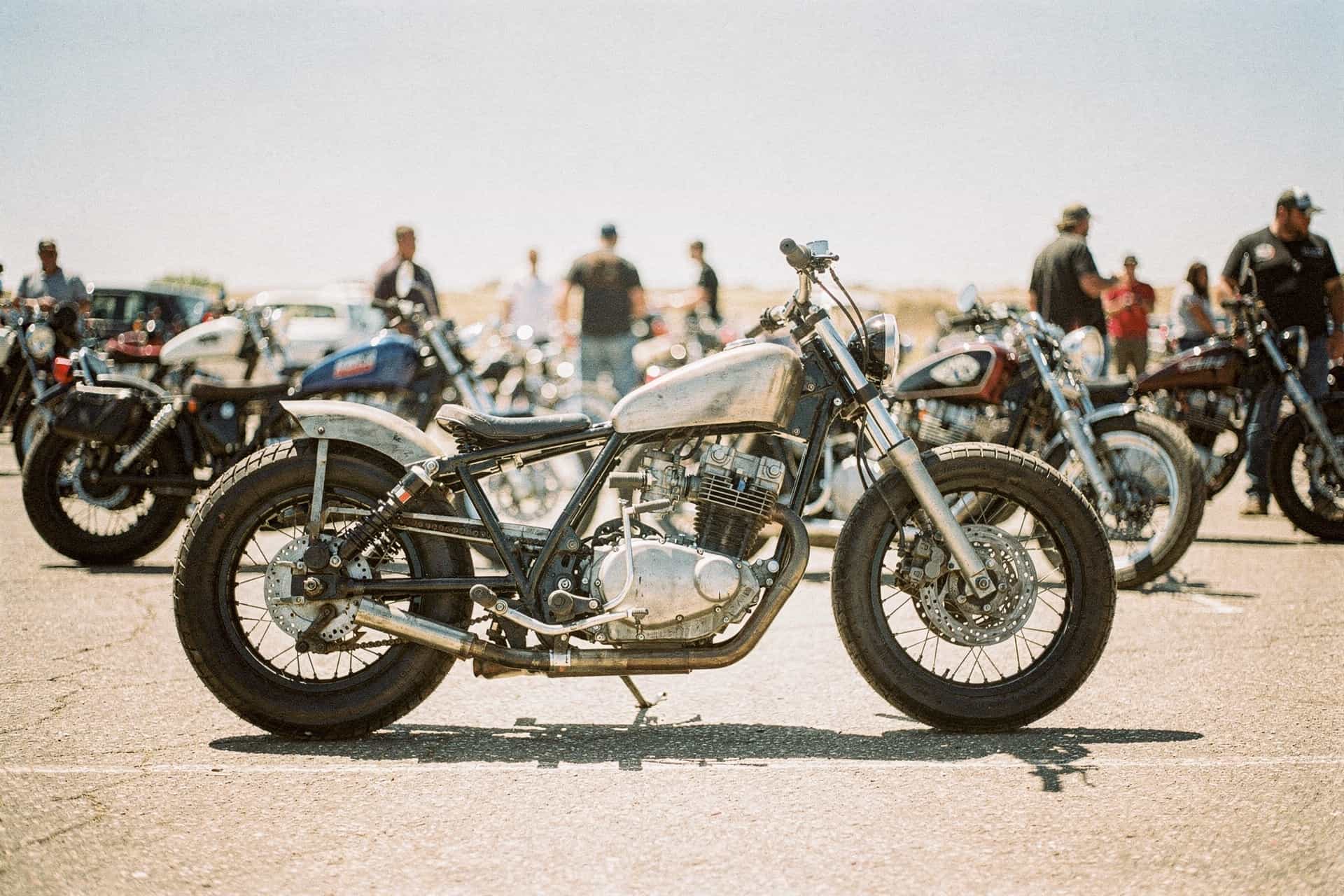
A buddy brought his XS400 bobber to a local show last year. Hardtailed, stripped to bare essentials, hand-formed aluminum tank. It sat between two Sportster builds that probably cost four times as much. When the judges walked the line, they stopped at the Yamaha twice. He took home the trophy.
That’s the XS400 in a sentence. It doesn’t win on cubic inches or torque curves. It wins because small-displacement builds force you to be a better builder. Every pound matters. Every line is visible. There’s no massive V-twin to hide behind, no leather saddlebags to distract from sloppy welds. A bobber motorcycle stripped to 392cc of parallel twin is the builder’s skills laid bare for everyone to see.
The original post-war bobbers weren’t big bikes either. Guys in the late 1940s stripped down whatever they could afford - flatheads, British singles, small twins. The whole point was making a heavy bike lighter, faster, meaner. The Yamaha XS400 carries that exact spirit forward by about four decades.
What You’re Working With: The XS400 Platform
Yamaha produced the XS400 from 1977 to 1982 as a bored-out version of the XS360. It was a mid-range commuter - Yamaha’s answer to the Honda CB400 and Kawasaki KZ400 in the small-displacement market. Nobody at Yamaha was thinking about custom builds when they designed it.
Engine and Drivetrain
- Displacement: 392cc
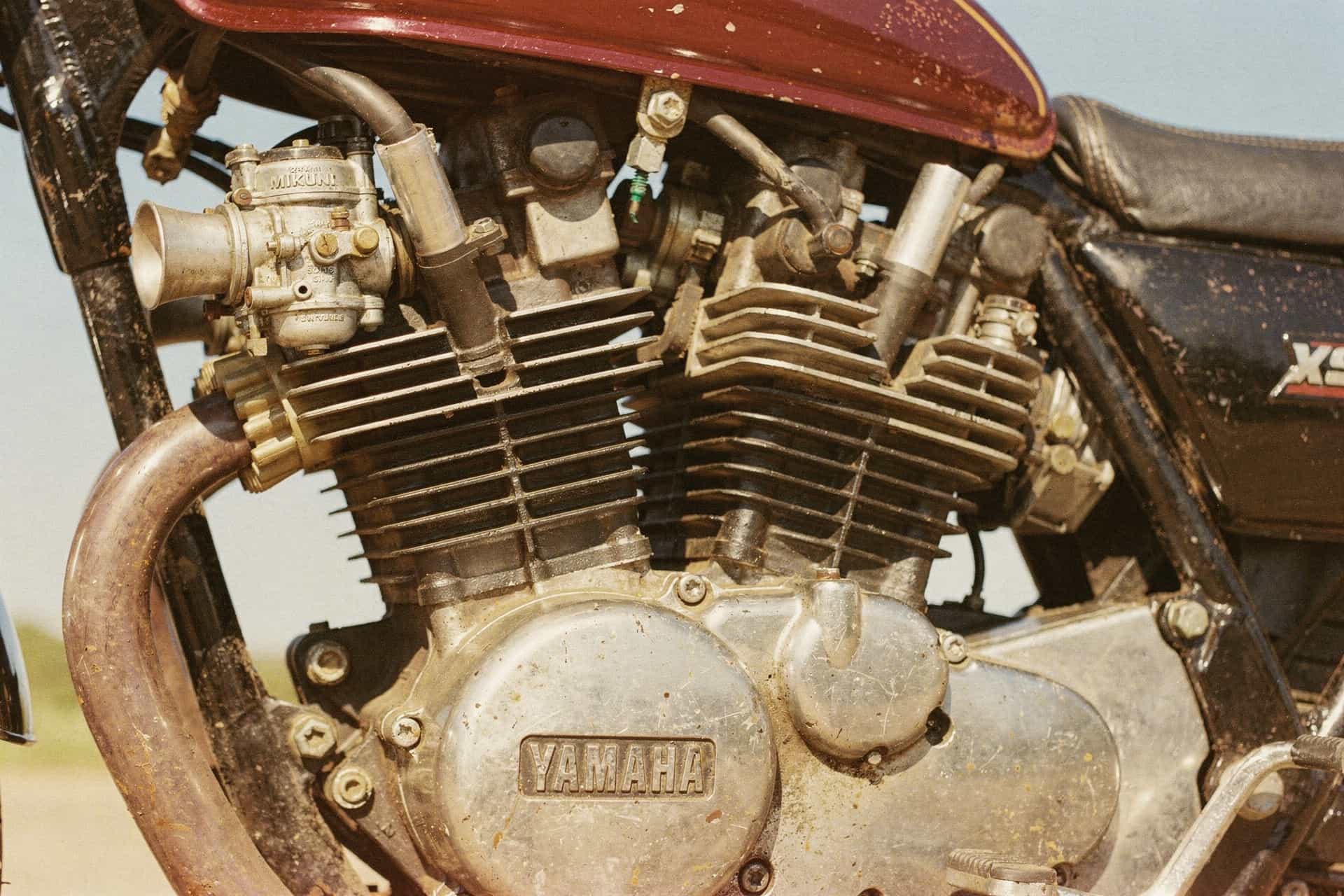
- Configuration: Parallel twin, SOHC, 180-degree crankshaft
- Valves: 2 per cylinder
- Bore x Stroke: 69.0mm x 52.4mm
- Cooling: Air-cooled, iron-sleeved cylinders
- Power: 32-36 hp at 8,500 RPM
- Fuel system: Pair of 34mm Mikuni CV carburetors
- Transmission: 6-speed manual
- Final drive: Chain
- Ignition: Points (early models), electronic CDI (later)
That 180-degree crank angle is worth understanding. Both pistons move in opposite directions - when one goes up, the other goes down. This cancels primary vibration well but introduces a rocking couple that shows up as a mild side-to-side shimmy at certain RPMs. Compared to a 360-degree crank like the Honda CB or a V-twin, the XS400 has its own feel. Different, not worse. You either like it or you don’t.
Chassis
- Frame: Mild steel tubular, single downtube, dual cradle
- Front suspension: Non-adjustable telescopic fork
- Rear suspension: Swingarm with 5-way adjustable shocks
- Wet weight: ~391 lbs (stock, fully loaded)
- Top speed: ~96 mph
- Fuel economy: 53-58 mpg
- Fuel capacity: 3.4 gallons
At 391 pounds wet, the stock XS400 is already light by cruiser standards. Strip the fenders, airbox, side covers, and passenger accommodations, and you’re looking at a rolling chassis around 320 pounds before you add bobber parts back. That lightness is the XS400’s secret weapon.
The Styling Generations
Not all XS400s look the same, and the differences matter when you’re choosing a donor.
XS400D (1977) - Squared-off tank design, the original look. Simple and industrial.
XS400F (1978) - Teardrop tank shape. This is the one most builders prefer for bobber aesthetics - the teardrop tank on a stripped frame looks like it was designed for the conversion.
XS400SG (1980+) - Cruiser-styled variant with a different riding position and styling cues. You can bob one, but you’ll strip off everything that made it a “cruiser” anyway.
For a bobber build, the 1978-1980 standard models are the sweet spot. Simplest wiring, points or early CDI ignition, and you’re starting closer to where you want to end up rather than un-building a factory cruiser to get there.
Why Small-Displacement Bobbers Have a Cult Following
They Force Better Design
When you’ve got 36 horsepower, every design choice is exposed. A bobbed XS400 puts the engine, the frame lines, and the builder’s fabrication skill on full display. There’s nowhere to hide behind displacement or chrome. The builds that win at shows on XS400 platforms win because of proportion and execution, not cubic inches.
They’re Genuinely Fun on the Street
A lightweight bobber with modest power is a blast on city streets and twisty back roads. You can wind the XS400 up to redline, bang through all six gears, and actually use the bike’s full performance envelope without risking your license or your life. Try doing that on a 1,200cc Sportster on a public road - you’d be in triple-digit territory before third gear.
They’re Cheap to Build and Run
XS400s sell for $500 to $2,000 depending on condition and whether the seller knows what they have. Parts - especially engine internals - are shared with the earlier XS360 and partially with the Yamaha XS650. Gaskets, bearings, and electrical components are available through specialists like MikesXS. A complete top-end rebuild on an XS400 costs a fraction of what the same job runs on a Harley.
At 53-58 mpg, the running costs are practically nothing. Insurance on a 40-year-old sub-400cc bike is pocket change.
The Community Builds, Not Buys
The XS400 bobber community skews toward hands-on builders. These are people welding their own hardtails, hand-forming fender struts, fabricating custom mounts from scratch. The XS-series forums - particularly xs650.com, which covers the entire XS family - are gold mines of build knowledge with detailed photos and parts lists going back years.
Building a Yamaha XS400 Bobber
Choosing the Right Donor
Must-have condition: A running engine with good compression. Frame condition and cosmetics don’t matter - you’re cutting and modifying everything anyway. But an XS400 engine that needs internal work will eat your budget alive. Ask the seller for a compression test. Both cylinders should read within 10% of each other. Anything above 120 PSI is healthy.
Best years: 1978-1980 standard models (XS400-2E, XS400F). Simplest wiring, fewest electronic complications, closest to the bobber starting point.
Avoid if possible: The XS400 Special and Heritage models (1980-1982) with factory custom styling, mag wheels, and more complex electronics. They can become bobbers, but you’ll remove everything that made them “special.” Start with a standard model and save yourself the deconstruction.
Frame Modifications
The steel tube cradle frame takes well to modification. Two common approaches:
Hardtail conversion - Weld a rigid rear section onto the frame, eliminating the swingarm and rear suspension entirely. This is the most dramatic visual change and gives that classic bobber silhouette. TC Bros, Lowbrow Customs, and several small fabricators sell weld-on hardtail kits specifically for the XS400 frame. Expect $200-$400 for a kit, plus welding costs if you’re farming it out.
Lowered stock rear - Keep the swingarm but install shorter aftermarket shocks. This slams the rear end without permanent modification and your spine stays on speaking terms with your brain. From ten feet away, a lowered XS400 with a bobbed fender looks remarkably close to a hardtail.
Fender and Seat
A bobbed rear fender is mandatory. You can cut the stock fender short - measure twice, angle grinder once - or buy a universal steel bobber fender and fabricate mounting struts. Front fender usually goes in the trash or gets replaced with a minimal shorty.
For seating, a spring solo seat on a hinge-and-spring kit is the classic approach. The XS400 frame has enough flat section behind the engine to mount one without excessive fabrication. The springs give you some suspension compliance that partially compensates for a hardtail, and visually they define the bobber look.
The Wiring Challenge
This is where XS400 builds separate the committed from the casual. The stock wiring harness is a tangled nest of connectors, relays, and 1970s color codes that confuses experienced mechanics. Most bobber builders rip it out entirely and rewire from scratch.
A simplified XS400 harness needs four circuits:
- Ignition - 12V to coils, CDI or points
- Charging - stator to rectifier/regulator to battery
- Lighting - headlight, brake light, turn signals if your state requires them
- Indicators - neutral and oil pressure
Companies like Revival Cycles and Moto Electrics sell simplified harness kits for vintage Japanese bikes. If you’ve never wired a motorcycle, the XS400 is a manageable place to learn. Two cylinders and a relatively simple charging system - not four cylinders with a computer-controlled ignition map.
Carburetor Reality
The pair of 34mm Mikuni CV carbs are reliable when maintained and frustrating when neglected. Any donor that’s been sitting needs a full carb service - remove, disassemble, soak in carb cleaner, replace float needle valves and gaskets, synchronize both carbs.
If you swap to pod filters after removing the airbox - which most builders do - you’ll need to re-jet. Bump main jets up one or two sizes and adjust the needle clip position. The XS400 forums have jetting charts for every combination of filter and exhaust people have tried over the past two decades. Don’t guess. Look up what worked for someone running your exact setup.
Parts Compatibility With the XS650
Here’s something useful: the XS400 shares more parts compatibility with the XS650 than most people realize. While the engines are completely different, chassis and accessory parts overlap:
- Handlebars and controls - both use 7/8-inch bars
- Headlight and gauge mounts - similar dimensions
- Brake components - some caliper and master cylinder parts interchange between certain years
- Electrical - rectifier/regulators, ignition coils, and CDI units overlap in some year ranges
This means you can shop the much larger XS650 aftermarket for many of your bobber parts. The XS650 has one of the biggest custom communities in the Japanese vintage world, and the XS400 benefits directly from that ecosystem.
Exhaust Options
The stock XS400 exhaust is a 2-into-2 system designed for emissions compliance in 1978 - quiet, heavy, and visually bulky. Every bobber builder replaces it.
Wrapped Headers With Shorty Mufflers
The budget king. Remove stock mufflers, cut headers to length, weld on universal shorty mufflers from Emgo or Cone Engineering ($40 each or less). Wrap headers in exhaust wrap from manifold to muffler inlet. Total cost: $60-$120. The XS400 twin has a sharp, aggressive bark at high RPM that the stock system completely masks. Opening up the exhaust reveals the engine’s actual voice.
Custom 2-into-1 Collector
A merge collector looks clean on the XS400’s compact frame and can improve mid-range torque. Building one requires bending and welding tubing - intermediate fabrication territory. Pre-made 2-into-1 systems for the XS400 exist from small fabricators who cater to the vintage Japanese bobber community.
Used Aftermarket Systems
Mac and Delkevic have both offered bolt-on systems for the XS400. Availability fluctuates, but used systems surface on eBay and forum classifieds regularly. A used Mac 2-into-2 runs $100-$200 and delivers a deeper tone with less weight than stock.
What a Finished XS400 Bobber Looks Like
The best builds share common traits:
- Stripped to minimal bodywork - small tank (stock teardrop or swap), short rear fender or delete, no front fender
- Hardtail or lowered rear end
- Single round headlight, 5-3/4-inch vintage style
- Exhaust either wrapped with shorty mufflers or custom-bent stainless
- Matte or satin finish - flat black, raw metal, or patina paint
- The engine as the visual centerpiece
The parallel twin’s symmetry photographs well and looks genuinely good when exposed. Those cooling fins catch light in a way that makes even a stock engine look custom when it’s polished and the rest of the bike is stripped down around it. The XS400 engine was never intended to be a visual centerpiece, but stripped of everything around it, that’s exactly what it becomes.
Realistic Expectations
This Is a City and Back-Road Bike
With 32-36 horsepower and a 392cc engine, the XS400 bobber lives happiest between 30 and 55 mph. It can sustain 60-65 on flat highway, but it’s working for it. Headwinds and hills become noticeable obstacles. If your riding includes interstate travel or long-distance touring, the XS400 will frustrate you. Know that going in.
These Are 40+ Year Old Motorcycles
Every XS400 still running is at least four decades old. Rubber degrades - seals, hoses, carburetor diaphragms - regardless of mileage. Electrical connections corrode. Petcocks leak. Budget time and money for replacing aged components, not just bolting on custom parts. The age of the platform is part of its charm and part of its cost.
You Will Fabricate
Unlike a Sportster or Shadow where you can order a bolt-on bobber kit, the XS400 requires metalwork. Even the simplest build involves cutting a fender and drilling new mounting holes. If you don’t have basic fabrication skills, you need a friend who does, or budget for a shop’s time.
Related Builds Worth Exploring
If the XS400 is too small for your plans, the XS650 gives you more displacement with a similar parallel-twin character and a much larger aftermarket. For big-inch Yamaha torque, the Road Star bobber is a completely different animal with 1,600-1,700cc of pushrod V-twin.
Outside the Yamaha family, the Honda Shadow bobber is another Japanese V-twin platform with a massive community, and our remarkable bobber builds roundup covers inspiration across every make and budget. If you want to understand how handlebar choice changes the entire riding experience on a build like this, our guide to motorcycle handlebar types breaks down every style. And grab some gear while you’re building - the Bobber Brothers t-shirt collection was made for builders who actually wrench.
Sources
- Motorcycle Classics - 4-Stroke Fun: 1977-1982 Yamaha XS400 - detailed production history, specifications, and technical overview of the XS400 platform
- AutoEvolution - Yamaha XS 400 (1982-1988) Specs - factory specifications for later XS400 variants
- MotorcycleSpecs.co.za - 1977 Yamaha XS400 - original model year specifications and performance data
- MikesXS - Yamaha XS400 Parts - OEM replacement and aftermarket parts for XS400 maintenance and builds
- Total Motorcycle - 1982 Yamaha XS 400 Specifications - complete specs including engine, chassis, and performance figures